
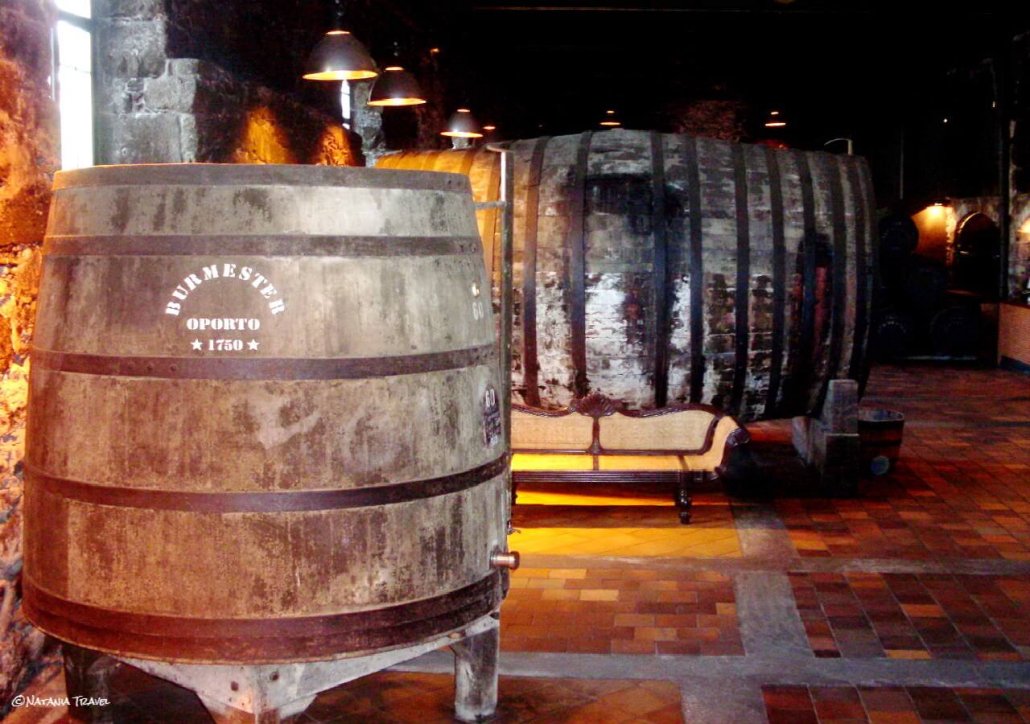
Port wine in Vila Nova de Gaia, Porto
Port wine (Vinho do Porto) is a Portuguese fortified wine.
All varieties of this wine have rich and intense aromas and flavours. It is produced from grapes grown and processed in the demarcated Douro Valley, in the northern regions of Portugal.
By the way, Port wines can only carry this name if they come from the Douro Valley, and are stored and aged in the warehouses of Vila Nova de Gaia.
The Douro Wine Valley
The Douro Wine Region Valley is one of the oldest wine regions in the world. Nature is fantastic: the river has carved deep valleys in the land, and grapevine plants are terraced in vineyards on the hills, exposed to sunlight.
Since the 18th century, the grapes from Douro Valley have been transported in boats called “Barcos rabelos” to Vila Nova de Gaia and warehouses.
Over a hundred varieties of grapes grow in the Douro region. The combination of white and black grapes gives Porto wine a specific taste. The Port wines usually have a higher percentage of alcohol content (usually between 19% and 22% vol). The reason is that in one precisely determined phase, brandy is added, and the fermentation is stopped.
Port wines are often called dessert wines because they are served at the end of a meal, with desserts, nuts and dried fruits.
White Port wines are served with seafood and soft, creamy cheese like Brie.
Ruby or Tawny Ports can be served with meats and strong, blue cheeses.
Port wine in Vila Nova de Gaia
Port wines can only carry this name if they are stored and aged in the warehouses of Vila Nova de Gaia.
In this part of the city, there are almost 60 warehouses of port wine. These cellars (locally known as “caves”) have become a major tourist attraction. You can visit most of them individually or as a tour group.
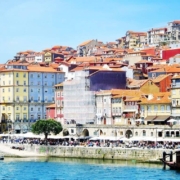
Vila Nova de Gaia is a real Porto wine town, located on the other side of the Douro River, across Porto. It is world-famous for being the world’s largest wine storehouse in one place, built in the 17th century.
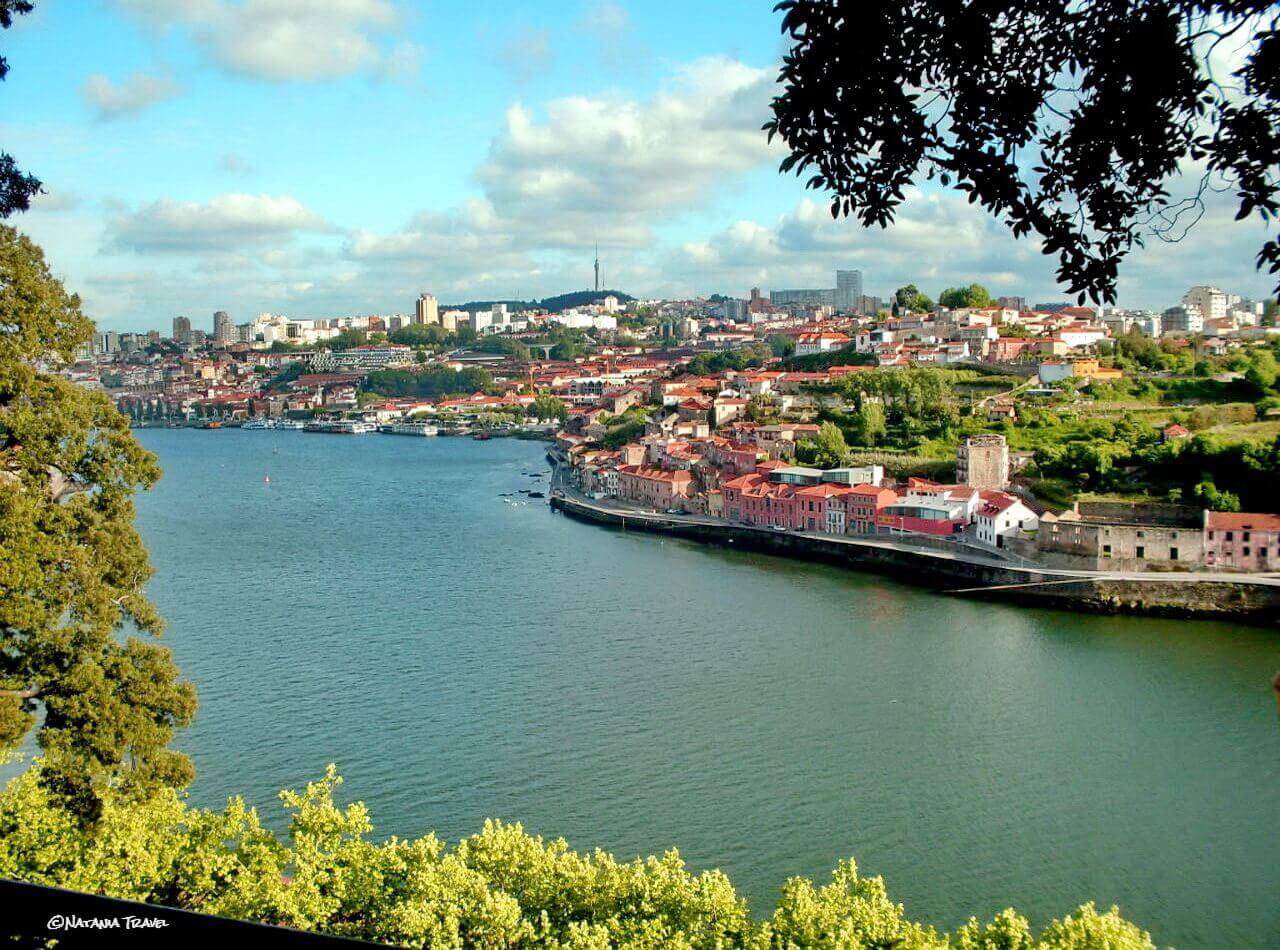
Porto, the river Douro and Vila Nova de Gaia
Viana do Castelo and Vinho Verde
Before Porto, the centre of the wine trade was the city of Viana do Castelo, located in Minho province, the northern region of Portugal.
The wine produced in this region is named “Vinho Verde” or “Green wine”. Actually, it is not exactly “green wine”. It is a young, fresh and sparkling wine.
Vinho Verde is a unique wine, and it is best to be consumed within a year of bottling.
Because of this, it is not convenient for export, and it was especially difficult in the 18th century when England was the primary trading partner of Portugal. So the wine traders began looking for other wines for the British market. They rediscovered the Douro region and continued to develop it as one of the world’s largest wine-producing regions.
Port wine of the Burmester winery
During our Portugal tour, we had an opportunity to visit the Burmester winery.
After crossing the bridge – Ponte Dom Luiz, first, you will find the Burmester Port Wine cave.
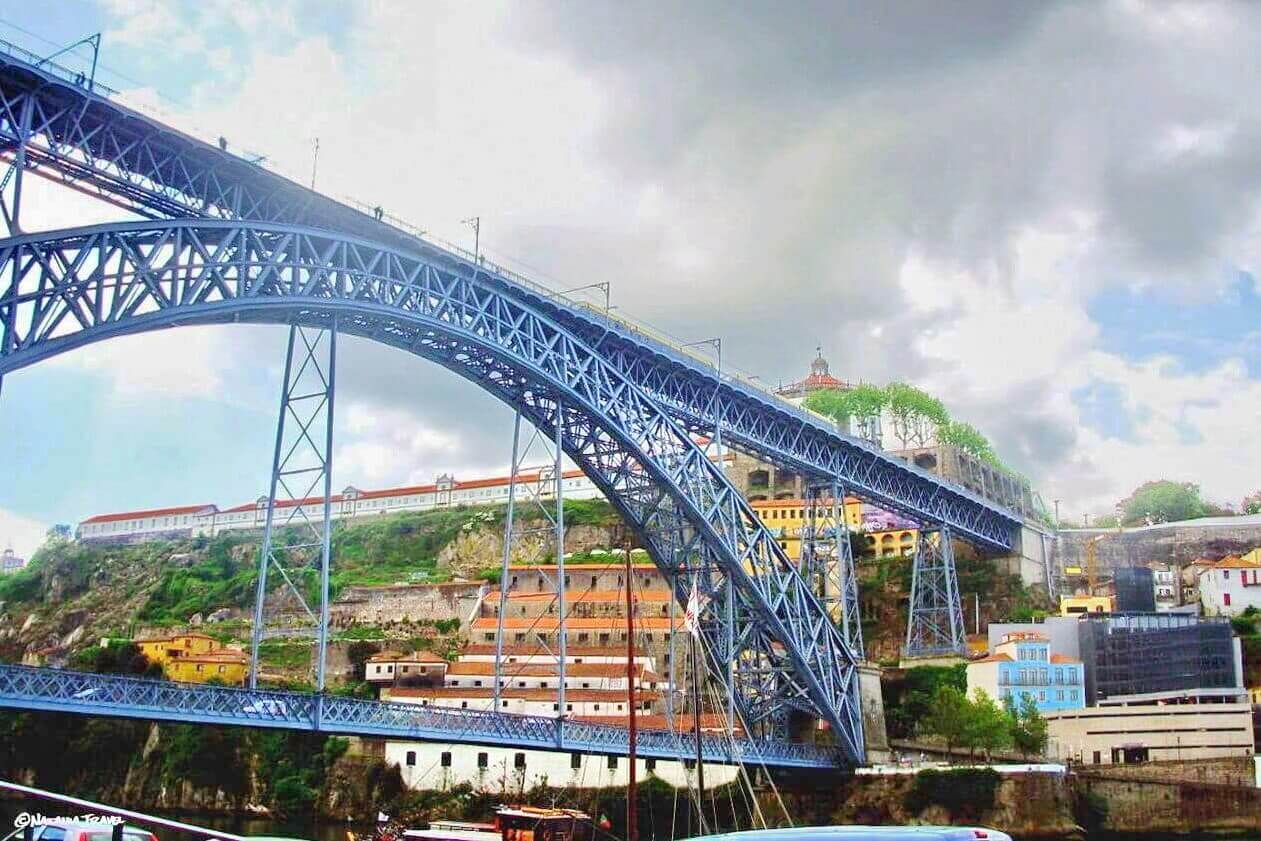
Vila Nova de Gaia
Burmester Company was founded in 1730 by Henry Burmester and John Nash in London as a cereal trading company. They moved to Villa Nova de Gaia in 1750 and began shipping wine to the British and European markets. At the end of the 18th century, the new Port wine company named H. Burmester & Sons was established.
In 2005, the Sogevinus Group acquired the company, connecting tradition and the latest technologies. They focused on the production and commercialisation of high-quality Port wines and Douro D.O.C. wines (Denomination of Controlled Origin).
By the way, the Sogevinus Group took part in the Wines Portugal Challenge competition in May 2014, and won 6 medals (two gold and four silver) among 75 national winemakers! Very impressive, isn’t it?
Rebranding and the Kopka Group
In May 2025, the company changed its name to Kopka Group, after the oldest port wine house in the group, from 1638. The current owner of the company is the Escotet family, the major shareholders of the Iberian bank Abanka. The rebranding process aims to strengthen the presence in international markets, especially in the USA.
Besides Burmester and Kopka wines, the Kopka Group offers a diverse range of wines produced by major wineries, such as Cálem, Barros, Quinta da Boavista, São Luiz and Velhotes.
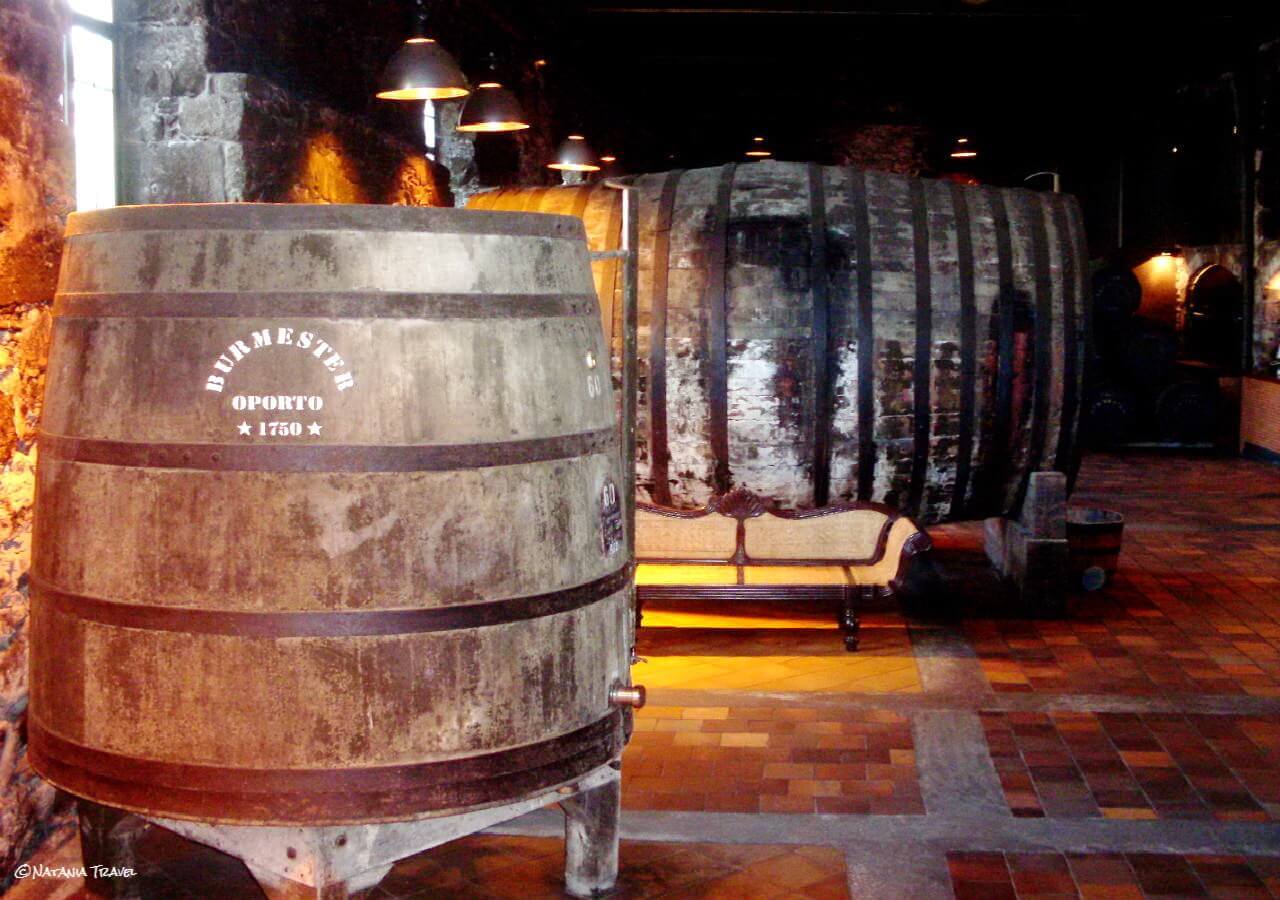
Porto, Burmester winery, Vila Nova de Gaia
Our wine tour started with a walk along the big oak barrels.
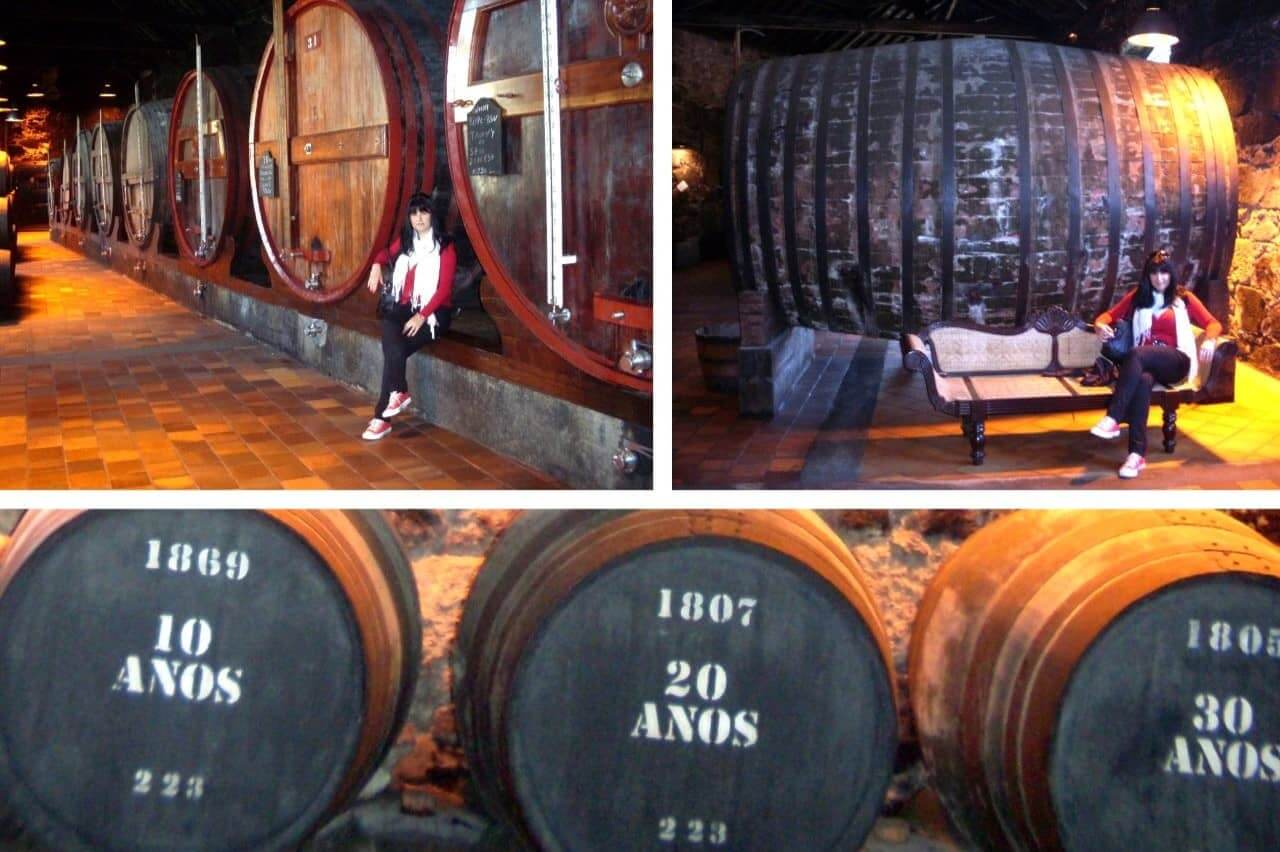
Burmester winery
We were listening to the story about wine and the history of the Burmester family.
And of course, we tasted the wines. I guess that is a highlight of each wine tour 🙂
After a long walk along the colourful streets of Porto, a glass of wine was the perfect refreshment.
Burmester’s Porto wine shop
There is a little shop where you can buy Port wines to bring home.
You can choose between the standard range features like Ruby, Tawny, White and Extra Dry White wines. Some wines are aged between five and seven years, but some are aged for ten, twenty or even forty years, like Tawny wines.
The Burmester wines are made in a traditional and rustic style. Well, the choice is only yours!
You can visit Burmester cellars every day from April to October from 10 AM to 01 PM, and from 2 PM to 7 PM. From November to March, the cellars are closed due to maintenance.
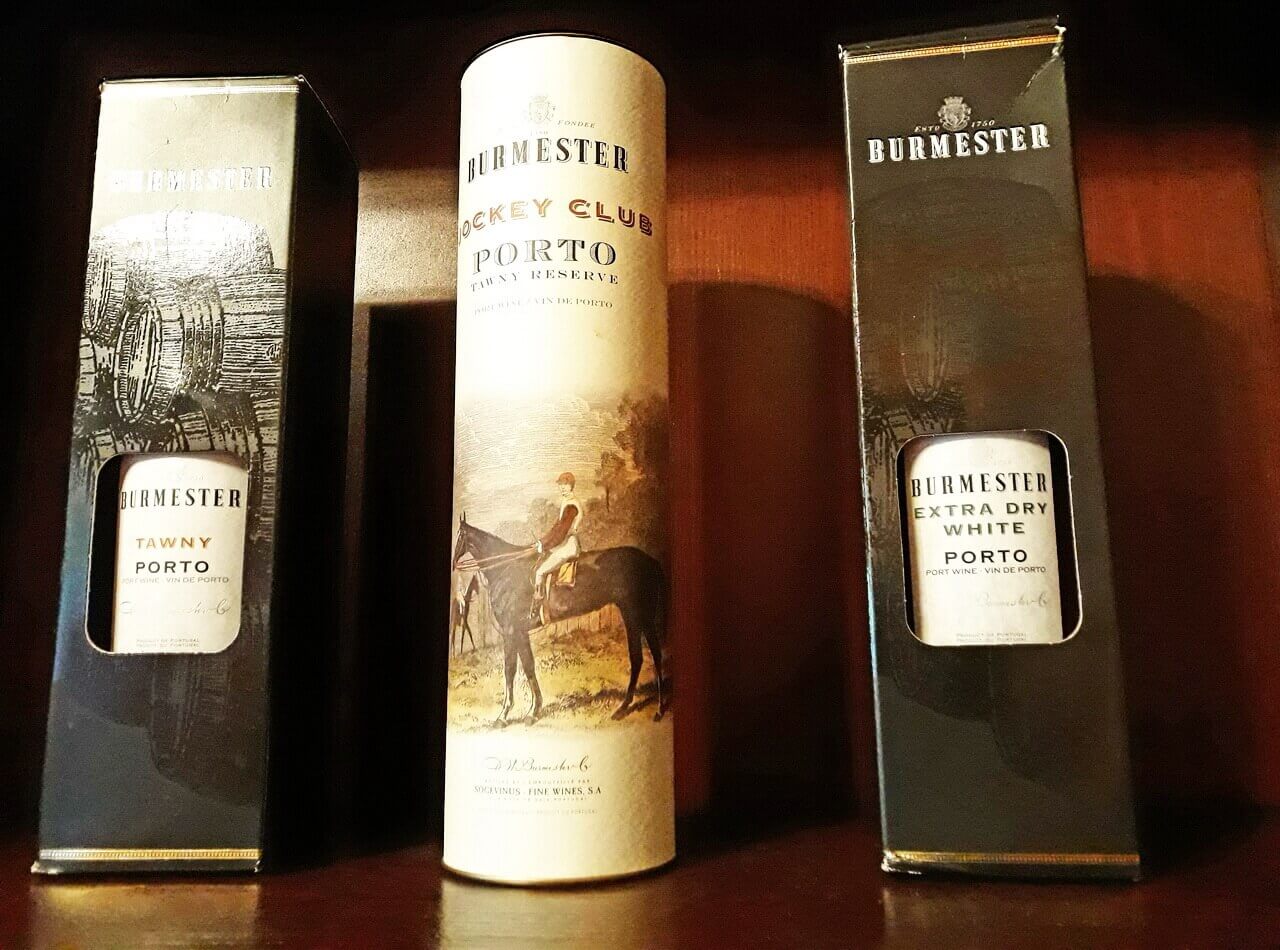
Port Burmester wines
After we finished our wine tour, happy and in a good mood, we continued walking to the amazing Porto.
We enjoyed the fresh and salty air at the point where the Douro River flows into the Atlantic Ocean.
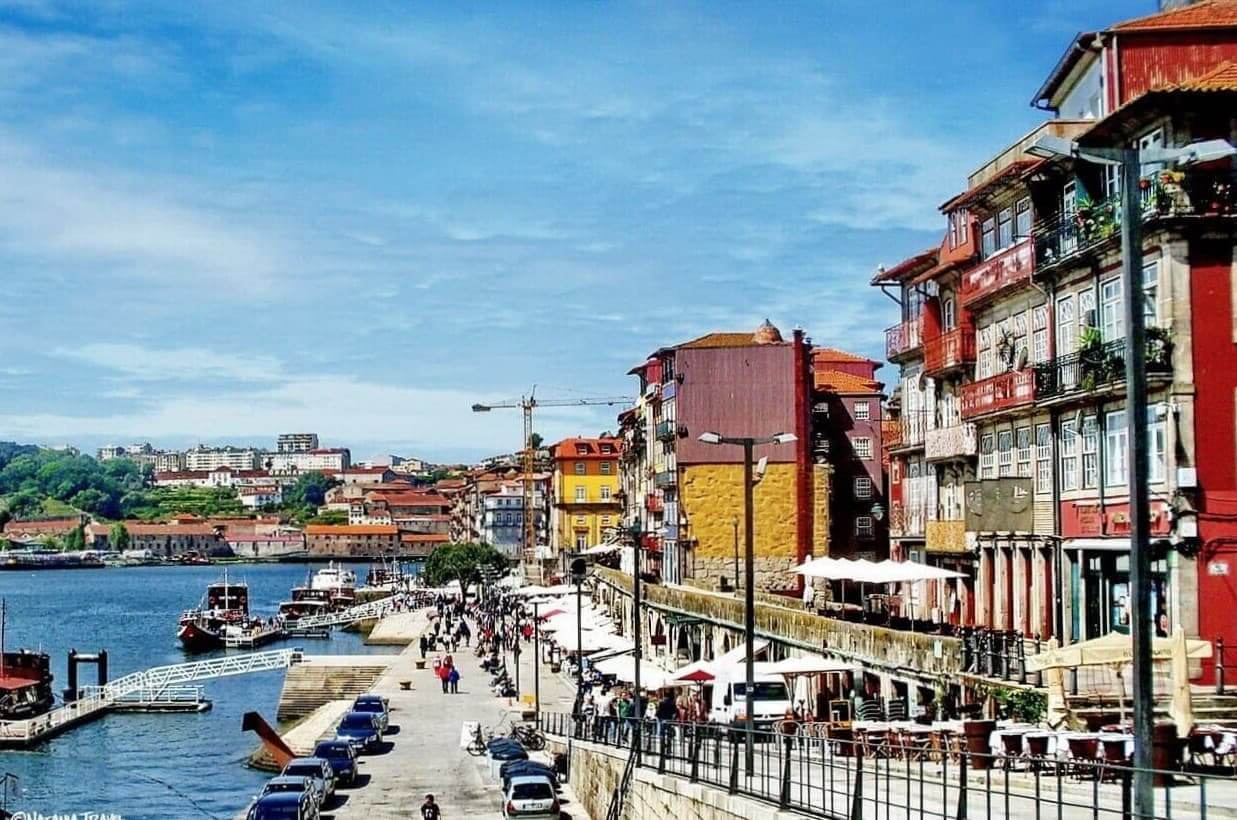
Porto, Ribeira
👉 🍷 Read more: Porto, the city of wine on the River Douro


Leave a Reply
Want to join the discussion?Feel free to contribute!