
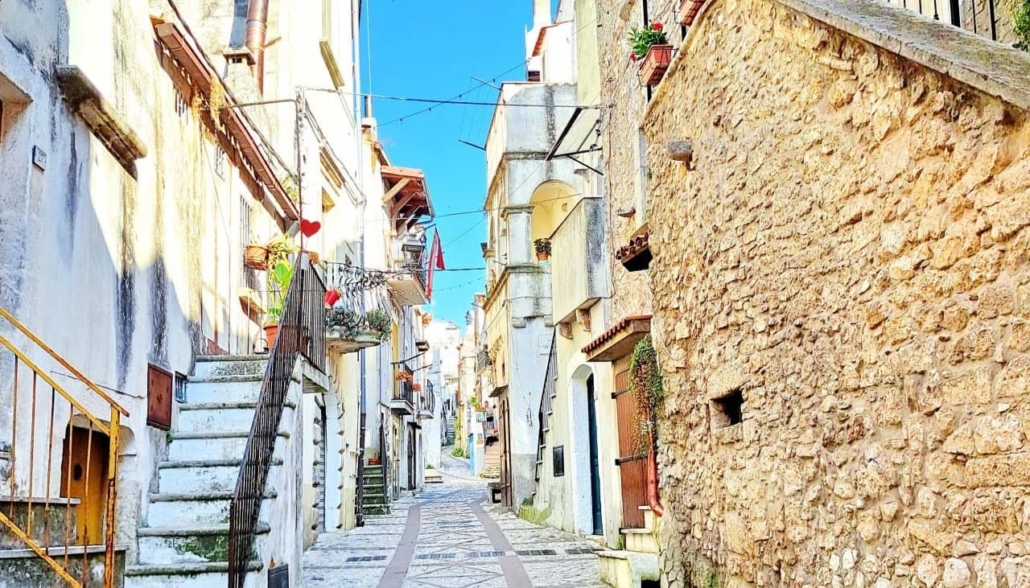
Vico del Gargano, the “Village of Love” in Puglia
Vico del Gargano is an interesting medieval village in the province of Foggia, in the Italian region of Puglia.
Walking along its historic centre with narrow alleys, stone arches and houses, you have a feeling that time literally has stopped.
It is one of the most beautiful villages in Italy (I Borghi più belli d’Italia).
Interestingly, Vico del Gargano is known as the “Village of Love” because of its patron, Saint Valentine. He is a protector of love and lovers, but also the protector of the citrus that grows in this area.
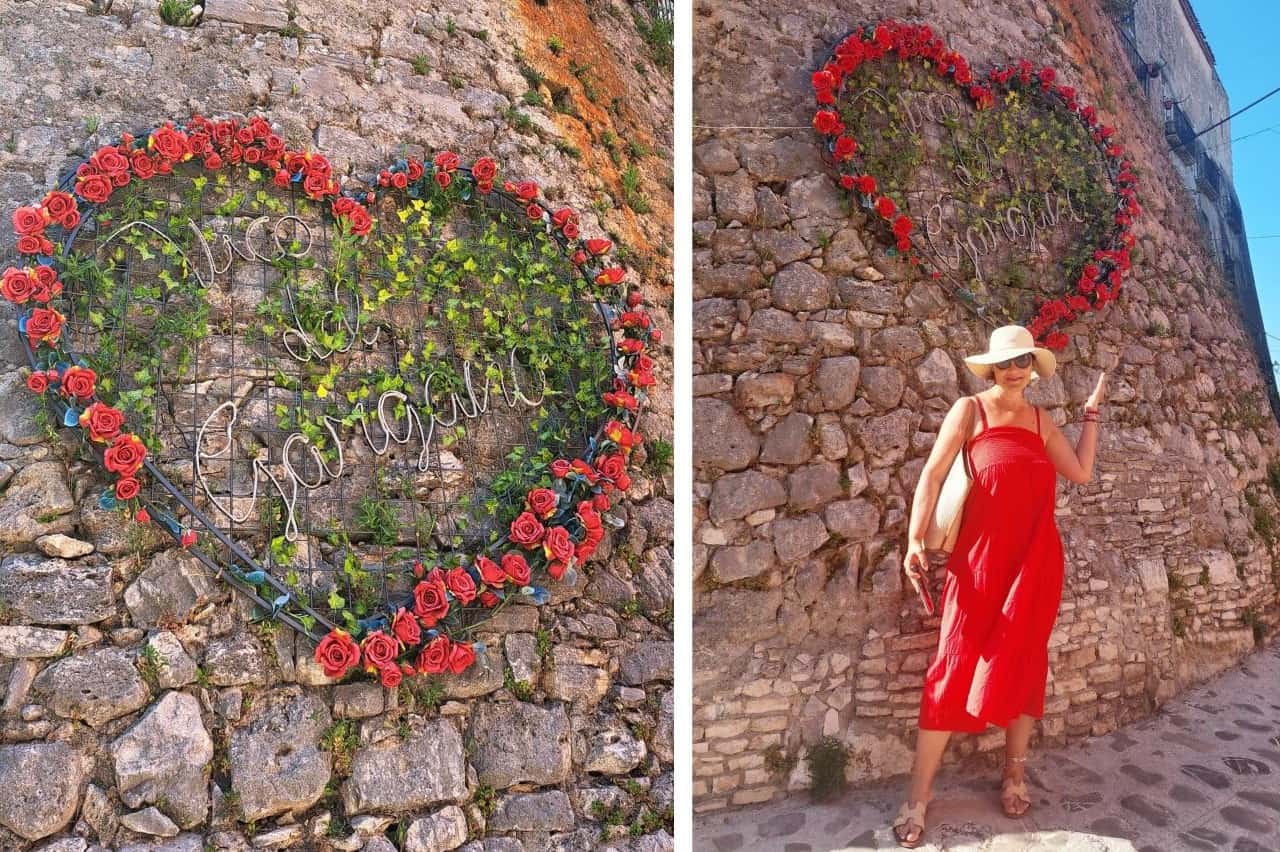
Vico del Gargano, the Village of Love
📌 How to reach Vico del Gargano
Vico del Gargano is located on the hill, in the Gargano Peninsula, in the northern part of Puglia. It is 117 km away from Foggia, 12 km from Rodi Garganico, and 34 km from Vieste. The territory of Vico del Gargano extends from the Umbra Forest in the north, at 800 meters above sea level, to the bays of Calenella and Saint Menaio.
✈️ By plane:
The nearest airports are Bari (about 230 km away) and Pescara, known as Abruzzo, which is around 200 km away. From there, you can rent a car and drive approximately 2h and 30 min north toward Gargano.
🚗 By car:
The best way to visit the village is by car. From Bari, follow the A14 highway, exit at Poggio Imperiale, and continue along the Gargano coastal or inland roads. Park the car outside the old centre and continue on foot.
🚌 By bus:
There are regional buses connecting Foggia with Vico del Gargano, but they run infrequently.
🚆 By train:
The small Ferrovie del Gargano line connects nearby towns, but not directly to Vico, so you have to combine a train with a bus or taxi.
A few words about the history
Surrounded by pine trees, the territory of Vico del Gargano is rich in greenery and water. According to some traces, it was inhabited in prehistoric times. The rock necropolis of Monte Tabor dates back to the Iron Age, while the necropolis of Monte Pucci dates from the early Christian period.
Around 970, Sueripolo, the leader of the Croatian Slavs, in the service of the Byzantines, expelled the Saracens from the Gargano. He obtained permission to settle there with his people. So, Sueripolo united several hamlets within defensive walls, making a first urban core: the “Cività“. Later, it will be called Vicus, from the Latin word which means “a group of houses or a village”.
Then, in the 11th century, the Normans conquered this area, built a fortress and the defensive walls. The Emperor Frederick II of Swabia (1090-1147) modified the fortress, and the medieval settlement developed around it. Later, Vico was ruled by the various Angevin and Aragon families, and it became part of the Kingdom of Italy.
Today, Vico del Gargano belongs to the province of Foggia, and it has about 8,100 inhabitants.
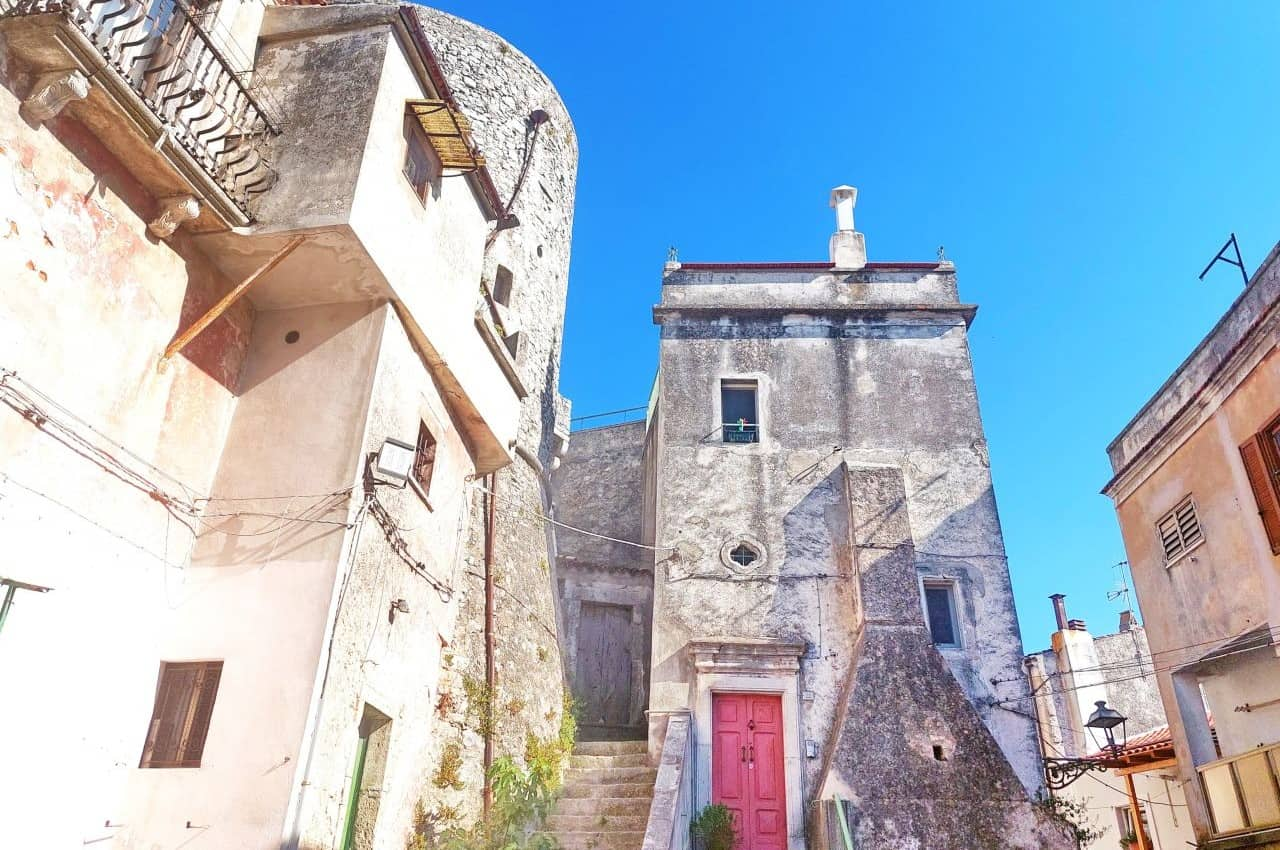
Part of the castle converted into a residential house, with the interesting chimney, Via Michele Cilenti
📍 What to see in Vico del Gargano
Our tour started from the Piazza Francesco, and we followed Via V. de Gagno and Corso Umberto streets.
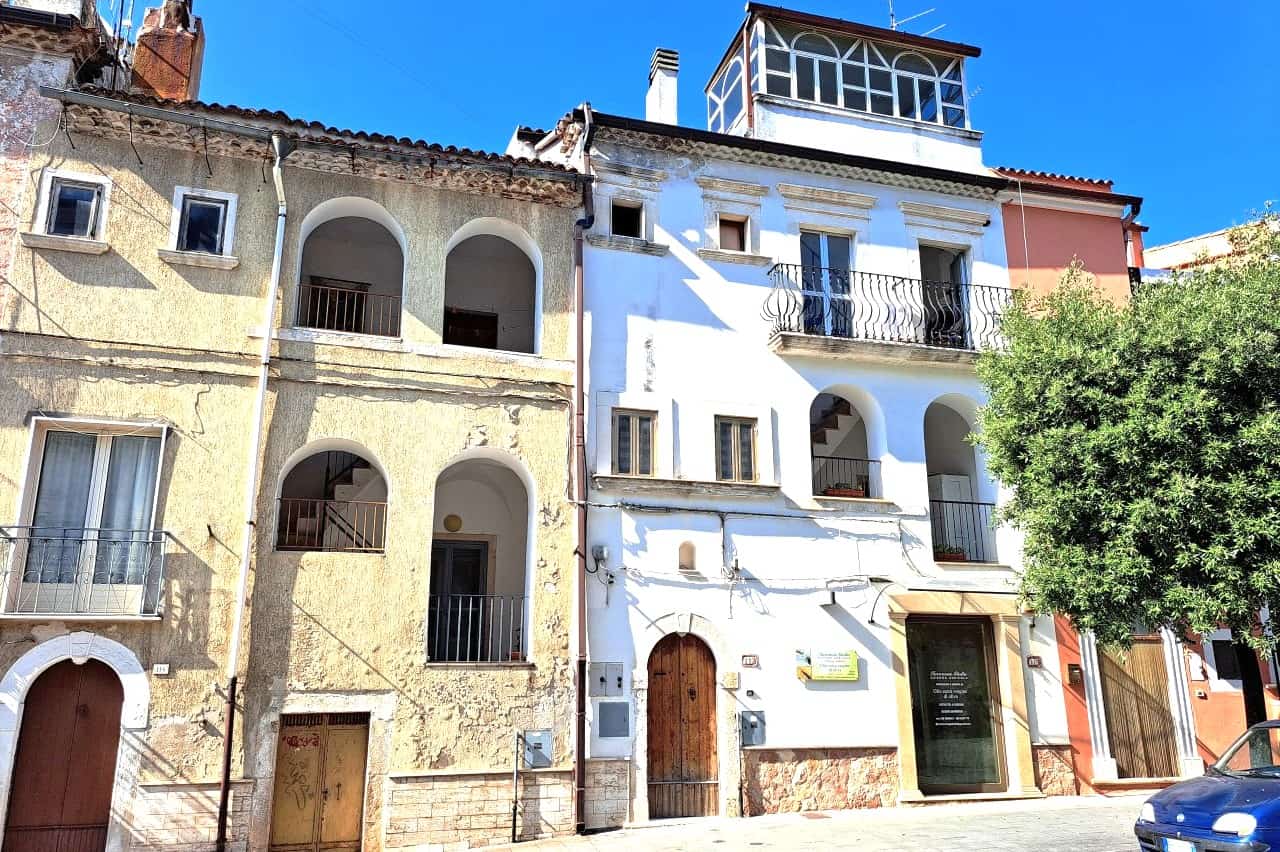
Vico del Gargano, Corso Re Umberto
Walking along, you can see the small Church of Our Lady of Mercy (Chiesa della Misericordia) from 1626, and the Church of Purgatory (Chiesa del Purgatorio) from 1677.
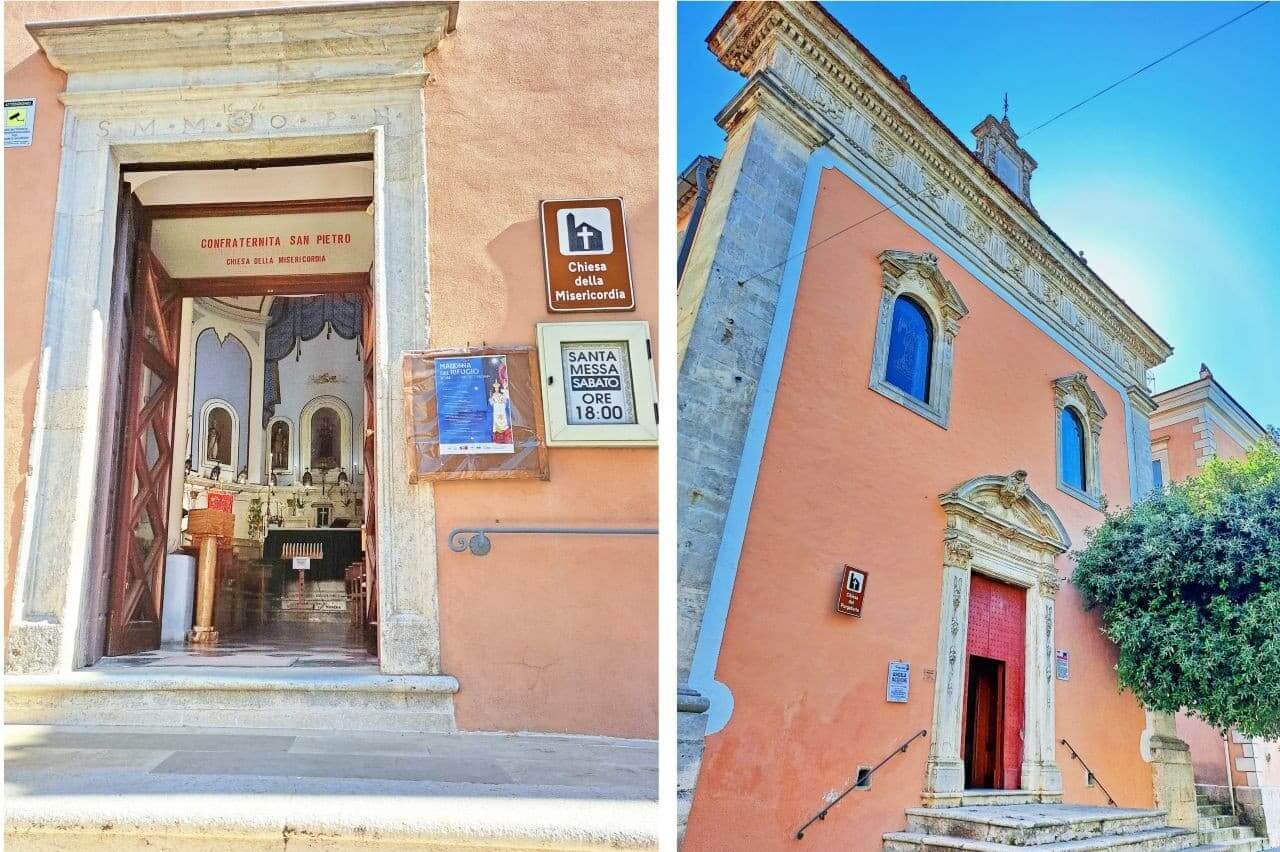
The Chiesa della Misericordia (left) and Chiesa del Purgatorio (right)
Going further, we came to the main square, Piazza San Domenico, where you can see the church, Chiesa di San Pietro e Paolo and the Town Hall. And, a few steps away, there is the historical centre of Vico del Gargano.
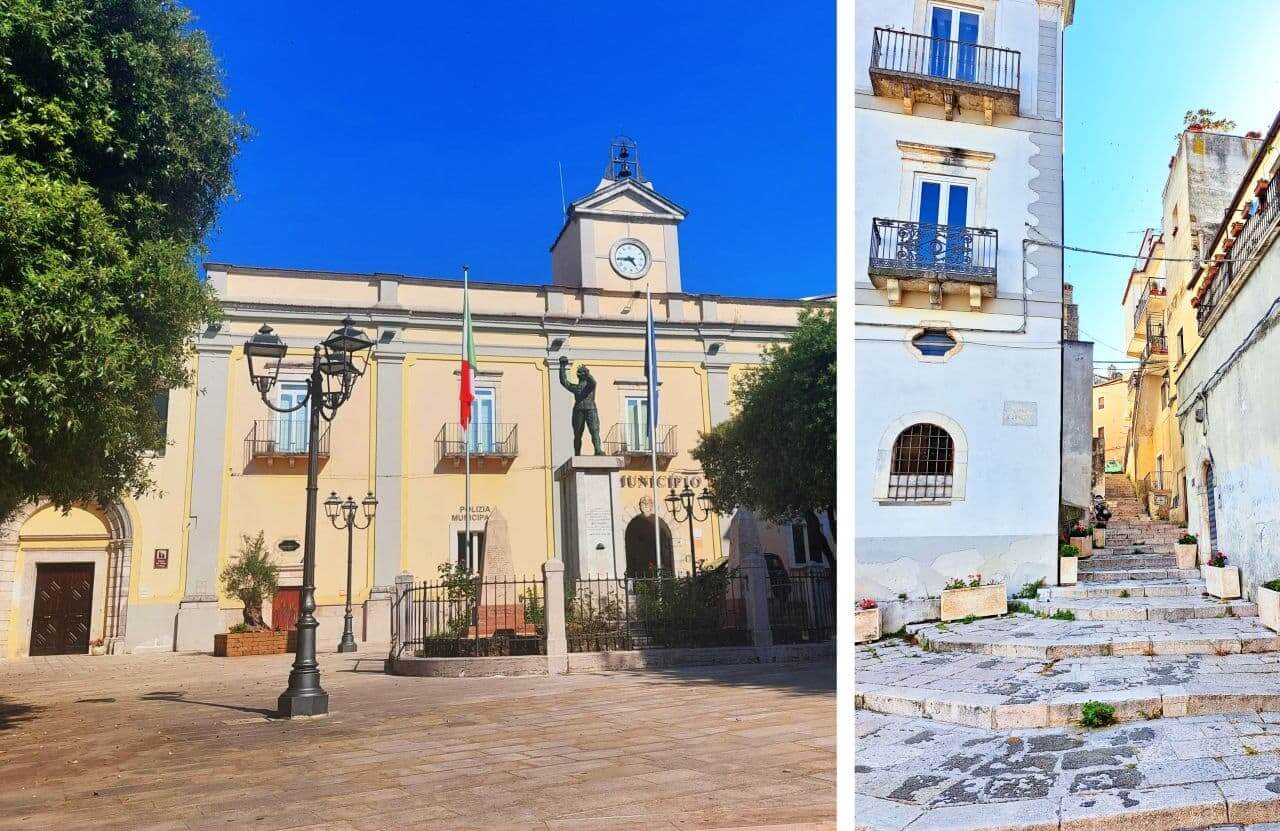
Chiesa di San Pietro e Paolo and City Hall, Piazza San Domenico
The Old Town (Centro Storico)
Centro Storico is a labyrinth of narrow cobbled alleys, stone houses, arches, and tiny passageways.
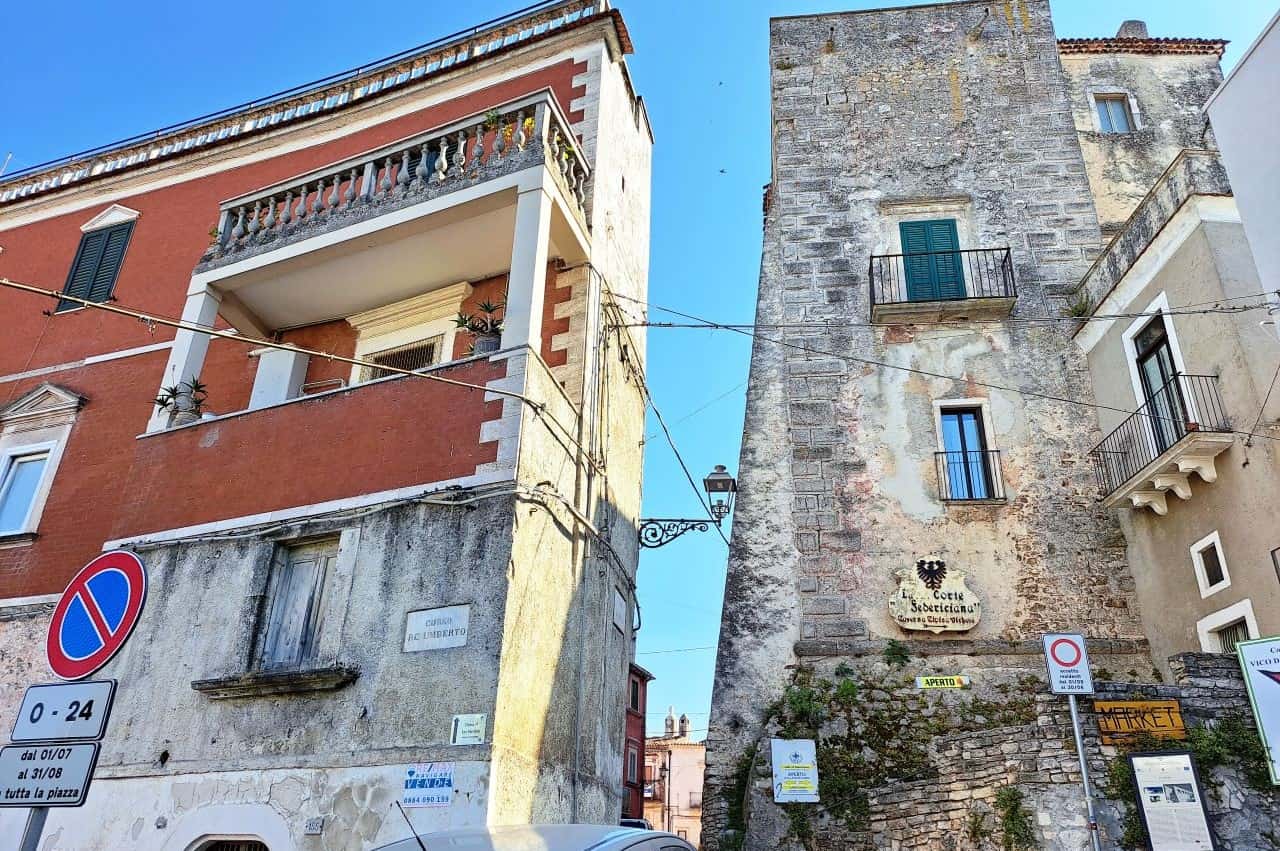
Corso Re Umberto and the old wall
The historical Old Town consists of three connected Rioni (neighbourhoods): Cività, Terra, and Casale.
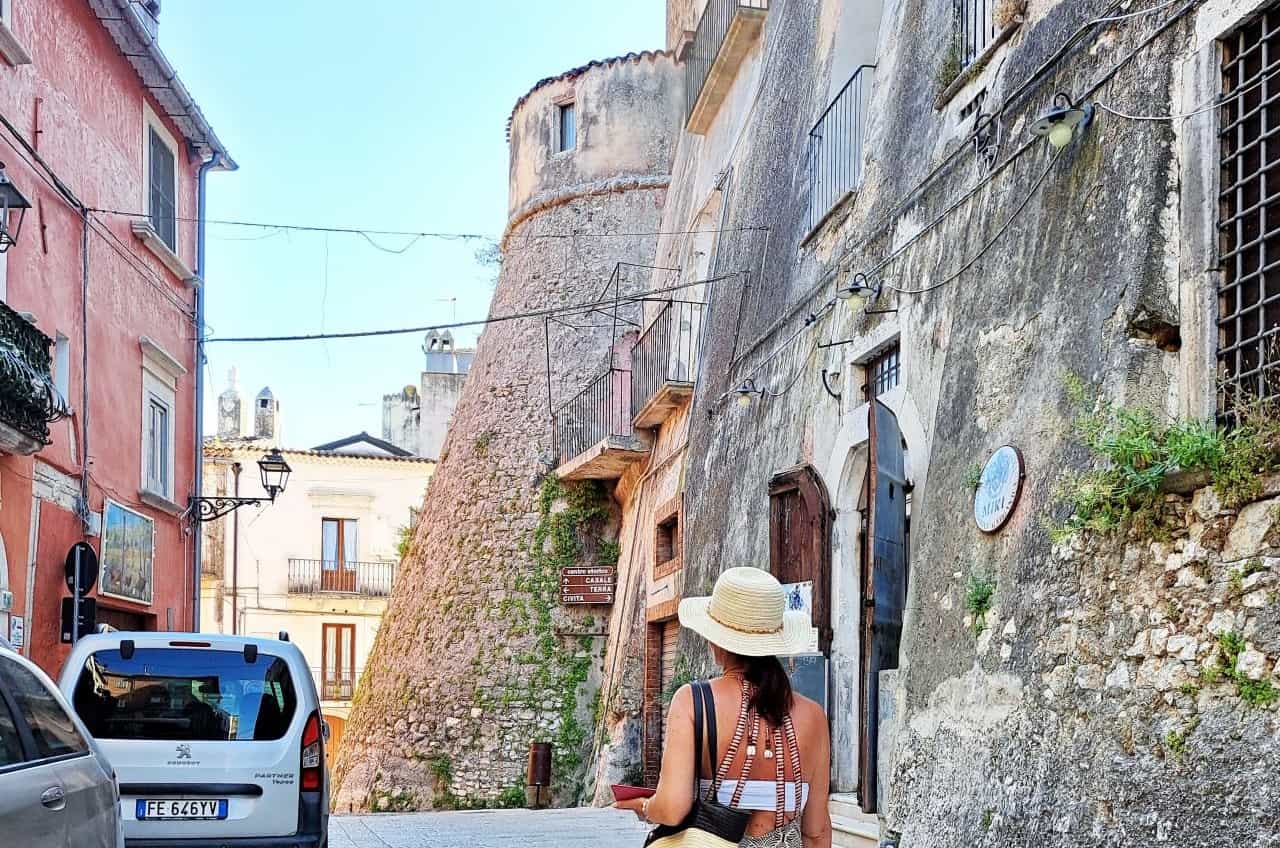
Via Castello
Rione Cività is considered the oldest and central historic district, located around the Castle Normanno.
In the 16th century, the village expanded, and the new Rione Terra neighbourhood was founded.
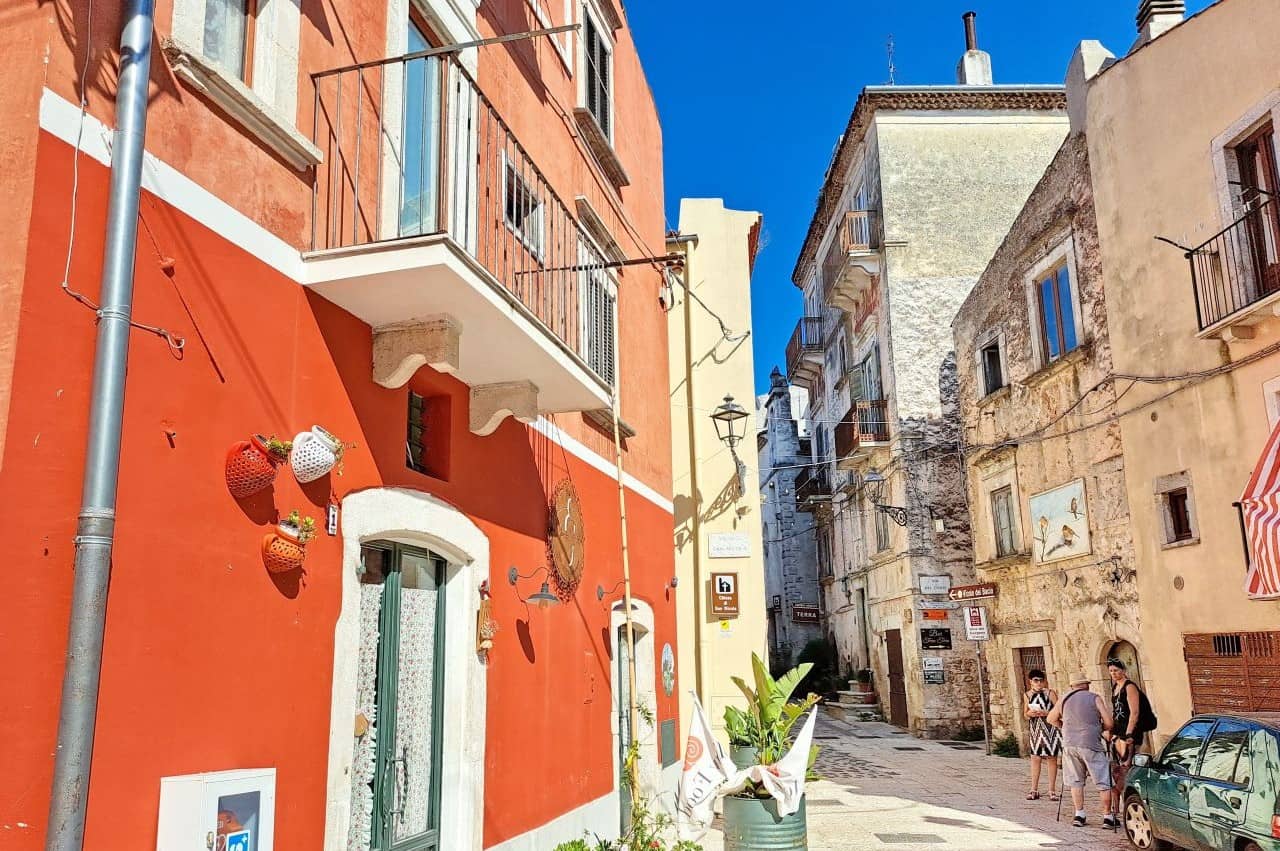
Vico del Gargano, colourful house in the Rione Terra
Rione Casale was developed between the late 16th and early 17th centuries, around the walls and surrounding the Cività and Terra.
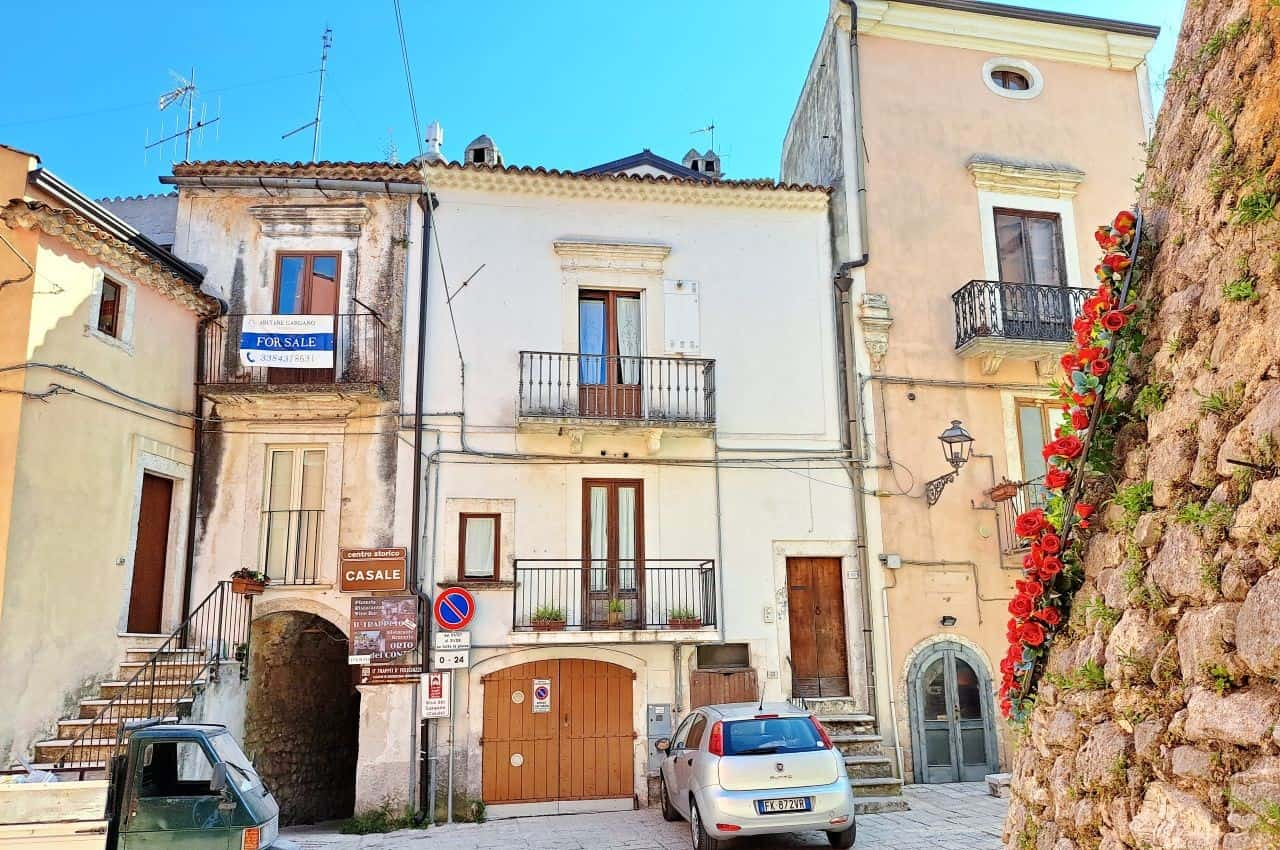
Via Castello, Rione Casale
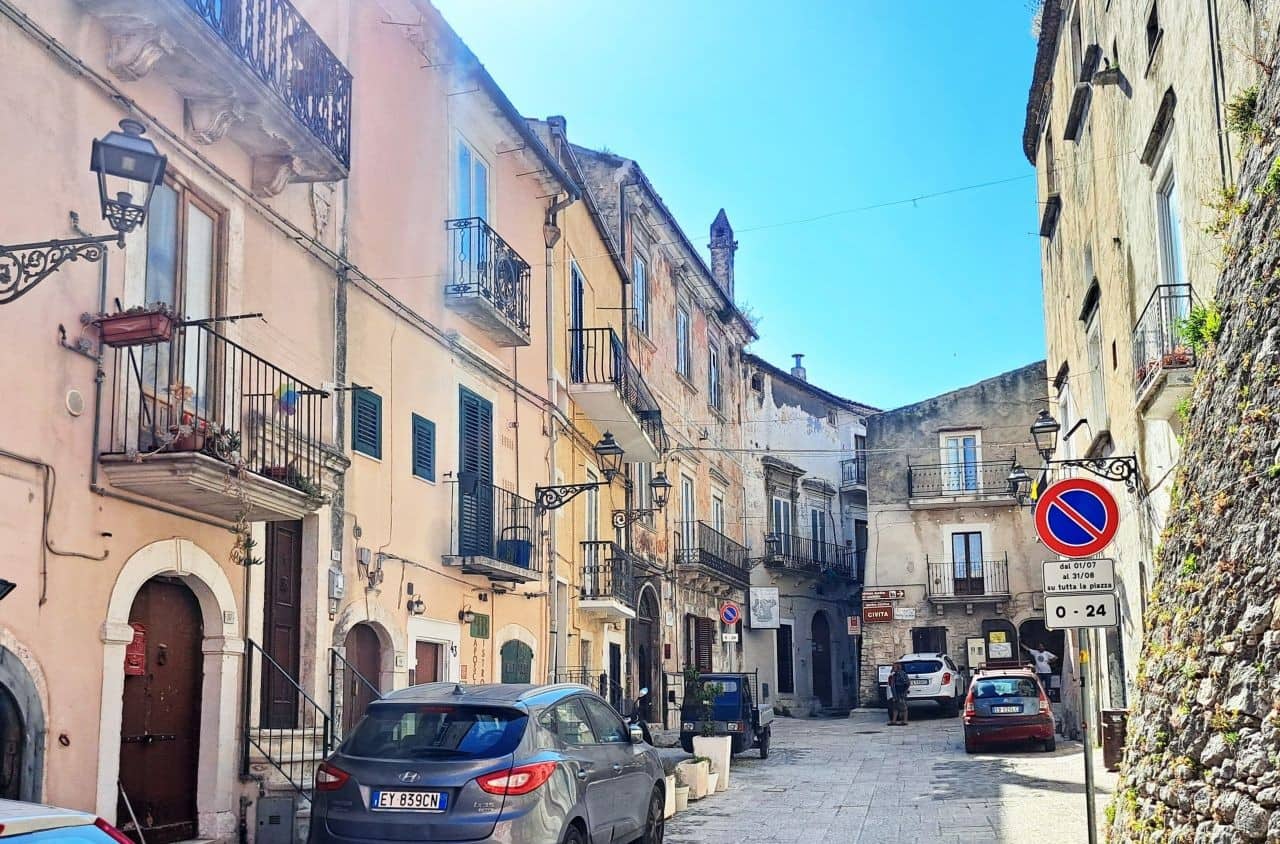
Houses in the Rione Cività
🏰 Rione Cività and the Norman-Swabian-Aragonese Castle
The Castle Normanno was built by the Normans in 1167, in a quadrangular shape. It was enlarged by Frederick II in 1240, while Teodisco de Cuneo, the master of crossbowmen and man-at-arms, built a boundary wall with about twenty circular and quadrangular towers in 1292. Also, the Aragons made some modifications.
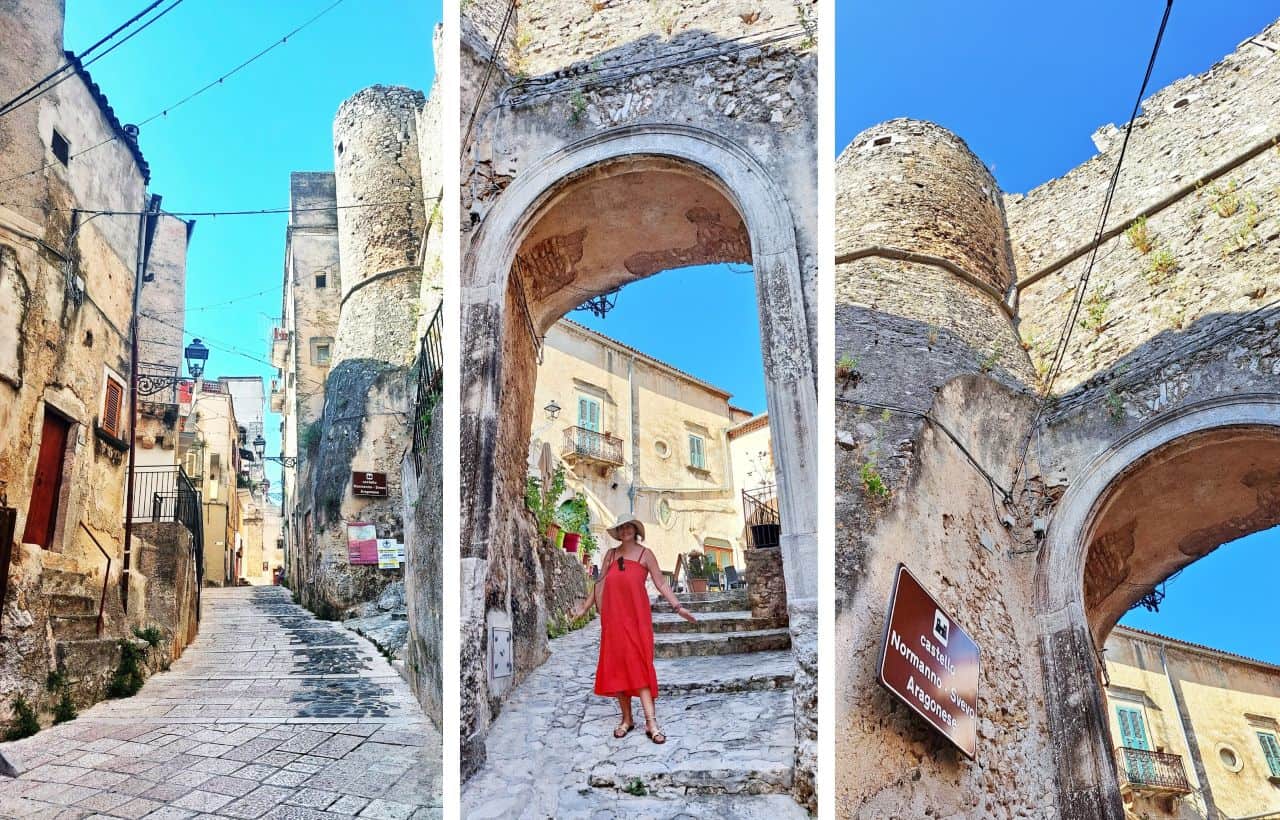
Normanno Castello
The Castle dominates the old town, and from its top, you can enjoy a panoramic view of the olive and citrus trees, the forest, and the sea.
Today, the castle and its walls are incorporated into the residential houses. In the castle courtyard, there is also a restaurant, Osteria Da Miki Il Federiciano, but it was closed during our visit (opening time: 12:30–2:30 PM, and from 8–11 PM)
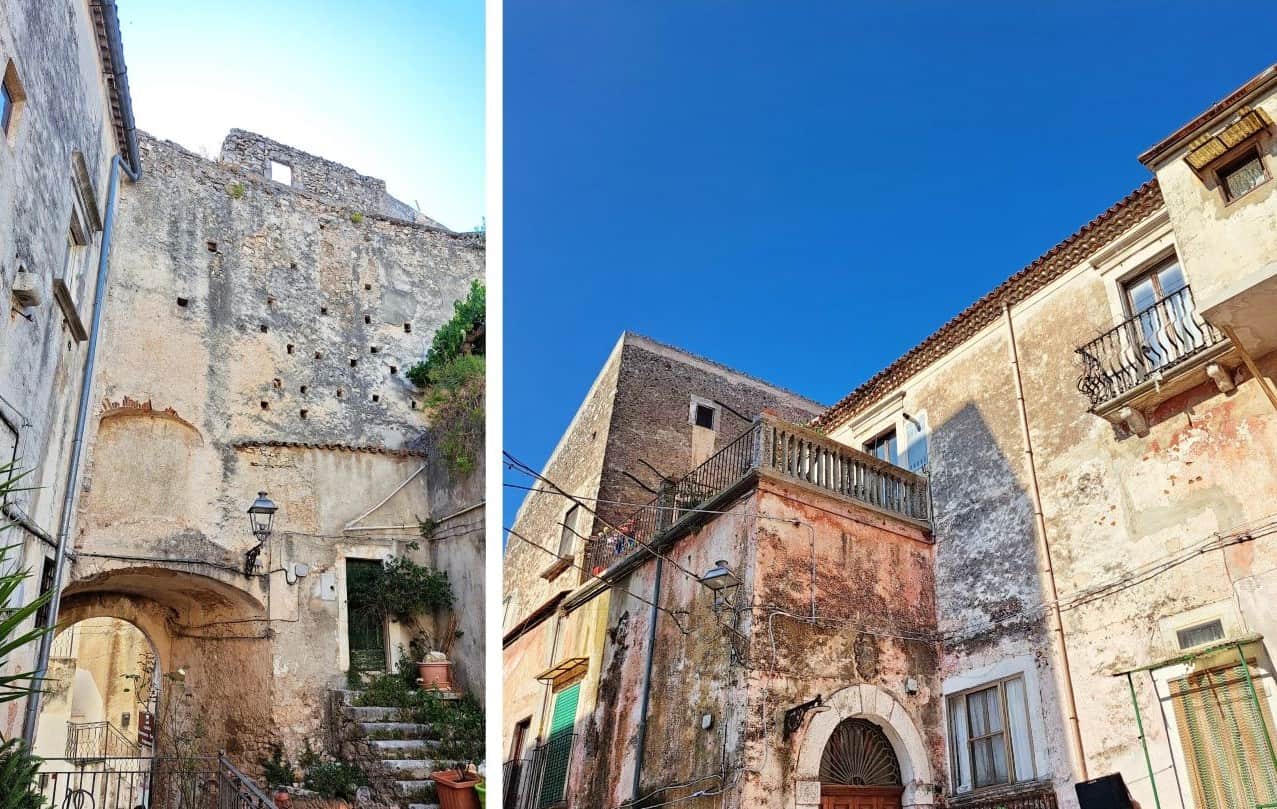
Courtyard of the Normanno Castello
The Church of Saint Mary of the Assumption (Chiesa Matrice)
Close to the castle, there is the church Chiesa Matrice, built in the 17th century. It has a simple facade, a quadrangular bell tower, and a red cupola.
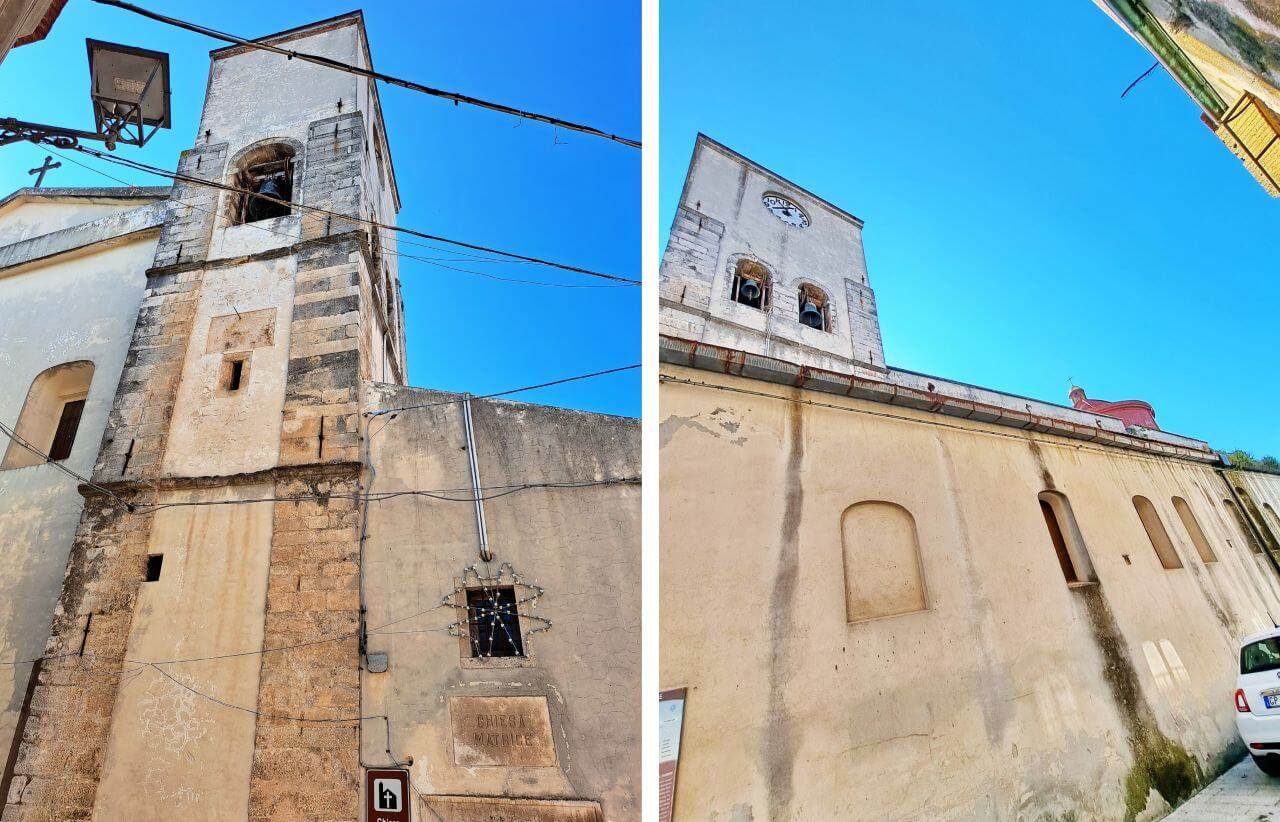
Facade of the Chiesa Matrice
Inside the church, there is a stone portal dated 1675, and a central nave with eleven altars. In the middle of the 18th century, it became the Collegiate Church. Chiesa Matrice is known for the relics of Saint Valentine, the city’s patron saint, which are carried in a traditional procession on the 14th February.
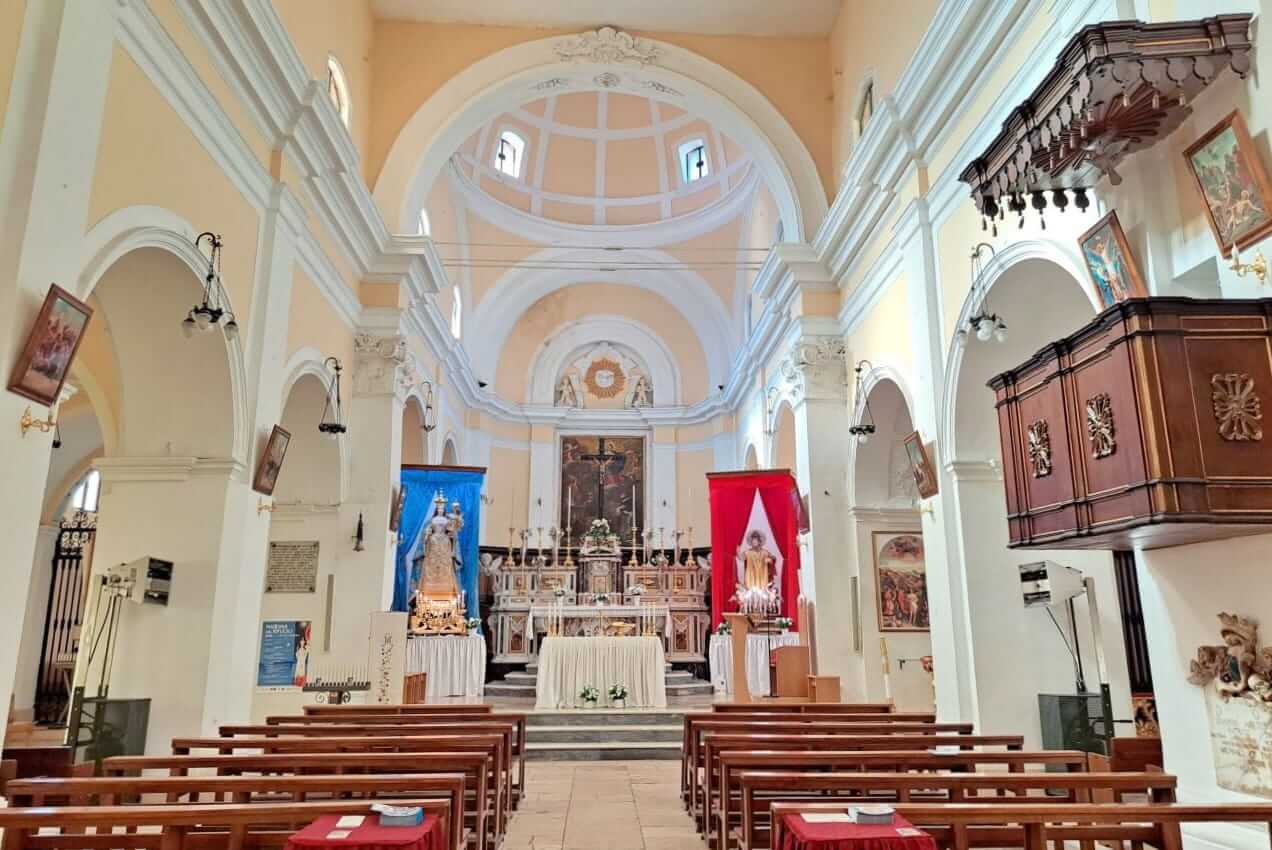
Inside the Chiesa Matrice
🏛️ Museum: Museo “Trappeto Maratea”
At the foot of the Castello Normano, you can visit Museo “Trappeto Maratea”. It is a civic museum dedicated to the traditional agricultural systems of the Gargano.
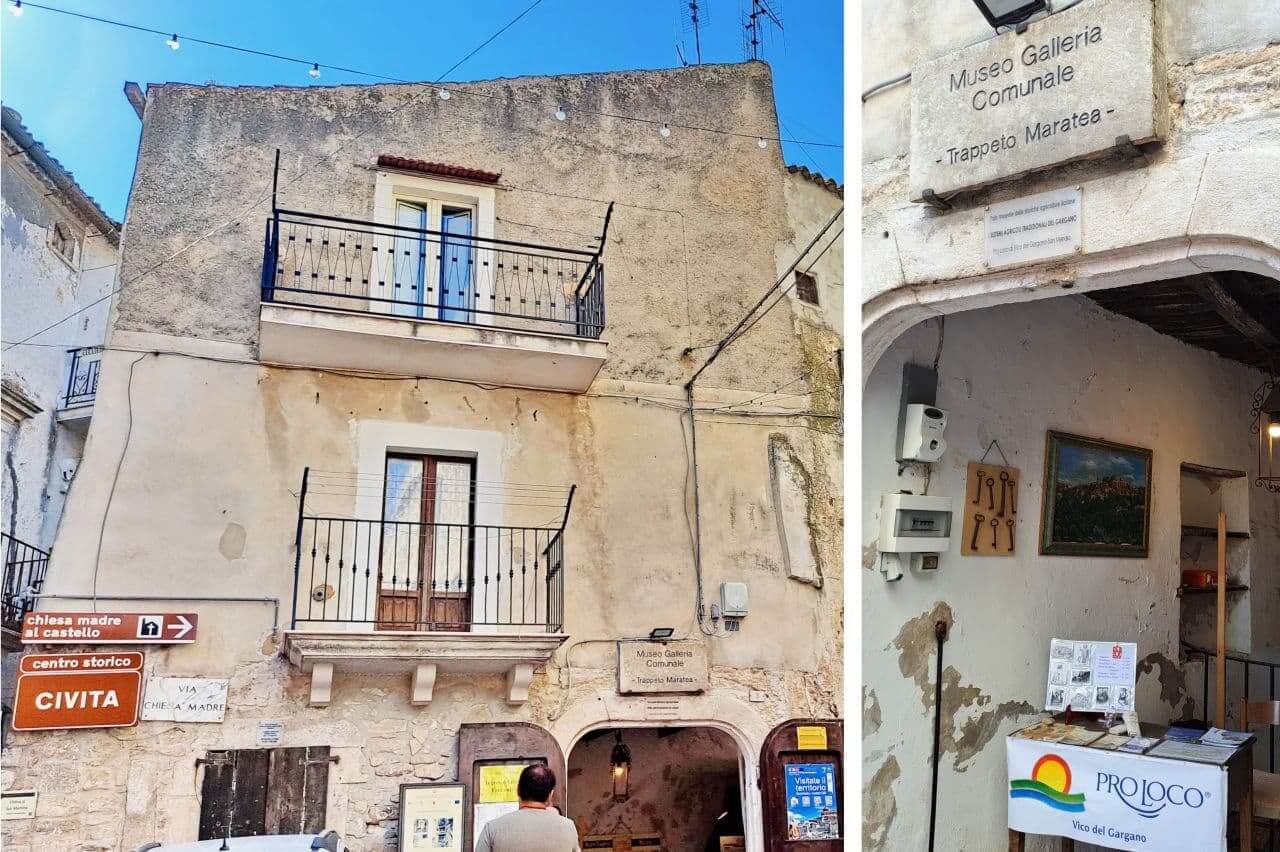
Vico del Gargano, entrance to the Museo Trappeto Maratea
For centuries, Vico del Gargano was famous for its olives and citrus fruits, thanks to its microclimate. Actually, there are numerous trappeti, the mills with olive presses in Puglia. According to documents, the oldest one dates back to 1318, located in Vico del Gargano, which is today the museum “Trappeto Maratea”.
By the way, trappeti were always built below street level because they needed a specific condition: a warm room with a constant temperature of around 14 degrees.
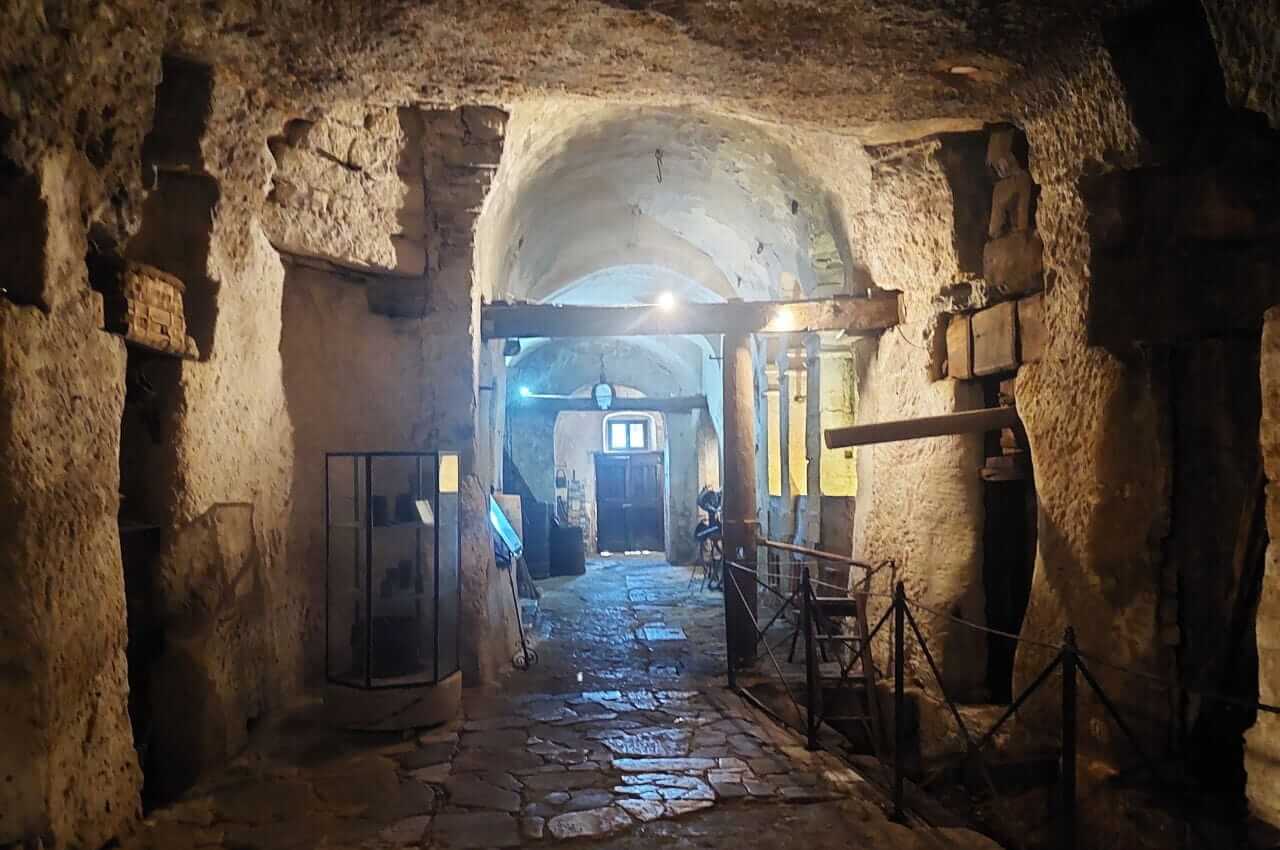
Inside the Museo Trappeto Maratea
So, the objects in the museum show various stages of olive oil production, such as milling, pressing and filtering. It was hard work, usually called “Blood trappets”, because of the huge energy of men and animals necessary for the process.
The production process
First, the large grinding wheel was turned by the donkeys, which broke the fruits. There were four large Genovese wooden presses, in four niches carved in rock. So the olives were reduced to a paste by the millstones. Then, this mixture was poured onto the superimposed ‘friscole’ to get total pressing of the olives. Oil and water came out, and they were collected in oak vats placed at the foot of the presses.
Usually, the separation process was slow because of the natural separation of water and the oil, collected by skilled hands. After the oil was separated by decantation, it was recovered and stored in stone cisterns.
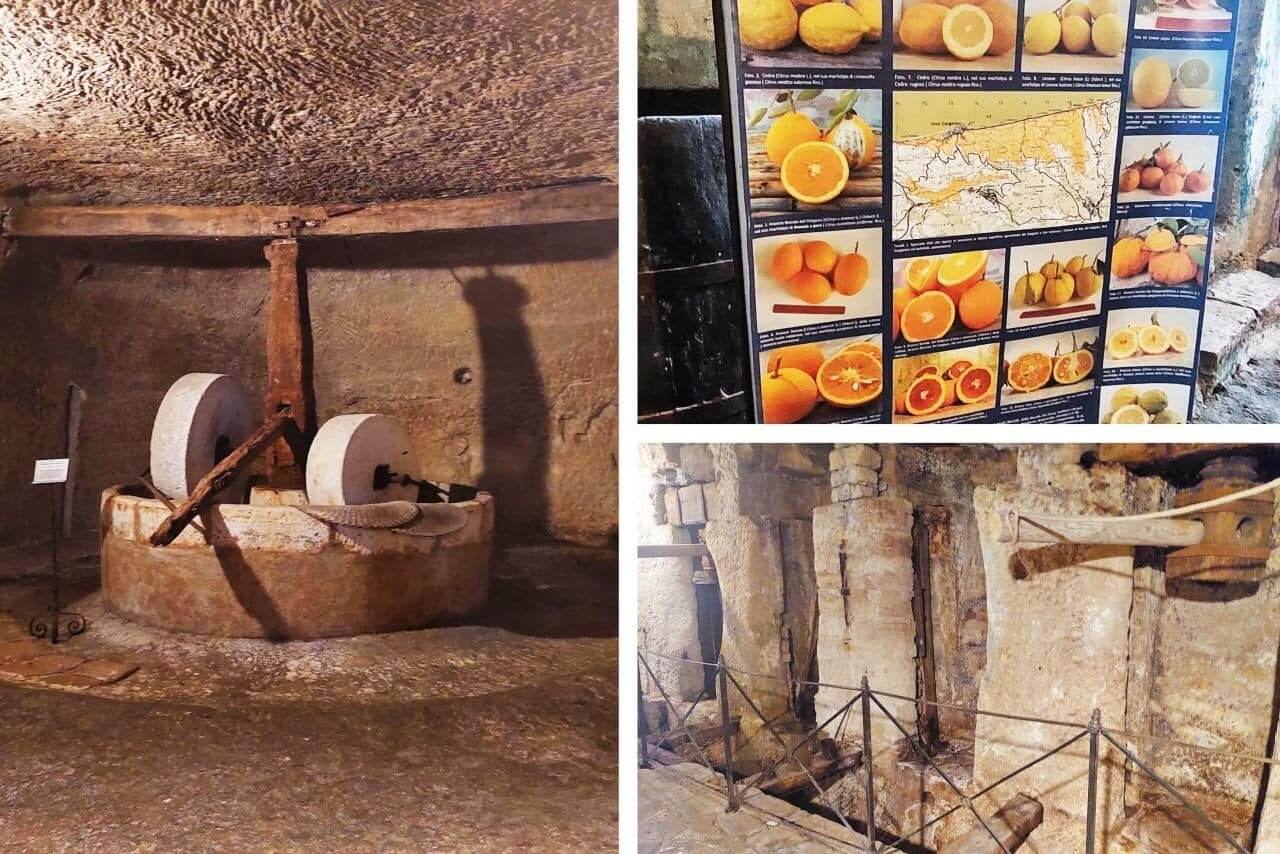
Inside the Museo Trappeto Maratea
The museum collection also includes various tools, hoes, sickles, and the specific equipment used in traditional agriculture systems for citrus fruits, pears, vines, olives, almonds and chestnuts.
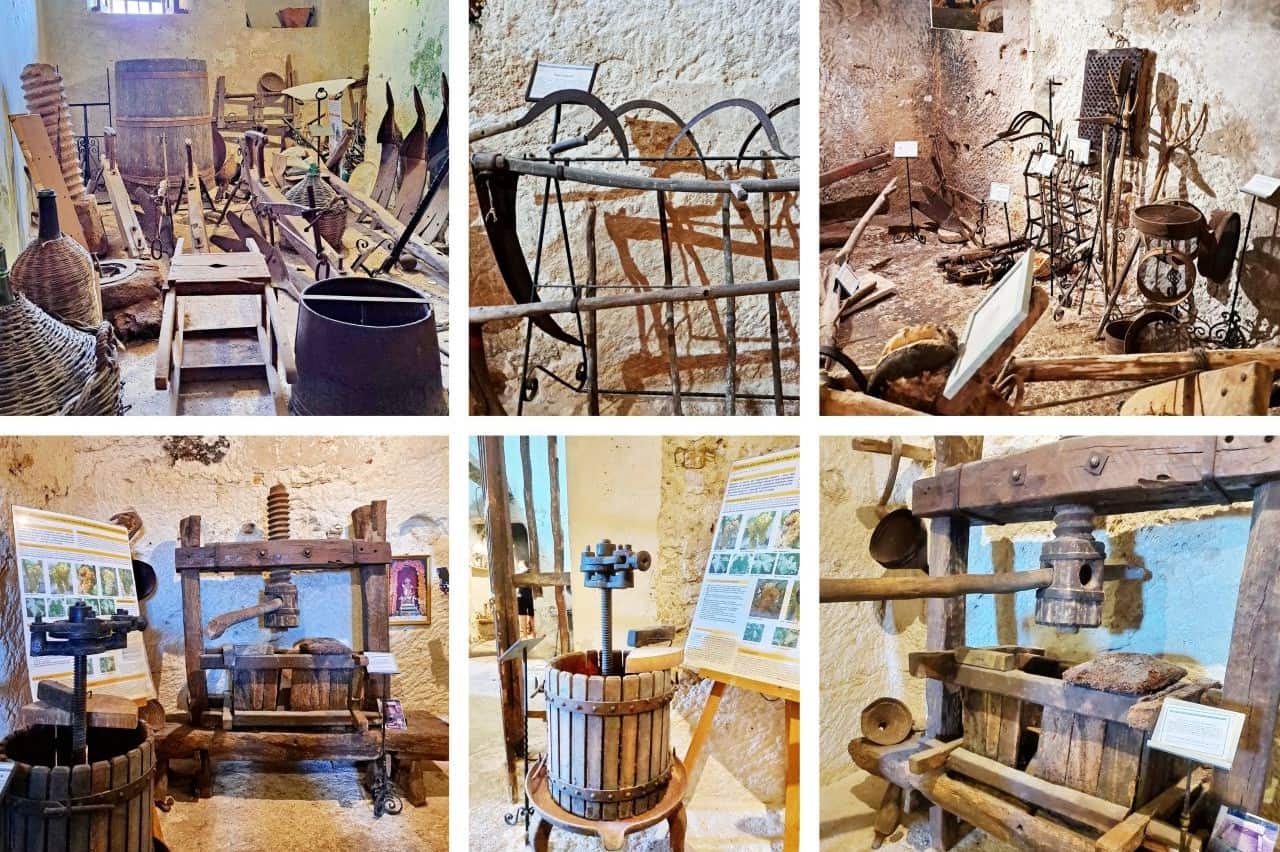
Various agricultural tools in Museo Trappeto Maratea
Despite the technological advances, the Maratea trappeto was used until the early 1950s.
The entrance is free, but you can leave a symbolic donation.
Rione Terra (Borgo Vecchio)
Wandering through the Rione Terra was fantastic. It is a medieval maze of small, cobbled streets, hidden courtyards, and stone arches that supported houses.
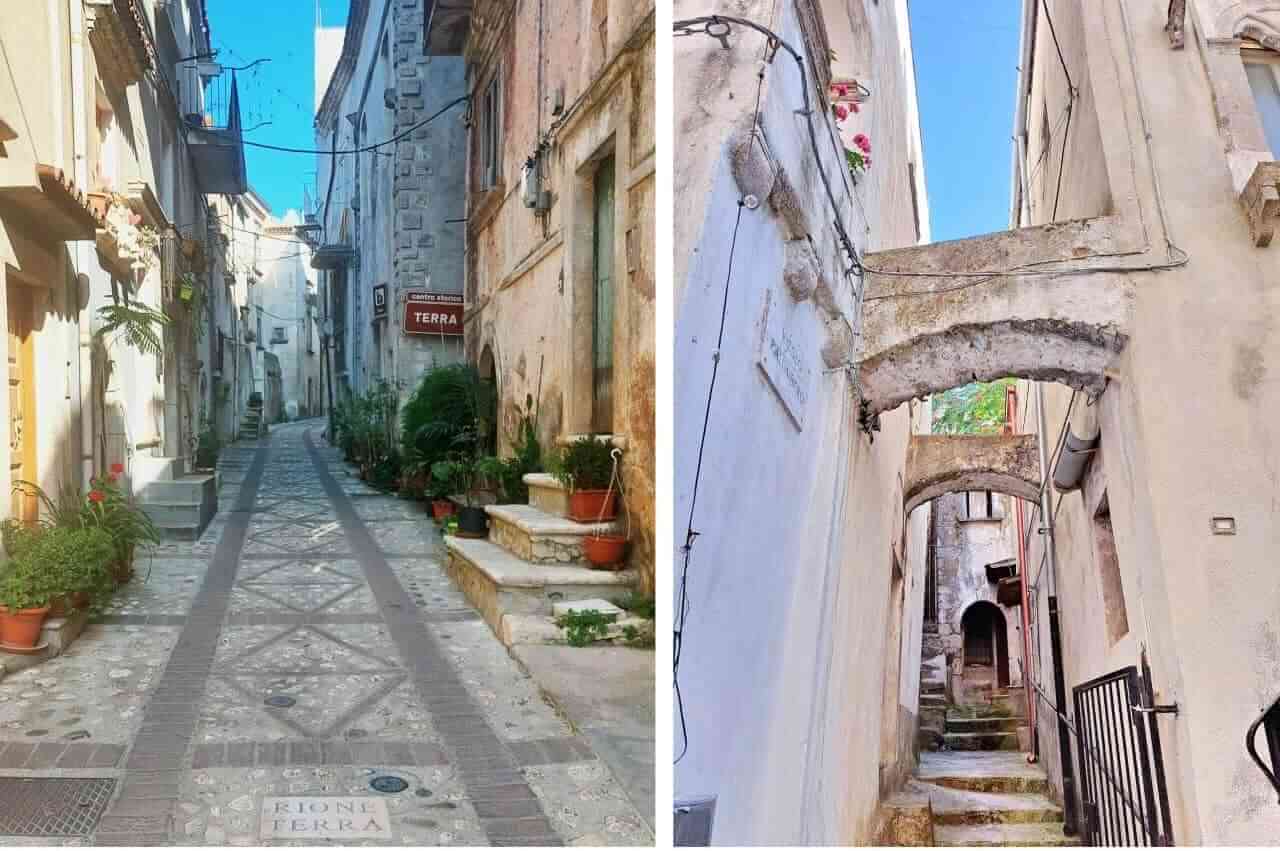
Vico del Gargano, Rione Terra
The stone houses have small terraces decorated with flowers, external carved stairways, and almost artistic chimneys that decorate their walls.
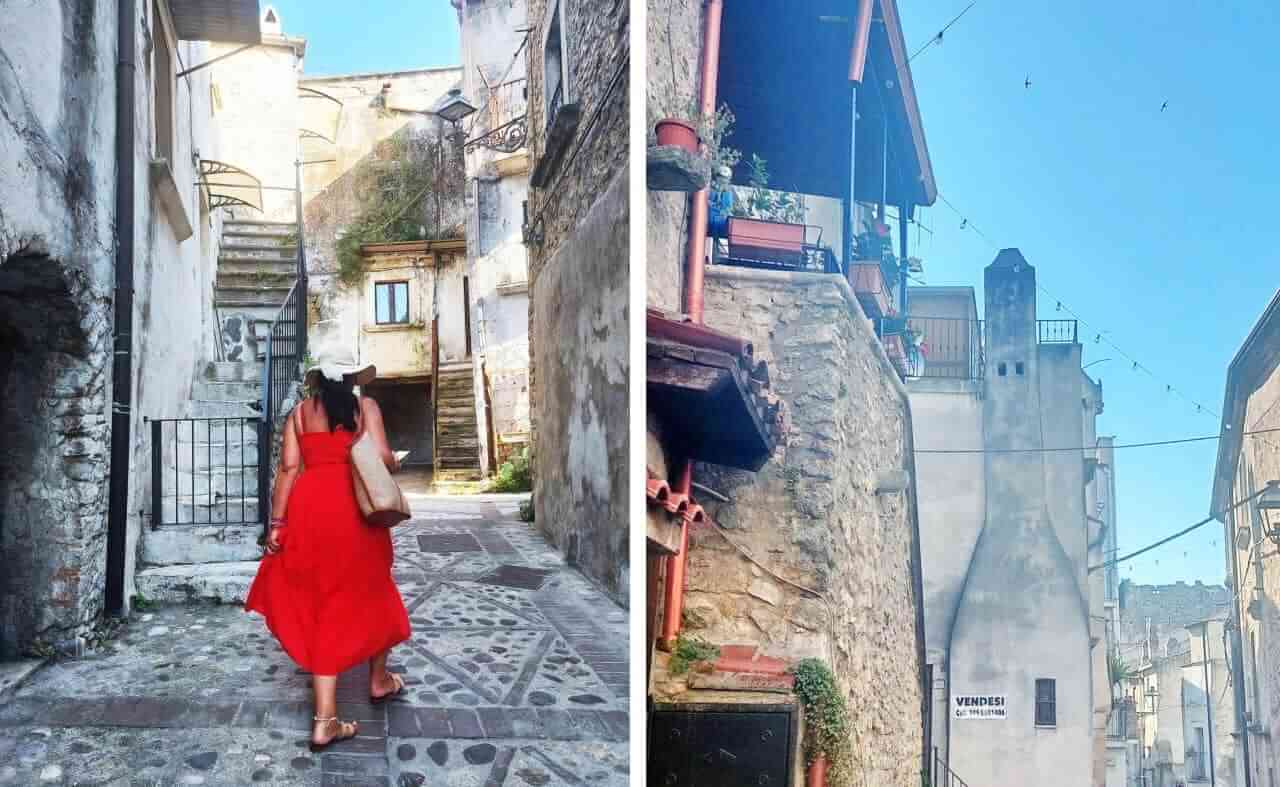
Vico del Gargano, Rione Terra
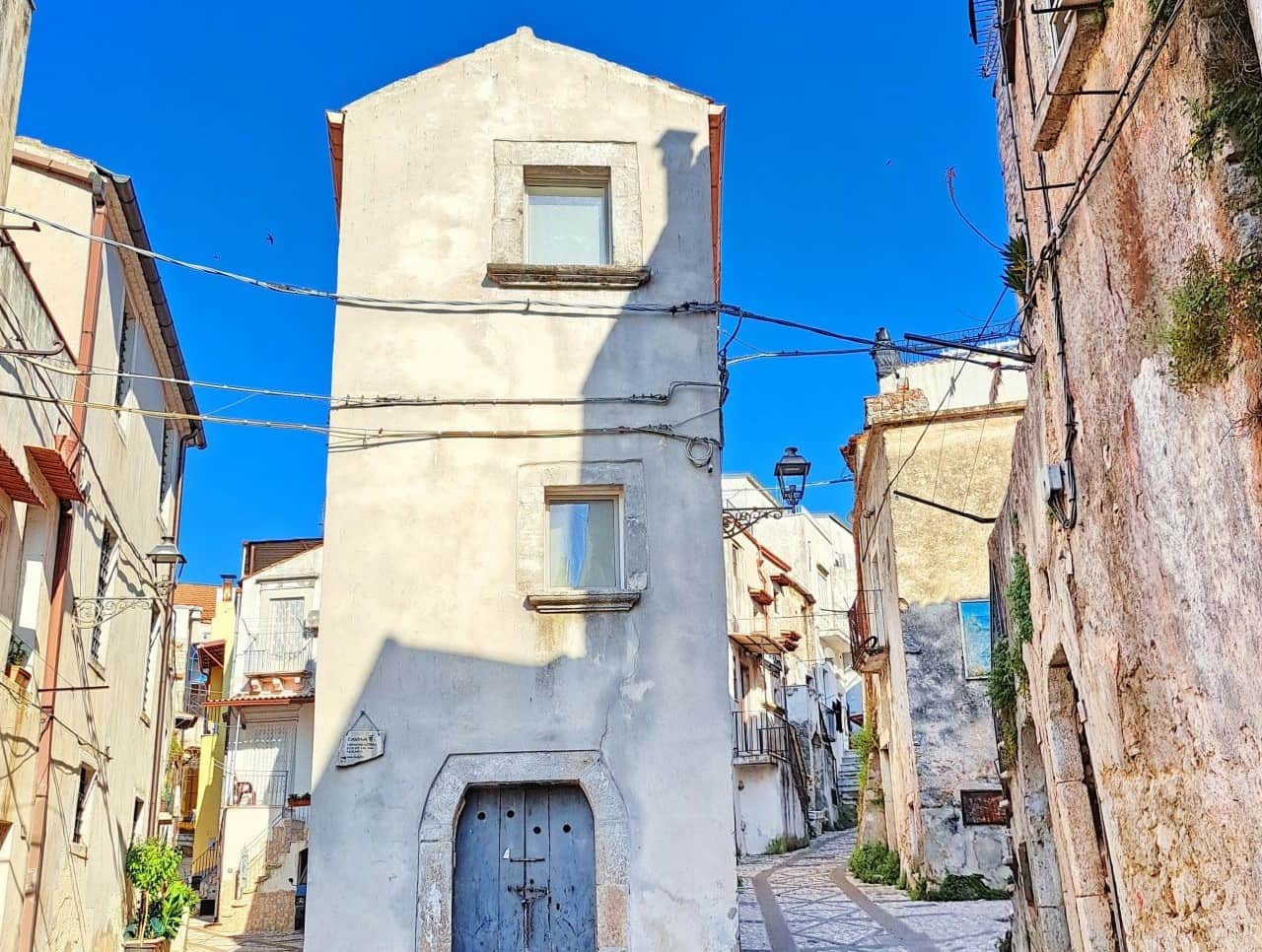
The house between two alleys
Almost everywhere, you can see the remains of old walls and towers incorporated into the residential houses. Interesting details are also the paintings on the house’s walls.
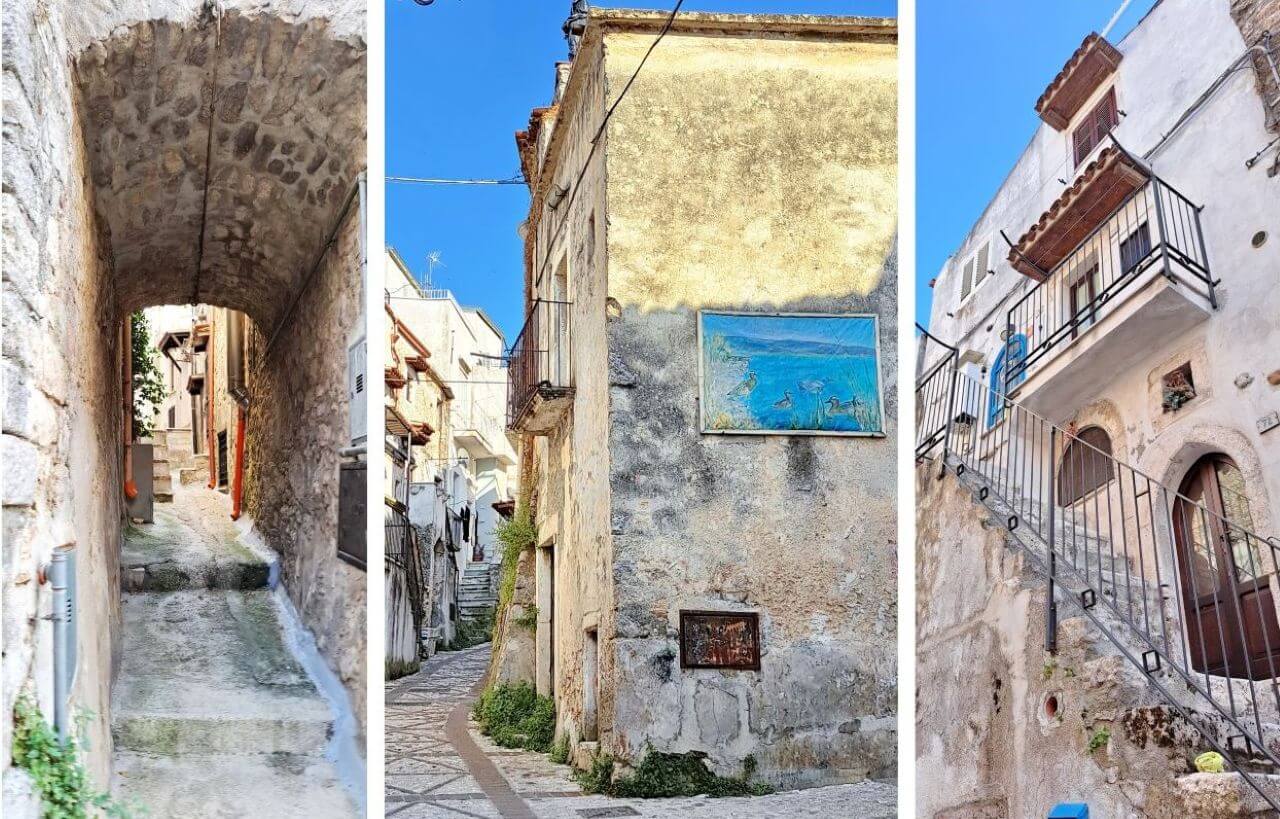
Vico del Gargano, passageway and houses in the Rione Terra
There you can find the Church Chiesa di San Giuseppe, built in the 17th century, and the 13th-century Church of San Marco.
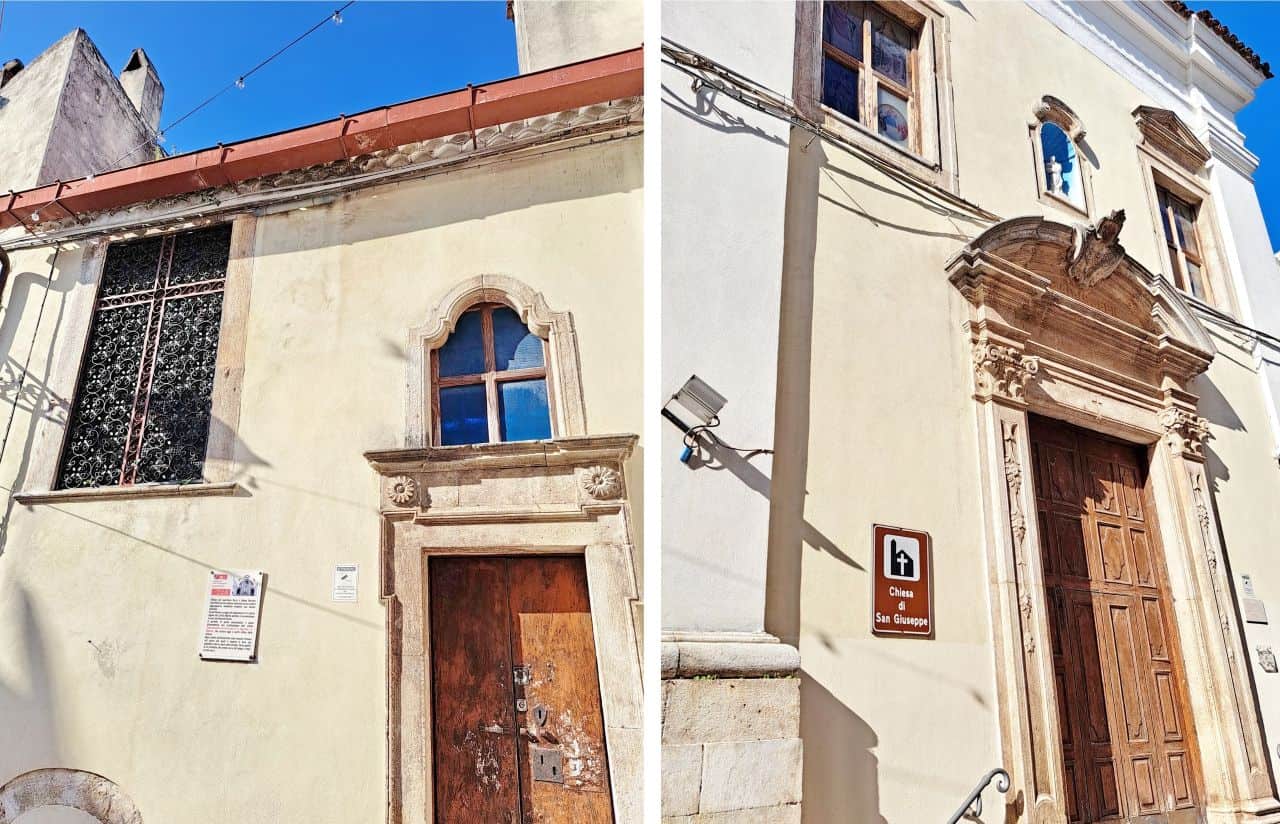
Chiesa di San Giuseppe
By the way, we visited Vico del Gargano in the afternoon, during the siesta. The streets were almost empty, the shops were closed, and we felt as if we had wandered into an old Italian movie… We took a short break in La Vecchia Cantina (Via Ricciotti 5), a bar with red chairs and wooden benches, with a view of the houses situated in the tower.
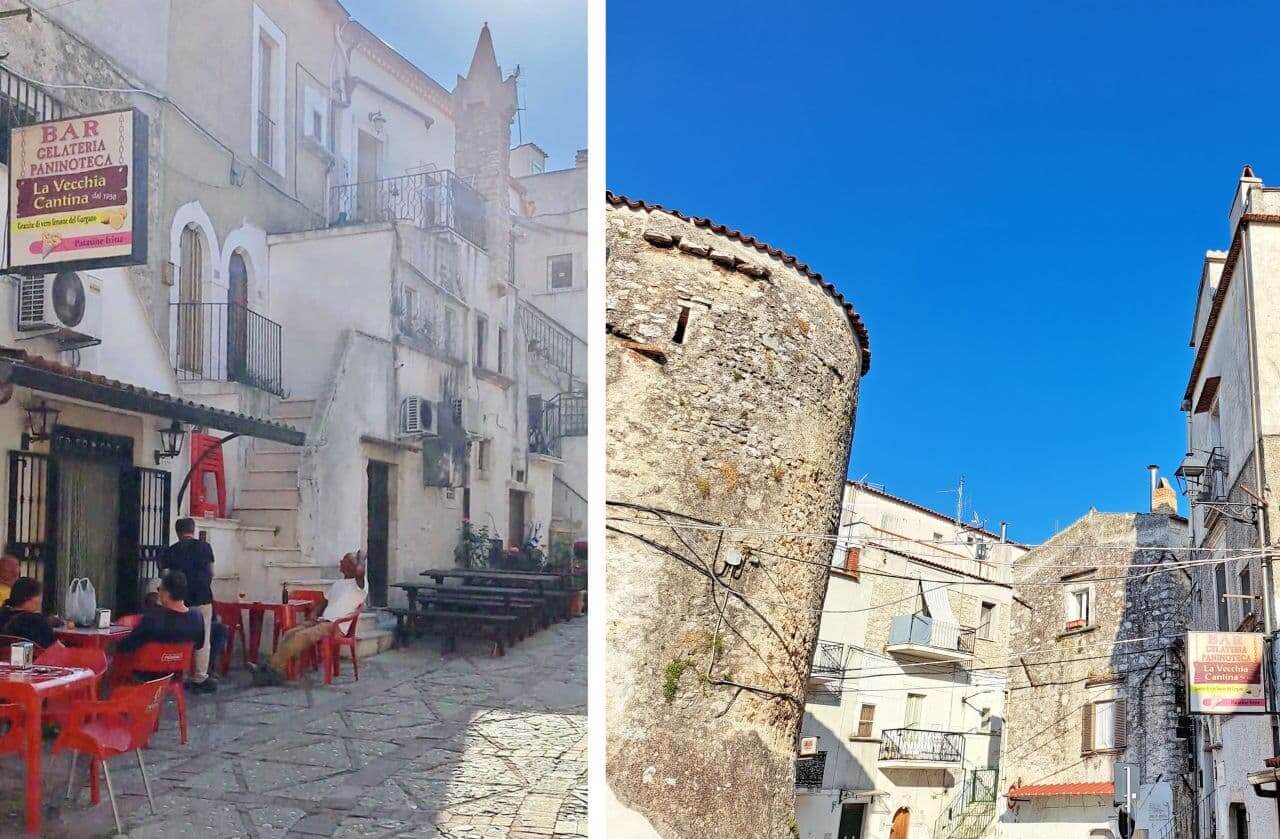
Bar La Vecchia Cantina
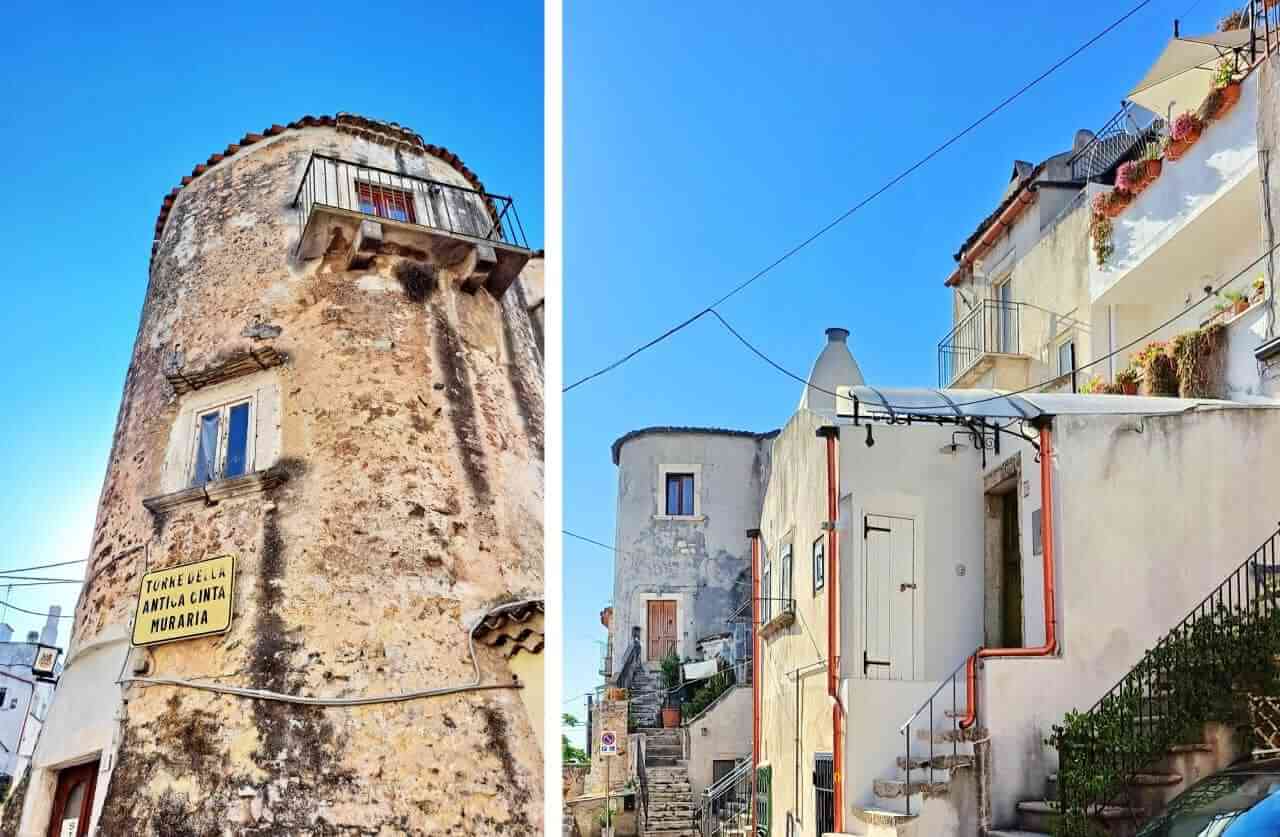
Residential houses in castle towers
Following the street Via Salita della Bella, we continue our walk among the houses to the new architectural attraction…
Palazzo Della Bella
The impressive palace, Il Palazzo della Bella, was built between 1908 and 1929 by Ignazio Della Bella from a noble Florentine family. The design of the palace was inspired by the famous Palazzo Vecchio, located in Florence.
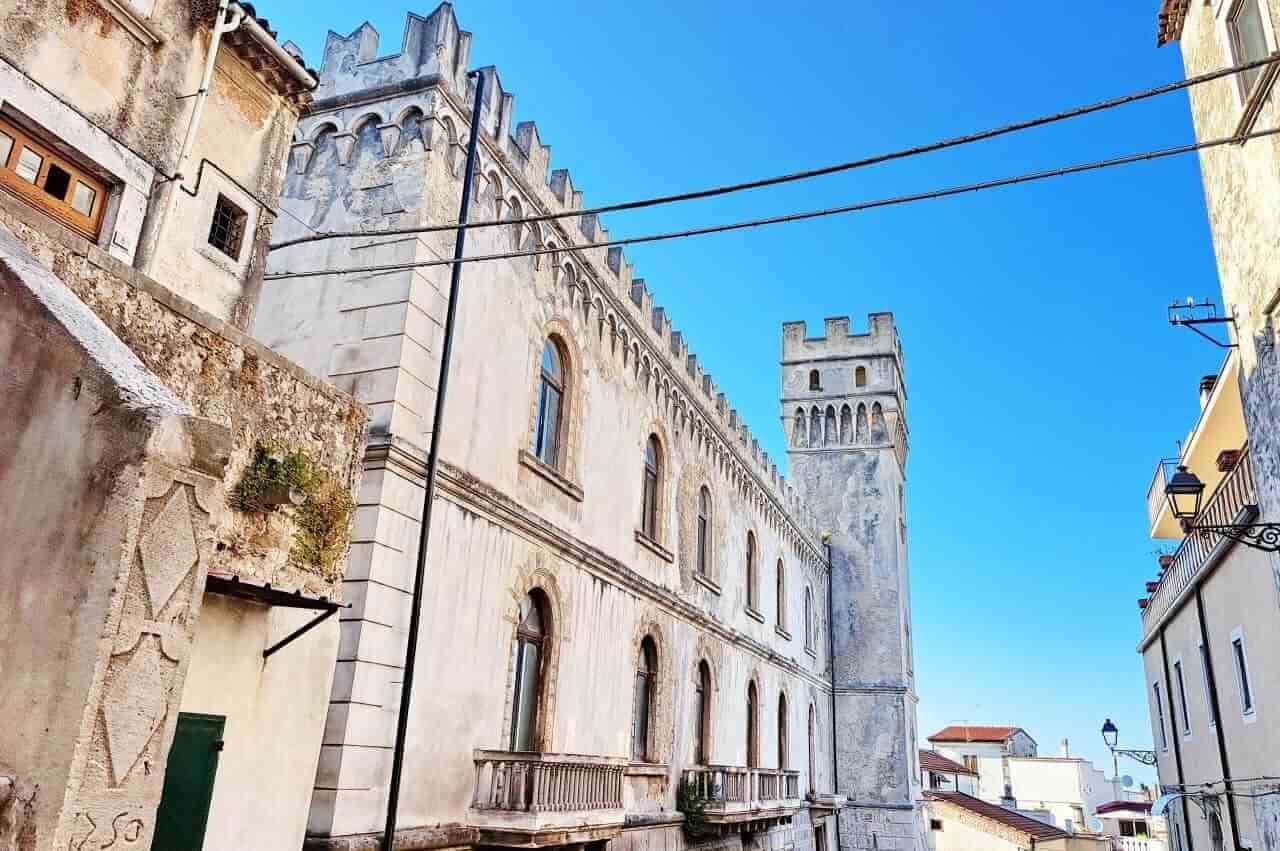
Palazzo Della Bella
The palace has two floors, two smaller circular towers and the majestic tower with the family coats of arms that dominates the building. We tried to come inside, but it is not open to the public.
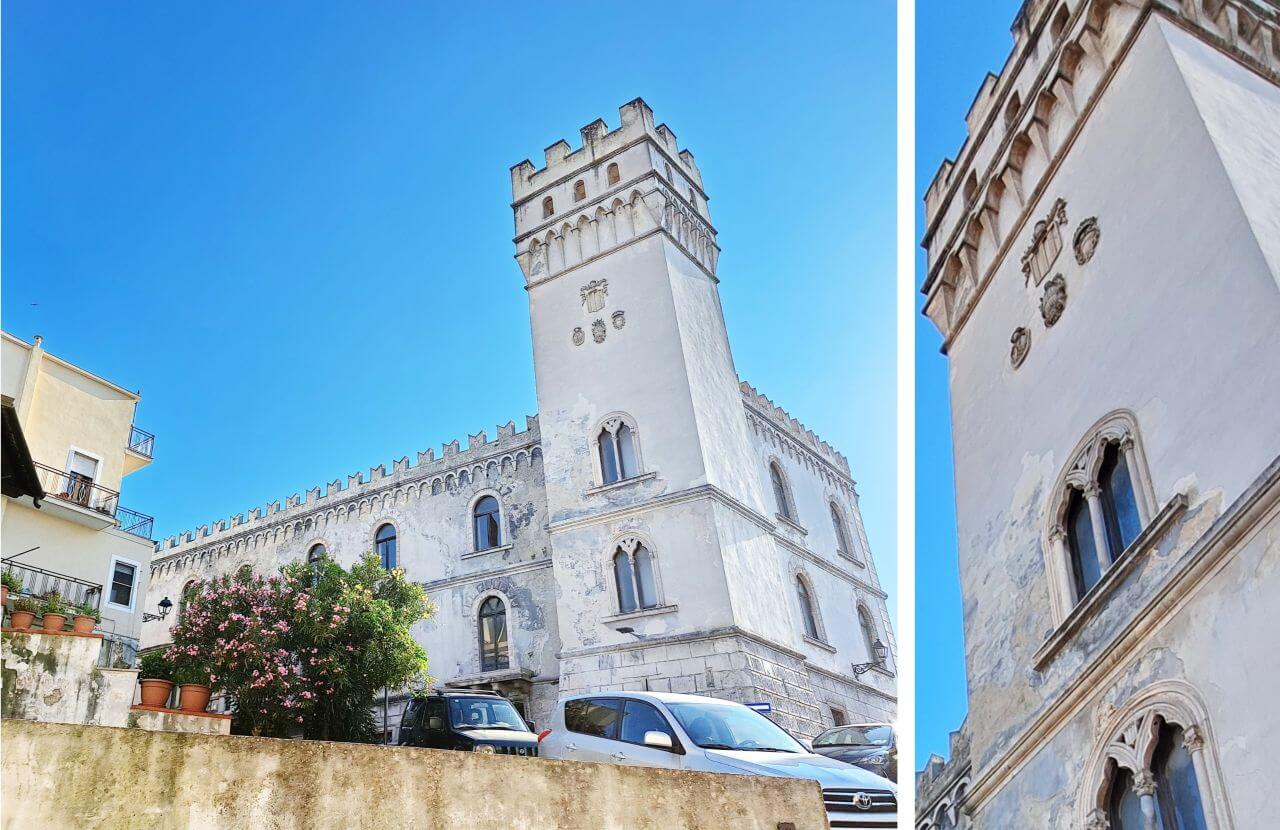
Tower of Palazzo della Bella
❤️ 🍊Vico del Gargano, the “Village of Love”
Well, Saint Valentine is worldwide celebrated on the 14th of February. He is known as the patron of love and lovers, but for the citizens of Vico del Gargano, he is much more. Actually, in 1618, Saint Valentine was acclaimed Patron Saint of the city and its orange gardens.
For centuries, Vico del Gargano was known for its delicious oranges and lemons. At the beginning of the 17th century, winters were cold with strong frosts. The people cried for protection so that the fruit trees’ crops would not freeze. They were looking for the Saint who is celebrated in the winter, and they found Saint Valentine. But, according to the legend, the Saint chose Vico del Gargano.
So, during a traditional procession on the 14th of February, a statue of Saint Valentine is richly decorated with oranges and laurel leaves. From the Chiesa Matrice, the statue parades through the streets of Vico del Gargano.
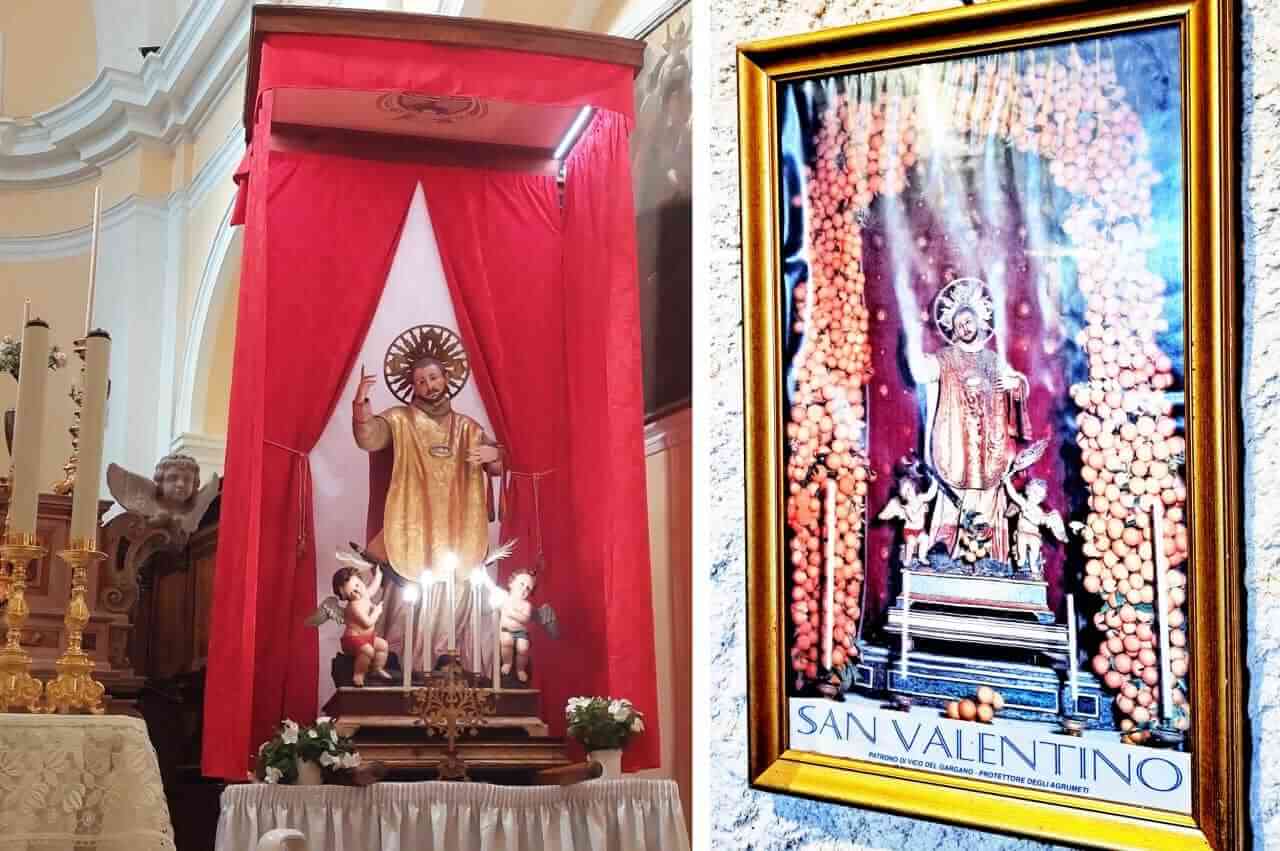
Statue of Saint Valentine in the Chiesa Matrice (left), and his statue adorned with oranges on the 14th February
🍊 Actually, the whole village of Vico del Gargano is decorated with oranges, laurel leaves, and red hearts! Houses, balconies, windows, shops, corridors, churches, everything is adorned with fragrant oranges, the symbol of prosperity.
In this ceremony, oranges and lemons are blessed and shared among locals and tourists. It is believed that eating blessed oranges and drinking orange juice ensures joy, love and happiness 😀❤️
In 2026, the festive program begins on Friday, the 13th of February and runs until the 15th of February.
❤️🥰 Vicolo dei Baci
The Village of Love (Il Paese dell’Amore) is also known for its Kissing Alley, or Vicolo dei Baci, located in the Rione Terra. Actually, it is a narrow alley only 50 cm wide, and less than 30 meters long!
It means that two people come into close contact in a passageway, which leads to a … kiss 🥰
According to tradition, couples who pass through it and kiss will have a lasting relationship, especially on Valentine’s Day.
And of course, Vico dei Baci became the popular spot for meetings and tourist photos.
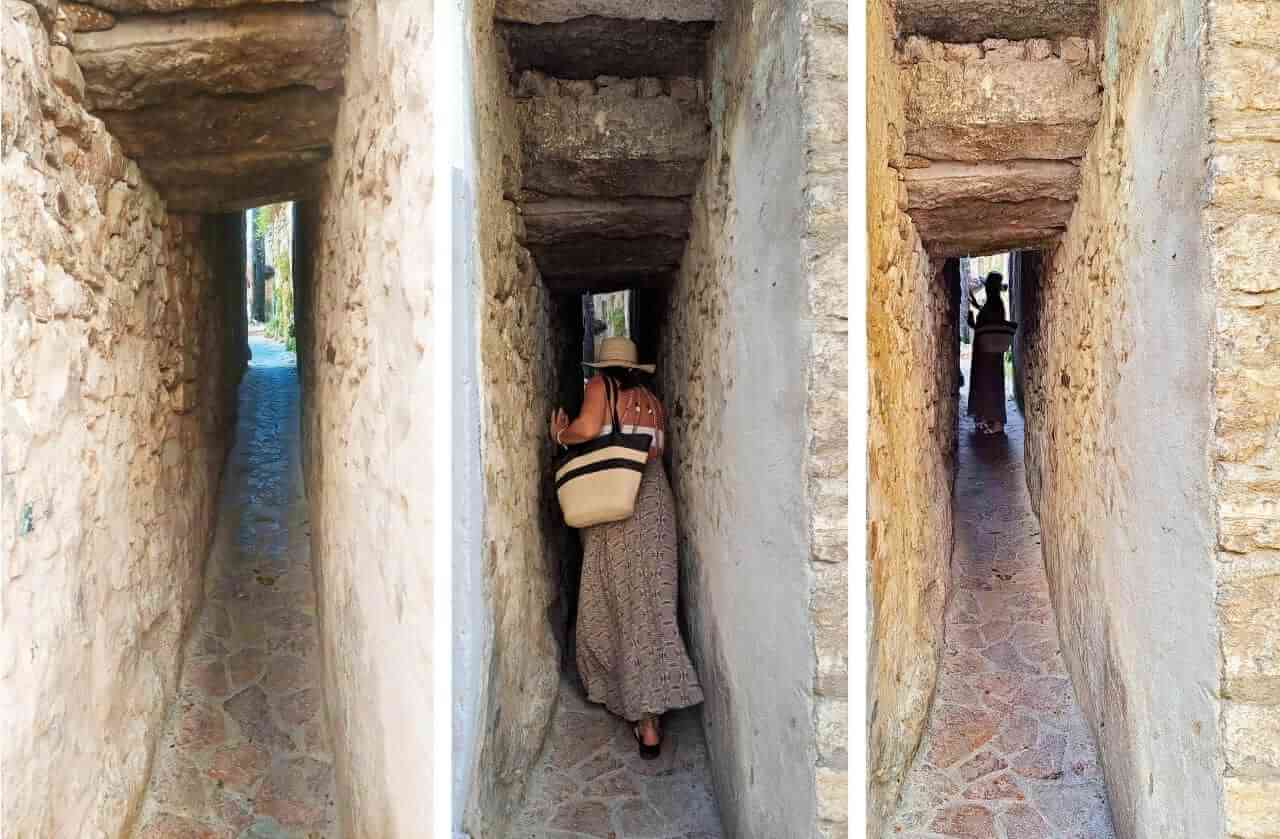
Vicolo dei Baci
🍽️ Where to Eat in Vico del Gargano
Well, the cuisine of Vico Gargano is known for homemade orecchiette, grilled vegetables, cheeses, magliatello (kid meat), and fish.
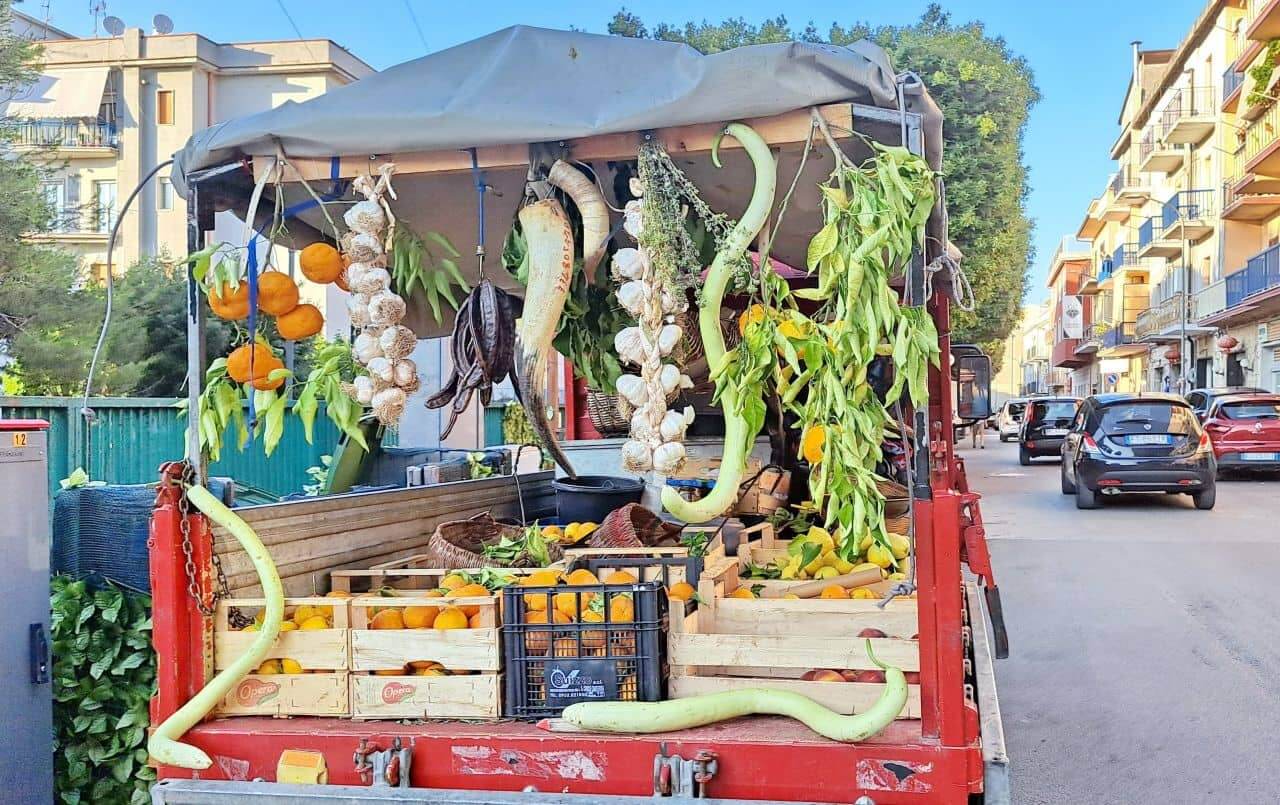
Local products of Vico del Gargano
But the traditional Apulian dish from Gargano, and specifically from Vico, is Paposcia Vichese. It is a stuffed, elongated focaccia bread, filled with local cheeses (caciocavallo), cured meats, tomato, vegetables, extra virgin olive oil, and oregano. So delicious! The modern version also includes seaweed, if you like it.
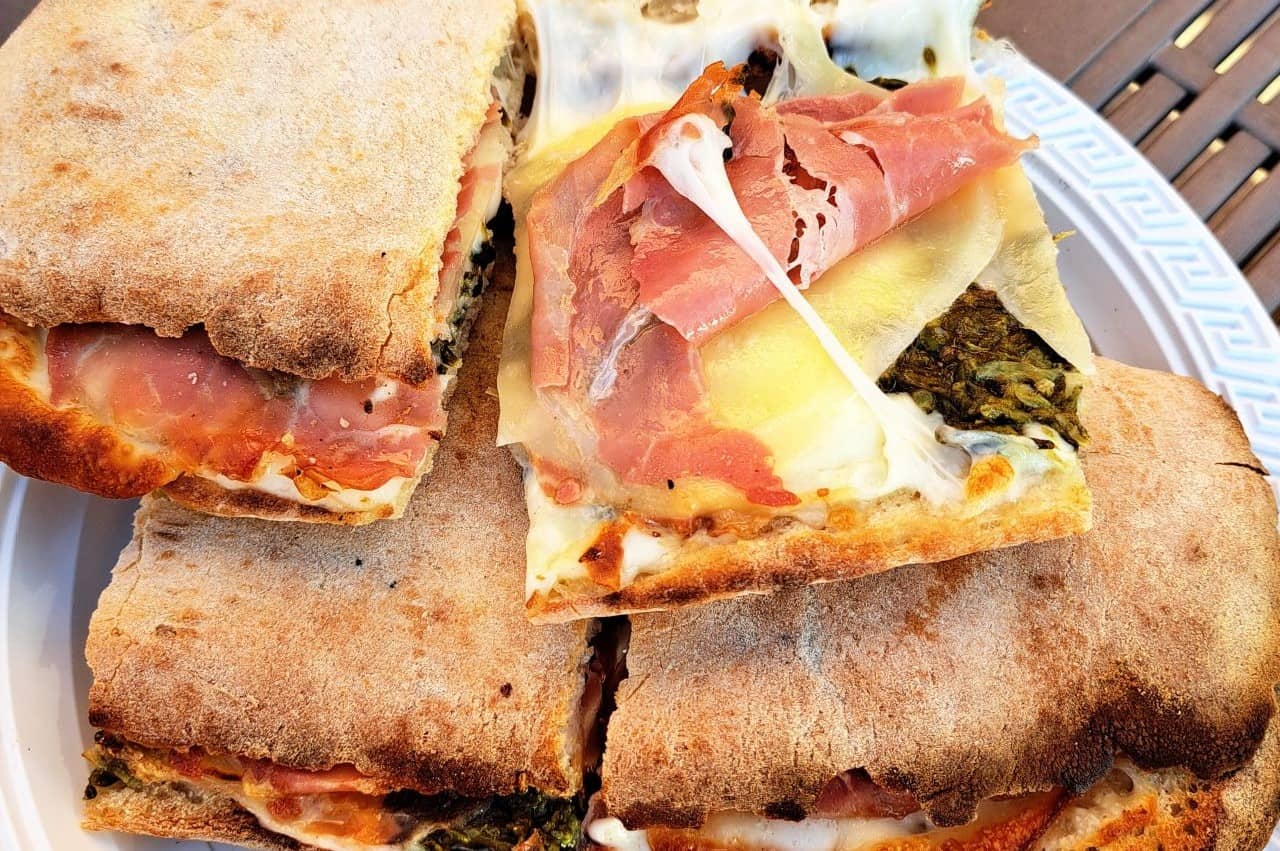
Vico del Gargano, La paposcia with seaweed
One of the most famous restaurants is Osteria Da Miki Il Federiciano, located in the Normano castle, and known for fresh pasta and local antipasti. Other popular places to enjoy Italian food are: Paposchia Bistrot, Cantina Il Trappeto, Masù, Radici, Nanì, Pizzeria Angolo, etc.
🍰 And something sweet…
Try the traditional Apulian sweet, Ostia Piena, a crunchy concoction of fruit, honey, almonds, and honey.
But the real surprise for me was the Capriccio pasticceria, with delicious small cakes, where you don’t know what to try first!
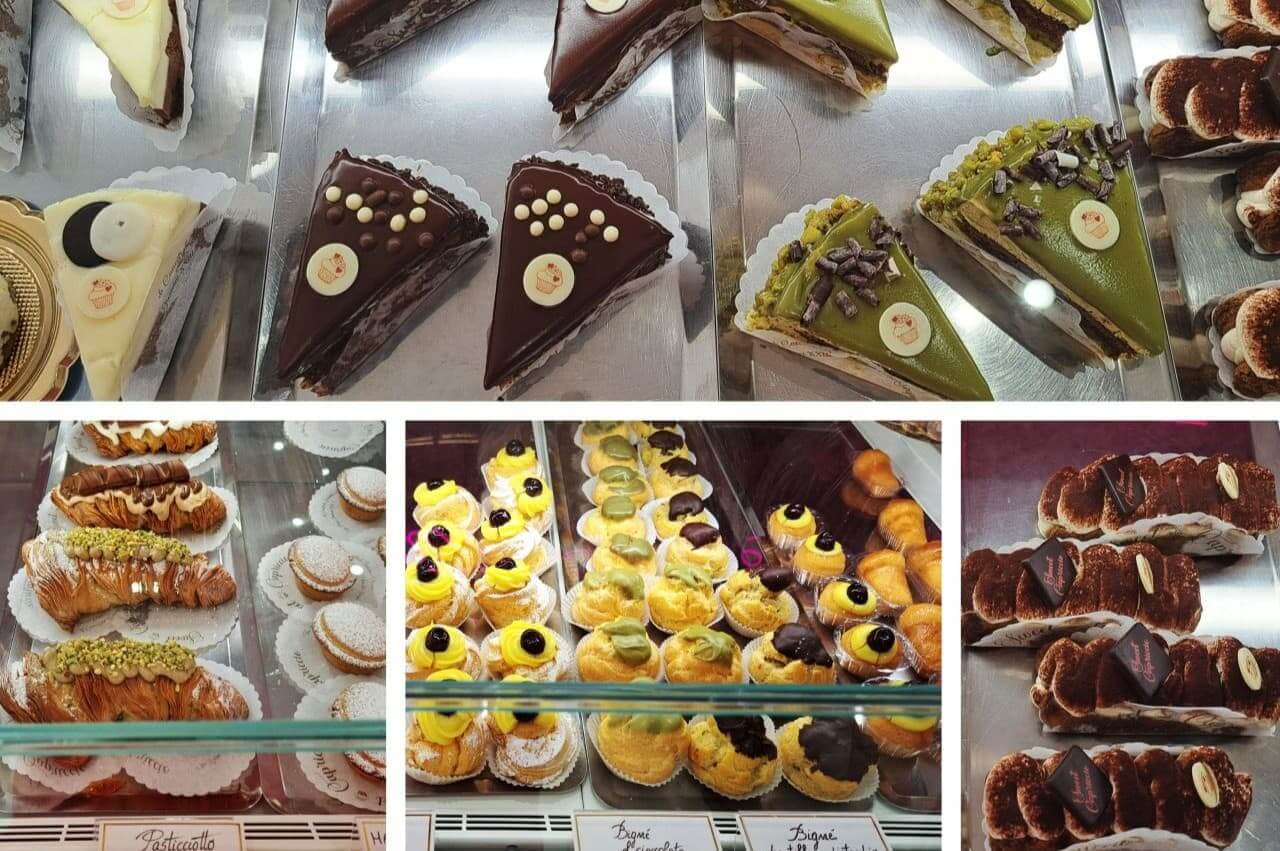
Cakes in the Gelateria Pasticceria Capriccio
The typical sweet from Vico is Dolce della Sposa, also known as Dolci Sospiri, or Bride’s Sweet. It is a traditional white, dome-shaped pastry made of two hemispherical cakes, filled with cream and glazed with sugar icing. There is also Dolce dello Sposo, or Groom’s Cake, which is covered with chocolate. I tried both the bride’s and the groom’s pastries, and they are so good!
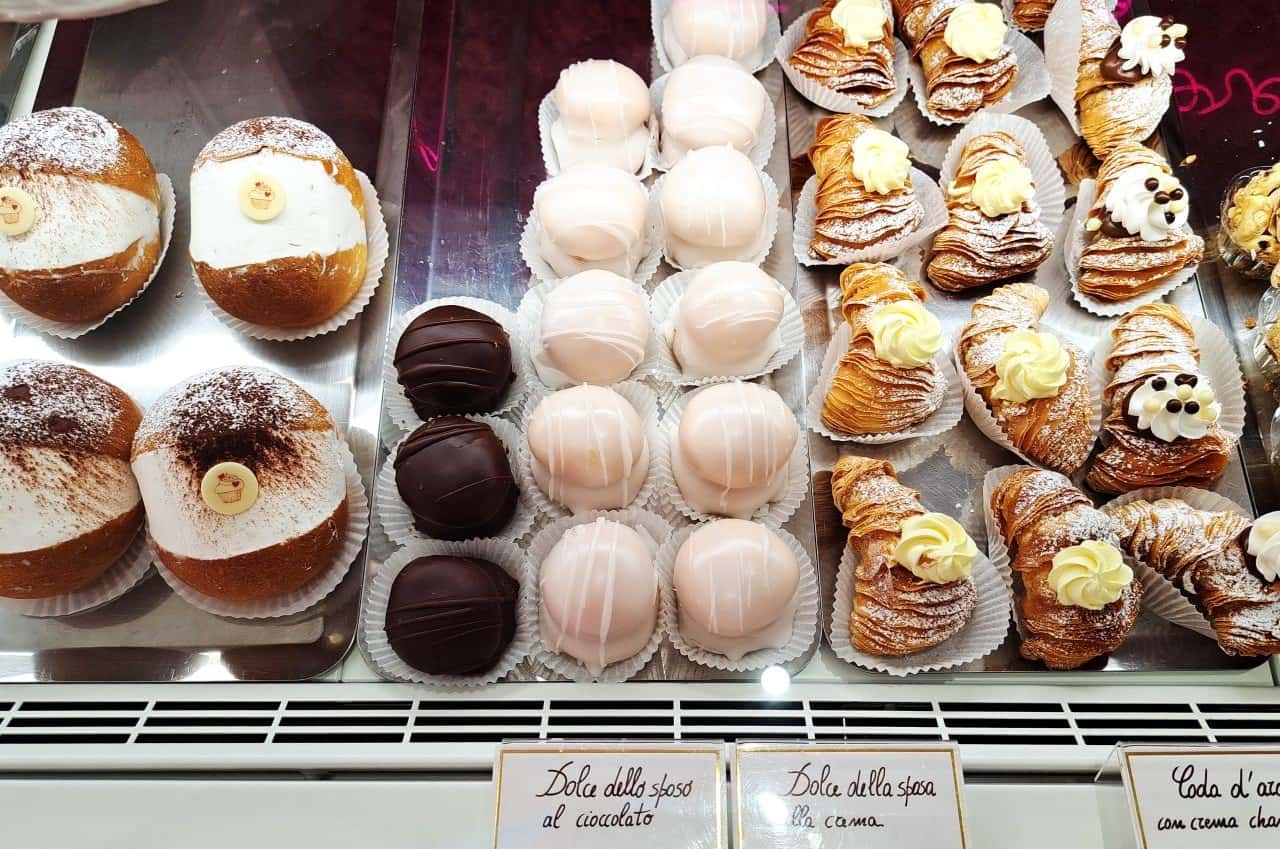
Sweets in Capriccio pasticceria, in the middle, Dolce dello sposo and Dolce della Sposa
🛍️ What to Buy in Vico del Gargano
I have to admit that recently, instead of classic souvenirs, I’ve been buying more and more various local products. And when I come home, the food and sweets remind me of all those wonderful places I’ve visited…
For example, regarding Vico del Gargano and Puglia, you can buy and take with you:
🍊 Fresh Arancia Bionda del Gargano, Limone Femminello del Gargano IGP, depending on the period of the year.
🍋 Citrus products, such as jams, liqueurs, or soap made from local oranges and lemons.
🫒 Olive oil, cold-pressed and fragrant, is a necessary part of every kitchen.
🧀🍷Local handmade pasta, cheese and wines.
🎁 And of course, handmade souvenirs and ceramics from small local artisans.
🏨 Where to stay in Vico del Gargano
If you like to spend some time in Vico, you can choose between small hotels, guest houses and apartments, often family-run accommodations.
♦ Apartments in the historic centre:
Casa Vacanza Al Borgo Antico, Aria di Vico Aparthotel, Arcaroli Borgo Vico; La Casa nella Pietra Suite Gargano; Casa Riccioto, Il Pieddi.
◊ Close to the sea:
Hotel Maremonti is situated between the sea and the forest.
Park Hotel Villa Maria, Hotel Villa Nettuno, Hotel Orchidea Blu, i Hotel Residence Marechiarare se nalaze na plaži San Menaio.
♦ Traditional Agriturismi, hotels in the countryside, close to Vico: Agriturismo Torre dei Pretti, Village Valle D’Oro ApartHotel and Masseria Le Macine.
📍 What to see close to Vico del Gargano
Generally, half a day is enough to visit it, and you can combine it with a visit to the nearby towns and beaches.
🏖️ Two long, sandy beaches of San Menaio and Calenella, surrounded by pine forest, are located about 7 km away.
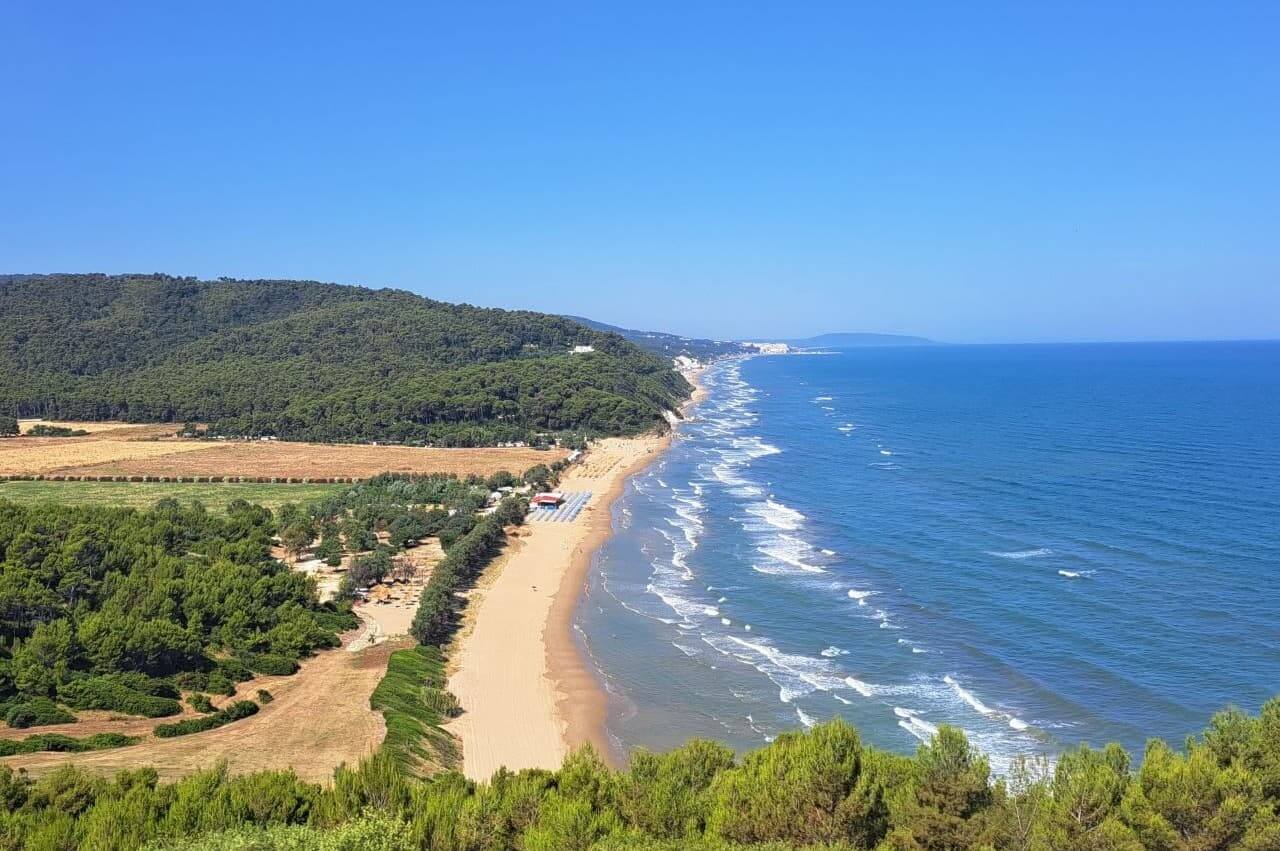
Calenella Beach
🏞️ Foresta Umbra is located a few minutes from the town, perfect for hiking, biking or picnics on hot summer days.
⛪The Necropolis of Mount Tabor.
🏘️ Nearby coastal towns with dramatic cliffs and sandy beaches: Rodi Garganico, Vieste and Peschici.
⛪ Monte Sant’Angelo town, known for the Sanctuary of Saint Michael.
Read more about it here: Monte Sant Angelo and the Sanctuary of Saint Michael.
🏞️Gargano Sea Caves, close to Vieste town.
Read more about this fantastic excursion here: Gargano Sea Caves, carved by wind and sea.
Vico del Gargano is truly a hidden gem of northern Puglia, and it has become a romantic place to escape urban life.
For sure, February and Valentine’s Day are a magical period to visit it.
But, it is always a good time to visit the village of love and be blessed by the fragrant oranges and Saint Valentine for good luck in love…
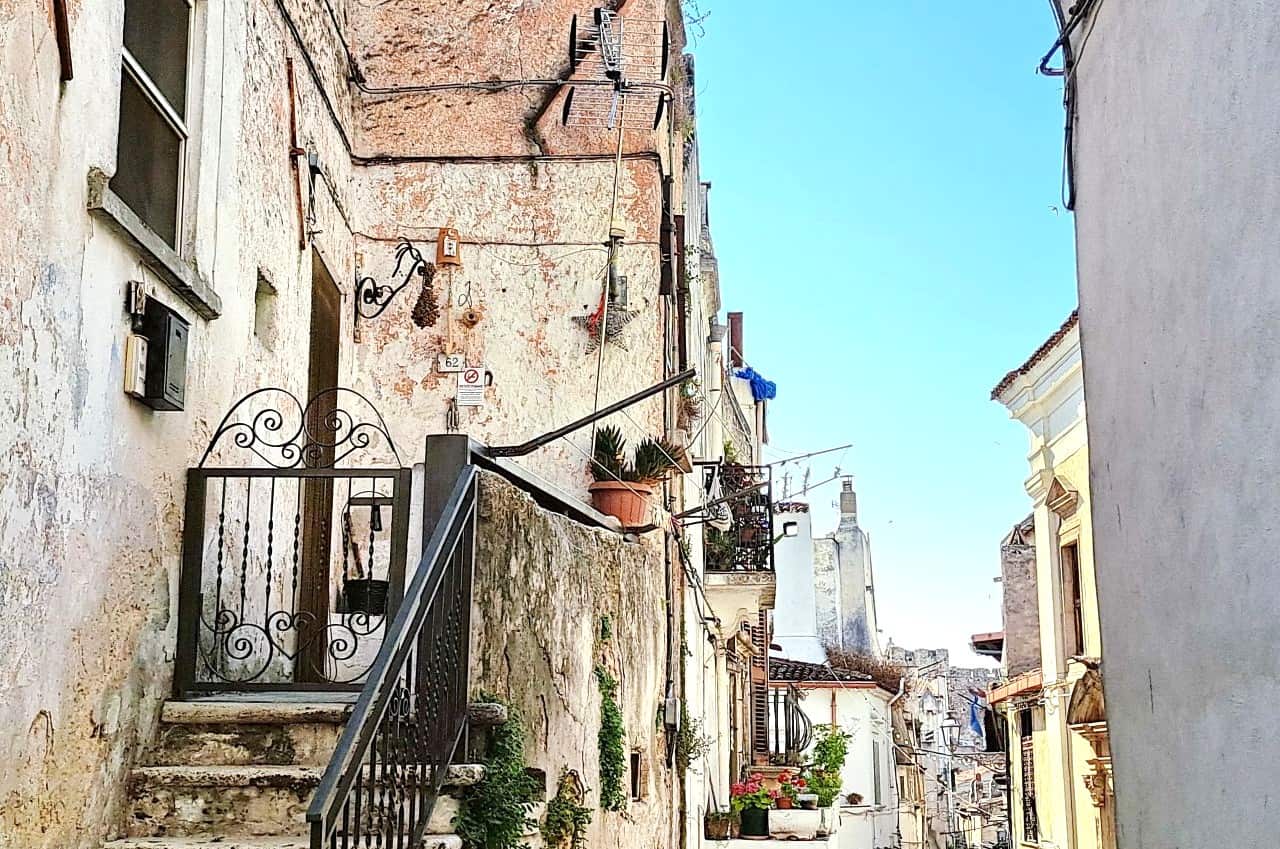
Vico del Gargano, Via San Giuseppe, Rione Terra



Leave a Reply
Want to join the discussion?Feel free to contribute!