
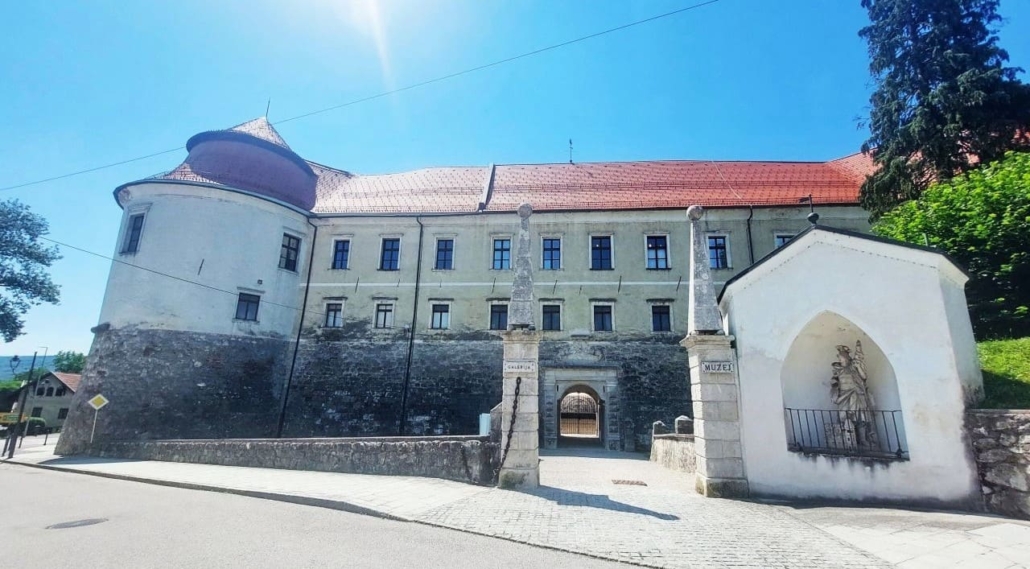
Fairy tale Brežice Castle in Posavje
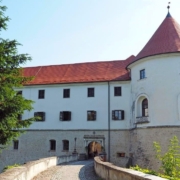
Brežice Castle is one of the most beautiful castles in Slovenia.
From a defensive fortress, it evolved into one of the most magnificent residential castles, and also the most impressive cultural landmarks in the Posavje region. It is a place where history isn’t just told; it is painted across the ceiling and walls in its Knight’s Hall and etched into the stones.
The castle is located only 4 km away from Terme Čatež. It’s an ideal place for visitors who want to connect wellness and culture in a single day.
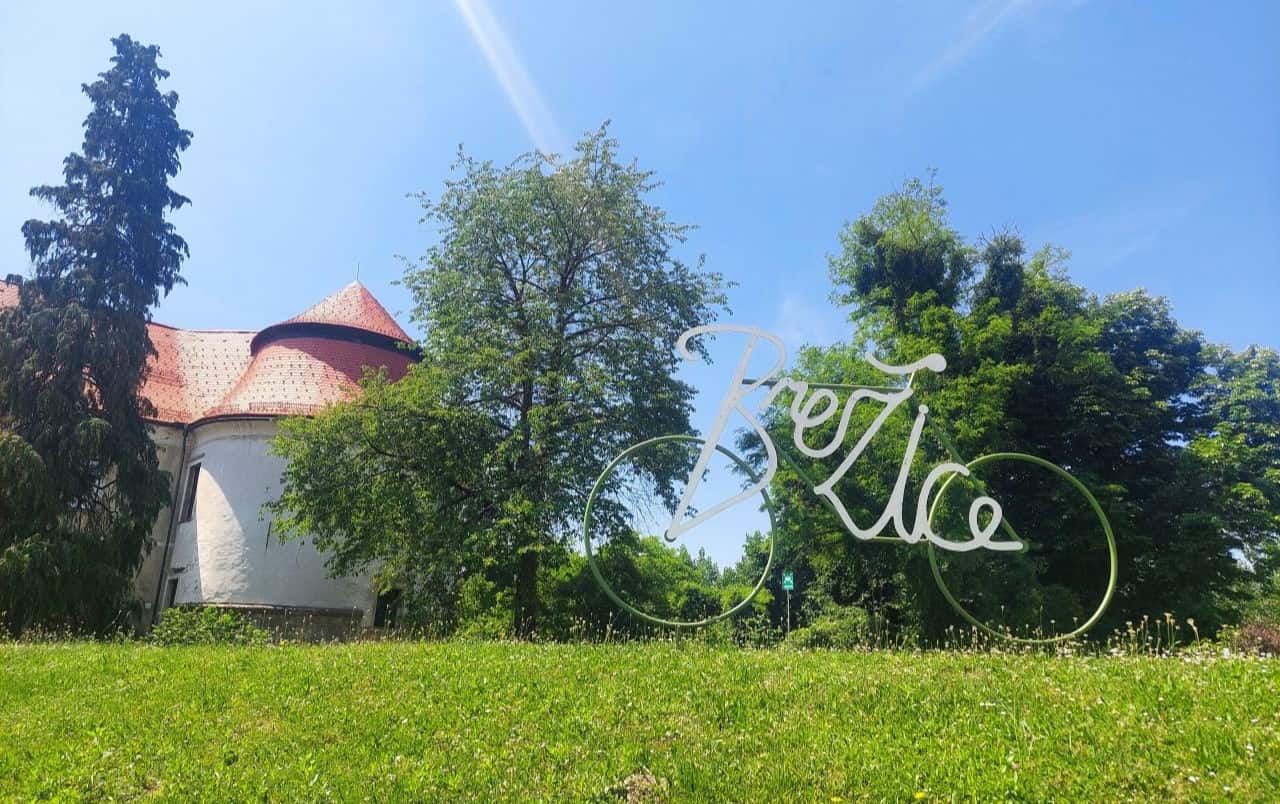
Slovenia, Brežice
📌 How to get to Brežice and the castle
Brežice is a small town in eastern Slovenia, in the Posavje region (the Lower Sava Valley), at the confluence of the rivers Sava and Krka.
Actually, its name derives from the word “brežec”, which means “a river bank”. It has approximately 6,800 inhabitants, and it belongs to the Municipality of Brežice, which is home to 24,450 people.
The most comfortable way to get there is by car. It is only 7 kn away from the Croatian border, and 35 km from Zagreb. The Slovenian capital, Ljubljana, is 106 km away, and Belgrade is about 430 km away.
Usually, the guests of Terme Čatež visit it during their holidays, because it takes only a few minutes to drive. You can also combine a visit to Brežice and Mokrice Castle, located about 10 km away.
📍What to see in Brežice
Brežice is one of the most popular towns in this part of Slovenia. This region is known for thermal springs, vineyards, forests, and rich architectural heritage.
The main street in the old town is Cesta Prvih borcev, where interesting buildings with Renaissance and late-Baroque facades can be seen. Some of them are the Town Hall, Stara Lekarna (the old pharmacy) with a Renaissance facade from 1641-1695, the National Home for the “Slovenes of Brežice”, and the German Home (Deutsches Heim) with the hotel for the “Germans of Brežice”.
The Parish Church of St. Lawrence is situated in the town centre, known for its Baroque architecture and neoclassical frescoes.
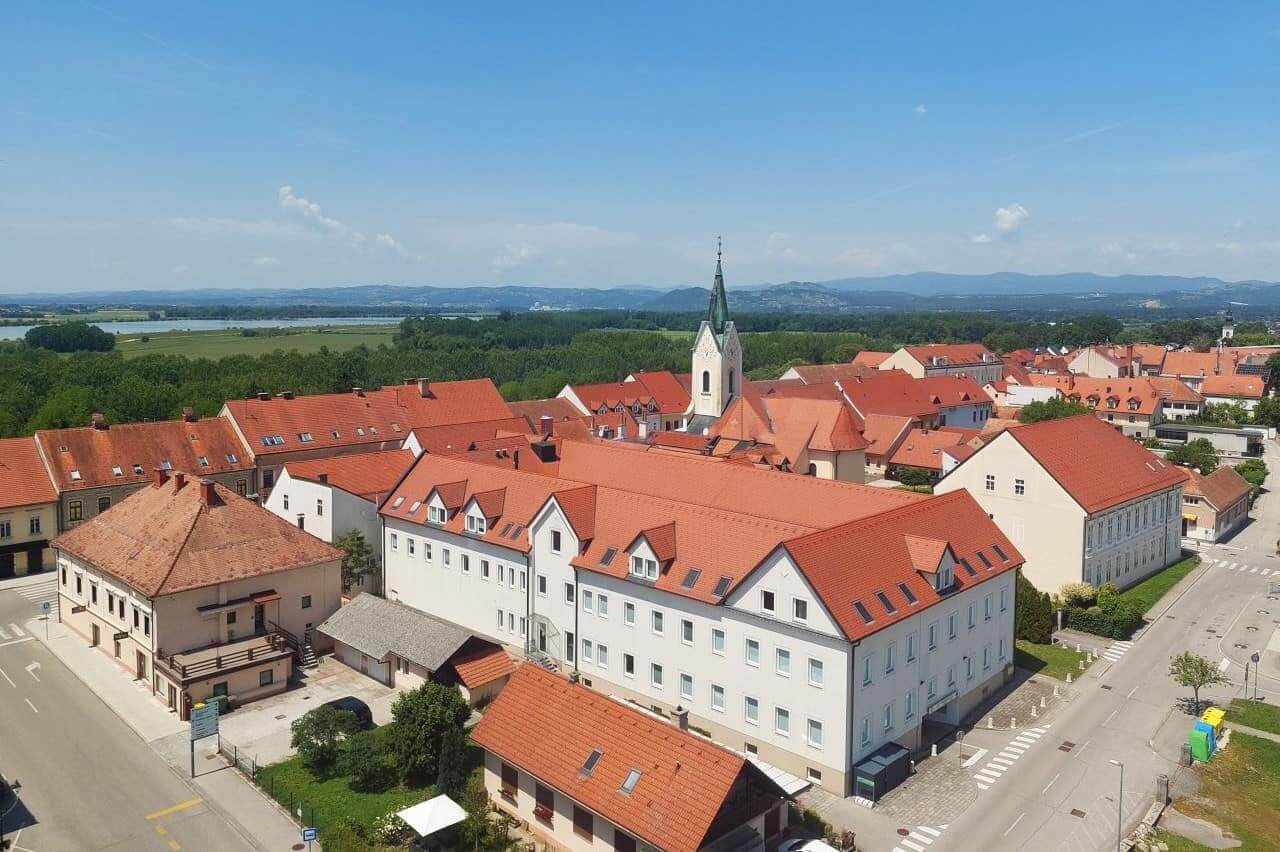
A view of Brežice town centre with the Parish Church, and the Sava River from the Water Tower
Another picturesque street is Ulica Stare Pravde (Old Justice Street). It was once home to craftsmen who lived and worked there in the mid-19th century. This street connects the Brežice Water Tower at one end to the beautiful Brežice Castle at the other.
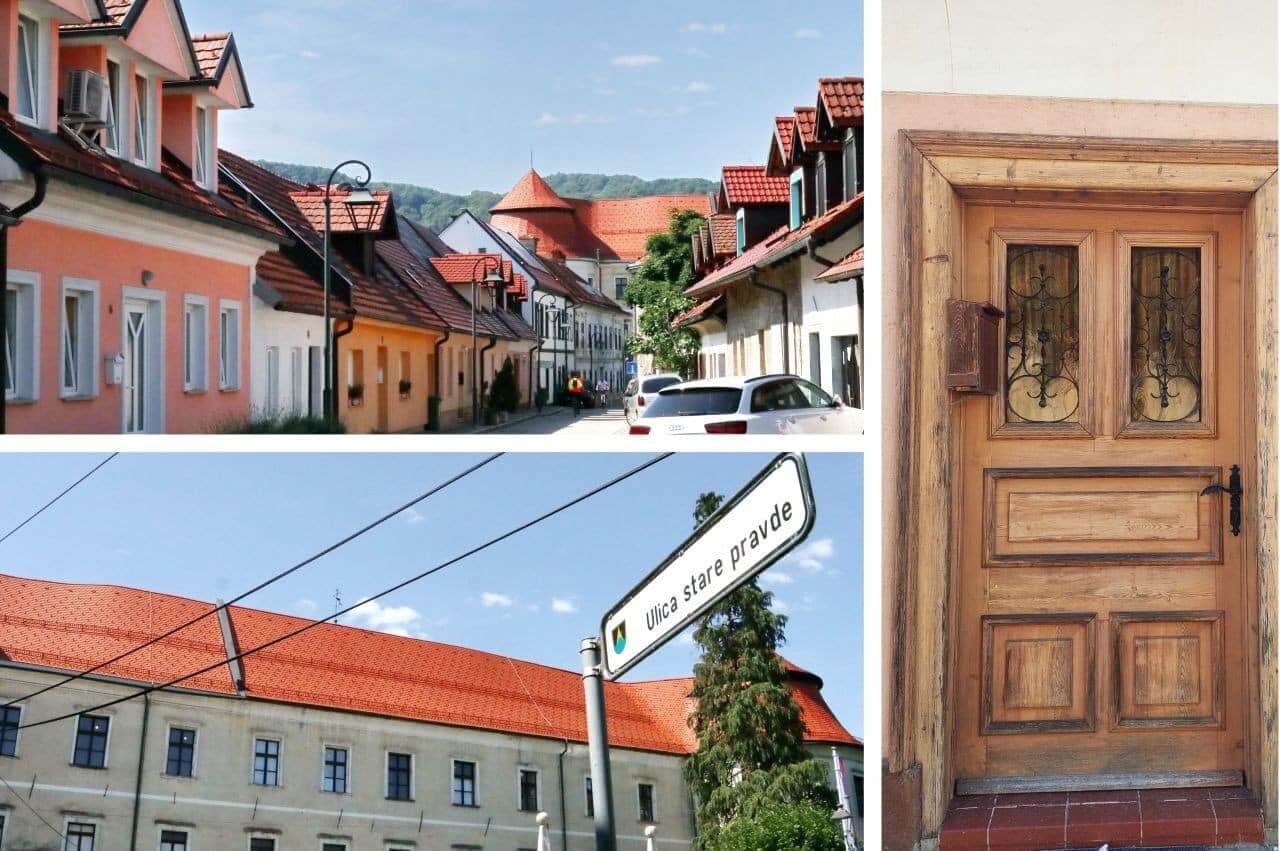
Ulica Stare Pravde, Brežice
And, don’t forget to take a photo sitting on the Love bench, a wooden bench with the carved heart 💖
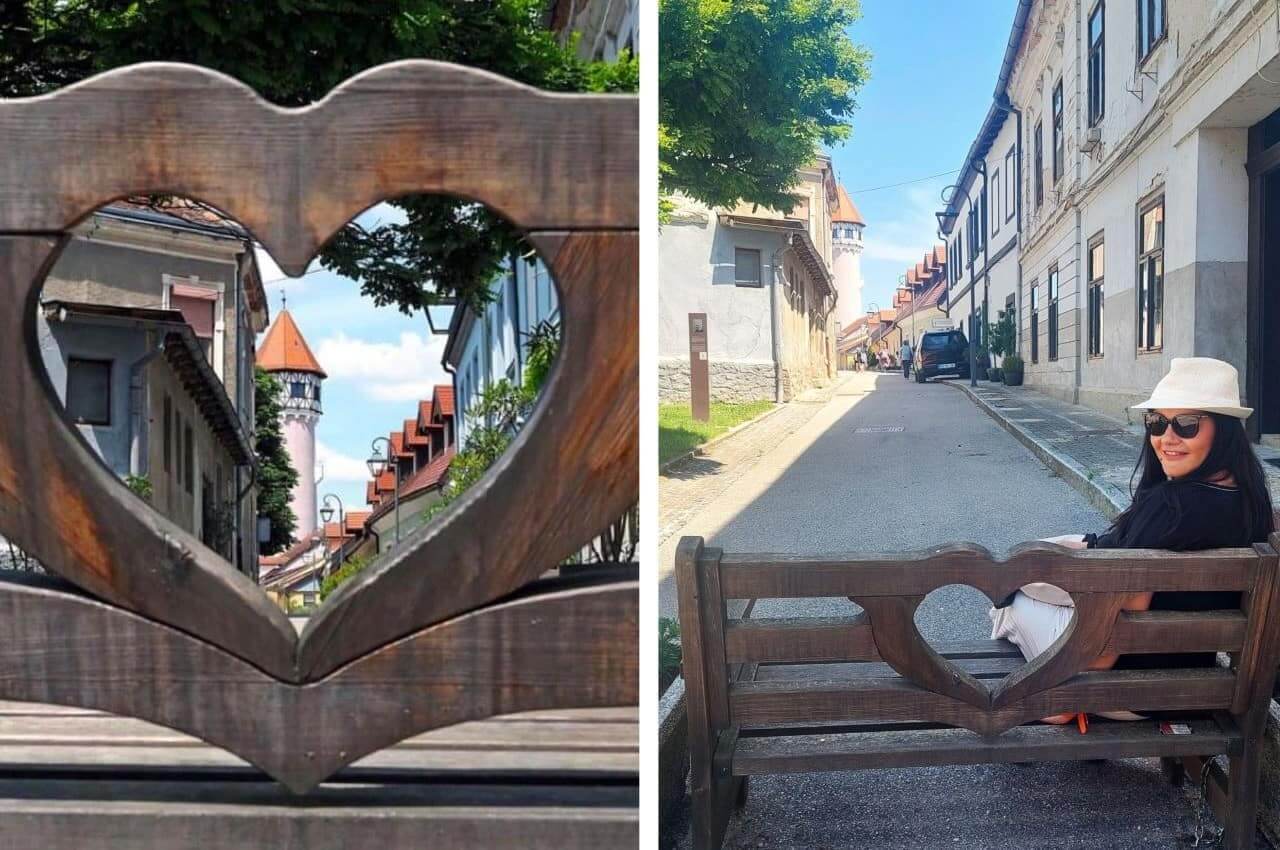
Wooden Love bench, Brežice (left photo Nikola Zoko)
🏰 A few words about the history of the Brežice Castle
At the heart of this town stands Brežice Castle, whose story dates back to the medieval period.
First, Brežice was mentioned in 1241. A wooden fortification was probably built during the late 12th century, when Brežice became the defence and administrative centre of the Bishopric of Salzburg’s holdings.
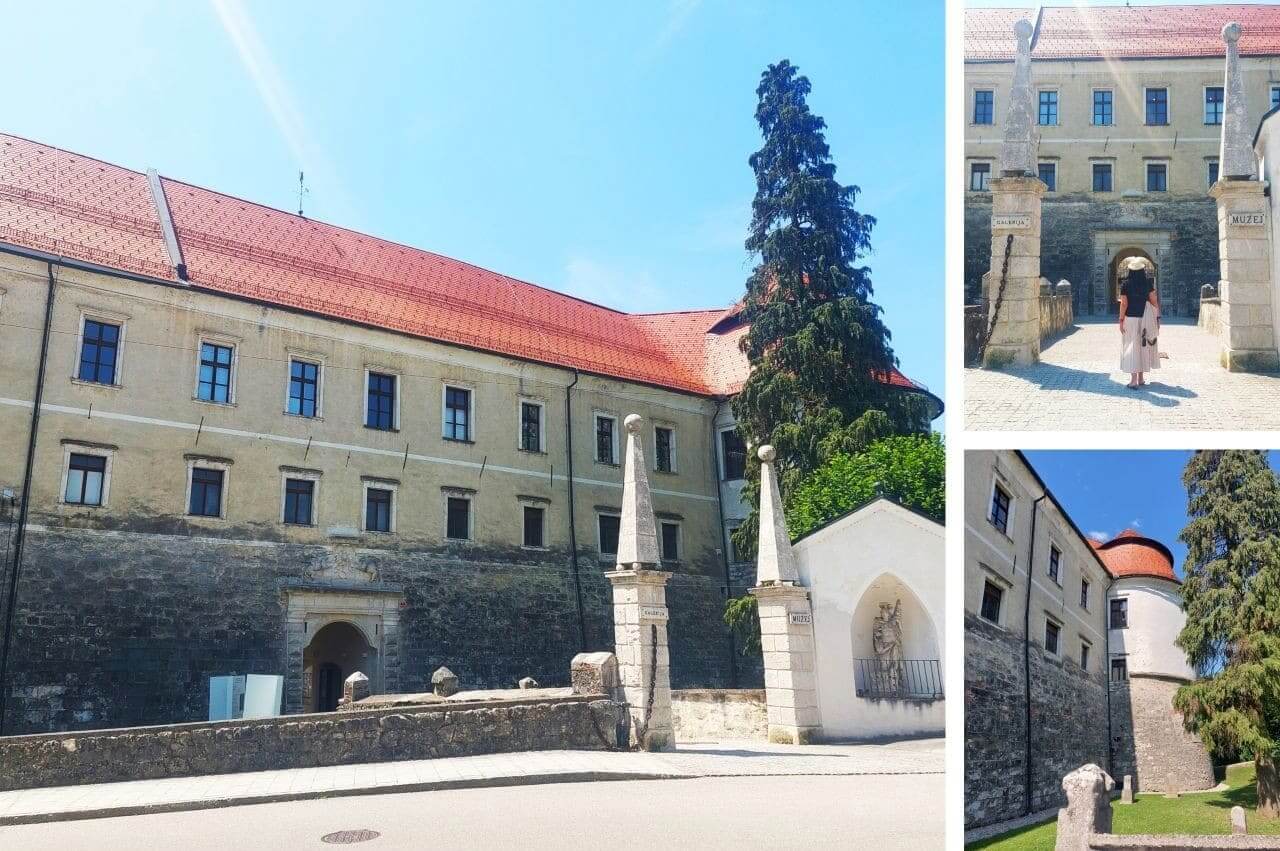
Entrance to the Brežice Castle
The castle fell to the Habsburgs in the 1490s. It was destroyed and attacked numerous times, including Ottoman raids during the 15th and 16th centuries.
By the way, there were more than 170 peasant revolts in Slovenia between the 14th and the 18th centuries, raised becaouse of the difficult position of the inhabitants, as well as labour, money, and goods duties imposed by the feudal lords. The most important Slovenian Peasant Revolts were in 1515, when the castle was burned to the ground, and in 1573, led by the famous Matija Gubec.
However, the new castle was rebuilt between 1529 and 1601 into a new Renaissance fortress with defensive towers and walls. In subsequent centuries, the castle was owned by the noble families Gallensteins and Frankopans, and finally, the Attems Counts.
Actually, in 1694, Count Ignaz Maria Attems (1652–1732), a wealthy Austrian-Styrian aristocrat, purchased the castle. The noble Attems family turned the fortress into a luxurious Baroque residence, adding the grand staircases, the chapel, and the crown jewel of the castle: the Knight’s Hall. They owned the castle for 251 years, until 1945, when the state nationalised the estate. During the First World War, the castle was used as a hospital, and it had various administrative and military roles in World War II.
In 1949, it became the home of the Posavje Museum of Brežice.
Today, weddings, concerts, various cultural events, festivals, and workshops are held in the Brežice Castle.
Inside the Brežice Castle
Once, the castle had a moat and a drawbridge, but they were removed because the course of the Sava River moved away over the centuries. The structure of Brežice Castle is basically an irregular trapezoid. It has two floors, with a basement carved out of bedrock.
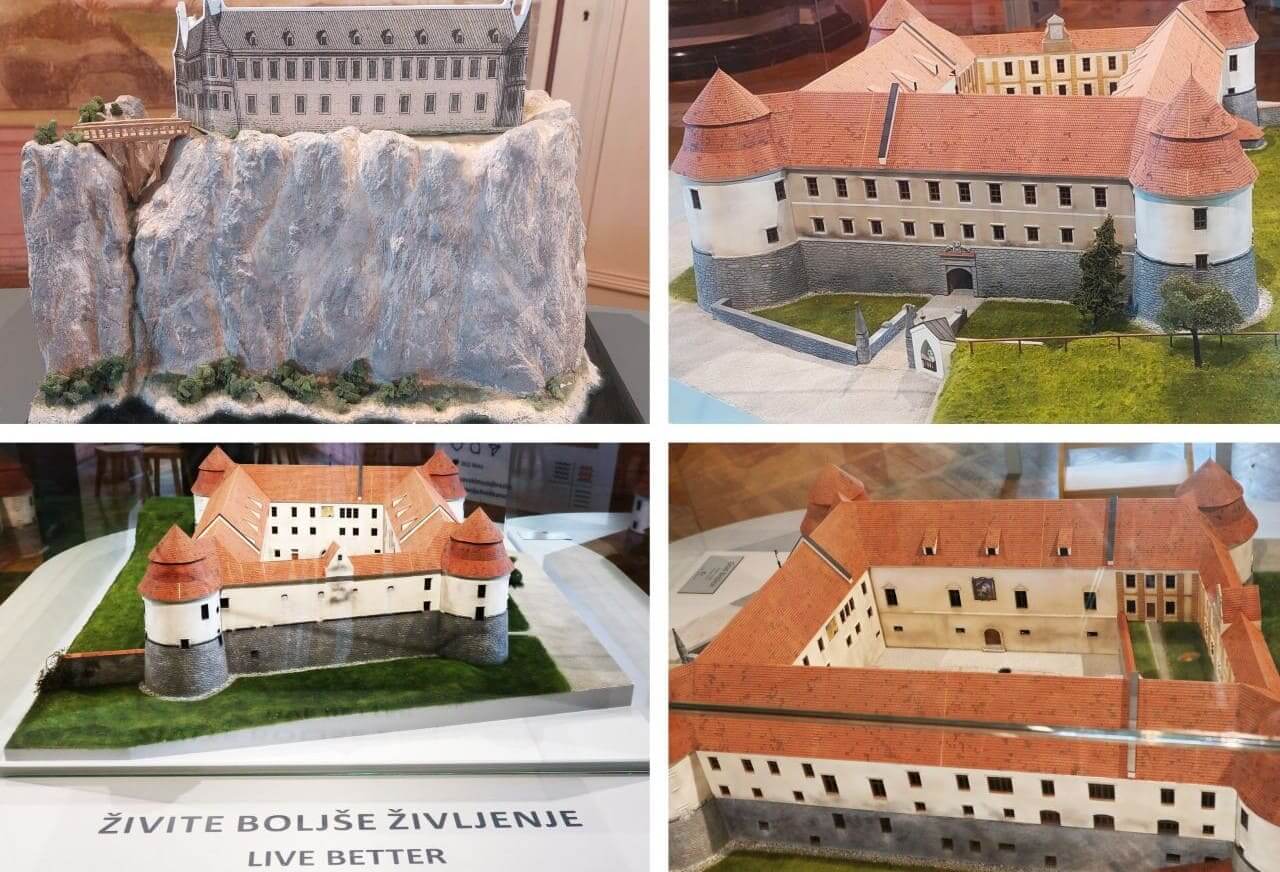
Model of Brežice Castle, the Posavje Museum
Inside the castle, there is an impressive courtyard which is today covered and used for various cultural and musical events. One clock and two sun clocks on the castle walls could still be seen.
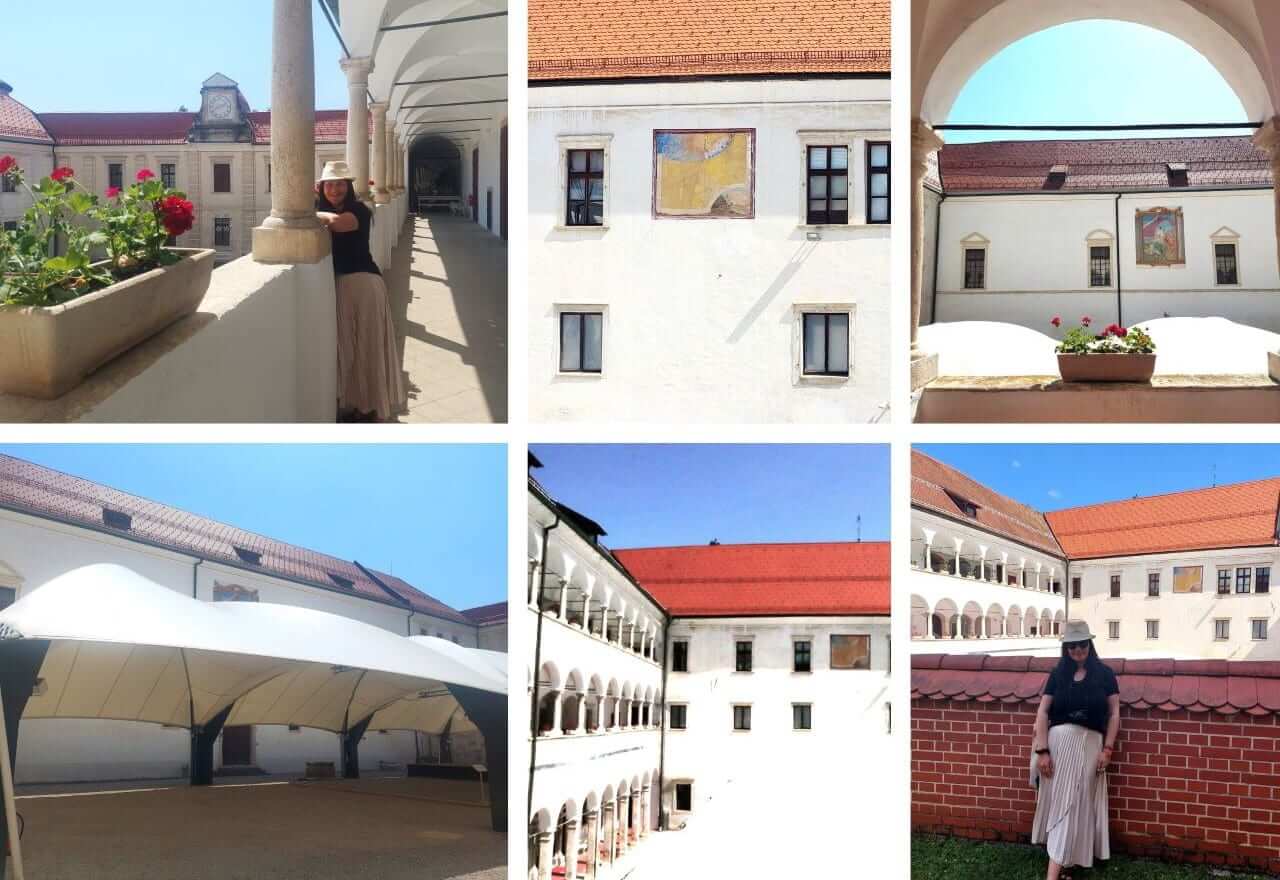
Inner courtyard and floors at Brežice Castle
There are three tiers of arched balconies, with a terrace on the first floor between the castle wings.
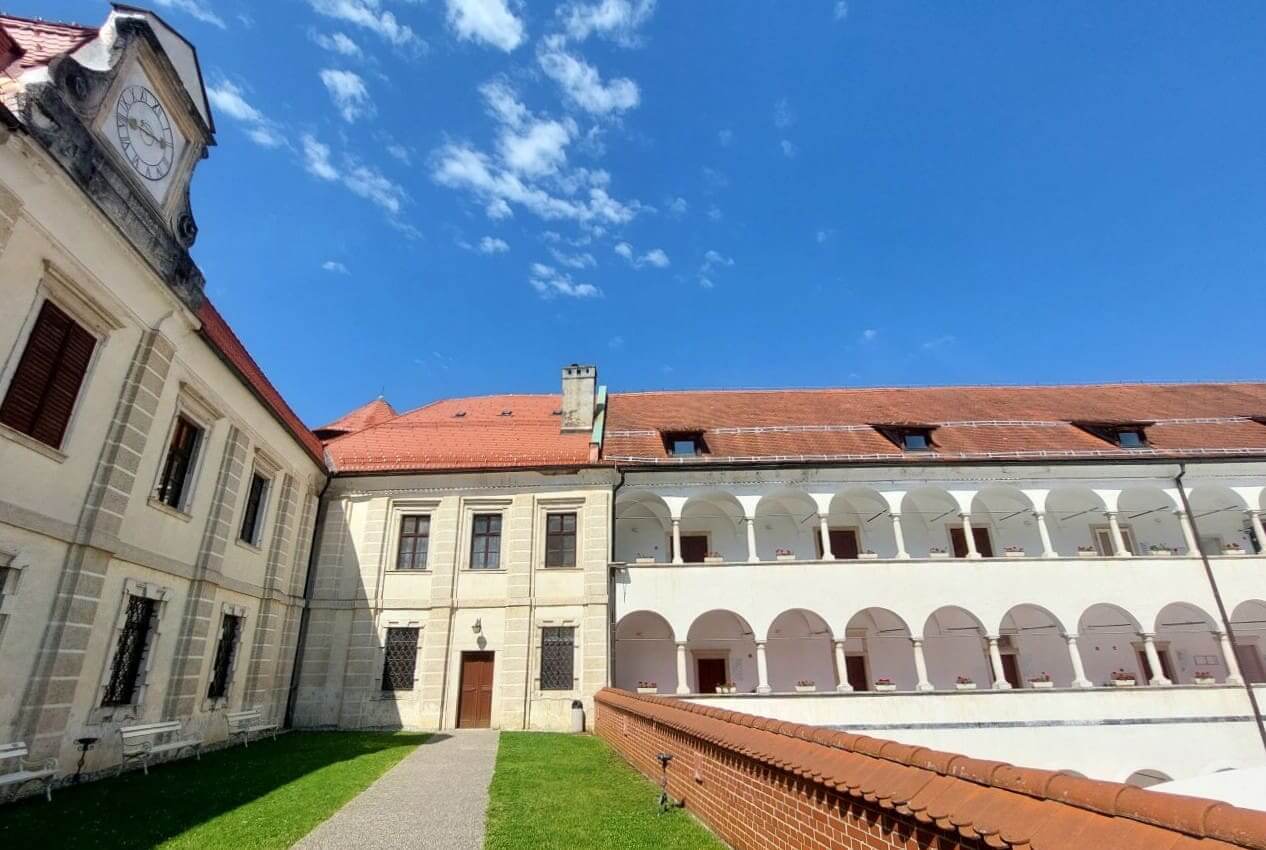
Terrace in the Brežice Castle
By the way, the ornamental staircase leads to the first floor. They are painted in a wonderful Trompe-l’œil fresco (an artistic technique that creates a highly realistic optical illusion of three-dimensional space) with allegorical figures.
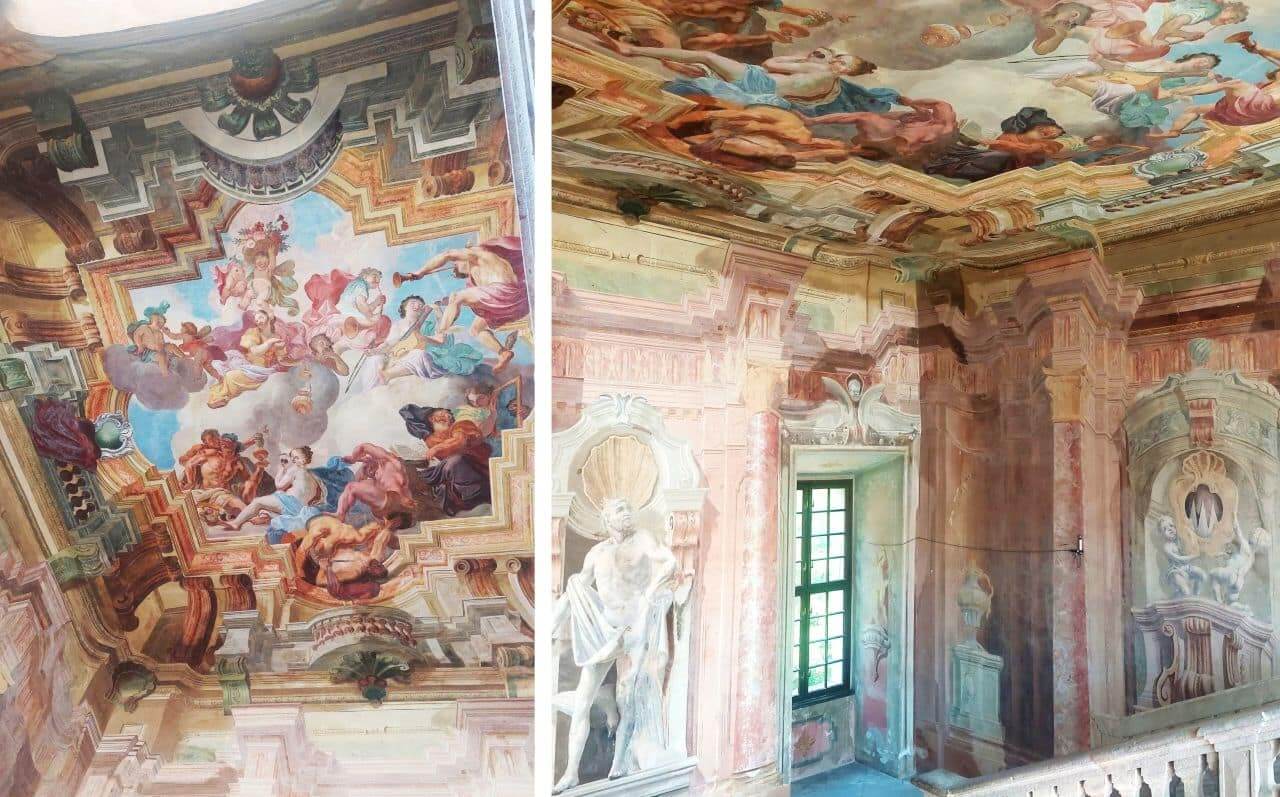
Stairs and ceiling decorated with Trompe-l’œil fresco
Knight’s Hall or “Viteška dvorana”
I must admit that I expected the knight armoury and coats in the Knight’s Hall, like in the Grand Master’s Palace in Valletta, for example. But it was completely different! The Hall is fantastically decorated in Baroque style, from the floor to the walls and the ceiling.
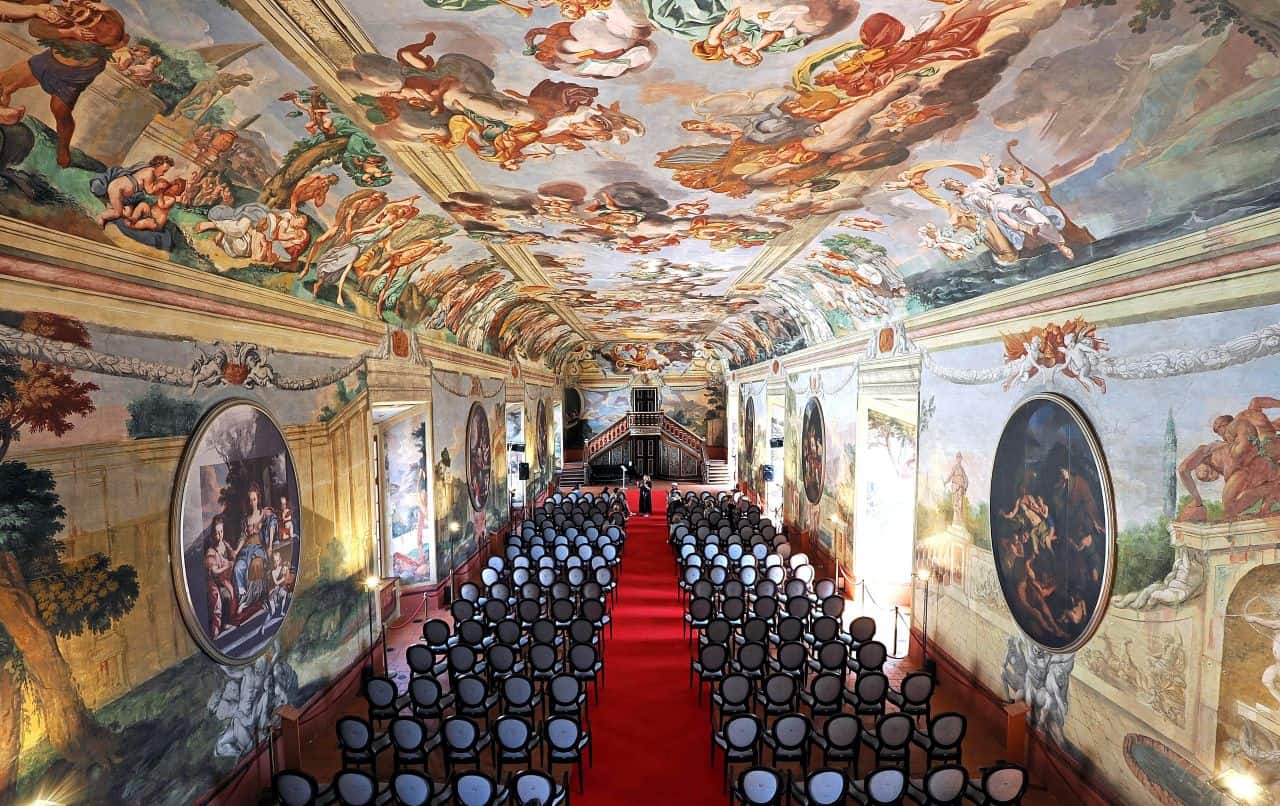
Brežice Castle, Knight Hall (Viteška dvorana), photo Nikola Zoko
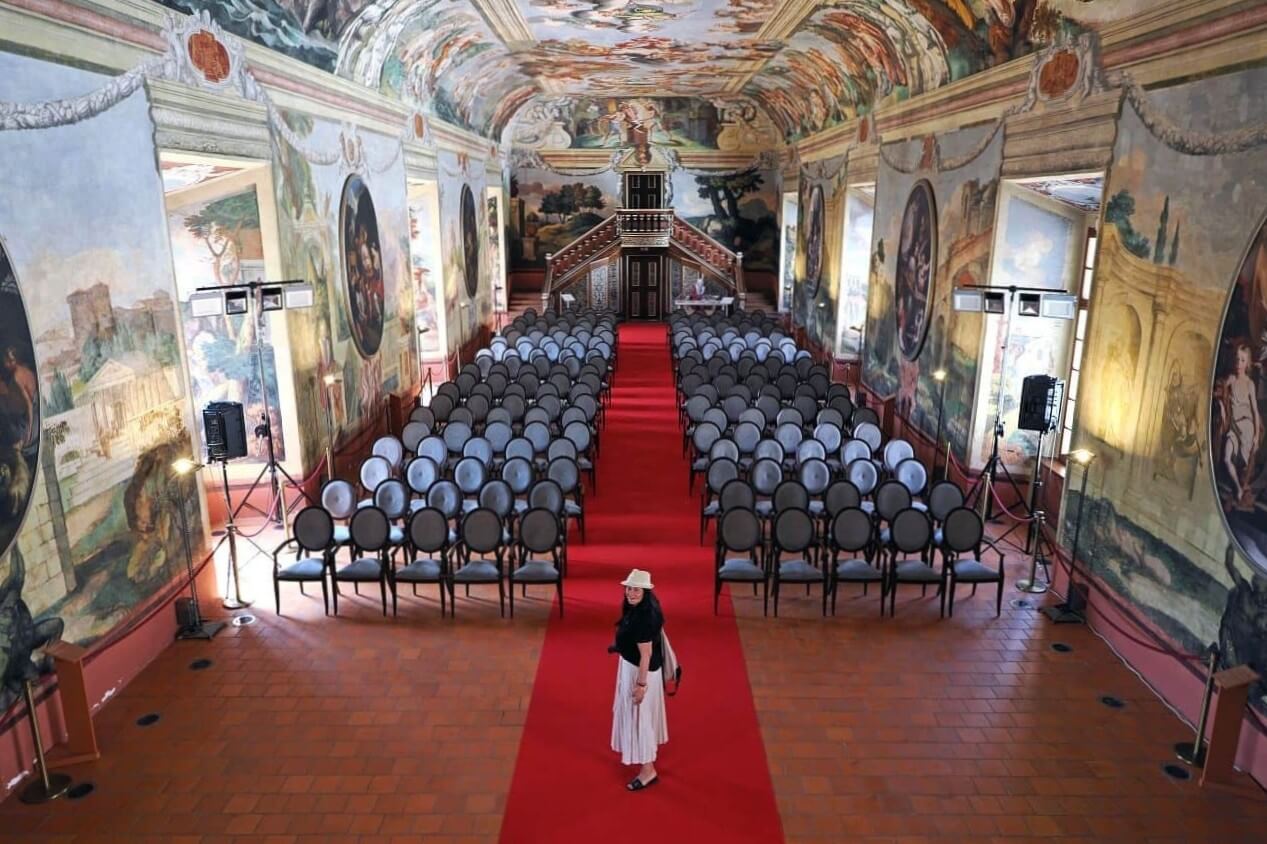
Me, standing in the Knight Hall, photo Nikola Zoko
For most visitors, it is the highlight of the castle. In a word, it is one of the finest preserved examples of Baroque wall painting in Slovenia.
The idea for the hall came from Count Ignac Maria Attems, a Councillor of the Inner Austrian Council in 1696. So, he bought eight castles with estates in Slovenia and converted them into residences. His first wife was Marija Regina, née Wurmbrandt (1659–1715), whom he married in 1685.
The young painter, Frančišek Karel Remb, held a special place in the Count’s castle. We can see it due to his self-portrait on the east wall of the hall, which is unusual. By the way, his education in Italy was made possible by the Count. In 1702-1703, at the age of just 28, the young artist created a masterpiece for his patron and client. Count took František from Brežice to Graz and Vienna, where he was successful and respected. František died in Vienna in 1718, at the age of 43.
Count Ignac Maria Attems died in 1732 in Graz, where he is buried in the local Franciscan monastery.
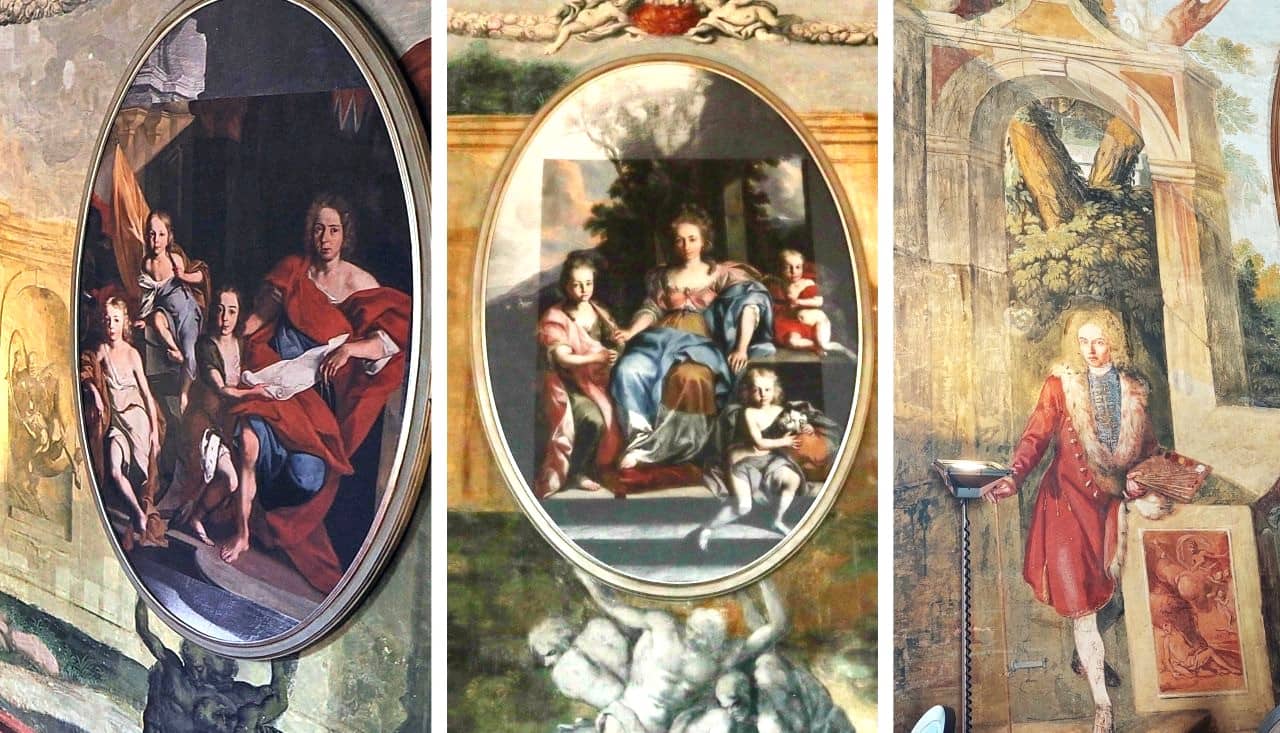
Count Ignaz Maria Attems (first photo), Maria Regina, wife (second photo), painter František (third photo), Brežice Castle
The frescoes of the Knights’ Hall
František decorated the hall based on the stories of Greco-Roman mythology, written down by the Roman poet Ovid in the “Metamorphoses” (Transformations). According to the tradition of ancient Greek philosophy, the elements are the fundamental components of all things: water, air, fire and earth.
♦ Four scenes represent water.
You can see Poseidon (the Romans called him Neptune) with his wife, the young sea goddess Amphitrite (the Romans called her Salaccia). The second is the one-eyed cyclops Polyphemus, playing the flute, trying to heal the pain of unrequited love for the nymph Galatea.
The third dramatic scene is the legend of the forbidden love between Pyramus and Thisbe, whose tragic destiny inspired many authors, including Shakespeare for his tragedy of Romeo and Juliet.
The fourth scene is known as the Raping of Europe. The god Zeus fell in love with her. He transformed into a beautiful bull, kidnapped Europe, and took her across the sea to the Greek island of Crete.
◊ Earth is represented by the Greek god Dionysus (Roman god Bacchus), the god of fertility, vegetation, wine and joy, surrounded by the nymphs. In the second scene, Dionysus stands above Adrianne, the daughter of King Minos, and the young wife of the Athenian prince Theseus. Ariadne helped Theseus to kill the Minotaur in the labyrinth, but he abandoned her while she was sleeping on the island of Naxos.
♦ The fire is represented by the god Hephaestus (Roman god Vulcan), who is forging lightning bolts for Zeus. Hephaestus is the protector of craftsmen, sculptors and metallurgists.
◊ Apollo, the Greek god of light, sun and spring, and the Greek goddess Eos (Roman goddess Aurora) are metaphors for the air. They are in a sun chariot drawn by doves, surrounded by birds.
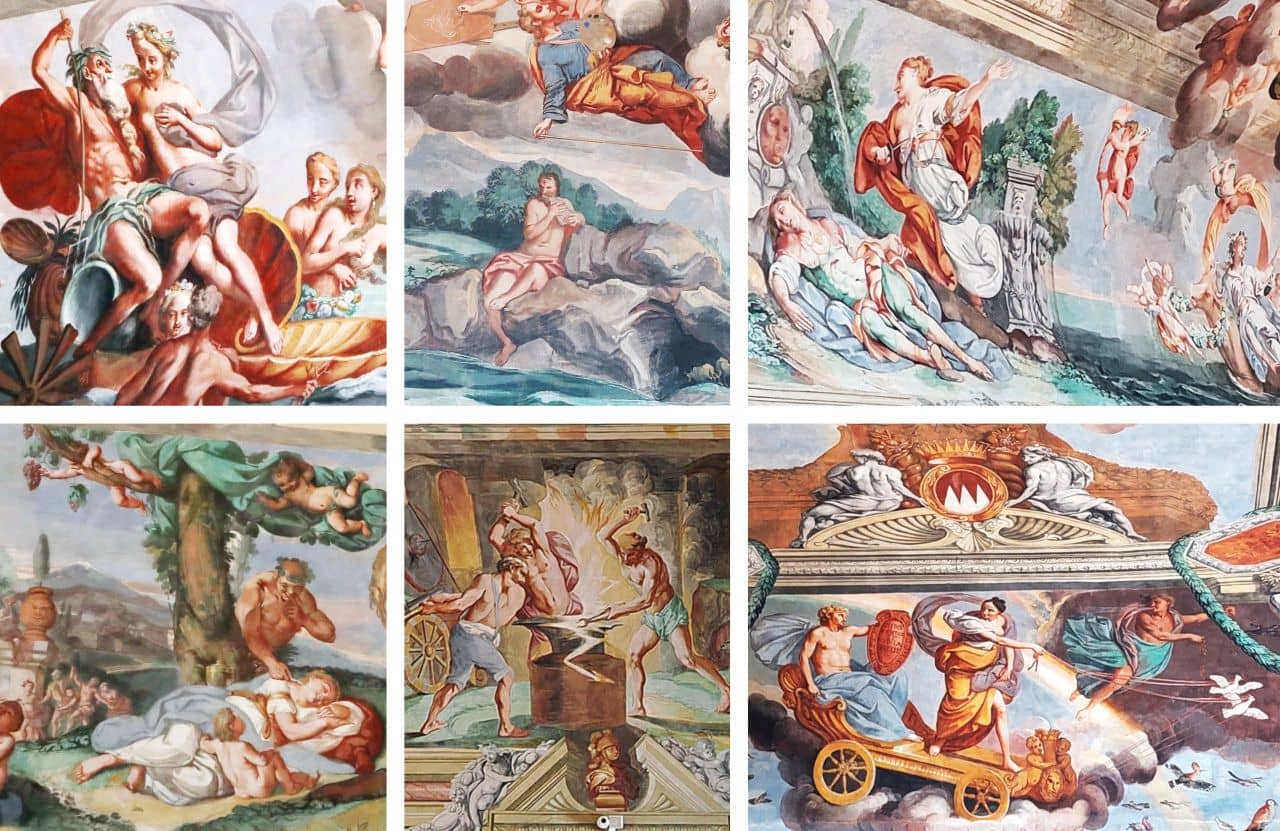
Frescos with four elements in Knight Hall, Brežice Castle
Goddess Fortuna
On the northern part of Knight Hall, beside the staircases, you can see on the ceiling the beautiful image of Fortuna, the goddess of fortune, fate and abundance. She scatters tiny fragments of happiness from her cornucopia, which should bring you luck and prosperity.
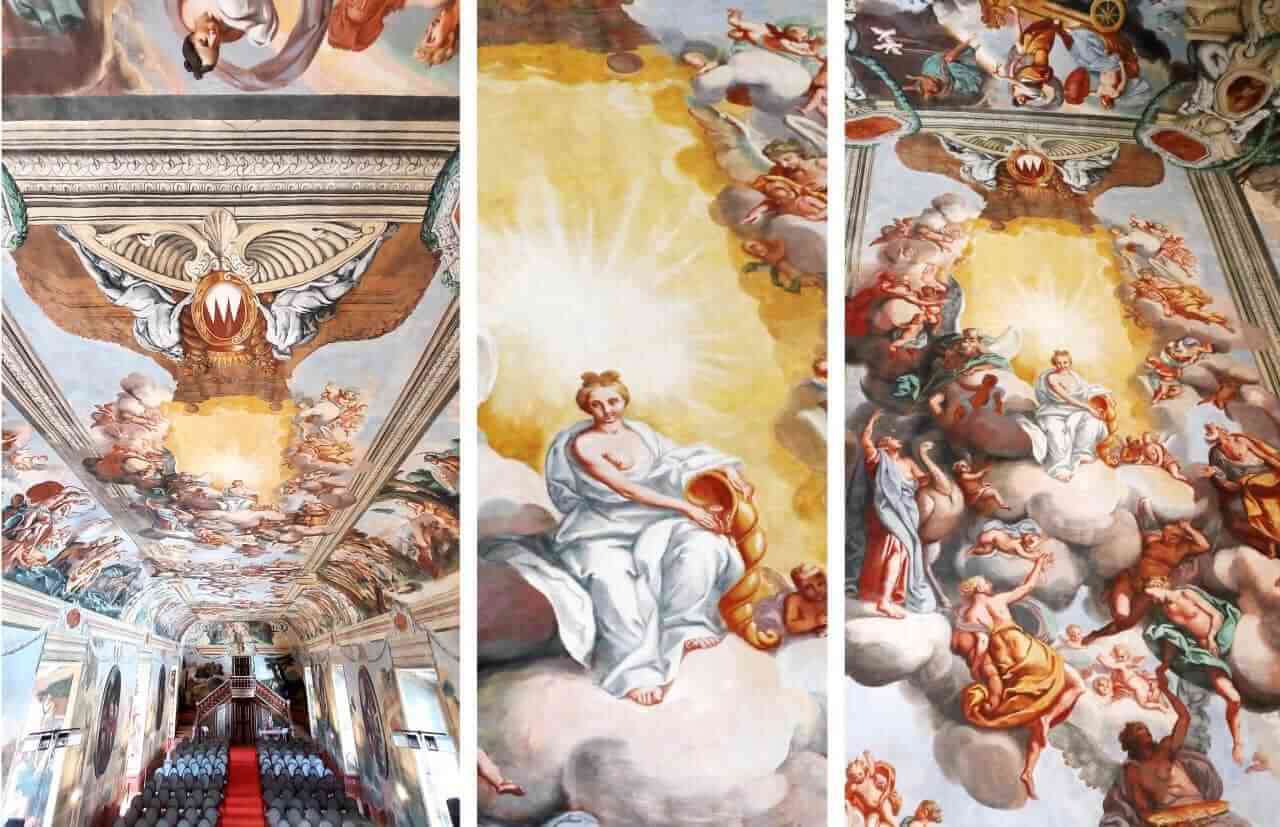
Goddess Fortuna fresco, Brežice Castle
There are more interwoven scenes and stories from the world of myths and legends. They look so real, so alive, with many details, and you don’t know where to look first! It is interesting how František connected all of them into one large composition.
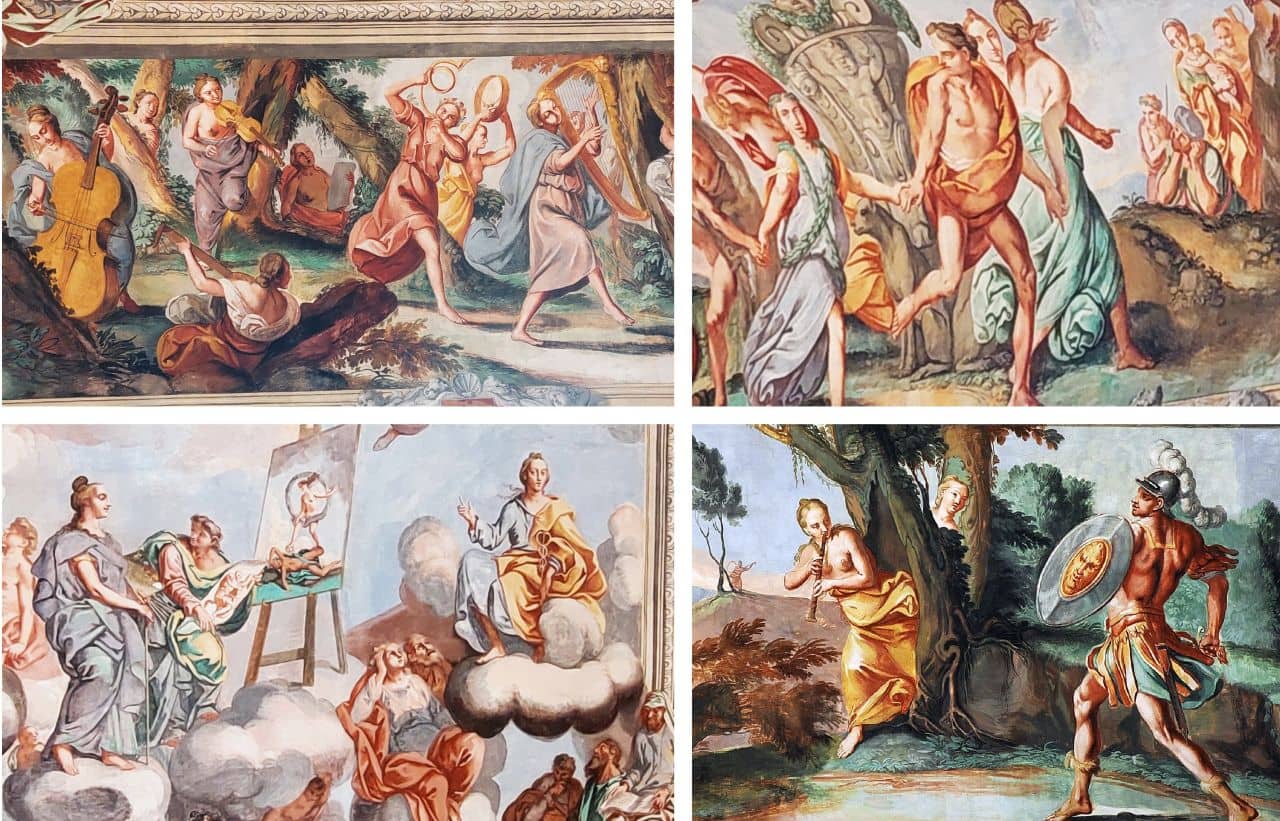
Various frescos in Knight Hall, Brežice Castle
The hall was conceived to impress, but also to show education and social standing. And yes, it has been captivating for more than 300 years. The Knight Hall is very acoustically, which is perfect for concerts, cultural events, and special occasions, such as weddings.
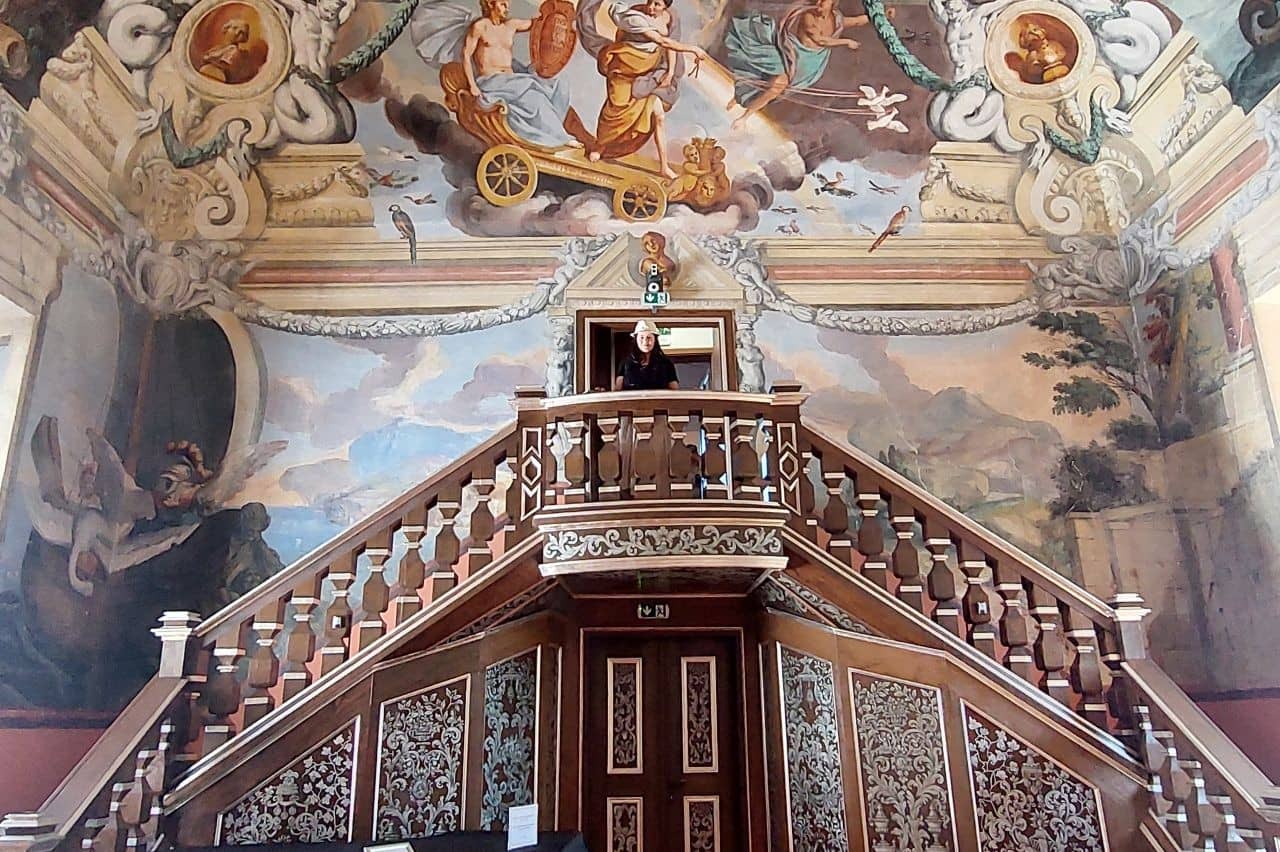
Me in the Knight Hall
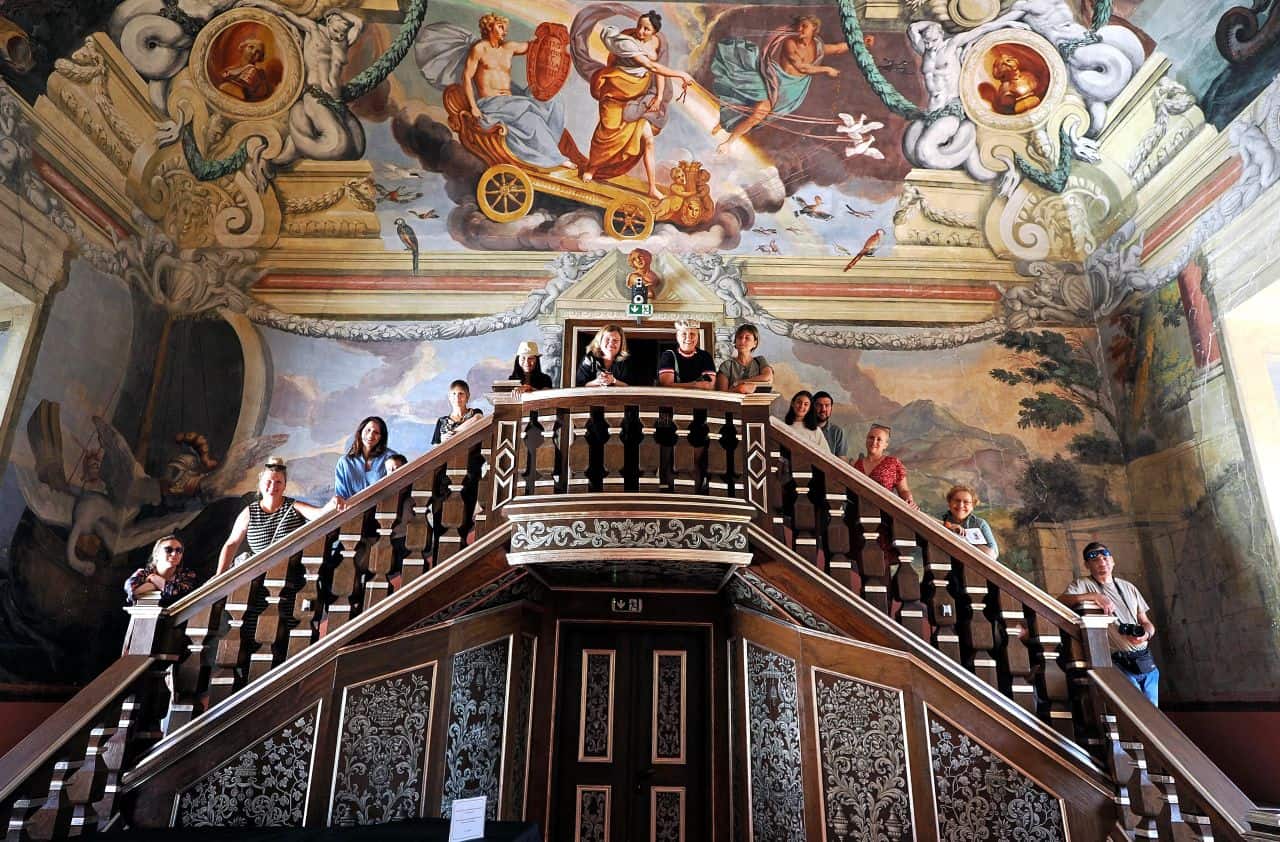
Our group visiting the Knight Hall, photo Nikola Zoko
Chapel of St. Cross (Kapela Svetog Križa)
The Chapel of St. Cross is situated on the second floor of the castle. The members of the Atttems family were getting married and were baptised there. It is also richly decorated with paintings made by Franz Ignac Flurer around 1720.
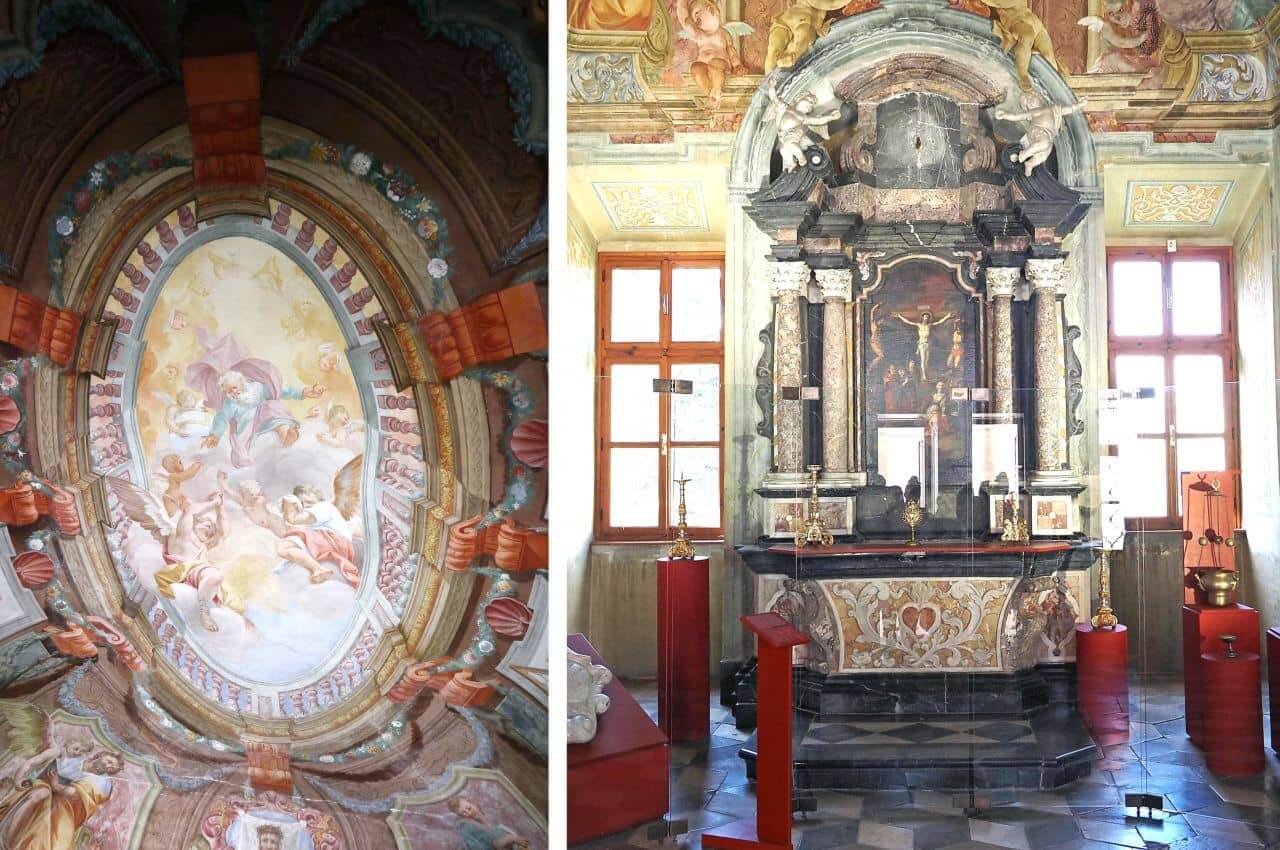
The Chapel of St. Cross, Brežice Castle (right photo Nikola Zoko)
Our tour of the castle ended in a recently opened and renovated area, inside one of the castle towers.
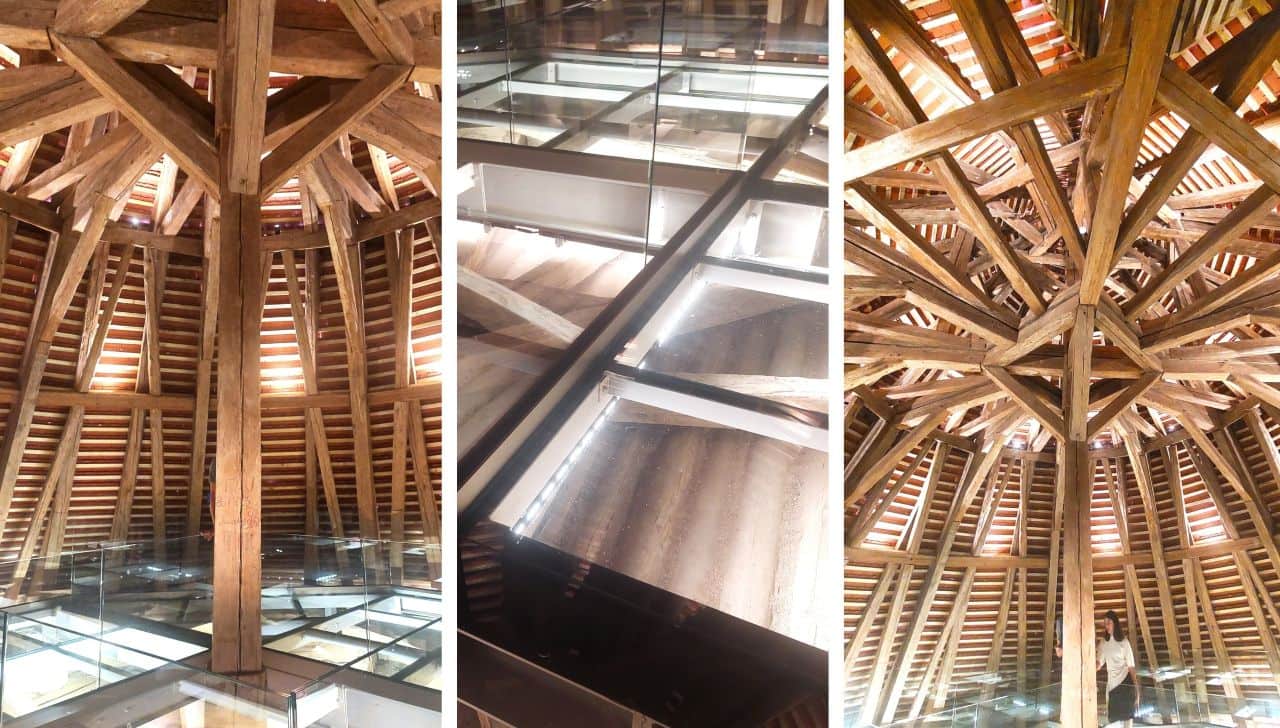
Inside the renovated tower of Brežice Castle
🏦 The Museum of the Posavje Region in the Brežice Castle
Since 1949, the castle has housed the Museum of the Posavje Region, which includes archaeological and ethnological exhibits from prehistory to the present time.
There are remains of various objects used by the Celtic tribe and Romans, as well as the reconstruction of the Celtic war chariot and Roman underfloor heating.
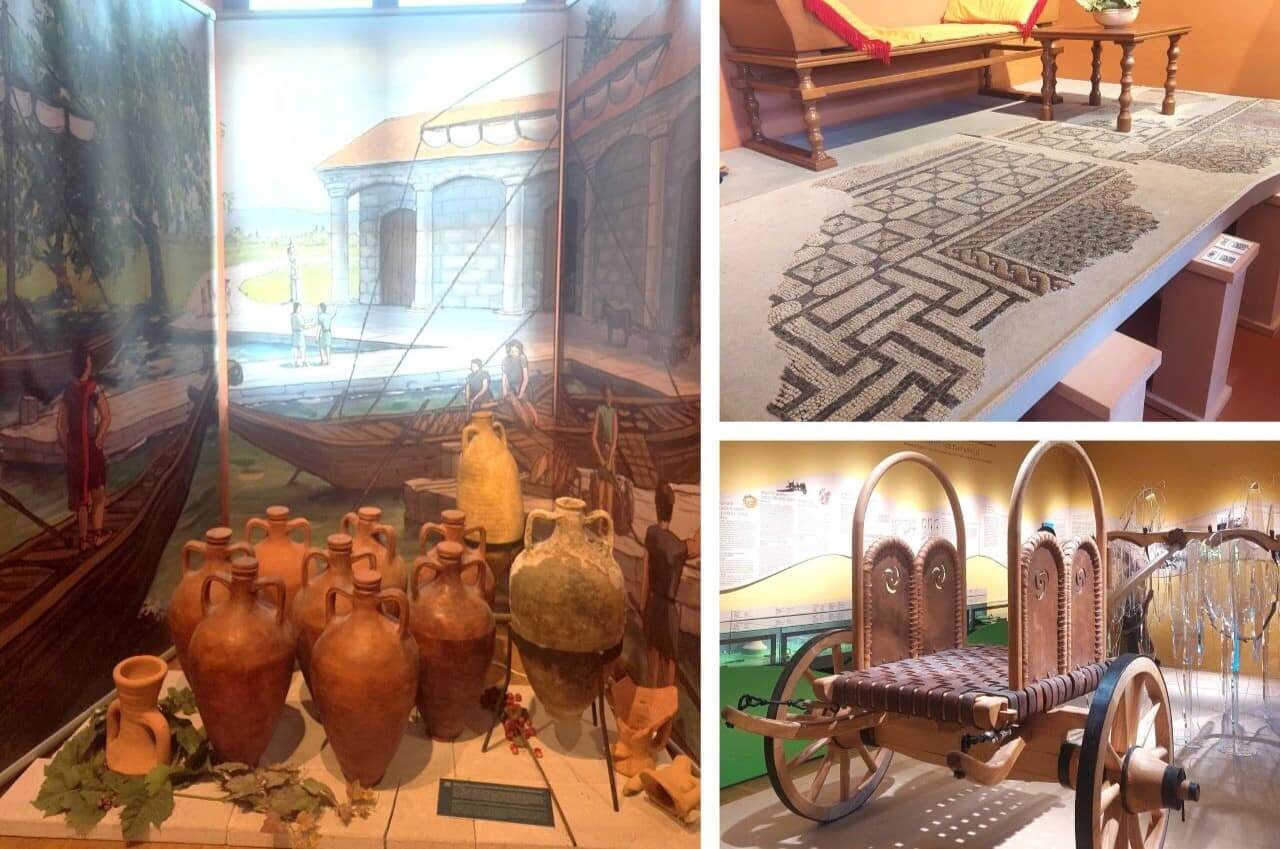
Roman and Celtic exhibits, Museum of Posavje, Brežice Castle
The ethnological exhibition represents the everyday life of the residents with an emphasis on craftsmanship, agriculture, fishing and winegrowing.
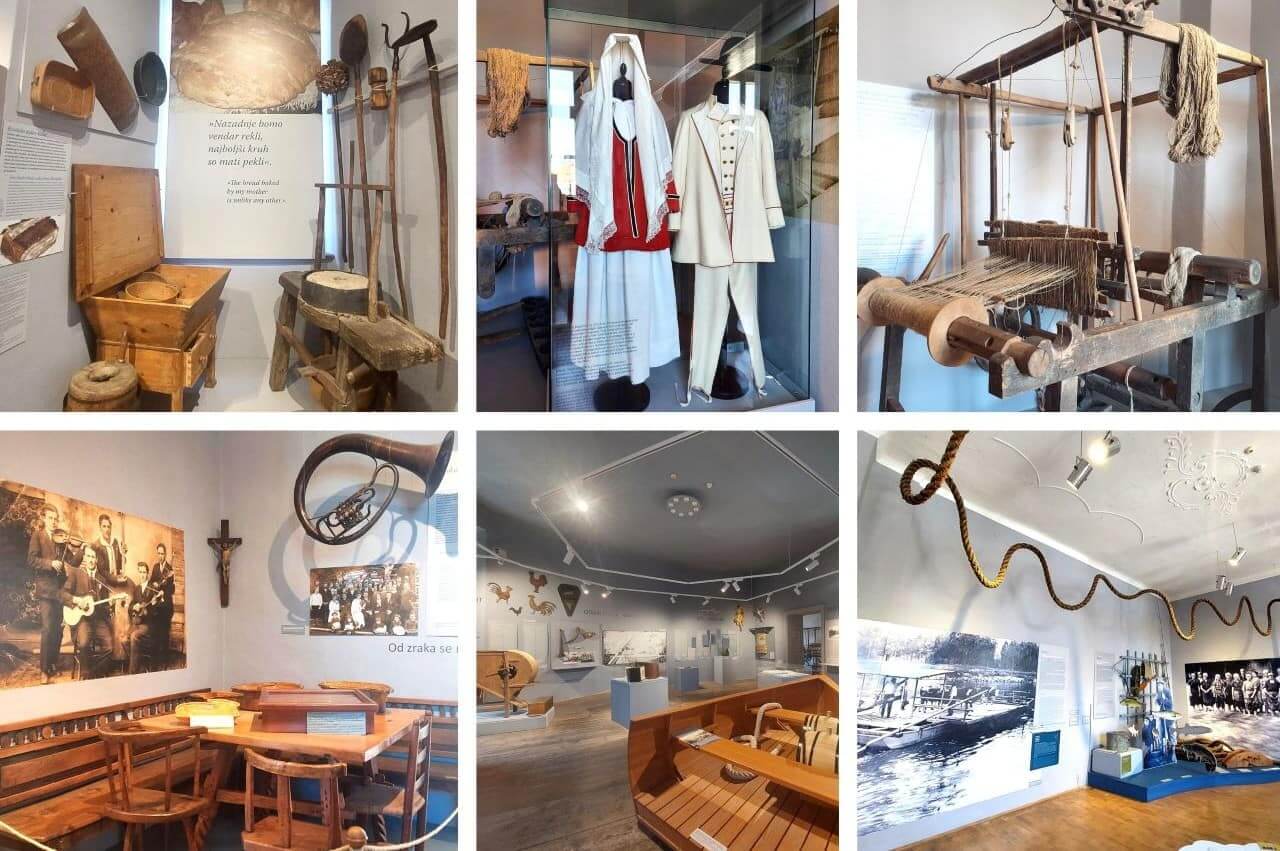
Ethnological exhibition, Museum of Posavje
Harmony of the Four Elements is a new exhibition based on the elements, Water, Fire, Earth, and Air, with interactive content. A part of this exhibition is dedicated to museum donors.
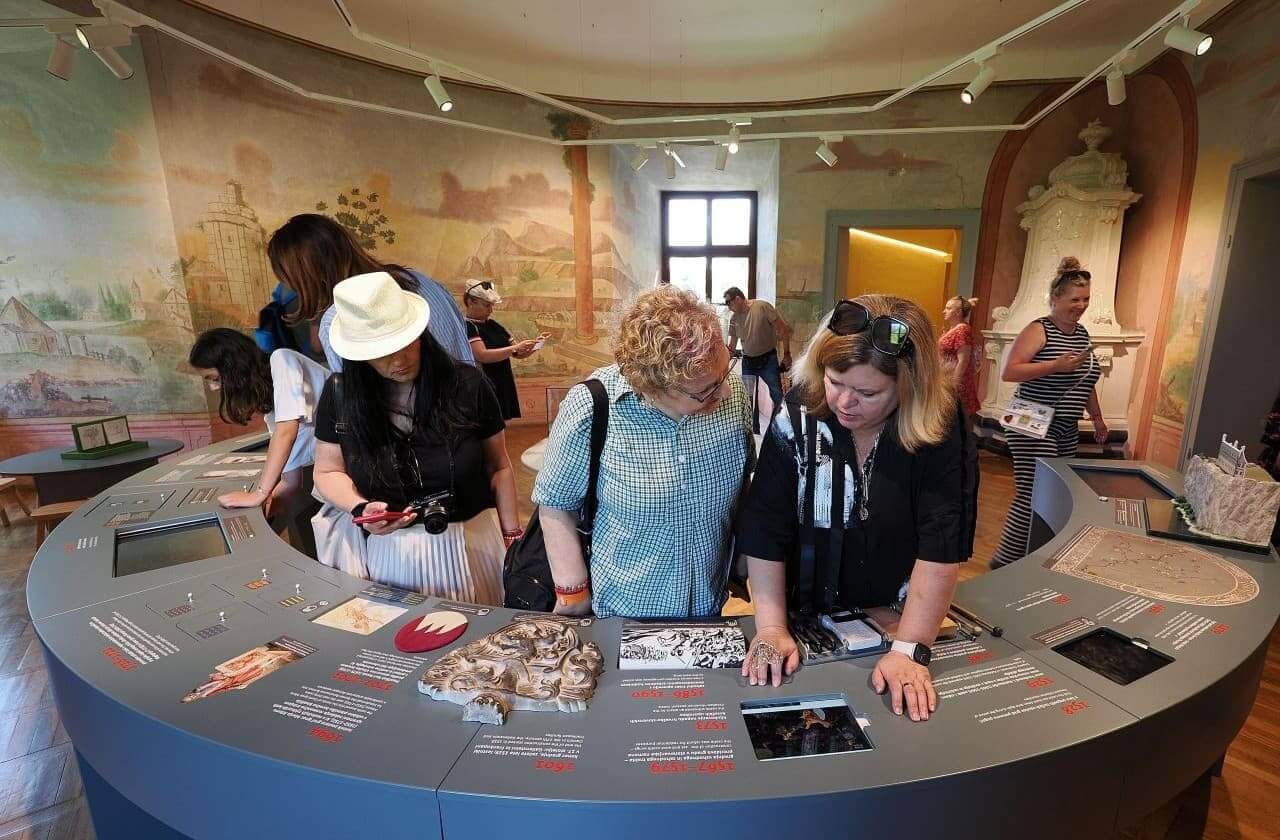
Posavski muzej Brežice, photo Nikola Zoko
💧Water Tower Brežice
The second landmark of the town is the Water Tower, built in 1914 to serve the water supply for Brežice.
It is 46 meters high, and it was disconnected from the water supply system in 1983.
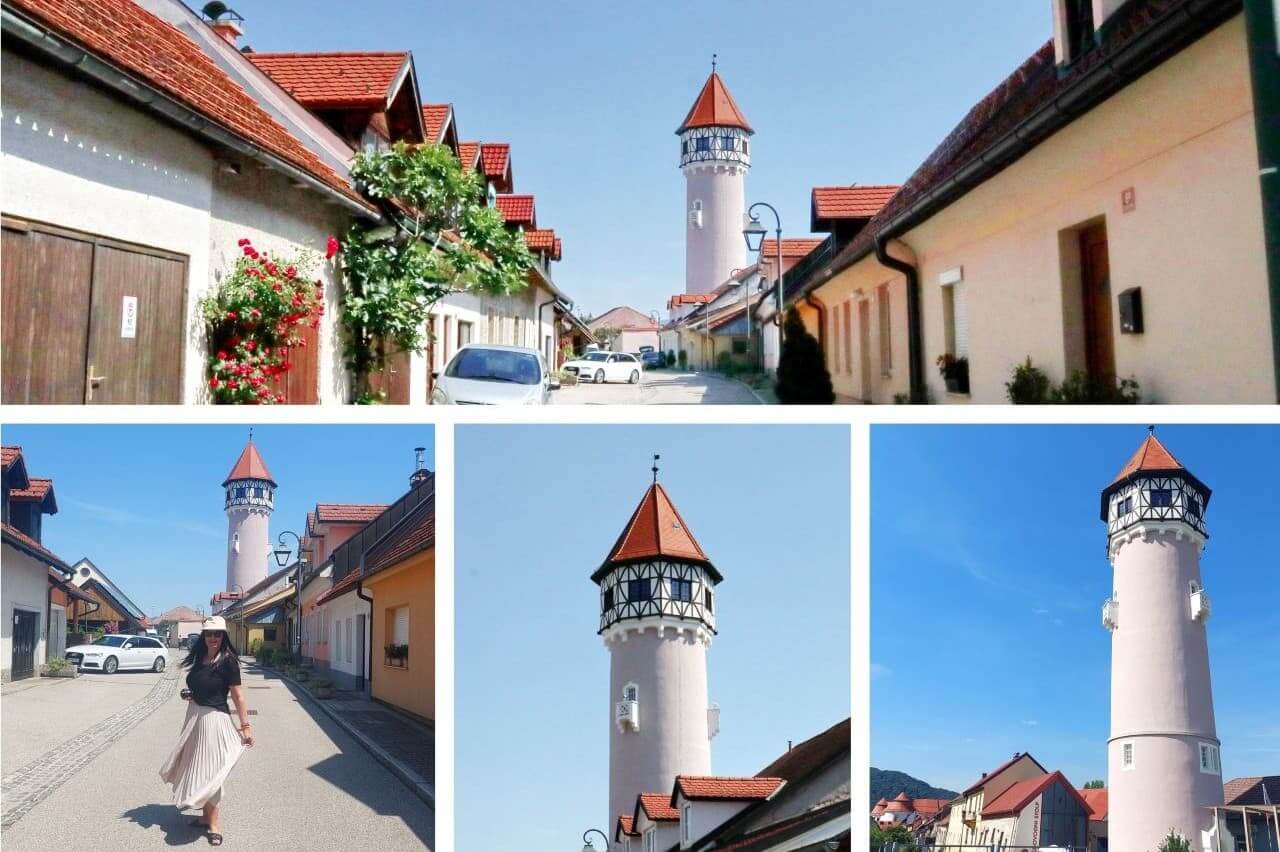
Street Ulica Stare Pravde and the Water Tower Brežice
The Water Tower became a modern and interactive museum after a renovation in 2022. Actually, it is the only water tower in Slovenia accessible to visitors.
During the tour of the tower, you climb to the top on the original circular staircase (or you can use the elevator). On every floor, visitors can learn more about how the Water Tower was built and how it has operated in the past.
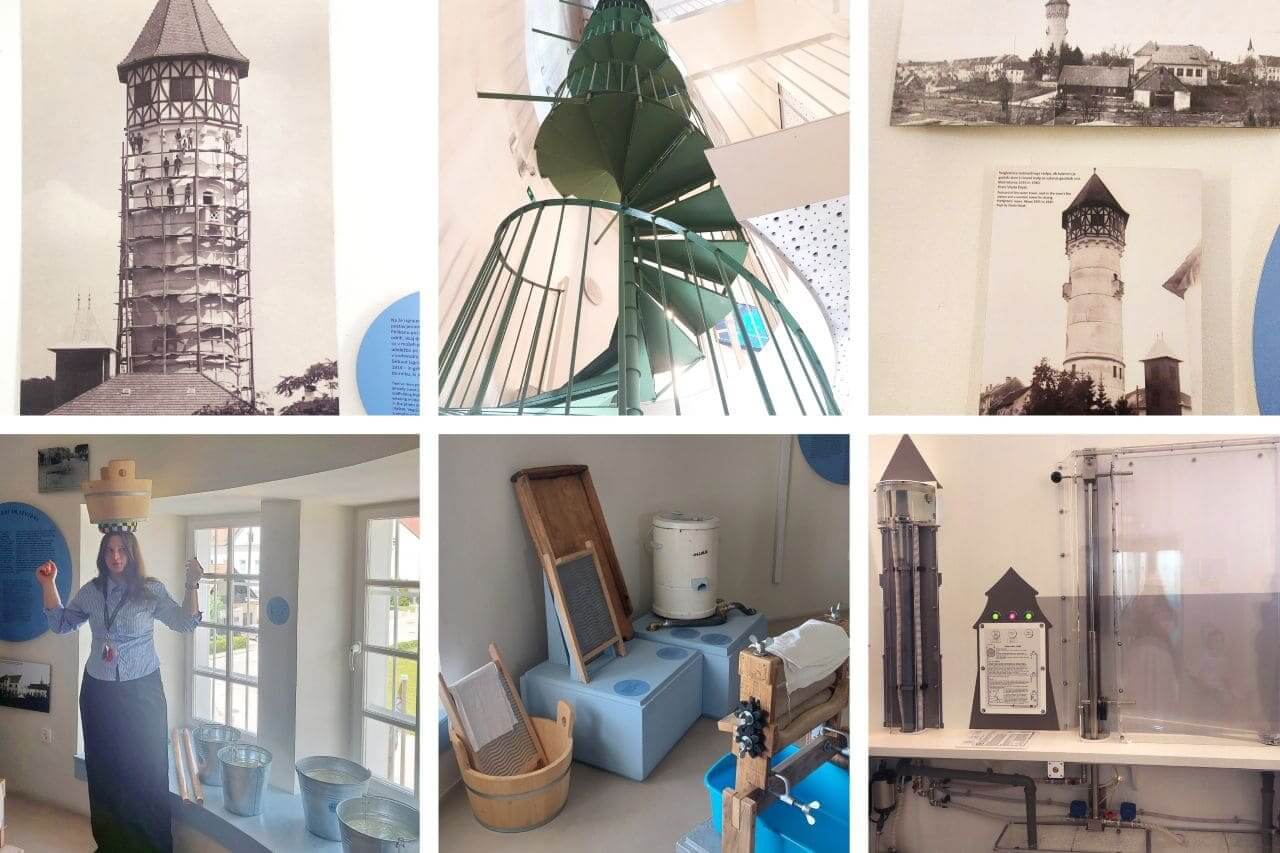
Water Tower Museum. Brežice
And when you reach the top, you can enjoy a fantastic panoramic view of the town and the lush greenery of the Posavje region.
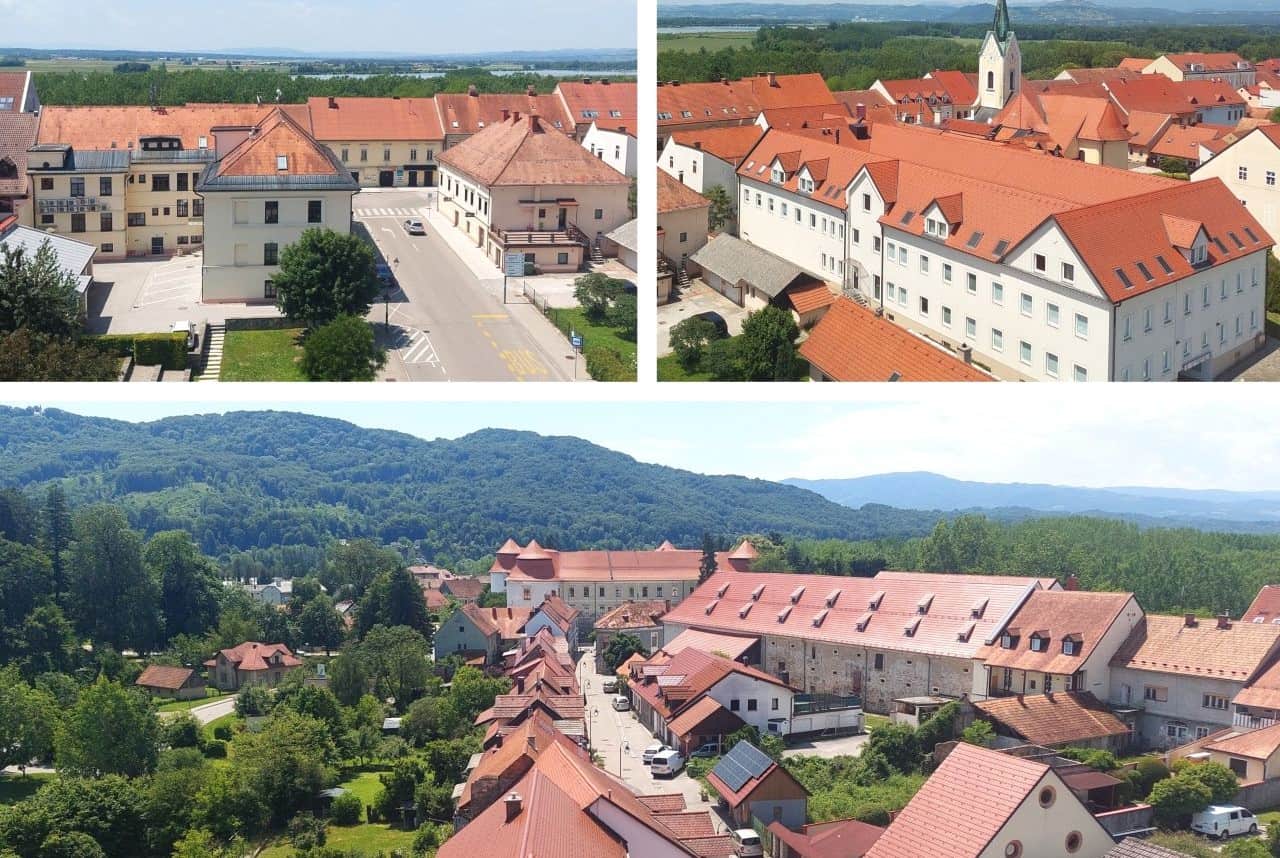
Panoramic view of Brežice from the top of the Water Tower
📅 Tips for visiting: opening hours and tickets
🕰️ Take a look at the opening hours for the museum and the Water Tower.
Summer (June-August)
Monday to Saturday, from 10 AM to 8 PM.
Sunday and holidays, from 2 AM to 8 PM.
Spring and autumn (March–May, September–October)
Tuesday to Saturday: from 10 AM to 6 PM.
Sundays and holidays: from 2 PM to 6 PM.
Winter (November–February)
Tuesday to Saturday: from 10 AM to 4 PM.
Sunday and holidays: from 1 PM to 5 PM.
🎟️ Price of tickets
Posavje Museum:
Adults: 6 EUR, reduced ticket: 4 EUR, family ticket: 15 EUR.
Water Tower:
Adults: 10 EUR, reduced ticket: 7 EUR, family ticket: 25 EUR.
Combined ticket:
Adults: 14 EUR, reduced ticket: 9 EUR, family ticket: 30 EUR.
Check here for details about reduced prices and free entrance.
☕🍽️ Cafes and restaurants
After we visited the museum, we took a break for coffee at the lovely Kavarna Vodovodni Stolp (Water Tower Cafe), located in the pavilion behind the water tower. You can also enjoy refreshing drinks and local desserts.
If you have time, go to lunch at some of the best restaurants, such as Osterija Debeluh (Michelin Plate Award in 2020 and 2021), Pr’ Šefu, Huda (Italian restaurant), Gostilna Pension Les, Štefanič, Reset Brewery (craft beer and food), etc.
In the main street, Cesta Prvih borcev, there is Kavarna Žagar, one of the most popular cafes which serves Italian coffee and sandwiches. Close to this cafe, you can find Yogurtlandia, the perfect place to taste frozen yoghurt, pancakes and waffles.
📍Why Visit Brežice Castle
Nestled in the Sava valley, Brežice Castle is more than just a museum. It is a witness to the turbulent history of the Posavje region. The castle has survived numerous attacks and destructions, but also renovations, changes and opportunities for a new life.
Visiting Brežice is an easy excursion between spa hours, pools with thermal waters in Terme Čatež, or a coffee in the town. Whether you are a history fan, an art lover, or simply a traveller seeking beauty, this Baroque gem will capture your heart.
Stay tuned for more stories from the hidden corners of Slovenia, such as the Mokrice Castle, which was our next amazing place to visit…

Leave a Reply
Want to join the discussion?Feel free to contribute!