
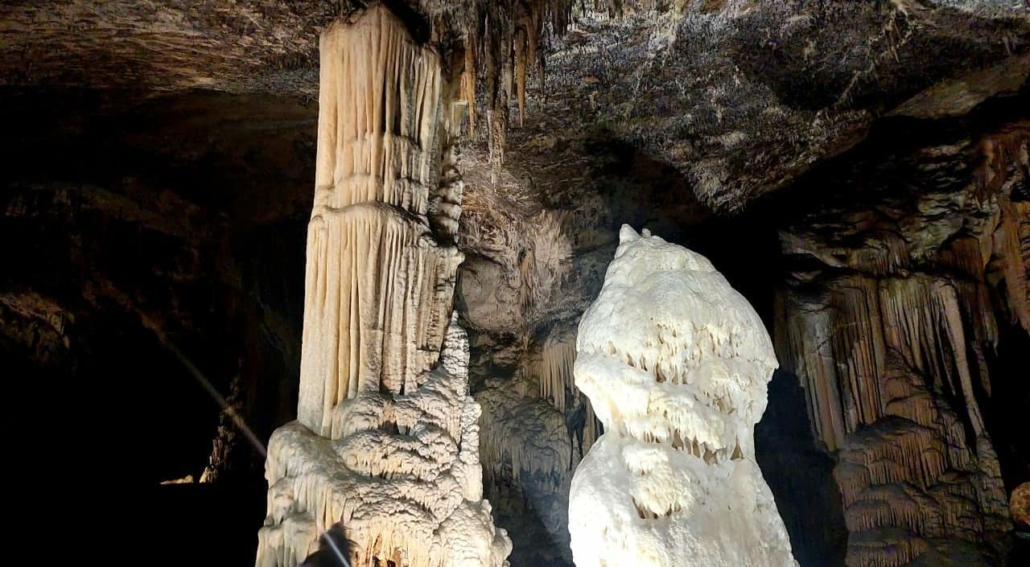
Magnificent Postojna Cave, the home of the baby dragon
Postojna Cave is a stunning natural marvel located in southwestern Slovenia. Its fantastic cave formation and the most famous inhabitant, the baby dragon, attract one million visitors annually.
Besides the Bled Lake, it is one of the most important tourist attractions in Slovenia. Also, it is the only place in the world where you can ride on an electric train through an underground cave.
The cave is a part of the Postojna Cave Park, together with the nearby Hotel Jama, Vivarium, Expo Cave Karst, and the Predjama Castle.
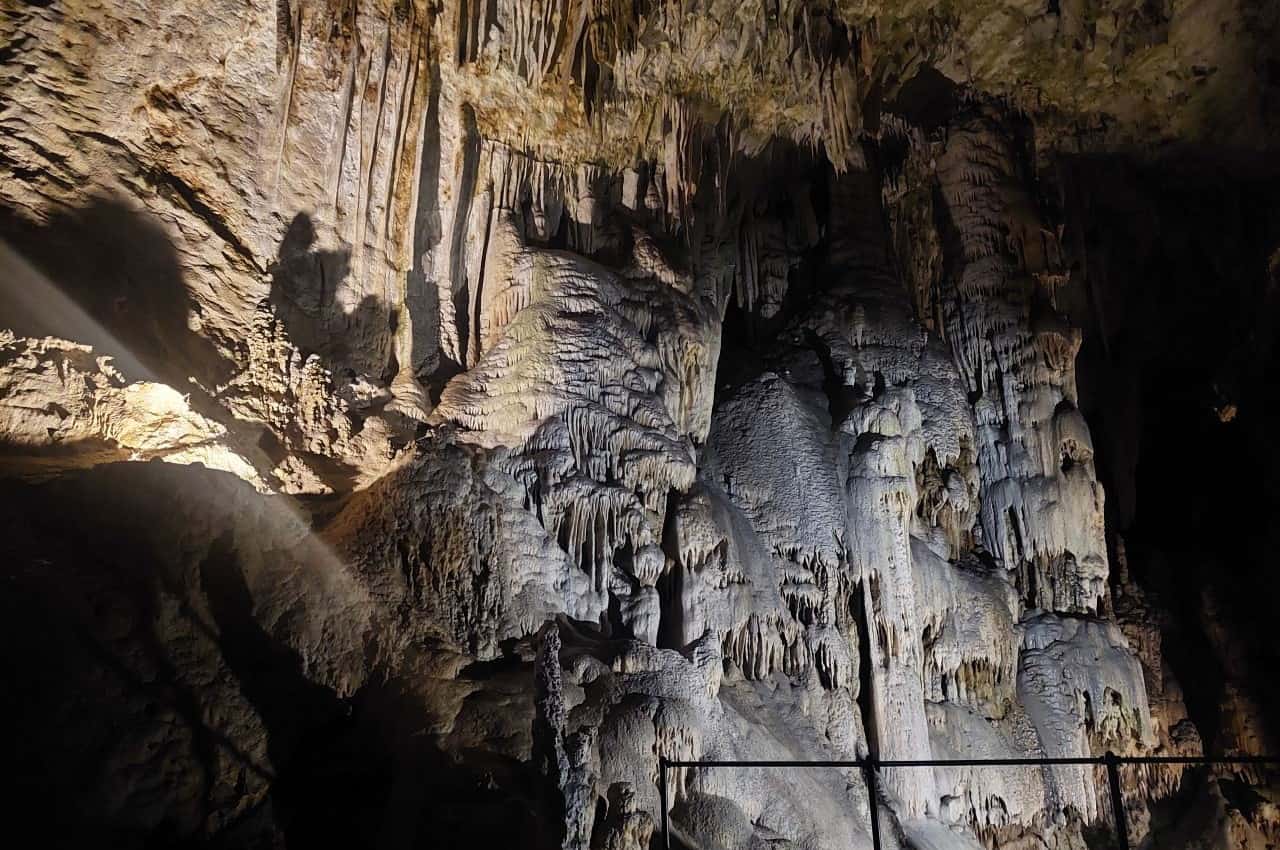
Postojna Cave
Disclosure:
This post contains affiliate links. If you click and make a purchase, I may earn a small commission at no extra cost to you. Thanks.
📍How to get to Postojna Cave
The Postojna Cave Park is situated near the town of Postojna and is easily accessible by various types of transportation.
It is in an ideal location at the intersection of roads between Croatia, Italy, Hungary, and Austria.
🚗 By car
The most comfortable way is by car via the A1 motorway from Ljubljana, which is 46 km away. Actually, Postojna is at the same distance from Koper, Portorož, Rijeka, and the Italian town of Trieste. Belgrade is 580 km away, which means about 6 hours of driving, plus the time at the border with the new EES system.
🚌 By bus
The Postojna bus station is located in the town centre, and there are hourly buses from Ljubljana to Postojna and several towns.
🚅By train
Postojna railway station is located a few kilometres south of the Postojna Cave. From there, you can take a local bus which runs to the Postojna Cave Park and the bus station, or take an approximately 25-minute walk. By the way, it is on the main railway line between Ljubljana and Trieste, and on the Vienna-Venice railway line with connections to Zagreb, Salzburg, Rijeka and Koper.
✈️ By plane
The closest airport is in Ljubljana, which is connected with the Italian airports in Trieste and Venice, and in Croatia, such as Zagreb, Rijeka and Pula.
💡What to know before the visit to Postojna Cave
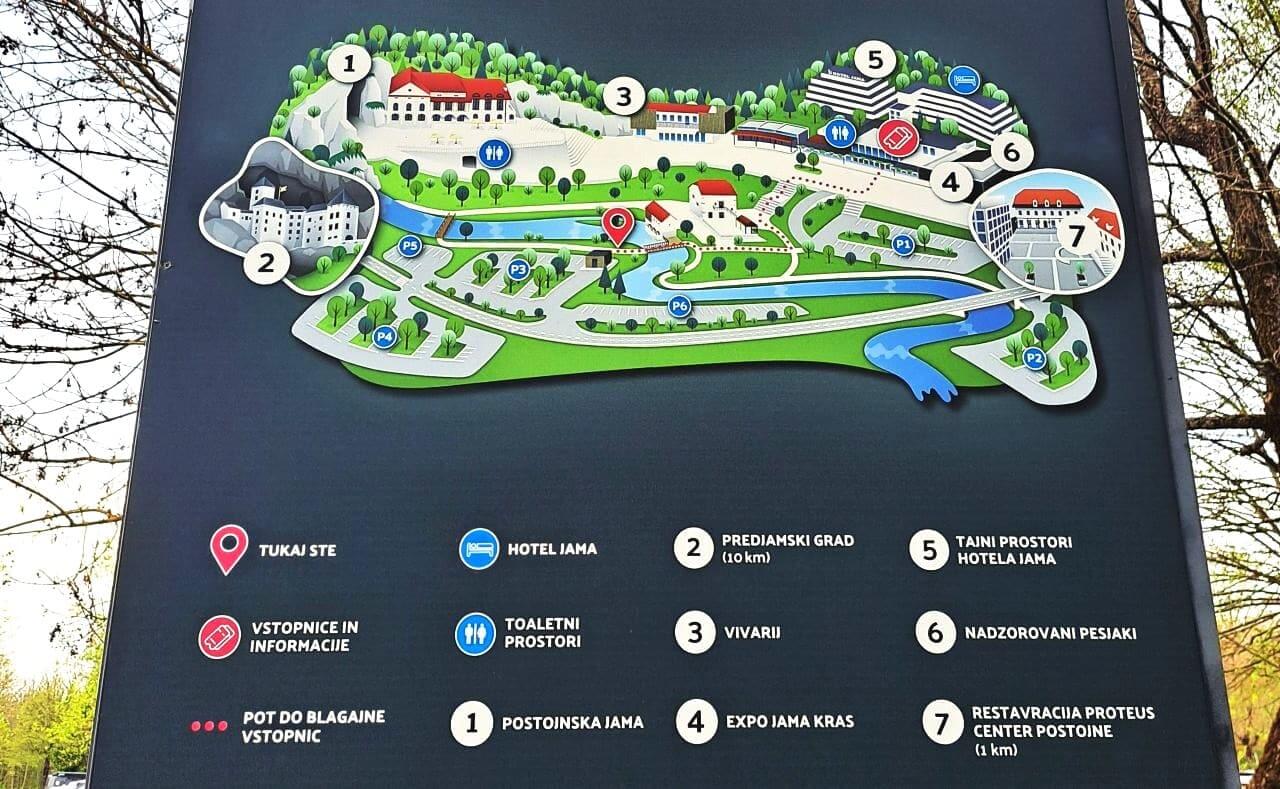
Postojna Park map
Price tickets
There are various options for tickets, depending on the number of places which are visited. It is recommended to buy them online becaouse of the crowd, or you can buy them in the ticket office close to the cave and hotel Jama.
The first tour starts at 9 AM, and it is the best time to visit it because it is not too crowded.
Check out the price of tickets for the Postojna Cave tour:
for adults 33.50 EUR, students (16-25 years) 26.50 EUR,
children (6-15) 19.90 EUR, and for children up to 5 years, the ticket costs 1 EUR.
The best option is to purchase the Combined ticket, which includes a visit to Postojna Cave, Vivarium, Expo Cave Karst, and Predjama Castle. This ticket costs 57.50 EUR for adults, 45.90 EUR for students (16-25 years), 34.50 EUR for children (6-15), and 4 EUR for children up to 5 years.
If you purchase a ticket that includes a visit to Predjama Castle, take the shuttle bus between the Postojna Cave Park entrance and the Predjama Castle, which is available for part of the year. Also, the taxi rides can be arranged at the ticket office.
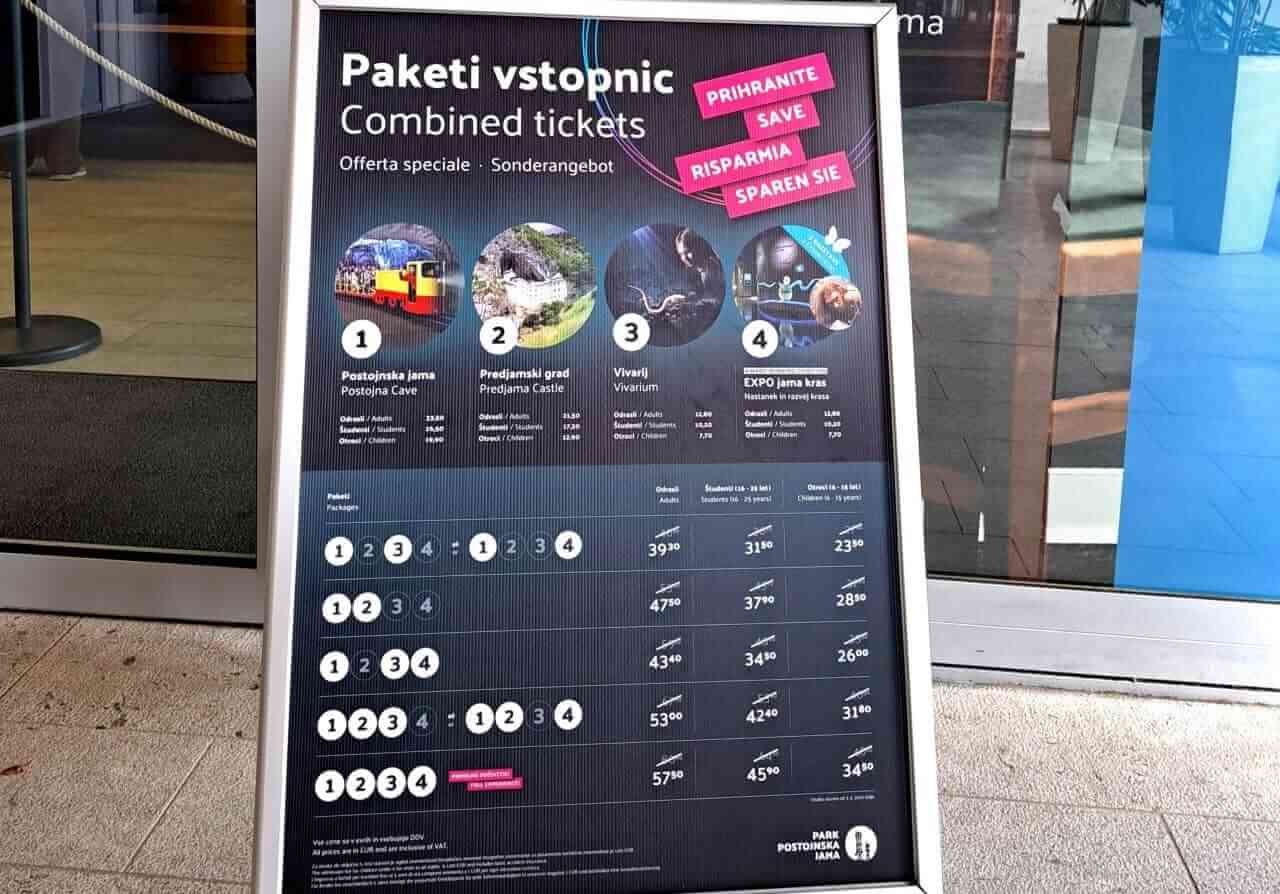
Postojna Park ticket prices, 2026
What to wear
Bear in mind that the temperature inside the cave is constant at 10 °C throughout the year, regardless of the season. It is advised to wear closed and comfortable sports footwear, because the cave paths are wet. Also, take a jacket or a sweater if you are coming during the summer, and long trousers, to be sure you won’t get cold.
Guided tours
Postojna Cave tours last 90 minutes, guided by speaking tour guides in Slovenian, English, German or Italian. There is also the option for audio guides in various languages.
Our guide, Kevin Valenčić, was fantastic, and he gave us a lot of information about the cave and its interesting inhabitants.
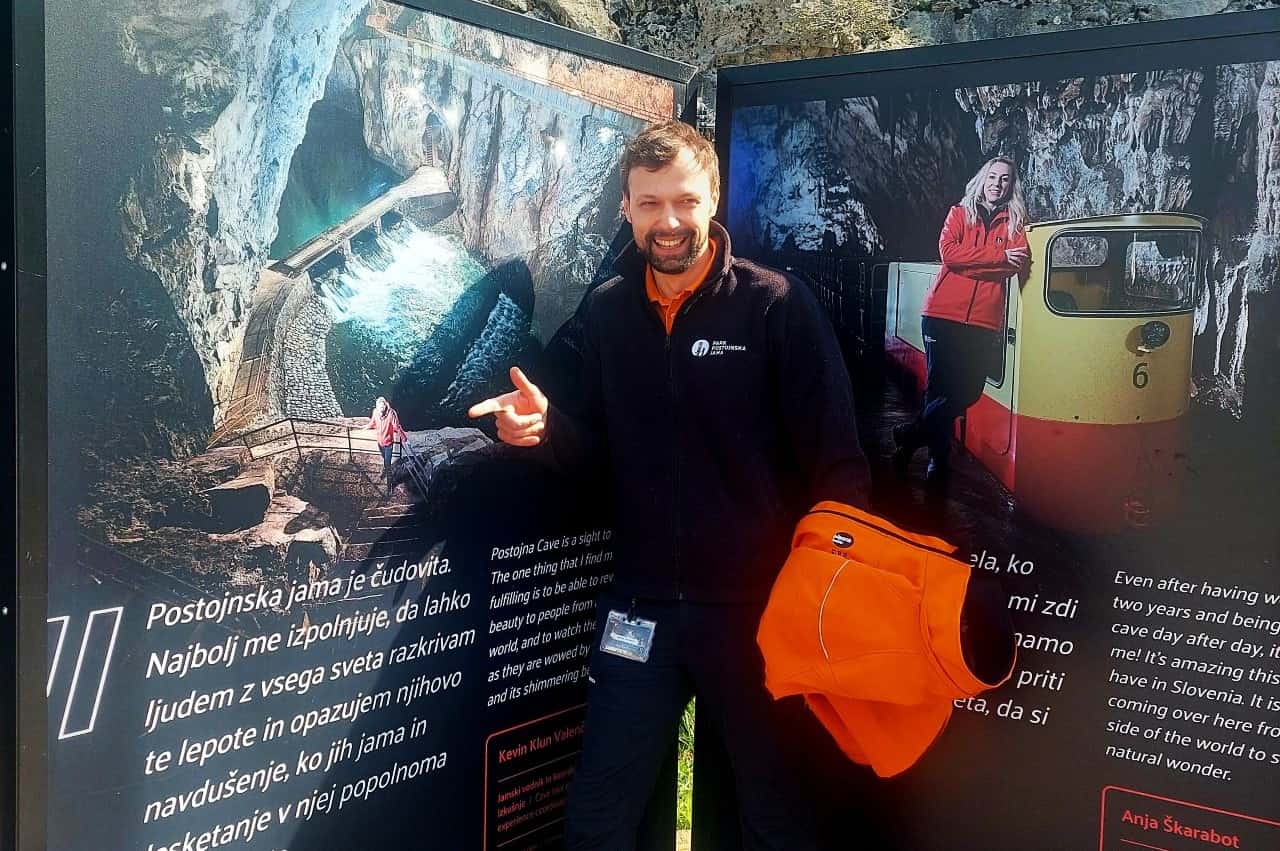
Postojna Cave, our cave guide, Kevin Klun Valenčić
Photography
You can take photos or videos in the cave, but the flash is strictly forbidden to protect the light-sensitive eyes of the cave animals and sculptures.
Expo Jama Kras
The best way to start a tour of Postojna Park is a visit to the Expo Jama Kras.
It is a modern interpretation space that introduces you to the fascinating world of the karst underground. In an interactive and visually attractive way, it is explained here how karst is formed, how water shapes caves for thousands of years and how long it took to create the system that you will soon see and walk.
Actually, EXPO is the story of the discovery of one of the most famous caves in Europe. Postojna Cave is considered the cradle of speleobiology. According to the inscriptions on the cave walls, the first visitors were probably in the 13th century.
By the way, the Slovenian word “karst” means the rocky landscape. I was surprised that by spring 2017, 12,000 known caves had been recorded in Slovenia and inscribed in the register of caves by the Speological Association of Slovenia and the Karst Institute.
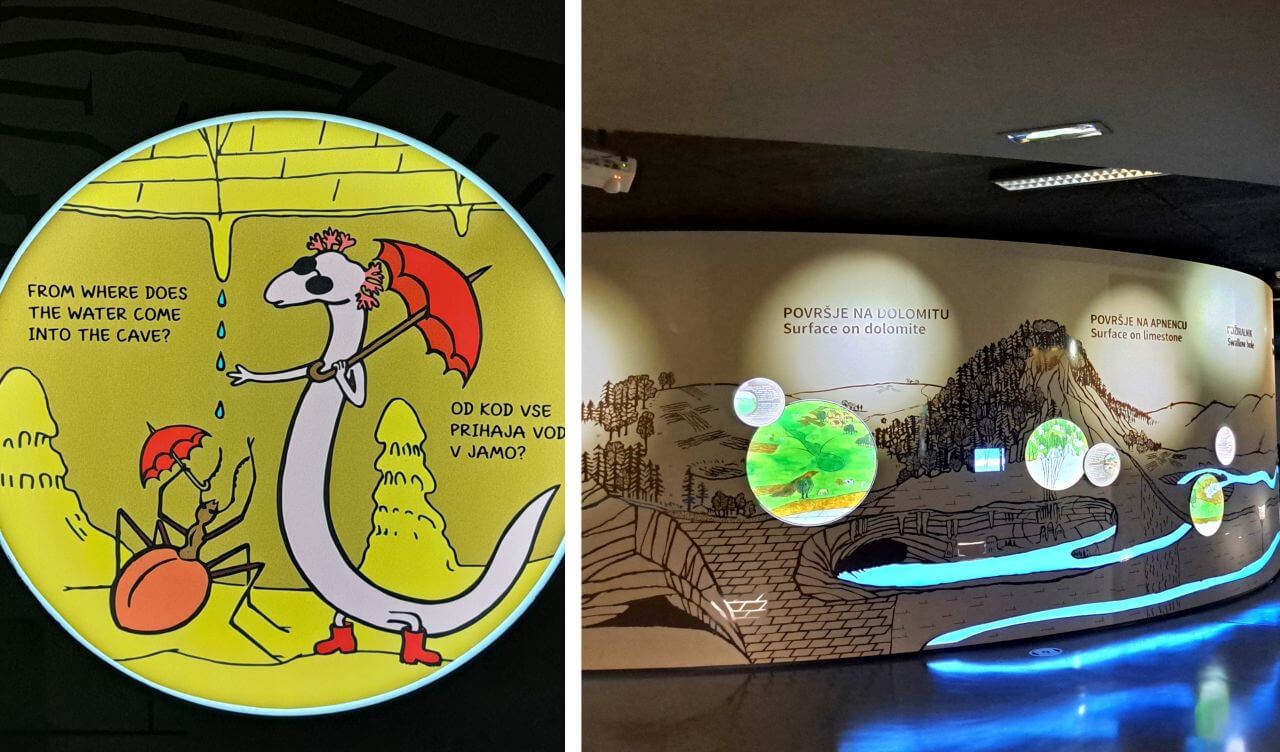
EXPO Kras, Postojna Cave
Luka Čeč, the discoverer of the Postojna Cave
In April 1818, the workers were prepared to illuminate the Great Hall in the cave for the visit of Emperor Josip I of Austria. Among them was Luka Čeč, a cave lamplighter, who crossed a makeshift bridge on the river Pivka and climbed some rocks. Suddenly, he disappeared, and his colleagues were already thinking the worst. But, Luka finally appeared, and gleaming in the lamp light, he said: “Here is a new world, here is paradise!”
His research and discovery of previously unknown underground halls marked the beginning of modern speleology in the region.
Unfortunately, his fantastic discovery was given to Josip Jeršinović von Löwengreif, the Postojna district treasurer, due to Luka’s poor origin. His request to join the cave guide service was also turned down. But he continued to research. Luka was the first person who discovered that there was life in the cave in 1831, when he found a cave insect, the thin-necked earthworm (Leptodirus hochenwartii).
He died in 1836, and in 1854, Luka was mentioned in Schmidl’s work on Slovenian caves. That was the first satisfaction to be placed alongside other Postojna Cave discoverers.
The history of cave train and tourism in the Postojna Cave
After Luka’s discovery, the first tourists began visiting the cave in 1819. It was a real adventure, climbing and exploring in the dark, with the light of torches. So, they tried to find a better solution for decades.
In March 1857, the sedan chairs were set for the imperial couple, Franz Joseph and Elizabeth, known as the Empress Sisi.
Becaouse of its horizontal position, it was possible to set up the first documented railway in an underground cave in June 1872. Well, it was moved by the cave guides, who pulled two carriages carrying four visitors around the cave, illuminated by the torches.
From 1872 to 1923, the cave became a tourist attraction. After World War I, Postojna was under the rule of the Kingdom of Italy, and, in 1923, the railway line was completely renovated and extended. Visitors were transported around the cave by a gasoline-powered locomotive that could pull 20 passengers.
The number of visitors was rapidly increasing, and the cave’s management purchased another locomotive. The new one had 25 carriages with 6 seats, and could accommodate 150 visitors on the tour at the same time.
After World War II, Postojna Cave became part of the Free Territory of Trieste and later, Yugoslavia. The gasoline-powered locomotives produced too much noise and exhaust fumes. Finally, in 1956, the cave management purchased battery-powered electric locomotives, and this type is still used even today. And the number of visitors is growing rapidly, day by day…
Vivarium, an underground zoo
Next to the Expo centre, Hotel Jama, and fifty meters from the entrance to Postojna Cave, you can visit the Vivarium. This tour is not guided, so take your time to see the exhibition.
Vicarium consists of two parts: the research part (laboratory), used for scientific work and research, and the speleobiological exhibition.
Do you know that there are over 150 cave animal species, including spiders and crustaceans, that have adapted to complete darkness? You can meet some of them there, because it is impossible to see in the cave.
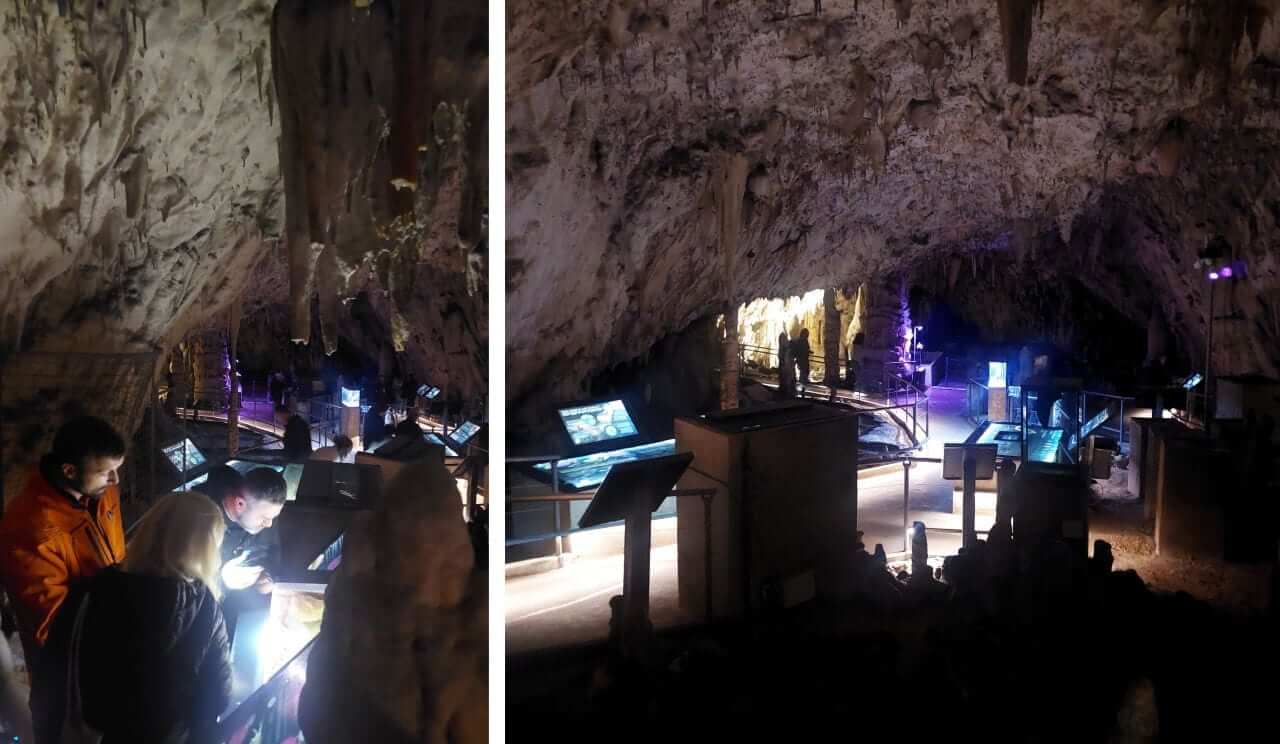
Vivarium
In September 1831, Luka Čeč found the Slenderneck Beetle (Leptodirus hochenwartii) on one of the stalactites below the Great Mountain in the cave. The beetle has a tiny neck, thin legs and a large abdomen. It was the beginning of biospeleology, a new science that studies organisms that live in caves, often referred to as cave biology.
Baby dragon
The most interesting inhabitant is the olm (Proteus anguinus), known as the baby dragon. According to legend, it was believed that they were the offspring of a dragon living in the cave.
This unique species spends its entire life in complete darkness underground. It is the largest of all animals in the cave, and it is 25 to 30 centimetres long,
The baby dragon is incredibly sensitive. Its skin lacks any protective pigmentation, so it is pale pink in colour and resembles the skin of people, which is why it was given the name “human fish”.
Its front and back pairs of legs are stunted. Three pairs of bright red external gills serve as organs for breathing, although they receive oxygen from the water and through the skin. It feeds on crayfish, worms, snails and other aquatic invertebrates.
It is a fascinating fact that it can live up to 100 years, and without food, it can survive for several years!
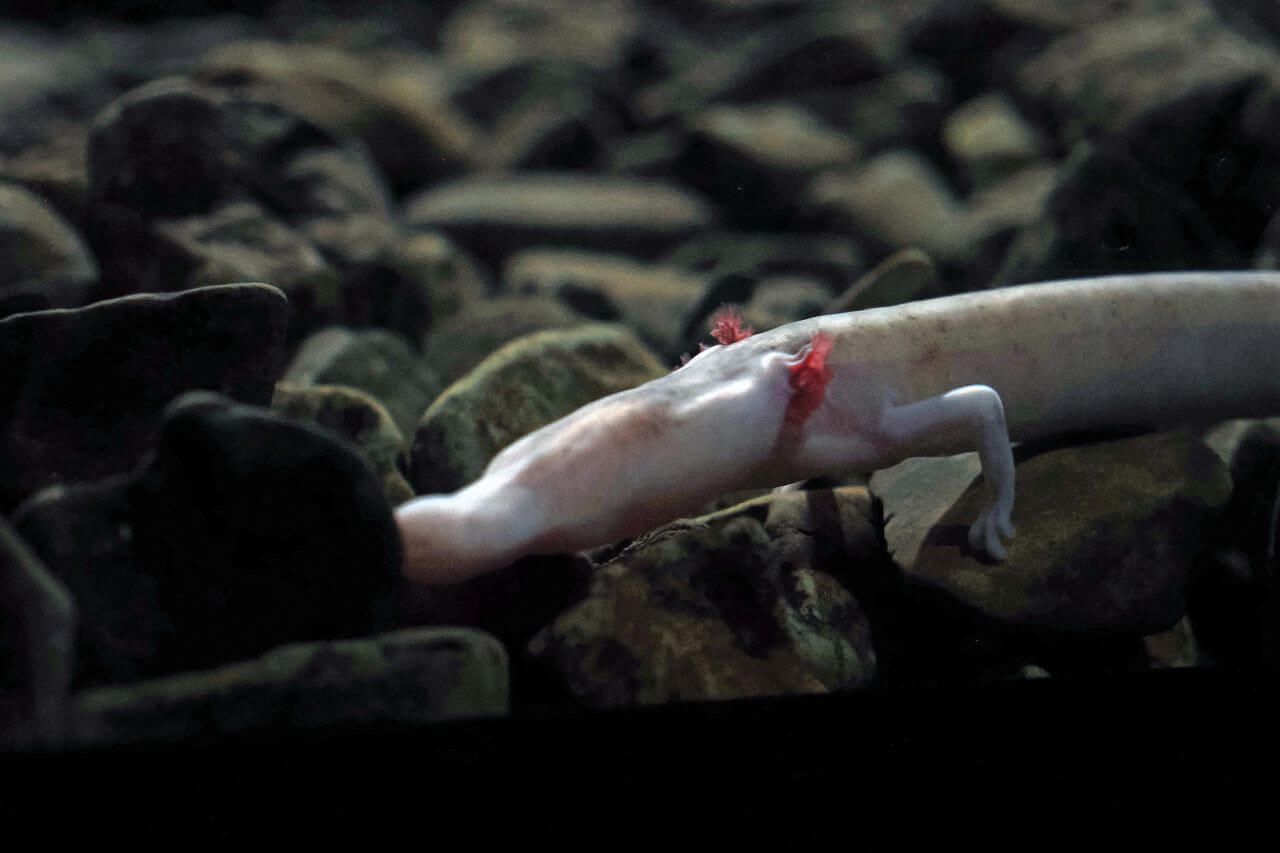
Postojna Cave, Baby dragon, photo Nikola Zoko
Interestingly, it reaches sexual maturity after 14 years. In 2016, the whole world watched the hatching of manfish hatchlings in a tourist cave, for the first time recorded in history.
The human fish in the Vivarium is proof of how fragile and incredible life in caves really is. It can be found in underground lakes and quiet parts of Dinaric karst streams, from northern Italy, Istria, Slovenia, through Dalmatia, Bosnia, and to Montenegro.
📍Postojna Cave, the Queen of Caves
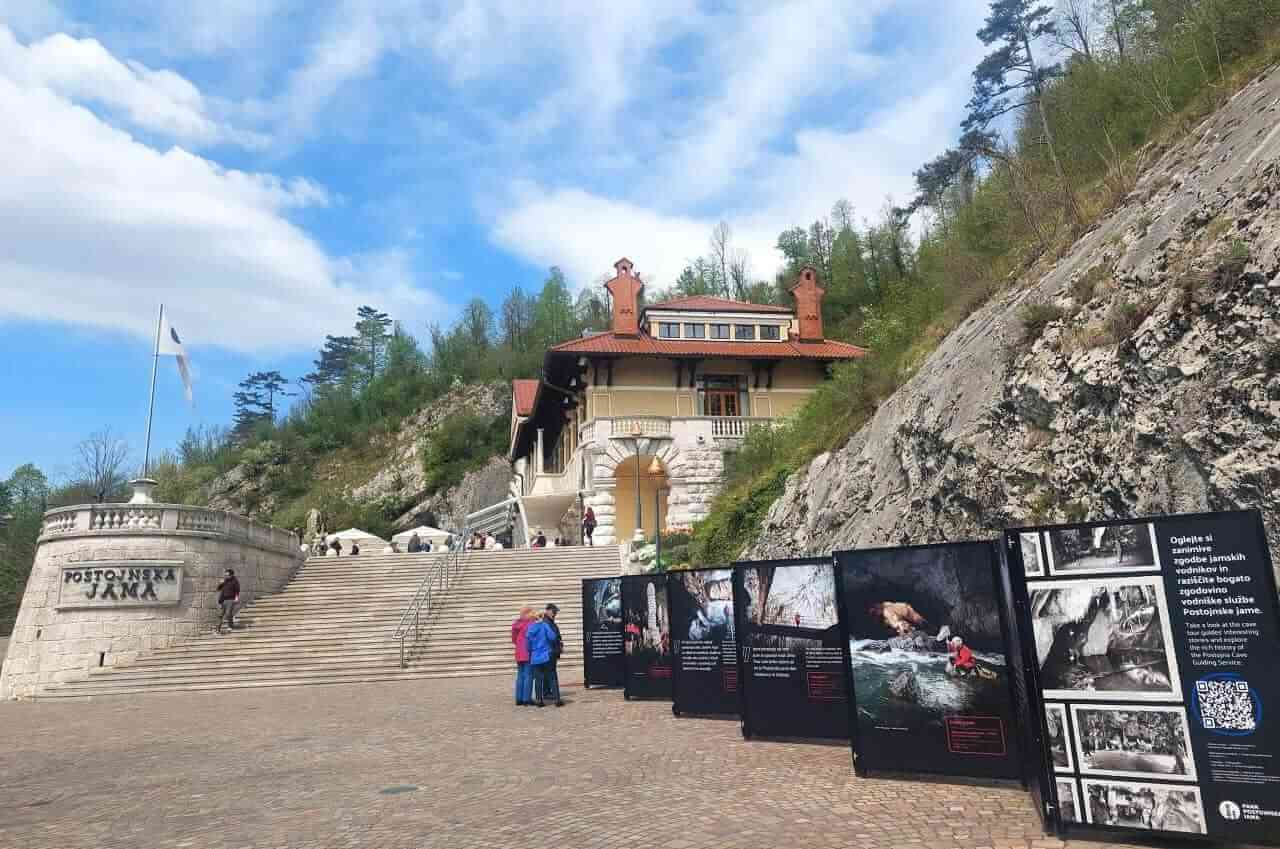
Entrance to the Postojna Cave
I must admit that I was so excited about visiting the Postojna Cave!
In front of the cave, there is an administrative building that dates back to the period when Slovenia was part of Austria-Hungary, and the cave was known then as “Adelsberger Grotte”. Today, there is a ticket office, a shop and the starting train station.
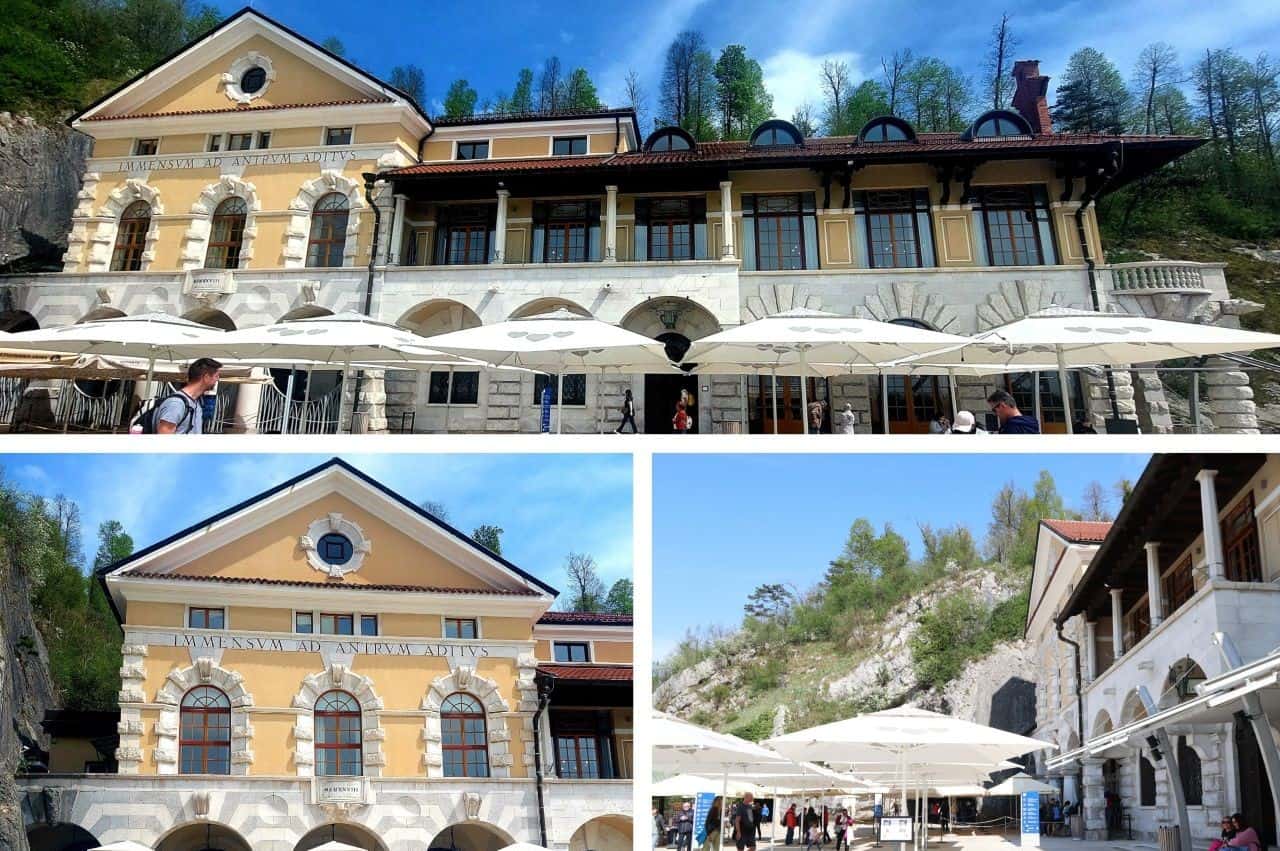
Administrative building, Postojna Cave
The Pivka sinkhole created the cave system. It can be seen at the entrance, where it sinks into the cave, then into the Otoška and Black caves, as well as into the Pivka pit.
Before 1818, visitors could visit only 300 metres of the cave, but today it is more than five kilometres.
Cave train ride
A visit to Postojna Cave starts at the entrance station of the cave railway.
First, the train passes through an artificial tunnel, built in 1964, when a double-track railway was constructed.
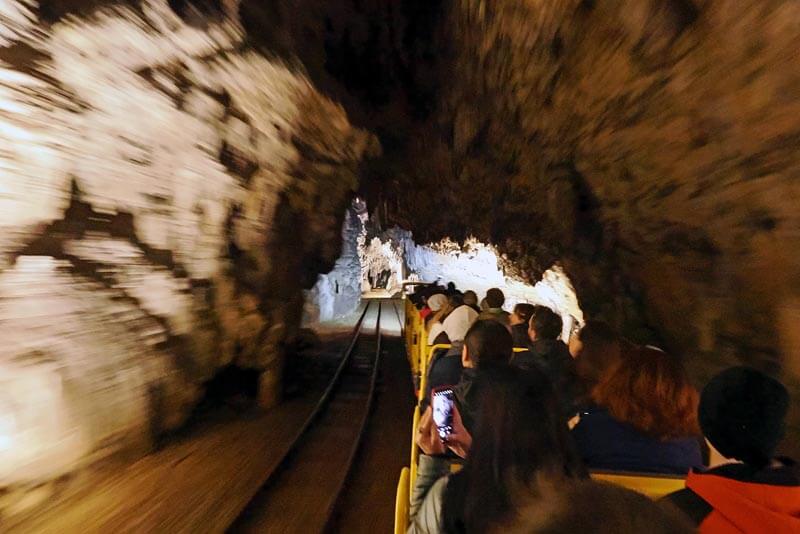
Cave train, Postojna cave, photo Nikola Zoko
Then comes the Gothic Hall, which is richly decorated with stalactites and stalagmites, and the Ballroom. The train ride through illuminated tunnels and halls is unforgettable, and leaves you breathless at every meter.
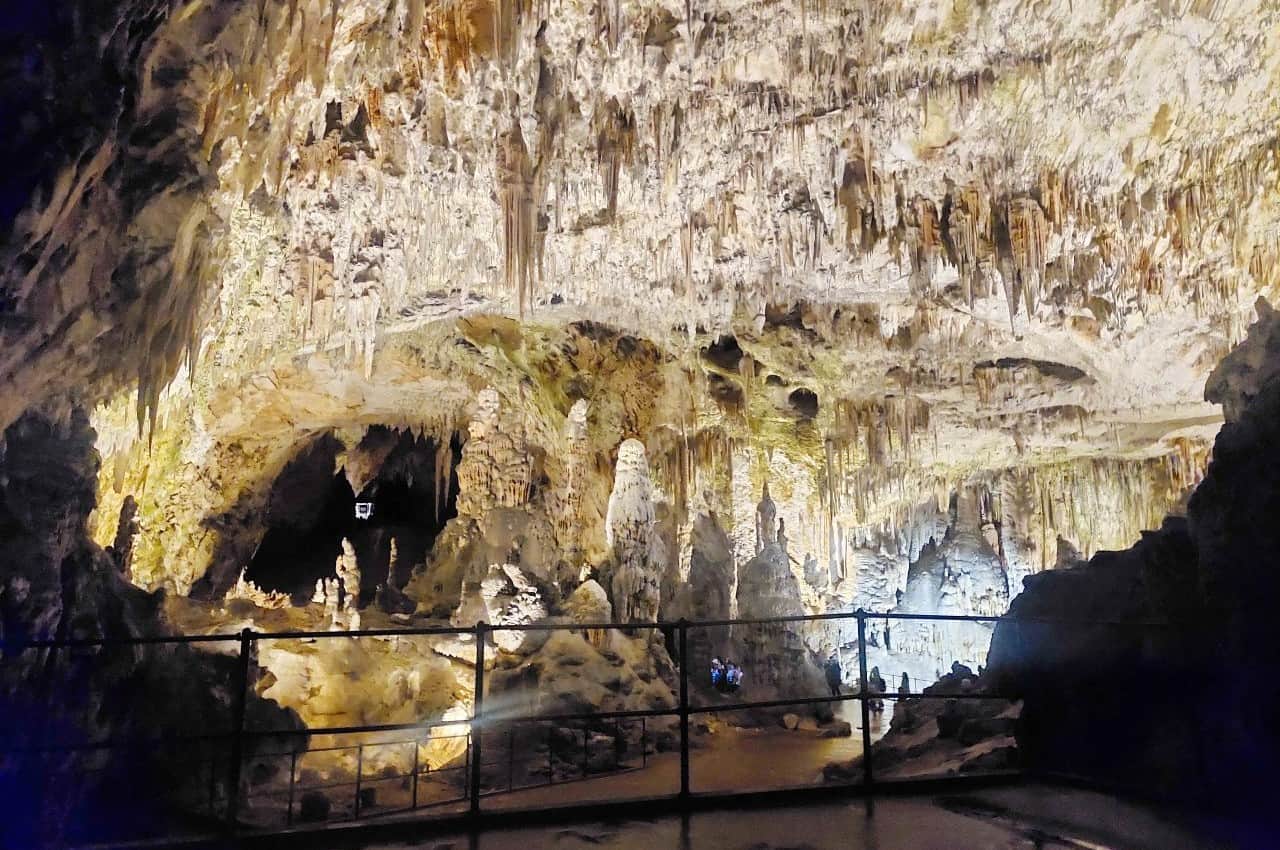
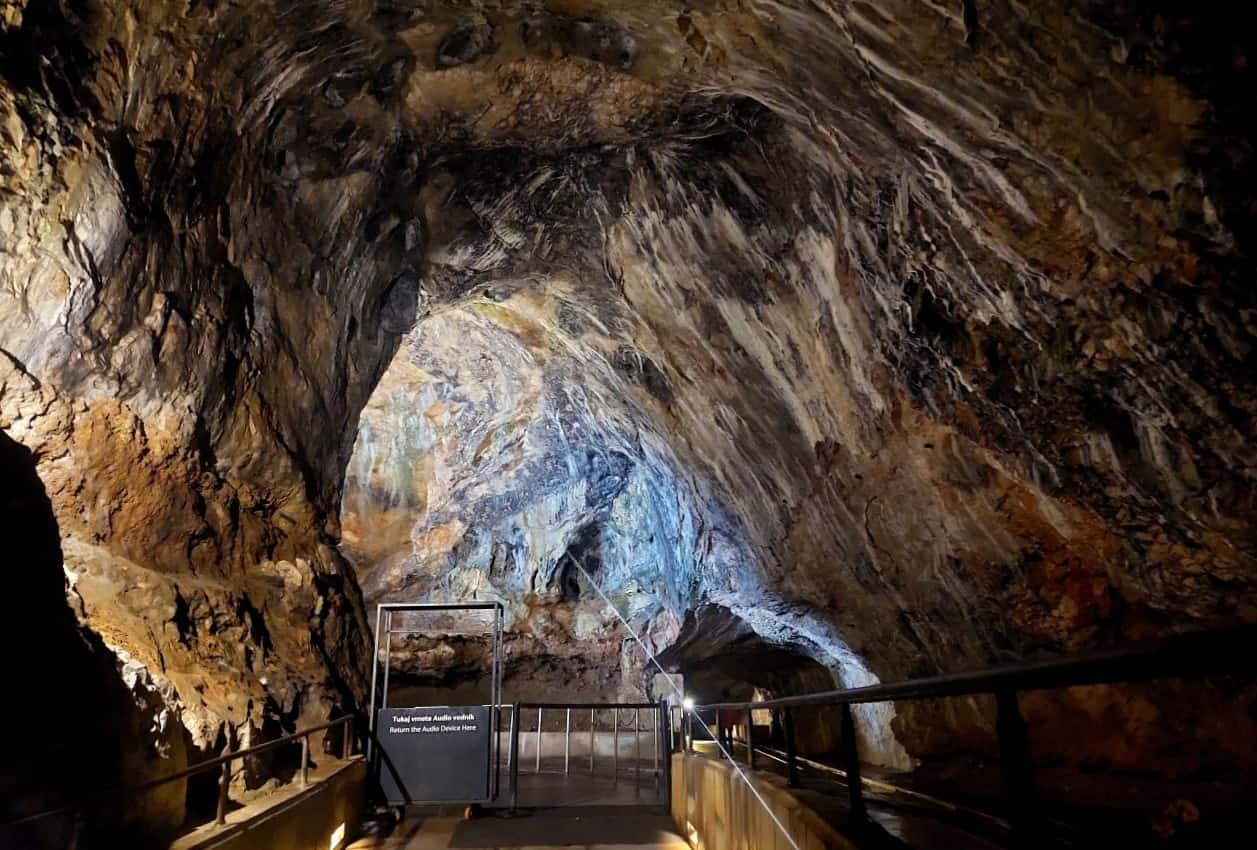
Inside the Postojna Cave
After two kilometres, we continue our visit on foot for about 1.5 km. The path leads past the Great Mountain (also known as Calvary), across the Russian Bridge into the Beautiful Caves, through Spaghetti, White and Red Halls.
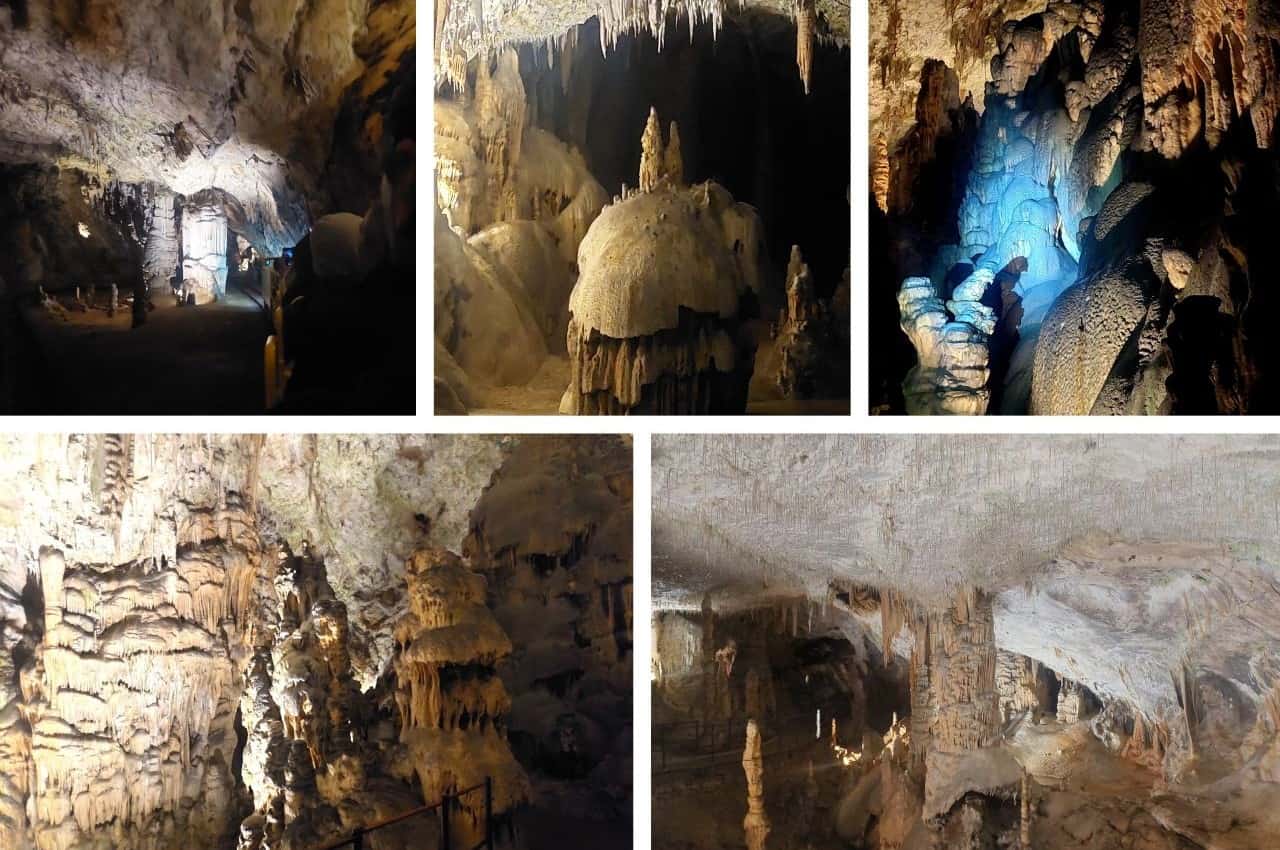
Amazing Postojna Cave
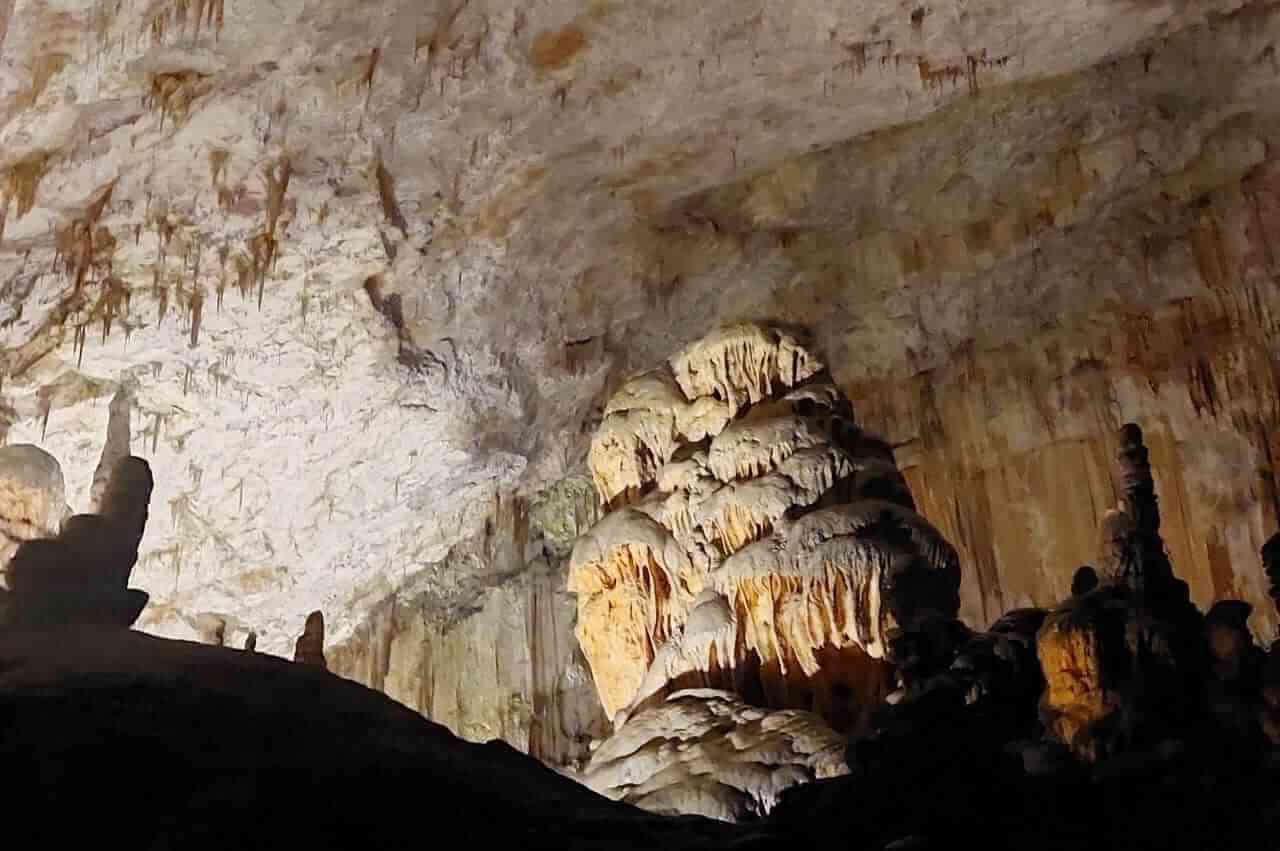
Postojna Cave
We were amazed by the wealth of cave decoration. Stalagmite and stalactite sculptures appear in various shapes, shades and sizes.
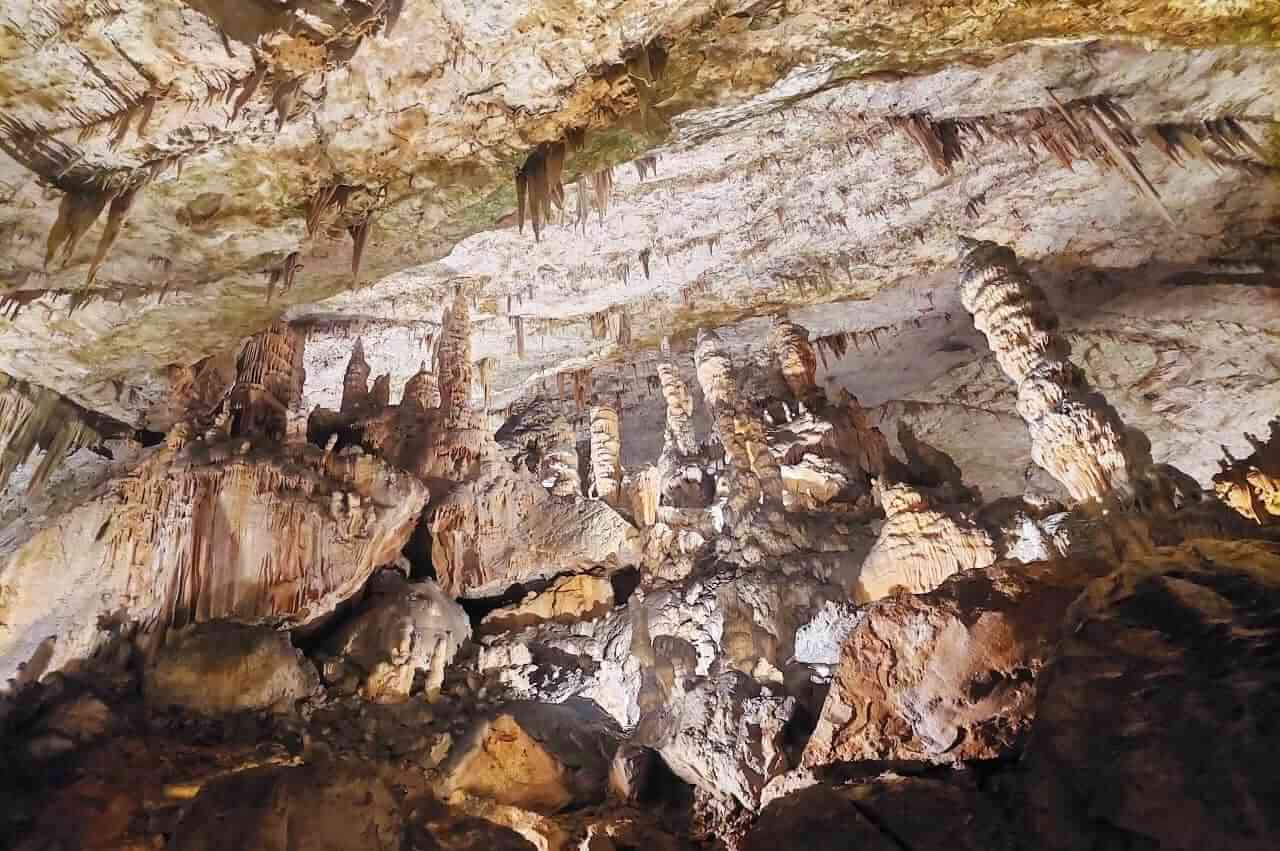
Amazing Postojna Cave
The symbol of the Postojna Cave is the magnificent five-metre-tall bright-white stalagmite called Brilliant.
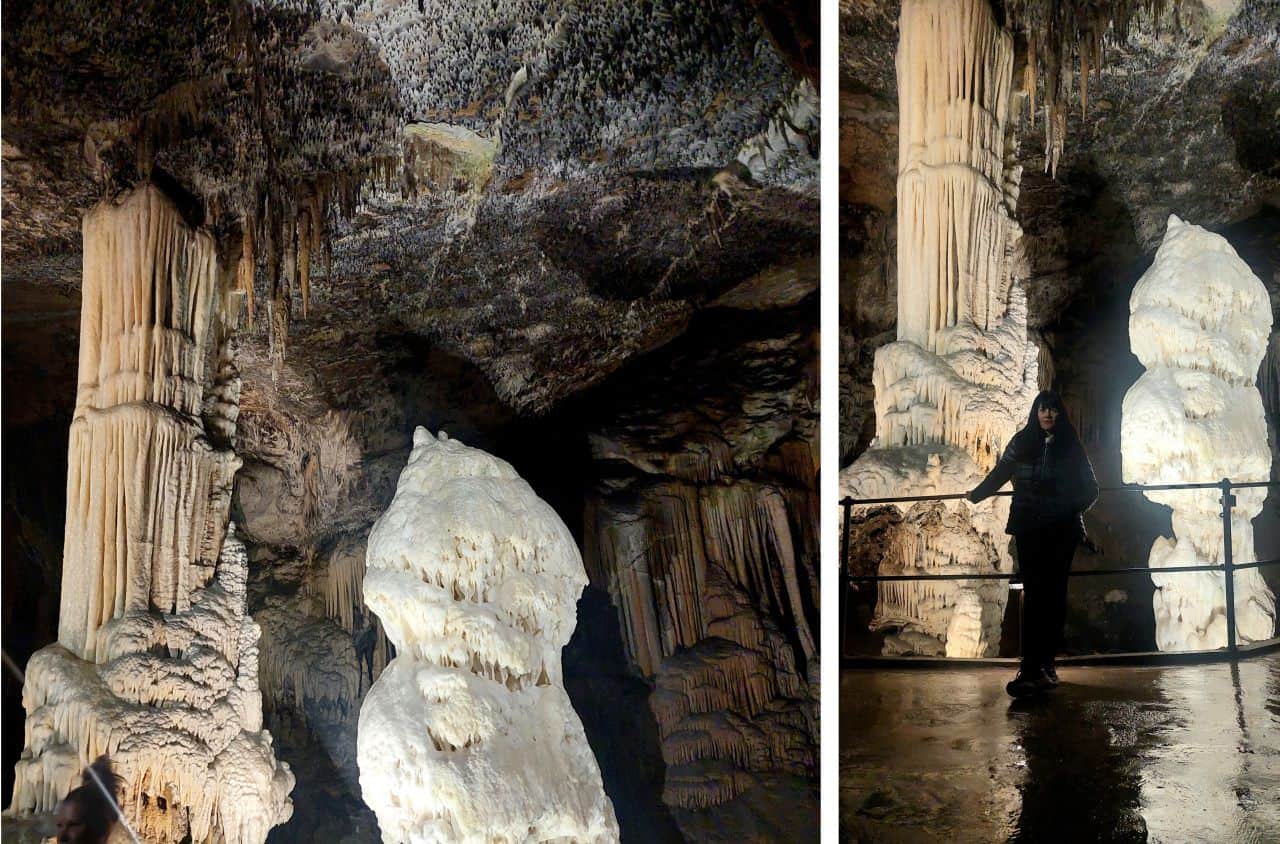
Amazing Brilliant
Baby dragon, human fish in the Postojna Cave
And somewhere in silence, in a dark aquarium, you can see the most sensitive inhabitant of this ecosystem: the human fish.
Well, only speleologists have the honour of seeing it in its natural environment. For tourist purposes, an artificial pool was created where the baby dragons stay for two months. After that, they return to their natural environment. New ones are taking their place and have been doing so continuously for decades.
Going further, we came to the huge Concert Hall. Due to its exceptional acoustics, concerts are still held there today, accommodating about 10,000 people.
Interestingly, there you can find a souvenir shop and the world’s oldest underground post office, where you can send a postcard.

Post office in the Postojna Cave, photo Nikola Zoko
Our tour was finished, and we entered the train which led us to the exit of the cave.
Throughout the decades, visiting Postojna Cave has been a matter of prestige. Many distinguished guests, presidents, scientists, aristocrats, and artists from all over the world visited this marvellous cave. So, what are you waiting for 🤩
Postojna Cave
📌 What to see close to the Postojna Cave
🏰 Predjama Castle is situated just 9 km from Postojna Cave, and it is a must-see attraction.
📌 The Slovenian capital, Ljubljana.
🏞️ The stunning Lake Bled.
📍 Slovenian coast: Piran, Portorož and Koper.
📌 Trieste is only 47 km away, perfect for a one-day trip to enjoy Italian coffee, pasta, and shopping as well.
In a word, visiting the Postojna Cave, with Vivarium and EXPO Kras, was fantastic!
For me, it was like a childhood dream came true when I was dreaming of being an archaeologist and exploring the new world.
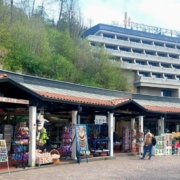
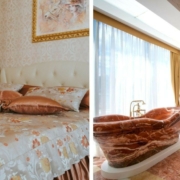
And for the full experience, stay at least one night at the Hotel Jama, which is literally abutting the entrance to the Postojna Cave.
But, it is another story, so stay tuned…



Leave a Reply
Want to join the discussion?Feel free to contribute!