
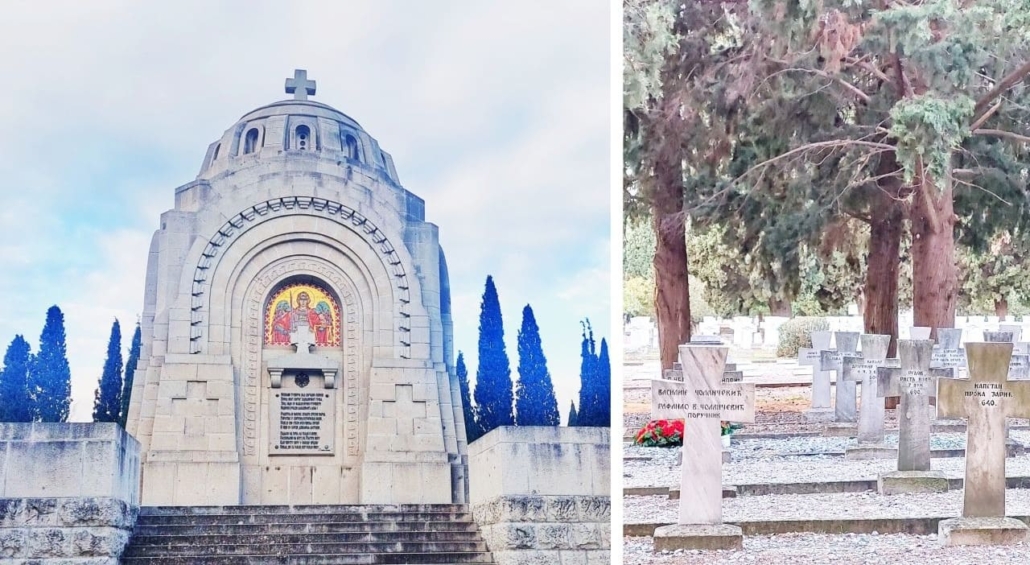
Zeitenlik Military Cemetery in Thessaloniki
For visitors from the Balkans, especially those from Serbia, a trip to Thessaloniki is not complete without a visit to the Zeitenlik Military Cemetery.
This is a place where silence speaks louder than guns. It is an Allied military cemetery which contains the graves of about 20,000 soldiers who died in the battle on the Salonika front during World War I.
I visited the cemetery twice: the first time in April 2014, and the second time on the 31st December 2025.
Both times, it was cloudy and windy.
And it seemed that the wind, blowing among the cypress trees that surrounded the graves, whispered their words: „Don’t forget about us…“
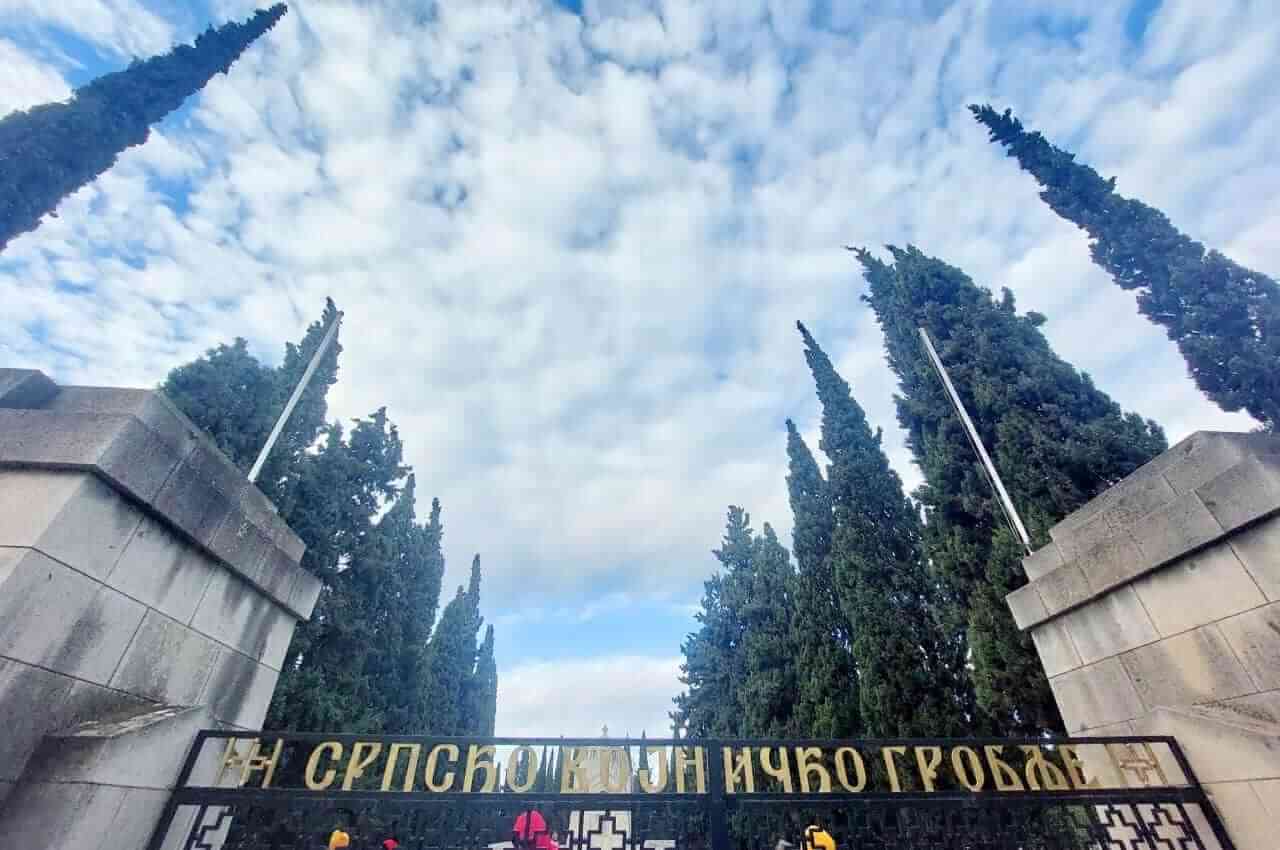
Thessaloniki, Zeitenlik, the Serbian Military cemetery – Srpsko vojničko groblje
📌 Visitor information for the Zeitenlik Military Cemetery
📍 Location: Mikis Theodorakis Avenue, 136 (formerly known as Langada Street), about 1,5 km from the city centre of Thessaloniki.
It is easily accessible by taxi or on foot. From the centre, you can catch a bus, and it takes about 20 minutes; line 27 from Egnatia Street, line 29 from Aristotelous Square, or lines 38/56 from the Train Station/Vardari.
🕛 Visiting hours: it is open daily from 9 AM to 5 PM (hours may vary slightly during winter or public holidays).
Entrance: Free of charge.
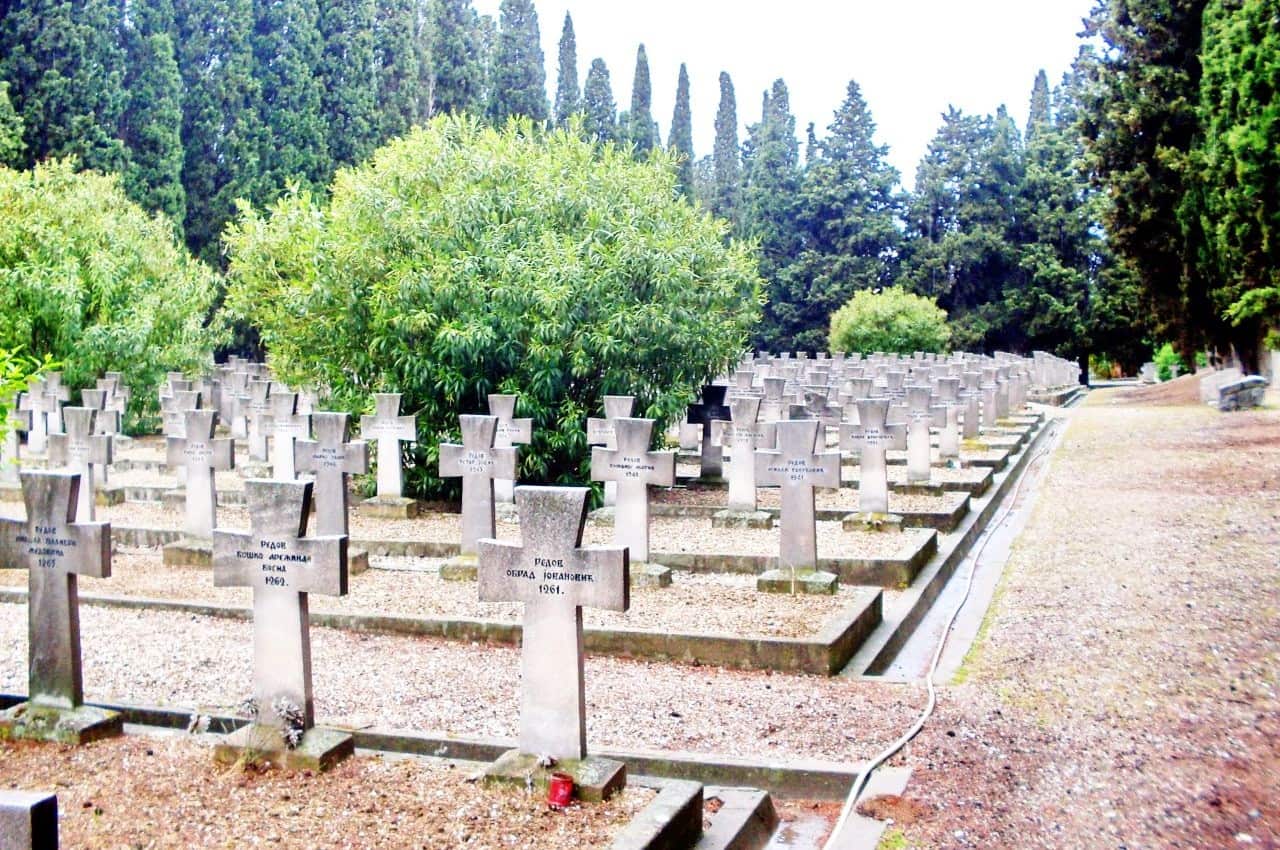
Serbian Military Cemetery
🪦 A few words about the history of the Zeitenlik Military Cemetery
The cemetery complex is situated in a place where the former Main Hospital of the Serbian Army was during the war.
By the way, its name comes from the Turkish word Zeytin, which means Olive. During the Ottoman Empire, there was a market for selling olive oil (zeytin) at this place.
After the end of World War I, the Allies decided to bury all the dead soldiers in a common cemetery. This area was chosen since it was bare ground and outside the city walls. Meanwhile, Thessaloniki has grown into a big city, and today, the cemetery is close to the centre.
An agreement about the cemetery was signed on the 20th November 1920, by the Greek Governor-General of Thessaloniki, Anastasios Adossides, and allies Vojvoda Živojin Mišić (Serbia), General Jean Noël Boucher (France), Field Marshal George Francis Milne (United Kingdom) and Colonel Curgio Giamberini (Italy).
The Greek government bought a piece of land and ceded it for cemetery construction. All the materials for the construction were brought from Serbia, without paying customs duties and taxes. The cypress seedlings brought from Hilandar were planted around the Serbian Cemetery.
The project was started in 1926 by the design of architect Aleksandar Vasić, and later by Nikolaj Krasnov, a Russian architect. The finishing works started in 1933 under the architect Budimir Hristodulo, one of the 1,300 Corporals, and lasted until the end of 1936. In the same year, on the 11th of November, the Armistice Day of World War I, the mausoleum, chapel and crypt were officially consecrated.
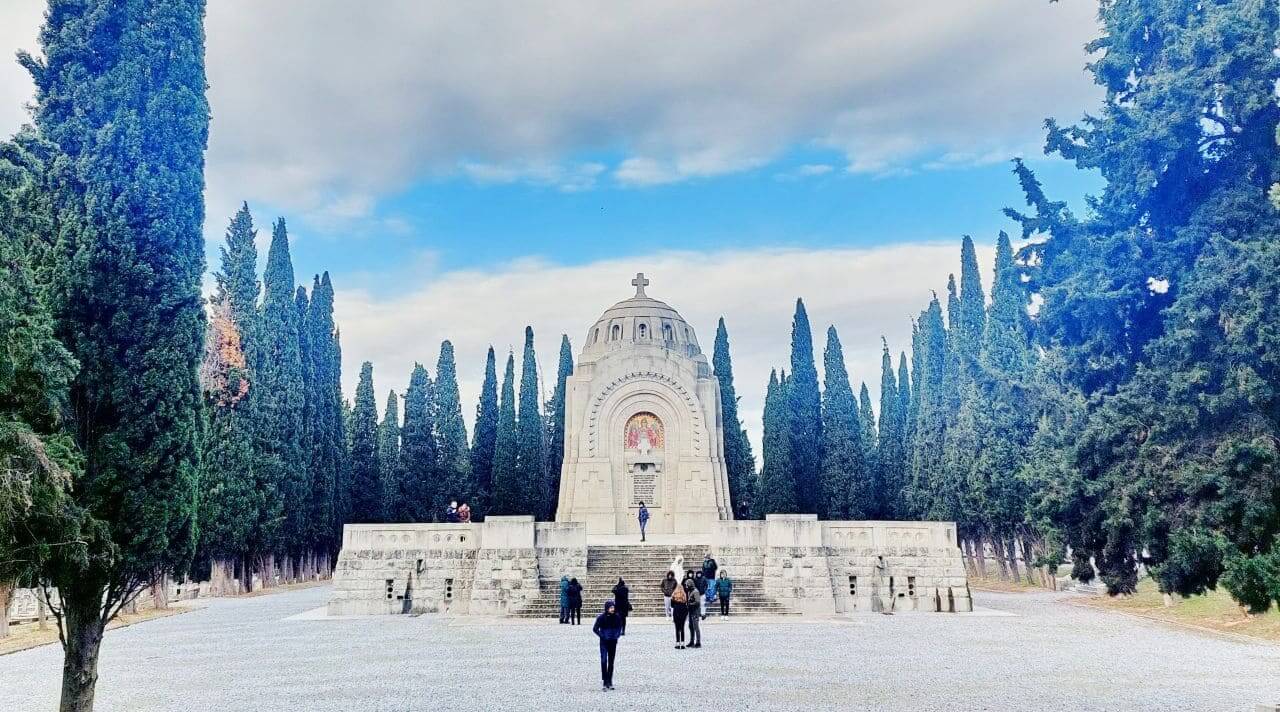
Zeitenlik, the Serbian Military Cemetery
🪦 The Serbian Military Cemetery
Passing through the front iron gate, the city crowd and noise remain outside, and time stops. Everything is so quiet, and you can only see numerous rows of marble crosses and cypress trees…
There were more than 20,000 Allied soldiers who died between 1915 and 1918 and were buried in the Zeitinlik cemetery.
Besides the Serbian soldiers, there are French, Italian, Russian, and British soldiers, whose graves were organised in five sectors, depending on the nationality.
The Mihailović Family, guardians of the Serbian cemetery
The first guardian of the Serbian Cemetery was Savo Mihailović, a Serbian soldier volunteer from Grblje near Boka Kotorska. From 1926, he led a group that visited over 250 cemeteries to find the soldiers’ graves. They collected soldiers’ remains and moved them to the new cemetery of Zeitenlik. Savo died in 1928, and he was buried in this cemetery.
Đuro Mihailović continued his father’s work. He saved the cemetery and its relics from Nazi looting during the Second World War. And Đuro was buried next to his father in the Zeitelik cemetery in 1961. Then, the duty of cemetery guardian fell to Đorđe, the last male descendant of the Mihailović family.
Đorđe Mihailović
Eh, everyone knew and respected Uncle Đorđe, as he was usually called…
He was born in Thessaloniki on the 1st May, in 1928, and he spent his whole life at the Zeitenlik cemetery, taking care of the Serbian graves. For years, he greeted everyone who visited this place, the tourists, presidents, soldiers’ descendants, politicians, and schoolchildren. Uncle Đorđe was always dressed in a military suit, with a Serbian cap on his head and a smile on his face.
He knew the layout of every grave, many names by heart, which family came from which region, and a lot about Serbian history. Usually, he said, “I promised my father I would not leave them alone.” With a trembling voice, he was telling the stories of soldiers, so that the heroes who did not return to their homes and loved ones would not be forgotten.
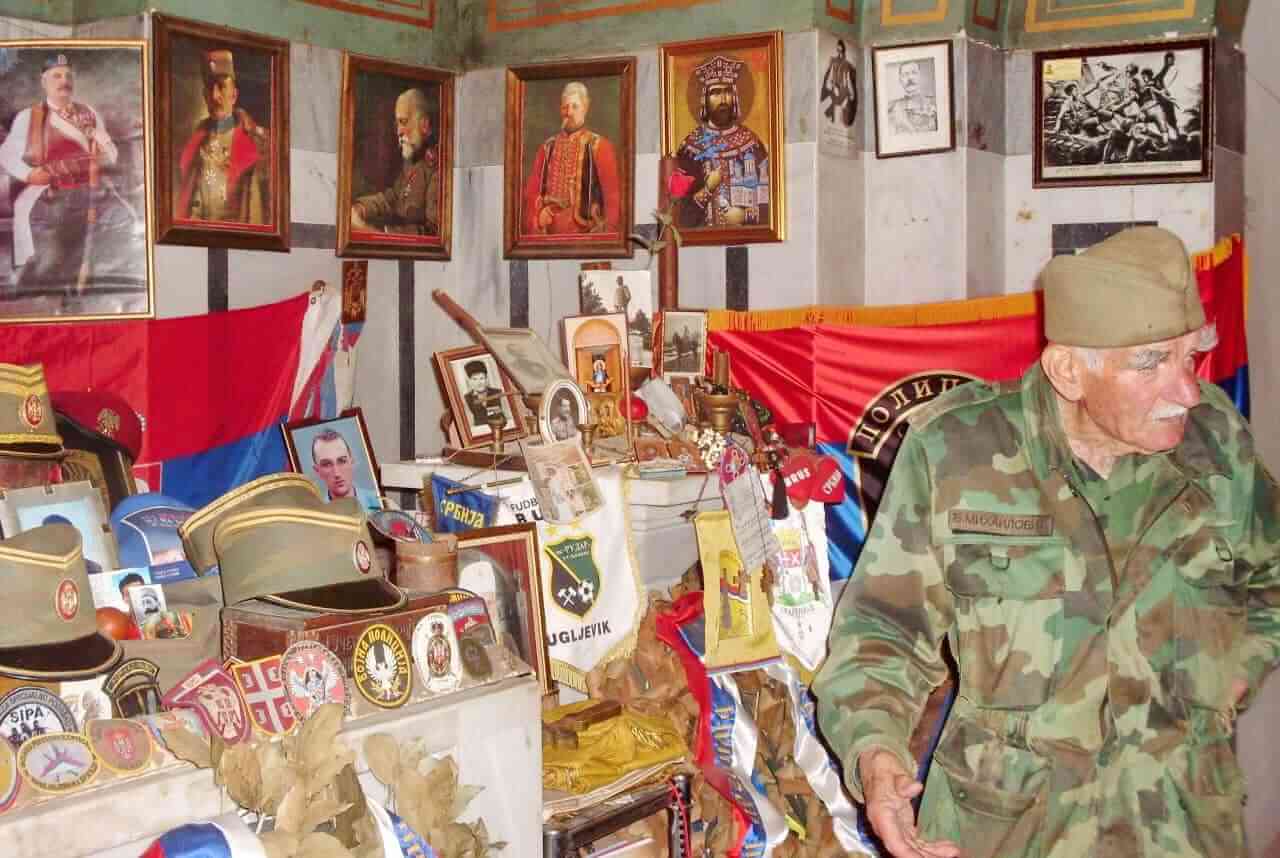
Đorđe Mihailović, April 2014
Traditionally, he offered a small glass of the Serbian rakia for the repose of the souls of the Serbian warriors.
We had the great honour and opportunity to meet this extraordinary man in April 2014. This photo is a nice memory of Uncle Đorđe.
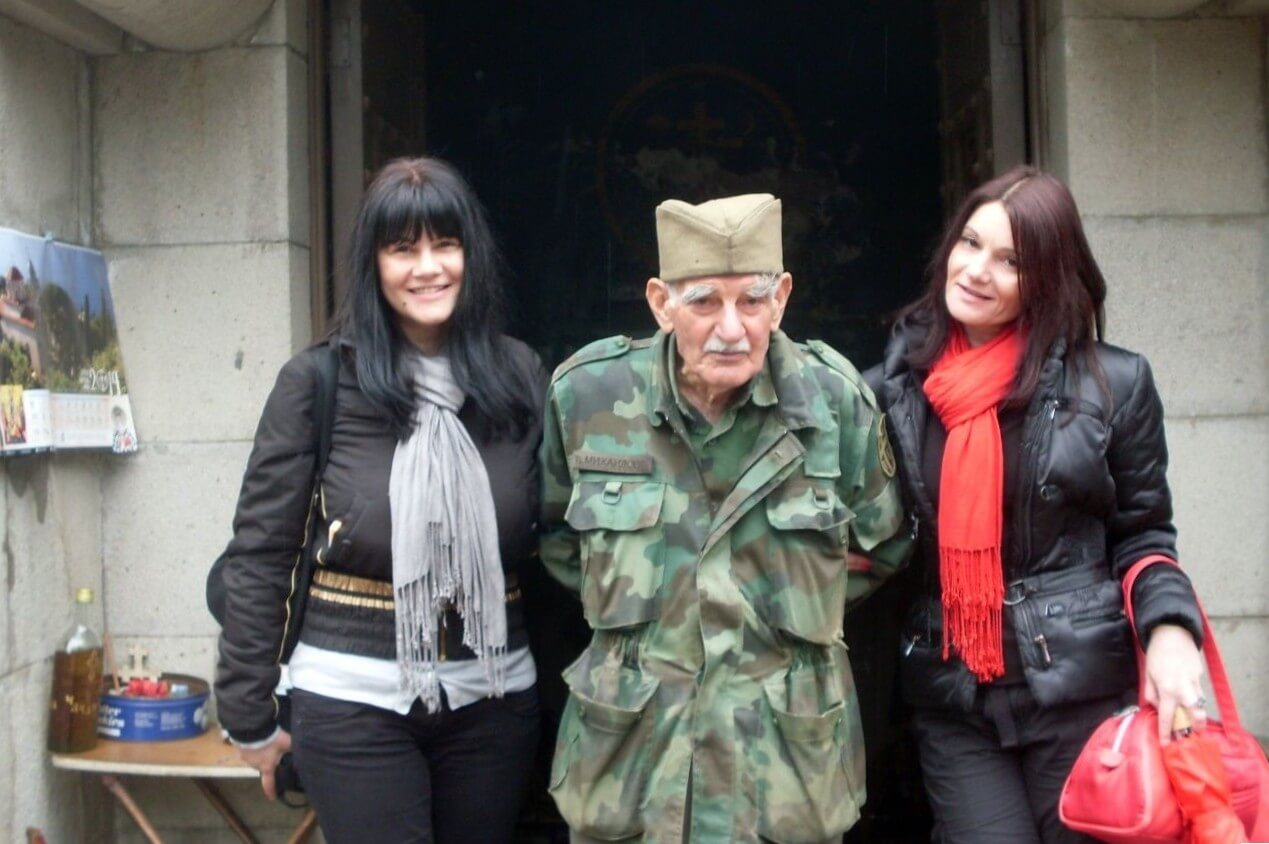
Memory of Đorđe Mihailović, Zeitenlik, April 2014
Đorđe passed away on the 2nd of July, 2023, at the age of 96. Although the new burials are forbidden, it was allowed that Đorđe could be buried near his father, grandfather, and the Serbian soldiers.
The Republic of Serbia awarded him with the Order of the Serbian Flag, second degree, and the Order of Saint Sava, first degree. In 2013, a documentary film “The Last Guardian” was made about him, while a memorial bust dedicated to Đorđe was placed in front of the house in 2024.
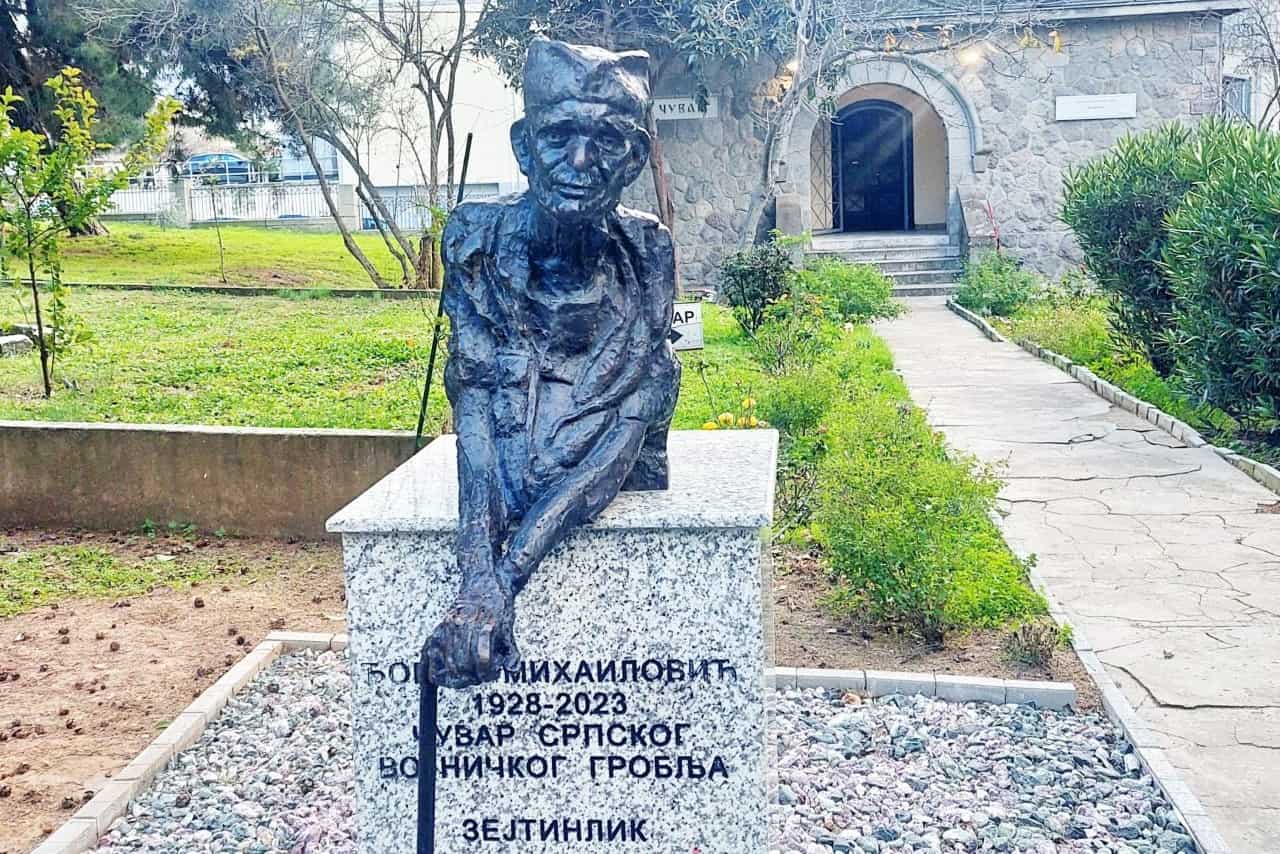
Memorial bust of Đorđe Mihailović, Zeitenlik
Today, visitors are welcomed by curators Krstimir Tzopas and Olga Tasić.
The Serbian Mausoleum-Ossuary
The Serbian cemetery of Zeitenlik is the largest sector with the graves of 7,440 soldiers from World War I and 129 from World War II.
Its landmark is an impressive mausoleum-ossuary, designed by the architect Aleksandar Vasić, and built between 1933 and 1936.
Zeitenlik, the Serbian Military Cemetery
On the frontal side of the mausoleum, there is a mosaic of Saint Archangel Michael.
The famous verses of Vojislav Ilic Jr. are carved on the cemetery chapel:
“Unknown stranger, if you accidentally pass
By this sacred common grave
Know that it is the eternal shelter
For the greatest heroes of today”.
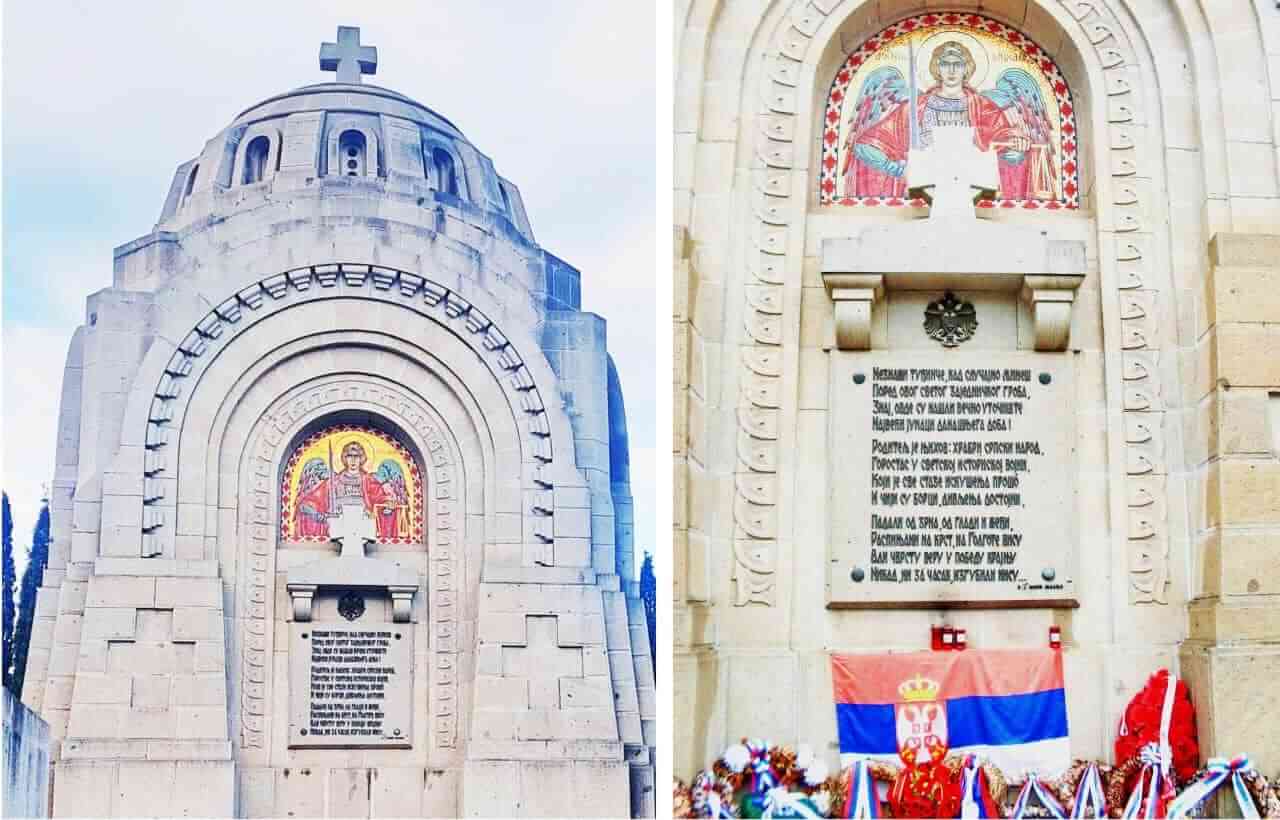
Serbian mausoleum
The entrance to the chapel is located on the other side of the mausoleum.
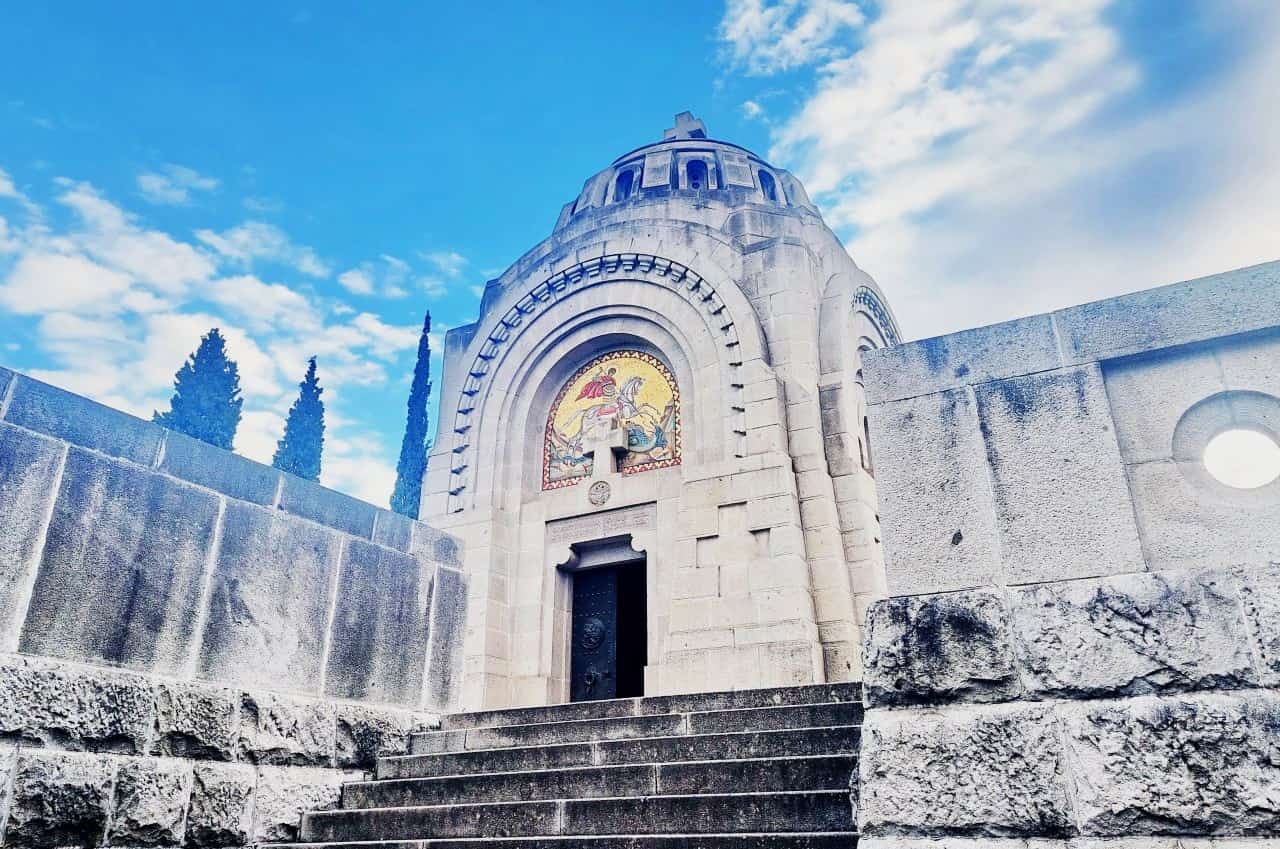
Serbian Chapel at the Zeitenlik Cemetery, Thessaloniki
The names of all the Serbian military units that participated in the battle of the Thessaloniki front are inscribed on the vault and walls of the chapel. The mosaic in the chapel, with motifs from medieval Serbian frescoes, was made by the Greek artist Voila.
In the middle of the chapel, you can see a chandelier cast from cannon shells from the legendary Kajmakčalan, made in the shape of a Serbian crown. By the way, the “crown”, which is around 200 kg, was inverted as a sign of mourning for the suffering of Serbian soldiers during the First World War.
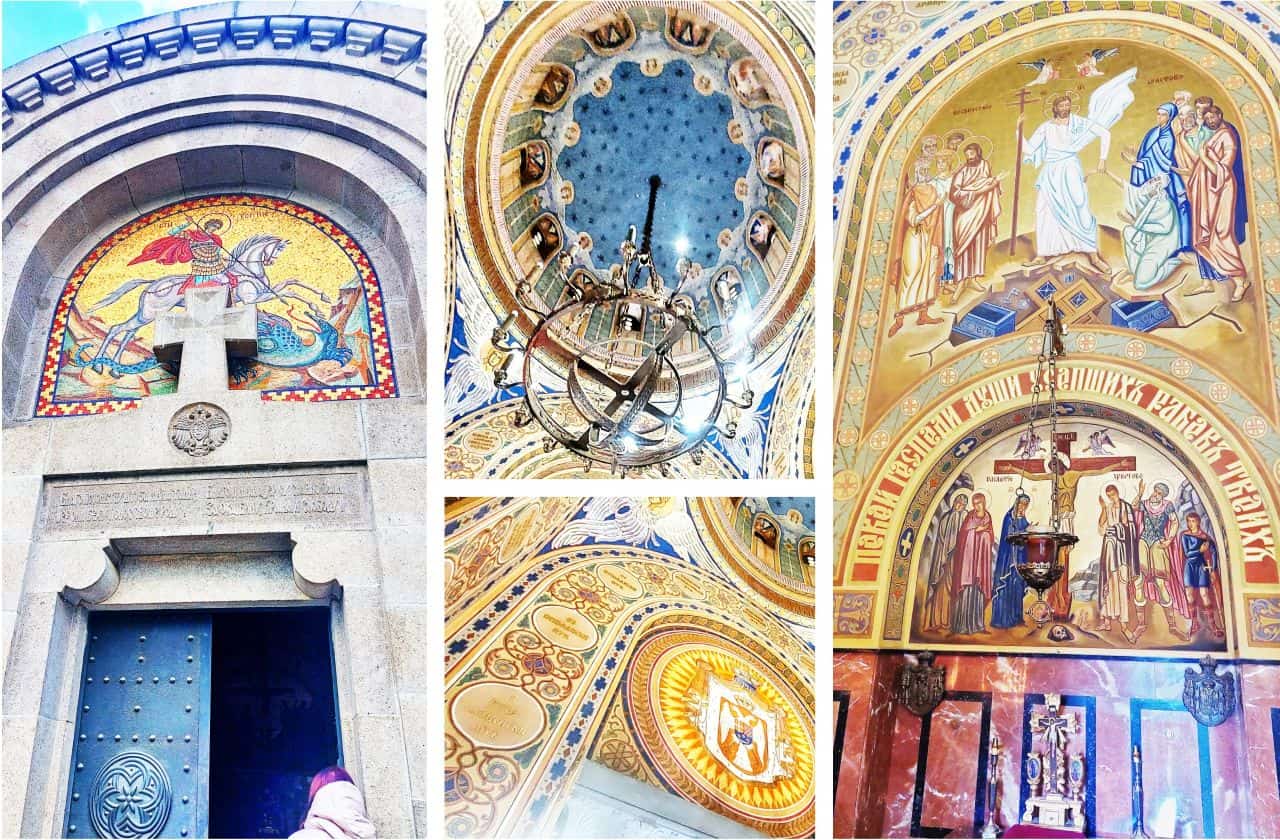
Inside the Serbian Chapel
The Serbian ossuary and graves
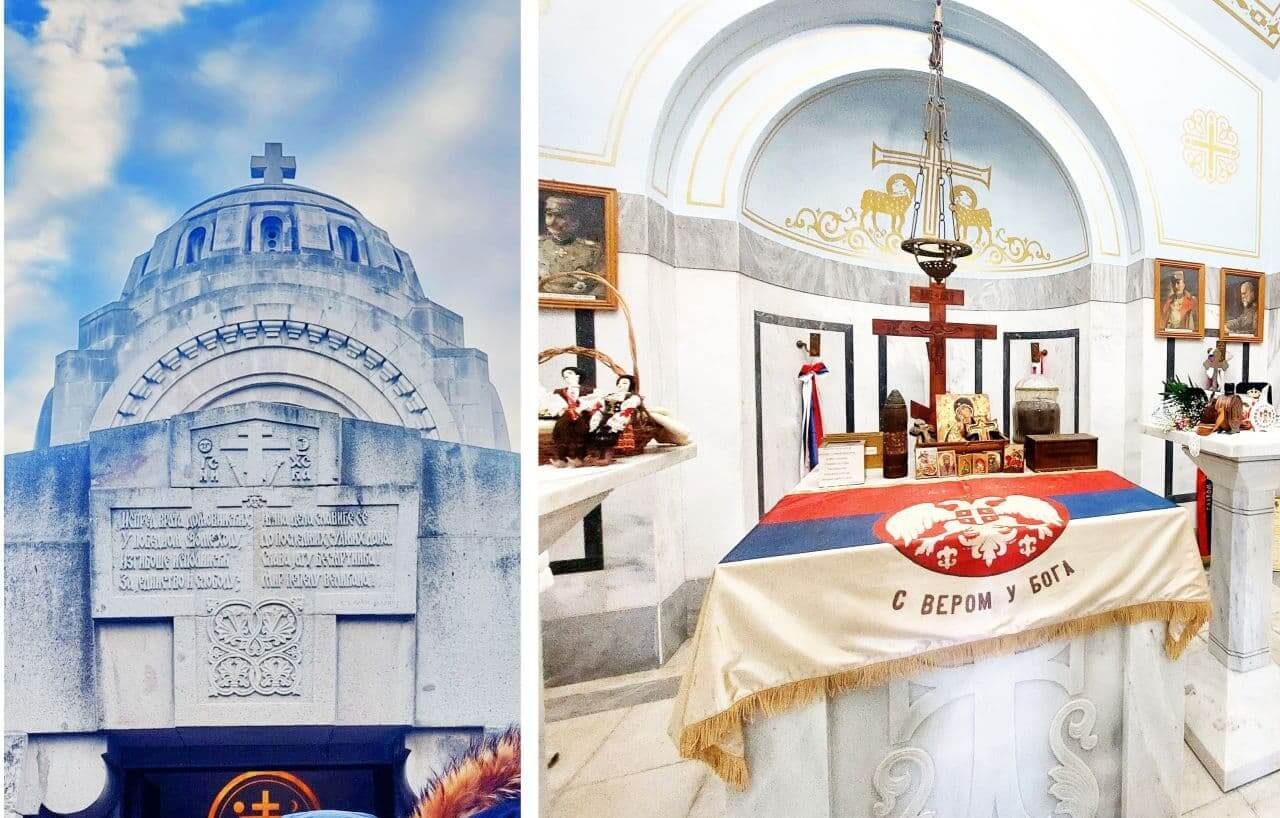
Entrance and inside the Serbian ossuary
Below the plateau with the chapel, there is a crypt. Around the stairs that lead to the central room, you can see various items, including photos, medals, caps, small statues, and flags.
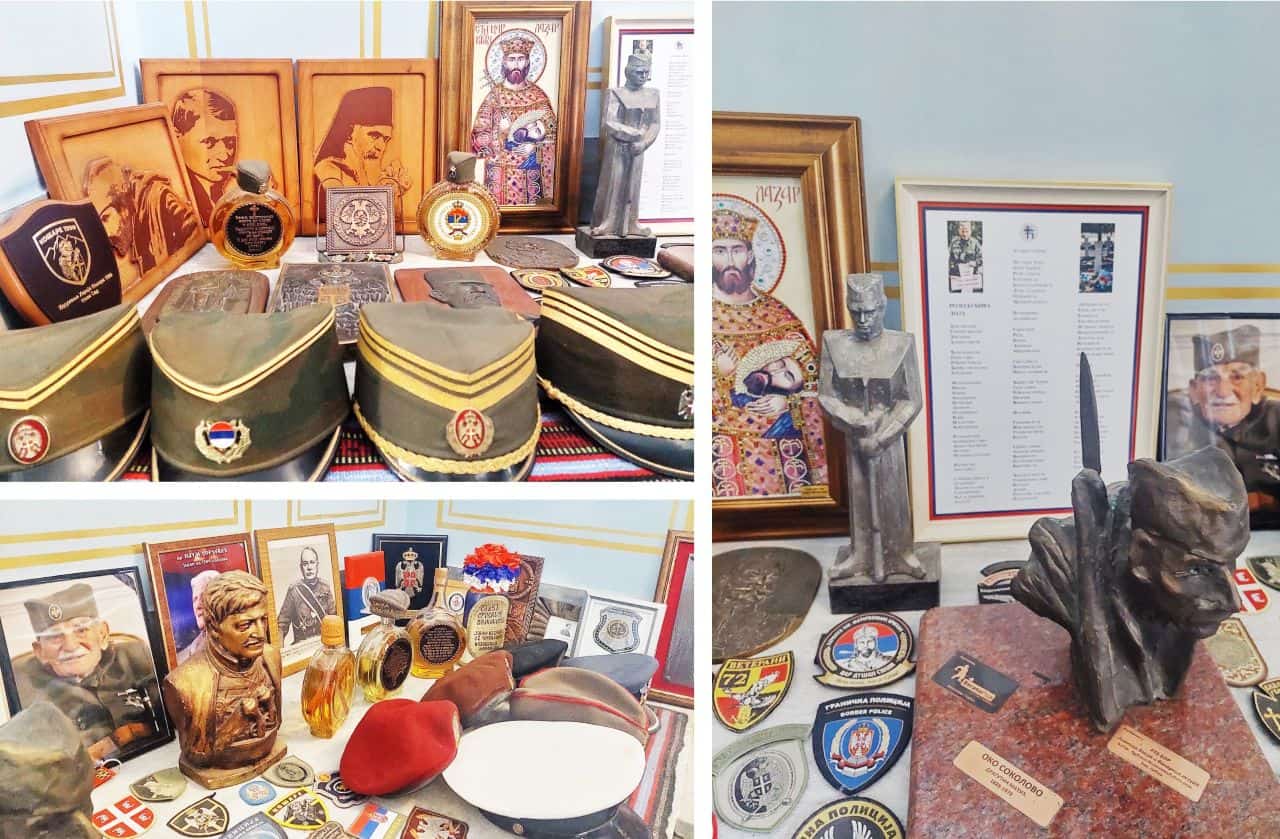
Various items inside the Serbian ossuary
From the central room of the crypt, narrow side corridors branch off. The walls are covered with white marble slabs with the names of the Serbian soldiers buried there. Actually, the bones of 5,580 Serbian soldiers were placed there.
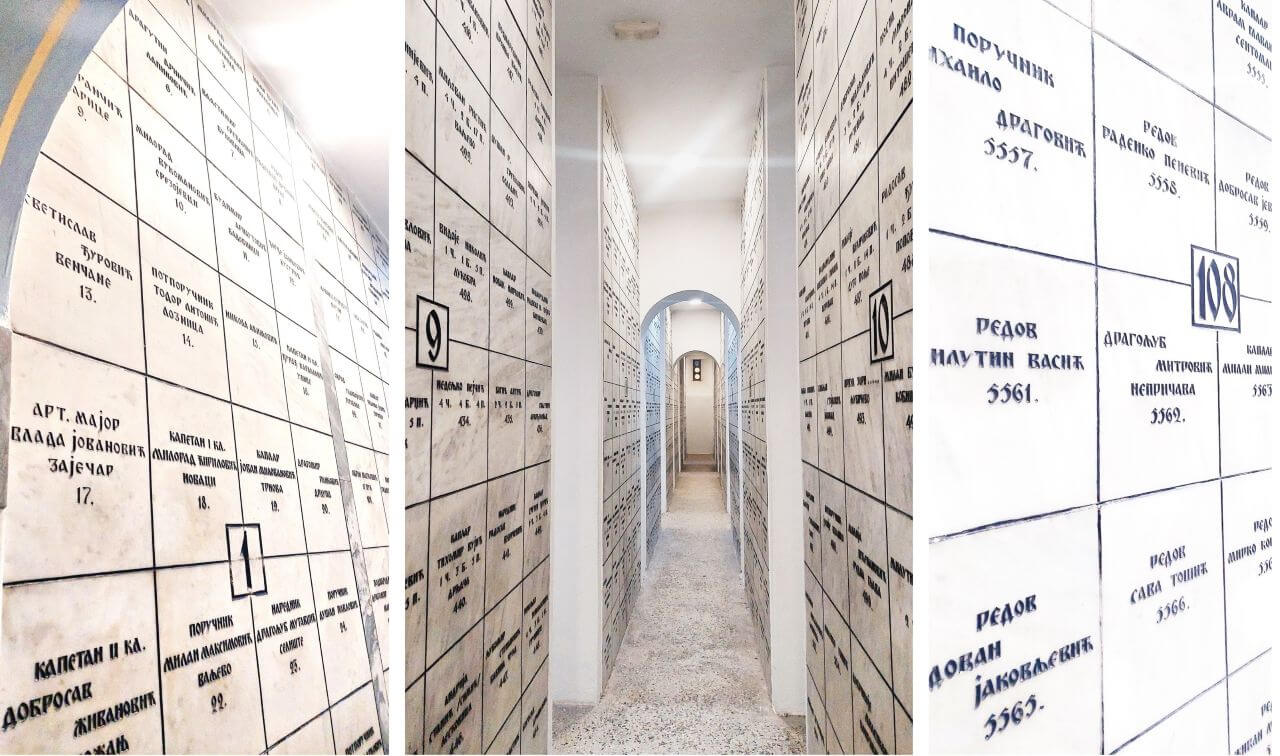
Zeitenlik, Serbian ossuary
Around the mausoleum, there are 10 plots where another 1,440 Serbian soldiers were buried.
It is difficult to describe the feeling that we experienced while walking among the graves. Small pebbles crunch under our feet, although we walk slowly and respectfully, because it is not just a cemetery. It is something much more; it is a sacred place that preserves the memory of human struggle, pain and sacrifice.
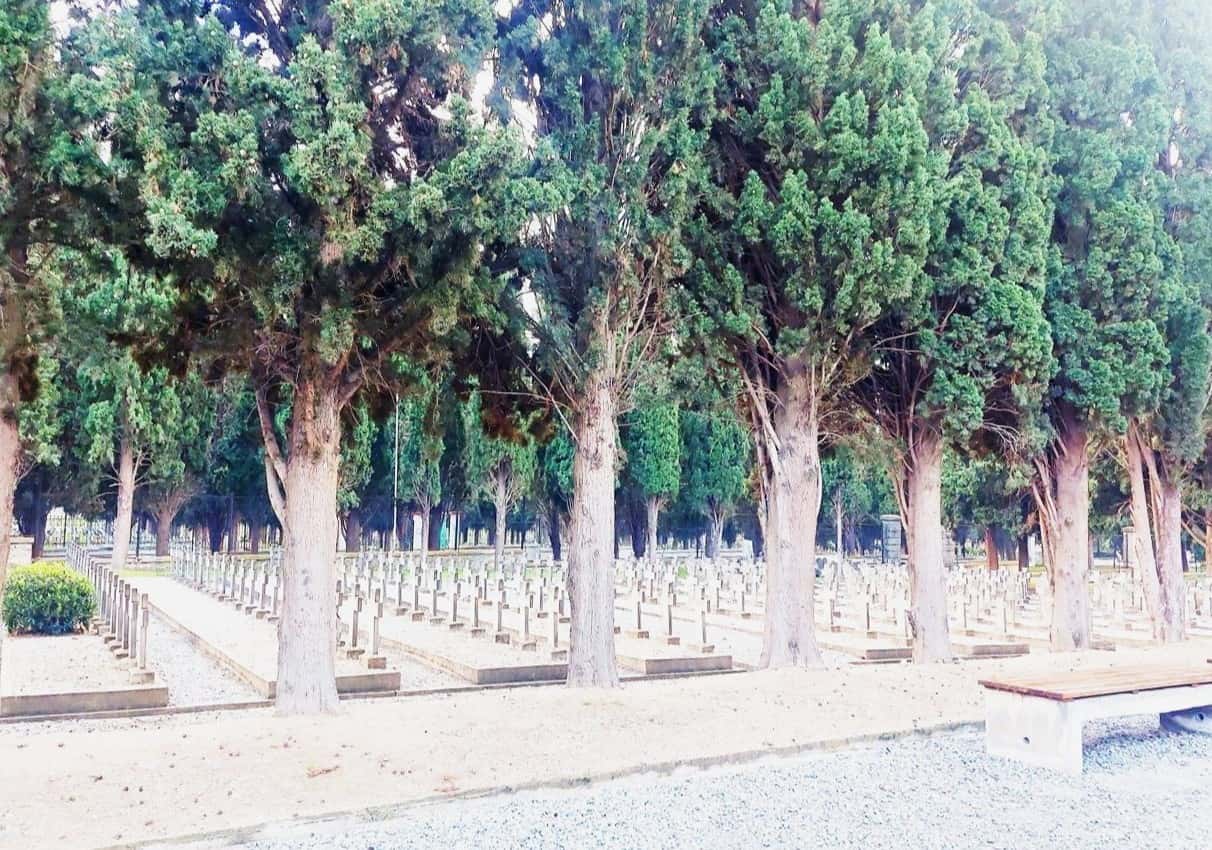
The Serbian graves of the Zeitenlik Military Cemetery
The throat tightens, and tears appear in the eyes.
The soul silently screams with each read name on the white crosses.
Soldiers, captains, corporals, fathers and sons, brothers and neighbours, known and unknown…
They are all there, together, forever.
And how many unrealised dreams and unfulfilled desires were cut short because of war, the struggle for power and authority? They were only defending their homeland…
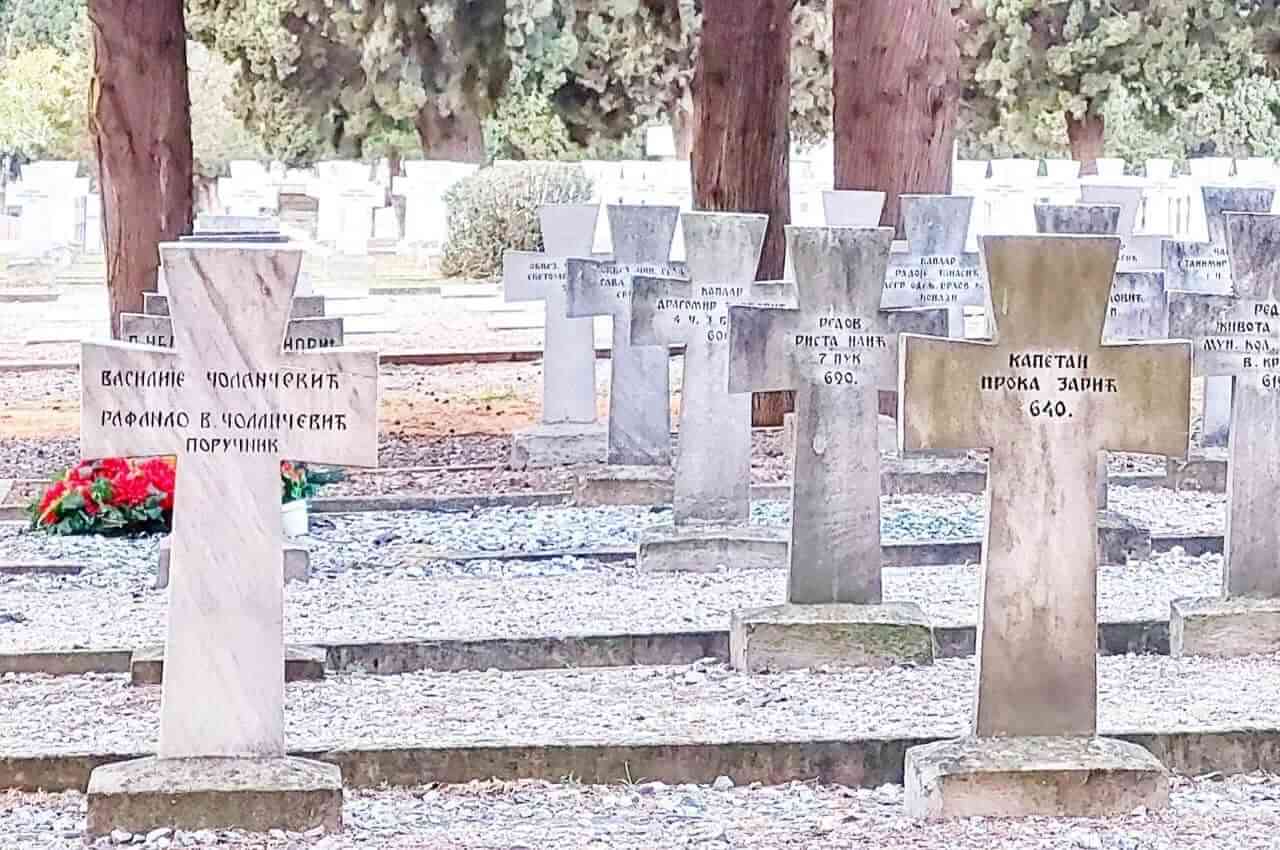
Zeitenlik, the Serbian graves
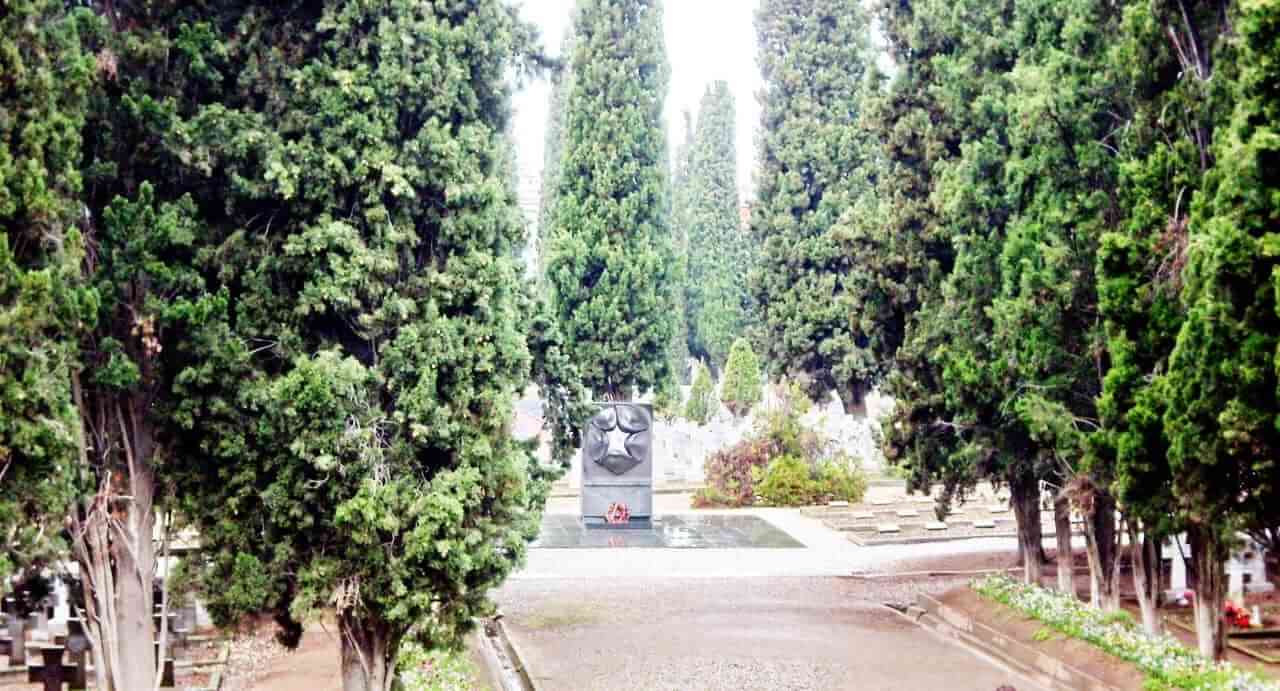
Zeitenlik Cemetery
Also, there are two common graves. In one, 78 unknown Serbian soldiers from the Thessaloniki front were buried. In the second grave, 217 unknown Serbian warriors, who had been transferred from Constantinople, were buried.
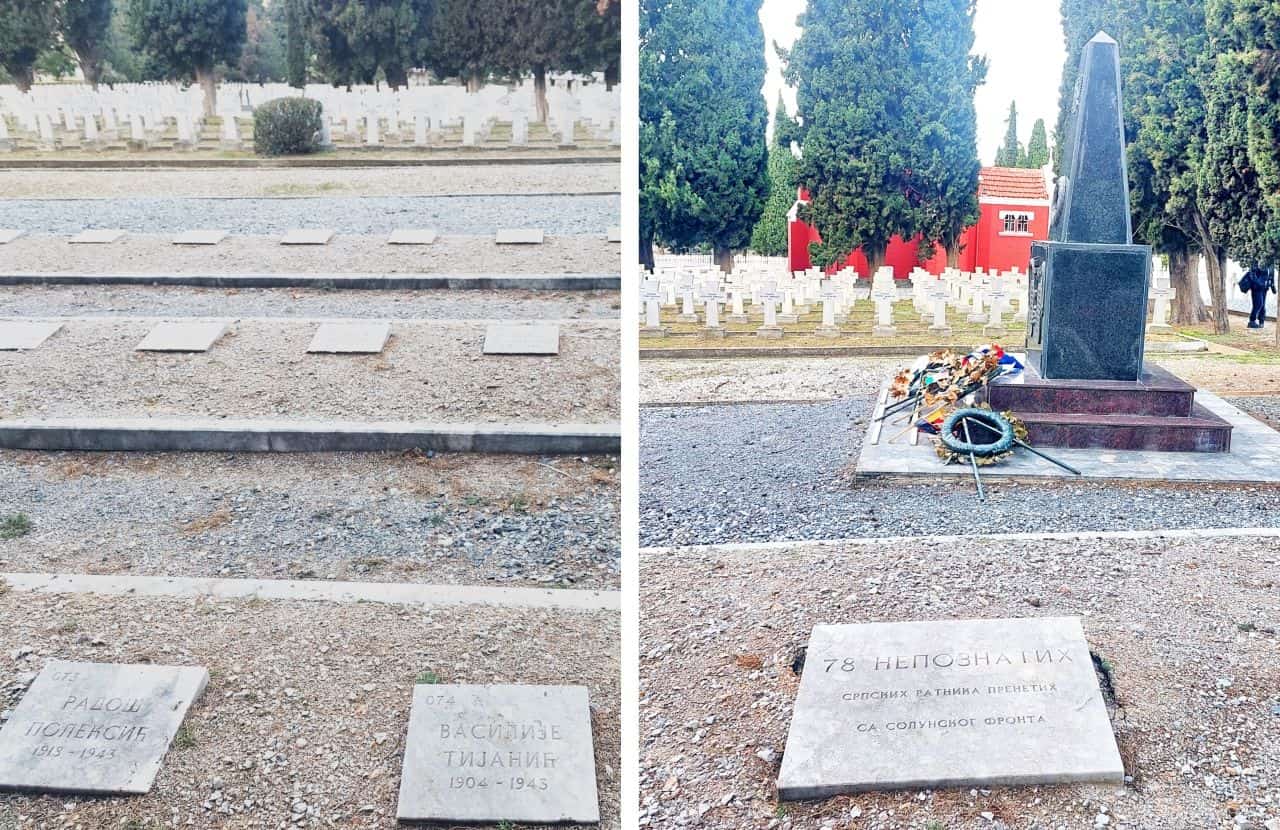
Zeitenlik, Serbian graves (left) and the Russian monument (right photo)
Allied Cemetery
As I have mentioned, the soldiers were buried in five sectors, depending on their nationality.
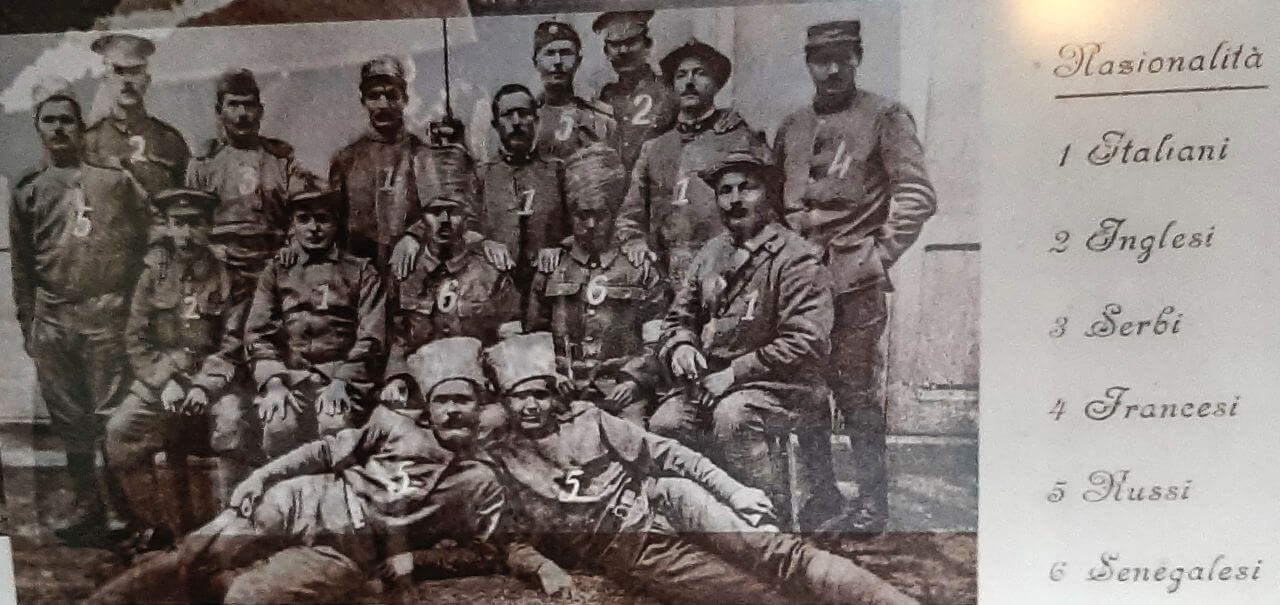
Photo with Allied soldiers, the Museum of White Tower
◊ The Russian sector
The Russian sector is located within the Serbian cemetery, where 496 Russian soldiers and officers were buried. In 2000, the monument made of black granite by the sculptor George Kikotis was placed in the cemetery to honour the Russian soldiers.
♦ The French sector
The French sector contains the largest number of tombs. Actually, there are 8,310 corpses, of which 8,102 are individual tombs, and 208 are in ossuaries. From France, there were 6,347 soldiers, 1,222 from Senegal, 398 from Madagascar and Indochina, and 343 from North Africa. The red chapel is also situated near the graves, and close to it, there is a white monument dedicated to the Greek soldiers.
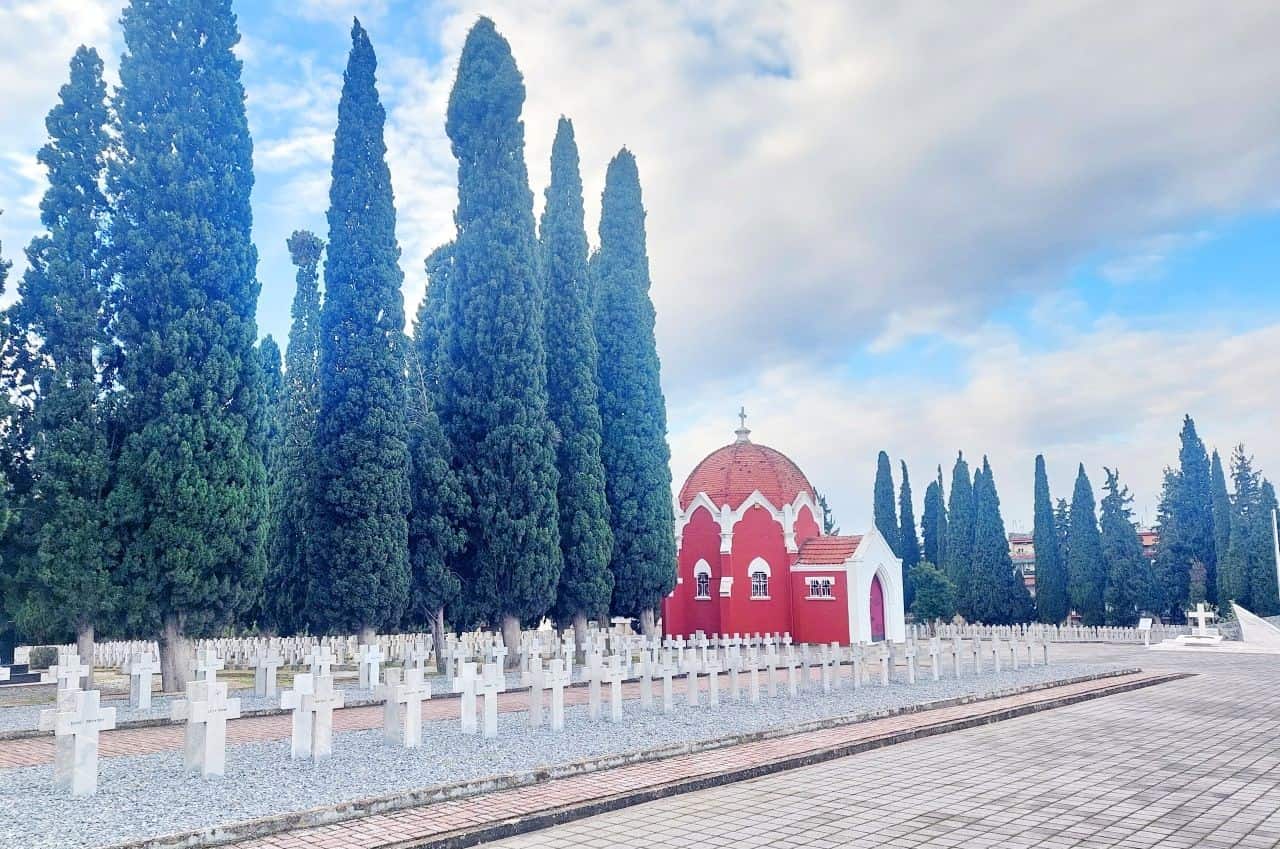
The red French Chapel, the graveyards and a white monument dedicated to the Greek soldiers
In 2014, with funding from the French Ministry of Defence, the old residence of the cemetery guard was restored in the Museum of the French Military Cemetery, where historical artefacts, photographs, maps, and documents are displayed.
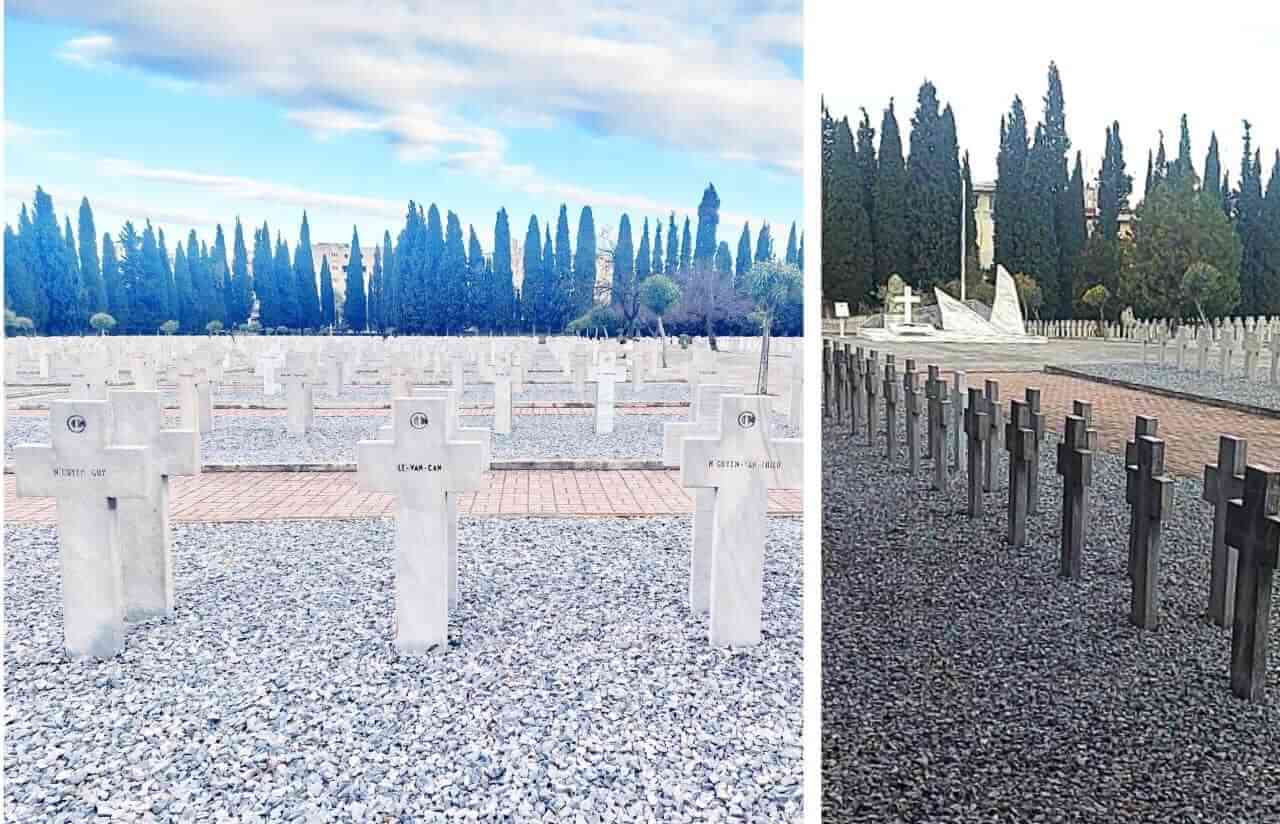
French graves
◊ The British Commonwealth Cemetery
The British Commonwealth Cemetery of Zeitenlik contains the graves with tombstones of 1,648 Commonwealth soldiers and also 45 Bulgarian ones. Interestingly, only one woman was buried in Zeitenlik cemetery. It is Katharine Mary Harlay (1855–1917), the British Red Cross nurse who led the group of nurses serving the Serbian people. Catherine died during the bombardment in Bitola, on 17th March 1917, and only her grave has a cross in the British Cemetery. The Catherine monument was erected by the Serbian Army in gratitude for her help and work, with carved words:
The generous English Lady and great benefactress of the Serbian people
Madame Harlay
“A Great Lady,
On your tomb instead of flowers,
The gratitude of the Serbs
Shall blossom there.
For your wonderful ful acts
Your name shall be known from generation to generation”.
♦ The Italian sector
The Italian sector is situated to the left of the Serbian cemetery. It contains the bodies of 3,000 Italian soldiers who died at the Albanian Front of World War I.
Tradition of the Zeitenlik Military Cemetery
Every year, on the 11th of November, veterans of World War I come to the Zeitenlik Cemetery to put the floral tributes in memory of the fallen soldiers. Today, this tradition is continued by the representatives of the allied nations.
The rows of white crosses, uniform and disciplined even in death, serve as a poignant reminder of sacrifice and historical brotherhood.
So, if you visit Thessaloniki, take the time to visit the Zeitenlik cemetery.
As Đorđe Mihailović once said to visitors: “As long as someone comes, they are not forgotten”.


Leave a Reply
Want to join the discussion?Feel free to contribute!