
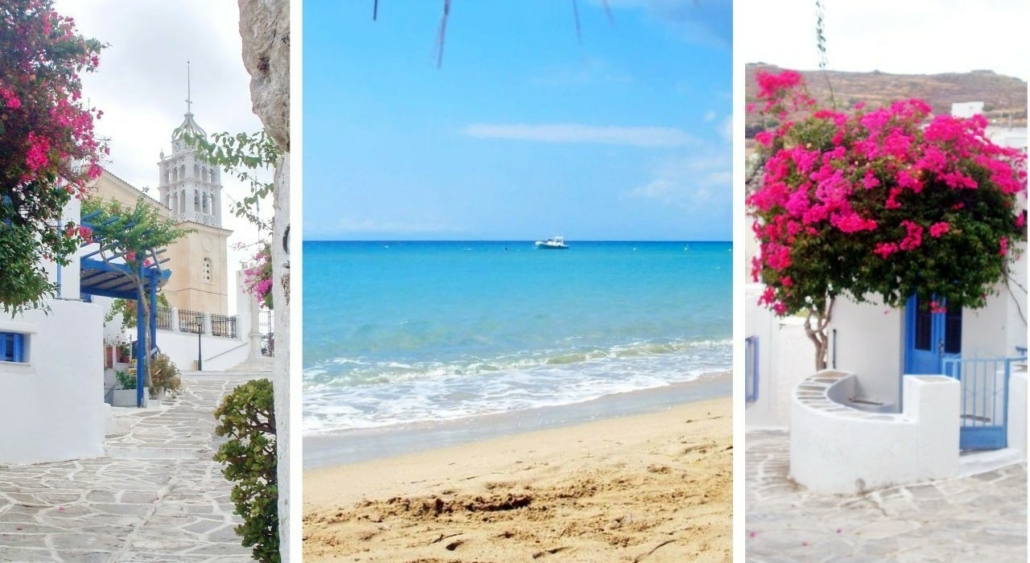
Paros, the Greek island with golden beaches
Paros lies in the heart of the Cyclades, a stunning archipelago of Greek islands.
For years, it was known as “Little Mykonos” because of its resemblance to Mykonos, with its traditional white houses with blue shutters, blue-domed churches, sandy beaches, and cosmopolitan charm.
In recent years, Paros has become one of the most popular destinations in Greece. According to the readers of the renowned travel magazine Travel + Leisure, Paros was voted the best island in the world for 2025!
It brings back memories of our vacation on Paros in August 2014. Looking at the photos from that time makes me want to return. The island has certainly changed: new luxurious hotels, stylish apartments, charming cafes and restaurants have appeared, but some things remain timeless…
So, let’s explore what you can see and do on this beautiful island.
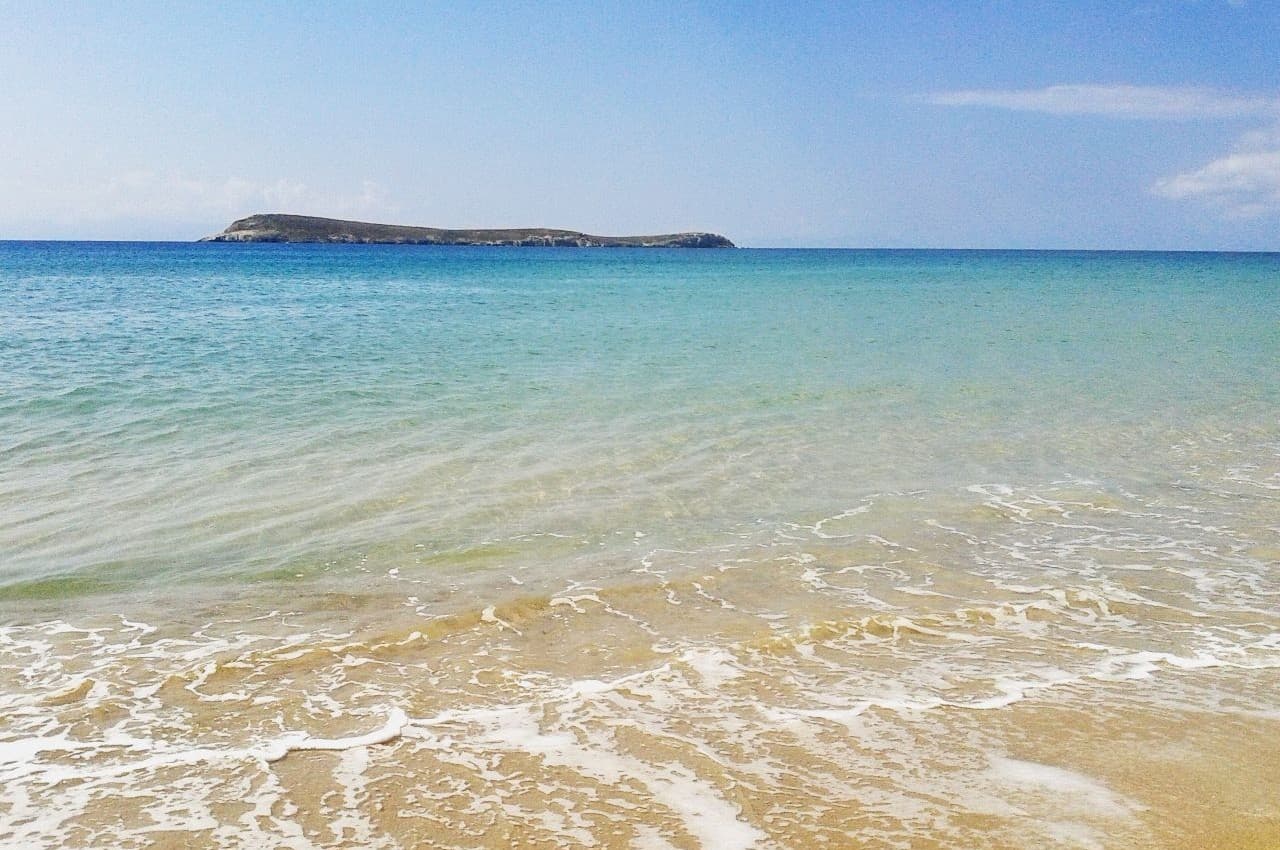
Golden beach, Paros
📌 How to get to Paros
Paros is the second-largest island of the Cyclades, located in the central part of the Aegean Sea.
Its closest islet is Antiparos, just 2 km to the southwest, while Naxos lies about 8 km away to the east.
Paros can be reached by ferry or plane.
⛴️ By ferry:
The island’s main port is in Parikia, on the west side of the island.
From Athens, ferries depart from the ports of Piraeus and Rafina. During the summer, there are several daily connections. The journey takes around 3–4 hours on a high-speed ferry, or 4–5 hours on a regular ferry. The ticket price varies depending on the vessel and seat type, ranging from 51 EUR to 115 EUR for a one-way trip for an adult.
There are also ferry connections from nearby islands, such as Mykonos, Naxos, Santorini, Crete and Milos.
⛴️ You can check ferry schedules here 👇

✈️ By plane:
Paros has a small national airport located 11 km south of Parikia. There are daily flights from Athens, lasting approximately 45 minutes. During the summer, flights also operate from Thessaloniki and Heraklion (Crete).
From the airport, you can rent a car or take a taxi to your accommodation. For example, the taxi to Parikia costs around 15 EUR, private transfers to Parikia cost around 50 EUR, and 60 EUR to Naoussa. There are also several departures by the Paros airport bus to Parikia and Naoussa. The bus ticket costs around 3 EUR, but check the timetable.
For our trip, we flew from Belgrade to Athens, then took the ferry from Piraeus to Parikia.
📆 Best time to visit Paros
July and August are the most popular, but also the most crowded months.
If you prefer a calmer atmosphere, visit it in the late spring (May–June) or September.
Depending on where you’re staying, you can explore the island by renting a car or scooter, or by using public buses. Most routes run between Parikia and Naoussa. From these towns, you can visit several villages and beaches as well. The Parikia bus station is located next to the ferry port, while the Naoussa station is in the centre of the town. Bear in mind that there are no covered stations; the buses are lined up in the nearby parking lot.
A one-way ticket costs from 2 EUR to 4 EUR, while a single-day ticket costs 10 EUR. You can buy tickets at the kiosk, local markets or directly on the bus. Check the KTEL Paros schedule, routes and times here.
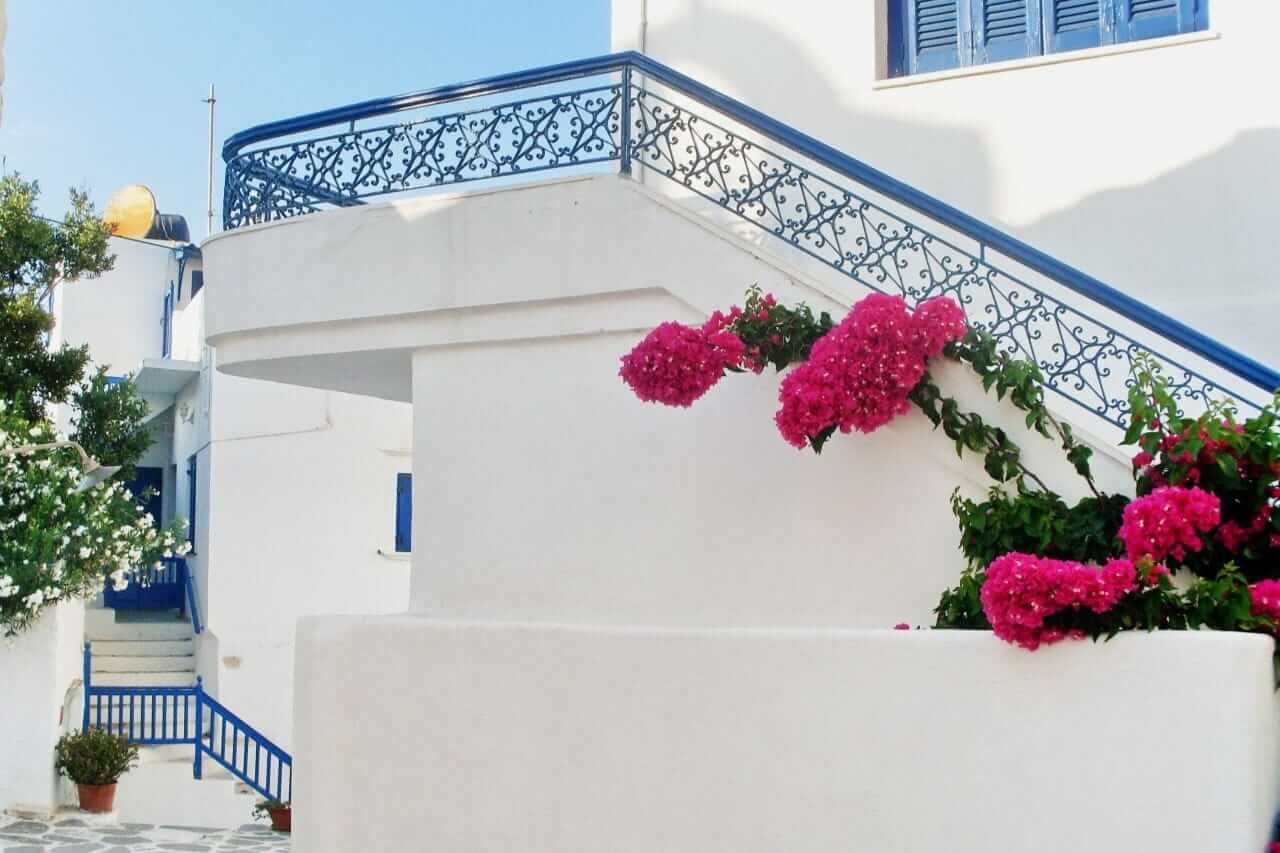
Paros, Parikian house with flowers
A few words about the history of Paros
Paros has a rich and turbulent past that stretches back to the Neolithic era. According to Greek mythology, the island’s first king was Alkaios from Crete, who named it Minoa. In 1100 BC, the Ionians conquered the island, and later the Arcadians arrived under their leader Parios, who gave the island its present name.
Between 800-700 BC, Paros flourished thanks to its maritime power and trade with the Phoenicians. It became famous for its white marble, which was used to build temples and some of the most famous statues of ancient art.
During the Greco-Persian Wars (490, 480–479 BC), Paros participated on the Persian side against Greece, but it was later forced to surrender and ally with the Athenians. Then, in 338 BC, the island came under the rule of Philip of Macedonia, Alexander the Great’s father. After his death came the Ptolemies, the Hellenistic dynasty (305–30 BC) that ruled Egypt.
Over the centuries, Paros was part of the Roman and Byzantine Empires. After the crusaders conquered Constantinople and overthrew the Byzantine Empire in 1204, Paros and many Byzantine territories were under the rule of the Duchy of the Archipelago. It was founded in by the Venetian nobleman Marco Sanudo as a maritime state due to the Venetian interests in the Aegean Sea, between 1207 and 1389.
In the mid-16th century, the Ottoman pirate and later admiral Barbarossa captured many Aegean islands, including Paros, which remained under Ottoman rule until the Greek War of Independence in 1821. One of the heroes of that struggle was Manto Mavrogenous, a noblewoman who financed and organised the fight against the Ottoman forces.
After the Independence War, Paros and other Cyclades islands became part of the modern Greek State. During World War II, the island was occupied by Nazi Germany.
From the 1960s, tourism began to develop, and it has become a major part of the island’s economy.
Parian marble
As I have mentioned before, Paros was widely famous for its fine-grained, almost snow white marble of exceptional quality. The most famous variety of Parian marble, lychnitis lithos, has high transparency and light transmittance, which, in the best quality material, can reach up to 12 cm.
The main ancient marble quarries are found in the villages of Marathi and Agios Minas, and have been used since the early Bronze Age. This marble was one of the most precious building materials in ancient Greece, used for temples and sculptures.
Here are some of the masterpieces crafted from the Parian marble.
♦ The Venus of Milo is the most famous statue among them, found on Milos Island. Today, it is in the Louvre Museum in Paris, together with the statue of the Nike of Samothrace.
👉 Read more about the Venus of Milo statue and Milos Island here:
Milos, the island of Venus de Milo and stunning beaches.
◊ The Parthenon marbles and the Peplos Kore statue are today in the Acropolis Museum in Athens.
👉 Read more here: The Acropolis of Athens, the ancient citadel.
♦ The Temple of Apollo is in Delphi, an ancient site in Greece.
👉 Read more about the temple and marble statues here: Delphi, the navel of the ancient world.
◊ The Temple of Zeus was in Olympia, where you can also see the statues of Hermes of Praxiteles and Nike of Paionios (Greek goddess of victory), displayed at the Archaeological Museum of Olympia.
👉 Read more about the Olympic Games, temple and statues here: Olympia, the birthplace of the Olympic Games.
Also, many public buildings, monuments and the temple dedicated to the Goddess Athena, made of this marble, once stood in the old town in Parikia. Later, the Venetians reused ancient marble blocks to build their castle, whose remains can still be seen today.
Guide for Paros: What to see
You’ve probably seen those stunning photos of Paros on the internet: white houses draped in colourful bougainvillaea, golden sandy beaches and a blue sea… The two main spots on the island are Parikia and Naoussa.
Town of Parikia
Parikia, the island’s capital and main port, lies on the western coast.
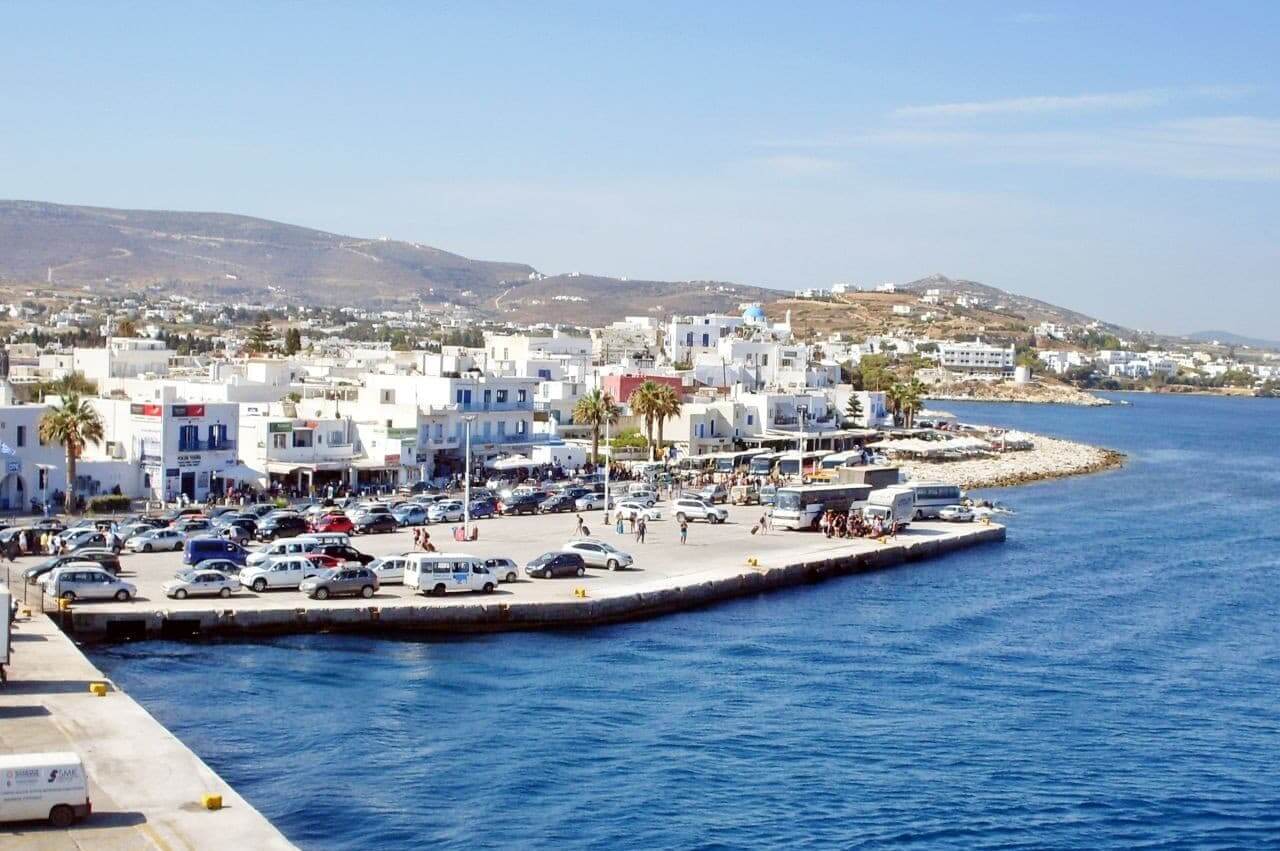
Paros, Parikia port and the bus station
Most visitors arrive in Paros by ferry. Some choose Parikia for its base, while others continue to Naoussa, or one of the smaller villages.
We chose Parikia because it is the largest place on the island. It has good bus connections with other parts of Paros and ferry routes to the neighbouring islands. There is also a wide range of accommodation, shops, cafes and restaurants, everything you might need for a perfect vacation.
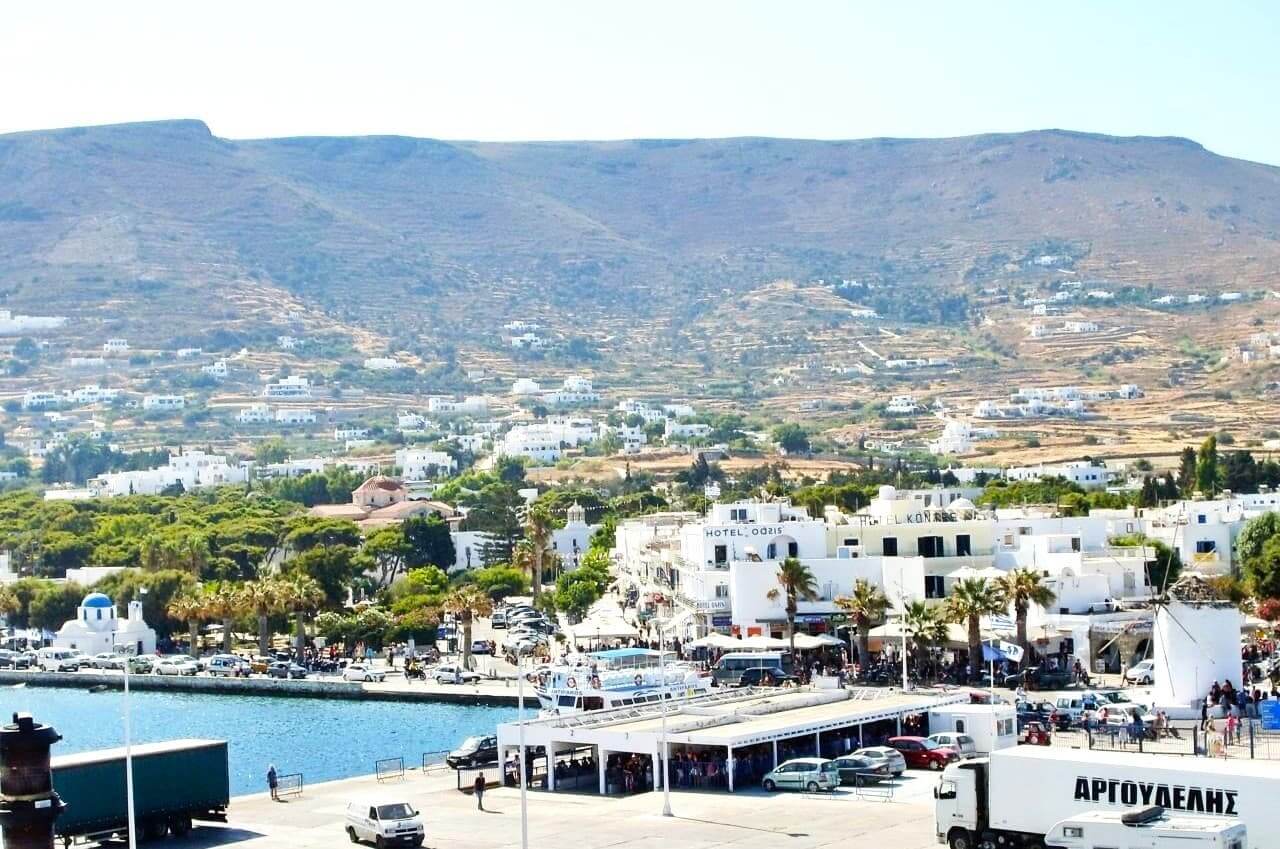
Parikia port and town
Paros Old Town and the Frankish Castle (Frangokastelo)
The old town of Parikia is a maze of whitewashed Cycladic houses with blue shutters, narrow cobbled alleys, and artisan shops.
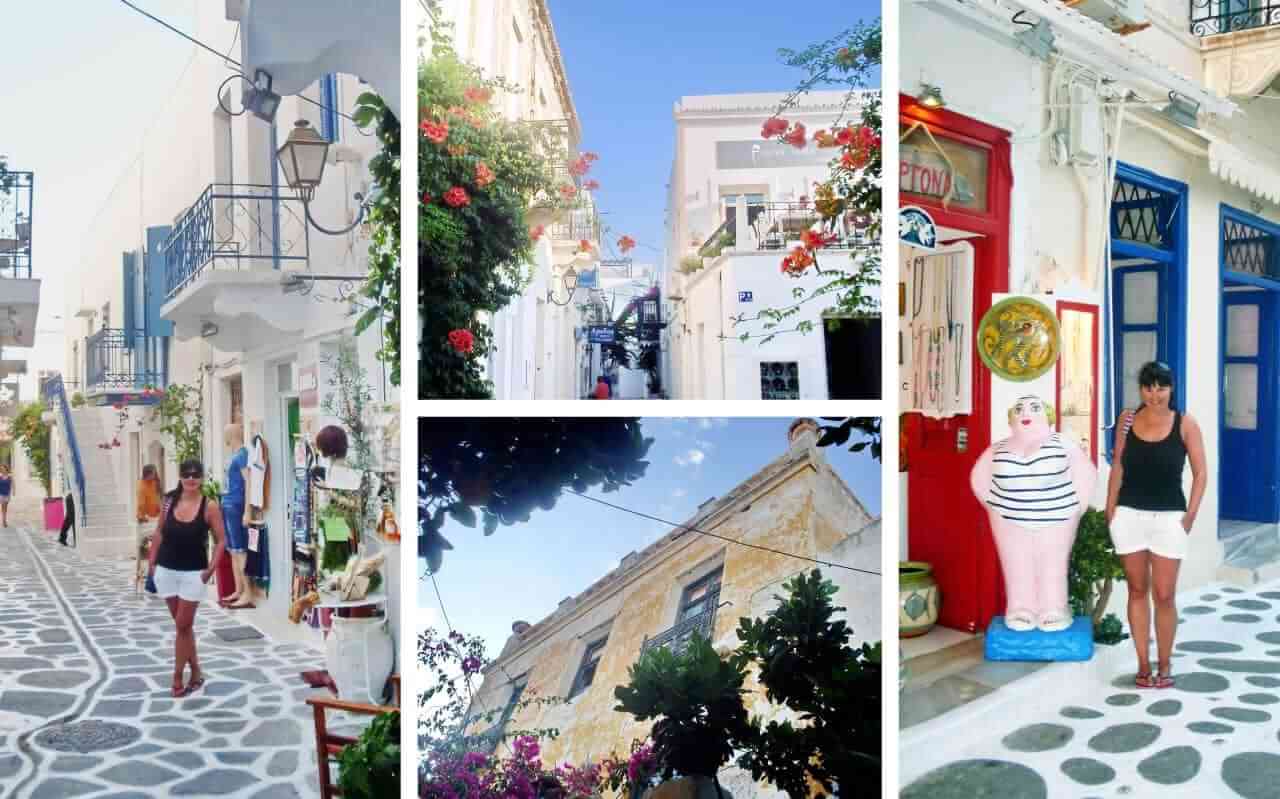
Alleys in the Old Town of Paros
Every corner looks like a postcard. Small balconies are decorated with flowers and bougainvillaea.
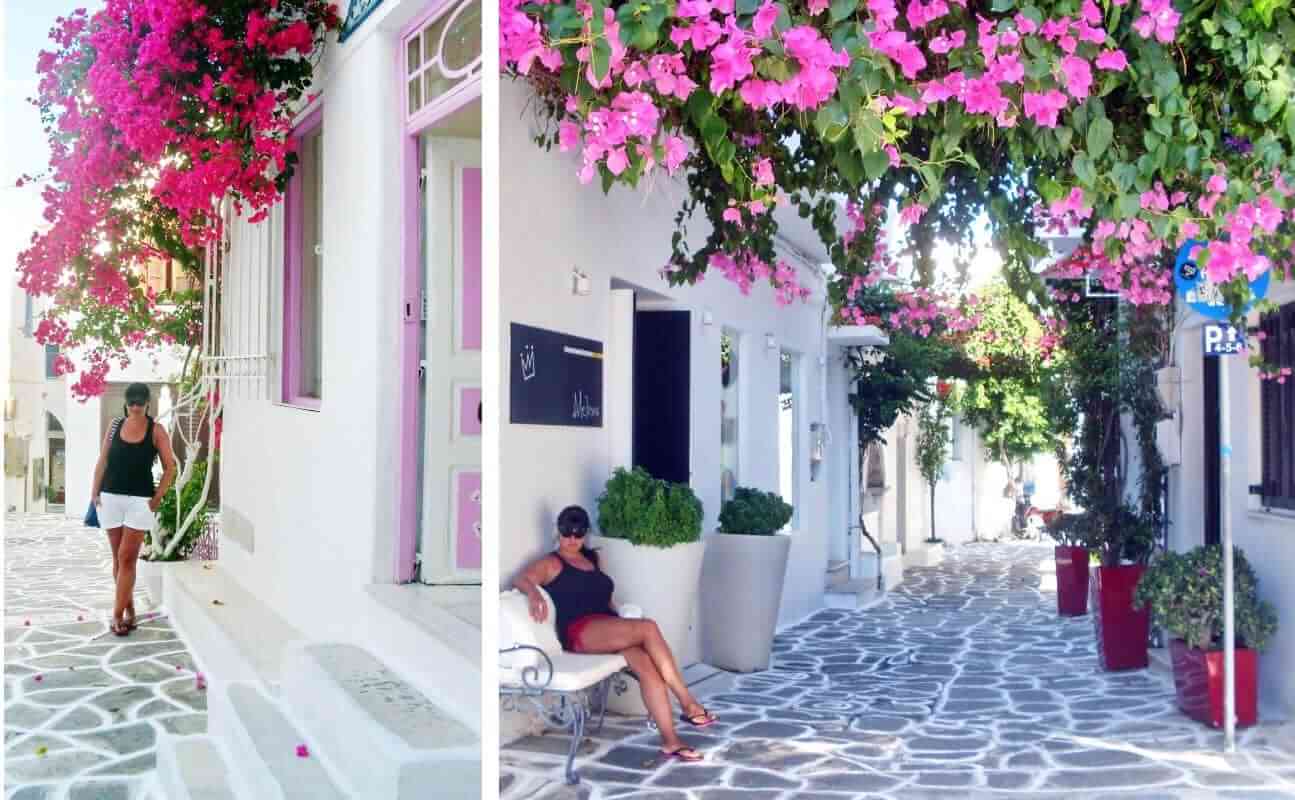
Beautiful bougainvillaea in the Old Town of Paros
You’ll find plenty of cosy cafes and taverns serving traditional Greek dishes, both in the alleys and along the waterfront. Near the Pirate Bar, famous for its cocktails, stands the small Pammegiston Taxiarchon Church.
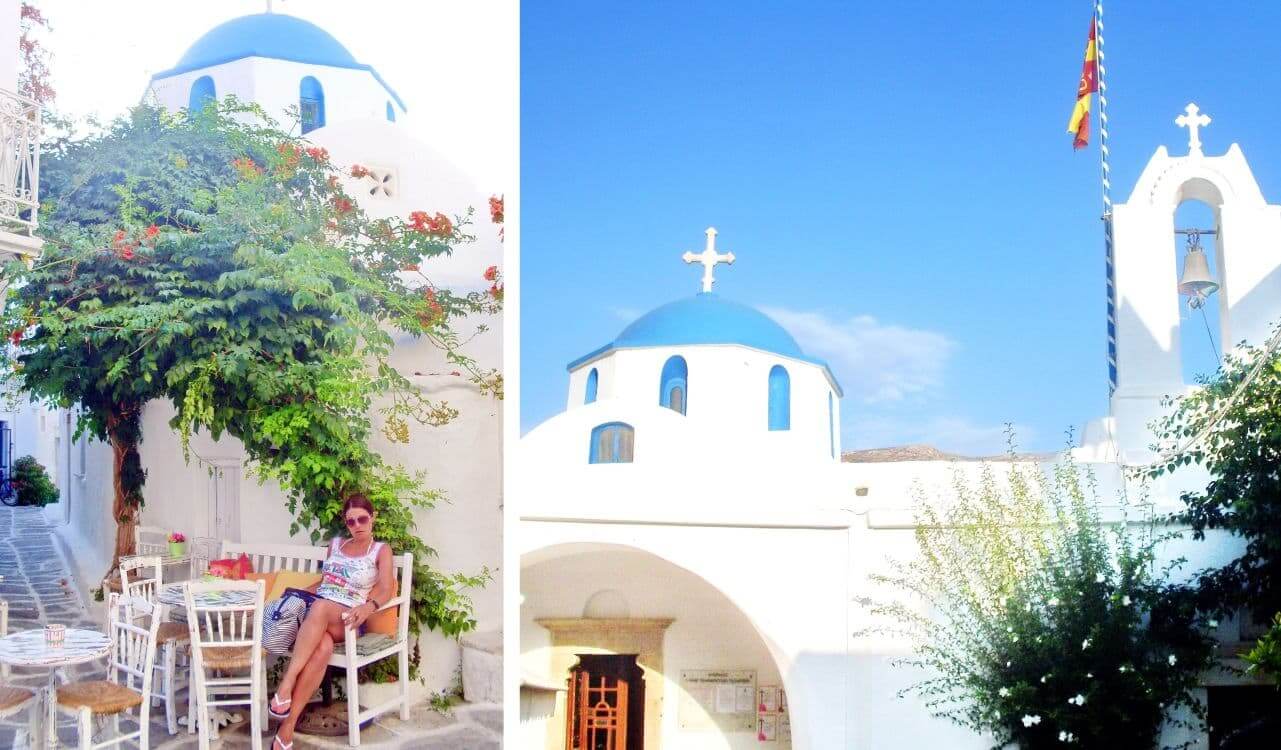
Pamegiston Taksiarxon Church
Climb up Agios Konstantinos Hill to visit the Agios Konstantinos Church and the remains of the Frankish Castle.
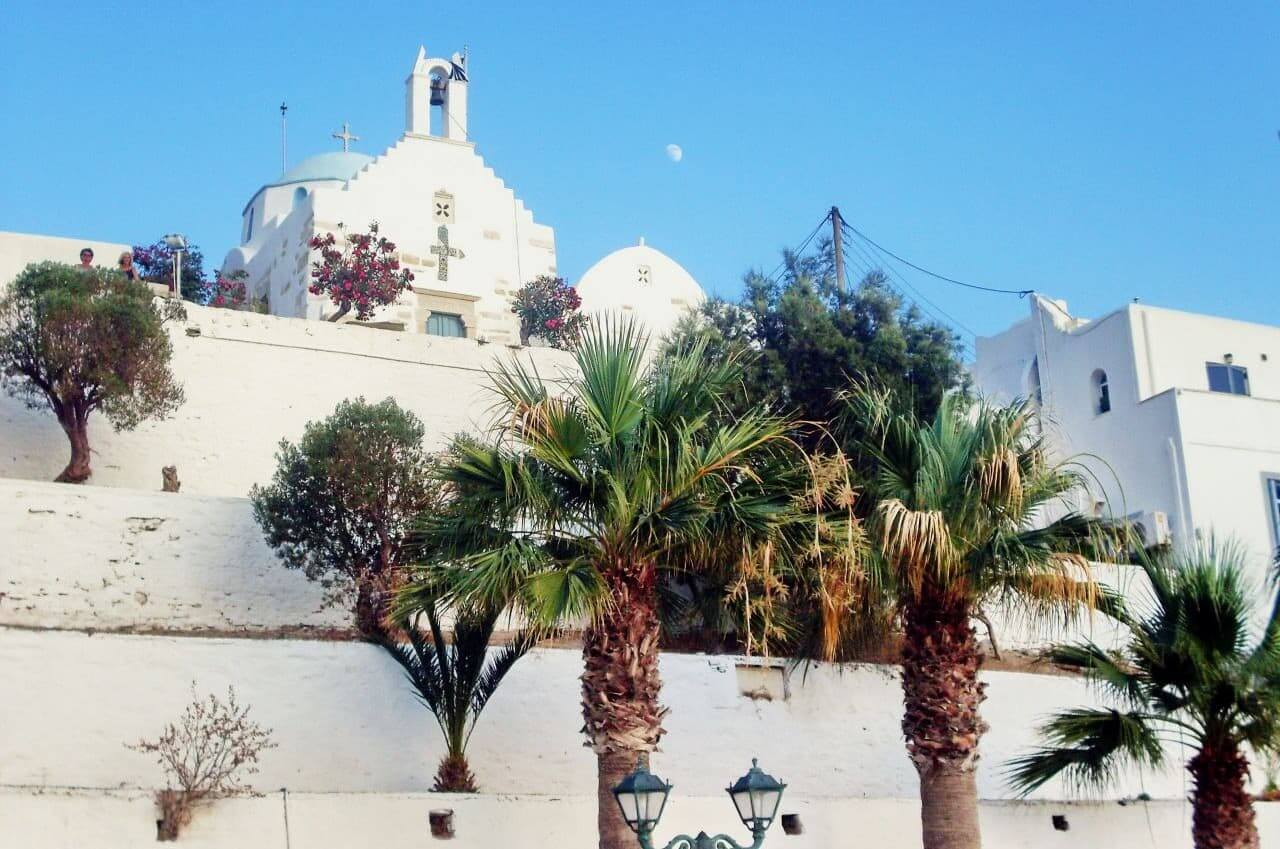
Agios Konstantinos Church
The Castle was built in 1260 by the Venetian Duke of Naxos on the site of the ancient acropolis of Paros, using its marble blocks. Today, parts of the defensive tower and sections of the eastern and southern walls are still visible, while others have been absorbed into newer houses.
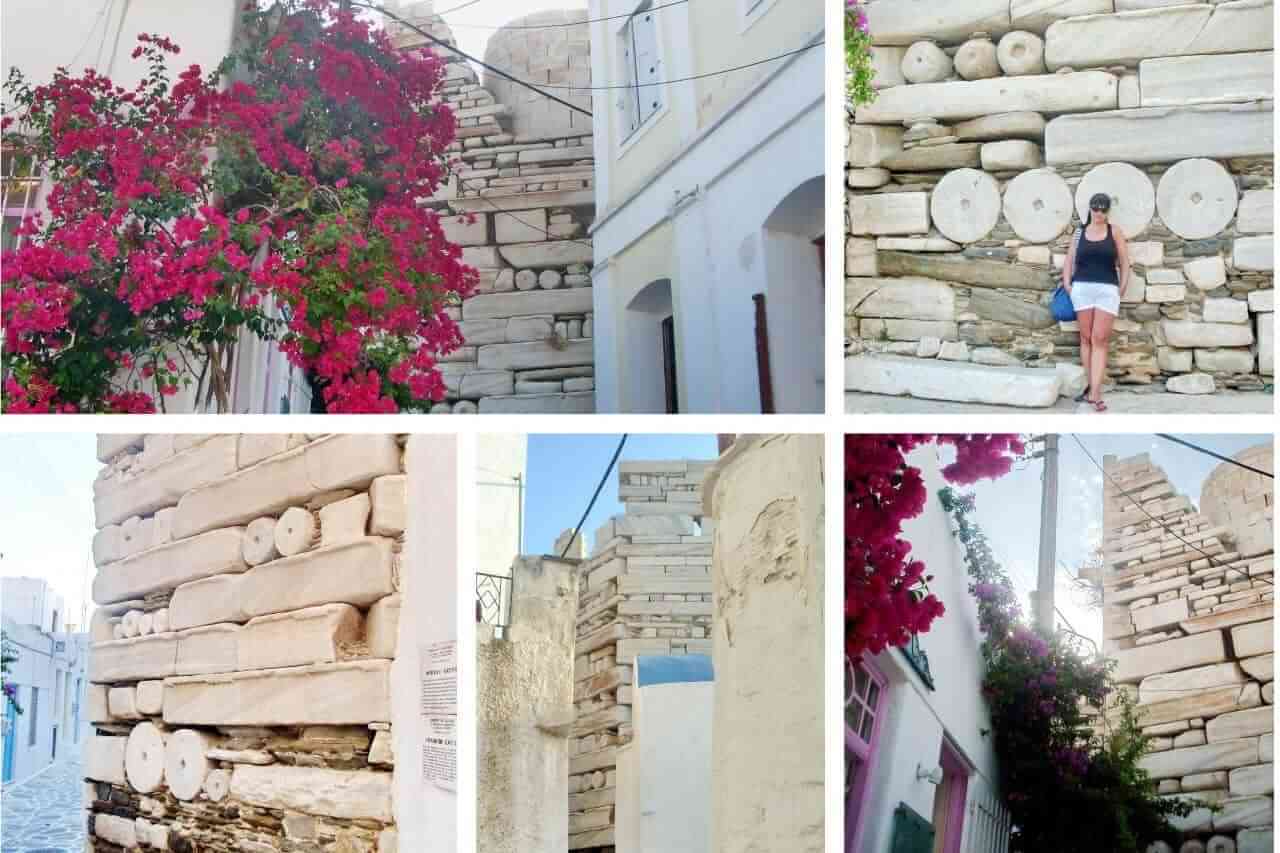
The Frankish Castle in Parikia
⛪ Panagia Ekatontapyliani (Church of 100 Doors)
A short walk from the port stands the impressive Byzantine church of Panagia Ekatontapyliani, the most famous landmark of Paros. Dedicated to the Assumption of the Virgin Mary, the island’s patron saint, it is one of the oldest churches in Greece.
According to legend, the church was built in 326 AD by Saint Helen, the mother of the Roman Emperor Constantine the Great (ruled 306–337). During her pilgrimage to the Holy Land, a storm forced her to stop on Paros. Grateful for her safety, she vowed to build a church to the Virgin. Another version says that the church was built later by her son, Constantine, after her death.
Later, the Roman emperor Justinian (527 to 565) renovated the church centuries later, adding a dome. Throughout its long history, it has been restored several times, including renovation after a strong earthquake in the 18th century.
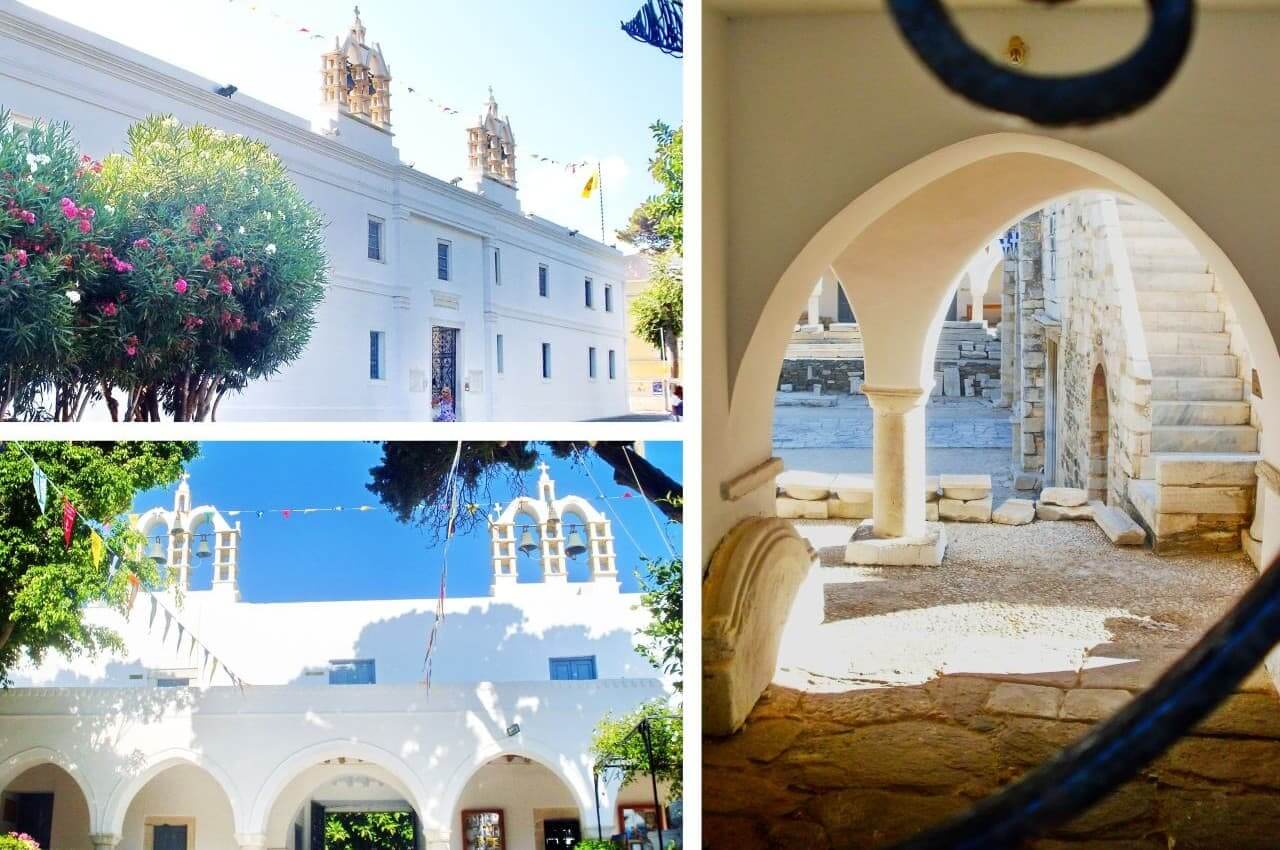
Panagia Ekatontapyliani
By the way, the name “Ekatontapiliani” means “the Church with the Hundred Doors”. So, it has only 99 now, but according to legend, there is one secret door. And, it is believed that the hundredth door will open when the Church of Hagia Sophia (today converted into a mosque) in Istanbul, becomes an Orthodox Church again…
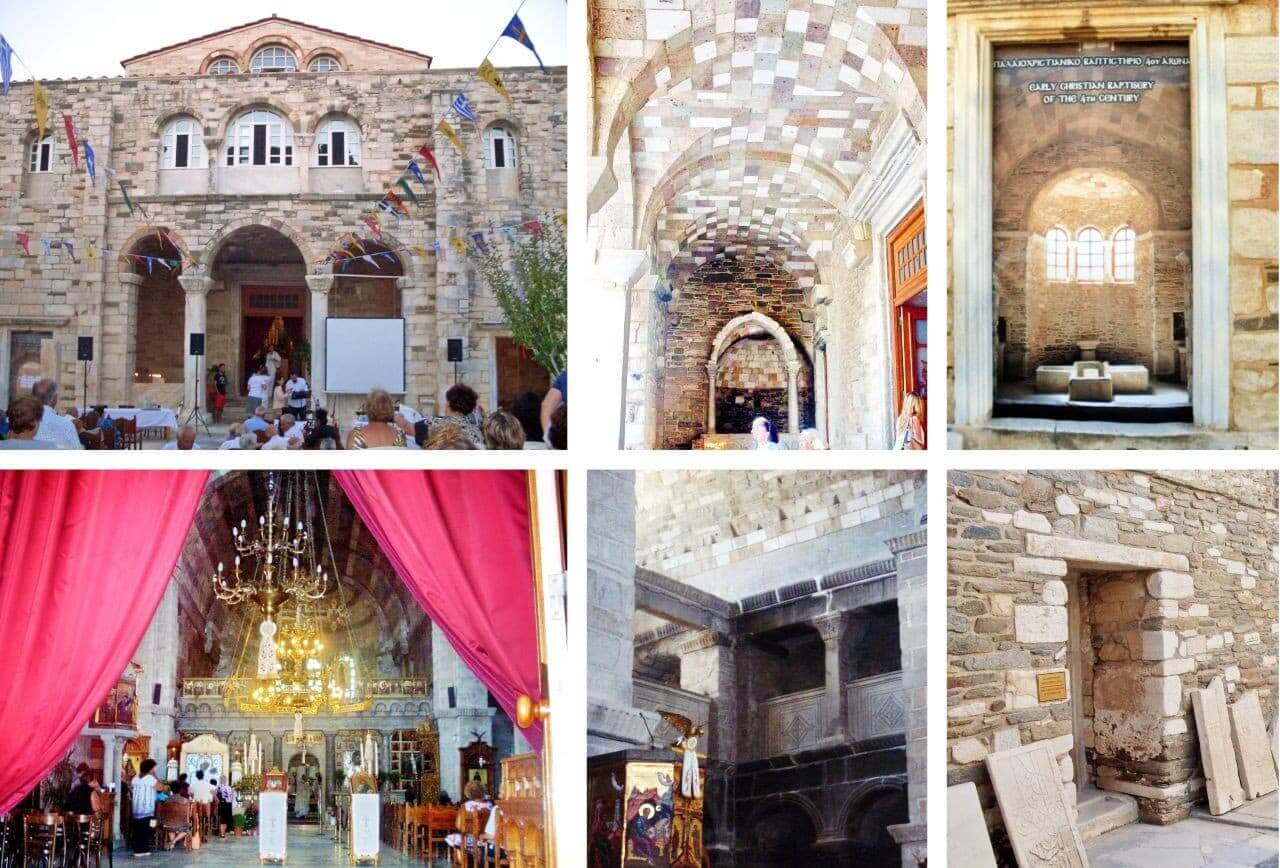
Facade and interior of the Panagia Ekatontapyliani
The Monastery complex
The Ekatontapiliani complex consists of the main church of the Virgin Mary and several internal and external chapels. In the monastery’s yard, there is a baptistery, the monks’ cells, and the Byzantine Museum with rare church artwork, wood carvings, silver and metal objects, and religious amphorae from the Byzantine Era.
Every year on the 15th of August, the Panagia Ekatontapiliani celebrates the day of the Dormition of the Virgin Mary, as one of the largest religious festivals on the island. Interestingly, during our vacation, there was a festival on the 2nd of August, which is also the birthday of my sister Tanja.
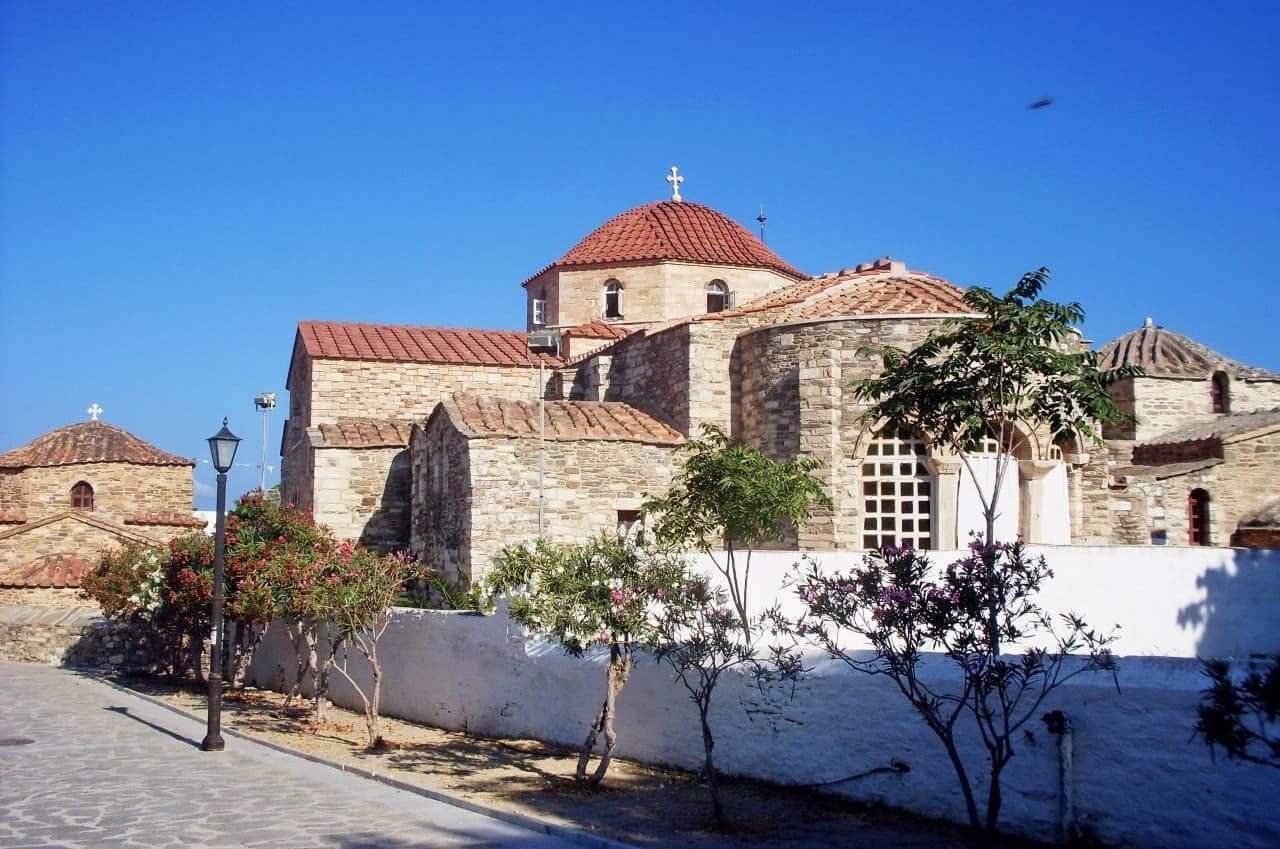
Panagia Ekatontapiliani in Parikia
🏛️ Paros Archaeological Museum
Just a short walk from Panagia Ekatontapyliani, you’ll find the Archaeological Museum of Paros, small but rich in history. Its collection includes sculptures, figurines, mosaics, amphorae, inscriptions, and the famous Gorgon head, all discovered on Paros and nearby Antiparos. The artefacts date back from the Neolithic to the early Christian times.
In the museum’s yard, you can see the statues and funeral sarcophagi from the Classical and Roman times, as well as floor mosaics from the Panagia Ekatontalipiani.
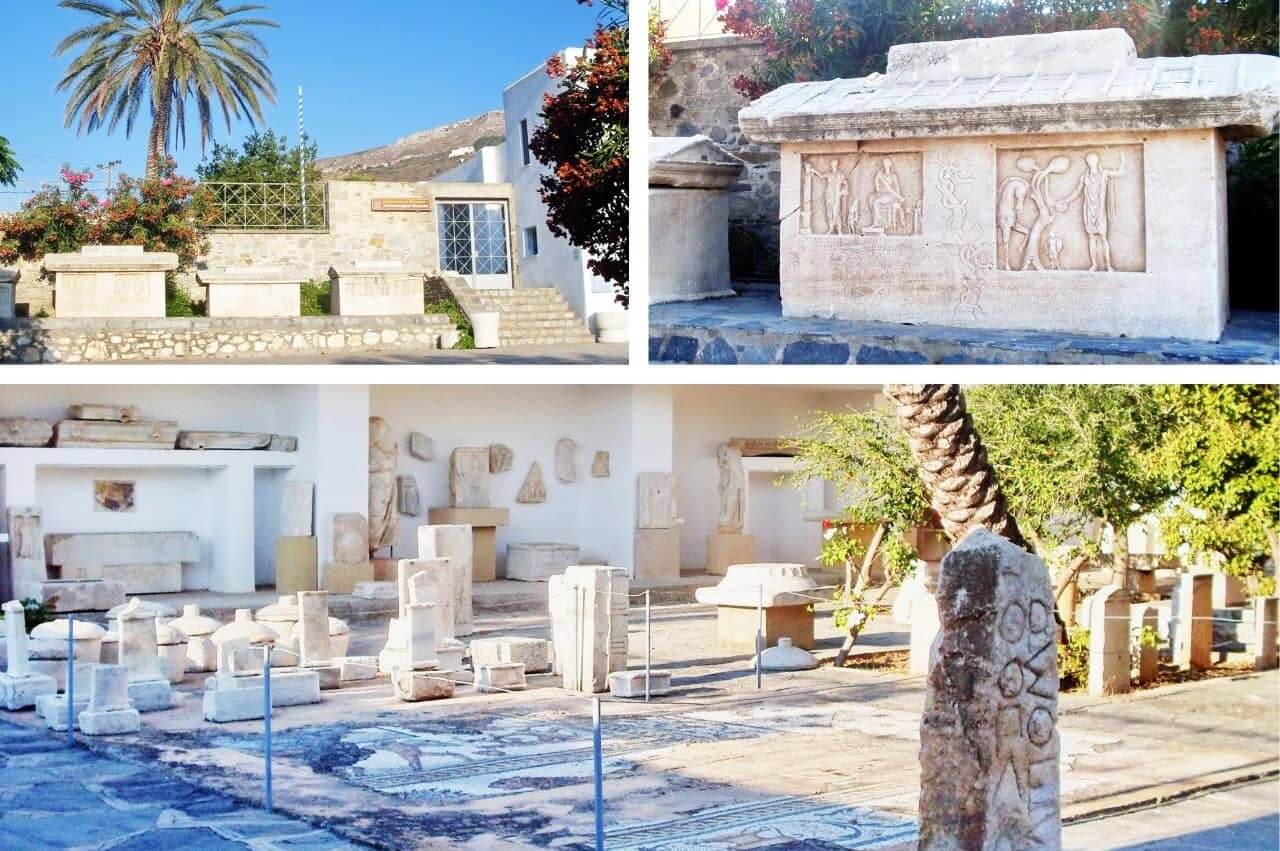
Paros Archaeological Museum
The town of Naoussa
Naoussa is the second-largest place on the island. It is located on the island’s northeastern coast, about 10 km from Parikia. You can easily reach it by taxi, public bus, or by renting a car/scooter.
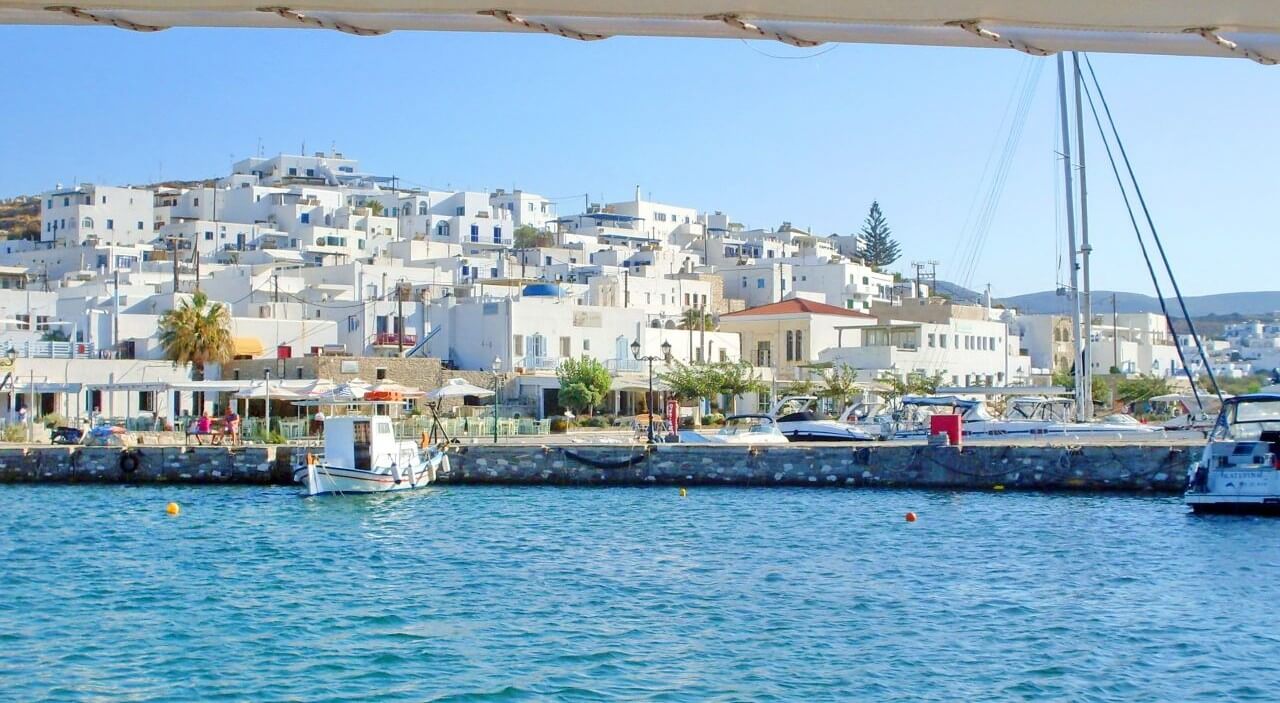
Naoussa, Paros
Naoussa is known for its picturesque harbour, whitewashed houses, narrow alleys, stylish bars and restaurants. Today, it is a perfect mix of Greek tradition and vibrant nightlife.
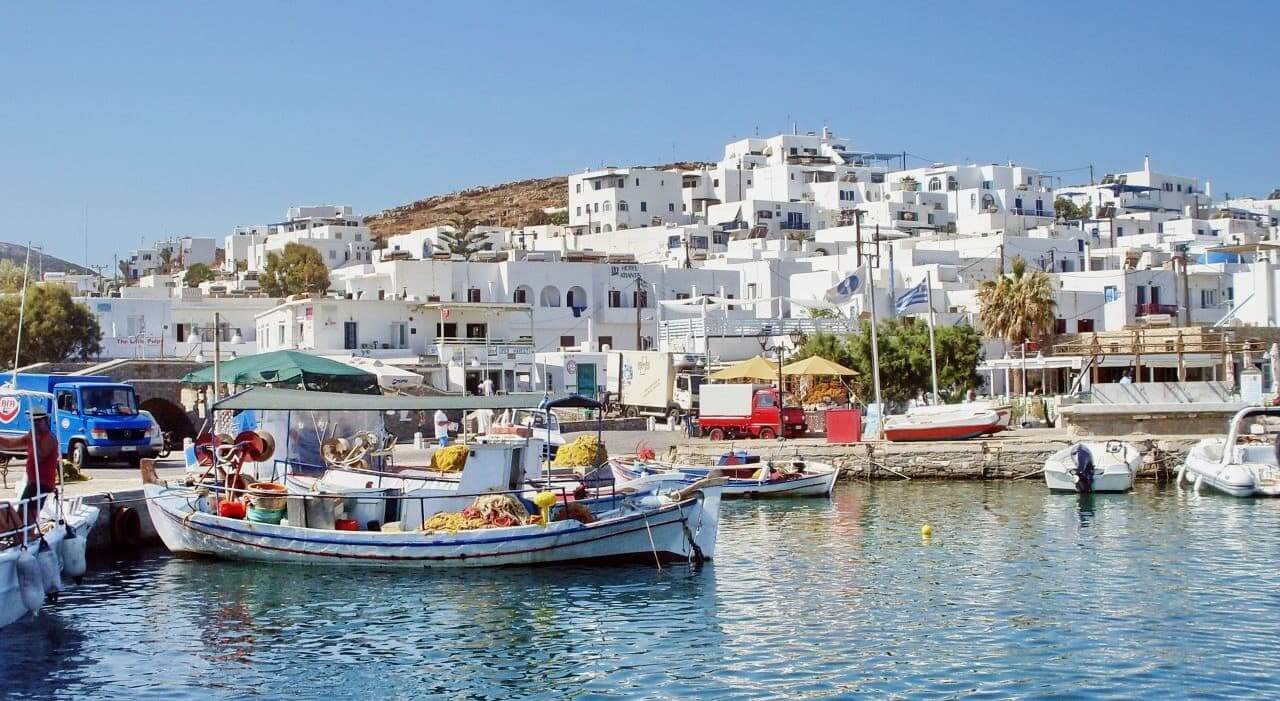
Naoussa port
The town was founded around the small port and the Venetian Castle-fortress in the late 14th century to protect from pirate attacks. Even today, the remains of the fortress can be seen, though much of the castle is underwater. In 1537, Naoussa fell under the rule of pirate Barbarossa and the Ottomans. Later, during the 18th century, it served as a Russian naval base.
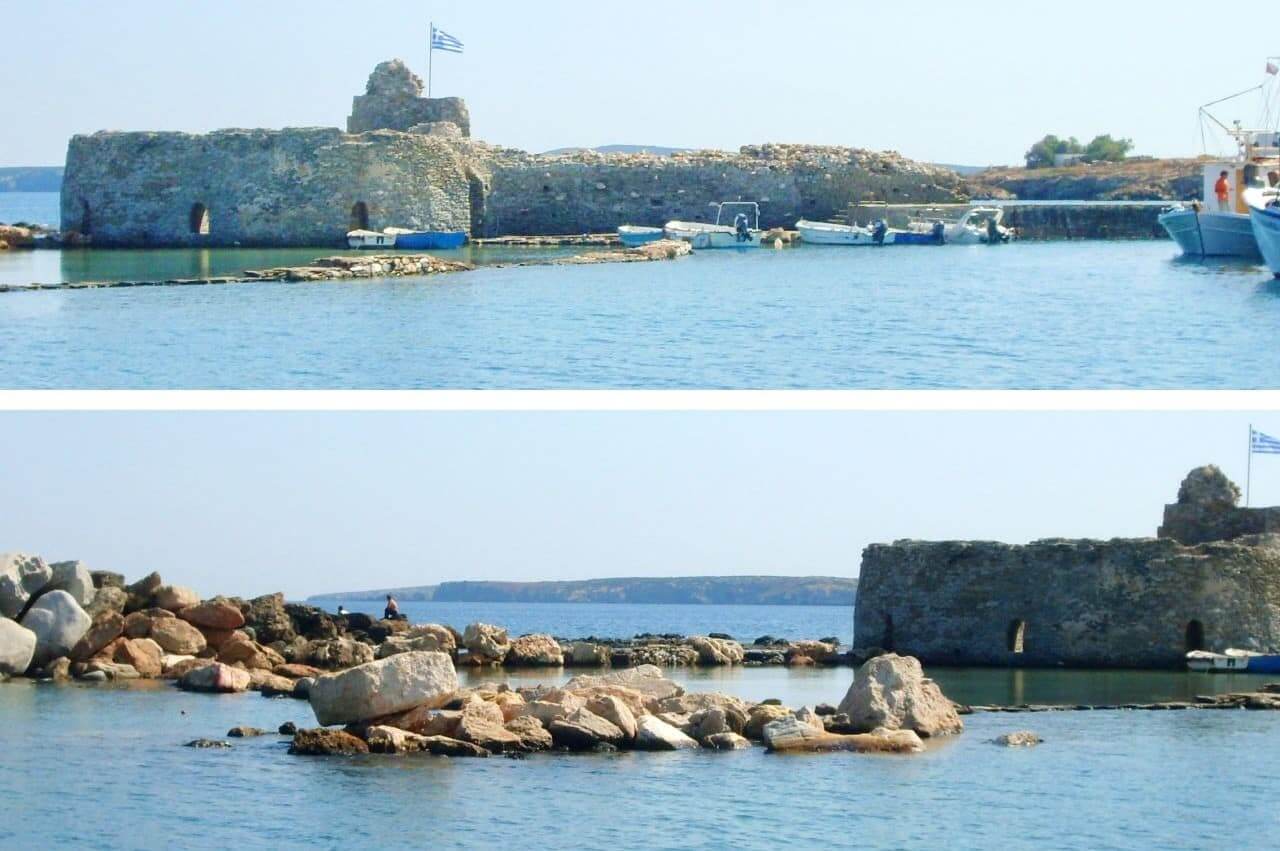
The Remains of the Venetian fortress in Naoussa’s old port
Once the Venetian storehouses were situated opposite the fort. Today, the waterfront is filled with interesting bars, restaurants, and fish taverns. Among them, the most popular is the Barbaroussa restaurant, known for its delicious food, vibrant atmosphere with music, and guests dancing with white napkins in their hands. For sure, the dinners and good mood are to remember 🙂
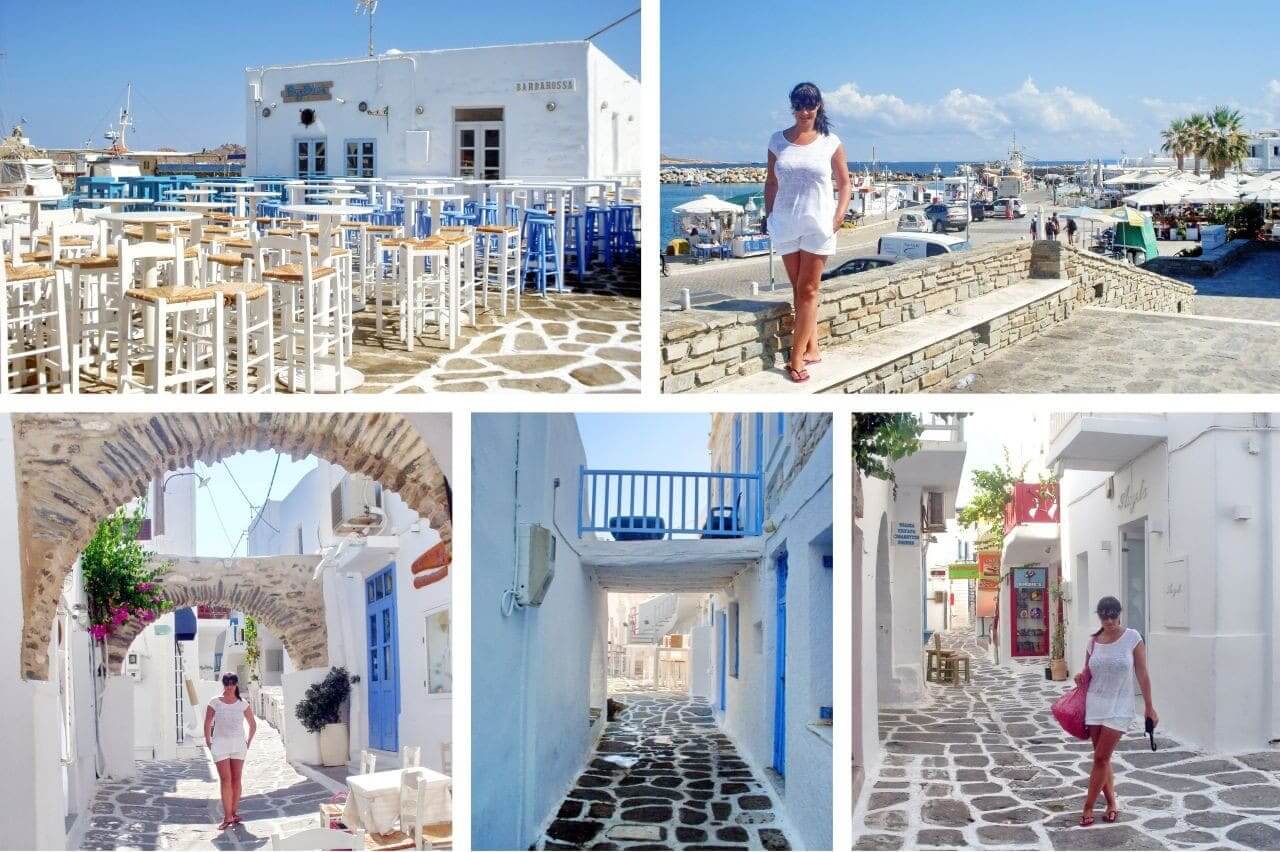
Barbarossa restaurant and Naoussa alleys
Strolling through Naoussa’s narrow alleys, you’ll find elegant boutiques, artisan shops, traditional products, and souvenirs. And when the sun goes down, Naoussa becomes the centre of the vibrant nightlife on the island, under the stars…
Faneromeni (Panagía) Church is the landmark of Naoussa, and it dominates the skyline above the small harbour. It is the third-largest church in Paros.
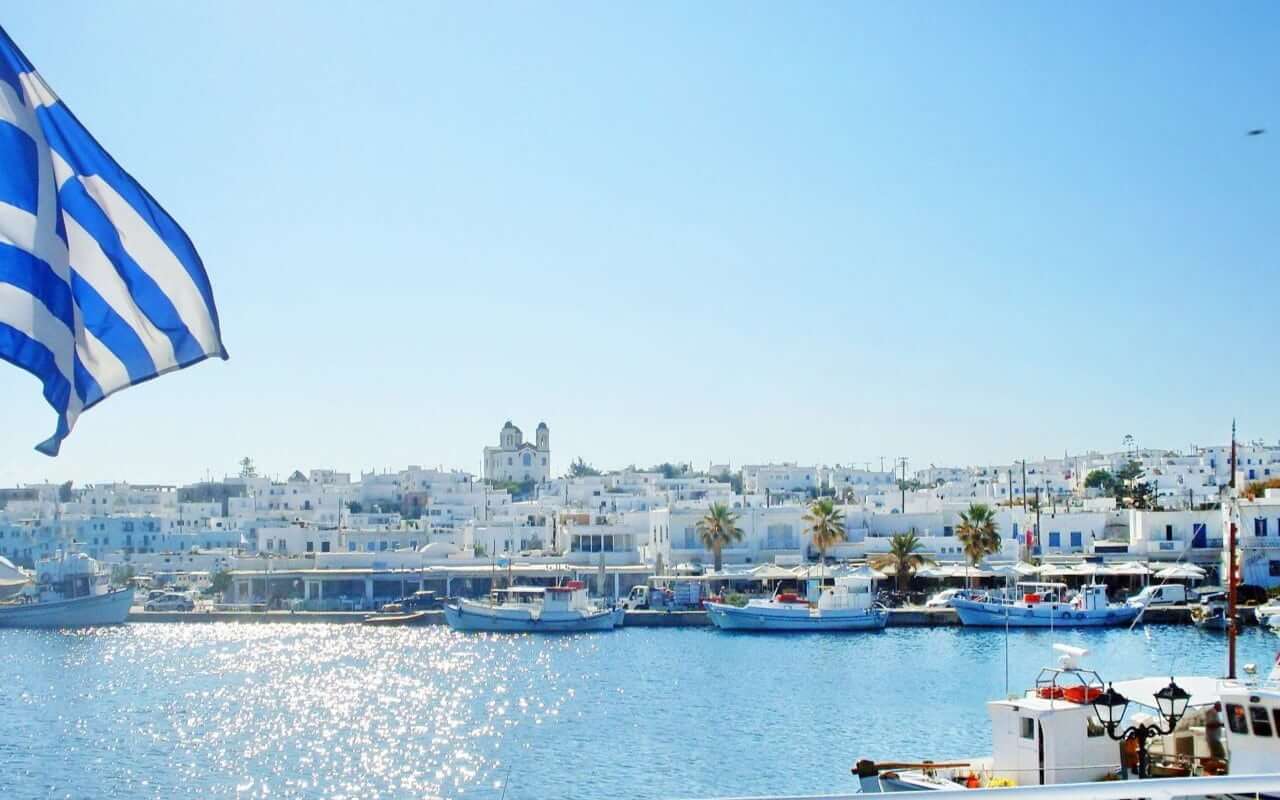
Faneromeni (Panagía) Church, Naoussa
Explore the villages of Paros
Besides Parikia and Naoussa, Paros is known for its picturesque villages.
If you have time, plan to visit Lefkes, Prodromos, Marpissa, Aliki, or Piso Livadi.
Lefkes village
We visited the traditional village of Lefkes, nestled in the mountains, about 11 km southeast of Parikia. It is easy to reach by car, taxi or public buses, which run regularly (about a 20-minute drive).
Along the way, we passed by the small village of Kostos, with a lovely square with the churches of Agia Marina and Anastasi.
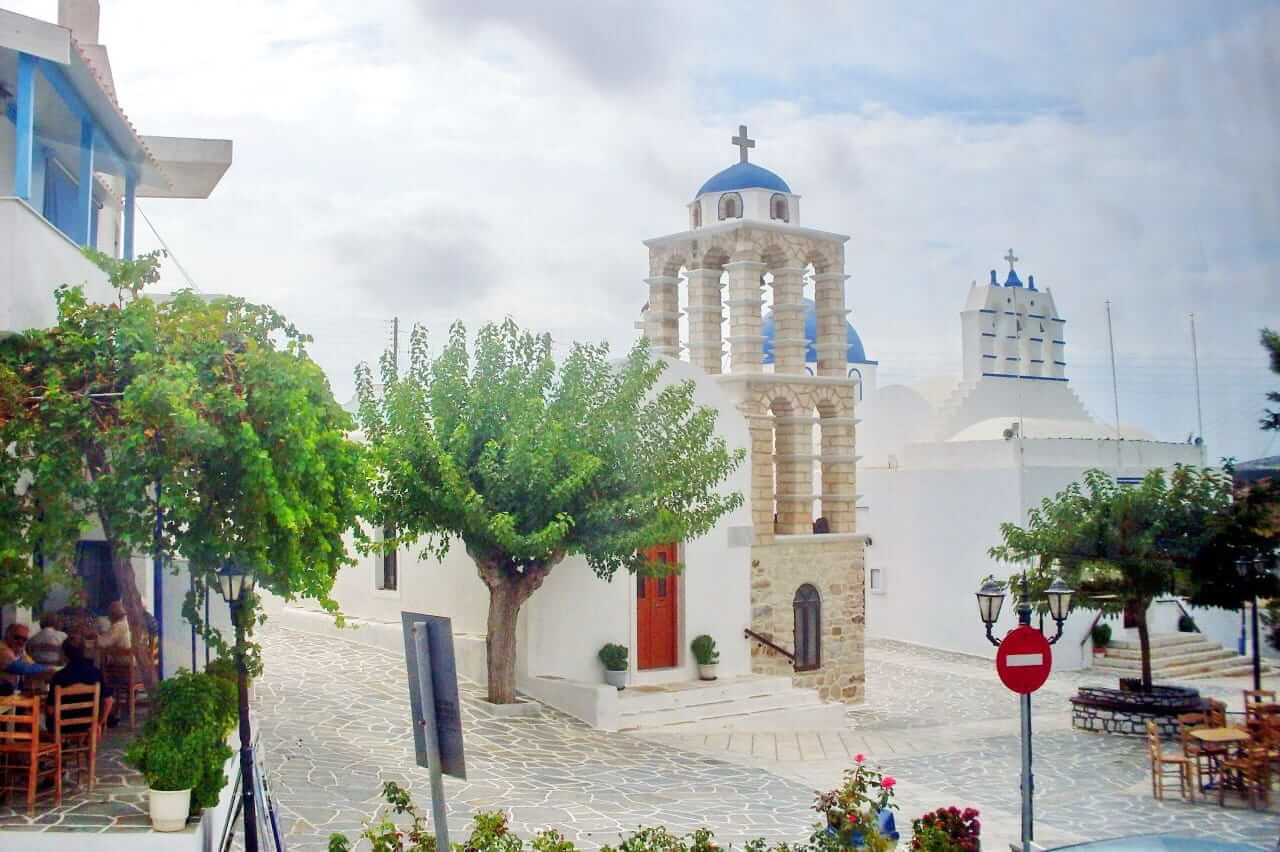
Churches in Kostos village
By the way, Lefkes was founded in the 17th century, and once, it was the first capital of Paros.
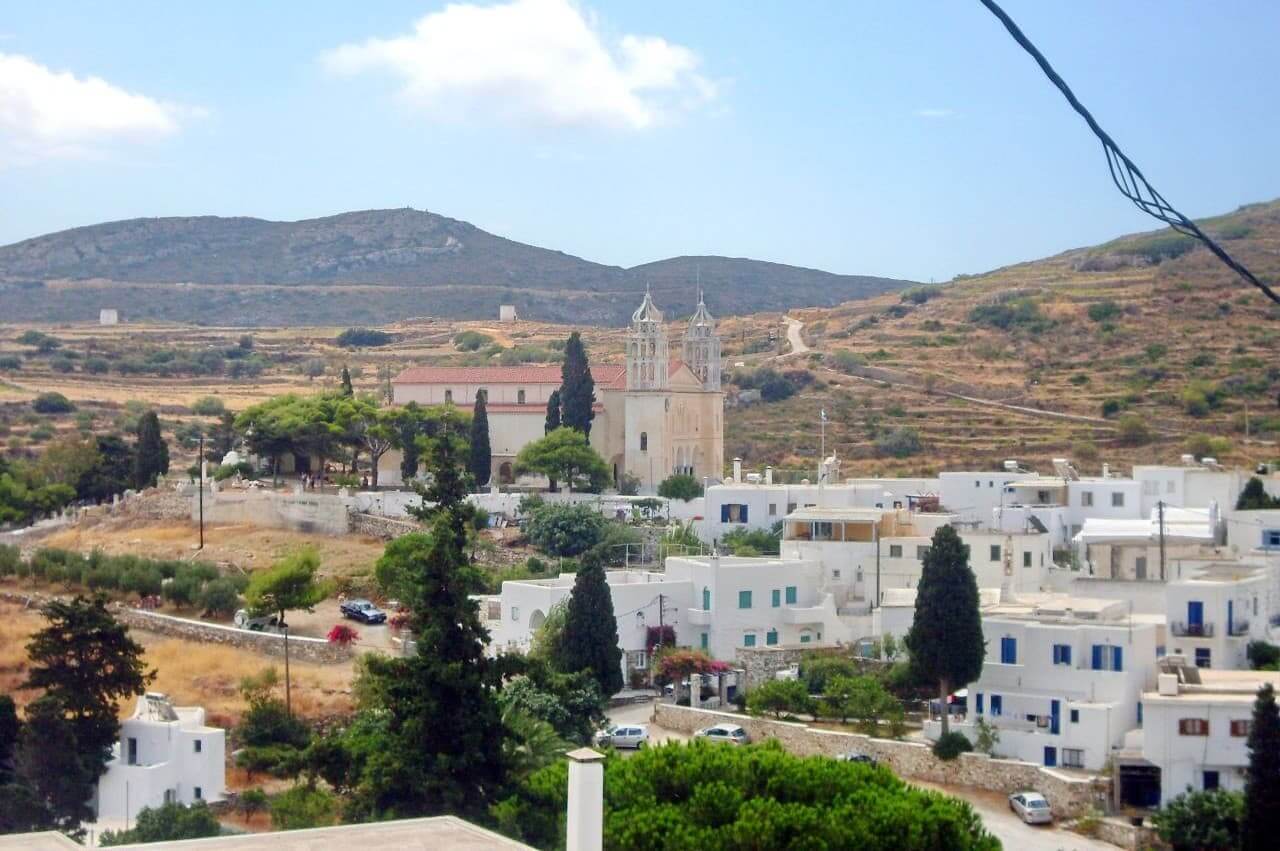
Lefkes village and the Church of Agia Triada
The landmark of Lefkes is the impressive Church of Agia Triada, the Byzantine temple dedicated to the Holy Trinity. It was built between 1830 and 1835, on top of the hill overlooking the village.
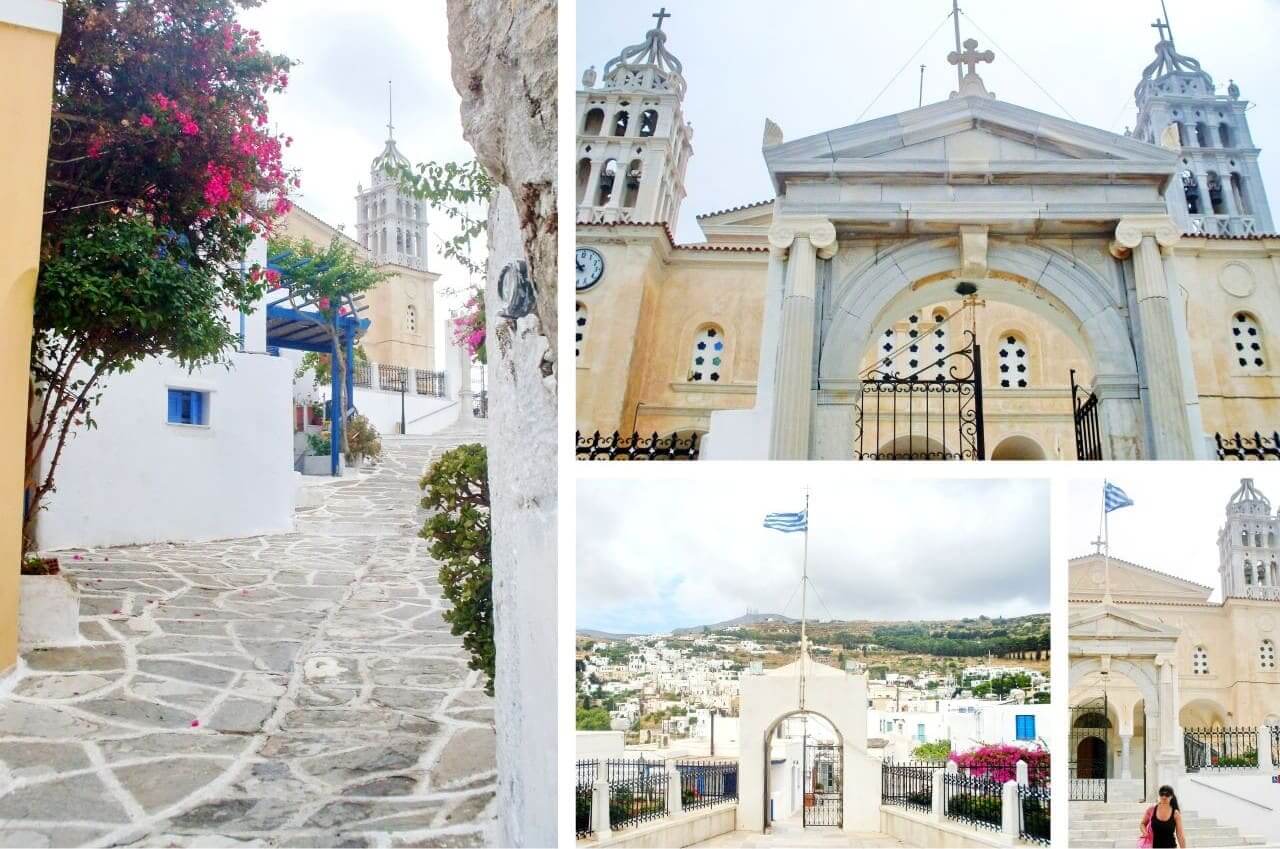
Agia Traida Church, Lefkes village
Two bell towers, an altar, and columns are made of the Parian marble, and the interior is adorned with frescoes.
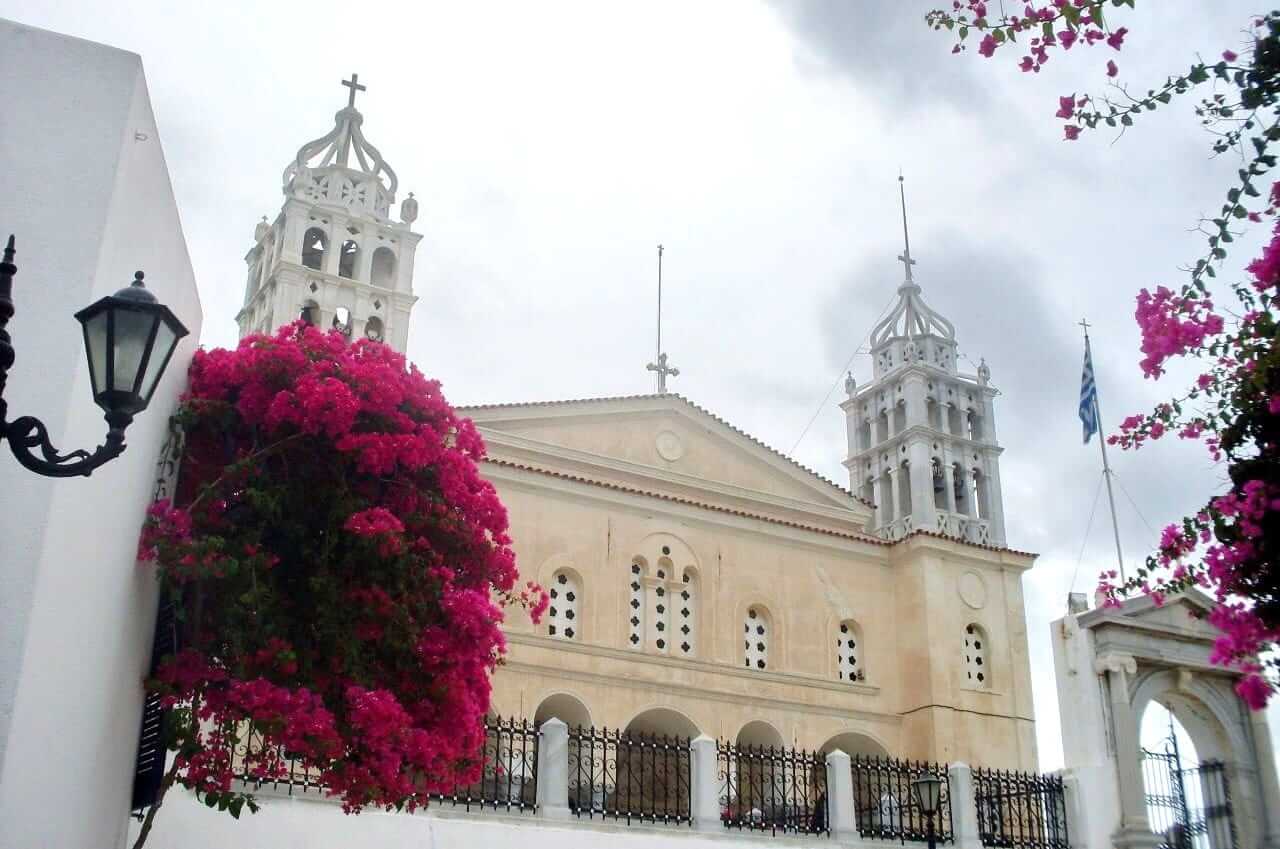
The Church of Agia Triada in the Lefkes village
After visiting the church, you can wander through the Lefkes’ alleys with traditional white houses, bougainvillaea trees and colourful flowers.
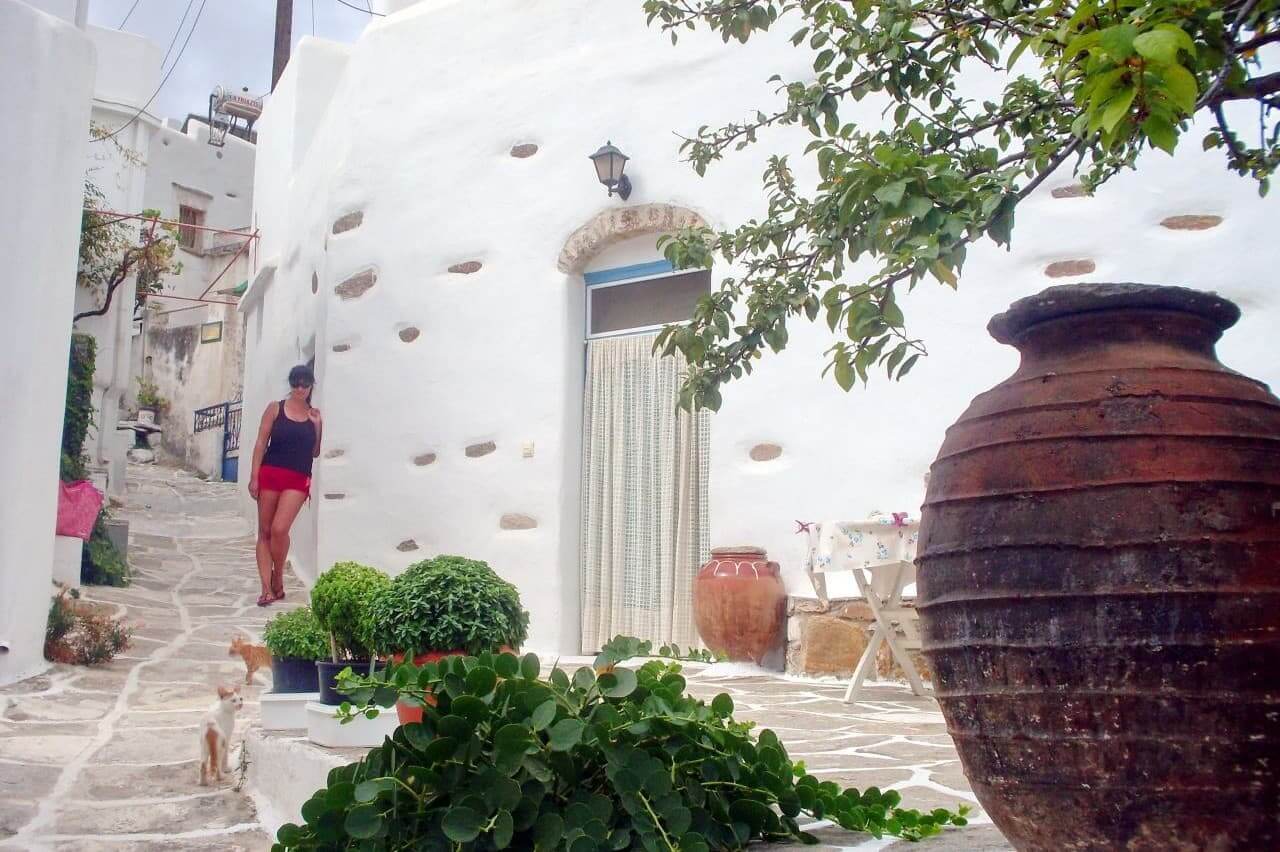
White houses in the village of Lefkes
Check small shops selling souvenirs, decorative objects, jewellery, or ceramics. Visit the Folklore Museum to learn more about the island’s traditions. Don’t miss the chance to take beautiful photos and enjoy a local dish or Greek coffee in one of the cafés.
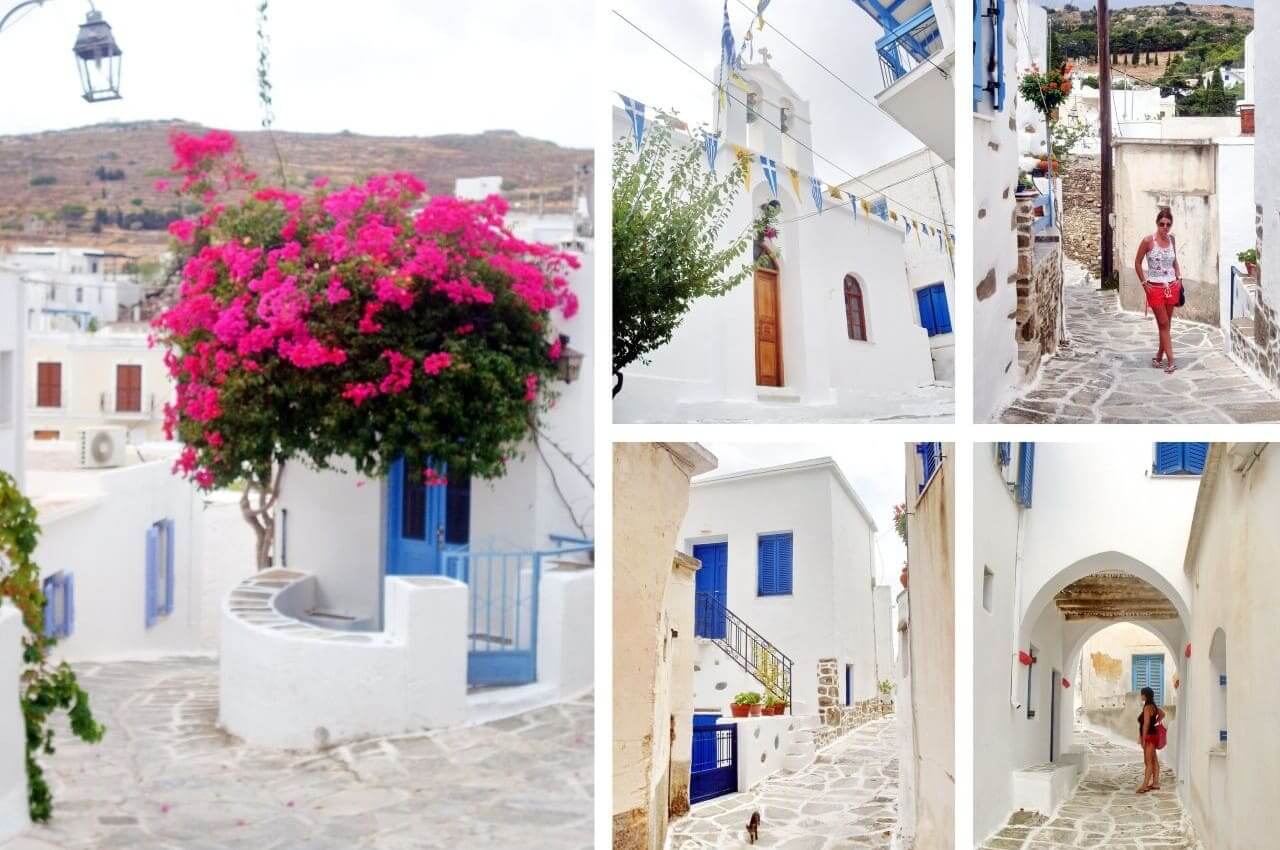
Strolling along the Lefkes village
Lefkes also offers private villas, guesthouses, and apartments for a peaceful stay.
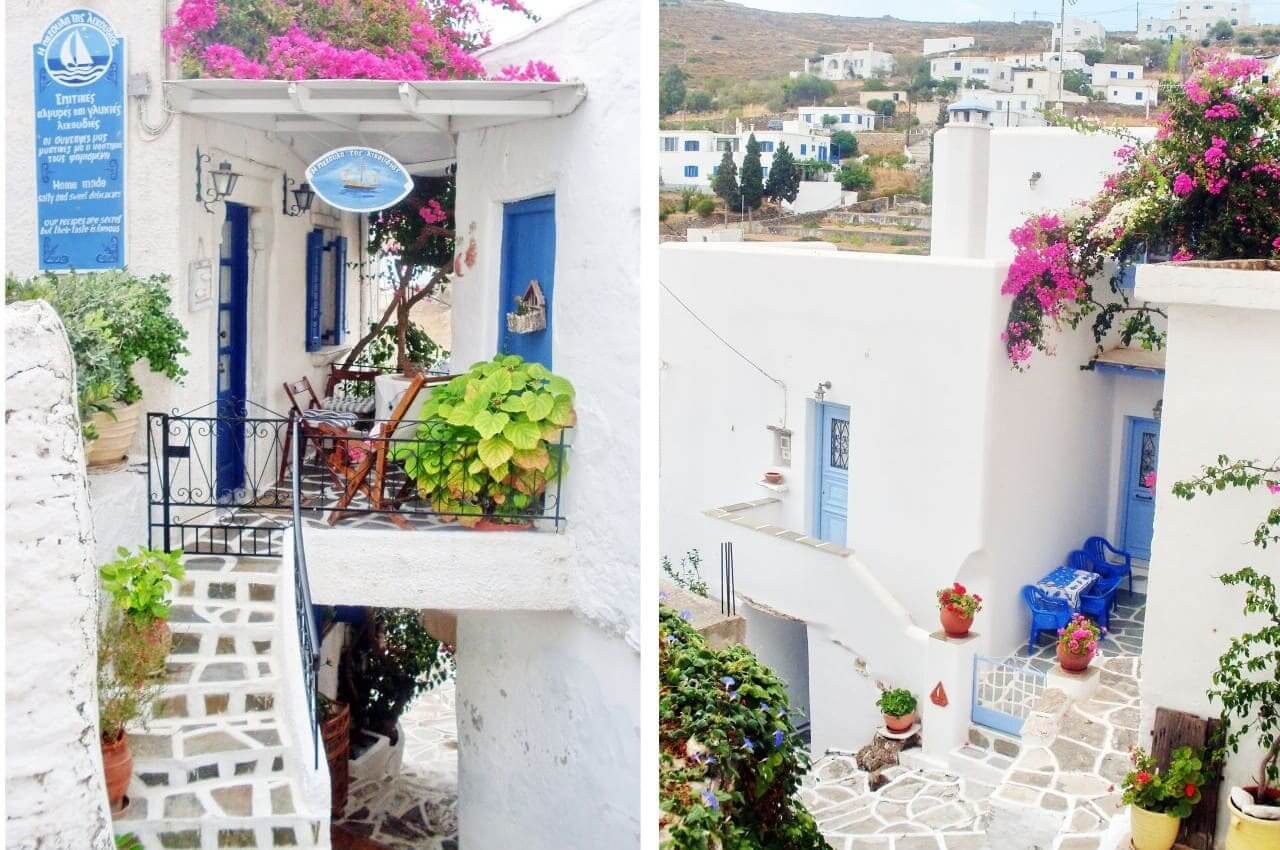
Whitewashed houses with flowers, Lefkes village
🏖️ The best beaches on Paros
Paros has some of the best beaches in Greece, but keep in mind that they can be very crowded, especially during high season. Beaches are perfect. The golden sand, crystal clear and mostly shallow water, lively beach bars and taverns around them, will make your vacation full of memories.
🏖️ Beaches around Parikia town
◊ Golden Beach (Chrissi Akti) is located about 20 km southeast of Parikia. It is a long and partly organised beach with bars and restaurants. Together with the nearby New Golden Beach, it is ideal for windsurfing. Every August, one of the Windsurfing World Cup events takes place in this area. You’ll also find the Diving Paros Centre there, where you can enjoy a scuba diving session.
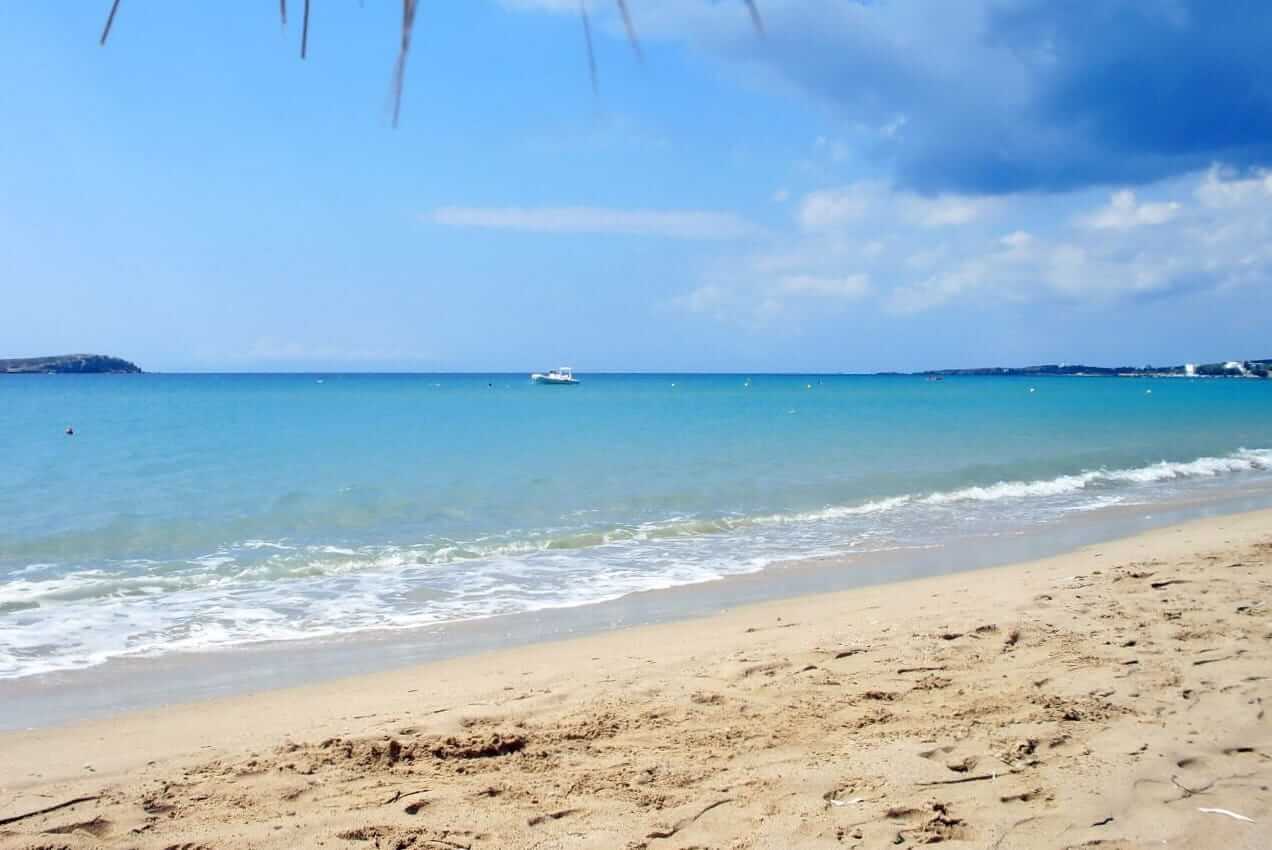
Golden Beach
♦ Marcello Beach is situated in the bay of Parikia. It is well organised and very popular among young people because of the beach bars and music. You can reach it by car, on foot (it takes about 45 minutes from the centre), or by a short boat ride from the port of Parikia. Near Marcello, you can visit the Krios Beach, a well-organised sandy beach with small taverns in the bay. It is easily reached by public bus or car. Close to the beach, there are a campsite, hotels and apartments.
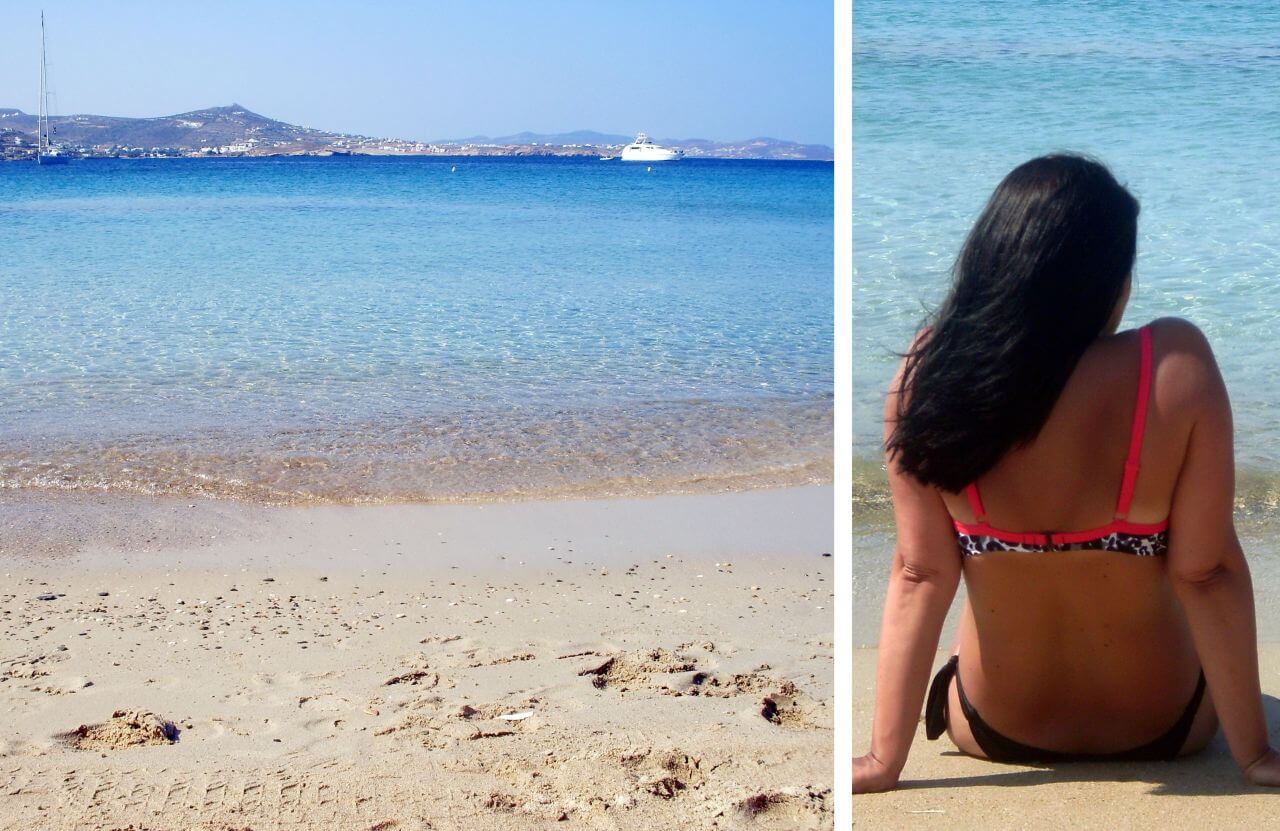
Marchello Beach
◊ Livadia is the closest beach to Parikia, about 700 meters from the harbour. Surrounded by trees, it is partly organised with sunbeds, umbrellas and water sports.
♦ Pounta Bay is located in a small village, about 9 km southwest of Parikia. It is a world-famous spot for windsurfers and kitesurfers, with several bars and hotels around it.
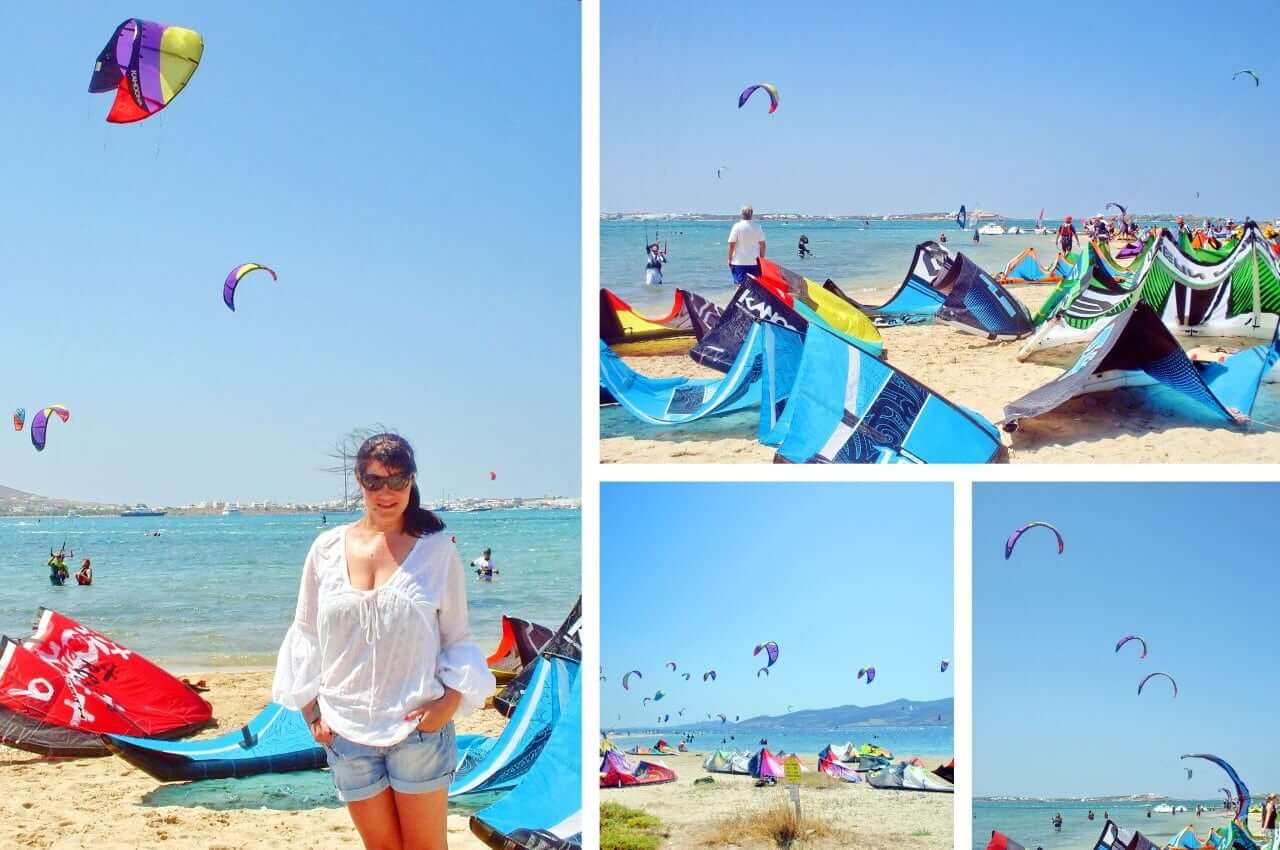
Pounta Beach and kitesurfing, Paros
Also, there is a small harbour in Pounta Bay, from which you can take a ferry to the opposite Antiparos island in a few minutes. Ferry runs between the islands every half-hour, but check the schedule before you go.
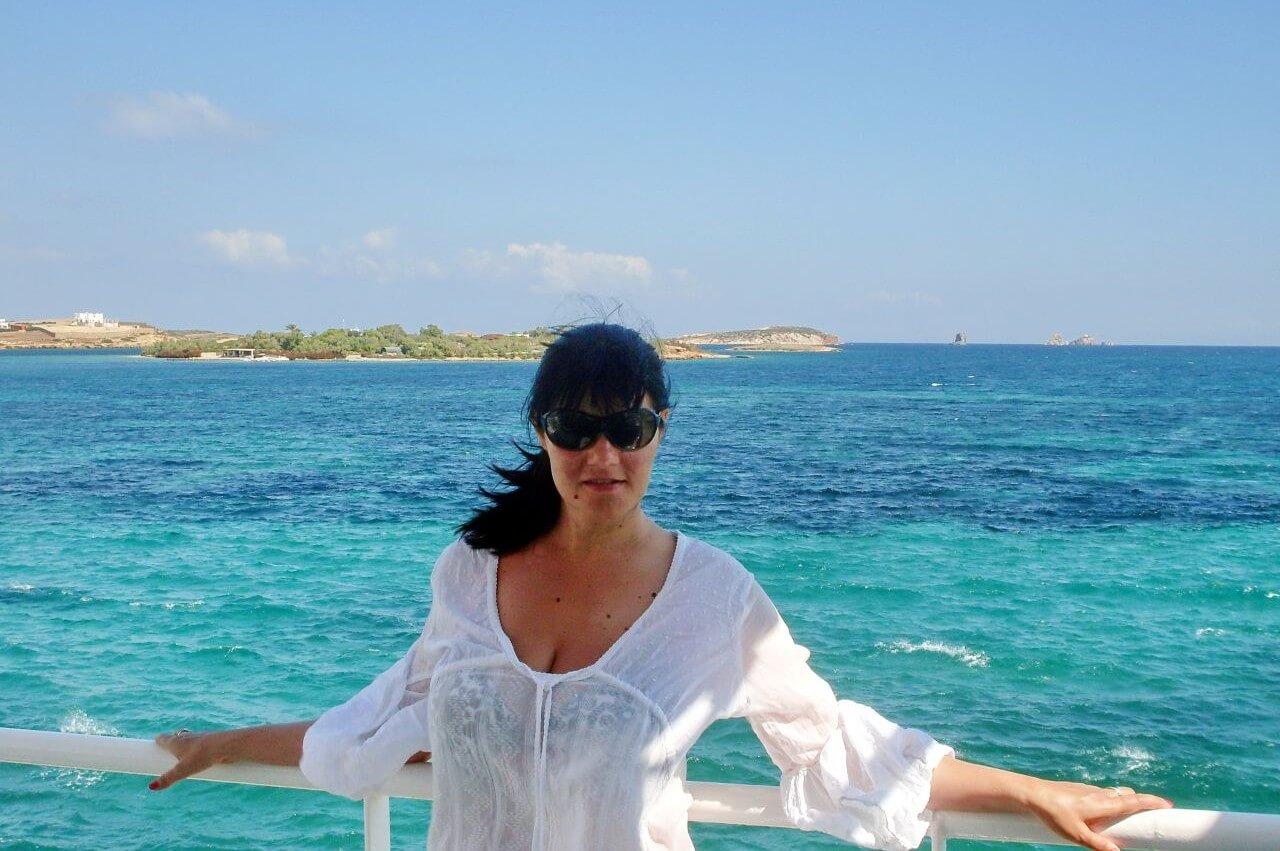
Ferry from Paros to Antiparos
🏖️ Beaches around Naoussa (North Paros)
♦ Kolymbithres is the most famous beach in Paros, known for its specific granite rock formations that create several natural coves. You can reach it from Naoussa by bus or water taxi. Just a few metres from the beach, you’ll find Taverna Kolymbithres, a great spot to try delicious Greek specialities.
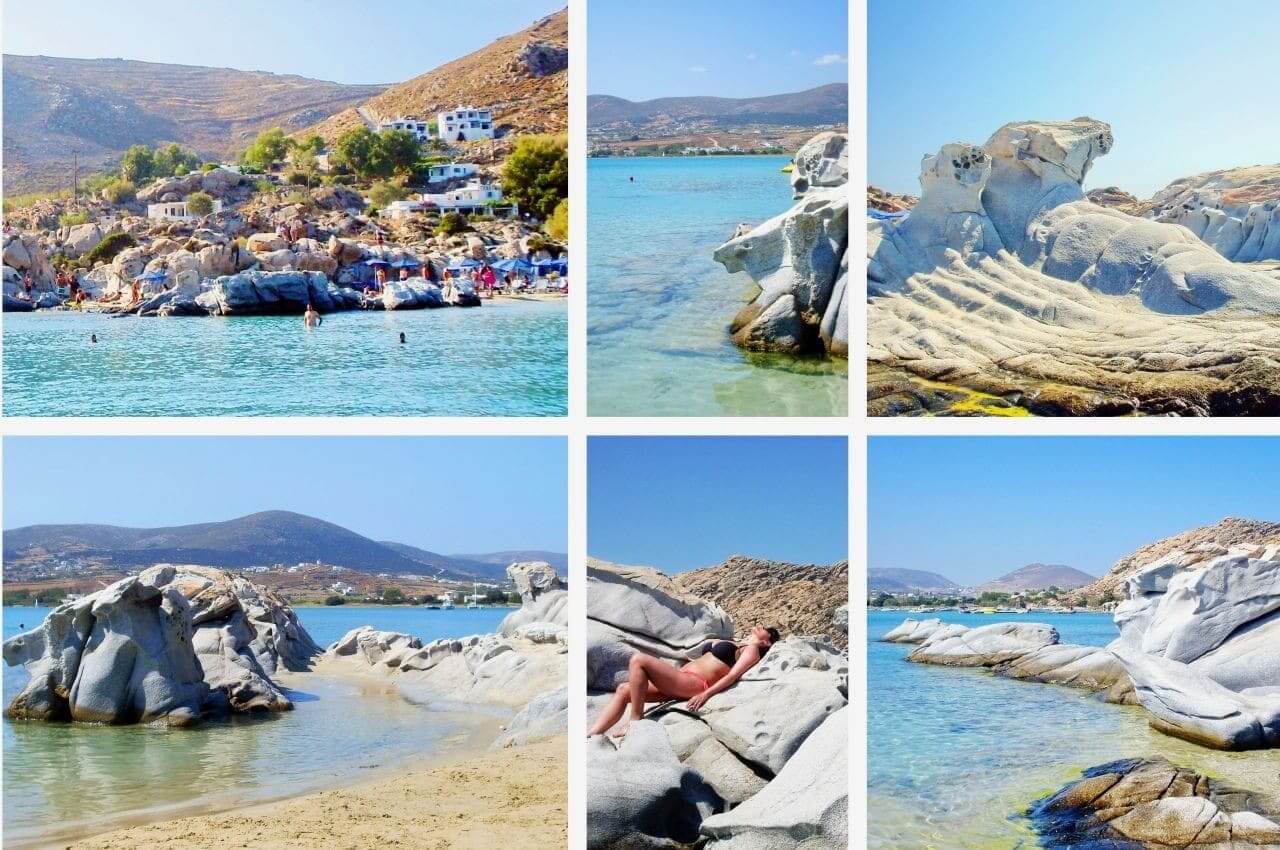
Kolymbithres Beach
◊ Located on the east coast of Paros, in Plastira Bay, Santa Maria Beach is a good choice for families with kids because of its shallow, crystal-clear water. It is a well-organised beach with bars and water sports. However, it can be crowded, especially during the beach parties with a DJ. If you prefer a calmer beach, find Mikri Santa Maria beach, located just one km away.
◊ Monastiri Beach lies near the Environmental Park of Paros, established in 2009 to protect rare flora and fauna species. It is a small sheltered beach protected from strong winds, with calm, shallow water, which makes it perfect for families with small children. Visitors can enjoy sunbeds, umbrellas, the Monastiri Beach Bar & Restaurant, paddle boats and water sports, as well.
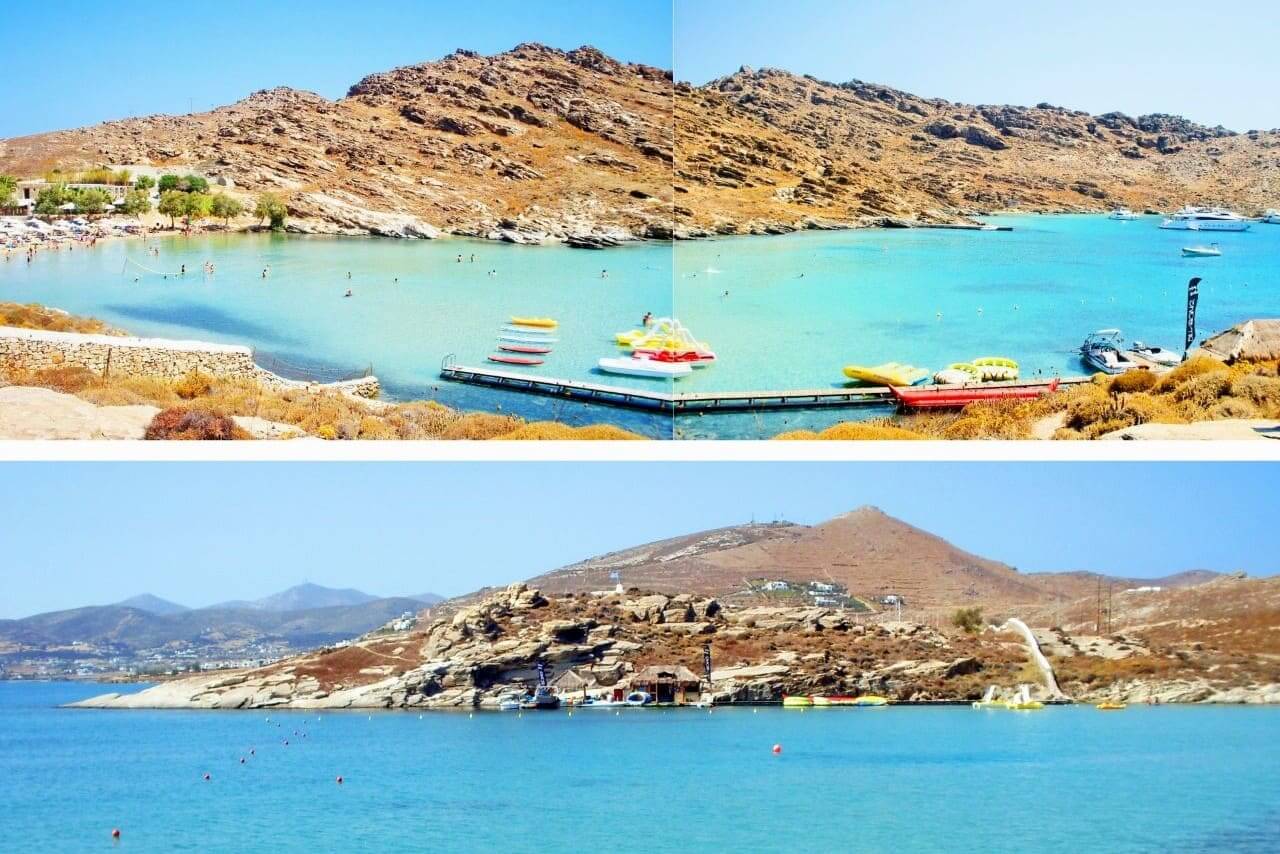
Monastiri Beach
On the rocky part of the beach stands Agios Ioannis Detis church, overlooking the blue Aegean Sea and Naoussa Bay. The first church was built in the 17th century, then renovated in 1806 by monk Joseph. Under the rule of King Otto, it was abandoned from 1833 until 1964, when Dutch painter Gisele D’Ailly got permission to live there and restored it.
Today, the festival of the monastery of Agios Ioannis Detis is celebrated on August 29, when pilgrims gather for an all-night mass.
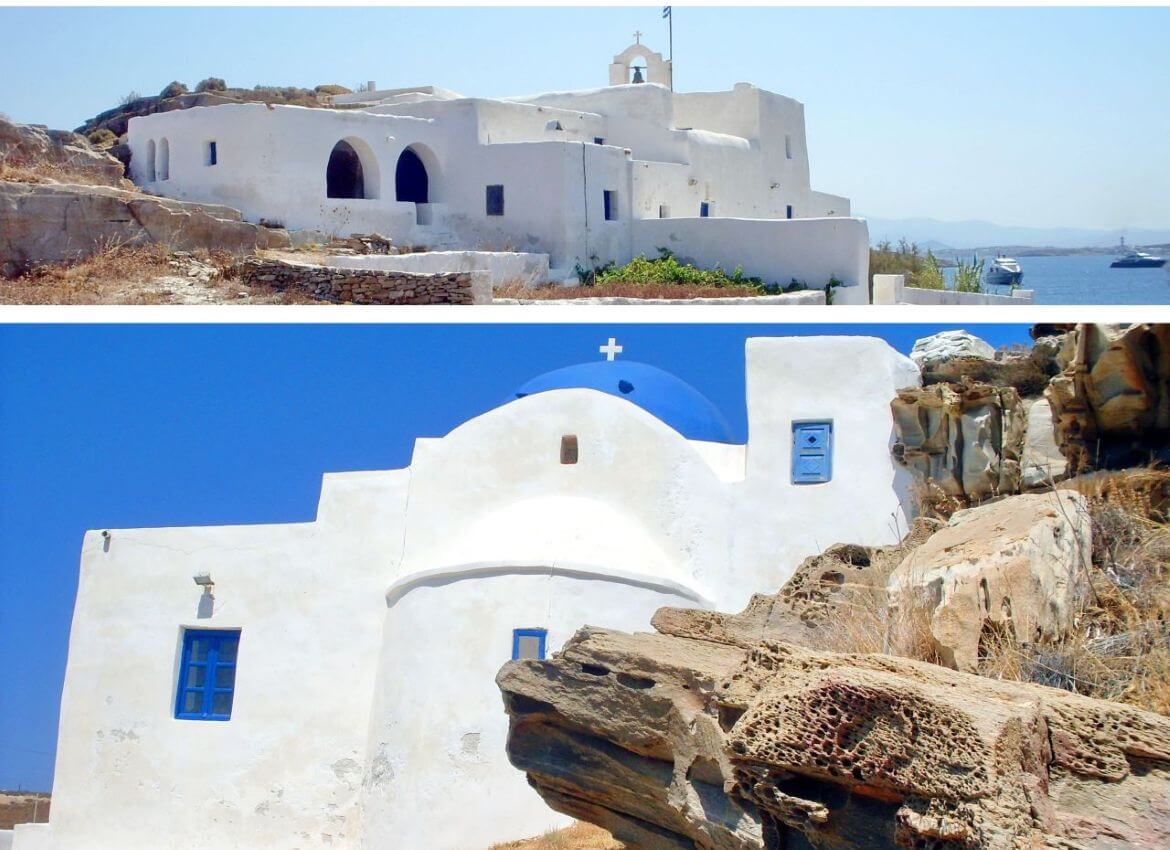
Agios Ioannis Detis Church near the Monastiri Beach
🏖️ A few more interesting beaches…
♦ Logaras Beach is situated in the southern part of the island, 18 km away from Parikia and a few km away from Piso Livadi Beach. It is a long, partly organised beach, with taverns, water sports and accommodation facilities.
♦ Kalogeros Beach is a secluded and non-organised beach on the eastern part of the island. It is famous for its natural clay, so you can treat yourself to a free natural SPA, right on the beach 🙂
♦ Langeri Beach is a quiet and isolated beach, close to the Santa Maria Beach, mostly frequented by nudists.
♦ Punda Beach is the most popular among the young visitors, known for bars, beach parties and loud music with a DJ.
🏨 Accommodation on Paros
Páros offers a wide range of accommodation, from small apartments to luxurious boutique hotels and villas.
We stayed at the Doukissa hotel, a family hotel run by two sisters, Doukissa and Lila. It is located in the centre of Parikia, near the Archaeological Museum and the Church of Ekatontapiliani, surrounded by roses, bougainvillaea, lemons, and pine trees. You can choose among various types of carefully decorated rooms, such as: Superior, Deluxe, Suite or Basic.
We were delighted with its perfect location, warm hospitality, and an excellent breakfast 😀
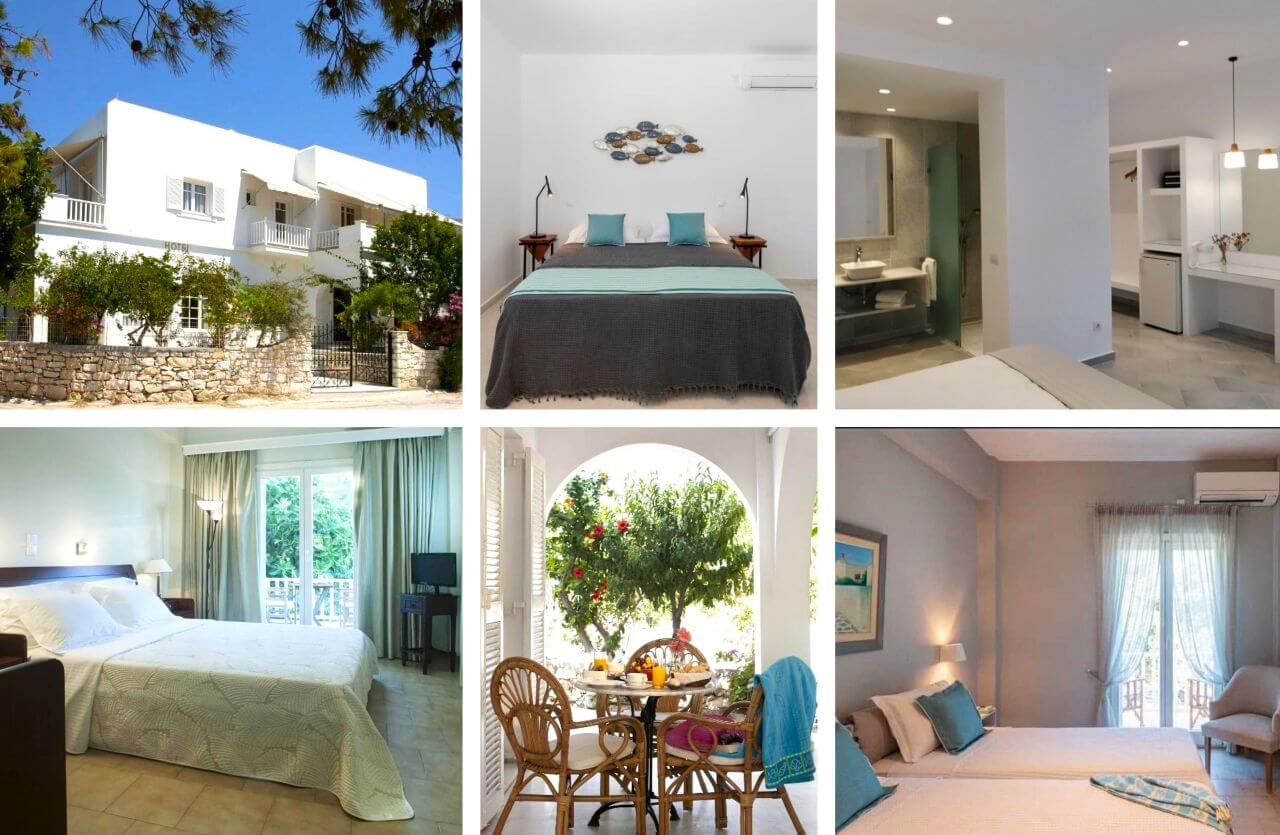
Parikia, the Doukissa Hotel
♦ Some of the most luxurious hotels are: Calme Boutique Hotel (adults only), Mythic Paros (adults only), Cove Paros, Martineli Residence-Beachfront Estate, Yria Island Boutique Hotel & Spa, PAROCKS Luxury Hotel & Spa, Kouros Blanc Resort & Suites, Vione Paros, White Dunes Luxury Boutique Hotel, Parilio, a Member of Design Hotels, Lilly Residence-All Sea View Suites (adults only), etc.
Check out the various accommodation options and find the best place for your stay in Paros.
☕🍽️ Cafes & restaurants
Paros offers numerous cafes, bars, and restaurants serving delicious food and drinks.
Here are some of the most popular spots to check out.
📌 Parikia:
Cafes: Symposium Cafe & restaurant (former Distrato, which was our favourite cafe & restaurant), Meltemi, Cosa All-day cafe Bar, Secret Cafe, Evinos Bar, Bebop, Pirate Bar, and Alexandros Bar, located in the old windmill, perfect for watching the sunset.
Restaurants: Taverna Mira, Mouragio, To Bountaraki, Apollon Garden.
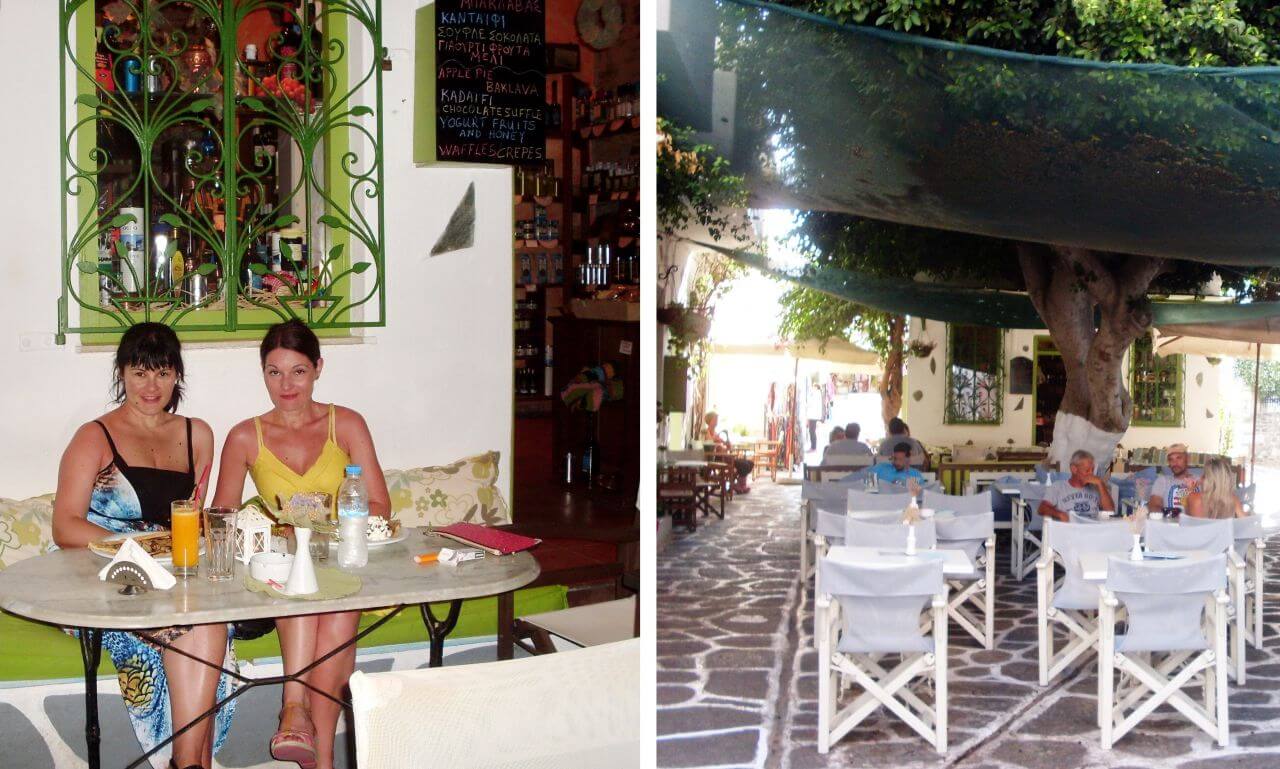
Parikia, Distrato Cafe, today Symposium Cafe
📌 Naoussa
Cafes: Kiranos Cafe, Fotis All Day Bar, Agosta, Sousauro.
Famous bakery: Ragoussis.
Restaurants: Barbarossa is the most popular and expensive restaurant, offering a cosmopolitan vibe and delicious gourmet dishes. It has hosted many Greek and international celebrities.
Also recommended: Tsakpinis restaurant, Siparos, Safran, and Sigi Ikthios.
🍷 If you are a wine lover, visit Moraitis Winery, one of the most famous wine producers in Paros.
🛍️ Shopping & souvenirs
Ah, shopping, an essential part of every trip😀
Wandering through the small shops in Parikia and Naoussa, you can find handmade jewellery, Greek leather sandals and textiles, local ceramics, handicrafts, and various souvenirs.
And don’t forget to buy local wines, cheese, olives, organic Parian olive oil and herbs, perfect gifts to bring a piece of Paros back home.
🪭 Cultural Events & Festivals
From June to September, Paros hosts numerous celebrations, open-air concerts, and cultural events filled with food, music, and fireworks. Some of the most popular are:
♦ The Panagia Ekatontapyliani Festival, on the 15th August in Parikia.
◊ Fish and Wine Festival on the 2nd July in Naoussa.
♦ The Pirate Festival, on the 23rd of August in Naoussa, is a fun reenactment of pirate raids.
Everyone is welcome, so check the Paros festival schedule here. Eat, drink, dance and have some fun 😀
🌞 Visit Paros & Cyclades
From Paros, you can visit several amazing Cyclades islands by ferry, in a one-day excursion. Or, you can combine an island-hopping tour including Paros and some of the islands. Just check the ferry schedules carefully.
♦ Antiparos is a charming small islet. Boats depart from Parikia port and the Pounta Bay. My sister and I took a short trip there to meet with Fabrizio, our Italian friend.
◊ Naxos is another fantastic Cycladic island, located approximately 20 km away. You can read more about it in one of the following posts.
♦ Mykonos is one of the most famous Greek islands, known for its nightlife, beach parties, and celebrities. We visited it during a one-day excursion. But if you like parties, plan to stay overnight to feel the vibrant atmosphere of the island.
◊ Milos is a marvellous island with stunning and colourful beaches.
👉 You can read more about it here: Milos beaches, the hidden gem of Cyclades.
So, if you’re dreaming of your next Greek escape, Paros might be exactly what you’re looking for. It is a perfect mix of tradition, cosmopolitan style, beautiful sandy beaches, sunset dinners and bougainvillaea-lined alleys.
Just one visit, and you’ll understand why Paros is considered one of the gems of the Cyclades 😀
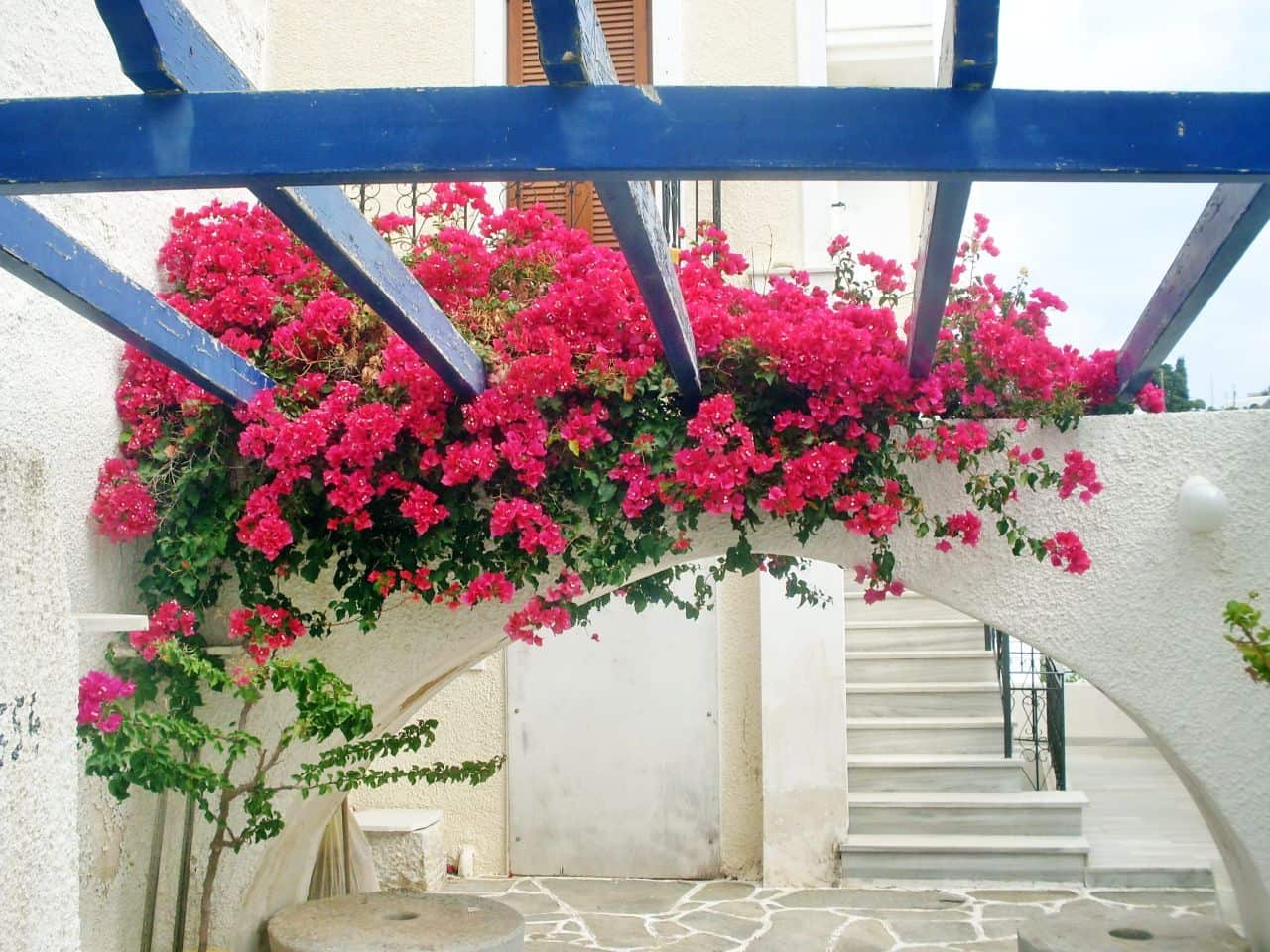
Paros, Lefkes house

Leave a Reply
Want to join the discussion?Feel free to contribute!