
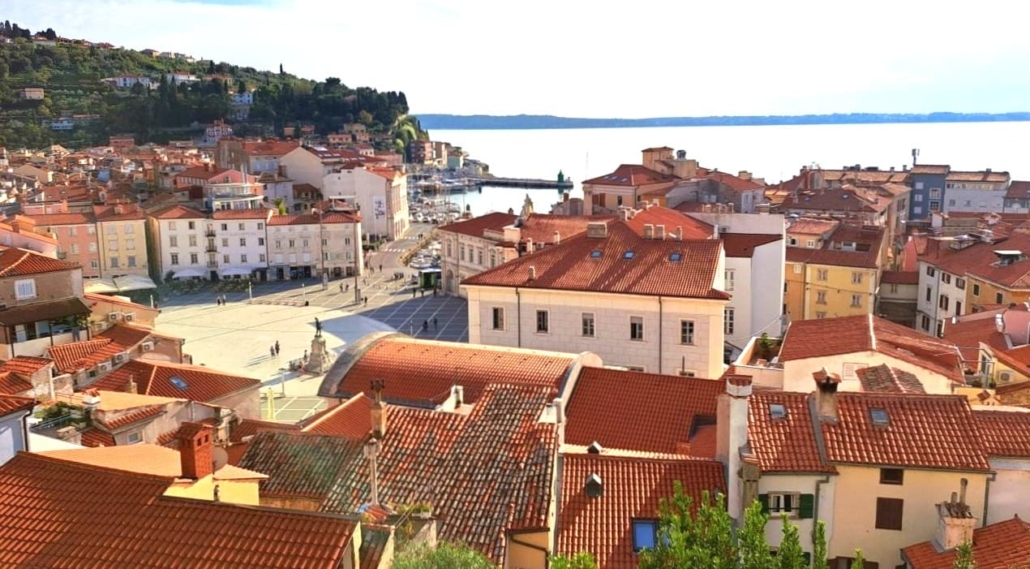
Piran, the medieval gem of Slovenian Istria
Piran is a picturesque Slovenian town and one of those places with which you fall in love at first sight.
This medieval gem is known for its old town with narrow cobbled alleys, small houses with colourful facades, red roofs, and salt panning. Becaouse of its specific architecture and history under the Venetian rule, it attracts visitors throughout the whole year.
So, let others talk, and go to Piran, the perfect place to escape for the weekend, enjoy a walk along the blue sea, and taste delicious Istrian dishes and wines…
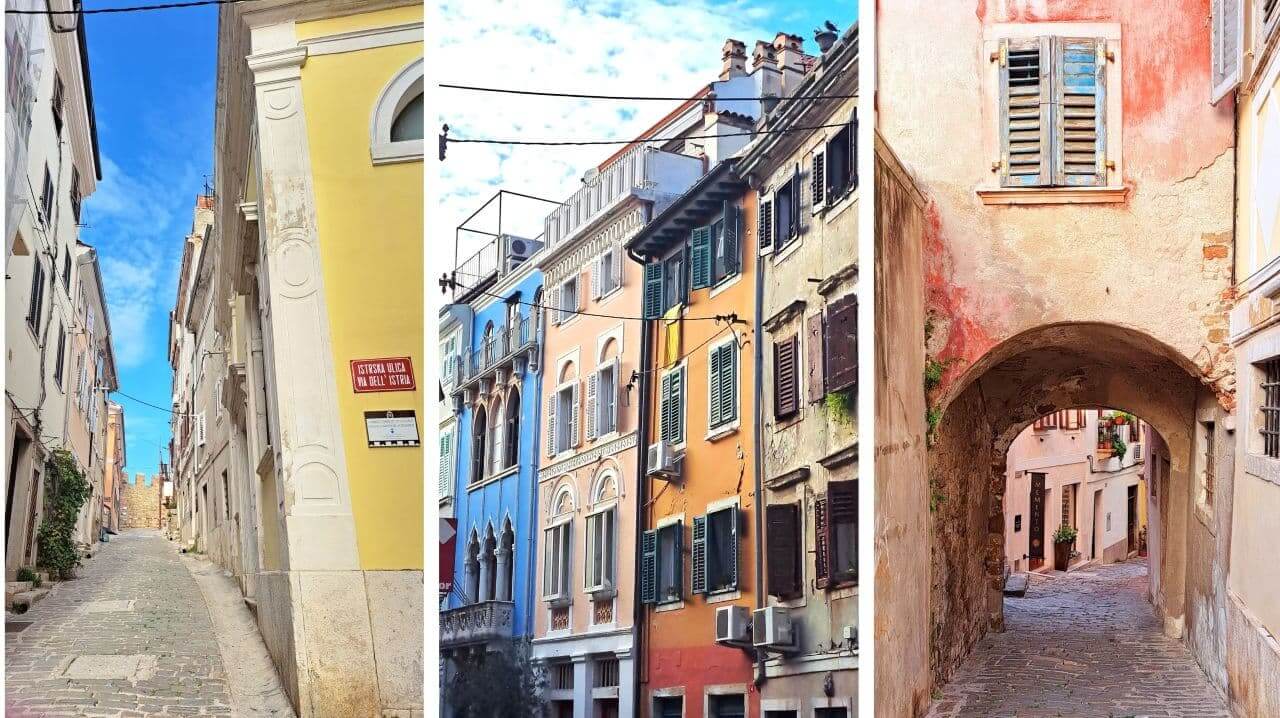
Alleys of Piran
✨ Disclosure:
This post contains affiliate links.
If you click and make a purchase, I may earn a small commission at no extra cost to you. Thanks.
📌 How to get to Piran
Piran is situated on the Gulf of Piran, part of the Adriatic Sea, on the Istria peninsula, which is shared by three countries: Slovenia, Croatia and Italy.
The most comfortable way to reach it is by car, depending on your location. Bear in mind that you have to leave your car outside the centre and the old town at a parking lot, because it is a restricted area.
From the capital Ljubljana, Piran is 120 km away, and from Belgrade, it is about 650 km (approximately 7-8 hours’ drive).
You can also take a bus from Ljubljana or Koper.
The nearest airports are in Ljubljana, Pula and Trieste, and from there, you can take a bus, train, or rent a car.
📅 Best time for a visit
Generally, the most popular months for visiting are July and August, when Piran is hosting various cultural events and concerts on Tartini Square. The sea is warm, the sunsets are spectacular, the waterfront restaurants are open until late in the evening, but it is also the most crowded.
To avoid the crowd, the best period to visit is from April to June or in September/October. The weather is perfect for long walks along the sea, enjoying the coffee, local food and wine under the Istrian sun…
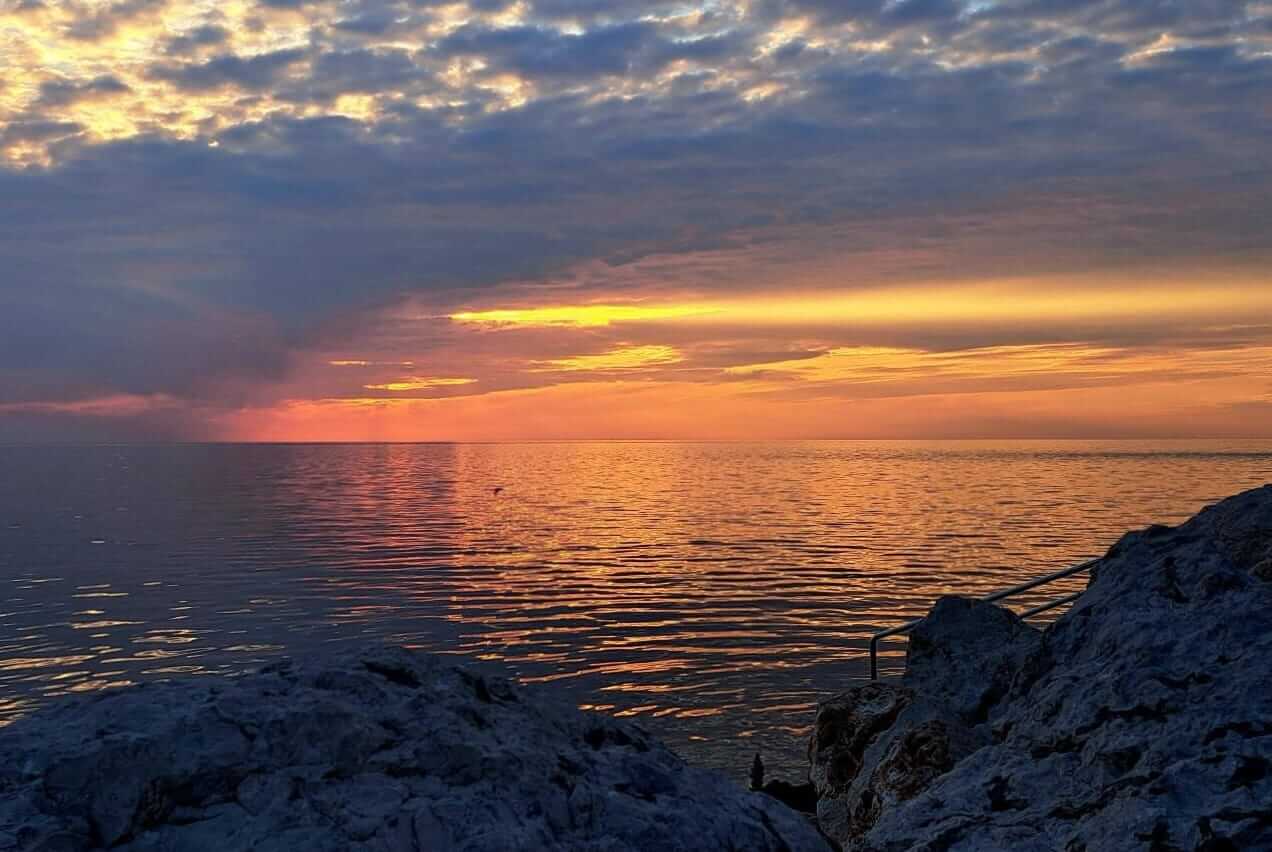
Piran sunset
📍 A few words about the history
It is believed that Piran got its name from a fire (ancient Greek “pyros” – fire) that was lit at the marina and on the peninsula.
The town had a turbulent history. The first inhabitants were the Illyrian Histri tribes, who were farmers, hunters, and fishermen.
Then, the Piran peninsula became part of the Roman Empire in 178 and 177 BC. After the decline of the Roman Empire, from the 5th century AD onward, it was attacked by Avars, Slavs, Byzantines, and Franks. In 952, Piran had become part of the Holy Roman Empire.
From 1283 to 1797, it became part of the Republic of Venice, with a semi-autonomous government and a council of local noblemen. In 1797, Piran was annexed to the Austrian Empire, and to the Napoleonic Empire from 1806 to 1814.
After the First World War, together with Trieste and all of Istria, the town was part of Italy. It was annexed to Yugoslavia in 1954, according to the London Memorandum.
The municipality became part of the Socialist Republic of Slovenia in 1975. Since 1991, Piran has been part of independent Slovenia.
🤩 What to see in Piran
Take comfortable shoes and explore the Old Town, with its narrow alleys, colourful houses, and secret corners surrounded by city walls.
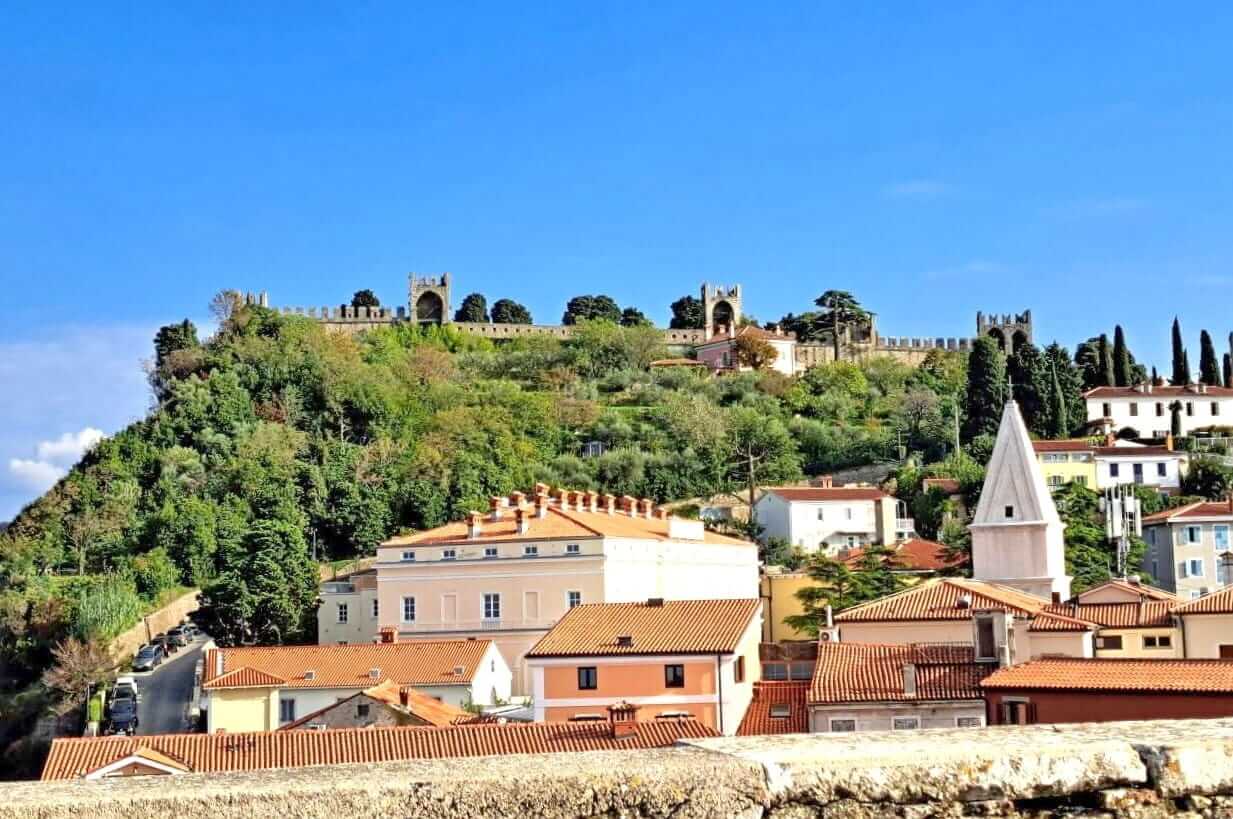
Piran City Walls
The Tartini Square – Piazza Tartini
Definitely, the heart of the town is Tartini Square. It is named after Giuseppe Tartini, the famous Italian composer and violinist who was born there. He played an important role in shaping its cultural heritage, especially known for his Violin Sonata in G Minor (the Devil’s Trill Sonata). In 1892, on the 200th anniversary of his birth, a bronze statue was erected and dedicated to Tartini.
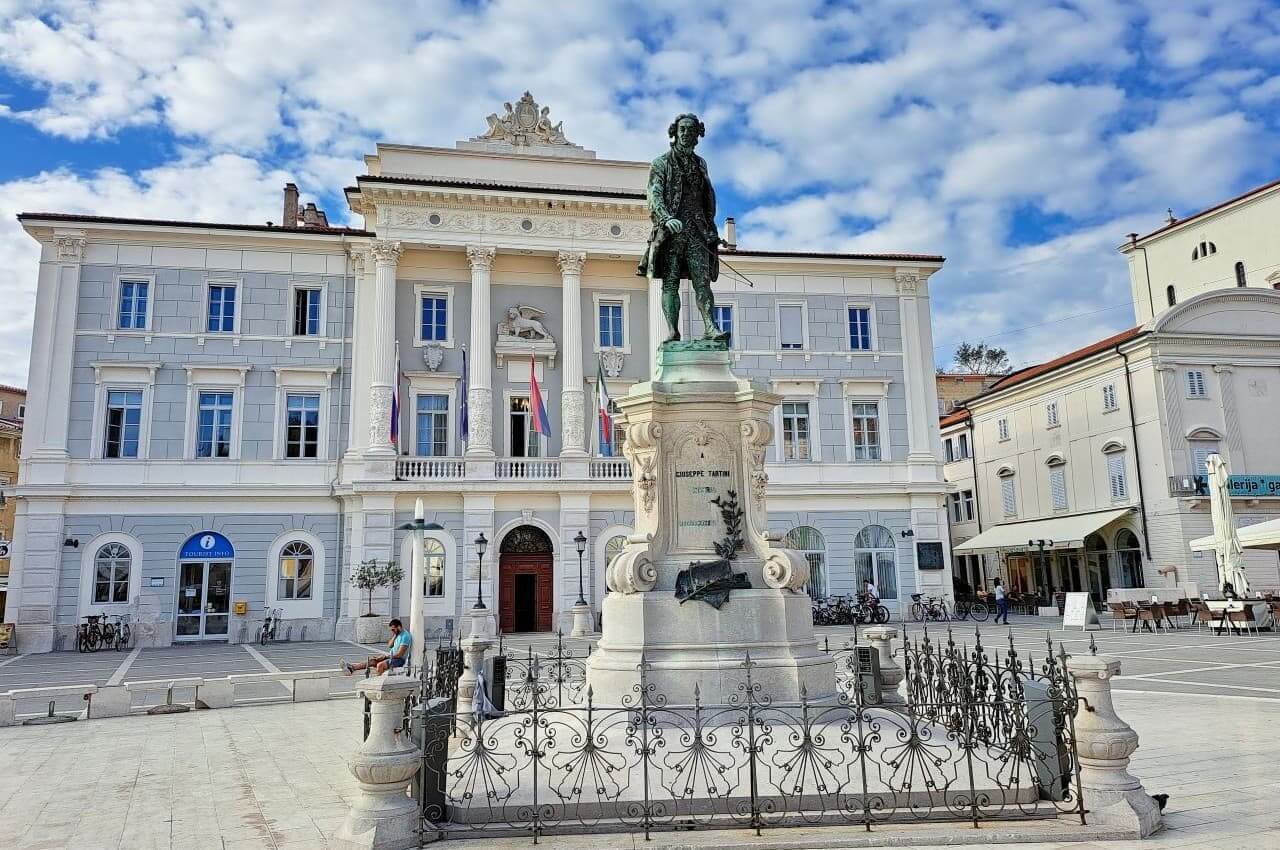
Piran, statue of Giuseppe Tartini
Interestingly, the square was once the inner dock for fishing boats, situated outside the first city walls. Then, in the Middle Ages, this area was surrounded by important palaces. The dock was transformed into a real square in 1894, and the new buildings were built.
By the way, the square is egg-shaped. Once, there were tram stations and a parking lot. After the fall of Yugoslavia, it was decided to ban vehicles and make this square the heart of the city, where locals and tourists pass every day, enjoy a walk, drink a coffee, and take photos, as well 🙂
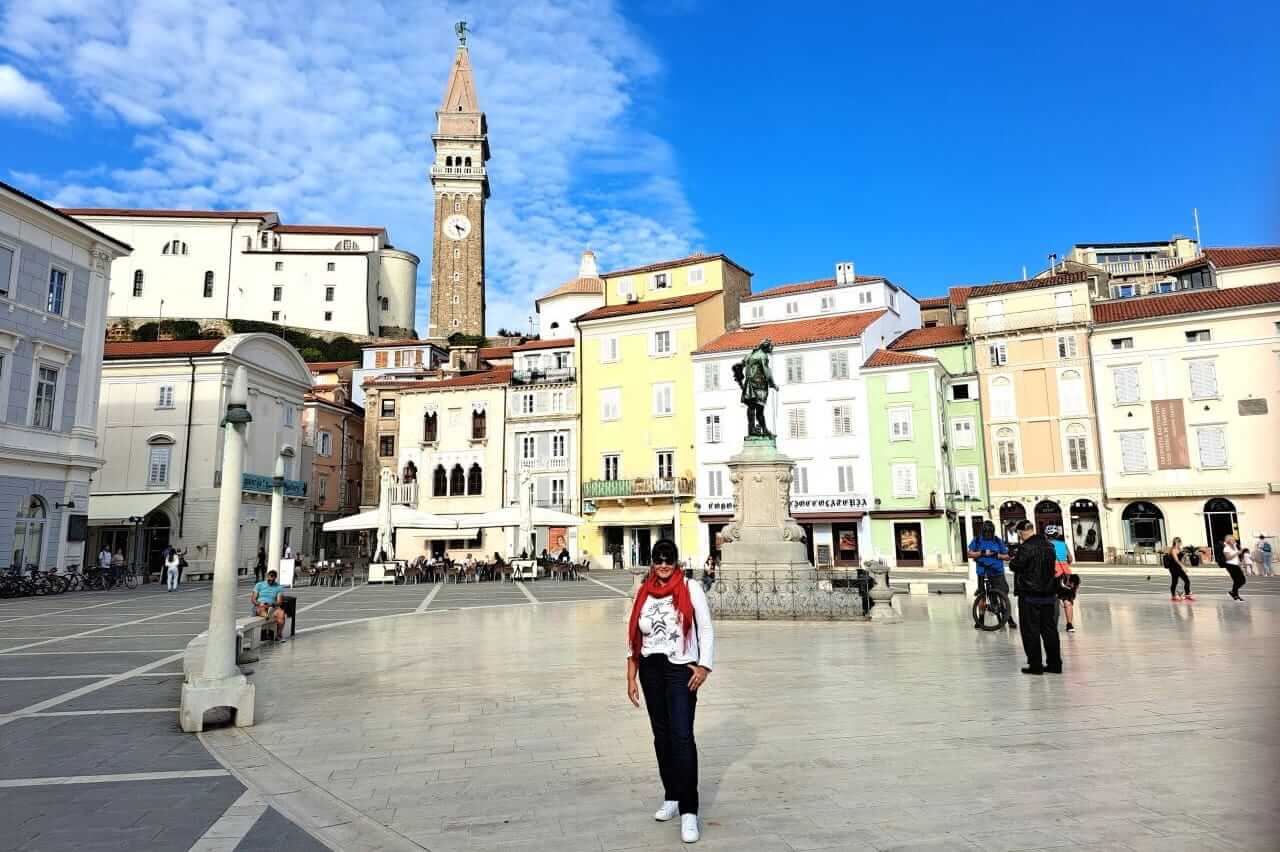
Piran, Tartini Square
The Town Hall
Behind the statue of Tartini, you can see the beautiful building of the Town Hall, built in the 19th century. On its facade, there is a lion, a symbol of the Venetian Republic, holding an open book, which means that it was built in peacetime.
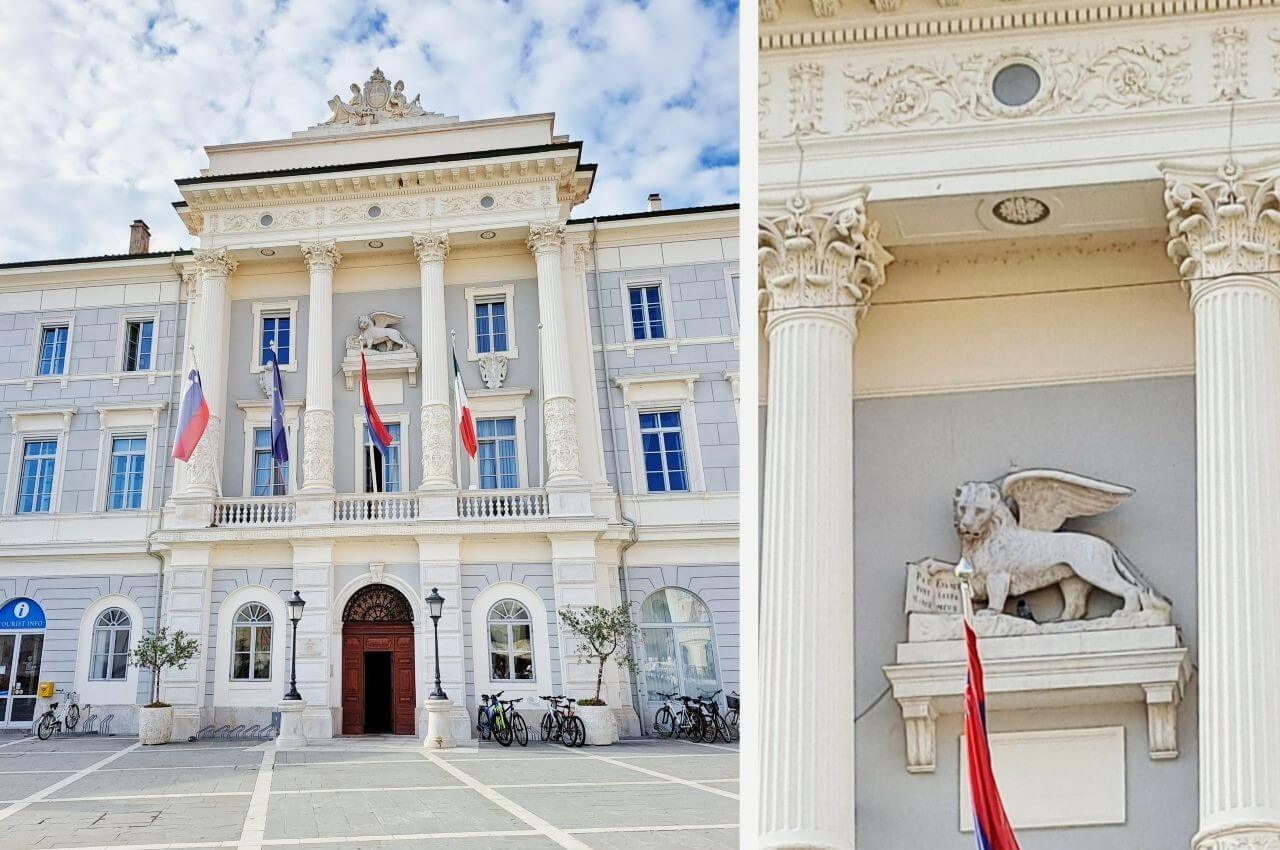
Town Hall, Piran
The Venetian House – Casa Veneziana
One of the most interesting buildings in the town is the Venetian House, known as Benečanka. It is located at the corner of IX Corpo Street and Tartini Square.
During my first visit to Piran in 2006, this house fascinated me with its Venetian-Gothic architecture and red colour. Years later, the colour has faded, but it still attracts the attention of visitors.
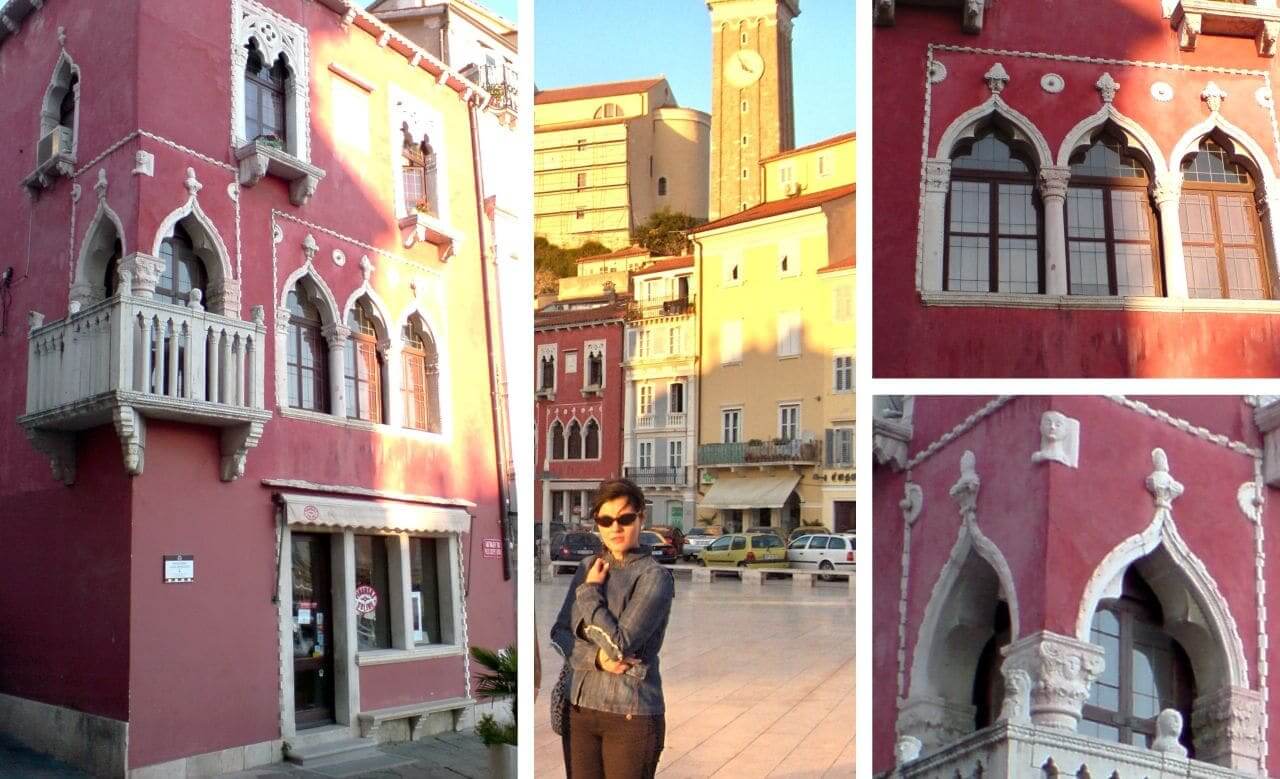
The Venetian House, 2006
There is an interesting story about it. The house was built in the middle of the 15th century by a wealthy Venetian merchant for his mistress, a young girl from Piran. To defy malicious gossip, they put the inscription “Lassa pur dir” (“Let them talk”) on the facade.
Today, on the ground floor of the Venetian House, there is a store of the brand Piranska Solina. You can buy Piranska salt with a protected designation of origin, fleur de sel, herbal mixes, salted chocolates, olive oil, and natural cosmetics from the Lepa Vida line.
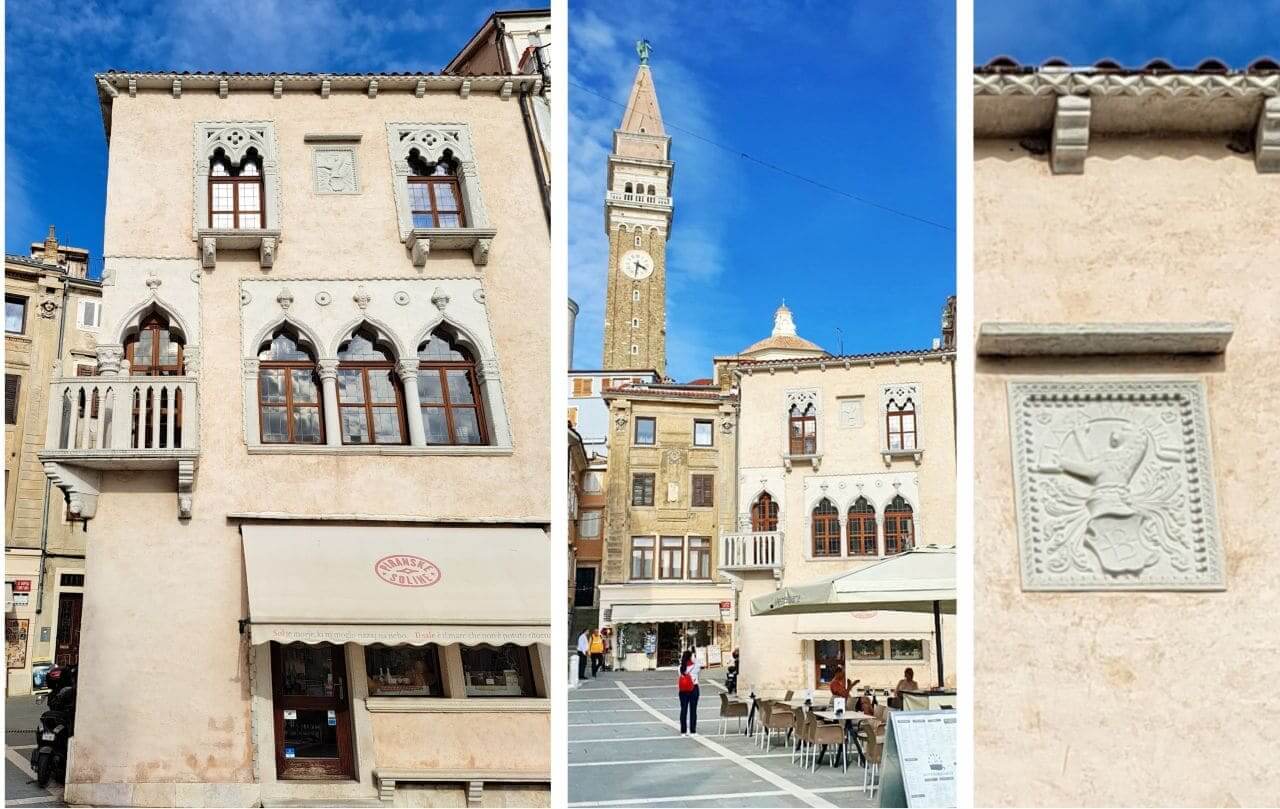
Piran, Venetian House
⛪ St. George’s Church & Bell Tower
At the top of the hill and in the old town, you can see St. George’s Church (Crkva Svetog Jurija), which dominates the town. It is dedicated to the saint patron of a town. According to legend from the 14th century, he saved the local fishermen from the storm.
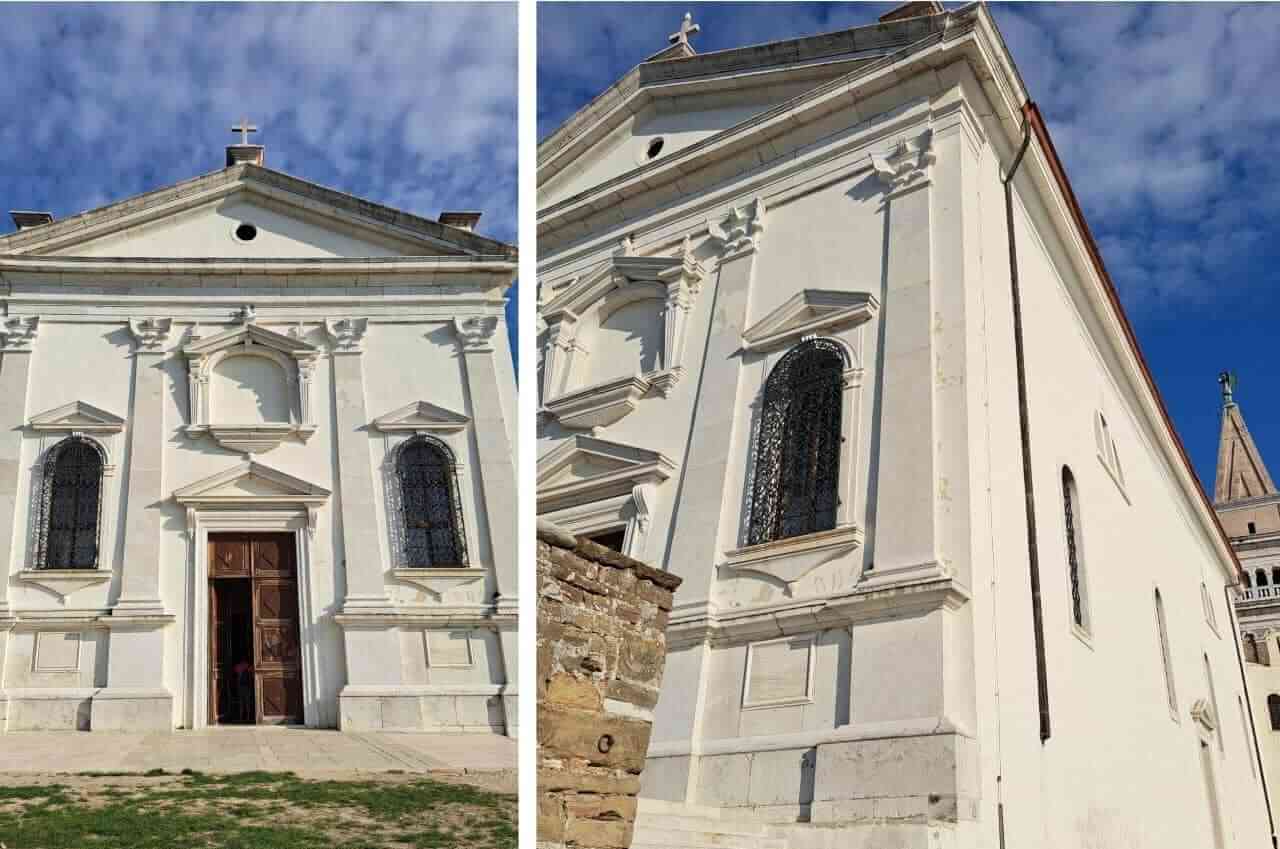
The St. George’s Church (Crkva Svetog Jurija)
The church was built between 1592 and 1614, replacing the old one. It has several renovations. and the last ones were between 2002 and 2006.
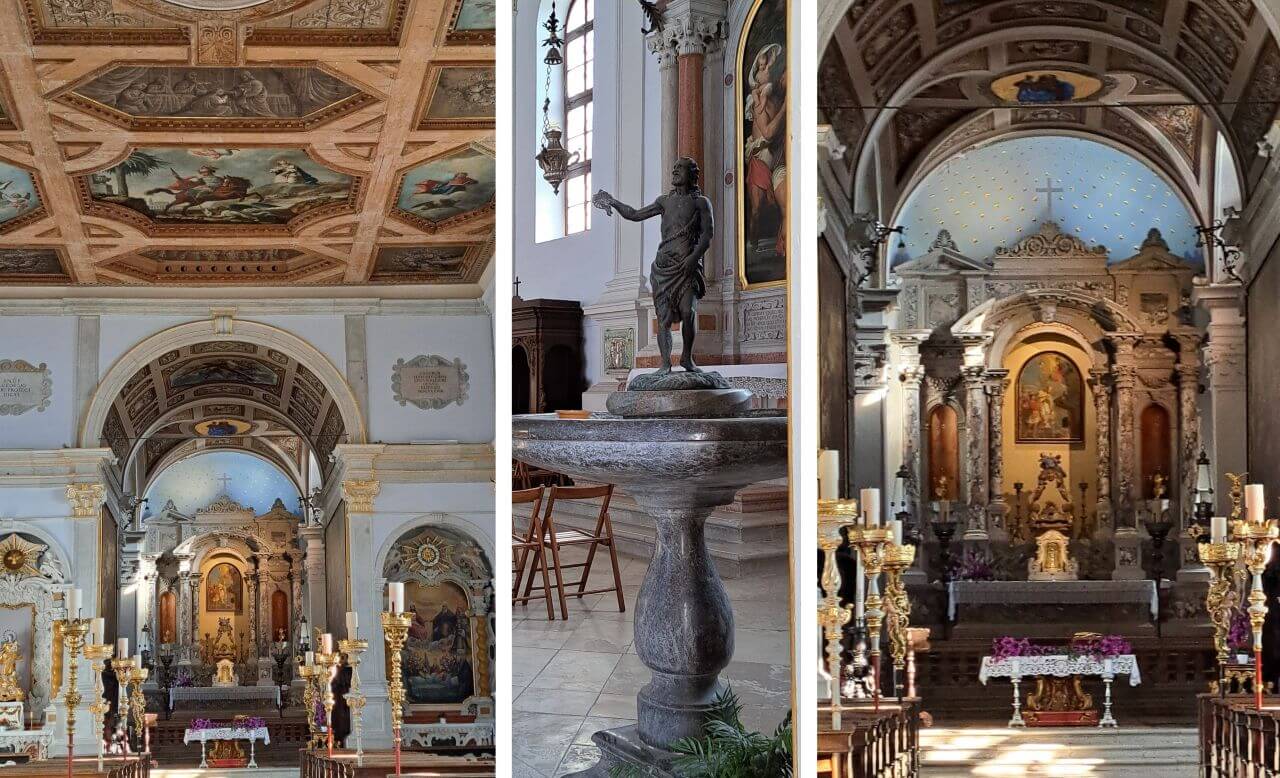
Inside George’s Church, Piran
Behind the church, once was a graveyard, and a few remaining tombstones can be seen on the wall.
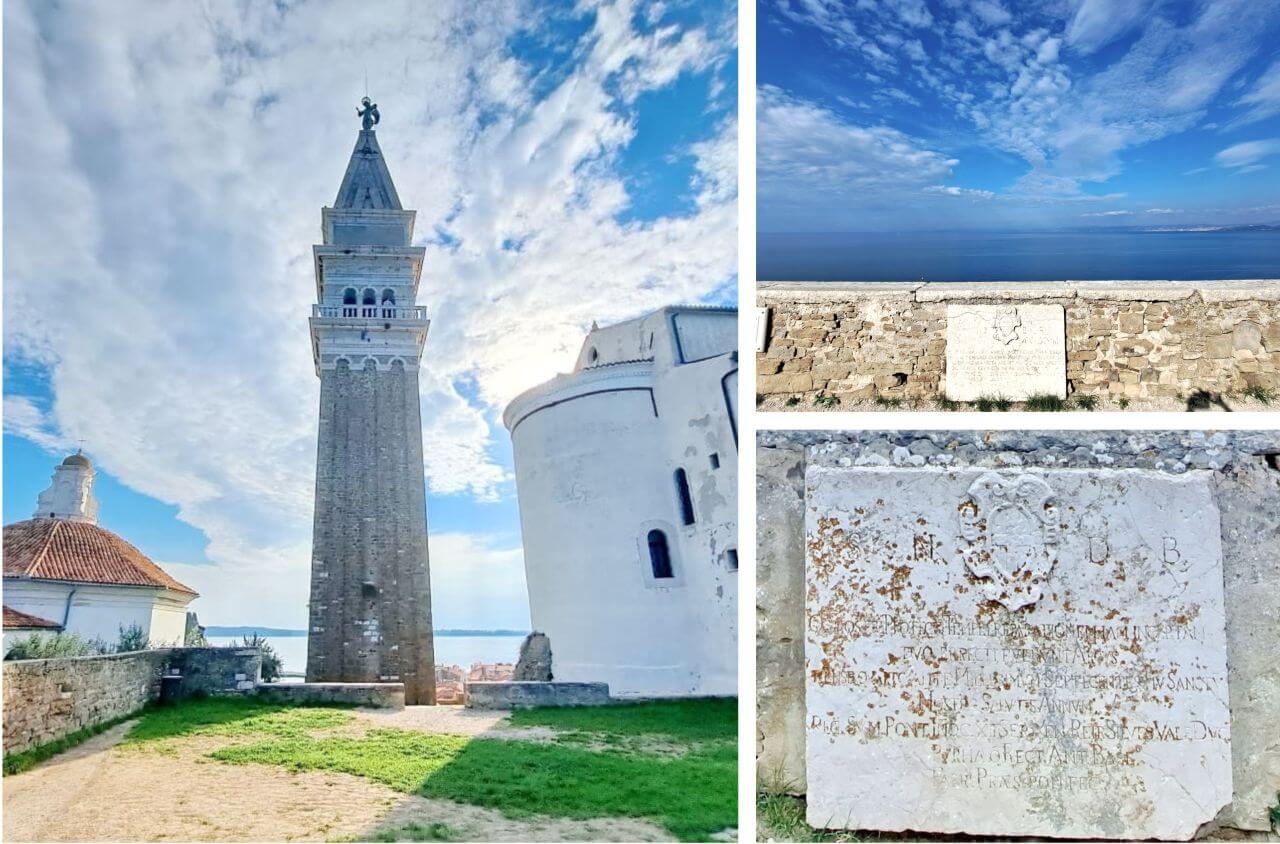
A view of Bell Tower from the backyard and the tombstones on the wall
Next to the church, there is an impressive bell tower built in 1615, a replica of the famous bell tower of Saint Marco in Venice. At the top, there is a small statue of the Archangel Michael, which rotates with the wind. It serves as a more reliable weather forecast than mobile apps! Actually, if the statue looks towards Italy, the weather will be good, and if it is looking towards the sea (the south wind is blowing), bad weather is coming.
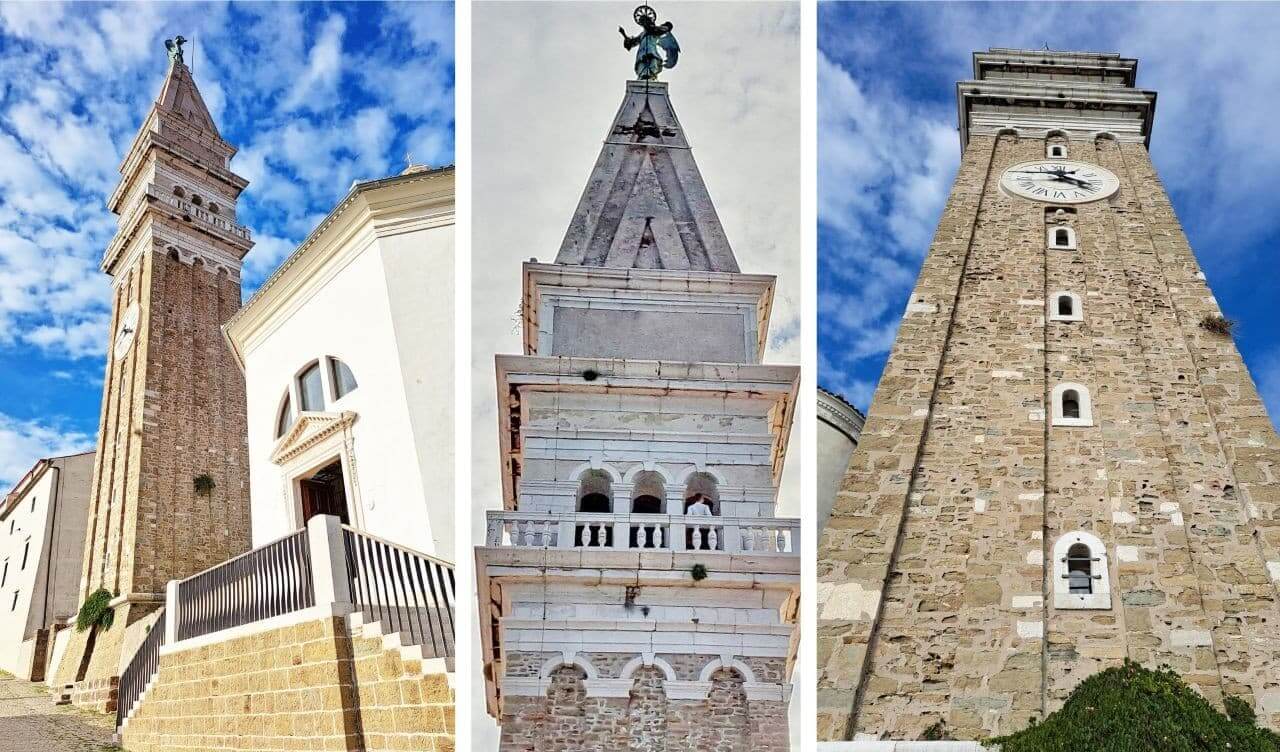
Bell Tower of Piran
From this place, there is an amazing view of the town and the blue Adriatic Sea…
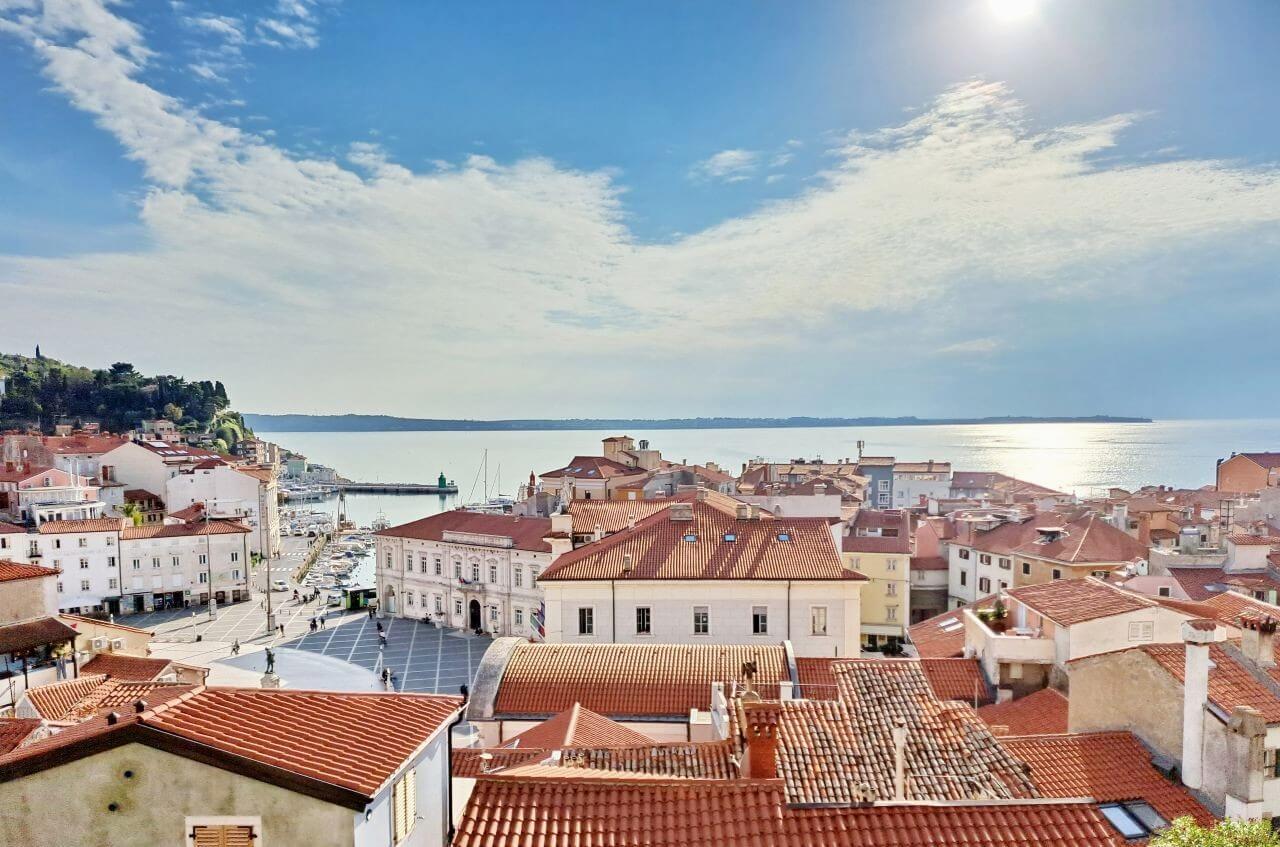
Piran
⛪ Our Lady of Health Church and the Lighthouse
Along the promenade, on Cape Punta, there is a church with a lighthouse.
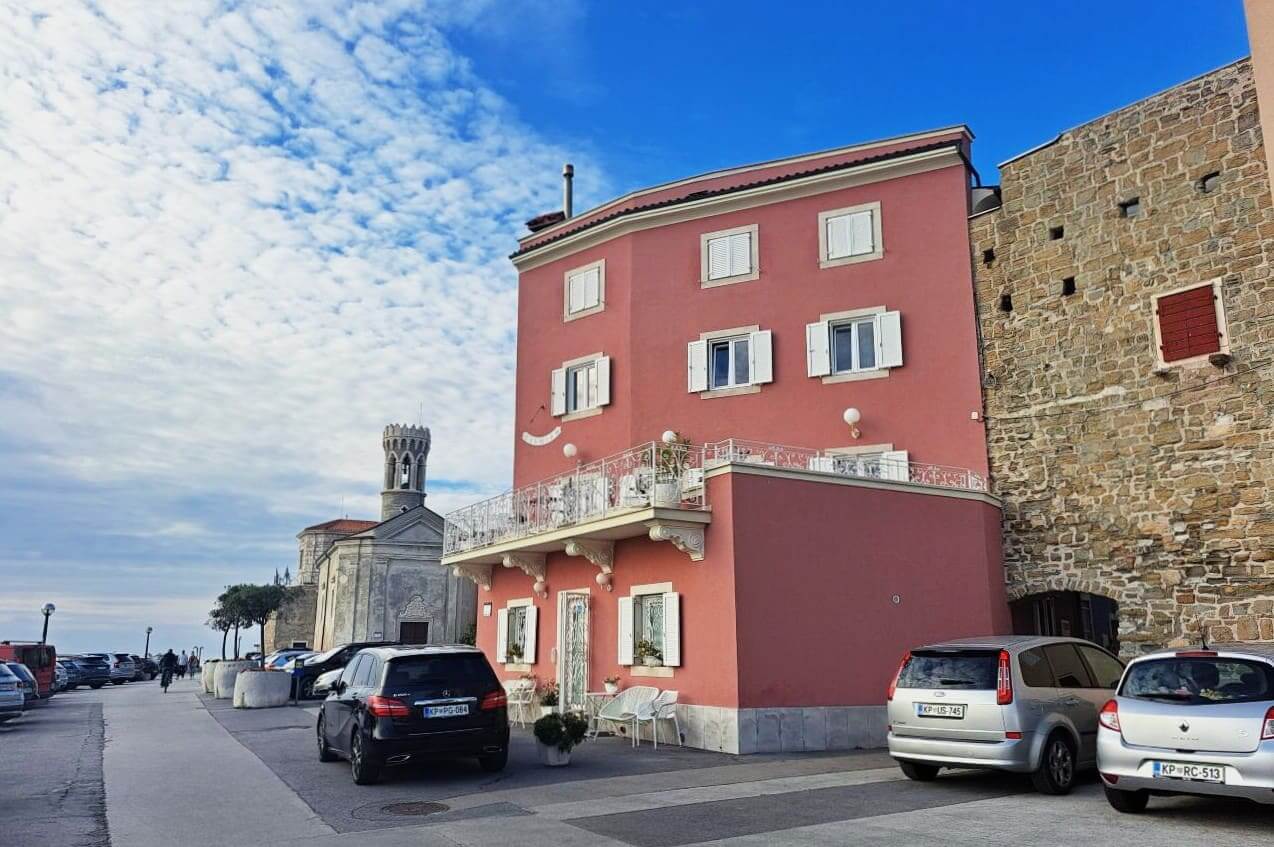
Walking along the promenade
Originally, it was the Church of St. Clement, built in the 13th century, but, after an epidemic plague in 1632, it was renamed to the Our Lady of Health Church. The church was renovated several times between 1773 and 1778, in 1890, and later in 2017.
The Piran lighthouse – bell tower was attached to the northwest side of the church. and it was reconstructed in the 19th century. Together with the church, they were used for both the military defensive and religious needs of Piran, sheltering citizens during pirate raids.
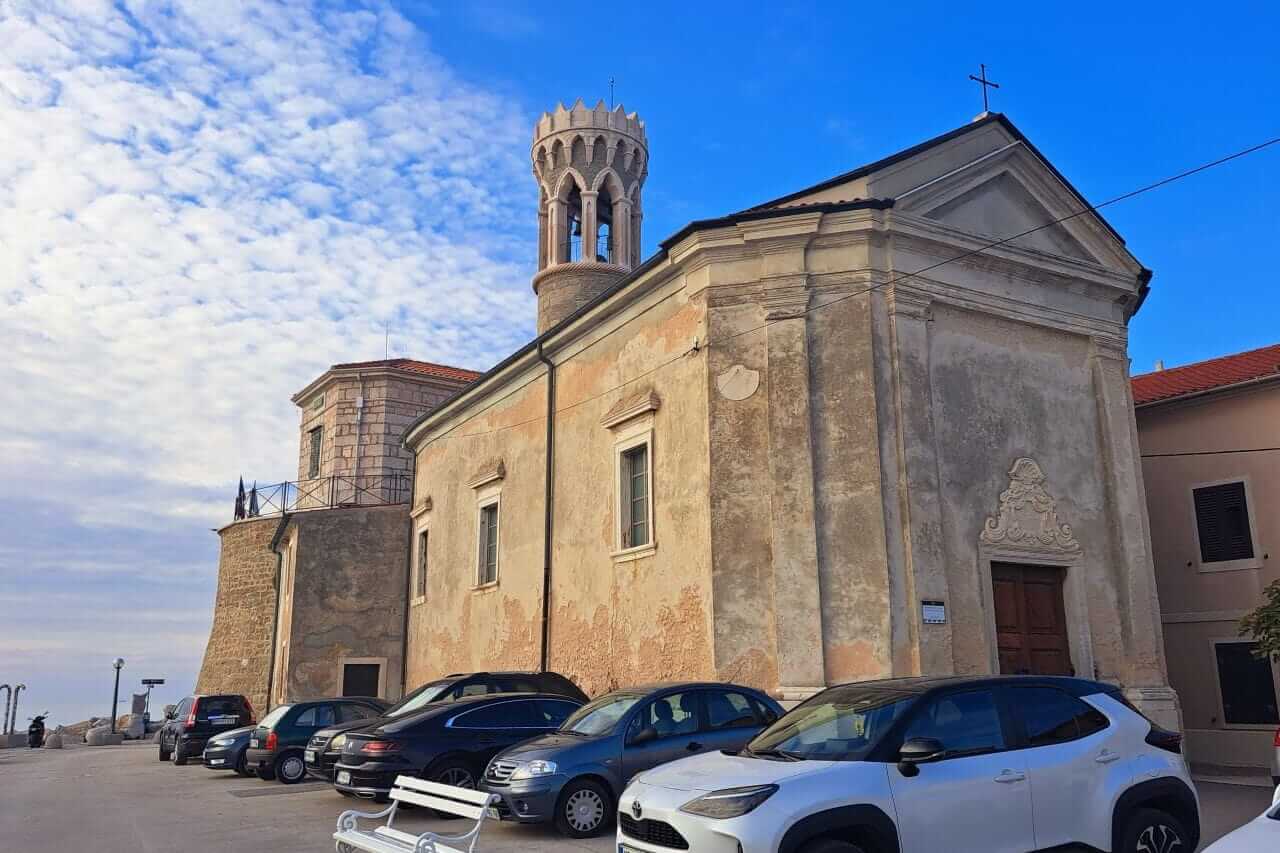
Our Lady of Health Church and the Lighthouse
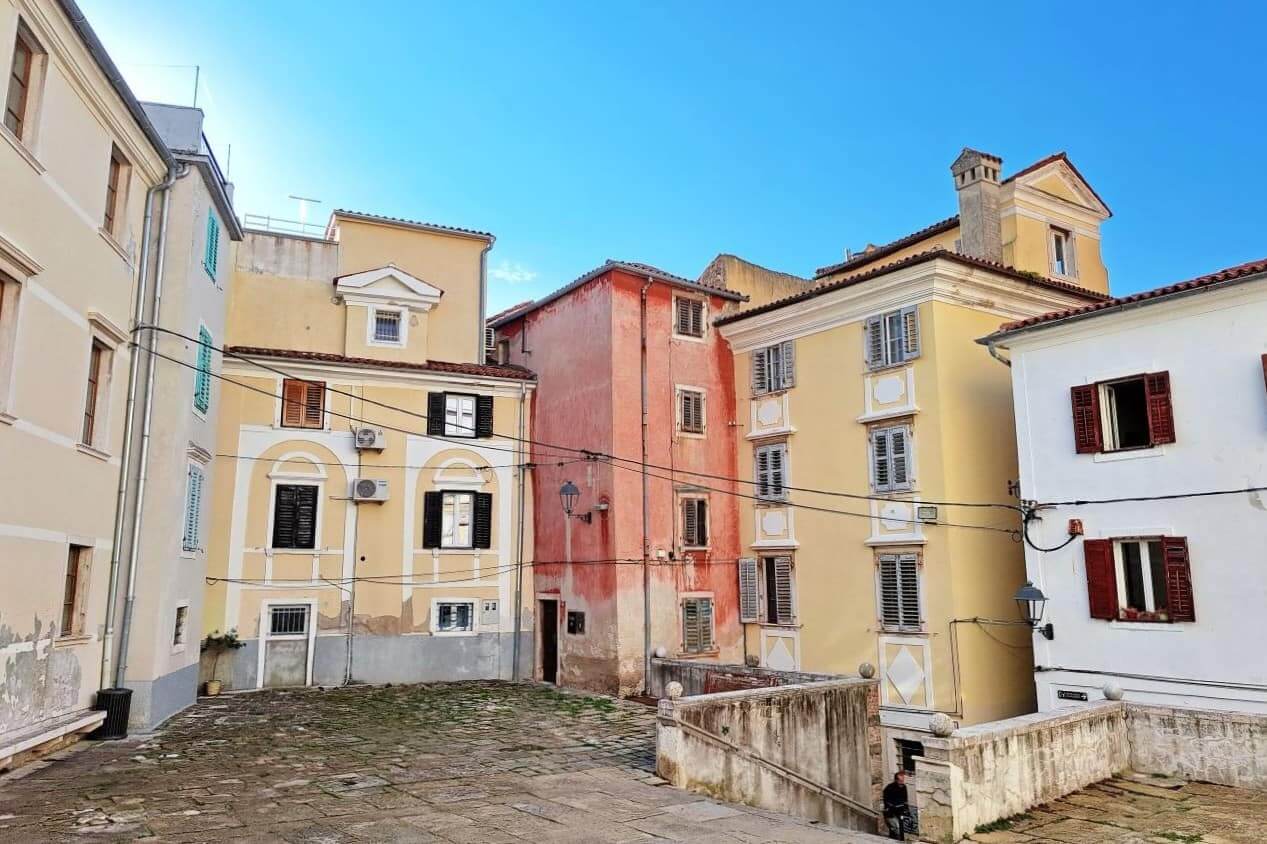
Colourful houses in Piran
⛪ The Monastery and the Church of St. Francis Assisi
Close to the Tartini Square and his house, between colourful houses, you can find the Church of St. Francis Assisi. It dates back to the beginning of the 14th century. The church has been renovated over the centuries. The interior dates back to the 17th century. You can see several altars, a clam shell for donation, and the Tartini family’s burial plot.
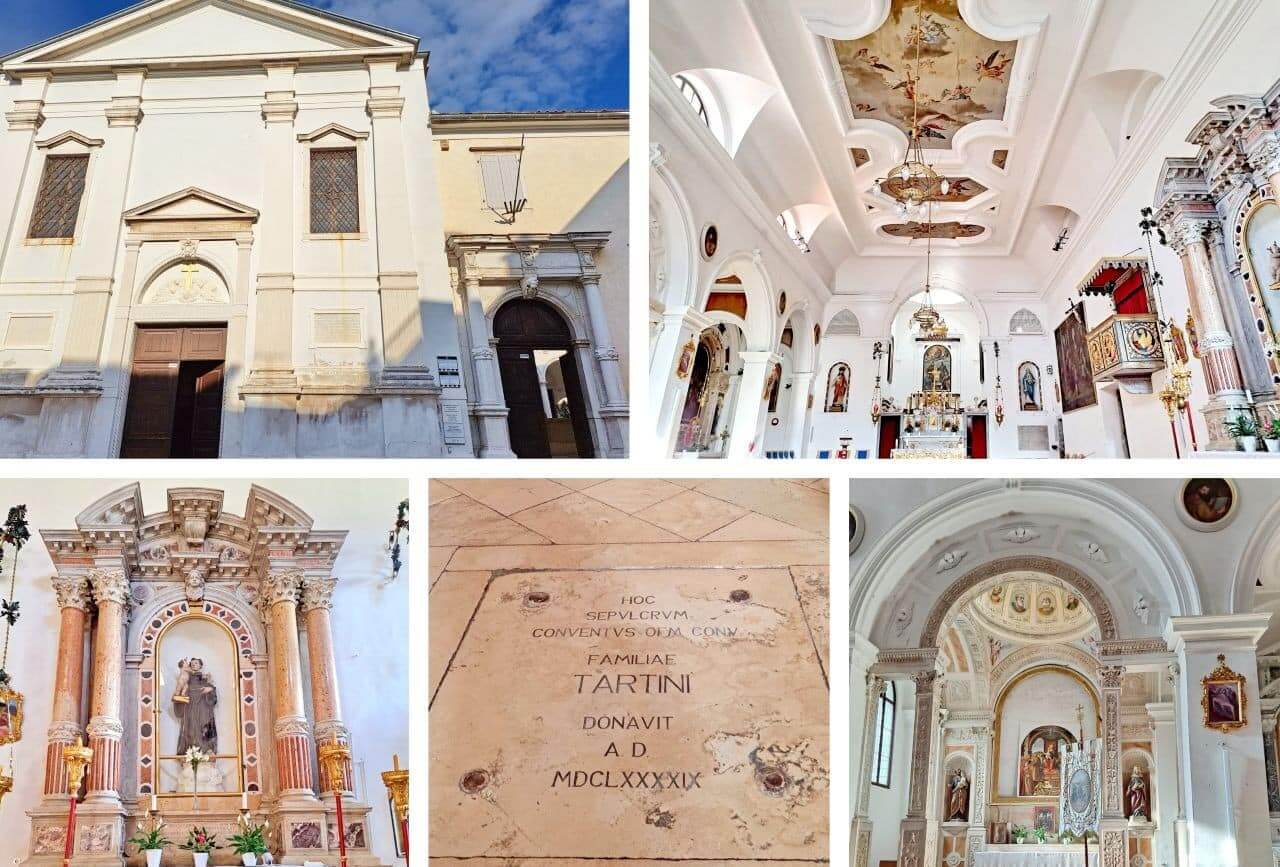
Monastery Church of Francis Assisi, Piran
Next to the church, you can see the Minorite Monastery of St. Francis Assisi, with a beautiful atrium and a Gothic cloister.
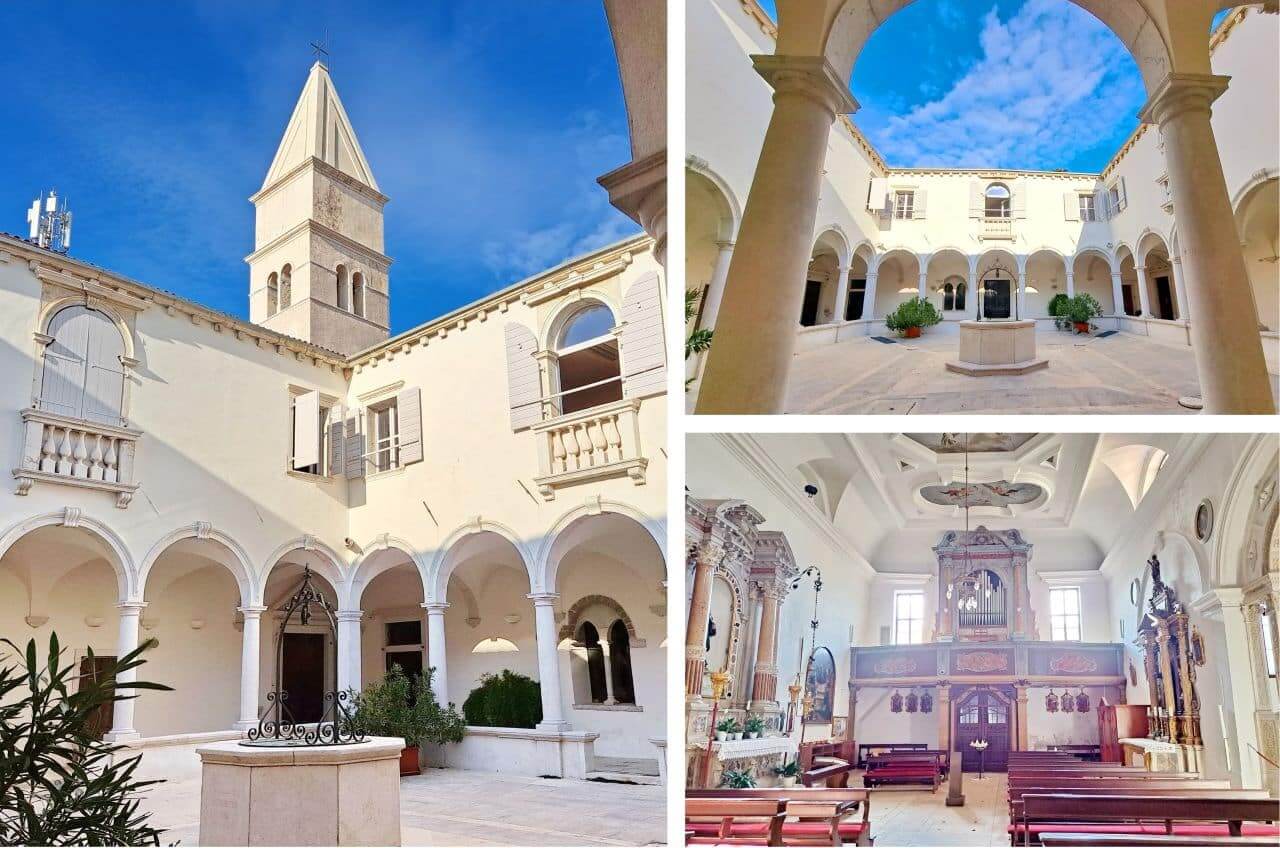
Beautiful Atrium of the Monastery Church of Francis Assisi
A root of a 500-year-old olive tree, carved into a seat, caught my attention in the monastery cloister.
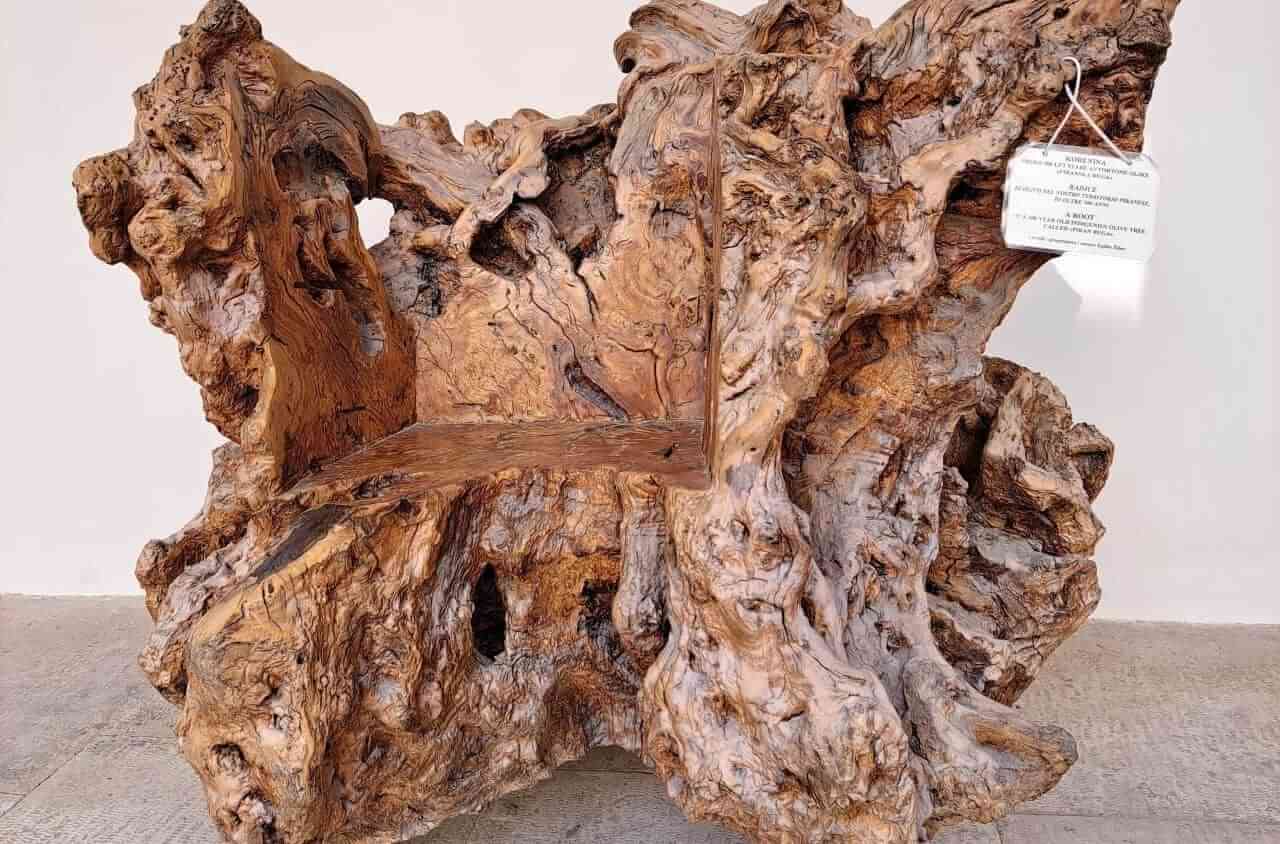
A root of a 500-year-old olive tree in the Monastery of Francis Assisi, Piran
🏛️ Maritime Museum
The Maritime Museum is situated along the Piran harbour, in the Gabrielli Palace, built in the mid-19th century.
Besides the maritime heritage, parts are housing the Museum of Salt-making at Sečovlje saltpans, an ethnological collection of Tona’s House (the former Istrian farmer), Tartini’s Memorial Room, and Monfort, the former salt warehouse.
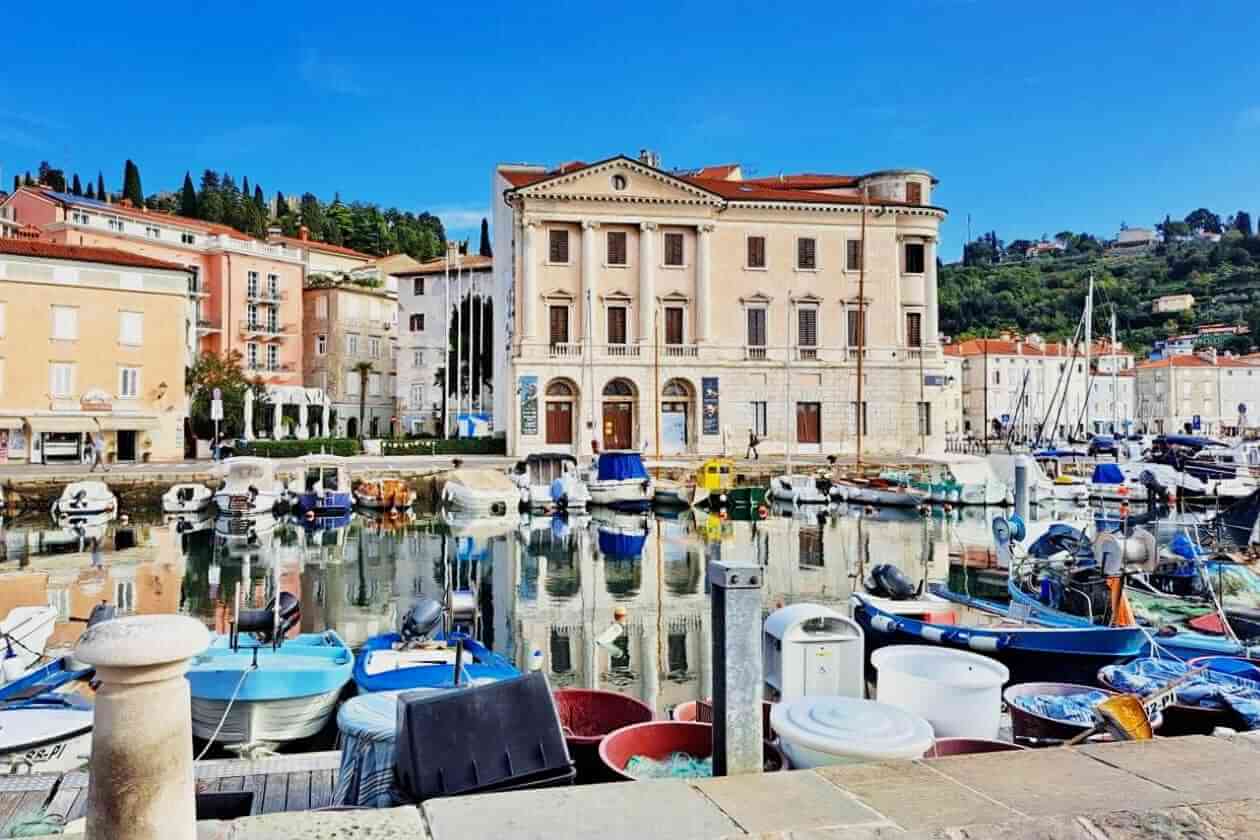
Piran, the Maritime Museum
Sečovelje Salina Nature Park
The Sečovelje Salina Nature Park is the largest Slovenian salt evaporation pond, located about 8 km from Piran. It is a unique landscape where the tradition of salt production has been maintained for centuries.
Salt is collected in special basins covered with petol – a natural layer that prevents salt from mixing with mud and gives it purity and a recognisable quality. The process is slow and depends on the sun, wind and sea, which makes each season different. A walk through the salt flats reveals a network of canals, embankments and pools that create an almost unreal landscape.
This area is also an important habitat for over 300 different species of birds, which makes it interesting for nature lovers as well. Besides them, there are 900 species of butterflies, crabs, mussels, and several species of bees found only in Slovenia.
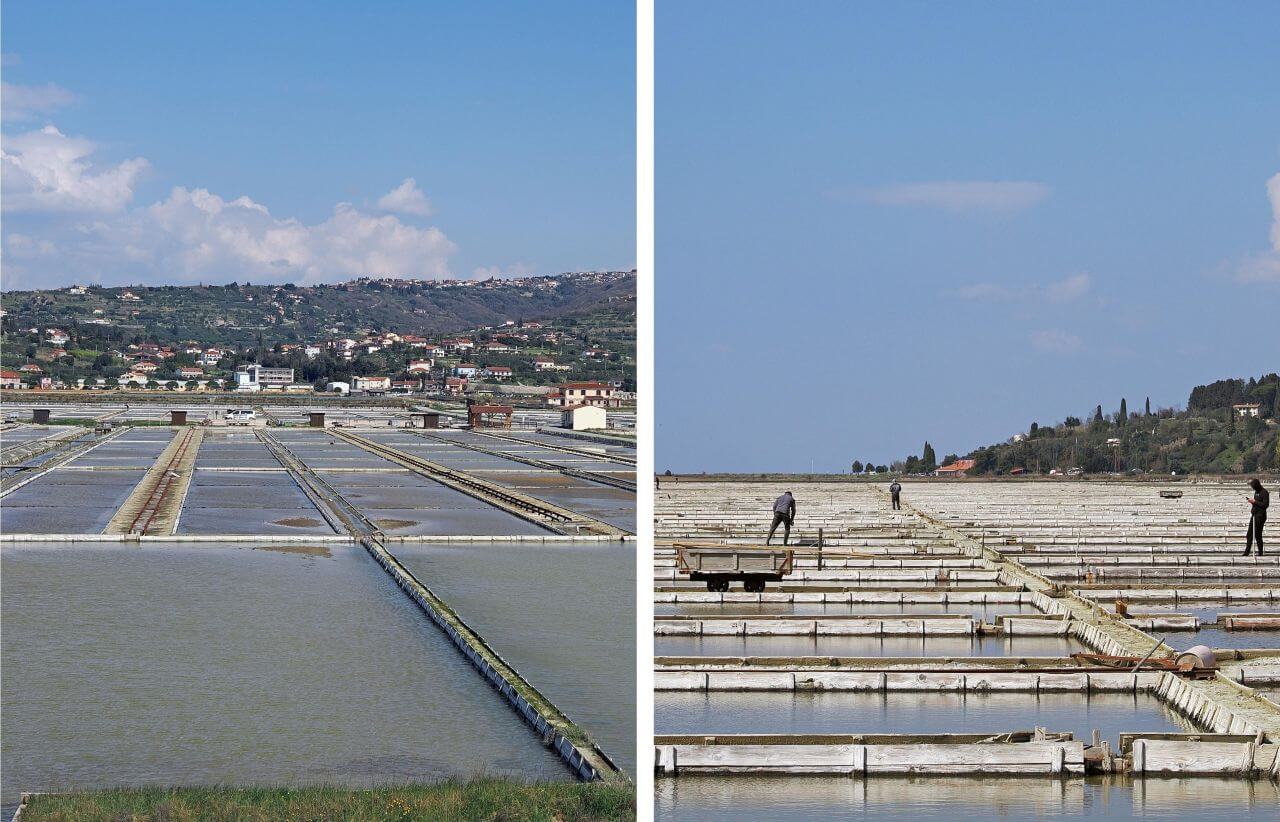
Sečovelje Salina Nature Park, photo Nikola Zoko
🏨 Accommodation in Piran
In Piran, you can find various types of accommodation, from apartments to luxurious hotels.
Some of the best hotels are Hotel Piran, Art Hotel Tartini, Barbara Piran Beach Hotel & Spa, and Hotel Zala.
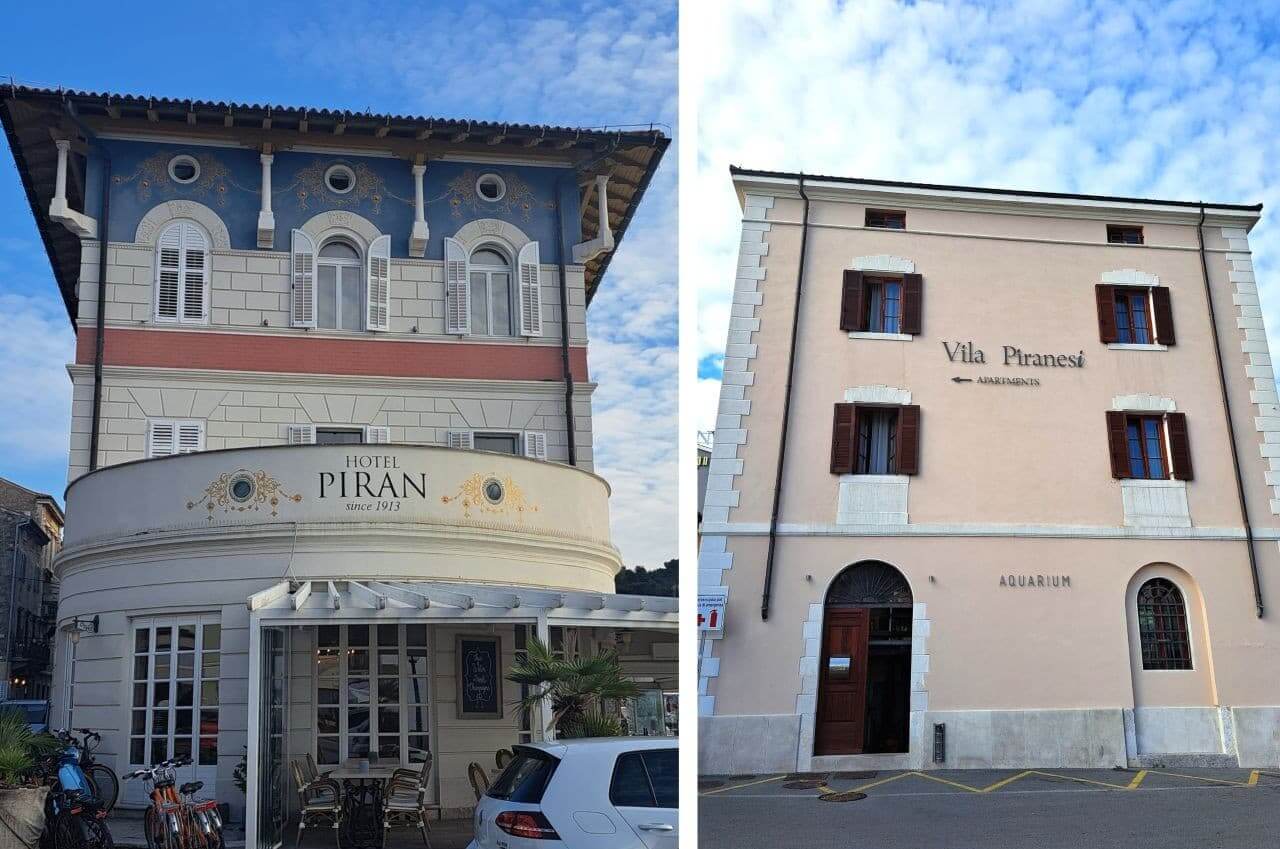
Hotel Piran and Vila Piranesi
And, somewhere between Piran and Portorož, there is the famous St. Bernardin Resort.
🏩 St. Bernardin Resort Portorož
The St. Bernardin Resort is located right by the sea, on a popular seaside promenade. It consists of three hotels, situated near the old Benedictine chapel, surrounded by oleander trees, palm trees, and rosemary bushes.
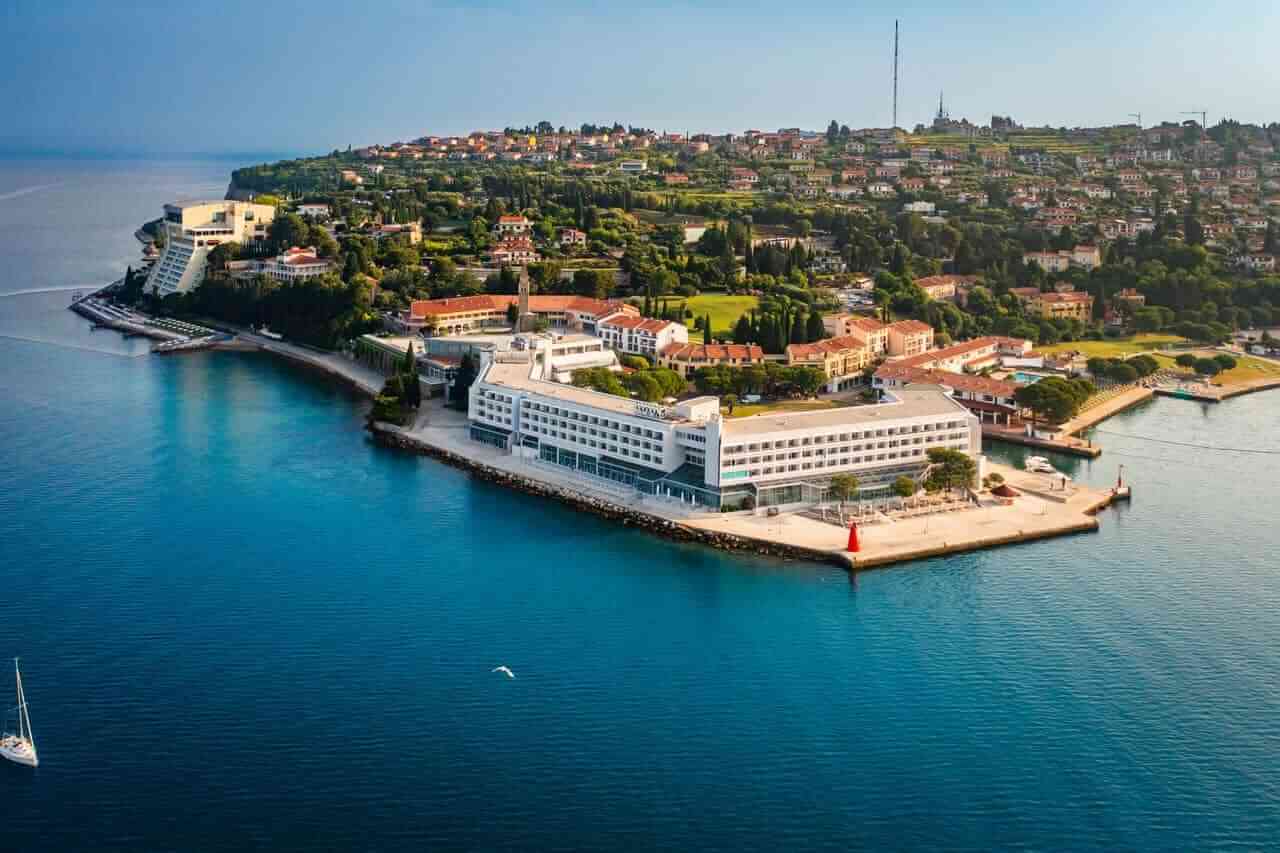
Promo photo by St Bernardin Resort
Grand Hotel Bernardin is a luxurious 5* hotel with 241 rooms and suites, private balconies and panoramic views of the Adriatic, and the fantastic Paradise Spa Wellness Centre.
Hotel Histrion 4* was completely renovated in 2020. There are 276 modern rooms with three themed types: olive, lavender, and sea, and each of them is decorated in pastel, natural shades of green, purple, and blue, just like the Istrian landscape.
But the centrepiece of the hotel is the Sea Waterpark Termaris. It is the largest pool complex with heated seawater on the entire Slovenian coast, open all year. The guests can enjoy the Wellness Benedicta spa with herbal, infrared, and Finnish saunas, a salt room, and treatments incorporating local Piran sea salt and Istrian herbs. Also, it has a hammam, the only one in Slovenian Istria.
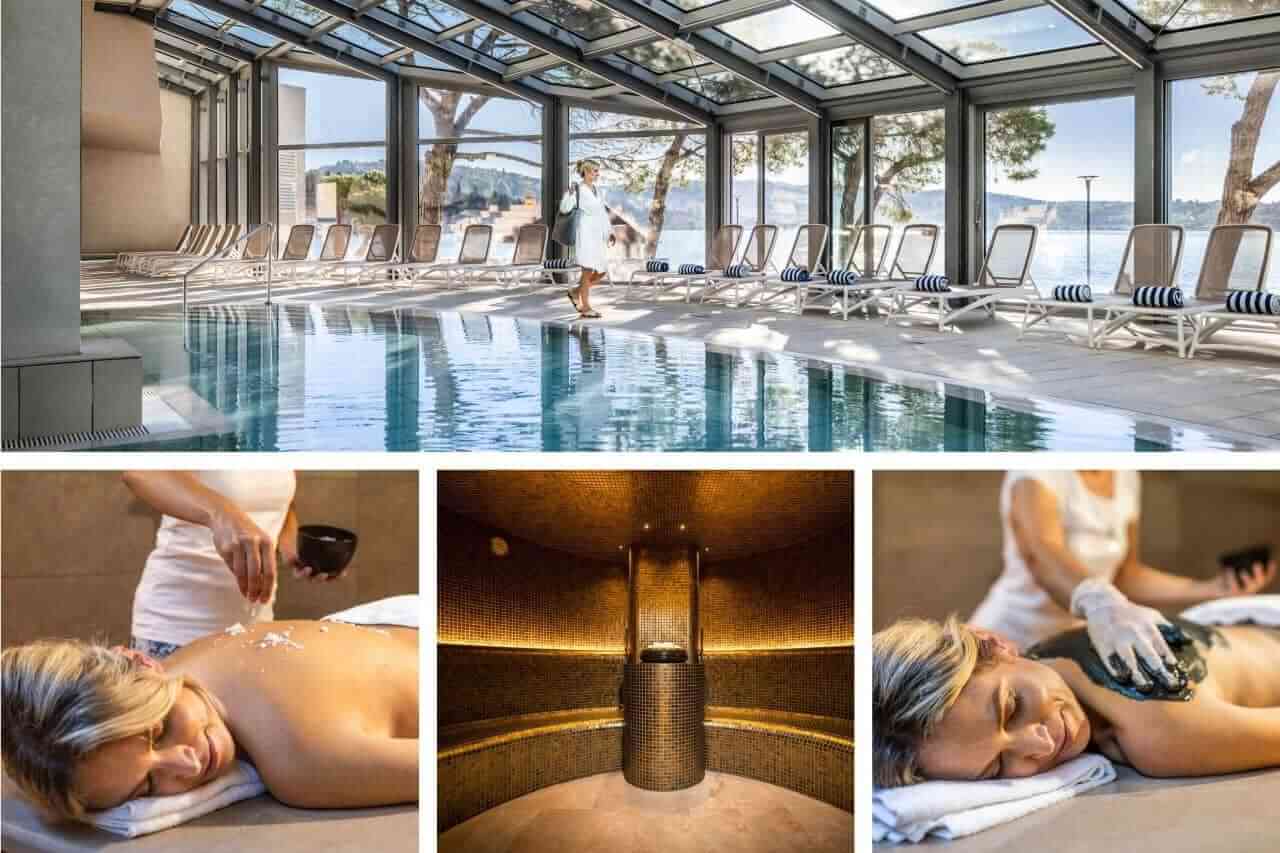
St Bernard Resort Wellness (promo photos)
The renovated Hotel Vile Park 3* has 29 rooms, which can be double or larger family rooms. In front of the hotel, there is an outdoor pool, children’s playsets with water effects, and a well-kept beach.
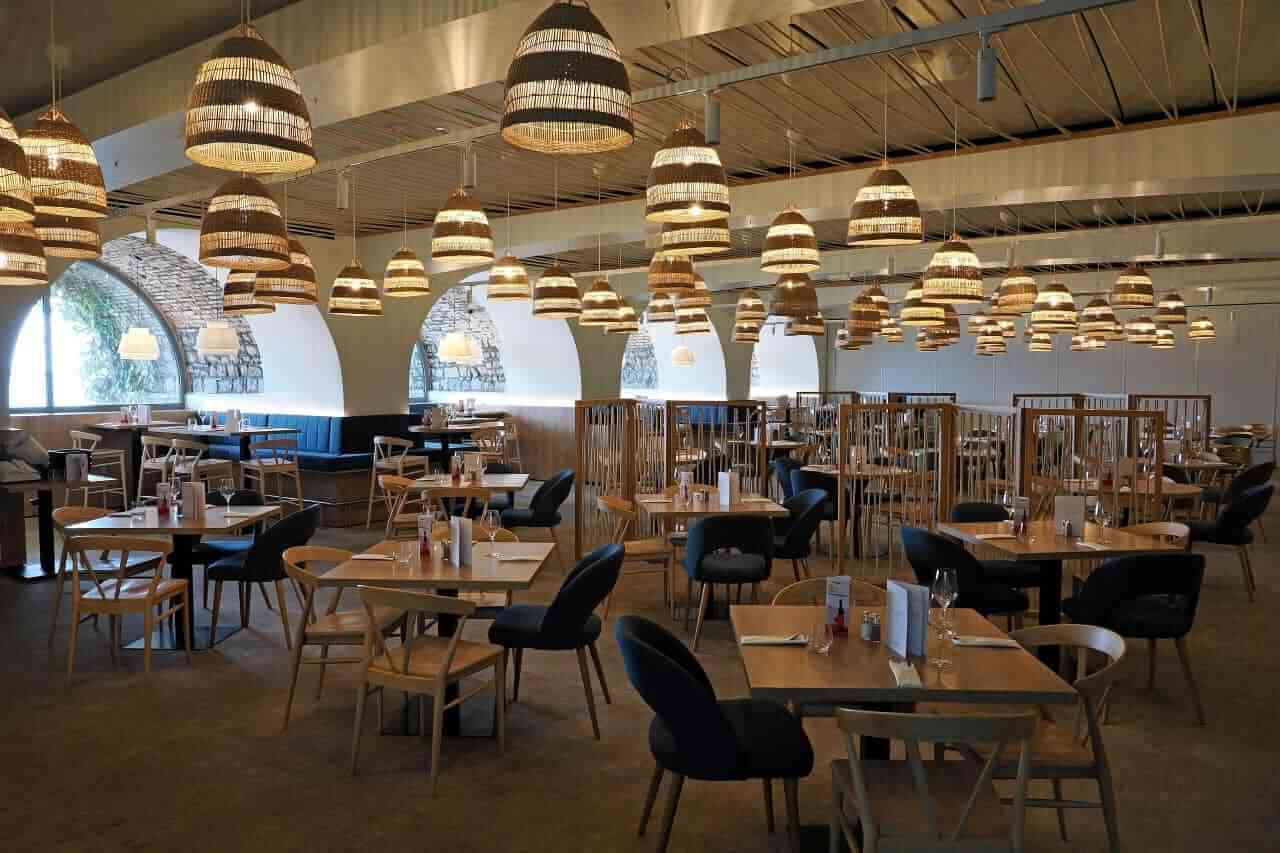
Hotel Vile Park, Restaurant Arkade, photo Nikola Zoko
🍽️ Gastronomy at the St. Bernardin Resort
The St. Bernardin Resort offers a gastronomy paradise, with authentic local flavours.
The Istrian breakfast includes homemade cheeses, fresh bread, olive oil, seasonal foods, rustic tomato sauces served with polenta, and the famous Istrian prosciutto. And traditional manestra, a nutritious soup, will give you the energy for the whole day.
And at the top of the Grand Hotel Bernardin, you can find the Grand Café, for lunch with the most beautiful views of the Piran Bay. You can spend hours and hours at this sophisticated space, with a glass of wine, looking at the sea.
The chef Mišo Jović is one of the most prominent Slovenian chefs, known for his modern approach to traditional cuisine. His dishes are based on Istrian ingredients but prepared in a modern way, such as fresh Adriatic fish, carefully prepared meat, homemade ravioli with seasonal fillings, gourmet burgers, etc.
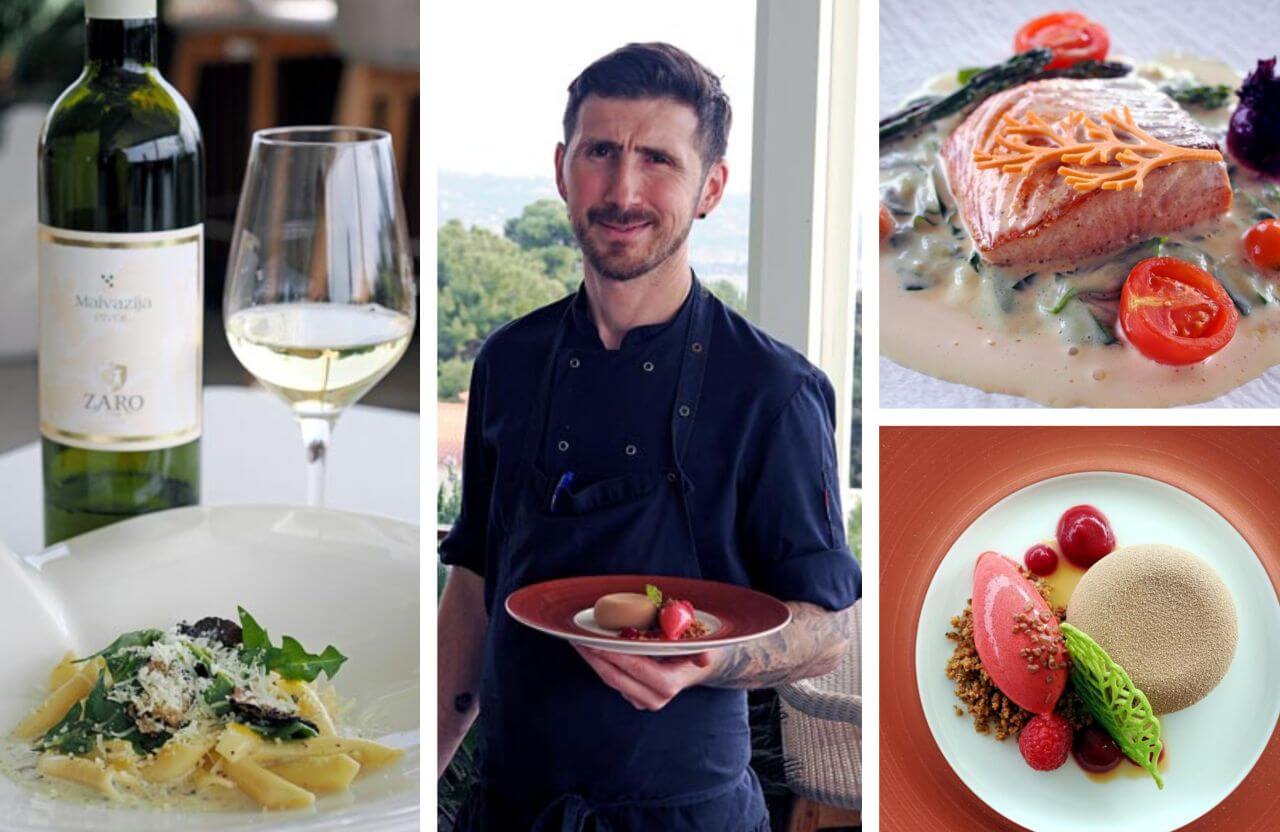
St Bernard Resort Gastronomy and chef Mišo Jović, photo Nikola Zoko
🍽️ Best cafes and restaurants in Piran
Istrian cuisine is well known for its local products, such as salt, olives, fresh fruit, vegetables, herbs, seafood, meat dishes, pasta and wines. Take your time and enjoy local taverns, coffee, or sweet delights.
Some of the most popular cafes are: Caffe Galeria Piran, Cafinho, and Da Noi.
The smell of fresh pasta, Adriatic fish, and delicious wine is the perfect combination for your lunch or dinner.
Check out some of the best restaurants: Restavracija Pavel, Rostelin, Fritolin Pri Cantini, Pri Mari, Porta Marciana.
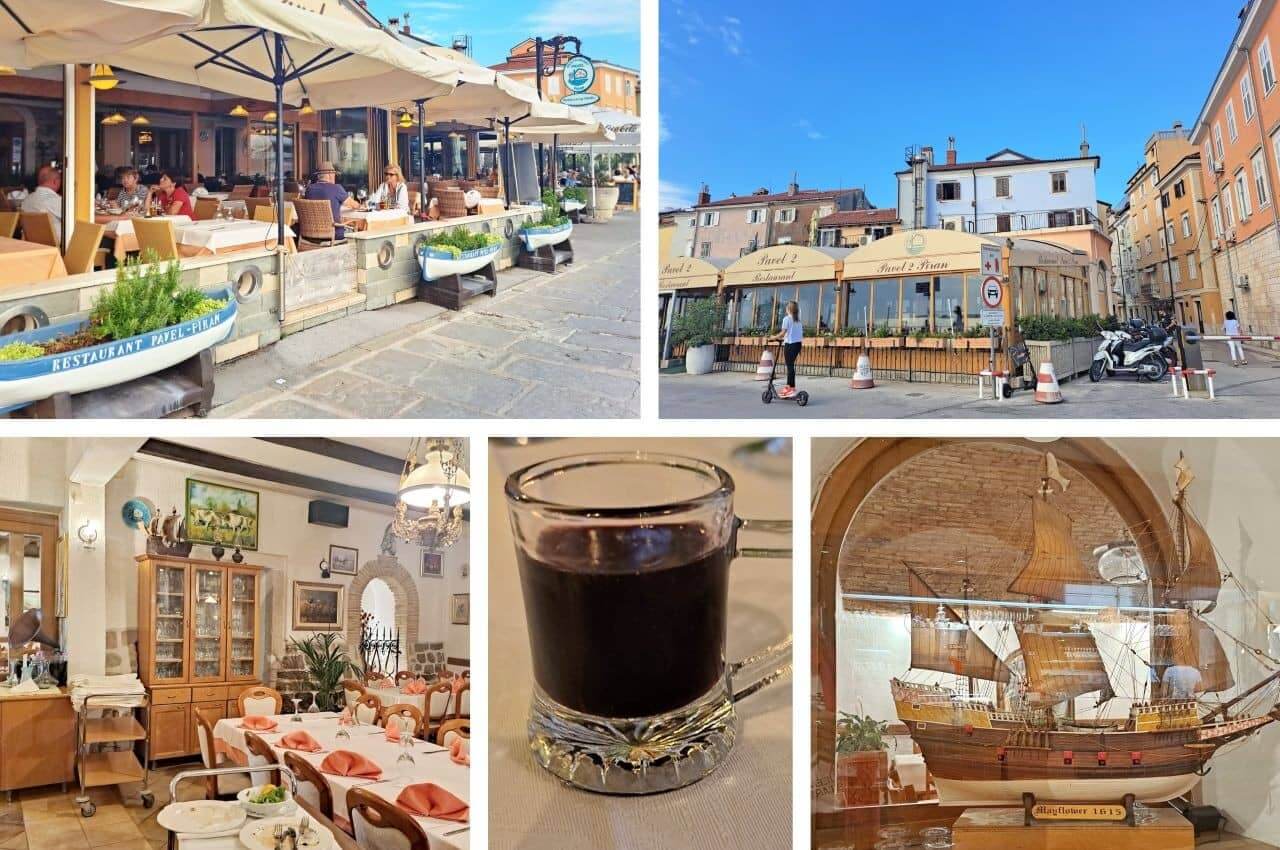
Restaurant Pavel in Piran
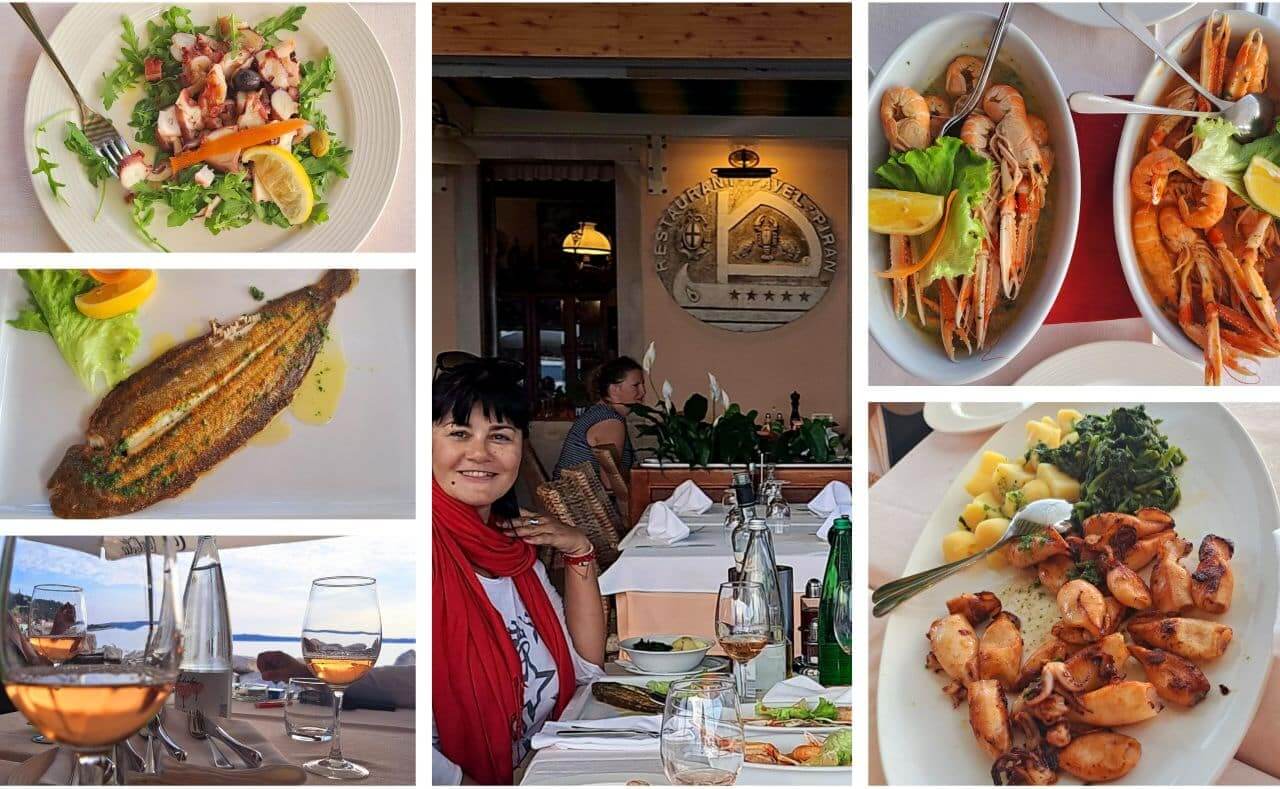
Delicious seafood in the Restaurant Pavel
Monument to Dragan Sakan
On the Piran promenade, you can find an interesting monument. It is a stylised bronze model of Piran made of books, pencils, and rulers, with the inscription “Visionary and man of ideas”.
The monument was erected on the 2nd September 2011 by the Piran municipality. It is dedicated to Dragan Sakan (1950-2010), the founder and creative director of the New Moment company, and the author of thousands of advertising campaigns in the former Yugoslavia.
Dragan loved to stay in Piran, and thanks to his school, “Ideas Campus”, he gathered the world’s greatest creatives. The monument symbolises his motto, “Ideas are all around us”.
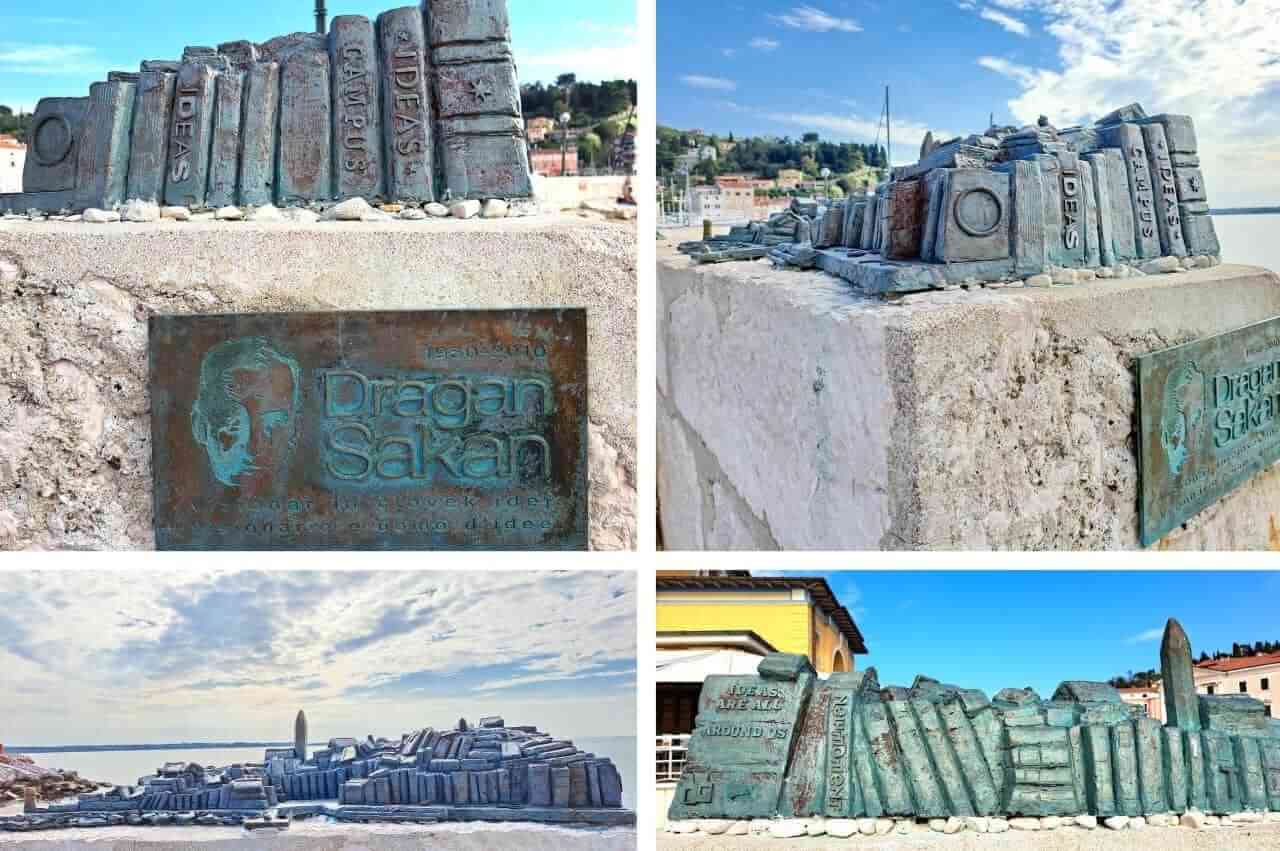
Monument of Dragan Sakan in Piran
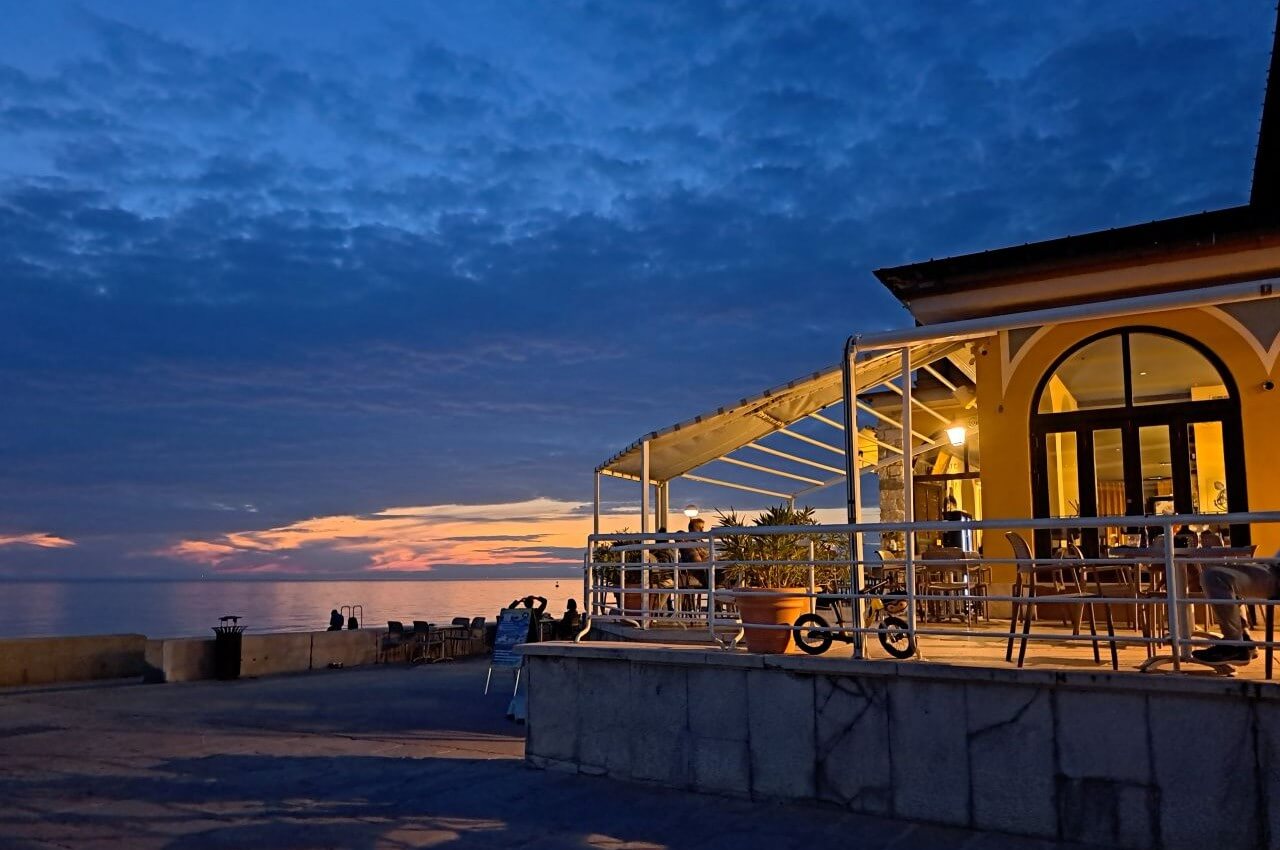
Piran, between sunset and night
🛍️🍷 Souvenirs from Piran
A journey is not complete without souvenirs, and the most interesting are products inspired by tradition and local culture.
Find various handicrafts in the small local artisan shops or cosmetic products made from natural local ingredients.
Considering that the salt production was very important for this area for centuries, excellent souvenirs are products made with salt. For culinary dishes, you can buy Piran salt with a protected designation of origin. Then, you can find fleur de sel, herbal blends, salted chocolates, olive oils, and natural cosmetics such as salt scrubs, soaps, body creams, and salt mud.
And don’t go back home without the Istrian olive oil and wines 🤩
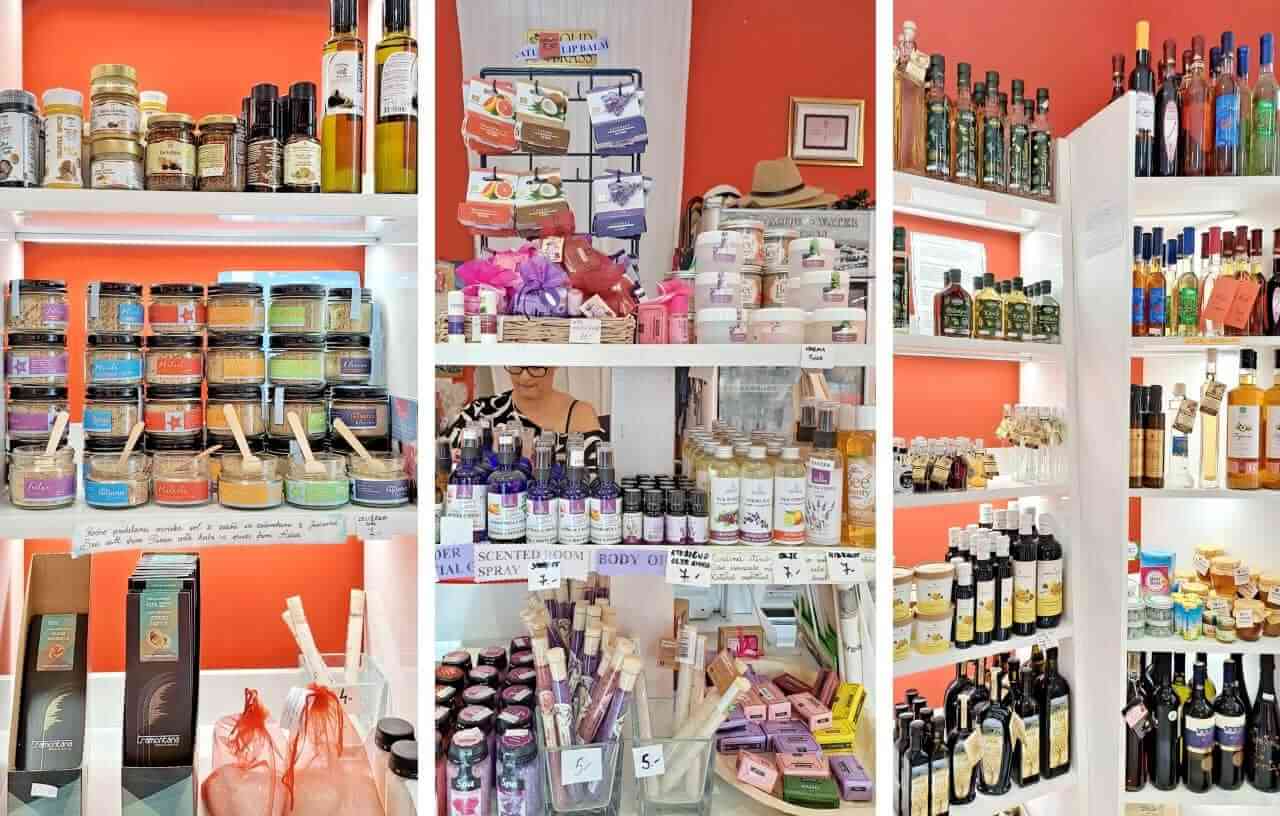
Souvenirs from Piran
📍 What to see close to Piran
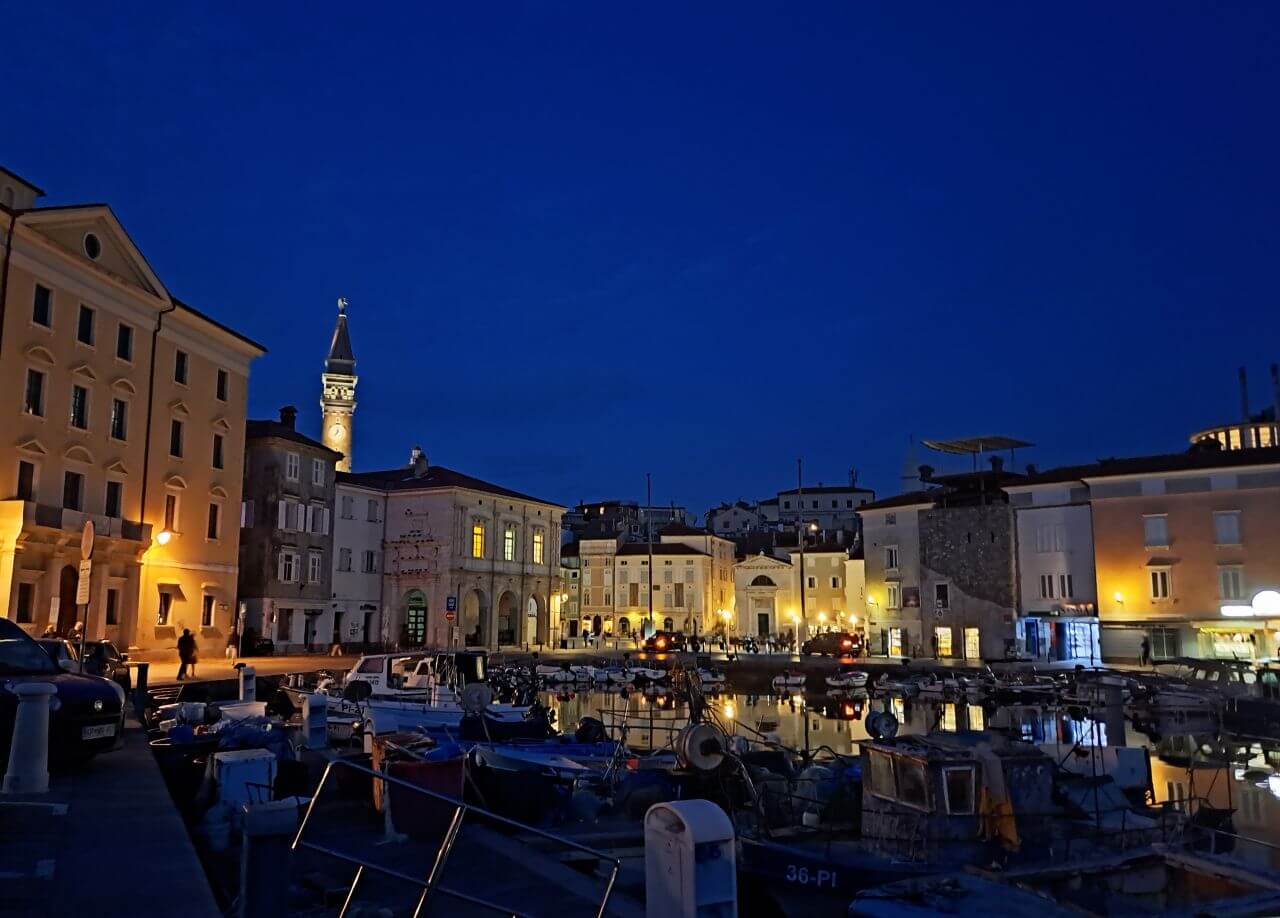
Piran by night
Generally, one day is enough to visit Piran, but the town is so charming that you can spend more days walking and discovering its secret alleys. Depending on your time in the beautiful Istria, check out what you can see close to Piran.
♦ Portorož is about a 20-minute easy walk from Piran. They are connected with the beautifully landscaped promenade by the sea. It is a modern town with a marina, luxurious hotels, the Grand Casino, and restaurants.
◊ Visit Gramona Farm, an ecological olive farm located close to the sea. You can buy their extra virgin olive oil, pickled olives, olive salt, herbal teas, hazelnuts, hazelnut butter, local olive paté, local wine, and natural cosmetics like olive oil and lavender ointment.
♦ Isola is located 12 km from Piran, along the coast. It is a quieter and smaller fishing town with a Venetian atmosphere and excellent fresh fish restaurants.
◊ Koper is the region’s largest city and main port, situated 18 km away, and known for its wonderful medieval old town.
♦ Postojna Cave and Predjama Castle are among the most remarkable natural attractions in Slovenia, located 75 km away from Piran. You can read more about them in the following blog texts.
No matter which location you choose for your next trip, I am sure that you will enjoy the beautiful nature, delicious food and wines, and towns with Venetian atmosphere and Slovenian hospitality.
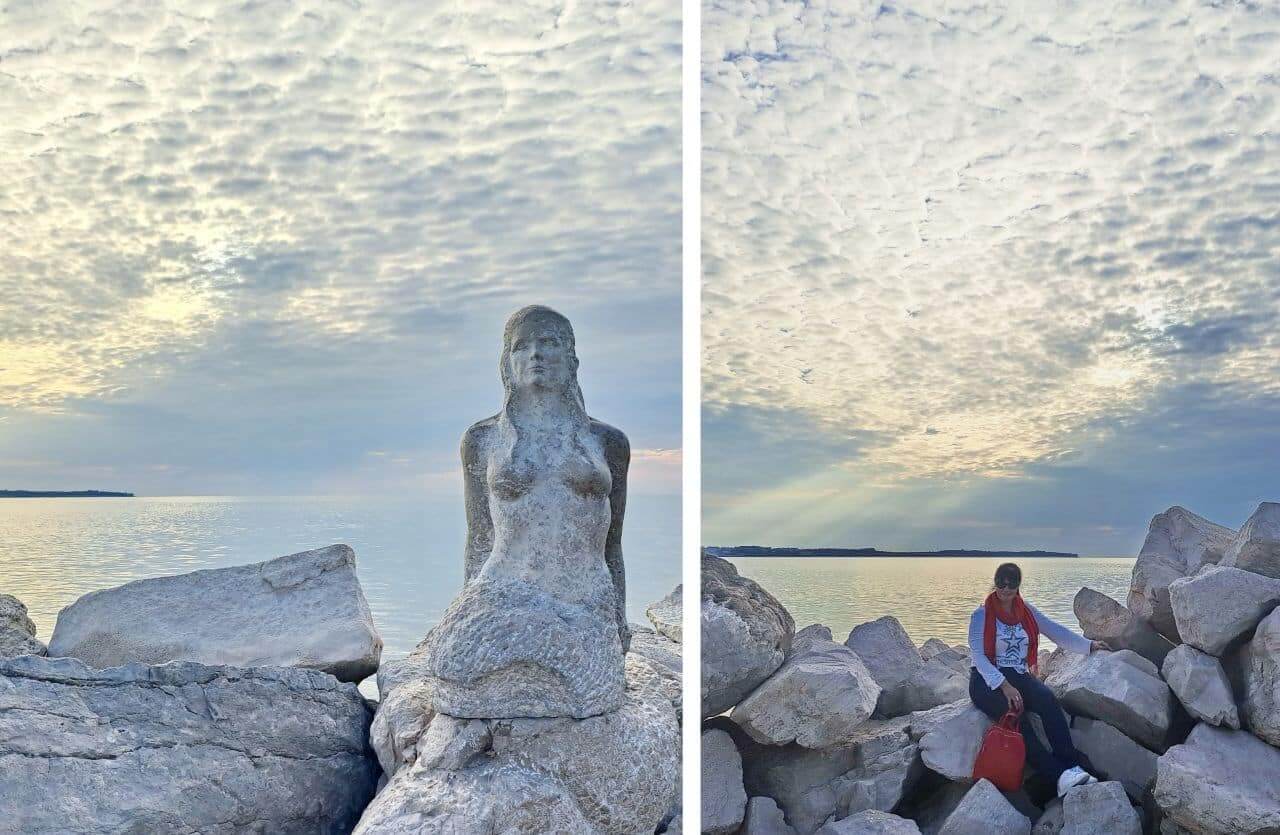
Piran promenade


Leave a Reply
Want to join the discussion?Feel free to contribute!