
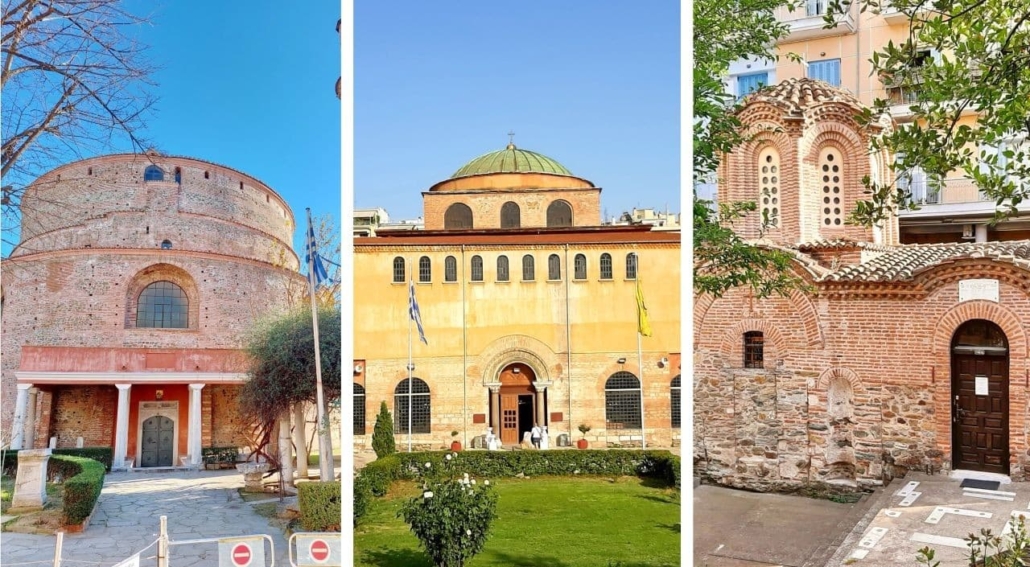
Byzantine Churches and Monuments of Thessaloniki
Thessaloniki, the second largest city in Greece, is a blend of Byzantine treasures and urban life. It is known for its remarkable Byzantine churches and monuments that reflect its glorious past and culture.
These 15 monuments are recognised for their unique architecture, spiritual significance, and fascinating stories. They were inscribed on the UNESCO World Heritage List in 1988, known under the common name of the Paleochristian and Byzantine monuments of Thessaloniki.
So, let’s go on a spiritual journey through the history…
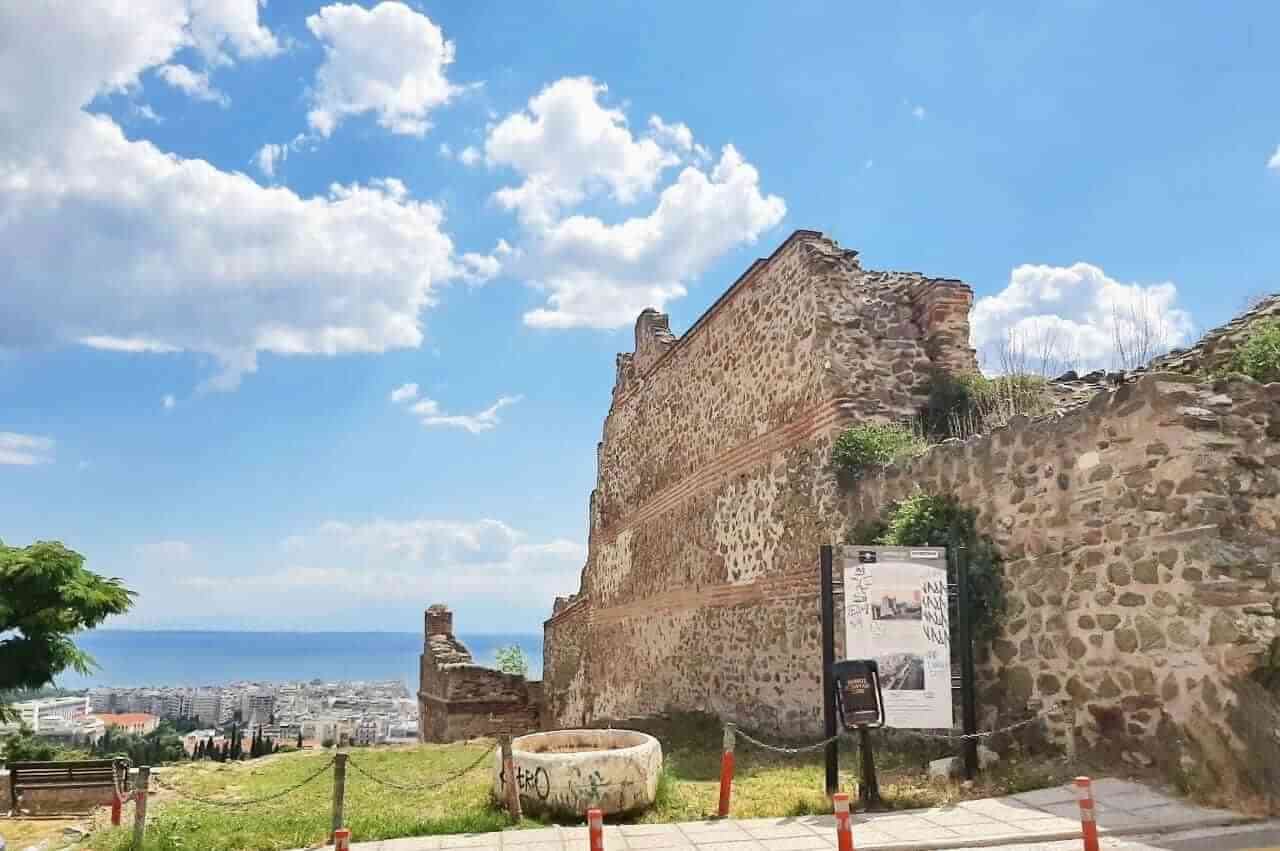
Thessaloniki, the Eastern city wall
⛪ The Byzantine Churches and Monuments
Thessaloniki was the second city of the Byzantine Empire, after Constantinople. It was a major commercial and military centre on the Via Egnatia, a 2nd-century BC Roman road, which connected the Adriatic coast to Byzantium.
Also, Thessaloniki was an important centre for Christianity in the Balkans. The UNESCO World Heritage List contains the following 15 sites: the Byzantine churches and monasteries, the City Walls, Rotonda, and the Byzantine Bath.
- City Walls (4th/5th centuries).
- Rotunda of Saint George (4th century).
- Church of Acheiropoietos (5th century).
- Church of St. Demetrios (7th century).
- Latomou Monastery (6th century).
- Church of St. Sophia (8th century).
- Church of Panagia Chalkeon (11th century).
- Church of St. Panteleimon (14th century).
- Church of the Holy Apostles (14th century).
- Church of St. Nicholas Orphanos (14th century).
- Church of St. Catherine (13th century).
- Church of Christ Saviour (14th century).
- Vlatadon Monastery (14th century).
- Church of Prophet Elijah (14th century).
- Byzantine Bath (14th century).
City Walls of Thessaloniki
The city was fortified from its establishment, in the 3rd century BC, by the Macedonian King Cassander.
At the beginning of the 4th century, Roman emperors Galerius and Constantine the Great strengthened the walls. From that period, the fortifications have been expanded and modified many times.
The wall ruins we can see today date back to the early Byzantine period (around 390 AD), and incorporate parts of an earlier, late 3rd-century, as well as from the Ottoman period.
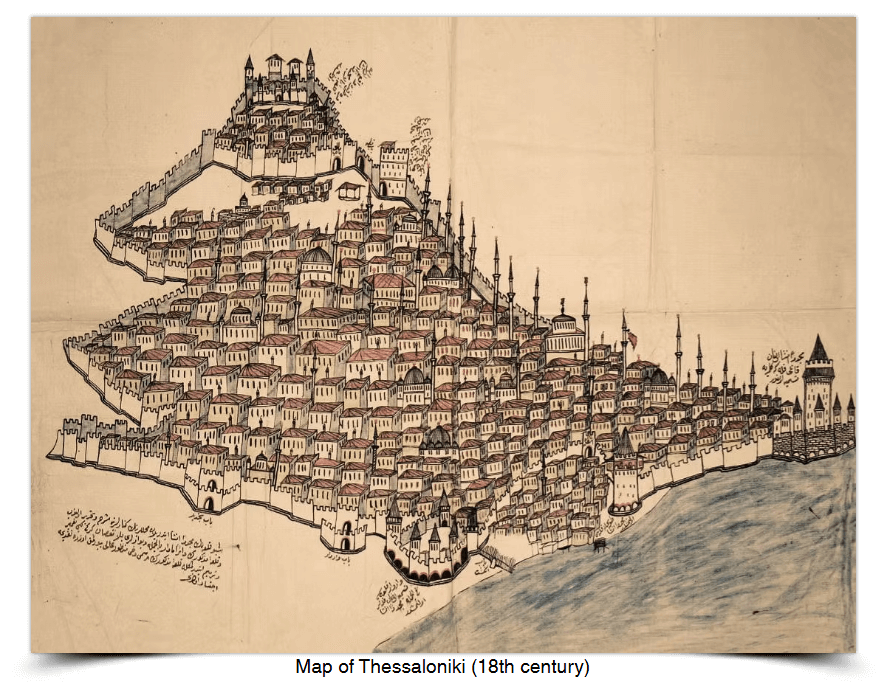
Map of Thessaloniki, Source: www thebyzantinelegacy.com
Once, the walls were shaped like a trapezium and were about 8 km long. The Eastern and Western walls were descending from the hill towards the sea. One wall surrounded the Acropolis, and the fourth was the coastal wall. They were approximately 10-12 meters high, and 5 m thick, built of the Roman mixed construction of ashlar masonry and brick bands.
The northern part of the walls climbs to the slopes of the Acropolis of the city, where the citadel of the Heptapyrgion was.
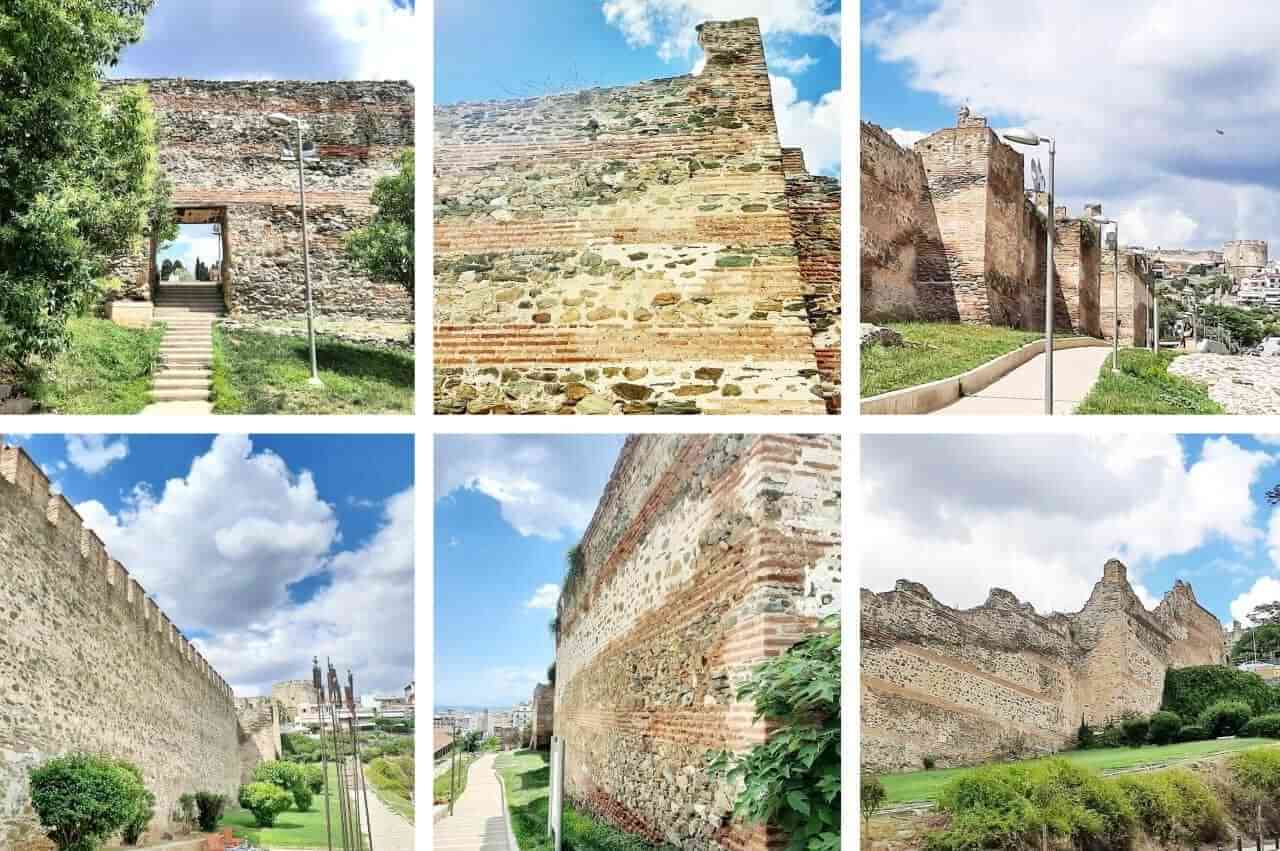
Eastern city walls of Thessaloniki
By the way, about 4 km of walls can be seen today. Most of the sea walls were demolished in the second half of the 19th century by the Ottomans to modernise and expand the city.
Today, the surviving walls are incorporated into modern city life. The best preserved walls are located at the Ano Poli, or Upper City, surrounded by narrow alleys with small colourful houses, cafes, and traditional taverns.
TIP: You can catch the bus no. 23 from the centre to the fortress. Walk along the walls and through the Ano Poli neighbourhood, and go back down to the centre. Or you can walk from the centre up to the hill, which is a perfect way to discover the old part of town, which keeps its traditional charm.
🏰 Heptapyrgion (Eptapyrgio) Fortress
The Heptapyrgion was built in the north-eastern part of the city’s Acropolis during the rule of the Roman emperor Theodosius I (379–395). The five northern towers with walls are probably from this period, while the southern towers and inner fortified redoubt were probably built in the 12th century. The fortress was also rebuilt during the Palaiologan period (between 1261 and 1453).
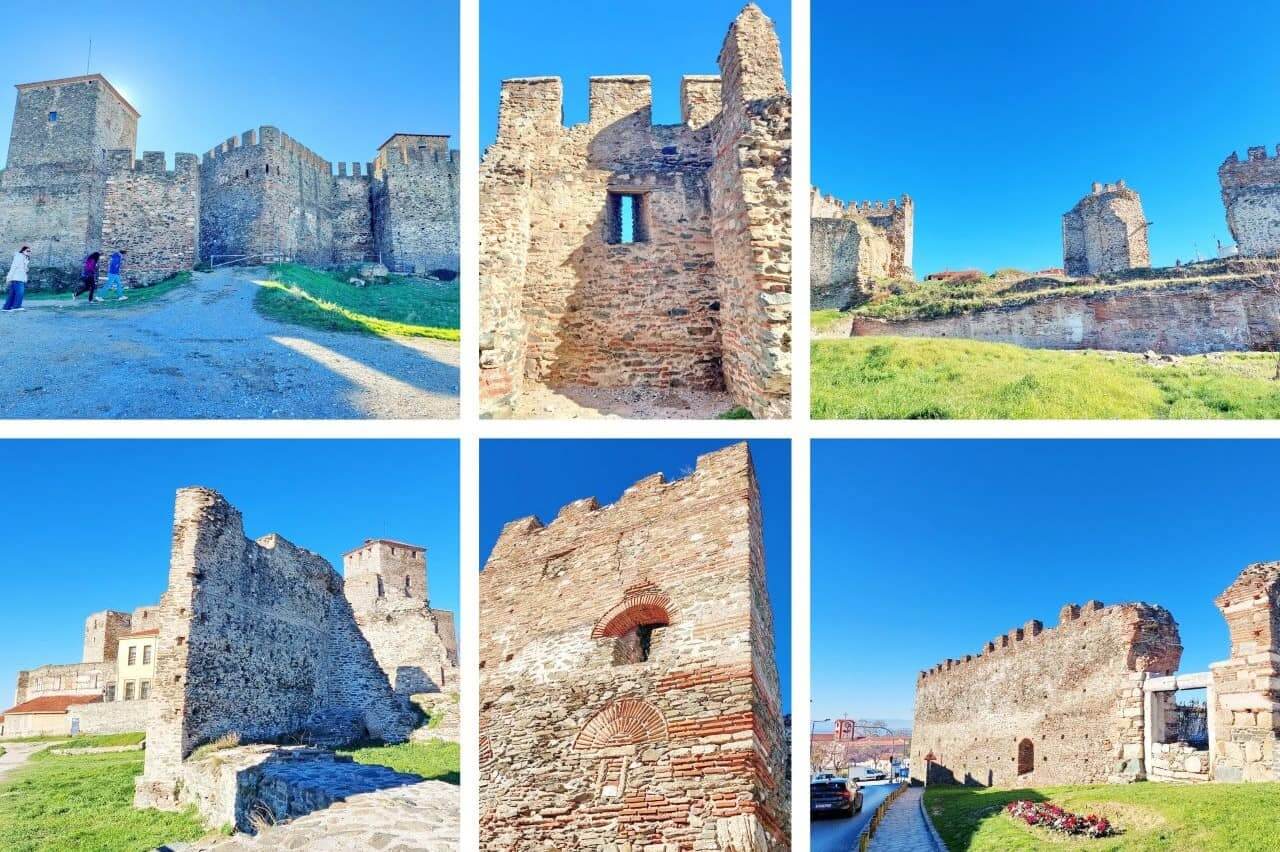
Ano Poli, Heptapyrgion, East Wall of Acropolis
The Ottomans leaded by the Sultan Murad, son of Sultan Mehmed, conquered the town in 1430. They called the fortress Yedi Kule, like a fortification in Constantinople. Even though its name (in the Greek and Turkish) means Seven Towers, it actually has ten towers; two are triangular, and eight are square-shaped.
The entrance from the citadel to the Heptapyrgion was by the way of the main, largest tower. Above the entrance, there is the refurbishment commanded by Cavus Bey, the first Ottoman governor of Thessaloniki, in 1431, after the city was conquered.
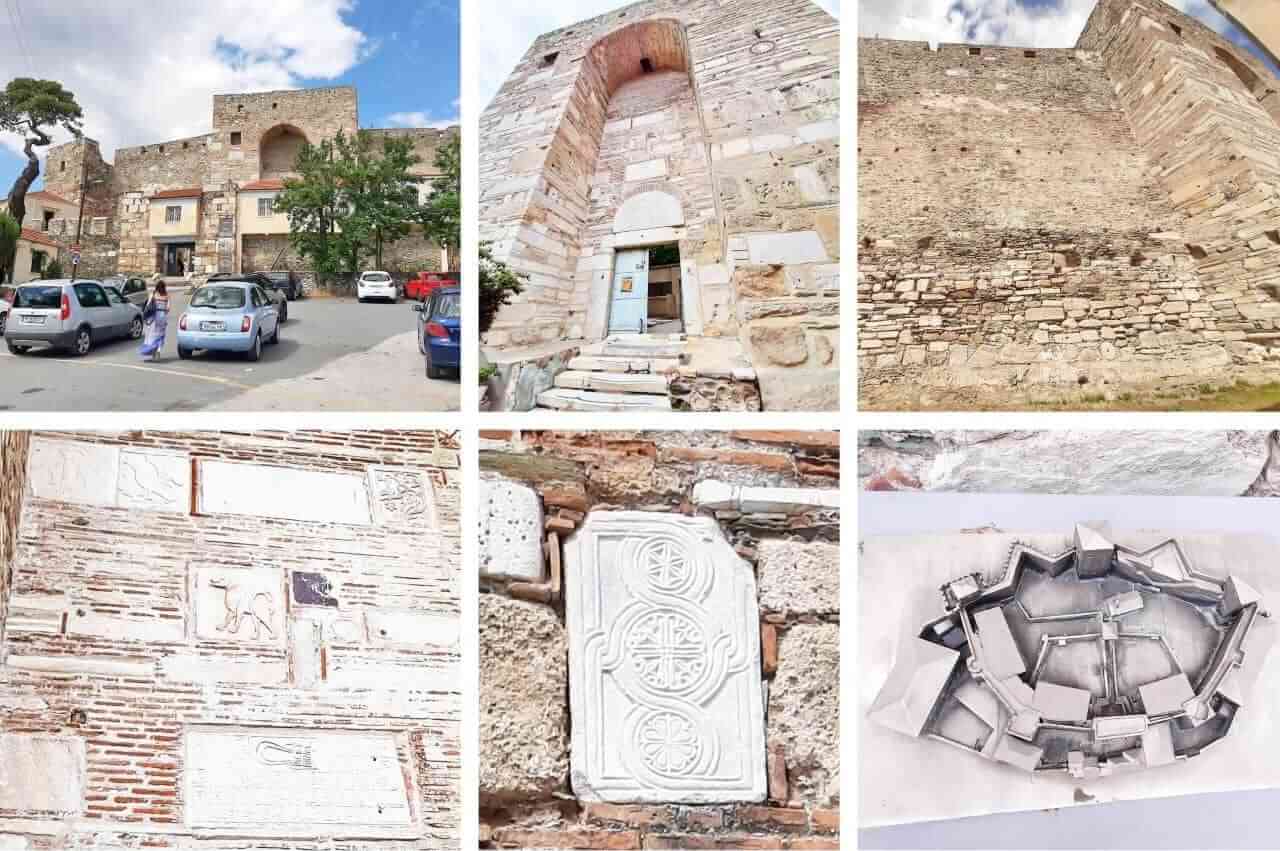
Thessaloniki, entrance to the Heptapyrgion and its model
Heptapyrgion Prison
From 1890 to 1989, Eptapyrgio was used as a prison.
All previous buildings within the fort’s interior were destroyed to make space for the new prisoners’ sections. Political prisoners were held there and tortured during various regimes, including the Metaxas dictatorship, the Nazi occupation and the military junta. This is why the Yedi Kule is often mentioned in Greek rebetiko poetry as a symbol of suffering.
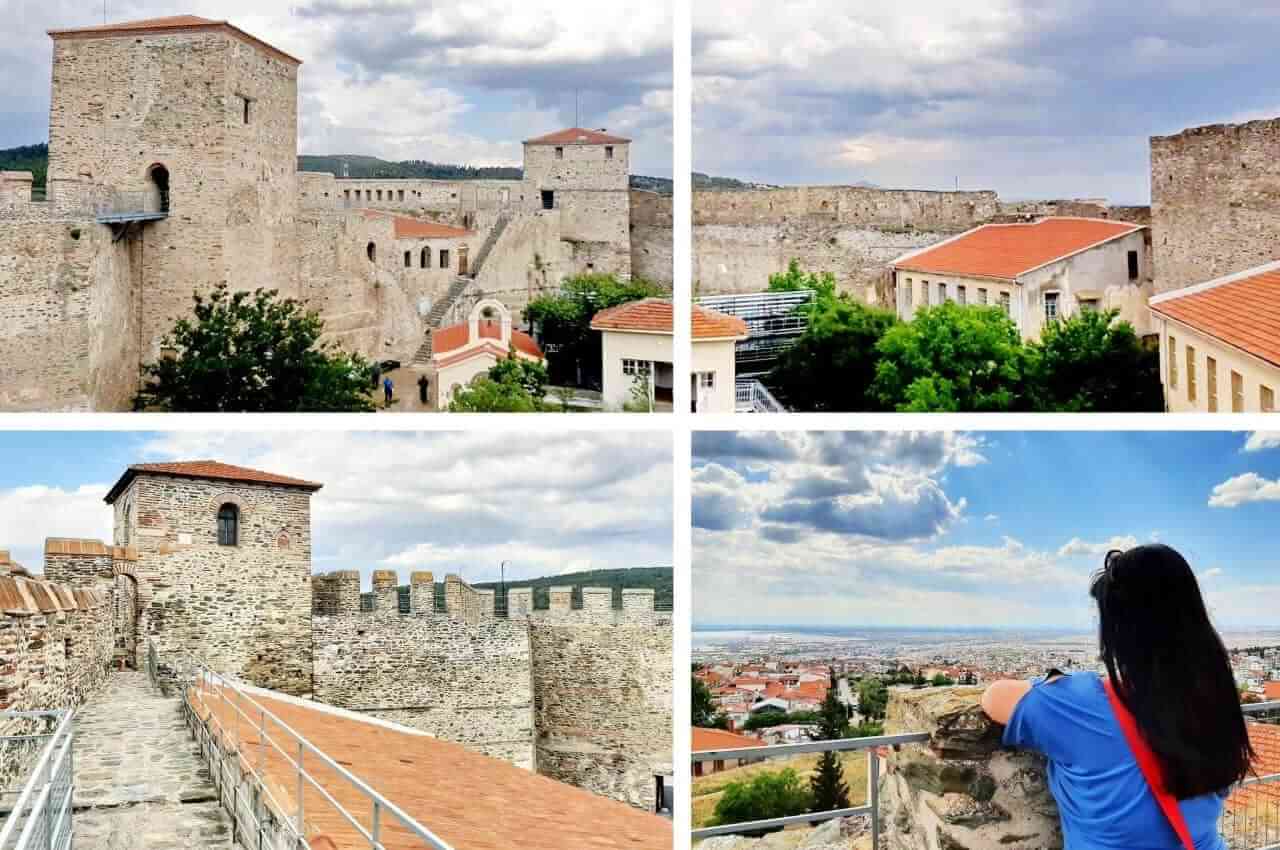
Heptapyrgion fortress with prisoner buildings
The prison had an administrative office, the men’s and women’s prisons, isolation cells, a central watchtower located in the centre, and a chapel. After the prison was closed and moved outside the town, the Ministry of Culture and Tourism started the renovation of the castle in 1990. Archaeological excavations began in the 1970s and continue to the present time.
Today, you can visit the fortress and the exhibition, which shows the history of the fortress and the prison.
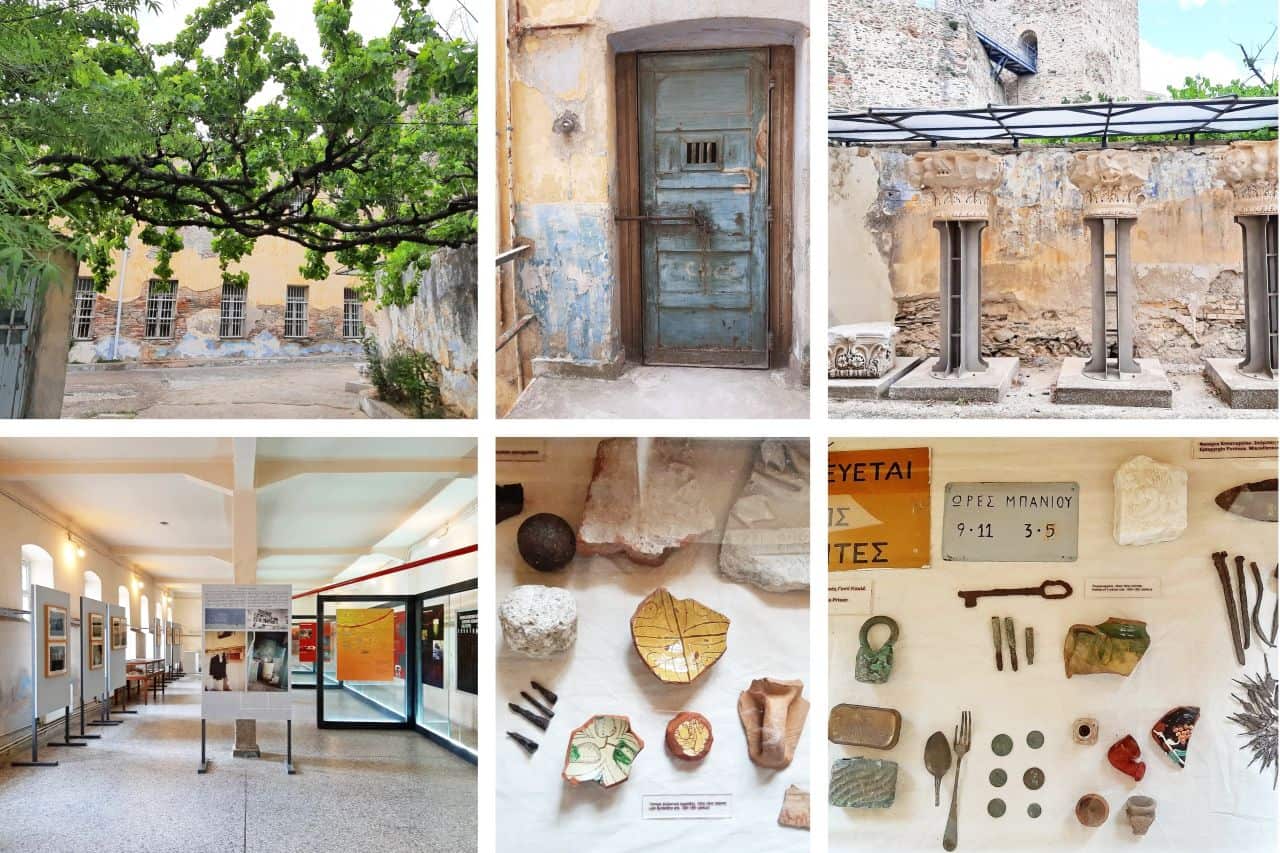
Thessaloniki, the Heptapyrgion prison and exhibition items
The Trigonion Tower
The Ottomans expanded the fortress and added a massive tower near the main gate, known as Trigonion Tower, or the Tower of the Triangle, due to its shape. It was the spot where the north wall meets the east wall. The tower served as the headquarters of the garrison commander until the end of the 19th century.
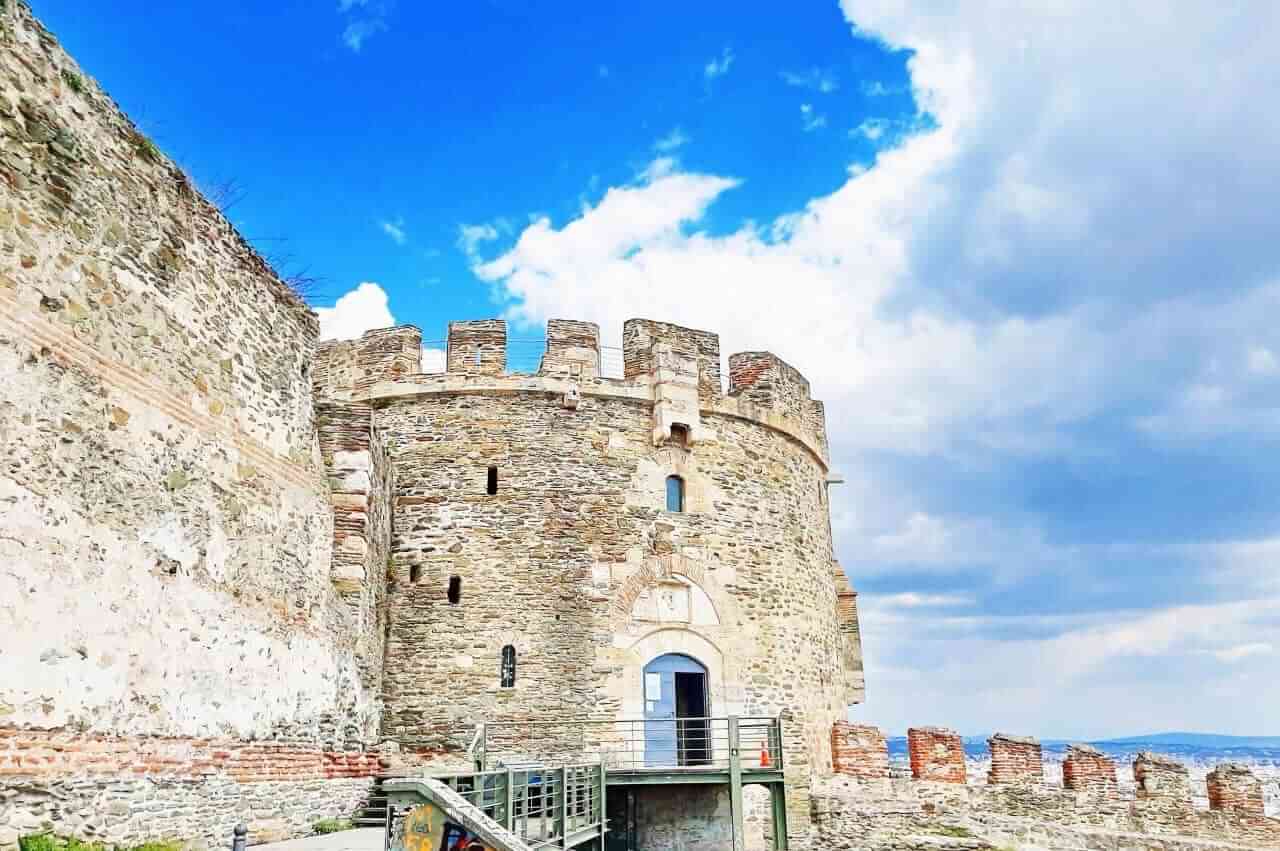
Trigonio tower of Byzantine walls
Don’t miss climbing to the top of the tower and enjoying panoramic views of the city and the Thermaic Gulf.
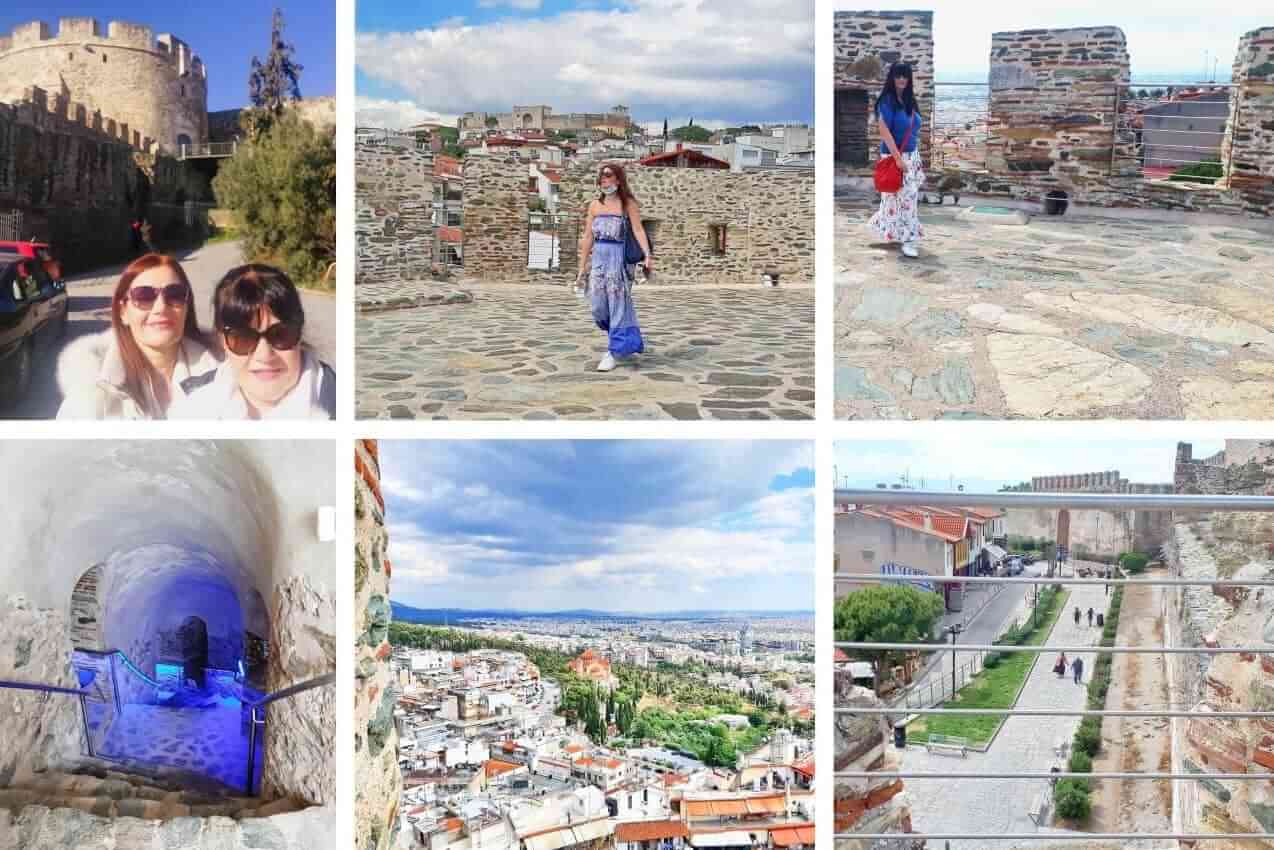
Thessaloniki, the top of Trigioniou Tower
Opening time of the Trigonion Tower: every day except Tuesday and public holidays: 8:30 AM to 8 PM.
The ticket price for adults is 6 EUR, and a reduced ticket costs 3 EUR.
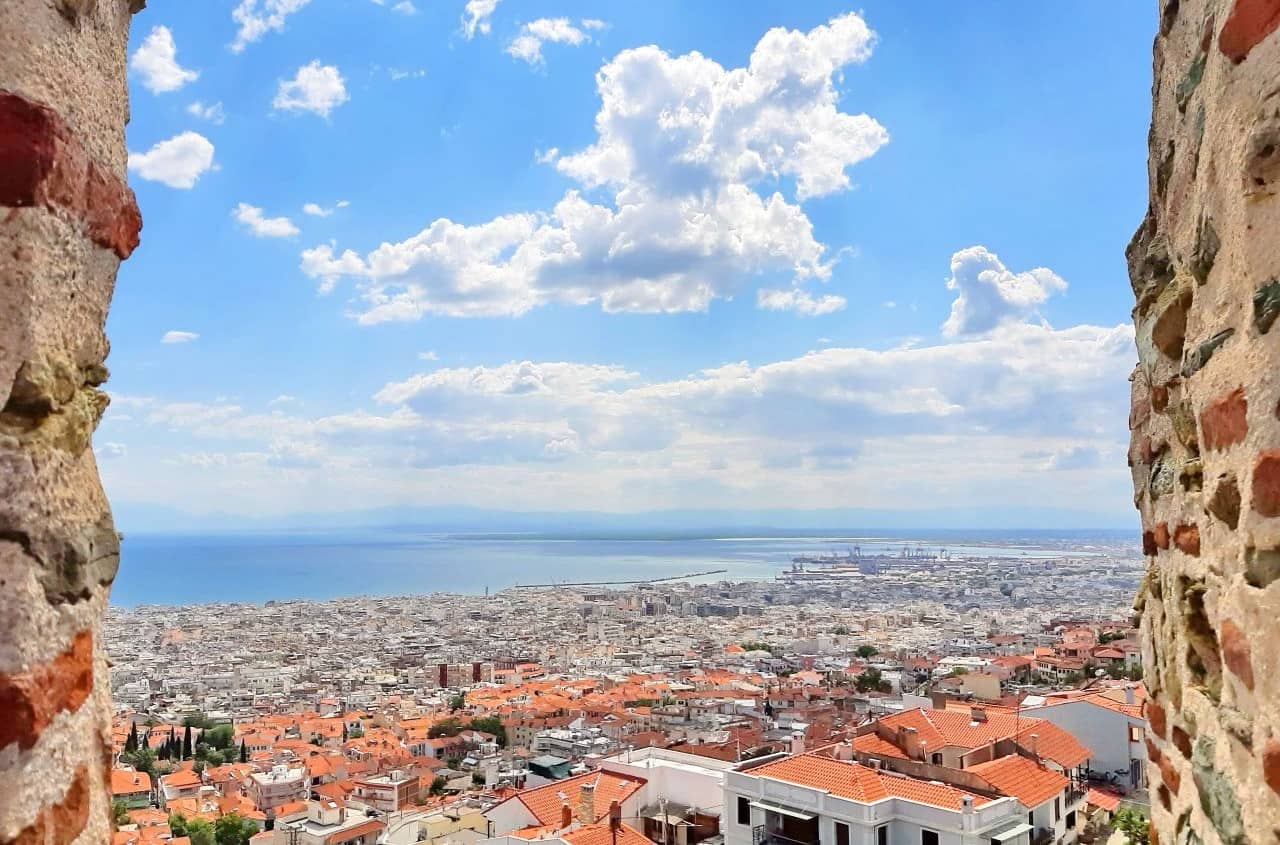
View of Thessaloniki from the top of Trigioniou Tower
Old gates of the town
By the way, the town had four main entrances: two gates in each of the east and west walls, set at the ends of the two parallel main streets.
The western gates were the Golden Gate (today the modern Egnatia Street) and the Letaia Gate (today the modern Agiou Dimitriou Street). In the east wall were the Cassandreia Gate (later the Kalamaria Gate), the Asomatoi Gate & the Rome Gate.
Smaller gates in the north wall of the city served military needs. The Chain Tower (in the Ottoman period) replaced the Byzantine Trigonion Tower. The White Tower at the coast replaced the old Byzantine Tower, standing at the junction of the sea wall and the eastern land wall.
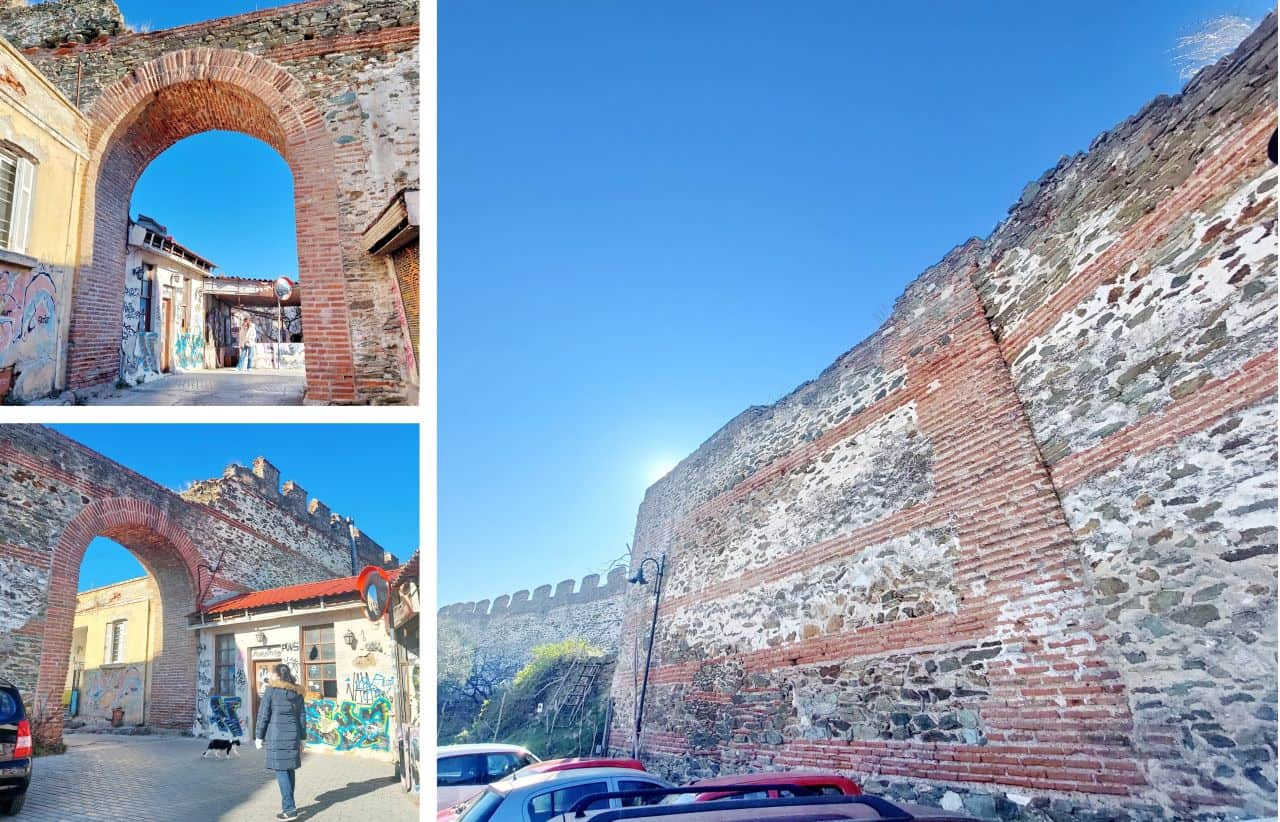
Ano Poli, the Gate of the western fortification, the Palamidou Street
The main entrance to the Acropolis was the well-preserved Portara Gate, with walls that are over 10 meters high.
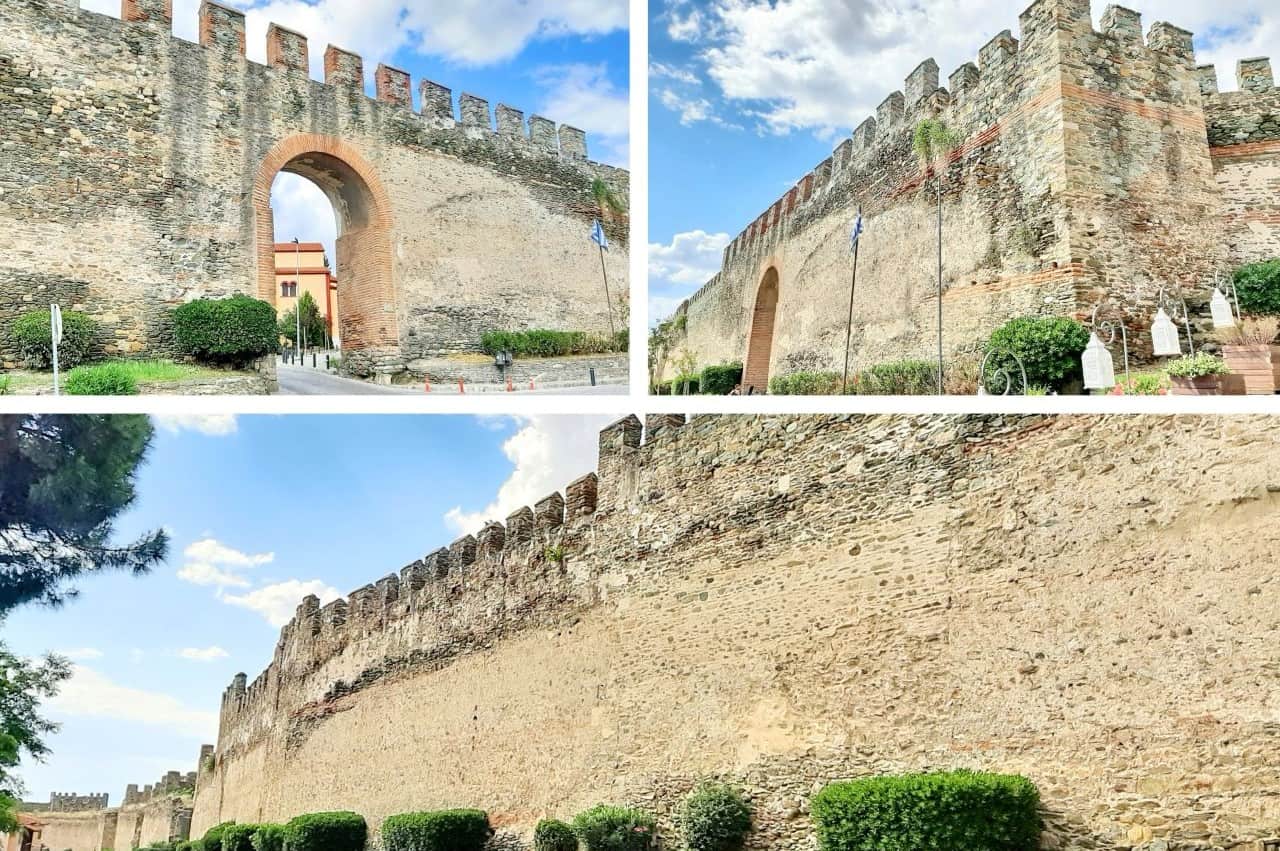
Portara Gate and walls, Ano Poli
Close to this gate, and a few hundred meters downhill from Heptapyrgyion, there is the Gate of Anna Palaiologina. On the marble lintel of this 14th-century gate, you can still see an inscription that mentions this Byzantine empress, who ruled Thessaloniki for fourteen years.
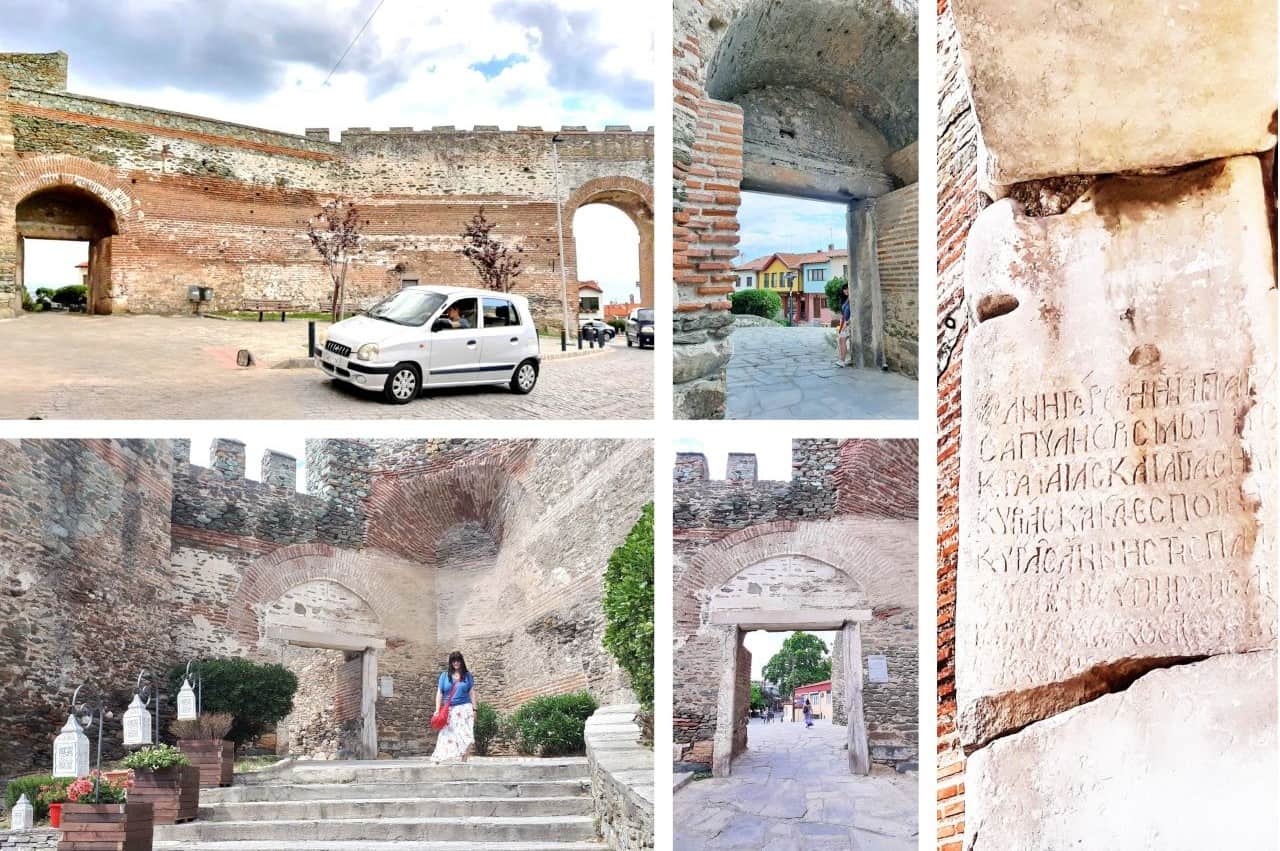
Thessaloniki City Wall, Gate of Anna Palaiologina, Ano Poli
⛪ Rotonda (Rotunda)
📍 Location: Platia Agiou Georgiou Rotonta 5.
The Rotonda was built about 306 AD. Some think it was made as Galerius’ mausoleum, while others think it was used as a sanctuary of the Cabeiri deities or of God Zeus. But Galerius was buried in 311 AD in his mausoleum at Gamzigrad-Romuliana, today’s Zaječar in Serbia.
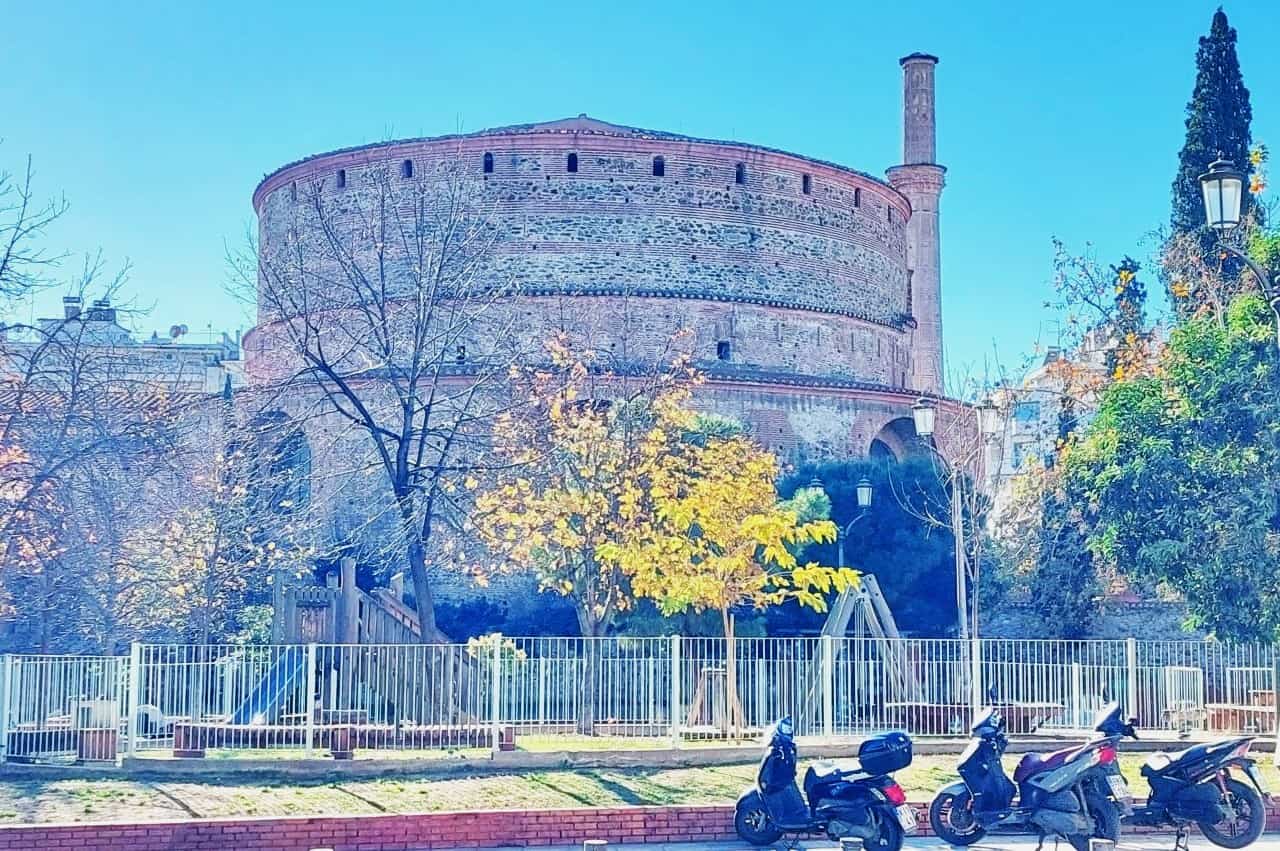
Thessaloniki Rotonda
Rotonda got its name after its massive circular structure, similar to the construction of the “Pantheon” of Rome.
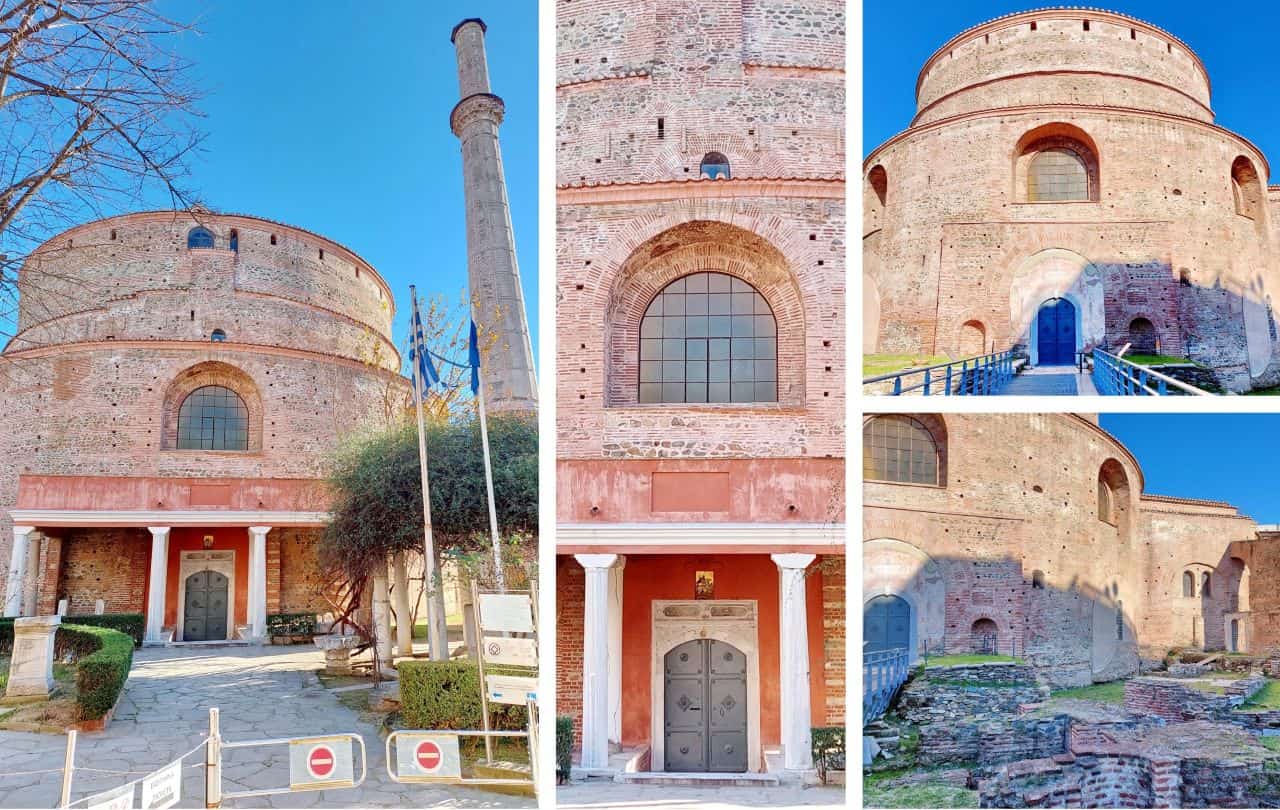
Stunning Rotonda, Thessaloniki
It is almost 30 meters high and 24.5 meters in diameter. The cylindrical wall is divided into eight rectangular niches.
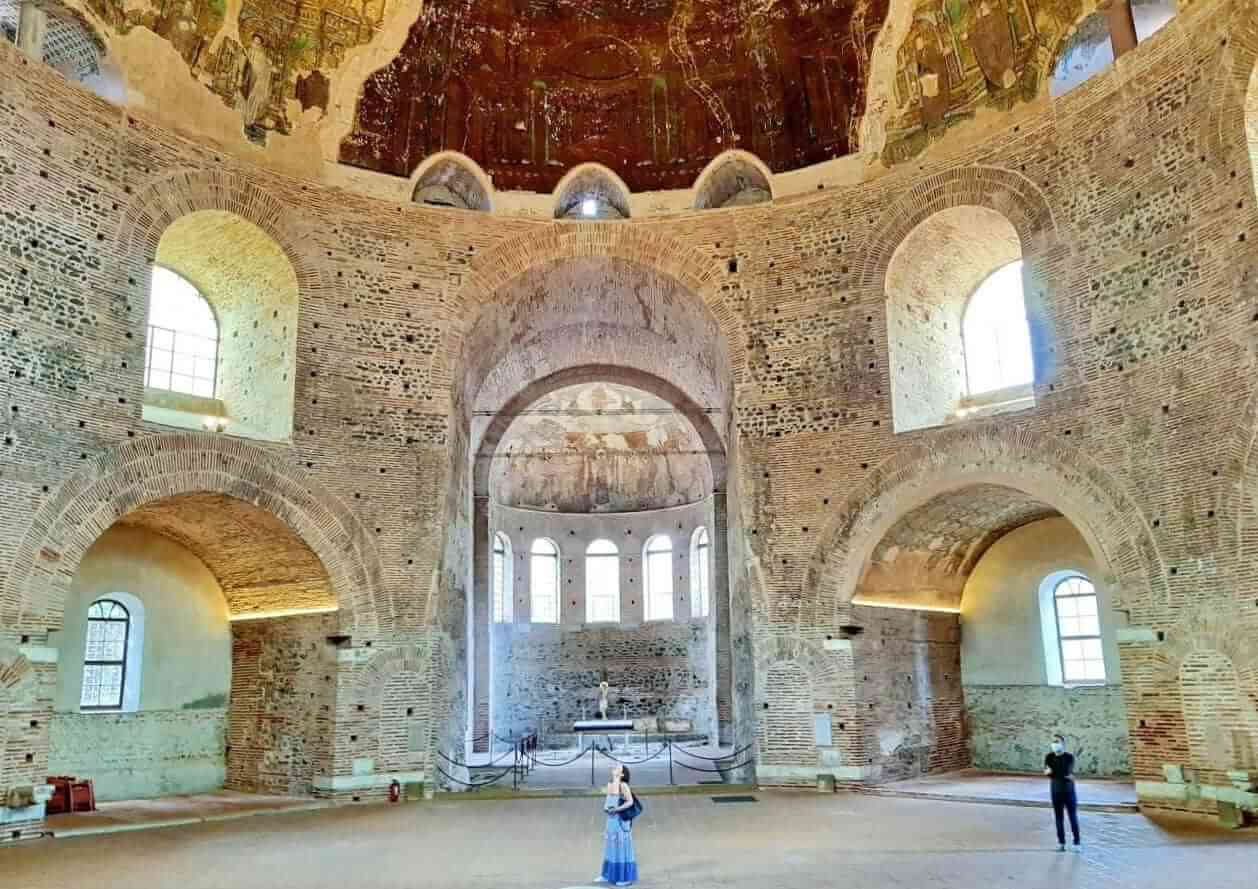
Inside the Rotonda
Later, the Emperor Theodosius I converted it into a Christian basilica in the late 4th century. We can only imagine how marvellous its interior once looked. The dome and barrel vaults were covered with colourful mosaics, which are among the oldest Christian works of art. Mosaics are similar to those in Basilica di San Vitale in Ravenna, and today we can see some parts of them.
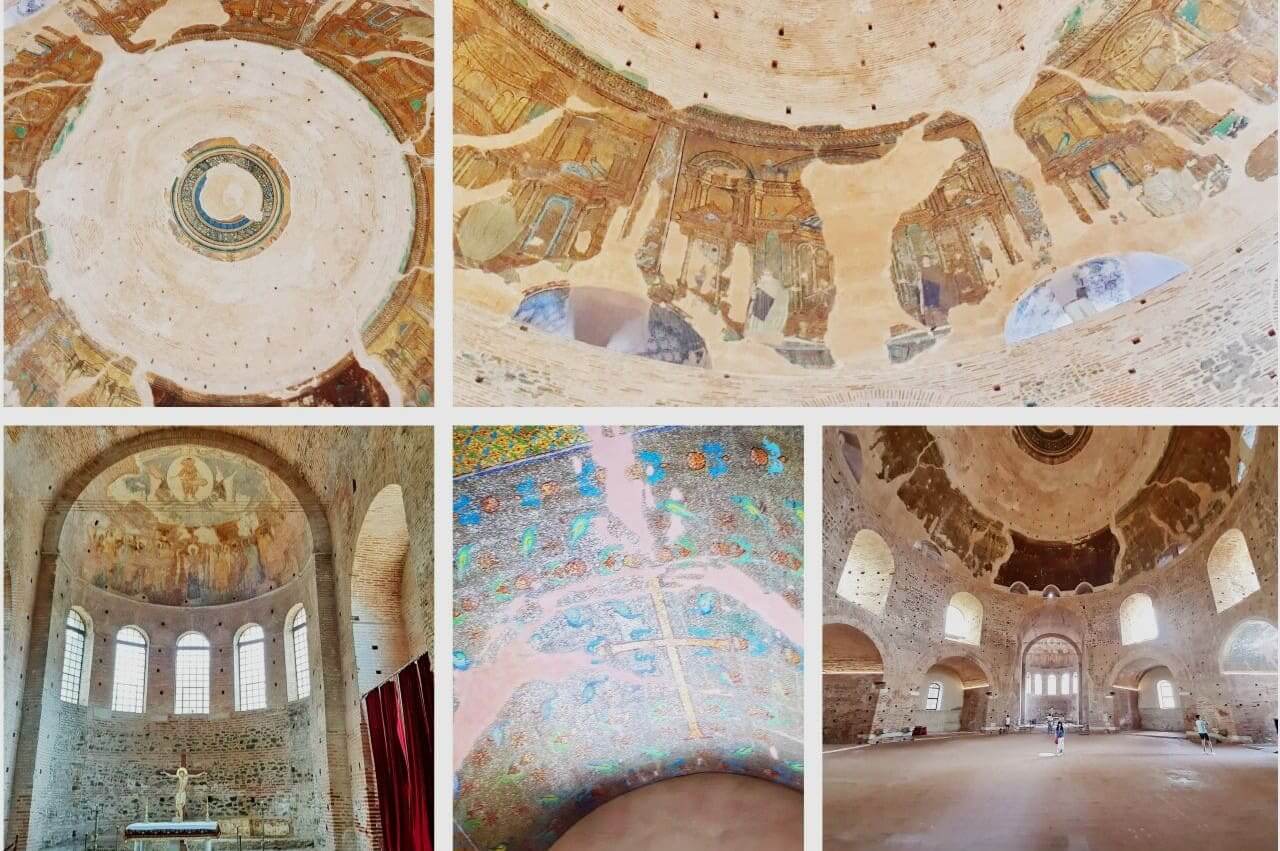
Mosaics of Rotonda
During the Ottoman period, in 1590-91, the Rotonda was converted into a mosque. A minaret almost 36 m high was added, while most of the murals were destroyed.
After the liberation in 1912, Rotonda was converted into an Orthodox church dedicated to Saint George. It was named after the small Church of Saint George, located opposite the western gate of the Rotonda. There is a small icon of Saint George above the entrance door.
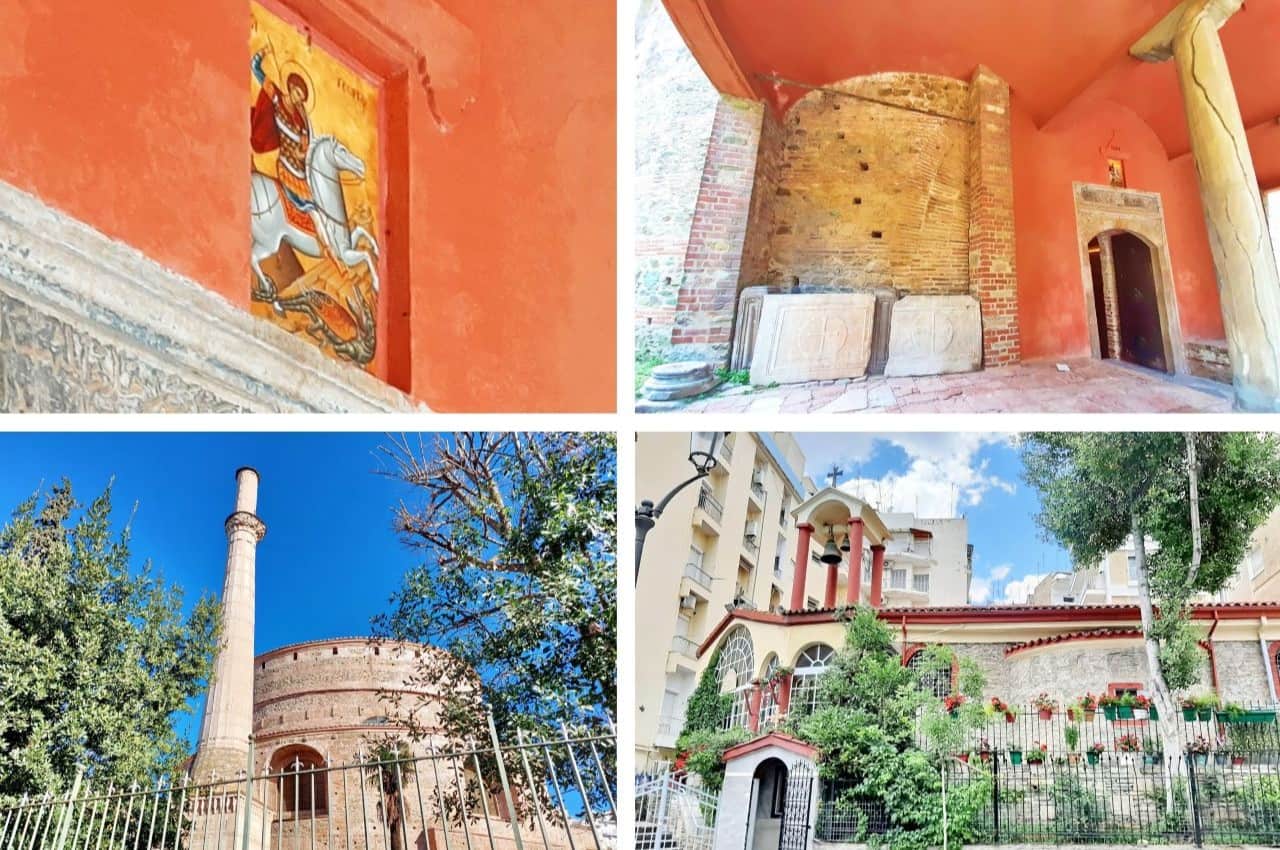
Rotonda and the small Church of Saint George (photo right, the second row)
Today, the Rotonda is restored, and it operates as a museum and for exhibitions.
Opening hours: daily 8:30 AM to 3:30 PM, closed on Tuesday and during public holidays.
The ticket fee is 10 EUR for adults, and the reduced ticket costs 5 EUR.
⛪ The Acheiropoietos Church
📍 Location: Agias Sofias Street, opposite Makedonomachon Square.
The Acheiropoietos Church is one of the oldest Byzantine churches, built in the 5th century on the site of the Roman public baths. It was modified in the 7th and in the 14th-15th centuries. During the Byzantine times, it was known as the Panagia Theotokos, and it was dedicated to the Virgin Mary.
Its name is connected with acheiropoietos (Christian icons not created by mortal hands), a miraculous icon of Panagia Hodegetria that was housed there. The church is known for its original mosaic decoration, 5th-century Ionian capitals, green marble columns, wall paintings, and three layers of floor mosaics from an earlier Roman-era bath.
It was the first church in Thessaloniki which was converted into a mosque, known as the Eski Camii (“Old Mosque”) in 1430 by Sultan Murad II himself. Later in 1922, it was used to accommodate Asia Minor refugees.
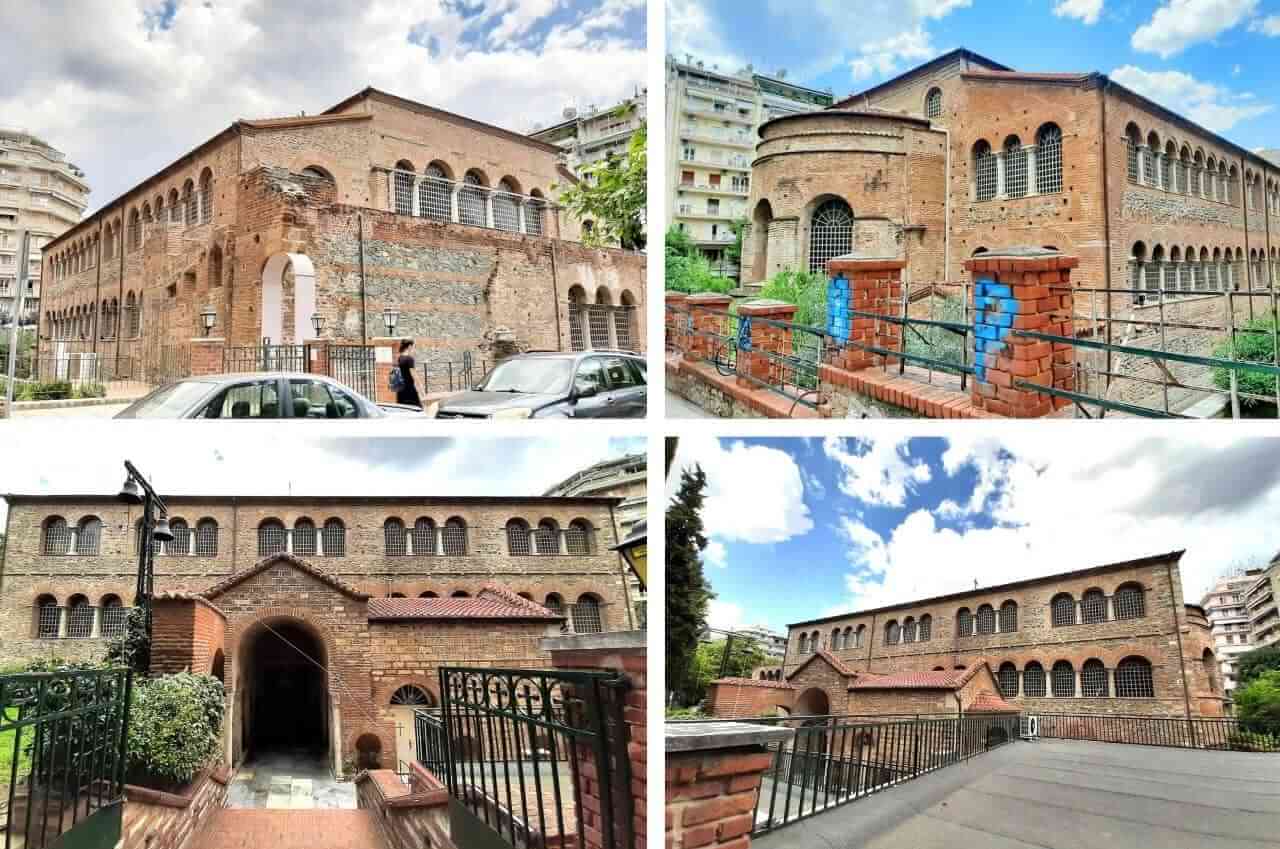
Church of the Acheiropoietos
⛪ Church of Agios Demetrius
📍 Location: Agios Demetrios 83, in the city centre, near the Roman Agora.
This is the most important church in the town, dedicated to the city’s patron saint, Saint Demetrius.
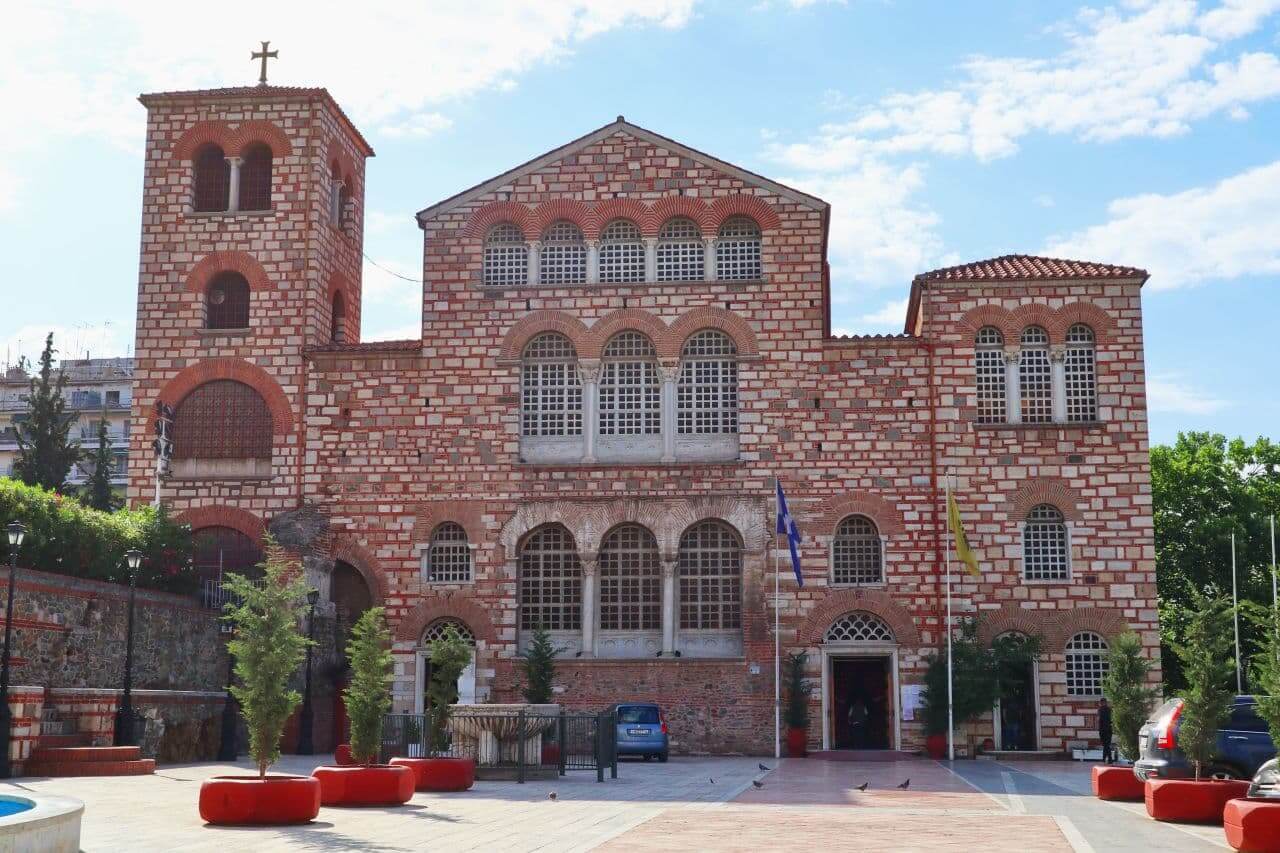
The facade and entrance of the Church of Saint Demetrius, Thessaloniki
During the reign of Emperor Galerius, Saint Demetrius was a young officer in the Roman army. He had been imprisoned, tortured, and after his death, buried at the Roman bath complex in 306 AD, because he believed in Christianity.
The first church was built in that place in the early 4th century. It was replaced with a larger basilica a century later, and rebuilt in the 7th century after the fire. In 1493, the church was converted into a mosque, and after the liberation, it became the Christian church again. It was seriously damaged in the Great Fire in 1917, and it took years of renovation.
Archaeological excavations discovered the ruins of the Roman bath with a well, where Saint Demetrious died. Today, it is the crypt of the church, which was converted into an exhibition space in 1988, where the artefacts are displayed. Several mosaics of the 5th-9th century can be seen on the walls.
The church has remained a religious pilgrimage site worldwide to this day, due to the miraculous myrrh from the saint’s relics.
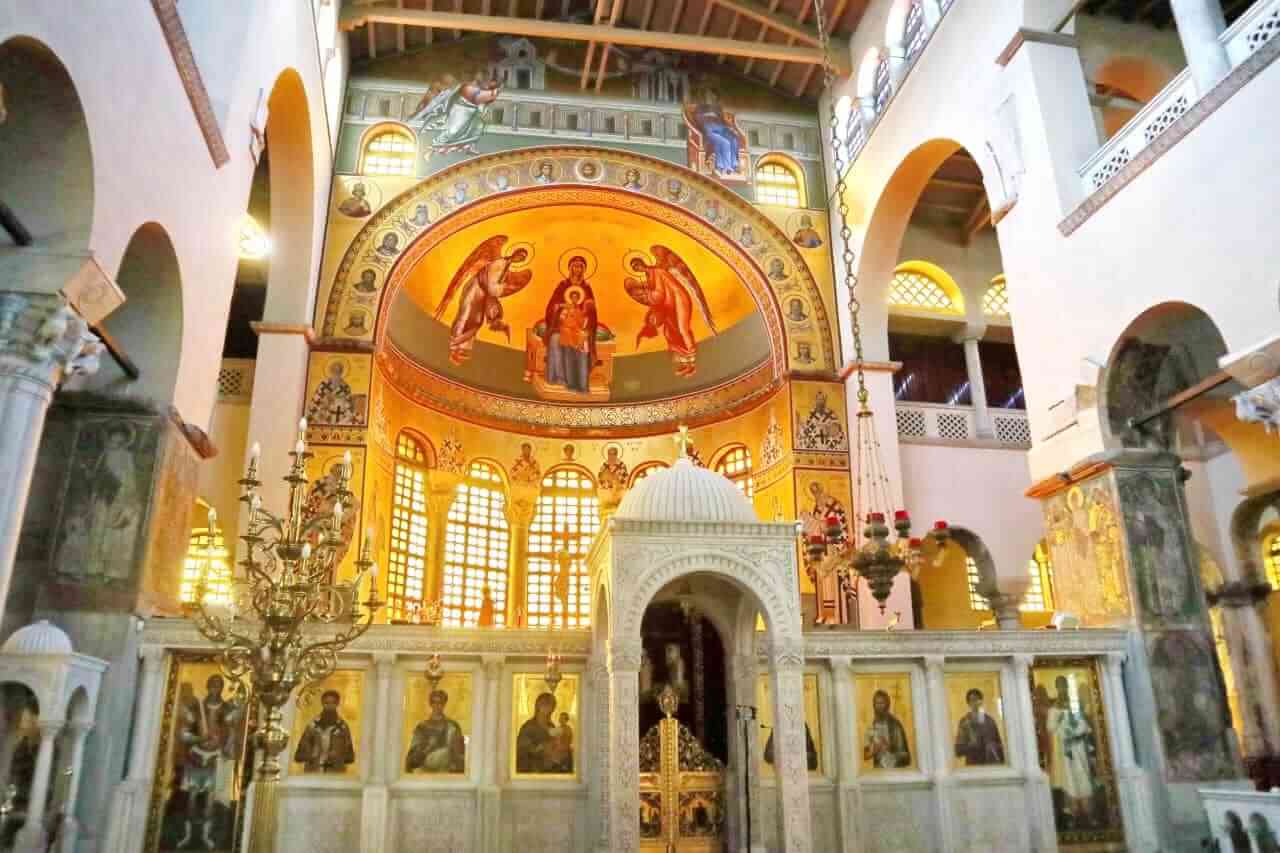
Inside the Church of Saint Demetrius
The feast of Saint Demetrius is celebrated on the 26th of October, with a large liturgy and procession. It is also a public holiday, because Thessaloniki was liberated from Ottoman rule on the 26th of October, 1912, during the First Balkan War.
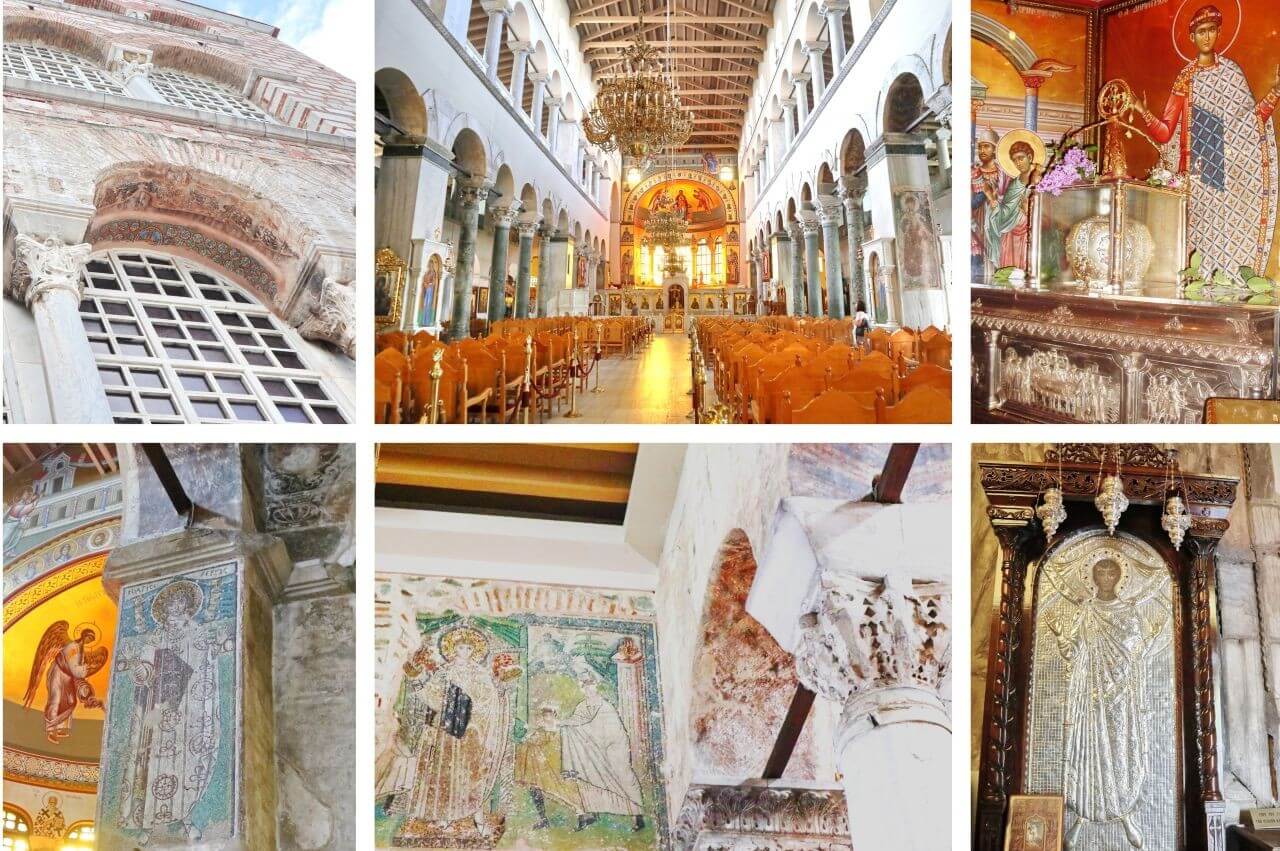
Interior of the Church of Saint Demetrius, Byzantine churches
⛪ Latamonou Monastery and the Church of Hosios David
📍 Location: Ano Poli, close to the Vlatadon Monastery, a junction of Bouboulinas Street and D. Poliorkitou Street.
The Church of Hosios David was built in the 5th century, as the catholicon of the Latomos Monastery. According to the testimony of the monk Ignatius in the 9th century, it was built by Theodora, the daughter of Emperor Maximian, the prosecutor of Christians. She became a Christian in secret and asked her father to build a house and a bathhouse. So, Teodora converted the bathhouse into a church, decorated it with a mosaic, and kept it in secret. By the way, the mosaic was revealed suddenly during an earthquake.
The monastery was converted into the Murad Mosque, and after the liberation, it became the Orthodox church again, named Hosios David. It was dedicated to David, a saint of Thessaloniki, while the name “Latomos” came from the nearby quarries (latomeia in Greek).
Parts of the unique Early Christian wall paintings from the late 12th and 14th centuries can still be seen inside the church.
⛪ Church of Agia Sophia (The Wisdom of God)
📍 Location: Agia Sophia Square, close to Aristotle Square, in the centre of town.
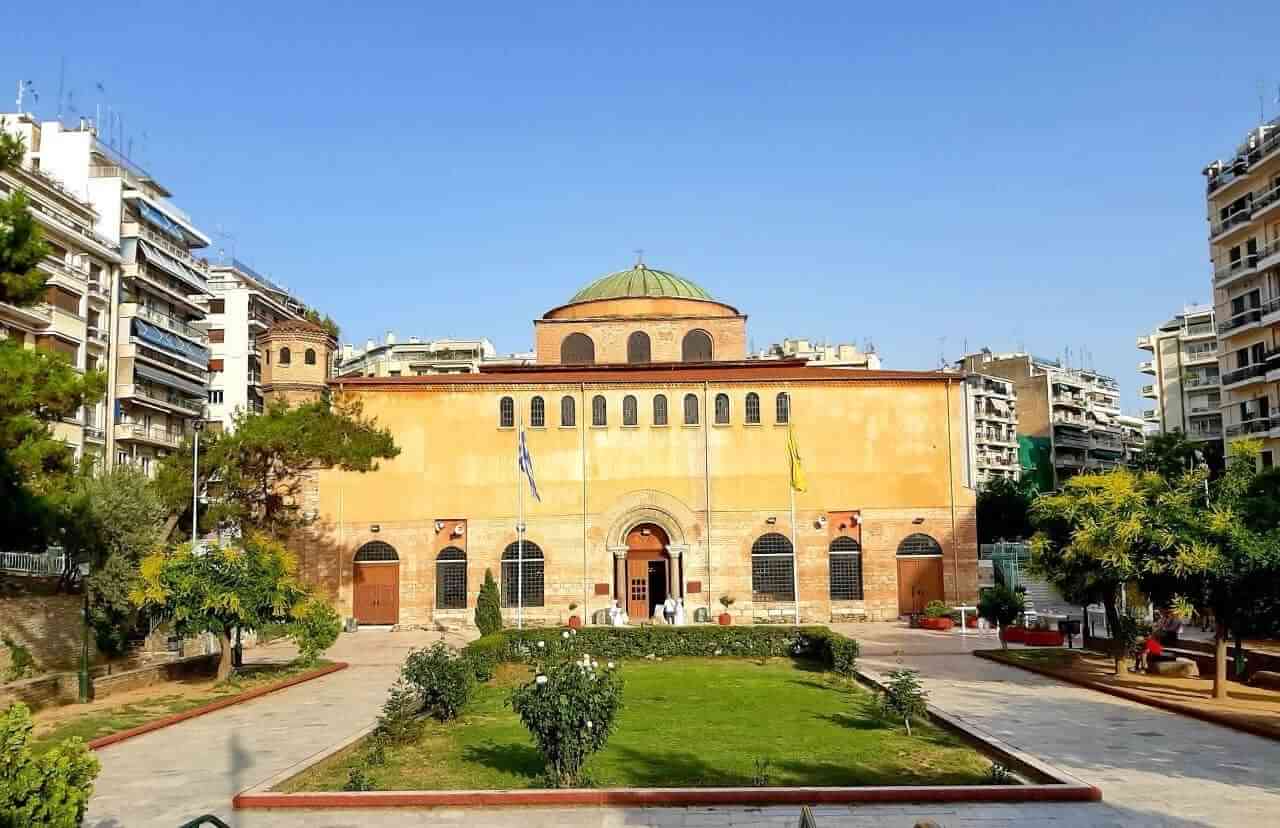
Сhurch of Agia Sofia, Thessaloniki
The Church of Agia Sophia was erected in the 7th century, on the site of the earlier church, from the 3rd century. Its construction was inspired by Constantinople’s Hagia Sophia. In 1205, the Crusaders converted it into a cathedral, and then, in 1430, it became a mosque, known as Aya Sofya Camii. After the liberation, it became the Christian church again.
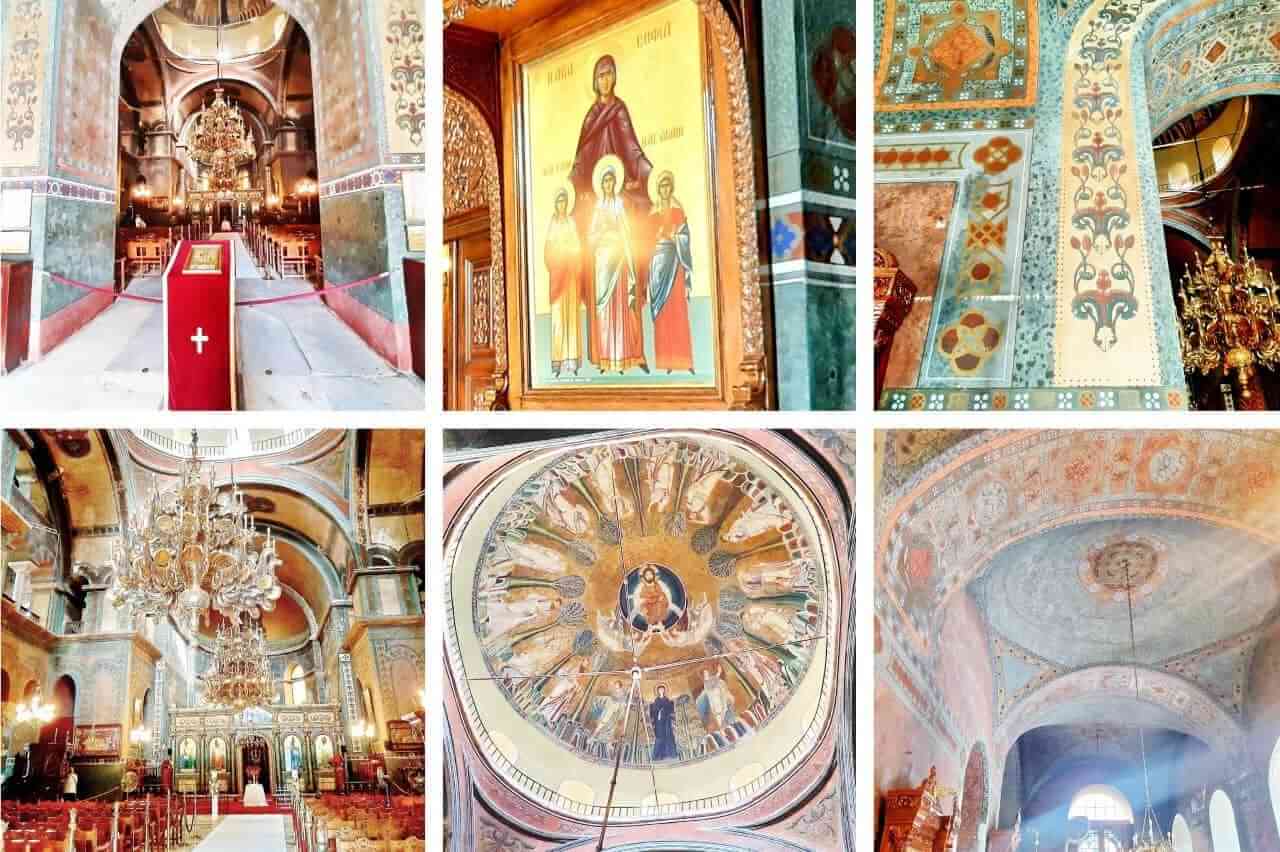
Inside the Church of Agia Sophia
The church of Agia Sophia is one of the most beautiful Byzantine churches. It is dedicated to Wisdom and the Word of God, and it is richly decorated during various periods. The Ascension of Christ from the 9th century is displayed in the dome, while the mosaic of the Virgin Mary holding baby Christ from the 11th-12th century is on the apse.
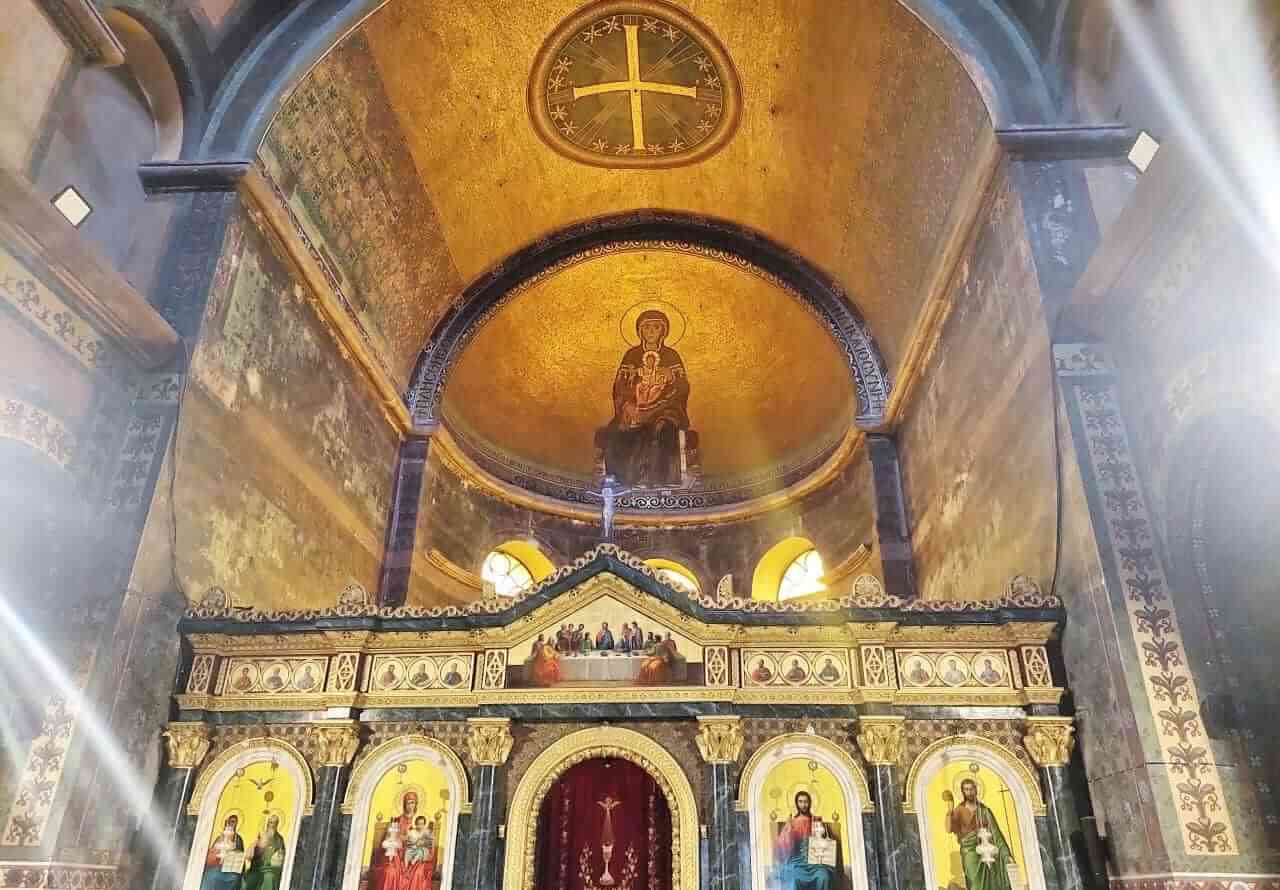
Agia Sophia Church
South of the Church of Agia Sophia, in Makenzi King Street, there are ruins of the Early Christian Baptisery, dating back to the 4th-5th century. It had a six semi-hexagonal structure, and today, only one of the six marble columns of the baptistery survives. Later, it was converted into a holy place, “Hagiasma”. It became part of the basilica complex; over its ruins, the Church of Agia Sophia was built.
From the church garden, you can enter the Catacombs of St. John the Baptist, where the first Christians practised their worship.
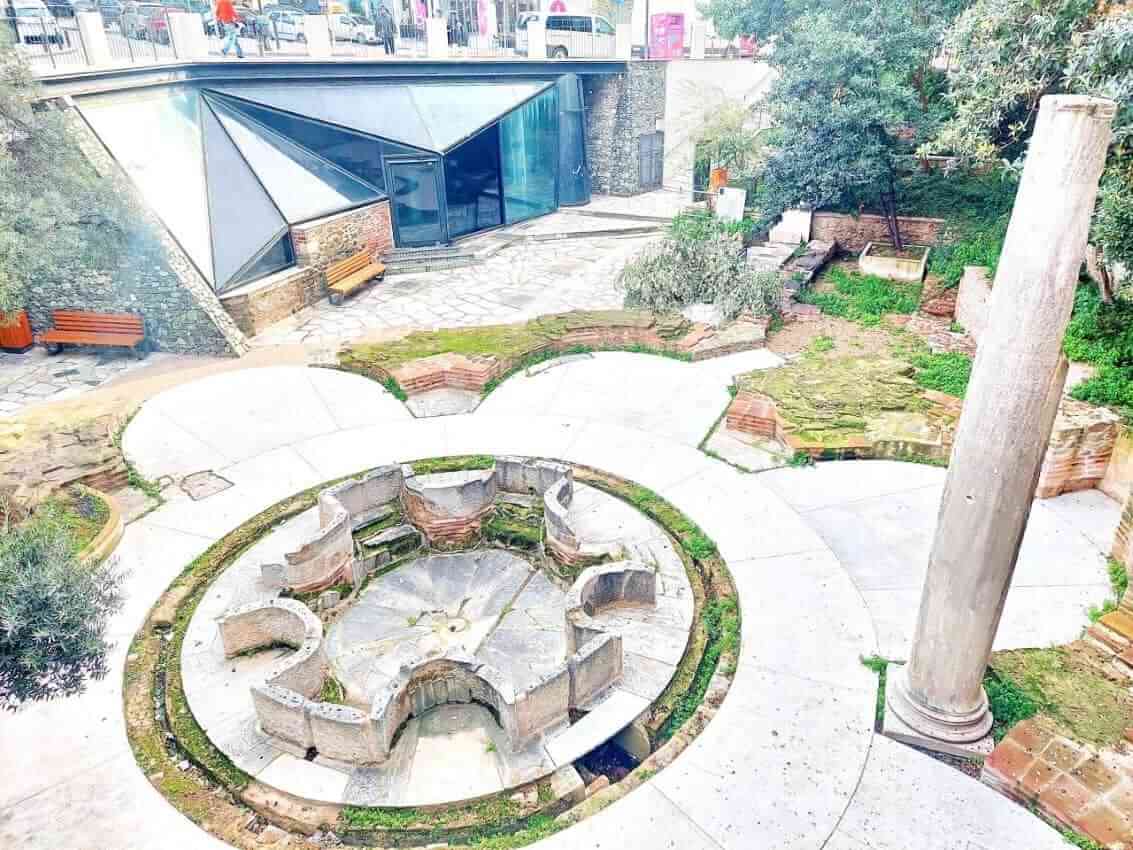
Ruins of the Early Byzantine Baptistery
⛪ Church of Panagia Chalkeon
📍 Location: in the centre, at the intersection of Aristotelous and Engatia streets, close to the former Roman Forum.
The Church of Panagia Chalkeon was built in 1028, over a pagan sanctuary by Christopher, the commander of Longobardia. Its name means “Virgin Mary of the Copper Smiths”, from the coppersmiths’ workshops that existed in the area. Surrounded by greenery and trees, the church had a nickname, “Red Church”, because it was constructed of bricks.
This church was also converted into a mosque during Ottoman times, and later, it became an Orthodox church again. It was restored after the fire in 1917 and the earthquake in 1932. Both times during our visits, in 2021 and at the end of 2025, the church was under renovation, so we could not visit it.
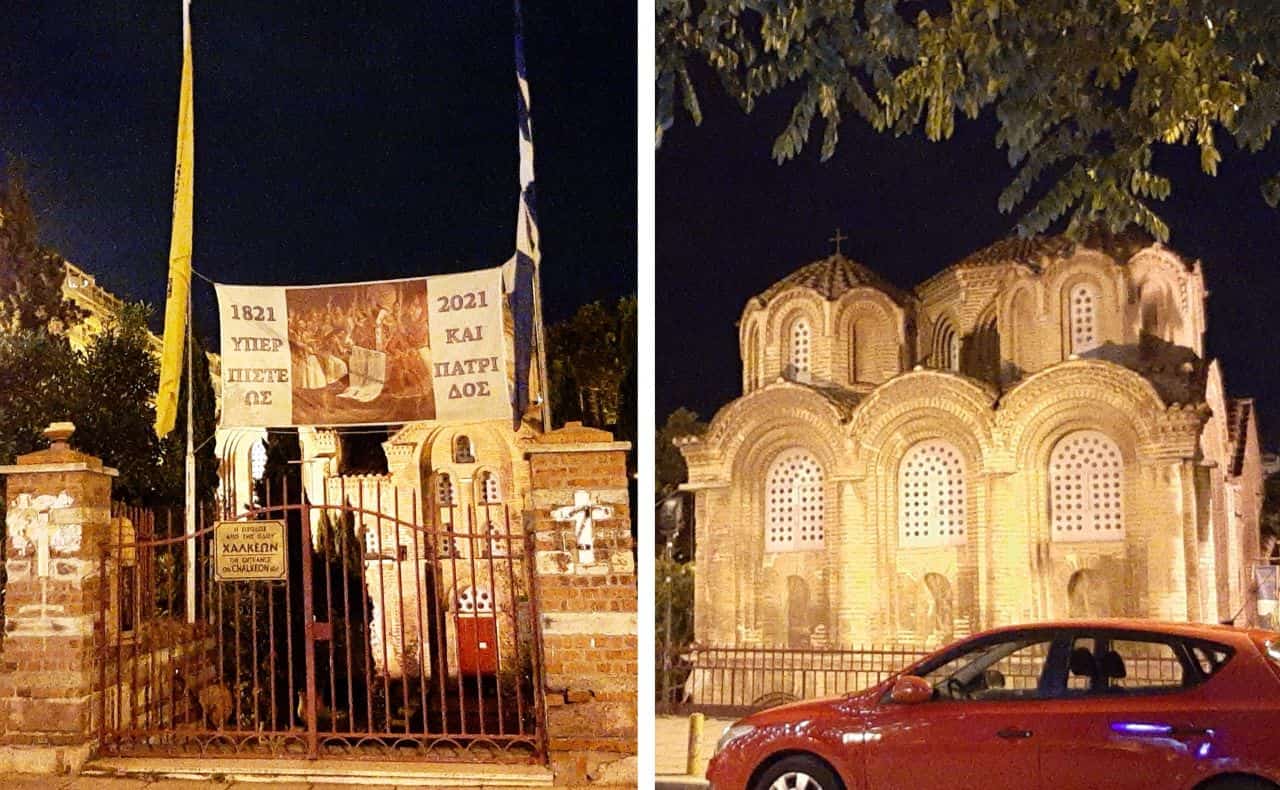
Thessaloniki, Church of Panagia Chalkeon
⛪ Church of Saint Panteleimon
📍 Location: an intersection of Arrianou and Iasonidou streets, close to the Rotonda and the Arch of Galerius.
The Church of Saint Panteleimon dates back to the late 13th century. Originally, it belonged to the Byzantine Monastery of the Virgin Mary Perivleptos. Like most churches in the town, Ottomans converted it into a mosque, and after the liberation in 1912, it became the church again. Today, only a few original wall paintings remain.
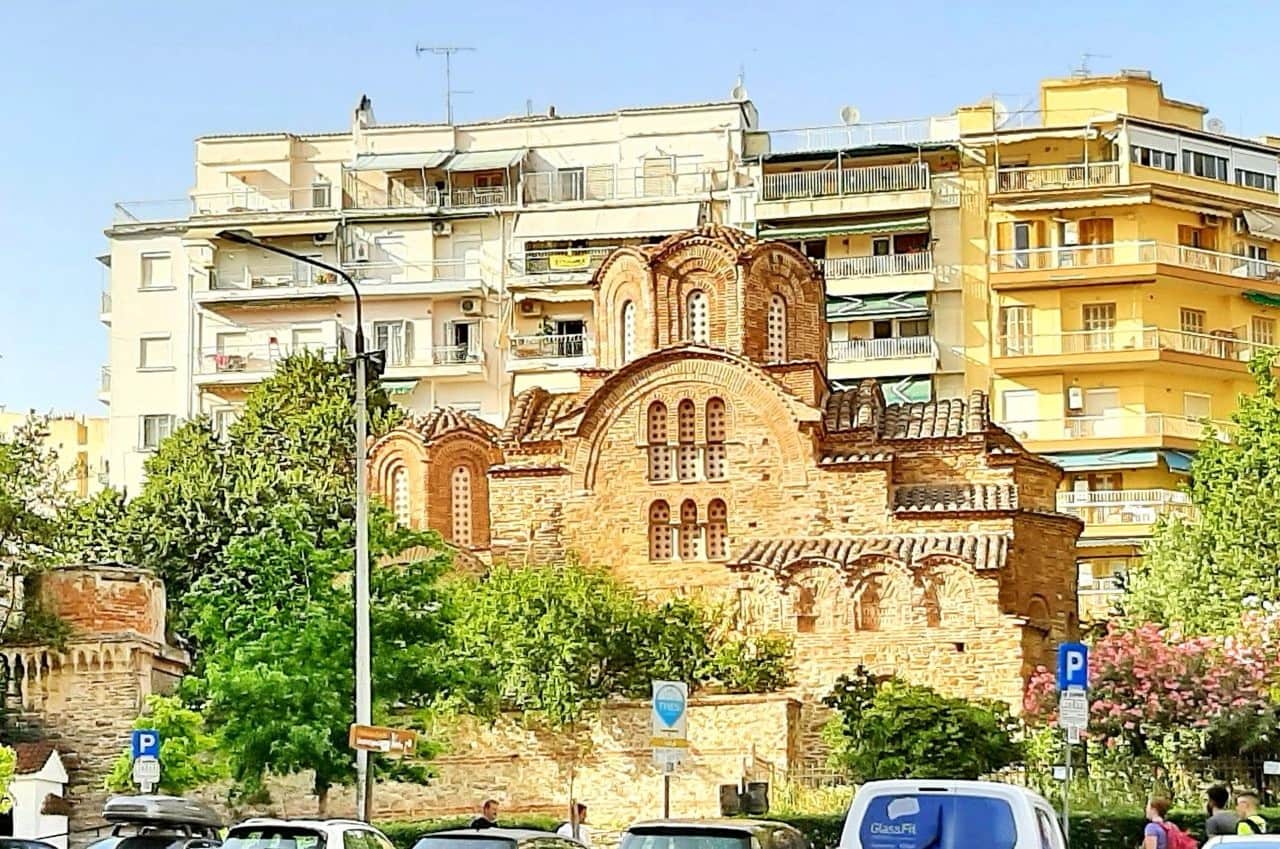
Thessaloniki, Church of Saint Panteleimon
Church of Holy Apostles
📍 Location: the beginning of Olympou Street, near the city’s western medieval walls.
The Church of the Holy Apostles was built around the late 13th and early 14th century, during the Palaiologan period. Probably, it was once the main church of the monastery complex, founded with the sponsorship of the Ecumenical Patriarch Niphon I.
Initially, it was dedicated to the Virgin Mary. Later, in the 18th century, it was dedicated to the Holy Apostles, becaouse of the tradition that the church had 12 domes symbolising the Twelve Apostles. The Ottomans converted it into a mosque, added a minaret, removed the small golden tiles from mosaics, and covered frescoes with plaster. After it became the Christian church again, several restorations were done to protect the mosaics and frescoes.
⛪ Church of Saint Nicholas Orphanos
📍 Location: Ano Poli, between the Apostolou Pavlou and Irodotou streets, near the eastern walls.
The name of the church is connected with Saint Nicholas, the protector of widows and orphans. Others think that it is related to the name of its founder, who belonged to the Family of Orphanos. And some think that it was the foundation of the Serbian king Milutin.
The church was probably built between 1310 and 1320, according to the stunning frescoes, which cover almost the entire interior. It is believed that the same monk painted the frescoes at the Hilandar Monastery in Mount Athos in 1314.
⛪ Church of Saint Catherine (Agia Aikaterini)
📍 Location: northwestern corner of the Ano Poli, the intersection of Tsamadou Street and Sahini streets, close to the Church of Profitis Elias.
The Church of St. Catherine was built around the 14th century. Probably it was dedicated to Jesus Christ, and later to Agia Aikaterini. Like other churches, it was converted into a mosque, and then into the Orthodox church again. The church underwent many modifications, but fragments of the 14th-century frescoes can still be seen today.
⛪ Church of the Christ Saviour (Metamorphosis Toy Sotiros)
📍 Location: a junction of Egnatia and Palaion Patron Germanou streets, across the Arch of Galerius.
The Church of the Christ Saviour was erected between 1340 and 1345, and originally served as a burial church. Today, this small church with rare frescoes in the dome is surrounded by modern buildings.
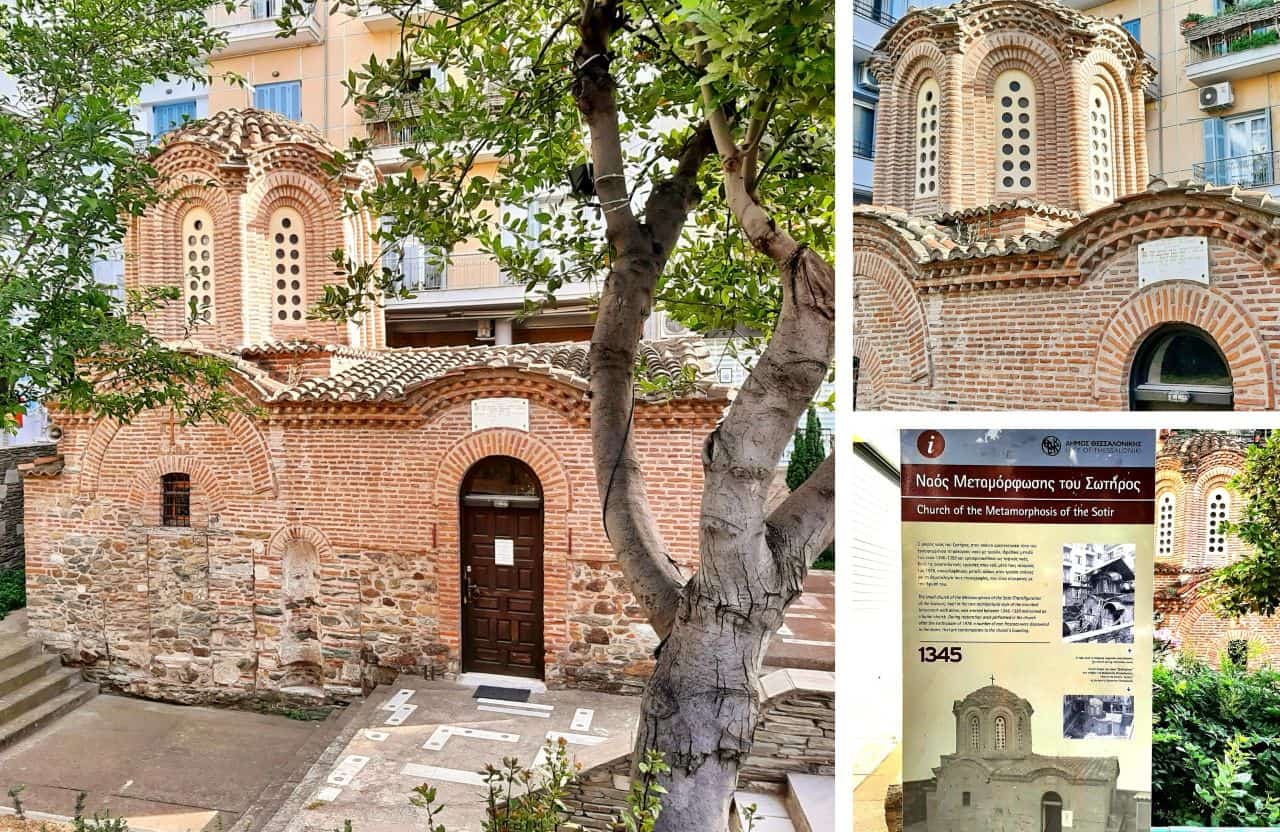
Church of the Christ Saviour, Byzantine churches
⛪ Vlatadon Monastery
📍 Location: the northern side of the Ano Poli, opposite the tower of Paleologos, Eptapyrgiou 64.
The Vlatadon Monastery is one of the oldest and most significant Byzantine monasteries in town. It is still active today, even though it was founded from 1351 to 1371. By the way, Empress Anna Paleologina (the wife of the last Byzantine Emperor, Constantine XI Paleologos) contributed to the construction of the monastery. It was founded by two disciples of Saint Gregory Palamas, brothers Dorotheos and Markos Vlattis. And according to the legend, the Apostle Paul preached to the locals in 51 AD, at this place. During Ottoman times, the monastery was converted into a mosque, but it was permitted to operate as a monastery.
It is dedicated to the Transfiguration of Christ, and only the catholicon survived until today. The wall paintings and icons date from the 14th century, while unique relics are kept in the sacristy of the monastery.
Today, it belongs to the Ecumenical Patriarchate of Constantinople, and the modern buildings house the Patriarchal Institute of Patristic Studies. Opening time: every day, from 8 AM to 11 AM, and from 6 PM to 8 PM.
⛪ Church of Prophet Elijah
📍 Location: Ano Poli, a junction of Olympiados Street and Amphilocias.
The church dedicated to Prophet Elijah was built around 1360-1370, as the katholikon of the Nea Moni Monastery. Then, the Ottomans converted it into the Saraylı Mosque, and after the liberation, it became the church again.
Interestingly, its architecture is a mix of elements from the Palaeologan and Constantinopolitan periods, with red bricks and white stones. The interior of the church is known for Paleologan wall paintings and frescoes.
⛪ The Byzantine Bath
📍 Location: Ano Poli, Theotokopoulou Street, near the Church of Taxiarches and a Byzantine cistern.
The Byzantine bath is probably dated back to the late 12th or early 13th century.
It is the only surviving Byzantine bath in town. There were more public baths in the Byzantine period, but they were abandoned because of the small and private baths.
The bath had a changing room, a warm room, a hot room, and a water reservoir. It was in use until 1940. During the Ottoman period, it was divided into male and female sections. After restoration in 2015, it was opened to the public.
🏛️ Museum of Byzantine Culture
📍 Location: Stratou Avenue in the city centre, opposite the park of Pedion Areos.
For history lovers, the modern Museum of Byzantine Culture is a must-visit place to learn more about Thessaloniki’s Byzantine heritage. It consists of 11 galleries with permanent exhibitions of numerous mosaics, icons, manuscripts, artefacts and objects from daily life.
Authentic exhibits from Thessaloniki and Macedonia date back from the Early Christian period to the years after the Fall of the Ottomans.
Opening time:
Winter Season: 1st November – 31st March, Monday, Wednesday to Sunday: 08.30 AM to 3.30 PM, Tuesday closed.
Summer Season: 1st April – 31st October, Monday to Sunday: 08 AM to 8 PM.
The ticket fee is 8 EUR for adults, and a reduced ticket costs 4 EUR.
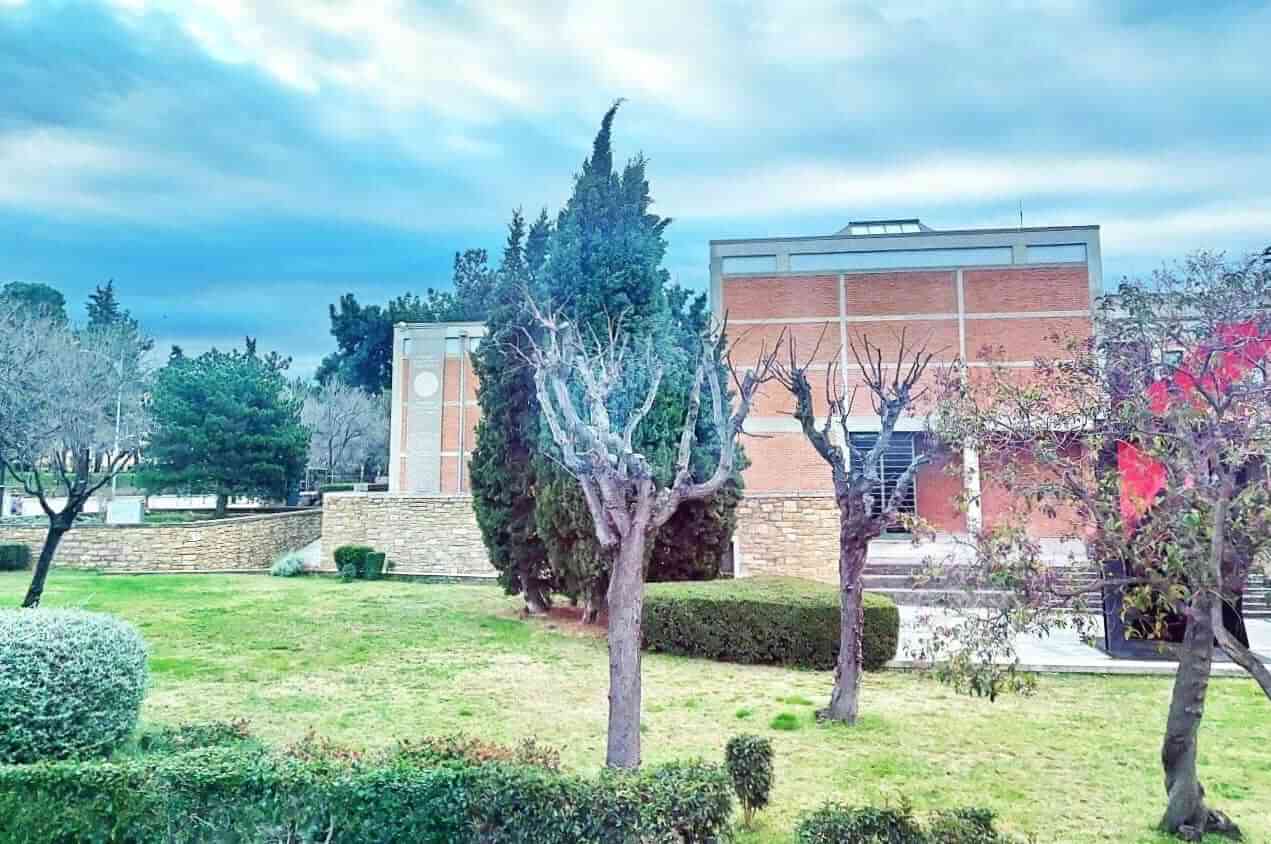
Museum of Byzantine Culture
⛪ Visit Byzantine churches
Well, you can find the Byzantine churches all around the town. But, bear in mind that almost all churches have different opening hours, so make a plan to visit them.
In a word, the story about the Byzantine churches turns us back to the turbulent Byzantine times, filled with divine spirit and the conquest attacks.
Stay tuned for the new story about Thessaloniki, the city of Byzantine Treasures and urban life.

Leave a Reply
Want to join the discussion?Feel free to contribute!