
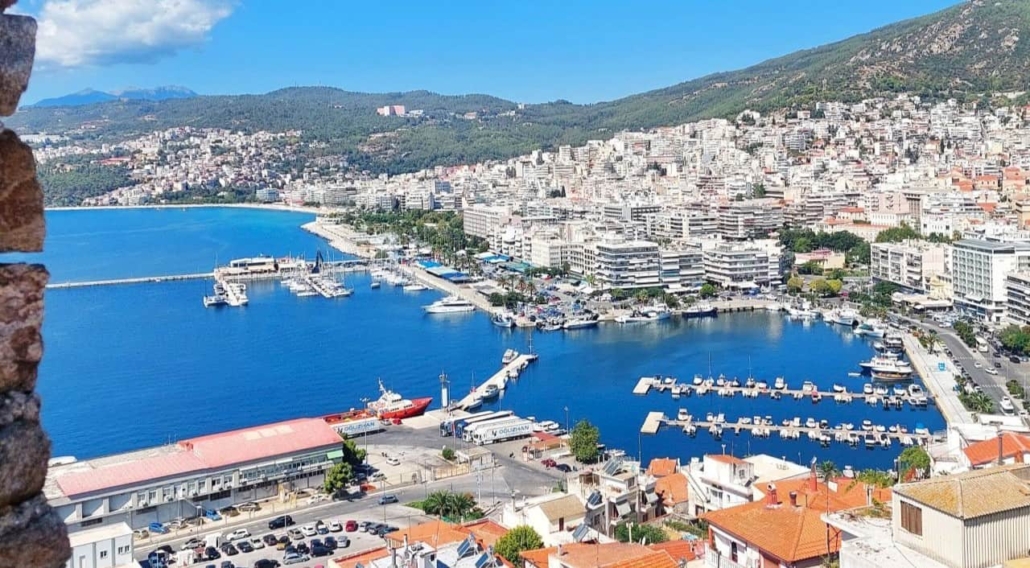
Kavala, a whisper of a past in modern times
Kavala is one of Greece’s most charming coastal towns.
It is known as the “Blue City” because of the blue and turquoise Aegean Sea which surrounds it.
By the way, Kavala is a place where you can walk along Ottoman fortresses, the Venetian aqueduct, and relax on sandy beaches. And all of that, you can do in one day.
So, let’s check out what you need to know before your trip to Kavala.
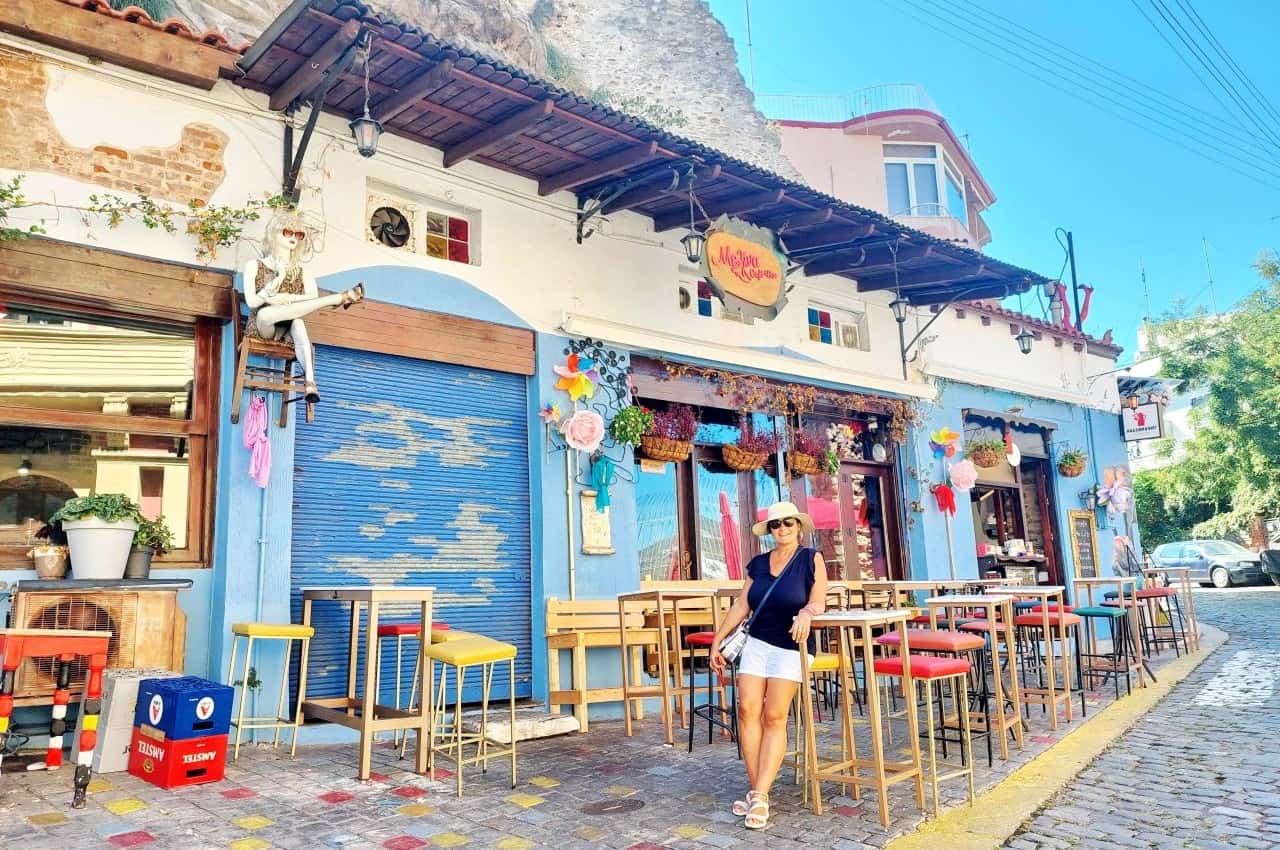
Strolling along the Kavala Old Town
✨ Disclosure:
This post contains affiliate links.
If you click and make a purchase, I may earn a small commission at no extra cost to you. Thanks.
📌 How to get to Kavala
Kavala is nestled on the slopes of Mount Symvolo, in northern Greece, and it is part of East Macedonia and Thrace. It can be reached by road, air, and sea.
🚗 By car/ 🚌 bus:
Kavala is about 160 km east of Thessaloniki (1.5–2 hour drive), and around 650 km from Athens (about 6.5 hours). There are several public and private parking lots in the town; the largest one is near the port and the Old Town.
By the way, it is well-connected by KTEL buses with Thessaloniki, Drama, Xanthi, and other towns in Northern Greece.
✈️ By air:
Kavala International Airport “Alexander the Great“ (KVA) is near the town of Chrysoupoli, about 30 km from Kavala. It is connected with Athens with regular flights, and seasonal flights to several European cities. From the airport, you can take a taxi, a bus or rent a car to the town.
⛴️ By ferry: Kavala is an important ferry port for the North Aegean islands, such as Thassos, Limnos, Lesvos, and Samothraki.
The most popular route among tourists is the one to Thassos Island from Kavala port to the Skala Prinos port. The second route is from Keramoti port (39 km away from Kavala) to Limenas port.

Kavala port and red Thassos ferry
Check the ferry schedule here 👇

🏛️ A few words about the history
Kavala has a long and rich history.
In ancient times, it was known as Neapolis, which means “new city”. It was built in the late 7th century BC by the settlers from Thassos Island. The town was also a port of Philippi, located 14 km away, named after King Philip II of Macedon in 356 BC. Today, this important ancient city was inscribed on the UNESCO World Heritage Site in 2016.
During the Roman rule, the town and the trade flourished due to the military Roman road Via Egnatia, which passed through the city. Also, one of the most important events was the landing of Apostle Paul during his first voyage to Europe.
In the 6th century, it was under the rule of the Byzantine emperor Justinian I, who fortified the city. In later Byzantine times, it was called “Christo(u)polis“. During the 8th and 9th centuries, this area was attacked by Bulgarians, Normans in 1185, Lombards, and the Catalans in 1302.
Then, the Ottoman Empire captured the city in 1387, and Kavala remained part of it until 1912. During this period, the Roman aqueduct was reconstructed, and the Byzantine fortress on the hill was extended. The town was demolished and then rebuilt. It became an important commercial port, and it got a modern look. By the way, from the 16th century, the city changed its name to Kavala.
In 1912, the town joined the Kingdom of Greece.
During the Balkan Wars, and also the First and Second World Wars, this area was mostly under the Bulgarian occupation. After the liberation, Kavala was turned over to Greece. It faced economic decline and population emigration, but it began to recover and expand in the late 1950s.
🚬 Tobacco production in Kavala
Did you know that Kavala was famous for the production of tobacco?
I heard about it for the first time from the Greek tourist guide during my vacation on the beautiful Limnos island.
👉 Read more here about the Secrets of Limnos Island.
Fishing was the primary occupation, but after the country’s industrialisation, the tobacco industry began to develop in northern Greece. Actually, from the mid-19th century until 1950, Kavala was the largest centre for the processing and exporting of tobacco in the Balkans. A small town became a wealthy and prosperous place due to the ideal conditions of the soil and climate for tobacco production.
Tobacco trade
At the time of the Ottoman occupation, Turks were forbidden to produce tobacco, but the Ottoman rulers still controlled the trade. It was a big opportunity for foreign investors to run the production in this area.
The most famous among them was the wealthy Austro-Hungarian banker and investor, Pierre Herzog. His company, “Herzog et Cie”, was founded in 1889, creating a monopoly of the tobacco trade in Macedonia. Also, Baron Herzog was one of the merchants responsible for liberalising the tobacco trade.
The company has many warehouses in the town, but the administration was moved to his residence, a beautiful whitewashed palace built in the 1890s. It looks amazing, like a medieval castle, with Gothic arches on the towers and balconies, and two Venetian Gothic apses on either side of the gate.
By the way, it is one of the most beautiful buildings in the town, located on Kiprou Street. In 1937, the Municipality of Kavala bought this house. Until today, it has been used as the City Hall and for administrative services.
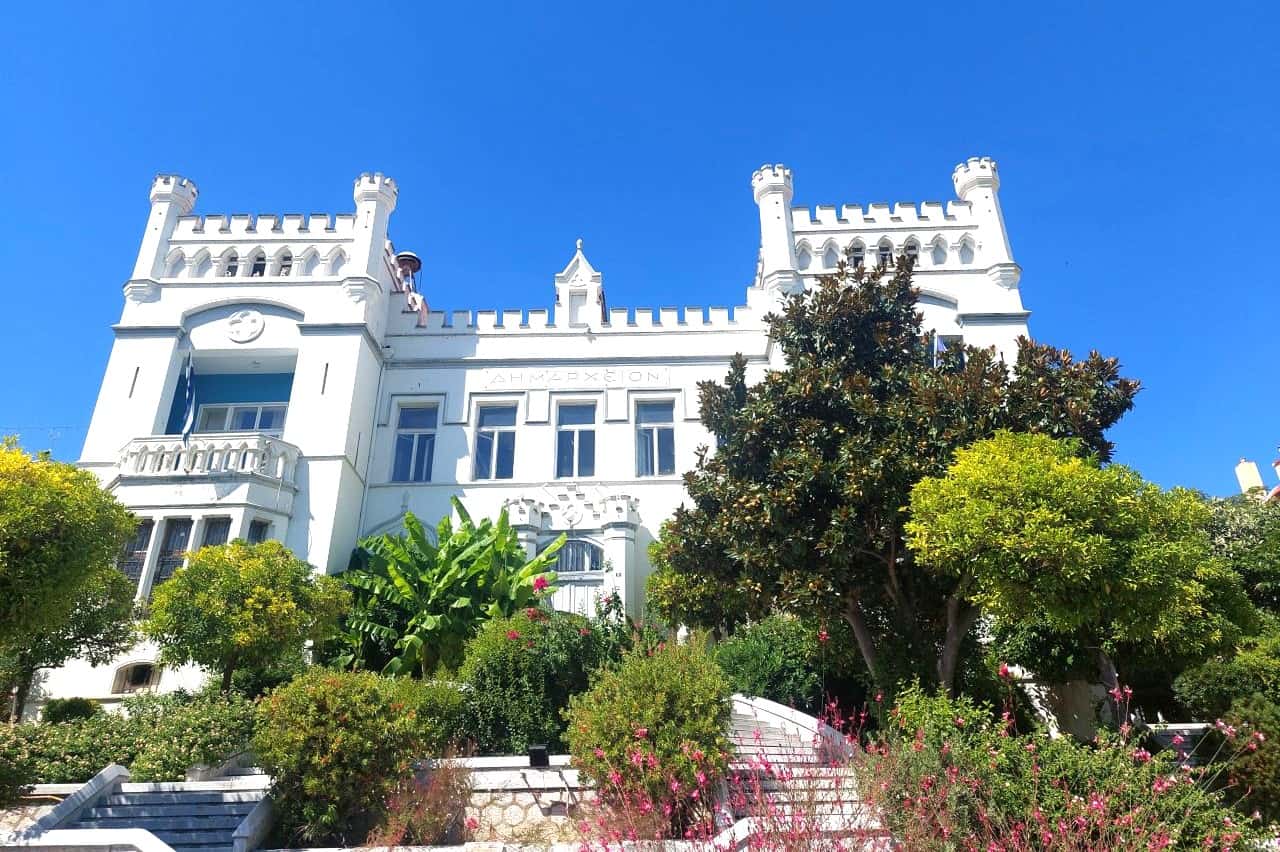
Kavala City Hall, former Baron Herzog residence
The Baron Herzog company was managed by Adolph Wix von Zsolnay, a German Jewish Baron who served as the German and Austrian consul in the city. His residence, also used as the office, was built next to the building of Baron Herzog in 1906. It is painted yellow, and it looks like a miniature Hungarian tower.
The building was bought by an American tobacco company in 1925. But today, it also belongs to the Municipality of Kavala and houses some of the Municipality’s services.

WIX building, Kiprou street
Life in Kavala during the tobacco period
The period of tobacco production was very important to Kavala. It became a wealthy and cosmopolitan town which attracted numerous tobacco experts, investors and merchants. They enjoyed restaurants, tennis, theatres, clubs, nightlife and balls at the Great Club of Kavala, or Megali Lesxi.
This beautiful building in the Austrian Baroque style is located on the left side of today’s City Hall. It was built in 1910 by the Philoptochos Adelfotis Kyrion Kavalas (a women’s charity for the poor) to house the Greek Community of Kavala.
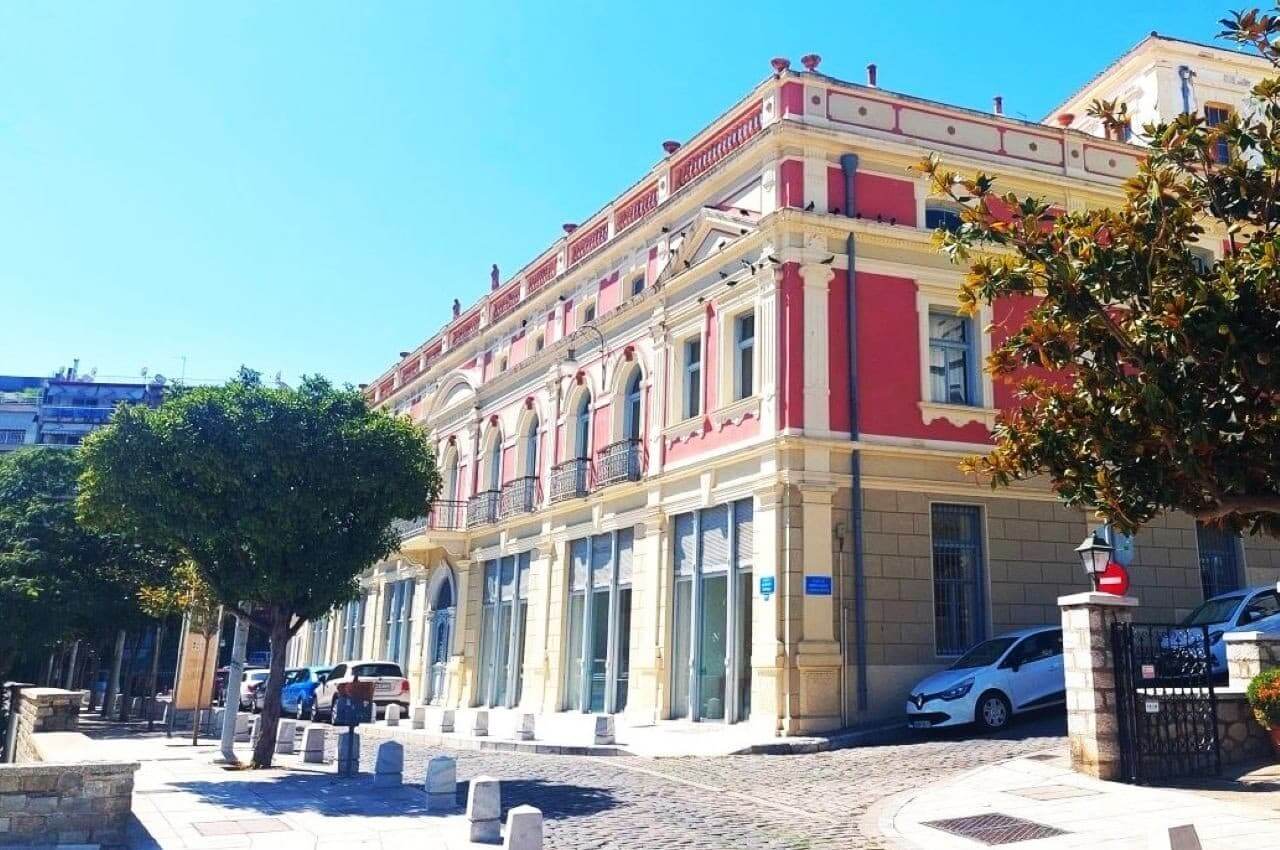
Great Club of Kavala, or Megali Lesxi building
By the way, in 1921, the majority of the Jewish community of 2,500 members worked in the tobacco industry. During World War II, the city’s Jewish community was largely deported to the Treblinka death camp in Poland, and only a small number of them survived.
The Tobacco Workers’ Square
By 1913, there were sixty-one tobacco companies registered in the city. Almost 6,000 people worked in the tobacco industry, and among them, there were also many women.
And 262 warehouses were built in a special architectural style all around the town. Today, some of them are restored, some are not, but all of them are testaments to the rich history of the tobacco trade.
The Tobacco Workers’ Square is located in the town centre, today known as the Kapnergati Square. It got its name after the workers and their historical movement.
On the square, and in front of the building of the Municipal Tobacco Warehouse, you can see the Monument to the Tobacco Worker. It was created by Dimitrios Armakolas, and it was placed there in 1986. The monument represents figures who participated in the tobacco workers’ movement.
Also, there is another artwork, “The Hands”, which represents the power, speed and mastery of the hands of the tobacco worker.
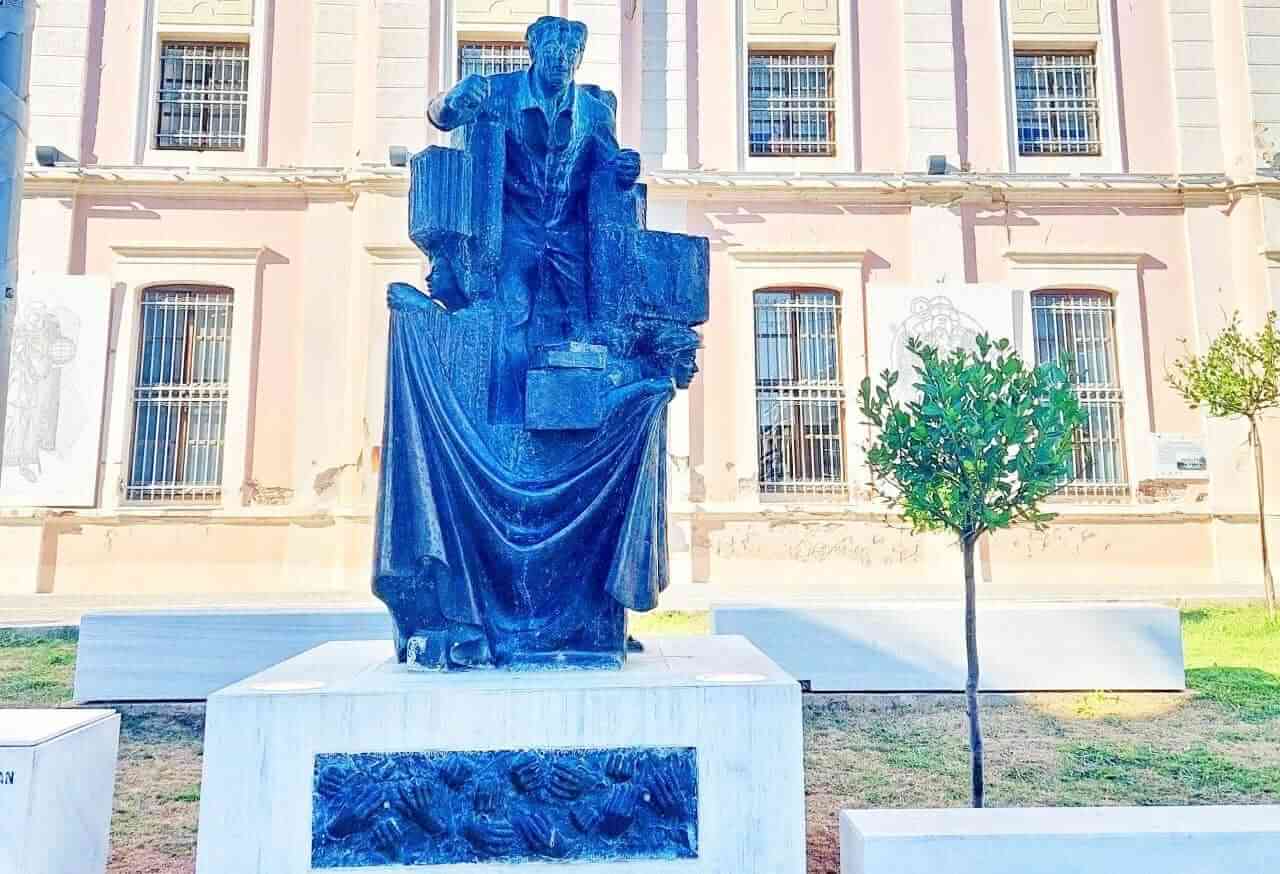
The Monument to the Tobacco Worker
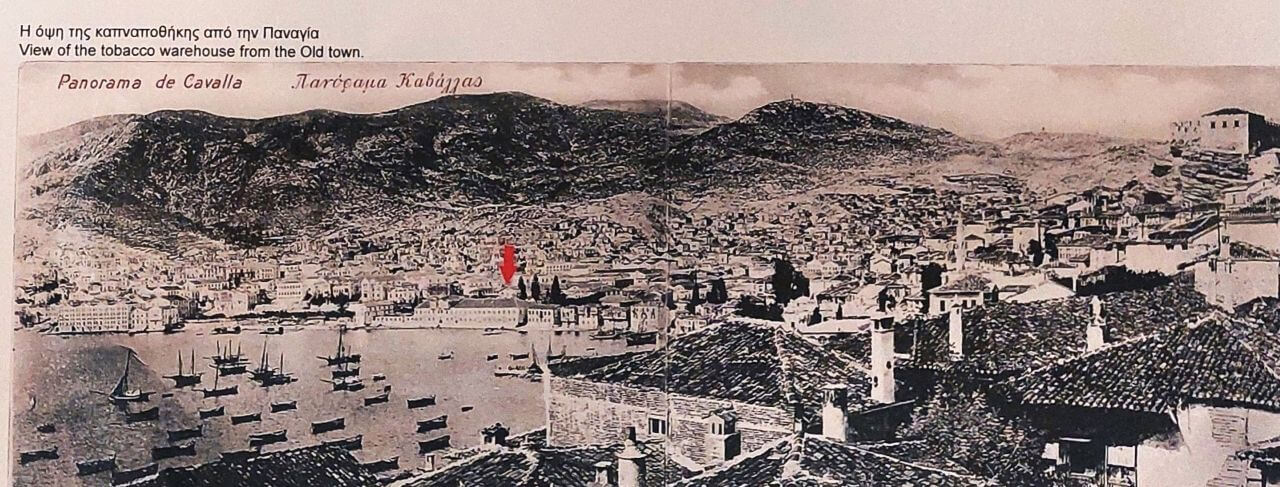
Municipal Tobacco Warehouse
The Municipal Tobacco Warehouse was built in 1910 by the businessman and tobacco merchant Kiazim Emin.
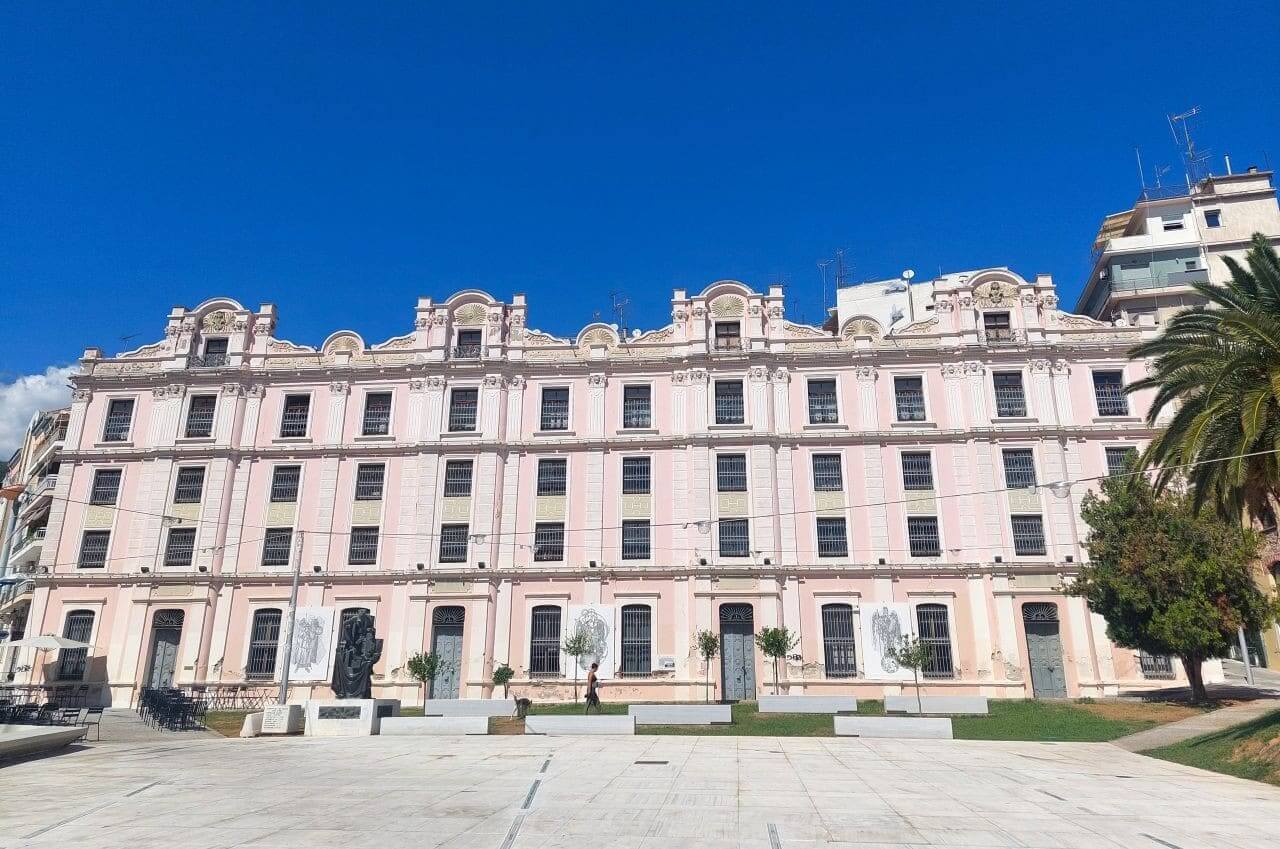
Beautiful building of the Municipal Tobacco Warehouse on the Tobacco Workers Square
This impressive building was built in Ottoman and European neoclassical style, with details such as four crowns, flowers, suns and family crests on the facade. In 1970, the Municipality of Kavala bought the building and made some renovations.
Today, the former tobacco warehouse is used for various events, concerts, conferences, and exhibitions. etc.
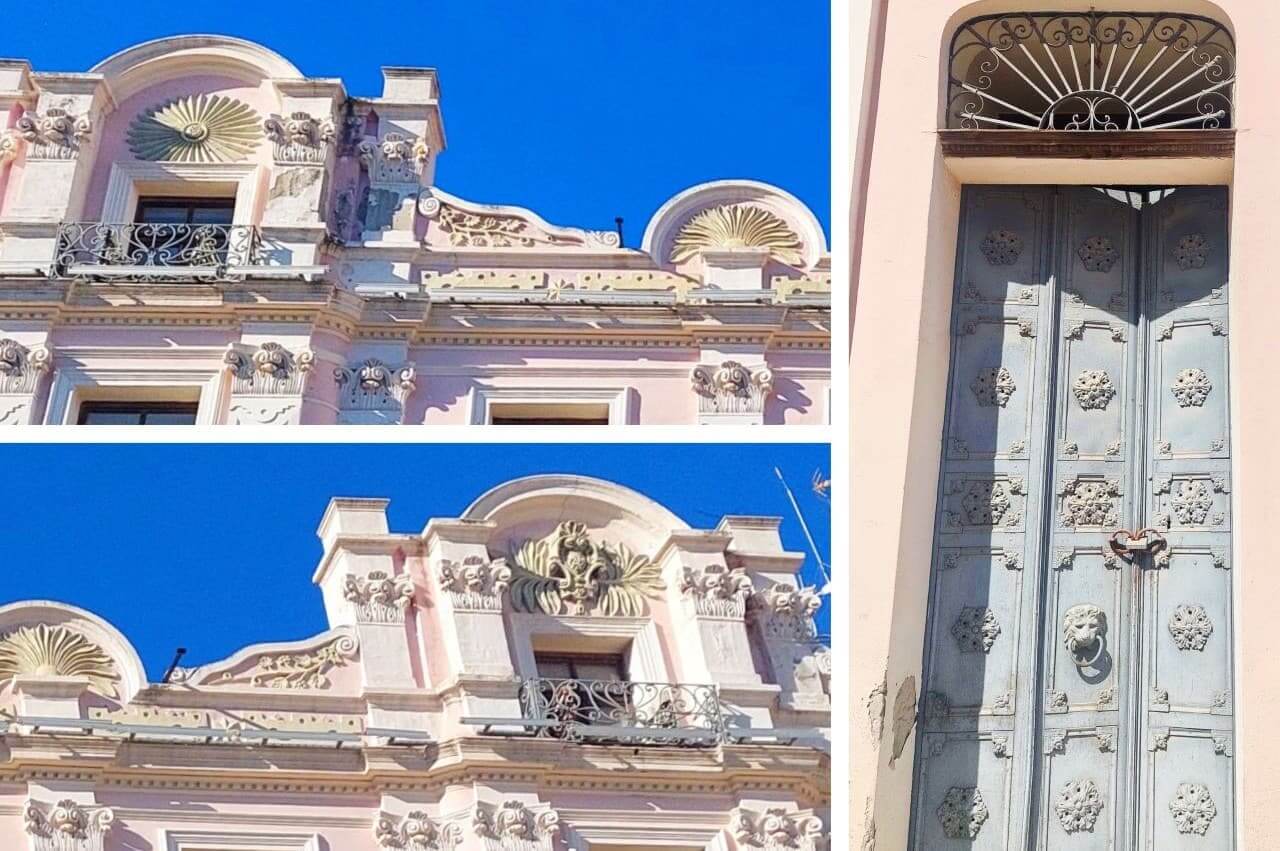
Facade of the Municipal Tobacco Warehouse
The Regie’s tobacco warehouse
Close to the Municipal Tobacco Warehouse, on the right side, you can see the Regie Tobacco House.
It is a three-storey building complex with four wings, constructed in 1885. It was purchased by the Régie, the Ottoman tobacco monopoly, in 1892. This company had the exclusive right to distribute tobacco and to produce various types of cigarettes in four centres: Istanbul, Thessaloniki, Samsun and Izmir.
View of the Tobacco Régie Warehouse Complex
The tobacco workers’ strike of 1896, known as “the fight for bread”, took place in this tobacco warehouse.
Today, its current owners have converted the tobacco complex into a modern shopping mall.
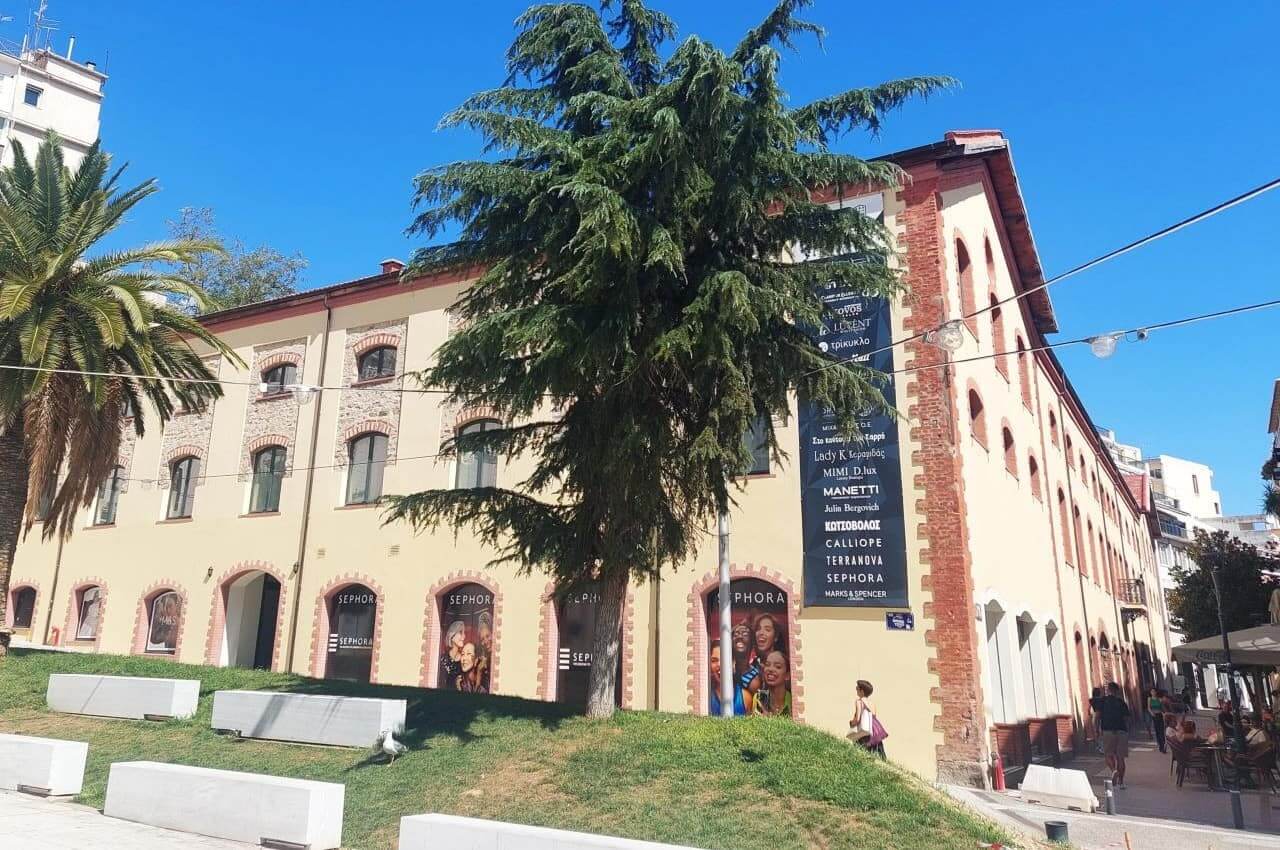
The Tobacco Régie Warehouse Complex
The Tobacco Museum
If you like to find out more about the tobacco production, you can visit The Tobacco Museum.
It is a modern industrial museum with a rich collection of exhibits and archive material regarding the cultivation and production of tobacco and tobacco products.
The museum was opened in 2003, in the former EOK warehouse (National Tobacco Organisation), close to the Great Club building. Opening time: Monday-Friday, 8 AM – 4 PM, and the ticket is 2 EUR for adults.
Explore Kavala
The city is amphitheatrically built on the Panagia peninsula, stretching along the sea. The old part is interwoven with a new modern part. On the one side, there are narrow alleys with colourful houses and a fortress, and on the other side, a promenade along the port and modern buildings.
This unique and vibrant atmosphere makes Kavala a dynamic city. It is full all year round, with numerous traditional taverns, cafes, clubs, and various shops. Commerce, tourism, fishing and oil-related activities make Kavala an important economic centre of Northern Greece.
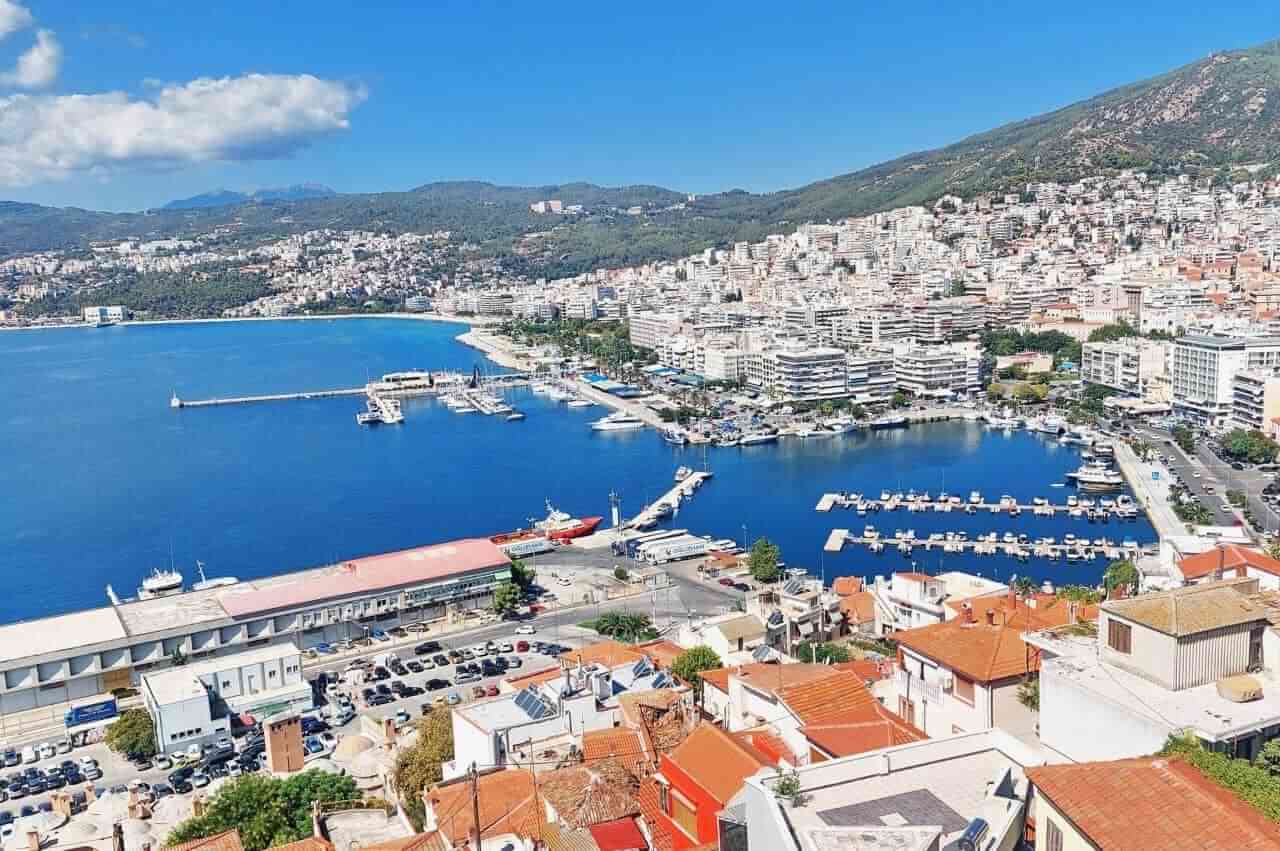
A panoramic view of Kavala from the fortress
Aqueduct – Kamares
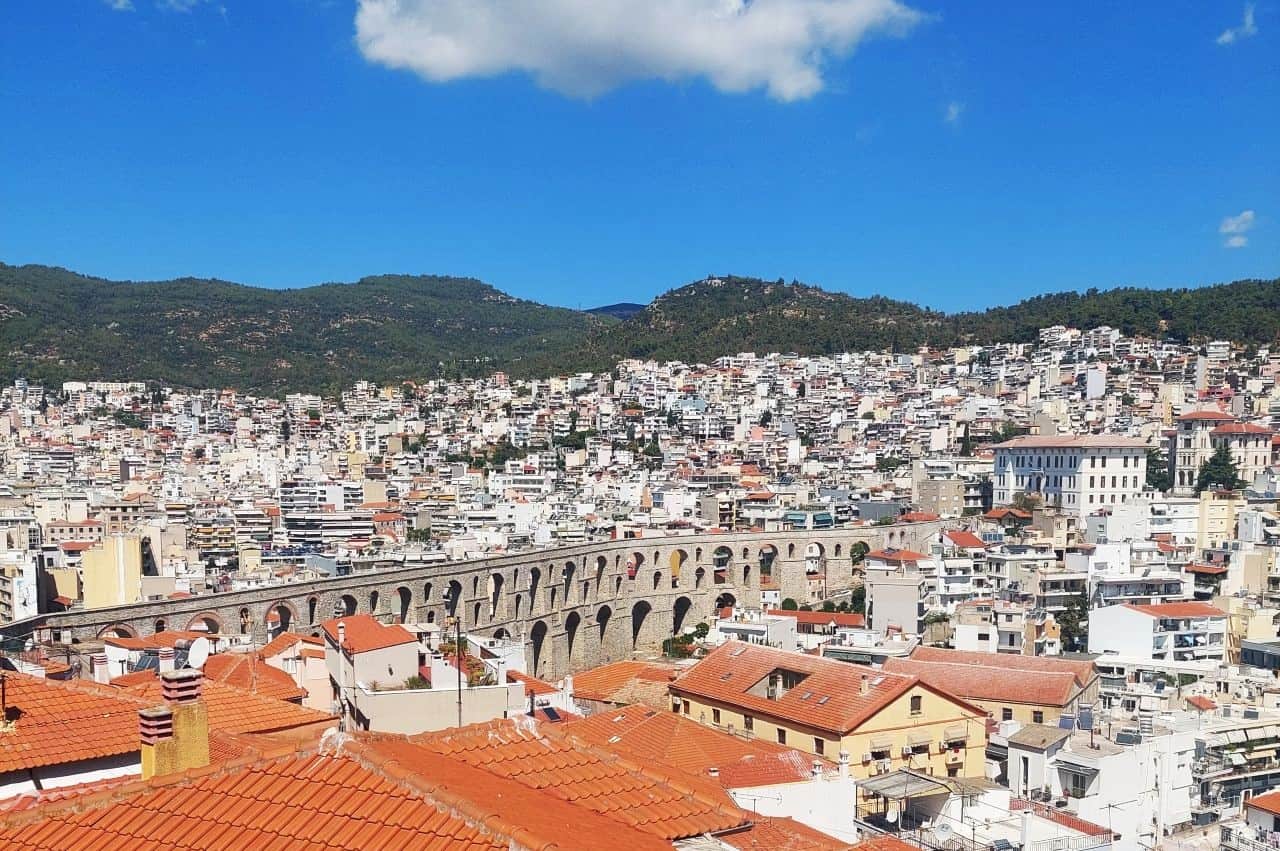
Aqueduct in Kavala
One of the most popular landmarks of the town is the Aqueduct, known as the Kamares (Arches). It is close to one part of the fortress, surrounded by modern buildings.
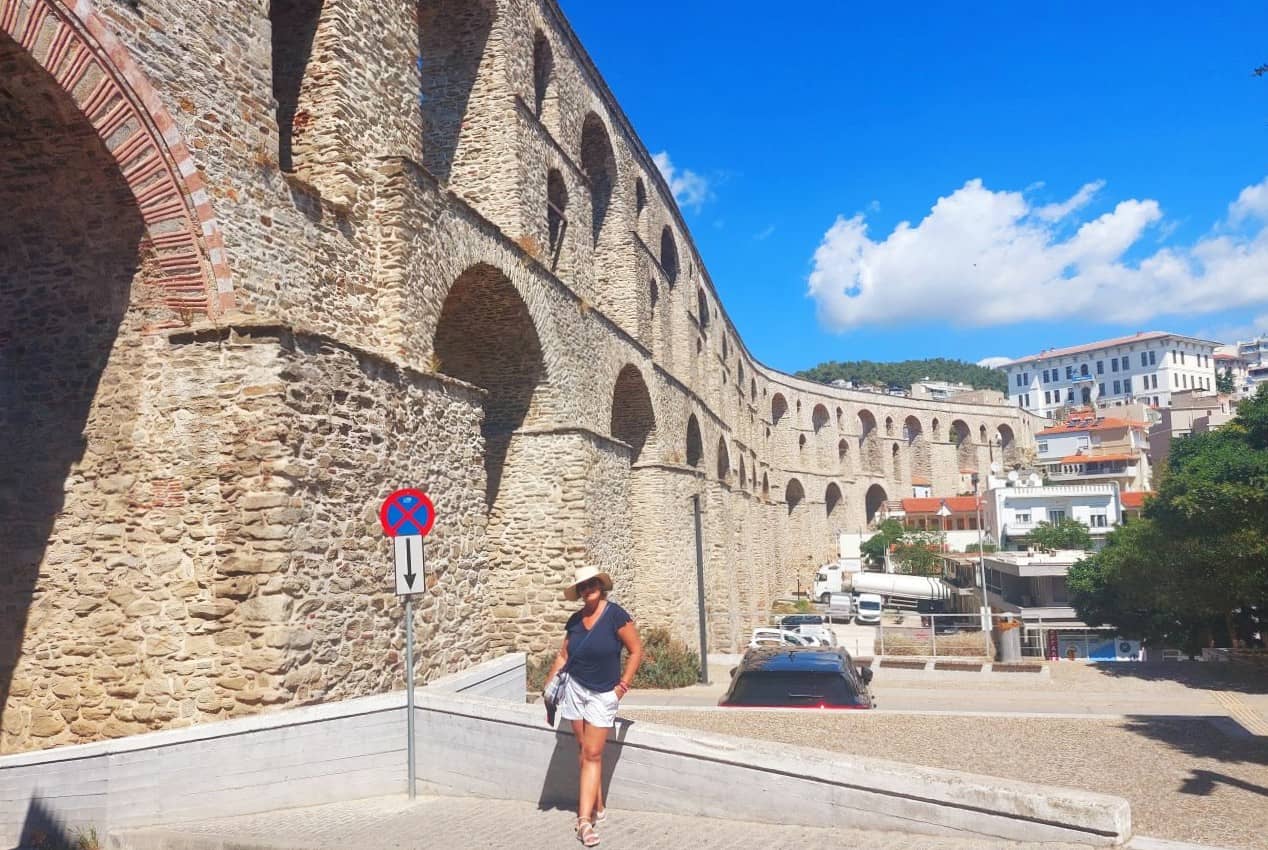
Aqueduct of Kavala
Originally, it was built by the Romans and reconstructed by Ibrahim Pasha, the vezir of Sultan Suleiman the Magnificent, in the 16th century. The aqueduct has 60 arches, it is 270 m long and 25 m of maximum high. It supplied the town with drinking water from Mount Pangaeus until 1911.
Even today, it still looks amazing, and it reminds me of the aqueduct in Istanbul.
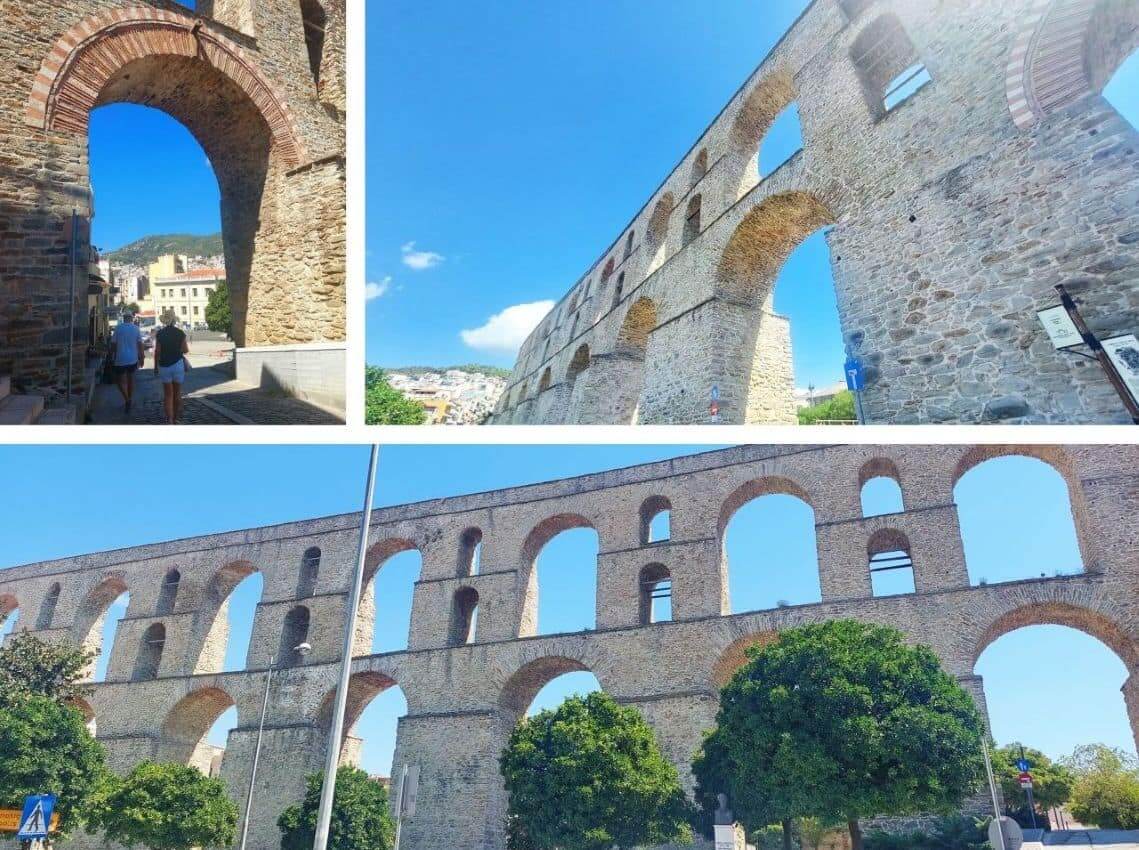
Kavala Aqueduct, Kamares
⛪ Old Town of Kavala
Although the Old Town of Kavala evokes memories of the past, people still live there. It is a maze of narrow alleys and colourful houses decorated with flowers. Some of them are renovated and converted into small hotels, apartments, cafes and taverns. But some of them are in ruins or wait to get a new look.
So, if you start your walk from the port following the city walls, after a few hundred meters, you will see the Church of Saint Nicholas on the left side. On the right side, there is an information board to the hill and an entrance to the Old Town, known as Panagia.
Following Theodorou Poulidou Street, you will see a few small souvenirs, cafes, and interesting houses on the left side.
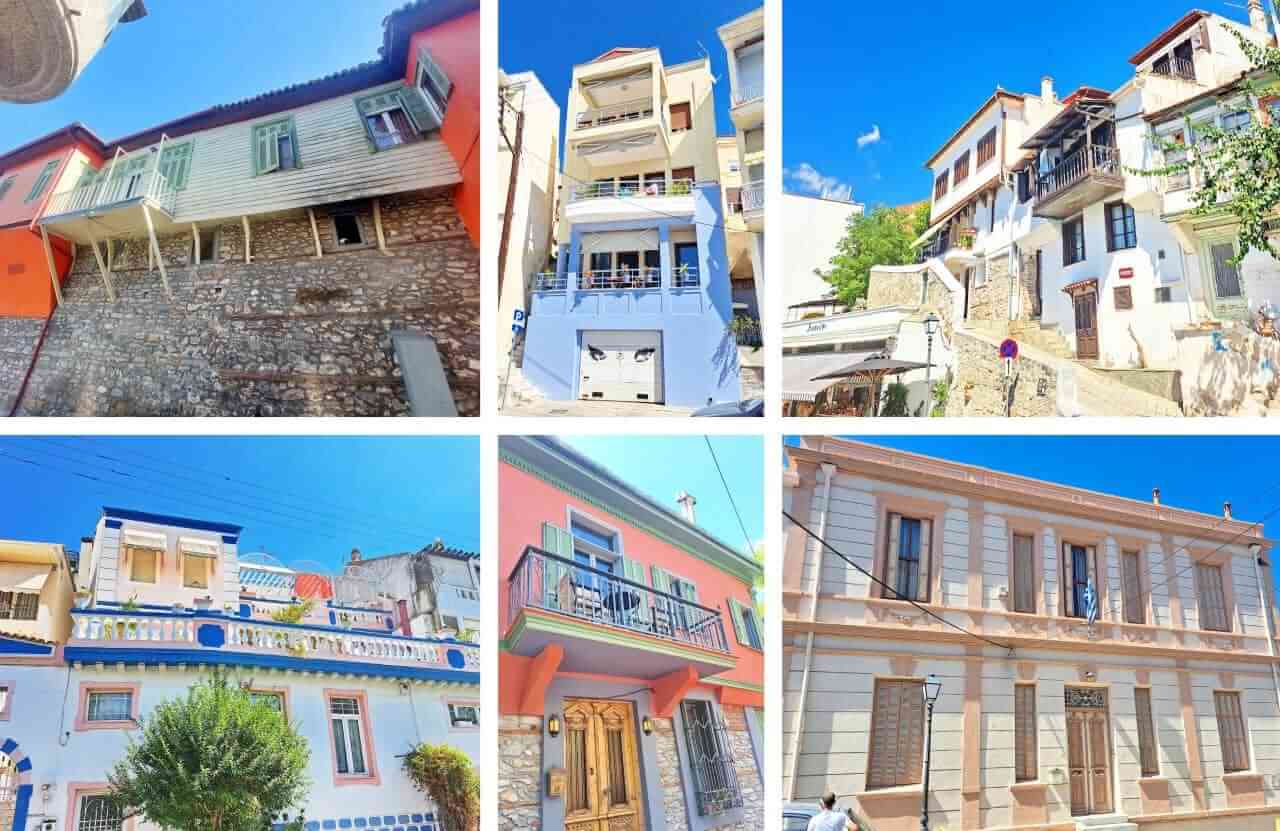
Houses in the Old Town, Kavala
On the right side, there is a beautiful, light rose-coloured building in the Ottoman Neoclassical style. It was built around 1905 as the residence of a Turkish merchant. Later, it was used as the Ecominics High School and as a prison for Greek patriots during the Bulgarian occupation in World War II. Today, it houses the Fifth High School.

The building of the Fifth High School
Imaret
Going further, you will see one of the Kavala landmarks, the Imaret, a unique Ottoman monument.
It stretches along the Theodorou Poulidou Street and Byzantine walls, which can also be seen from the port.
Muhammad Ali Pasha founded Imaret as “a gift” to his birthplace in 1813. Once, there was a sacred site of the goddess Parthenos sanctuary from the 7th century BC, at this place.

A view of the Imaret from the port, and the Castle in the background
Imaret was a religious, educational and charitable institution. The complex consisted of two medreses (seminaries), two large domed prayer rooms, an elementary school for boys, the imaret (soup kitchen), a hamam, a cistern, fountains, and the offices. A single dome of the Muhammad Ali Pasha Mosque can be seen from the street, but it is no longer open for worship.
From 1922, it served as a shelter for the refugees. Then, it was converted into a museum, cafeteria and restaurant.
In 2004, the complex was restored into a beautiful 5* luxury hotel. By the way, the hotel was closed temporarily becaouse of the renovations, and it was reopened on 1st October 2025.
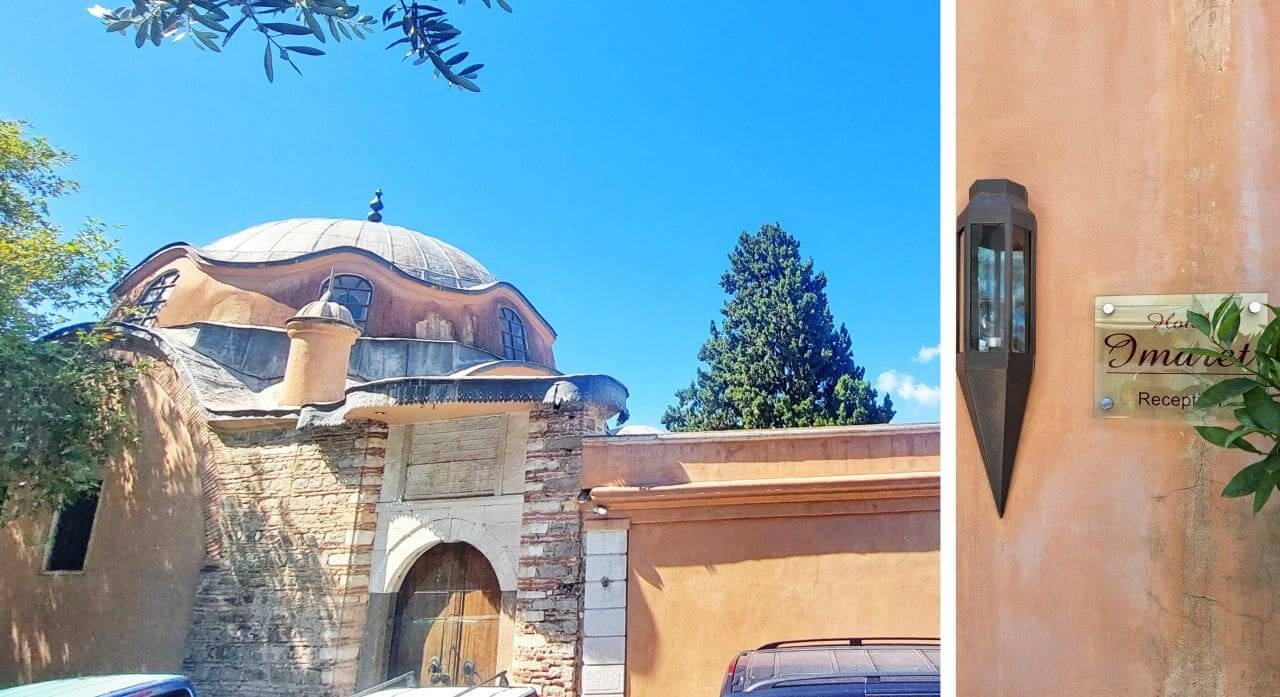
Kavala Old Town, Imaret Hotel
Halil Bey Mosque
The unusual rose-red colour of the Halil Bey Mosque surprised me. It was probably built around the 1530s, during the Ottoman rule, on the site of a previous Byzantine church of Agia Paraskevi. Some remains of the church can be seen today through the glass floor of the mosque.
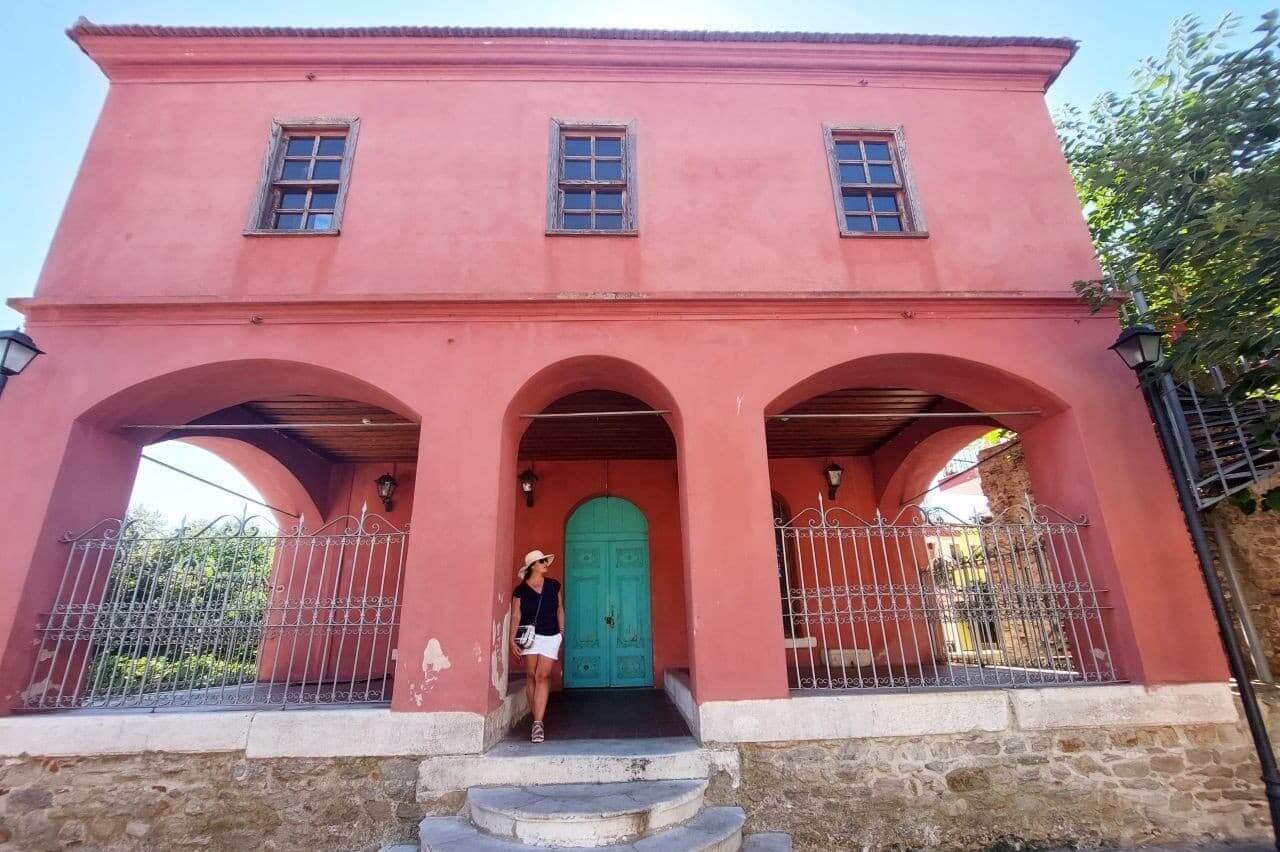
Halil Bey Mosque
So, the mosque was a part of a complex, which also included a madrasa, with eight rooms for students.
By the way, the mosque and madrasa served as a girls’ school in the 20th century, and as a shelter for Greek refugees after the Balkan War. The mosque is also known as the “Mosque of Music” or “Palia Mousiki”, which means Old Music, because it housed the municipality’s philharmonic orchestra from 1930 to 1940.
The mosque and madrasa had many renovations, and today serve as a museum.
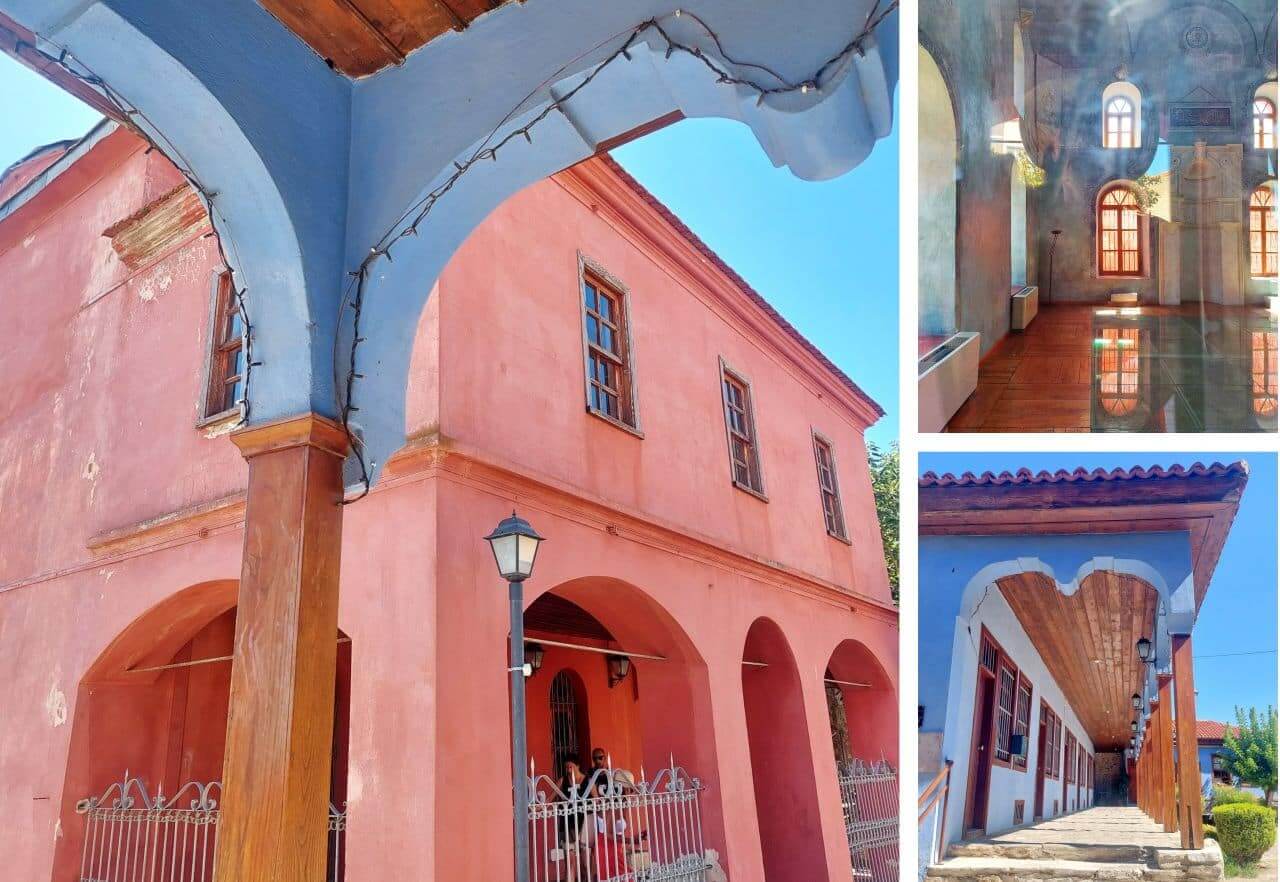
Halil Bey Mosque and madrasa
Muhammad Ali House
The Muhammad Ali House was and is still the largest house in the town. It consisted of the men’s rooms, the pasha’s private rooms, guest rooms, the women’s quarters, the hammam and the sofa. Today, his house has been preserved as a museum, which is open every day except Tuesdays and Wednesdays, from 10 AM to 3.30 PM. The entrance fee is 8 EUR for adults, and the reduced price is 5 EUR.
Muhammad Ali (1769-1849) is considered the founder of a dynasty that ruled modern Egypt.

Muhammad Ali House
Near the house, there is a huge statue of Muhammad on a horse.
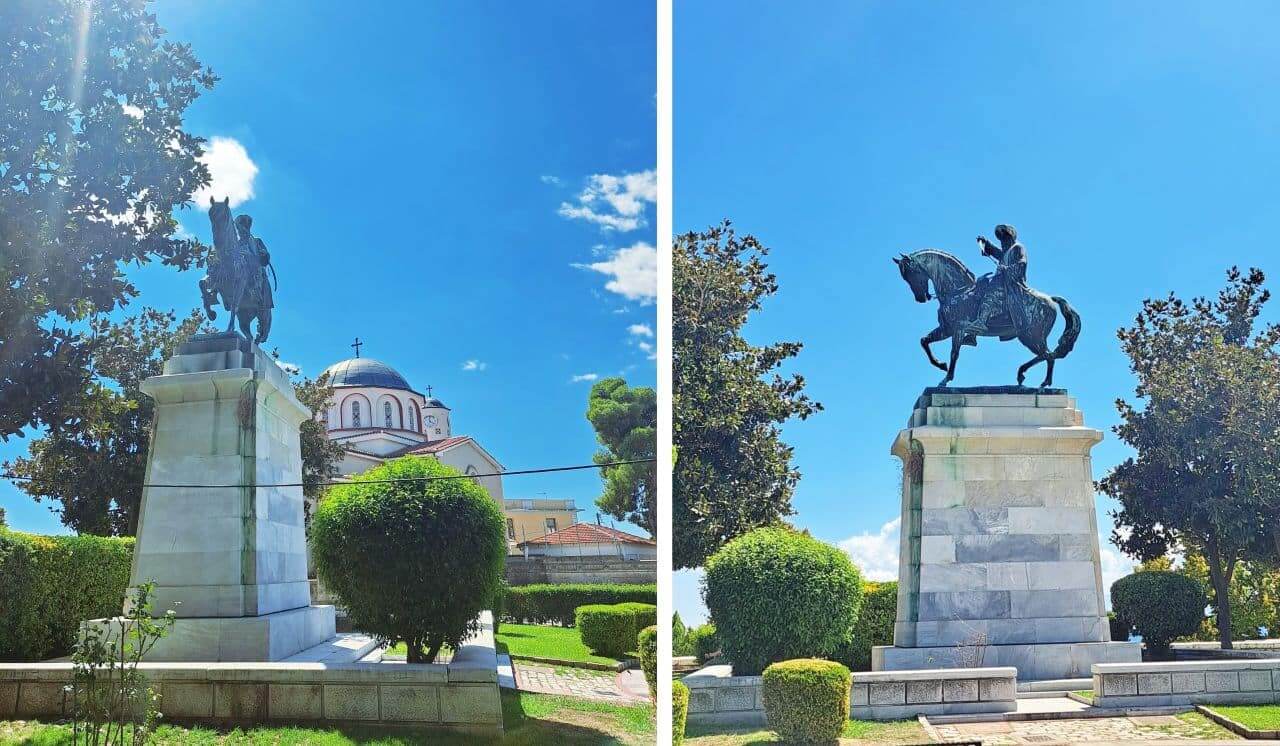
A statue of Muhammad Ali
⛪ The Church of the Assumption of the Virgin
Close to the Muhammad Ali House, there is the main church in Kavala’s Old Town, the Holy Church of the Assumption of the Virgin Mary. It is also known as the Church of Panagia.
Today’s church was built in 1957, on the place where a church was in the 15th century. During the Ottoman occupation, Greek Christians lived in this area, which got its name from this church. Unfortunately, it was closed during our visit.
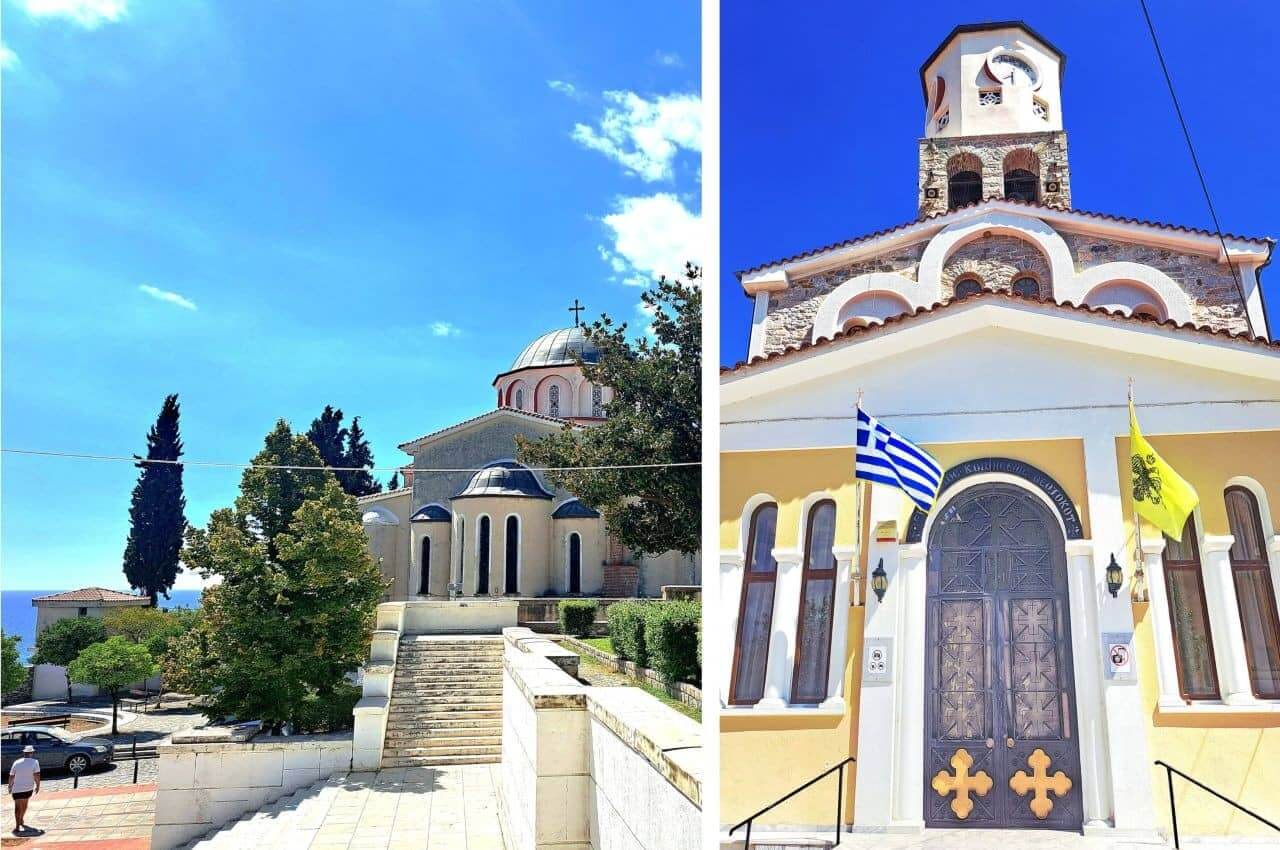
Church of Panagia
If you continue to walk to the edge of the peninsula of the Old Town, you will find the Lighthouse, built in the late 19th century. There is a panoramic view of the sea, Mount Athos and the island of Thassos.
Fortress of Kavala
The Fortress of Kavala is situated at the top of the peninsula of Panagia, about 70 meters above sea level.
The fortification of Kavala started in ancient times and continued through the Byzantine and Ottoman times. It consists of the external walls on the steep coastline and the interior around the Acropolis.
The fortress, which can be seen today, was built in the 15th century, on the remains of the Byzantine Acropolis. It was made of local raw granite stones, brick and marble, and it survived many reconstructions. The major renovations were made between 1530 and 1536 under the rule of Suleiman the Magnificent.
When you enter the fortress, on the left side, in the outer enclosure, today it is an open theatre and cafe. During the summer, various cultural events, concerts and theatrical performances are held there.
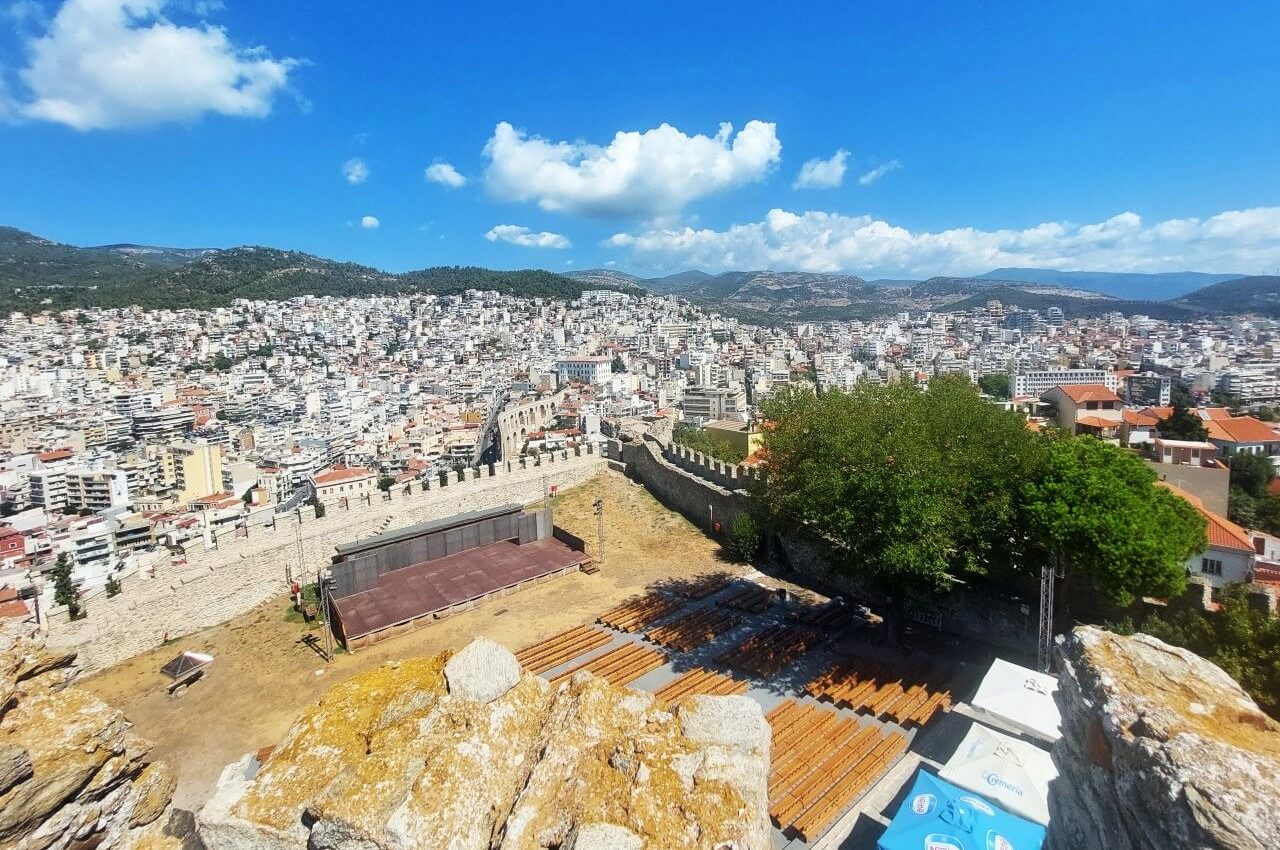
A view from the Fortress of Kavala of the theatre and town
Inside the inner enclosure
Then, passing through the inner gate, you enter the inner enclosure, which is about 90 m long and 37 m wide. There is a circular tower built in the 15th century, on the site of the Byzantine tower.
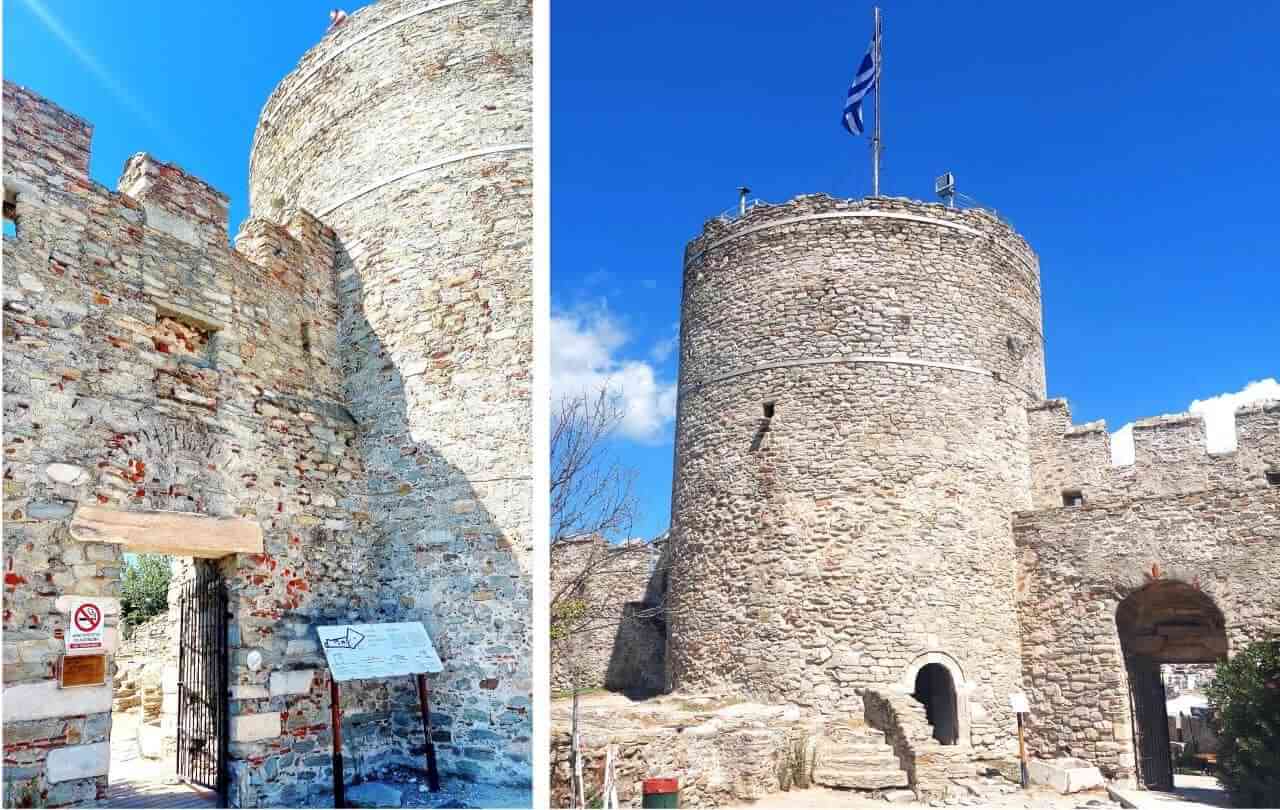
Inner gate of the fortress and the tower
Just be careful when you climb the tower, because of the narrow, steep and slippery stairs.
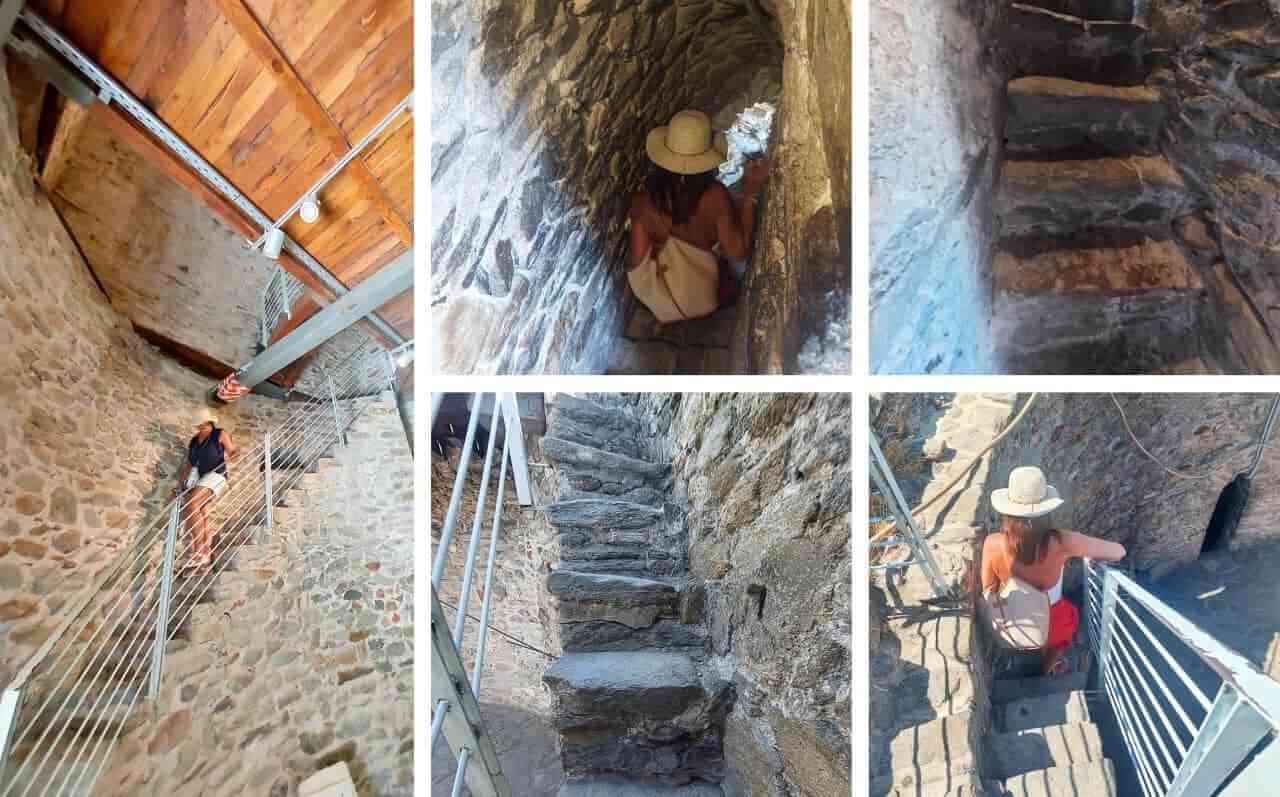
Stairways in the tower of the fortress
And from the top, you can enjoy the beautiful panoramic view of the town, the aqueduct and the blue Aegean sea.
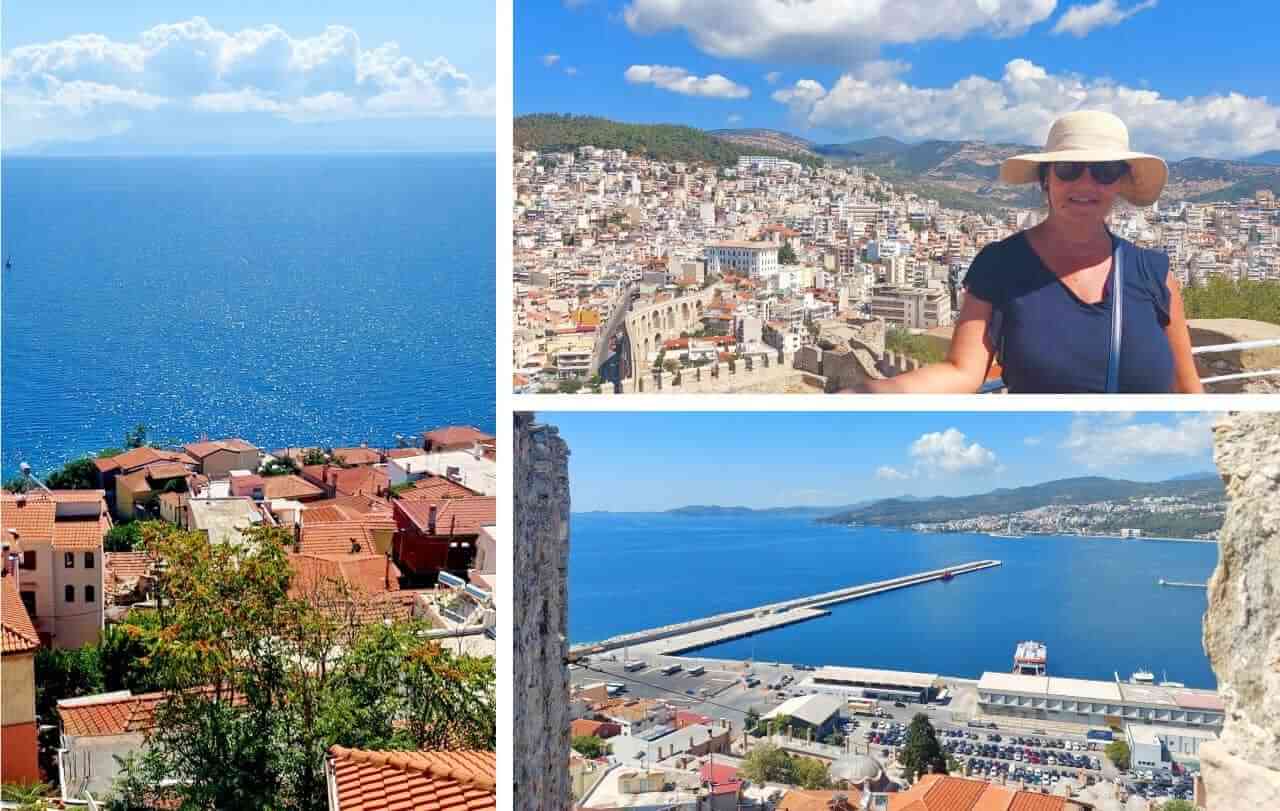
A view of the town and the blue sea
Near the tower, there are remains of a water cistern from the early Christian or Byzantine era. Also, you can see there an ammunition depot and a food store, built around 1530. Later, in the 18th – 19th centuries, it served as a prison. The Guardhouse was built in the 15th century and has undergone numerous changes.
And of course, be careful if you walk around the walls, and wear something comfortable.
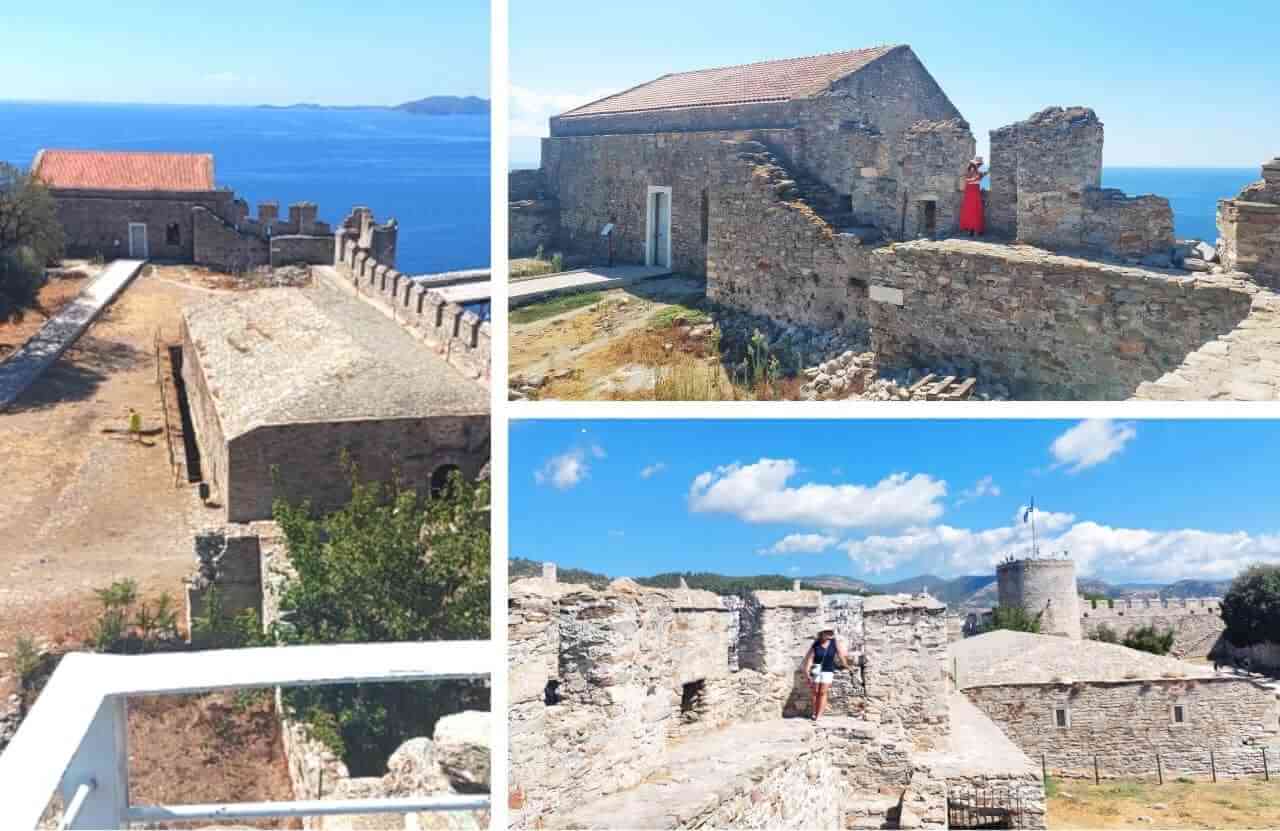
The Guardhouse, an ammunition depot and a food store
⛪ Churches in Kavala
Besides the most famous Panagia in the Old Town, you can visit numerous Orthodox churches located around the town.
The Cathedral Church of St. Paul the Apostle
This church was founded to honour the town’s patron saint, the Apostle Paul. He landed at Neapolis during his first voyage to Europe in 49 AD. St. By the way, he baptised Lydia of Thyatira, a woman who sold purple fabric, during his travel through the region of Philippi. It is considered the first documented convert to Christianity in Europe.
The church was built in 1905 by the Greek Community after the consent of the Turkish Administration.
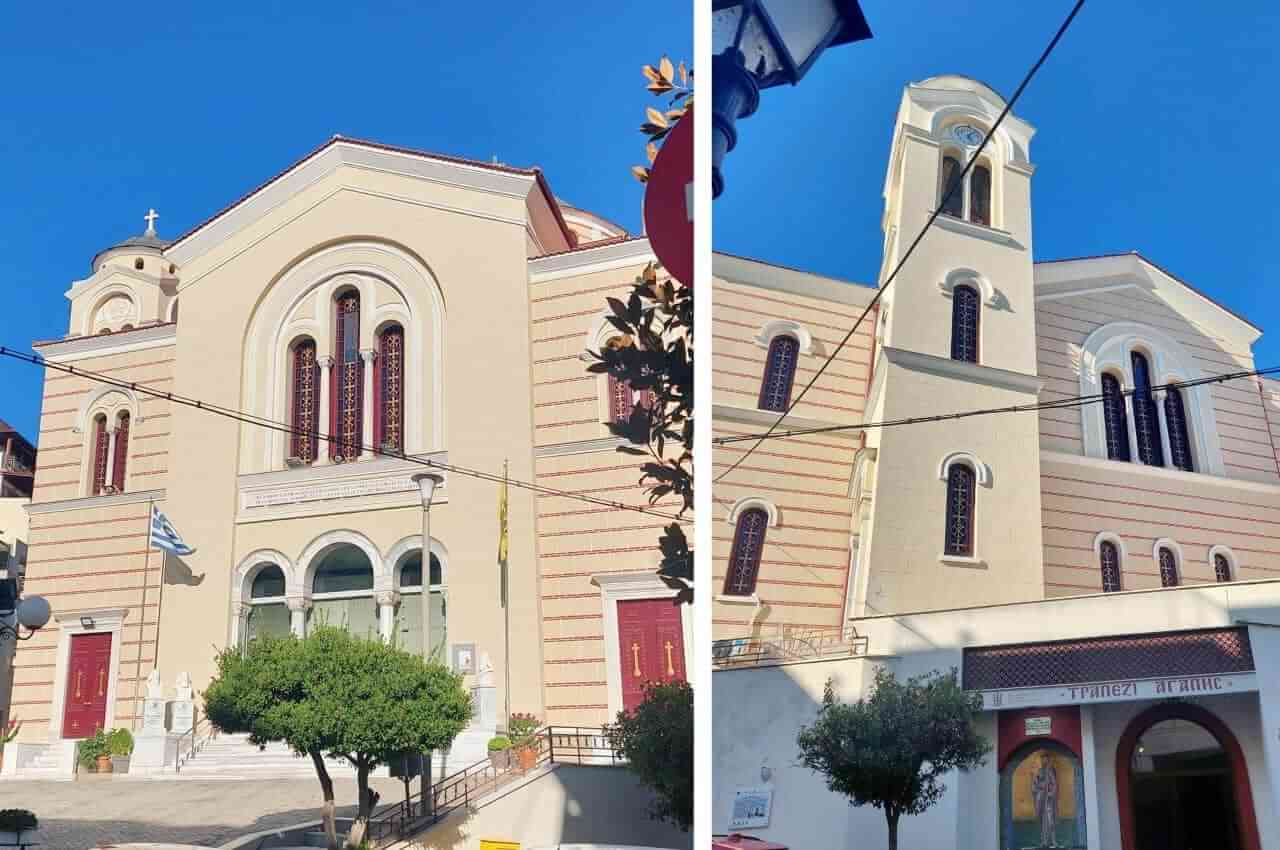
Church of Saint Paul
The Church of St. Nicholas
It is located close to the port and the Old Town. First, this building was erected in 1530 as a mosque, on the previous Christian church, by Ibrahim Pasha, vizier to Sultan Suleiman the Magnificent. It was the largest mosque in Kavala. Then, in the 1920s, it was converted to an Orthodox church, dedicated to Saint Nicholas. The minaret was destroyed, and a new bell tower was built.
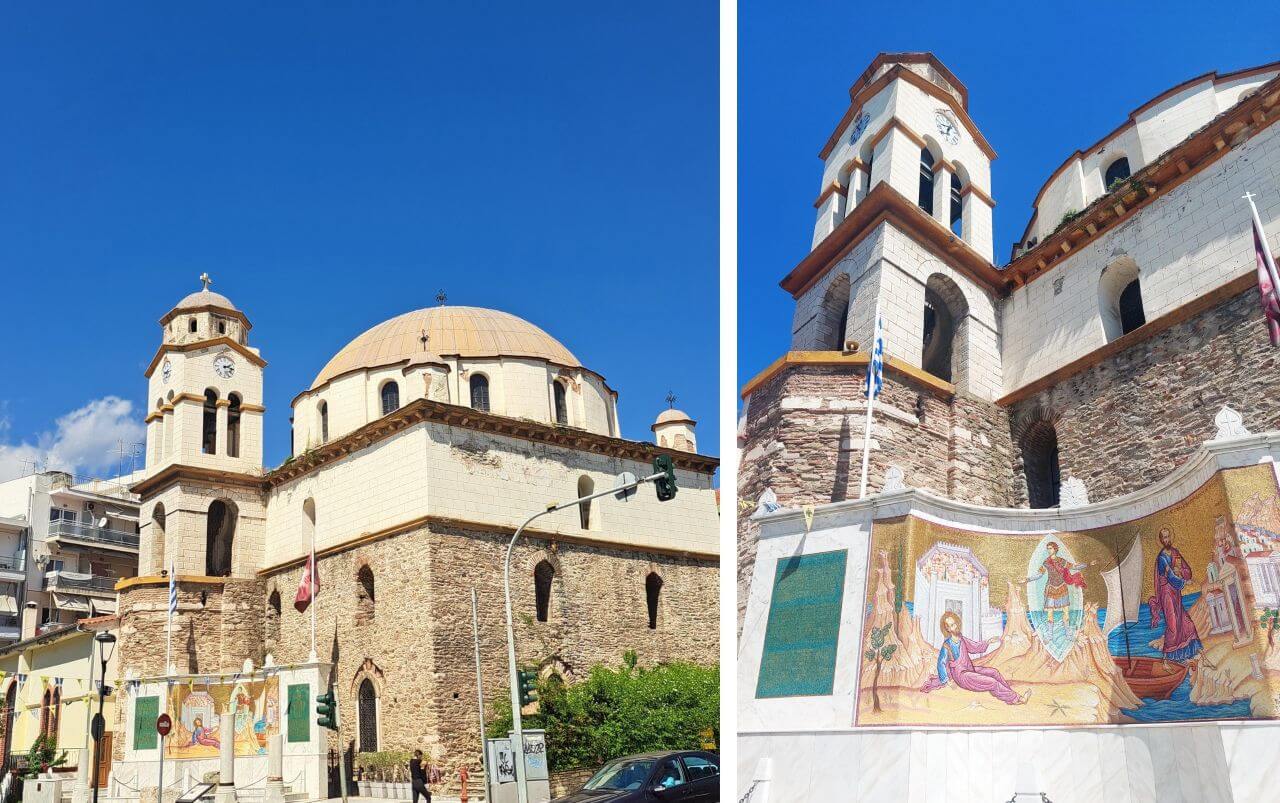
Church of St. Nicholas with mosaic
On the eastern side of the church, there is a mural depicting the arrival of Apostle Paul in Neapolis.
We entered the church, but there are some renovation works inside it.
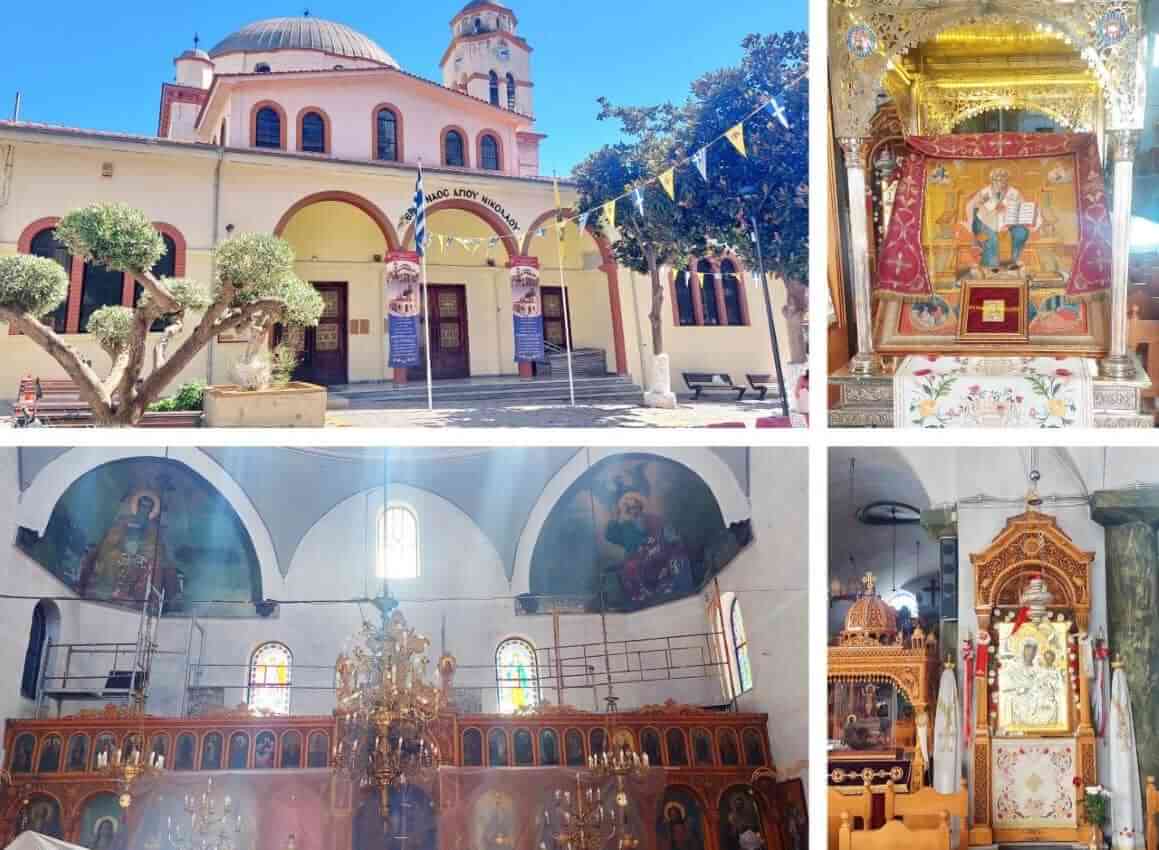
Inside the Church of St. Nicholas
The Church of St. George
The church of Saint George was founded by refugees after 1922.
First, there was a mosque in this place, then it was converted to a church and renovated.

Church of Saint George
☕🍷🍤 Cafes and restaurants
There are many cafes, small taverns and restaurants where you can enjoy delicious Greek cuisine and drinks. Bear in mind that most restaurants are open from 12 PM for lunch, and later for dinner. Let’s mention some of them.
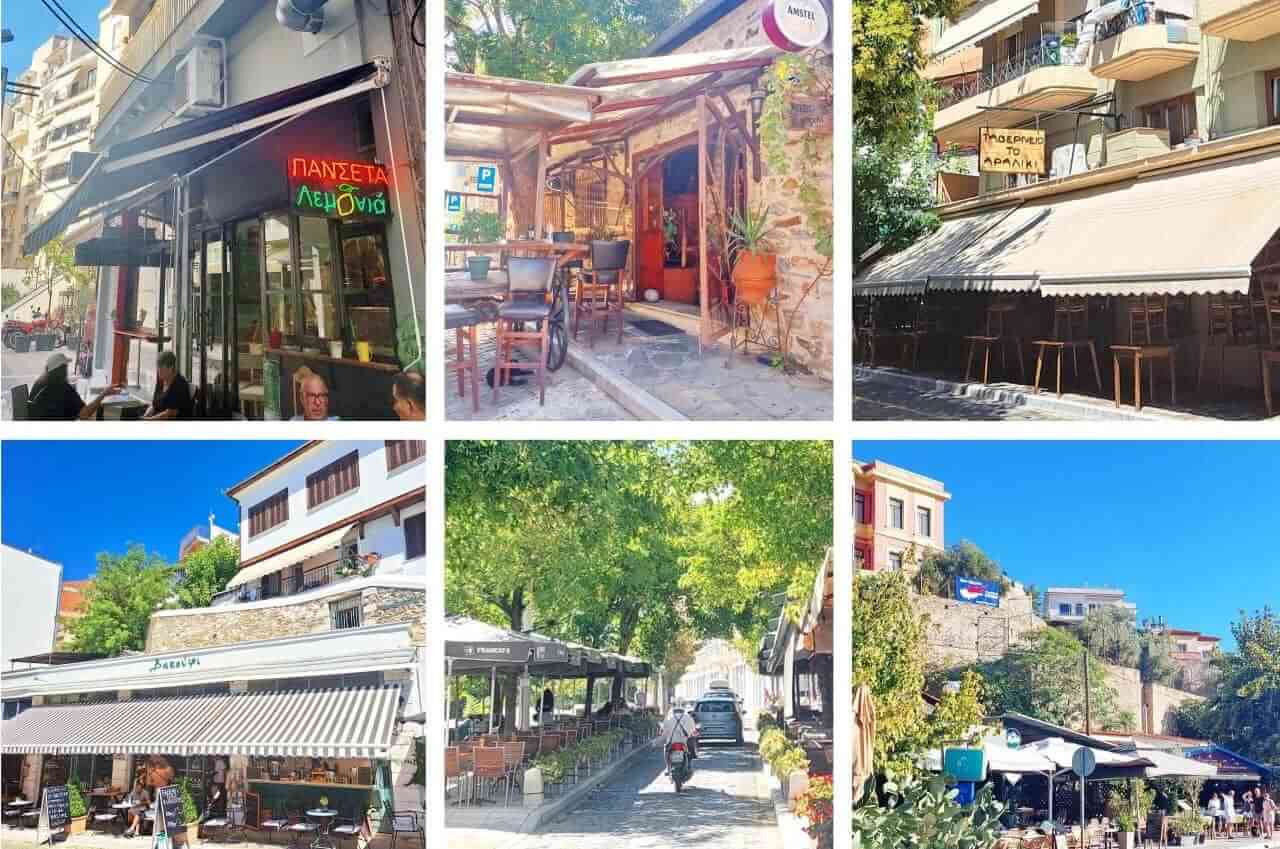
Cafes and restaurants
🍽️ Popular taverns in the Old Town: To Araliki, Belle Helene, Koutoukaki, Kanados.
Gourmet restaurant: Atopo Bistronomy Restaurant.
Best fish tavern: Kapilio.
Best fast food: Panseta Lemonia (Πανσέτα Λεμονιά), Delikaris, Koulis.
Excellent Greek taverna with traditional dishes: Sousouro.
Best cafe & restaurant: Tsalapeteinos Urban Farm.
🍸 Best cocktail bar: Capsula.
☕ Kafé Bríki (Coffee pot)
Take a break at the most unique cafe in town, located in the Old Town. The interior is interestingly decorated with vintage furniture, numerous details, and black-and-white photographs showing Kavala’s past.
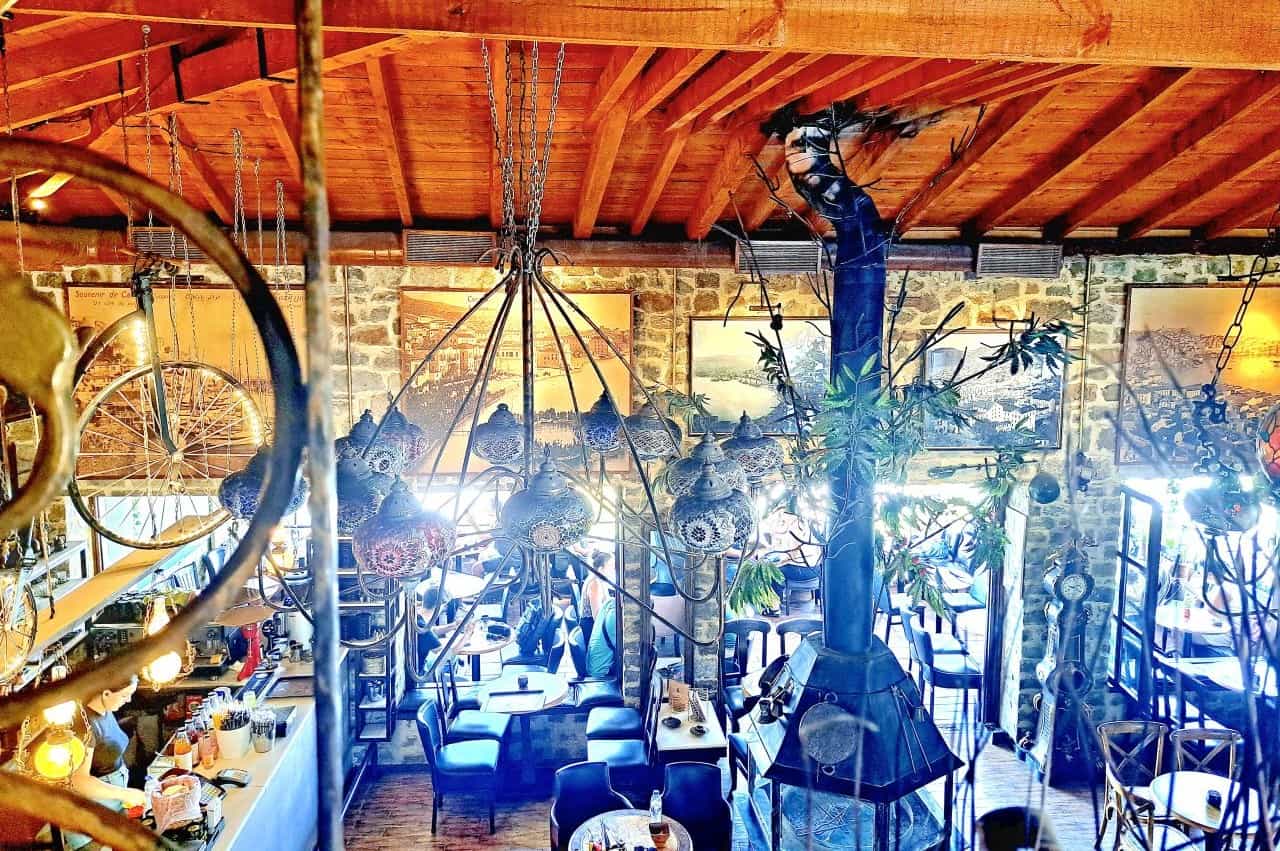
Kavala, Cafe Briki
Try traditional Greek coffee in a pot and enjoy the beautiful view of the Kavala port.

Greek coffee at the Cafe Briki
🏨Accommodation in Kavala
There are various types of accommodations in Kavala, ranging from apartments to luxurious and boutique hotels.
♦ Imaret Hotel: the most luxurious hotel in town, inside Muhammad Ali’s building.
◊ Lucy Hotel: a luxurious 5-star hotel located on Kalamitsa Beach, perfect for travellers who prefer resort-style.
♦ Airotel Galaxy: 4-star hotel, great location by the harbour, with modern rooms, and a rooftop bar.
◊ Hotel Oceanis: 3-star hotel, good location, popular for its rooftop with a pool.
Accommodation in Palio, Nea Iraklitsa and Nea Peramos is more convenient for families with children because of the nearby sandy beaches. There you can find numerous apartments and hotels.
We booked the Brick Apartment in Nea Peramos, and we were satisfied with the equipment of the apartment and its location.
🏖️ Beaches around Kavala
The nearest beach to the centre is the Rapsani Beach, located about 1 km away. Close to the town, there are Kalamitsa, Batis, Tosca, and Perigiali.
Beaches in Nea Iraklitsa are located about 16 km away, and in Nea Peramos, around 18 km from Kavala. One of the best beaches in northern Greece is Ammolofi Beach, with several beach bars, located close to Nea Peramos.
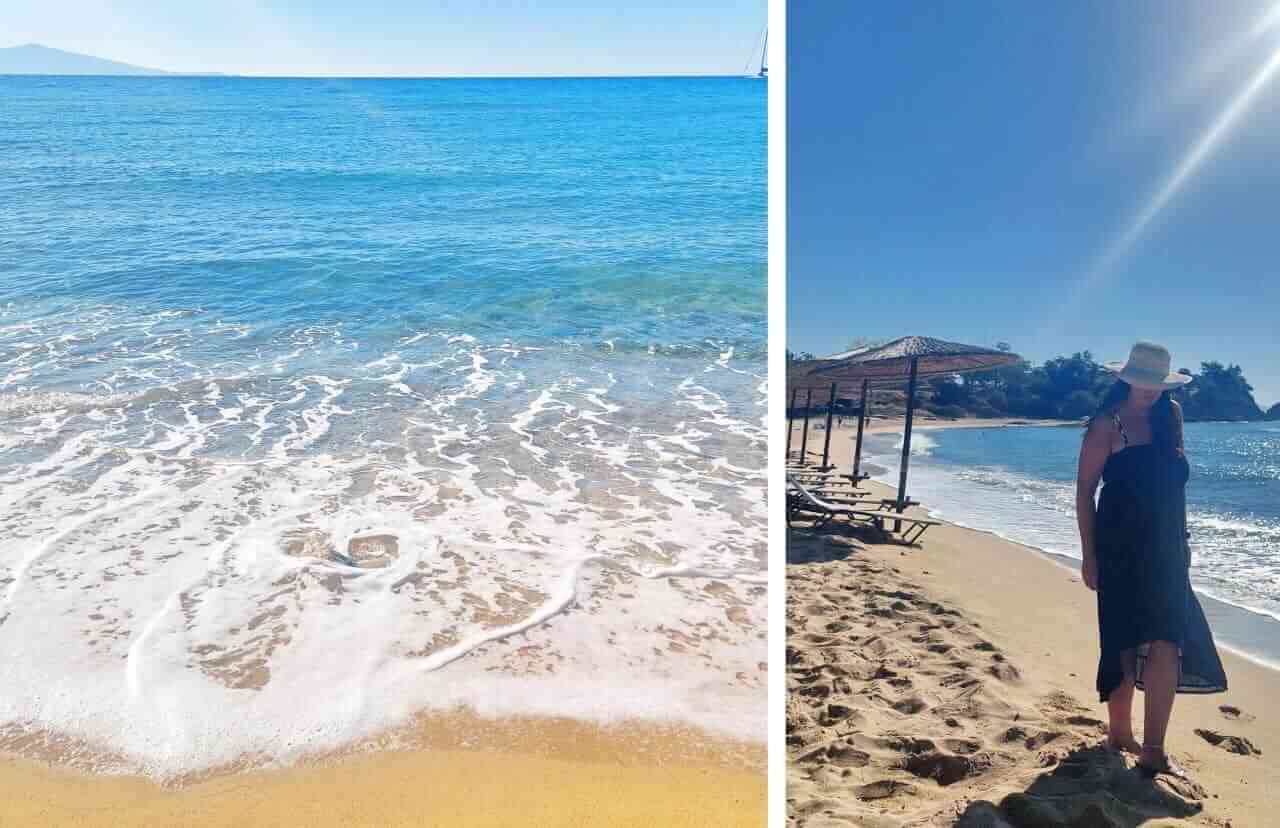
Ammolofi Beach
👉🏖️ You can read more about the beautiful beaches near Kavala here.
🛍️ Shopping and souvenirs
The modern Kavala’s city centre offers various possibilities for shopping.
The main streets with shops and services are Venizelou Street, pedestrian street Meg. Alexandrou, and along Omonia Square. There you can find local boutiques with clothes and popular brands, jewellery shops, and artisan stores. Along the Megalou Alexandrou Street, there is the Shopping Mall of Kavala, housed in a former tobacco warehouse, which I have mentioned before.
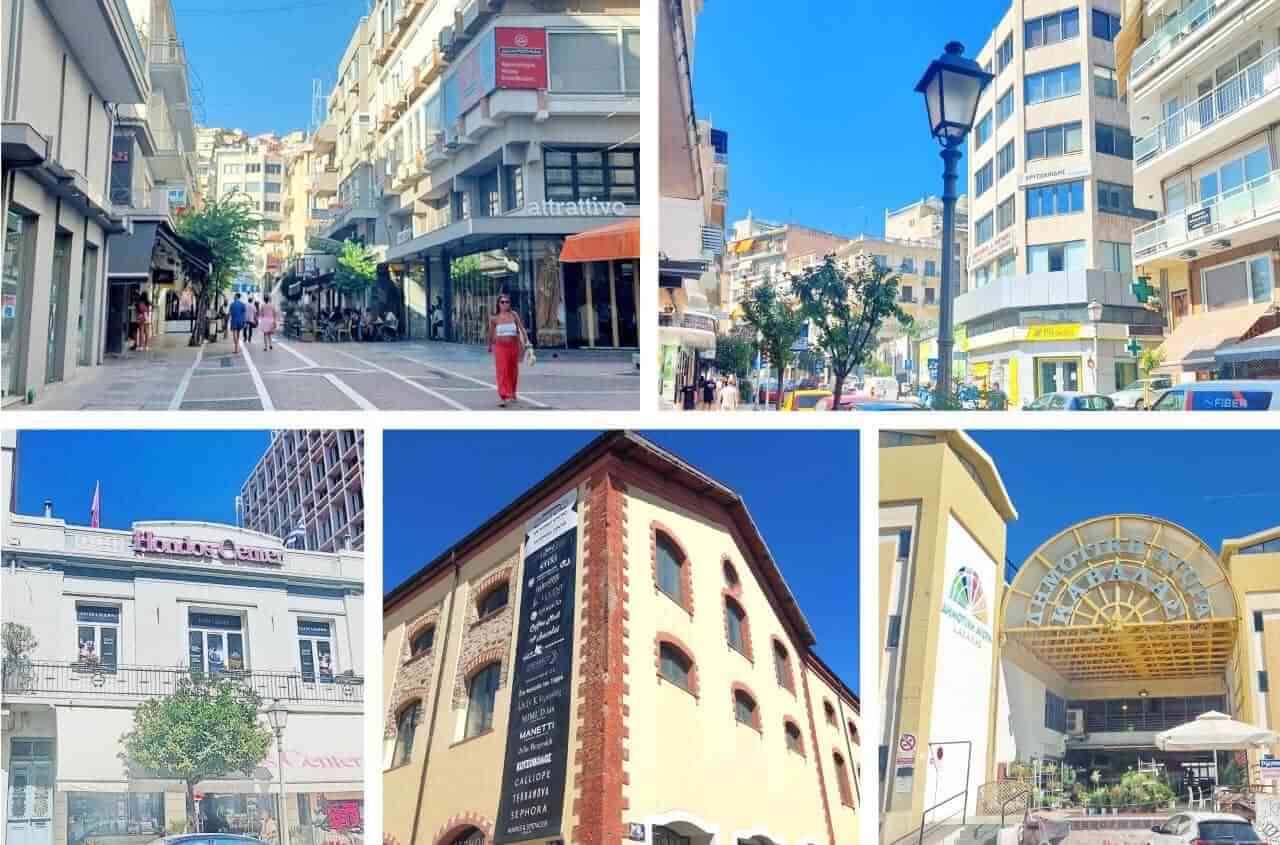
Shops and a local market in Kavala
Near the Church of Saint George, you can find the Kavala Municipal Agora. There you can buy local and fresh products, honey, herbs, spices, handmade pasta, etc.
And don’t forget souvenirs: almonds, local wines, olive oil, magnets or handmade ceramics.
TIP: Bear in mind that most shops have double working hours, usually from 8-9 AM to 2 PM, and from 5-6 PM to 7-8 PM.
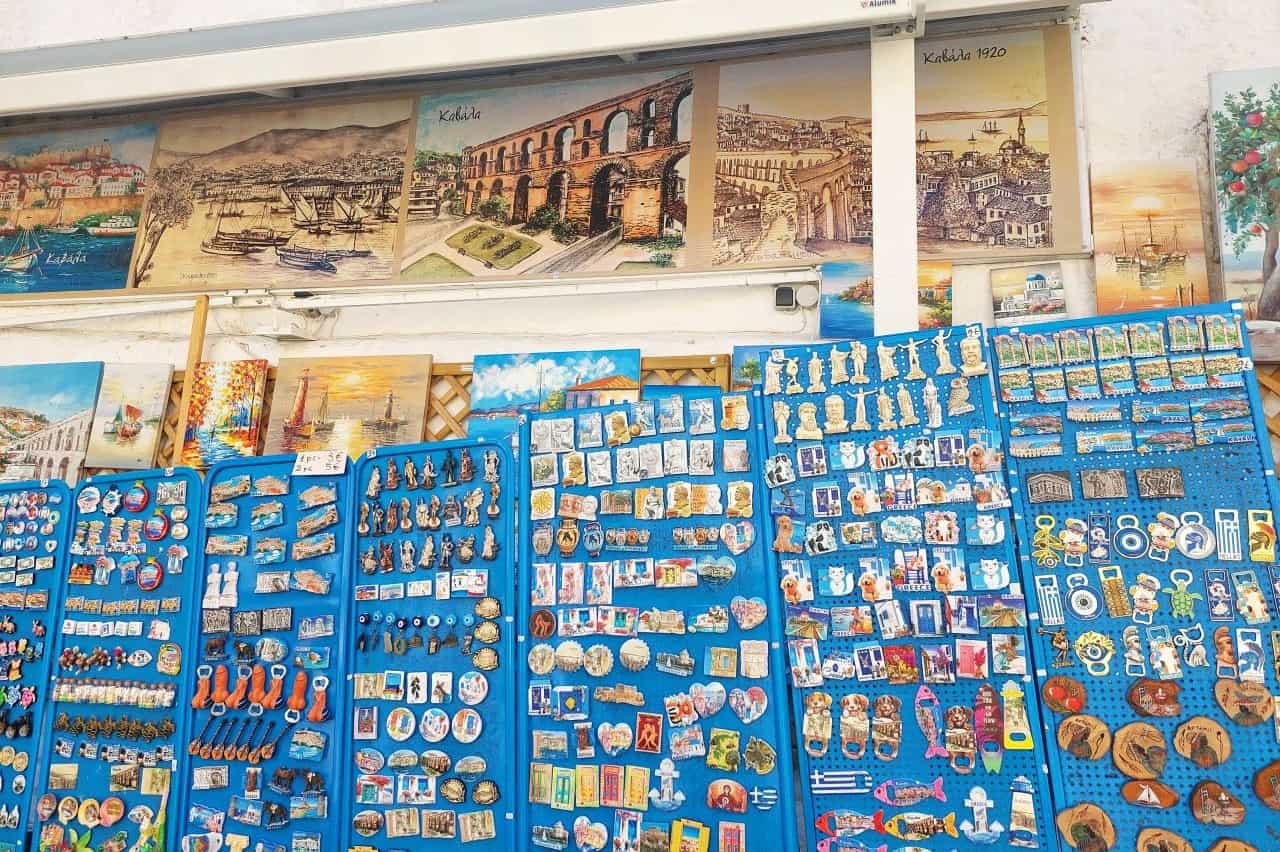
Kavala Old Town, Theodorou Poulidou Street, souvenir shop
Visit Kavala
Usually, Kavala is a stop on the way to Thassos. But it is more than that. It is a place where you can find historical sites, beautiful buildings, wonderful sandy beaches, tasty food, and warm hospitality.
So take your time. Wander along the narrow alleys of Panagia and sip coffee, looking at the port. Walk under the arches of Kamares, and watch the sun dip into the Aegean Sea.
Whether you’re visiting Kavala for a day or planning a longer stay, I am sure that you will find interesting spots to enjoy your time sightseeing.
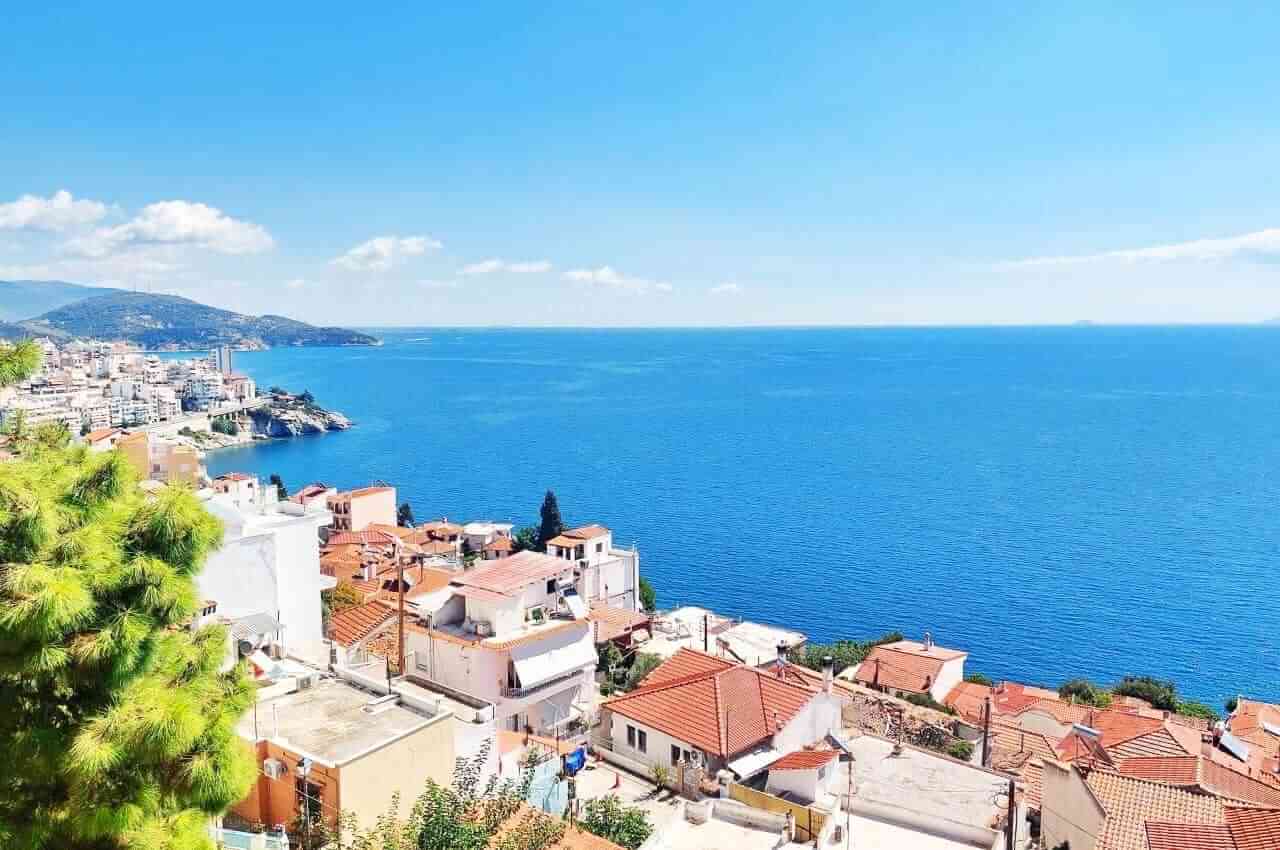
View of Kavala and the sea from the castle
 www.nataniatravel,com

Leave a Reply
Want to join the discussion?Feel free to contribute!