
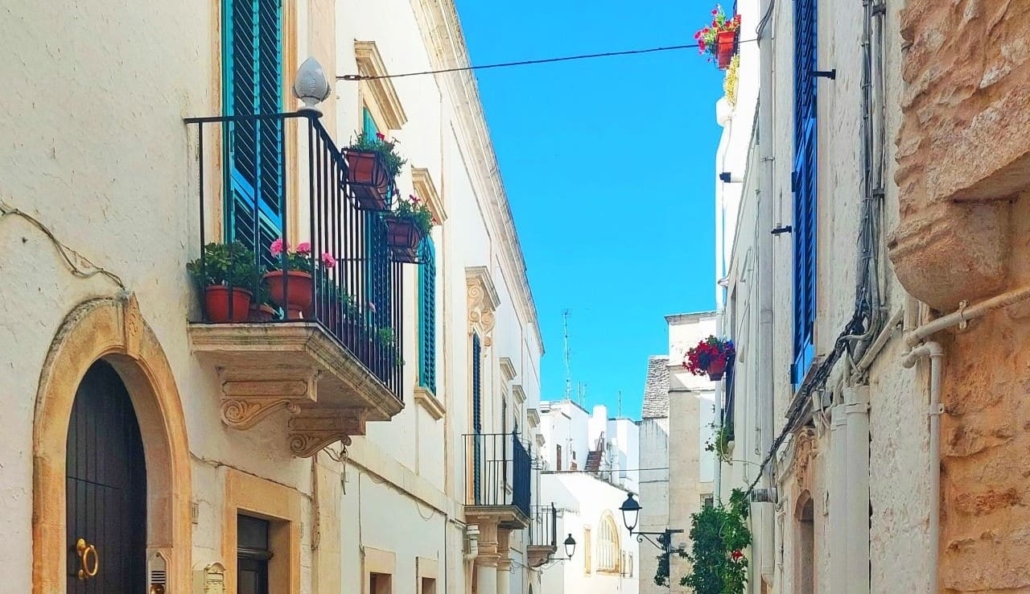
Locorotondo, an amazing round place in Puglia
Locorotondo is considered one of the most beautiful villages in Italy (Italian: “I Borghi più belli d’Italia“).
This amazing place is located in the Italian region of Puglia. It is known for its historic centre with concentric rings of white houses, and excellent white wines.
Because of its circular shape, the village got the name Locorotondo, which literally means “round place” (Locus Rotundus in Latin).
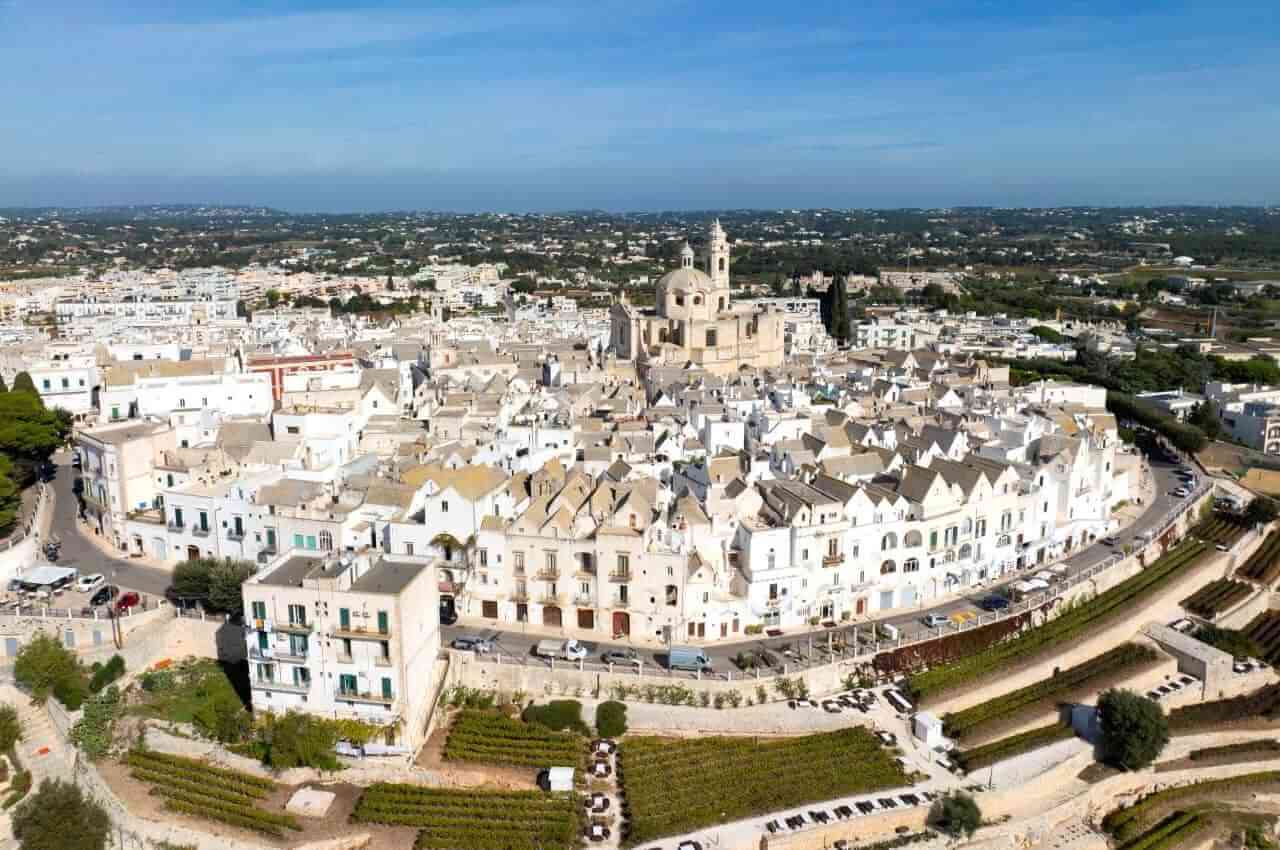
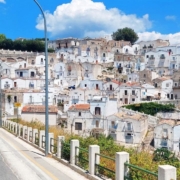
View of Locorotondo, © Designed by Freepik, Author V.Walakte
📌 How to get to Locorotondo
Locorotondo is situated on a 400-meter-high hill on the plateau called “Murgia dei Trulli”, in the heart of the Valle d’Itria in Puglia. Administratively, it belongs to the Metropolitan City of Bari. You can reach it in several ways.
By car
The most convenient way to reach it is by car. The road distance from Locorotondo to Bari is 68 km, to Alberobello is 10 km, to Martina Franca is approximately 6 km, and to Ostuni is about 28 km.
By bus
The cheapest way to go is by bus, depending on your departure point, with Flixbus and ITABUS lines.
By Train
The regional Ferrovie Sud Est train line connects Locorotondo with Bari and neighbouring towns. The train station is located on the edge of town, and then, walk uphill to the centre.
By Plane
The nearest airports are in Bari and Brindisi, which are also important seaports. Then, you can rent a car, book a private transfer, or catch a train or bus.
We visited Locorotondo during an excursion organised by the travel agency “Mayak Tours“, during our trip around the Puglia region.
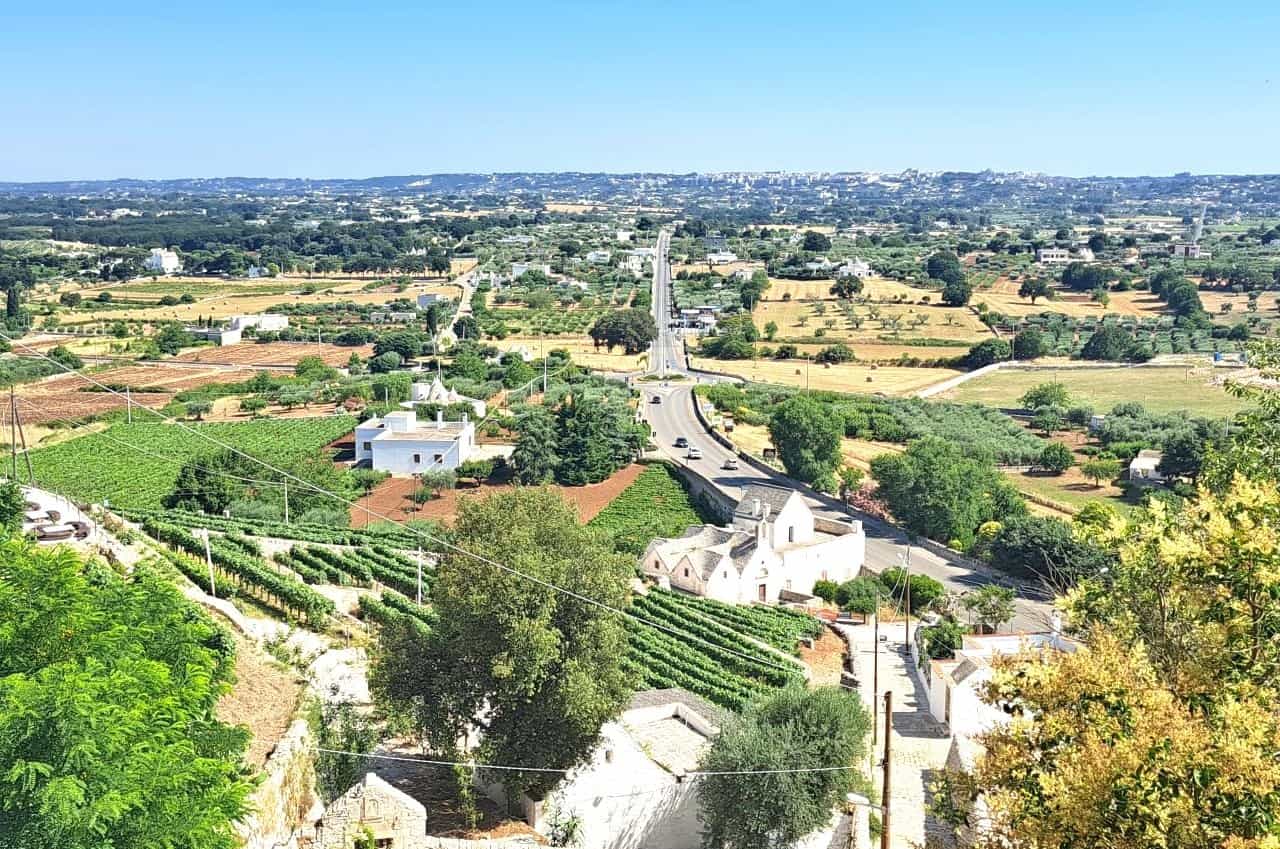
Panoramic view of the Valle d’Itria, from the Locorotondo belvedere
A few words about the history of Locorotondo
Locorotondo dates back to ancient times, according to archaeological finds dating between the 3rd and 7th centuries BC.
The town which we can see today was founded around 1000 AD. It was an unfortified hamlet under the jurisdiction of the Benedictine monastery of Santo Stefano in Monopoli.
For about 500 years, this area was under the rule of various feudal families. The last one, the Caracciolo family, was one of the most important families in the history of the Kingdom of Naples, and they ruled until the beginning of the 19th century.
During the medieval period, Locorotondo developed, and the castle and walls were constructed. The agricultural sector flourished, especially the production of wine and olive oil, and it continues even today, due to fertile land and its climate.
Over the last few decades, Locorotondo has become a very popular tourist destination. Today, about 14,000 inhabitants live in the town.
What to see in stunning Locorotondo
Locorotondo is surrounded by olive groves, vineyards, and white trulli with a communal area known as “jazzile”.
Along the road from Locorotondo to San Marco, there is the oldest trullo in the valley, Trullo di Marziolla. It is believed that the trullo dates back to 1559 (imprinted near the entrance). Even though many trulli are restored for tourism, this trullo remains in its original form.
Generally, half a day is enough to explore Locorotondo because it is a small town.
You can combine your trip with visiting nearby towns, such as Alberobello, Monopoli, Martina Franca, Cisternino, Polignano a Mare, Ostuni, or the Castellana Caves. For example, we visited Alberobello, Locorotondo and Monopoli in one day.
👉 Click here and read more about amazing Alberobello, a fairy tale town in Puglia.
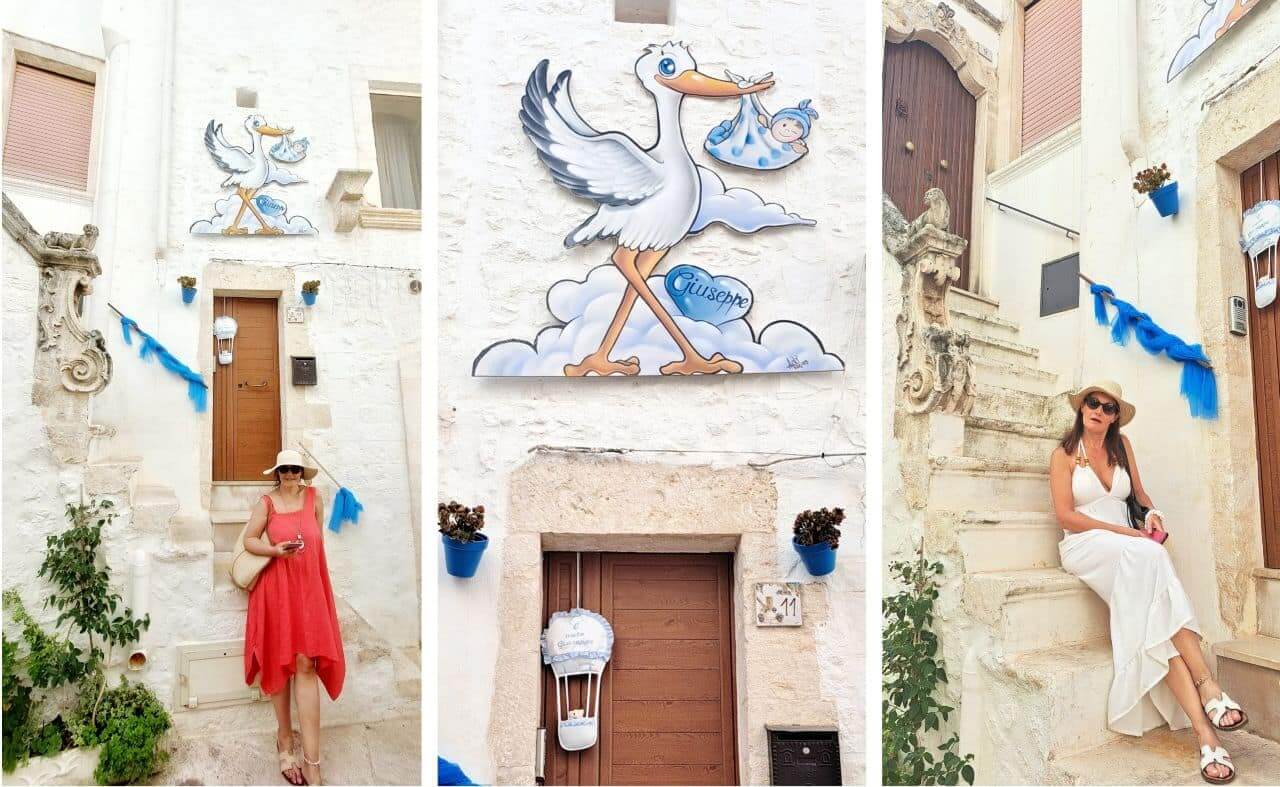
Locorotondo street
The historic centre of Locorotondo – Centro Storico
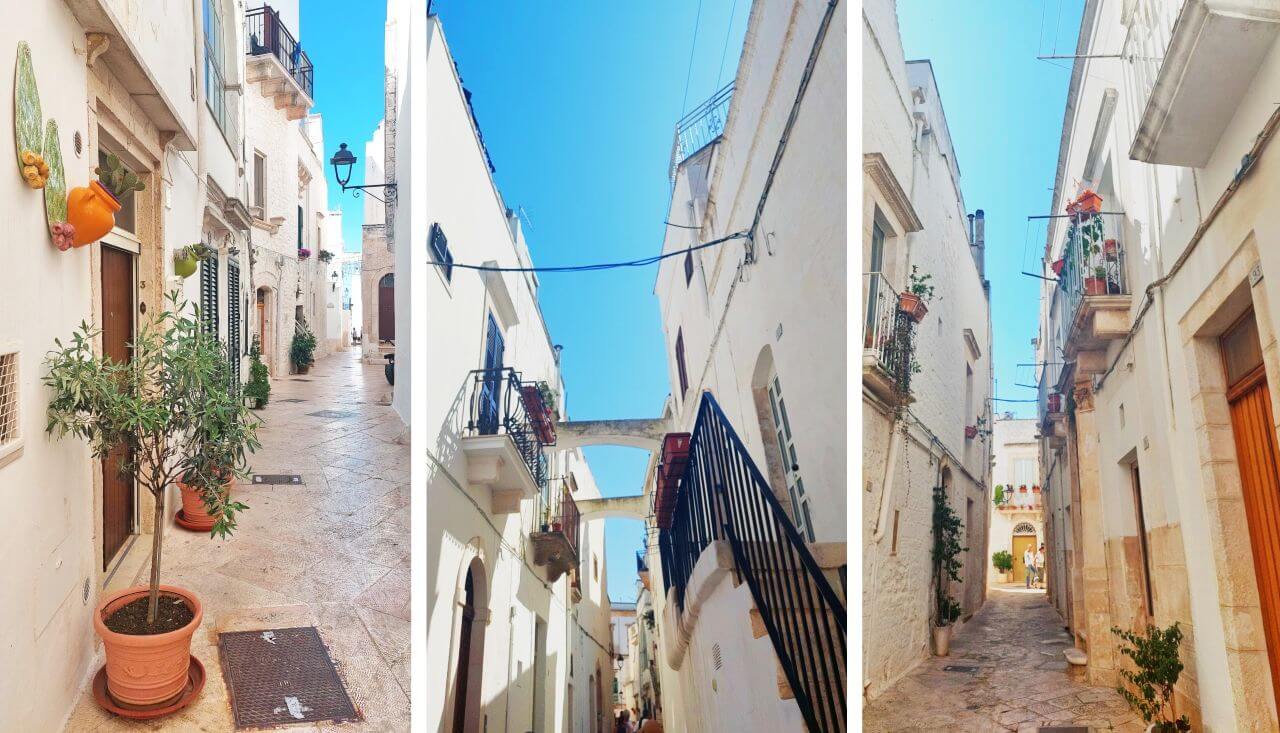
Alleys of Locorotondo
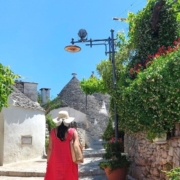
Centro Storico is a labyrinth of narrow, cobbled streets, filled with whitewashed houses, flowers on terraces, small cafés, restaurants, and craft shops.
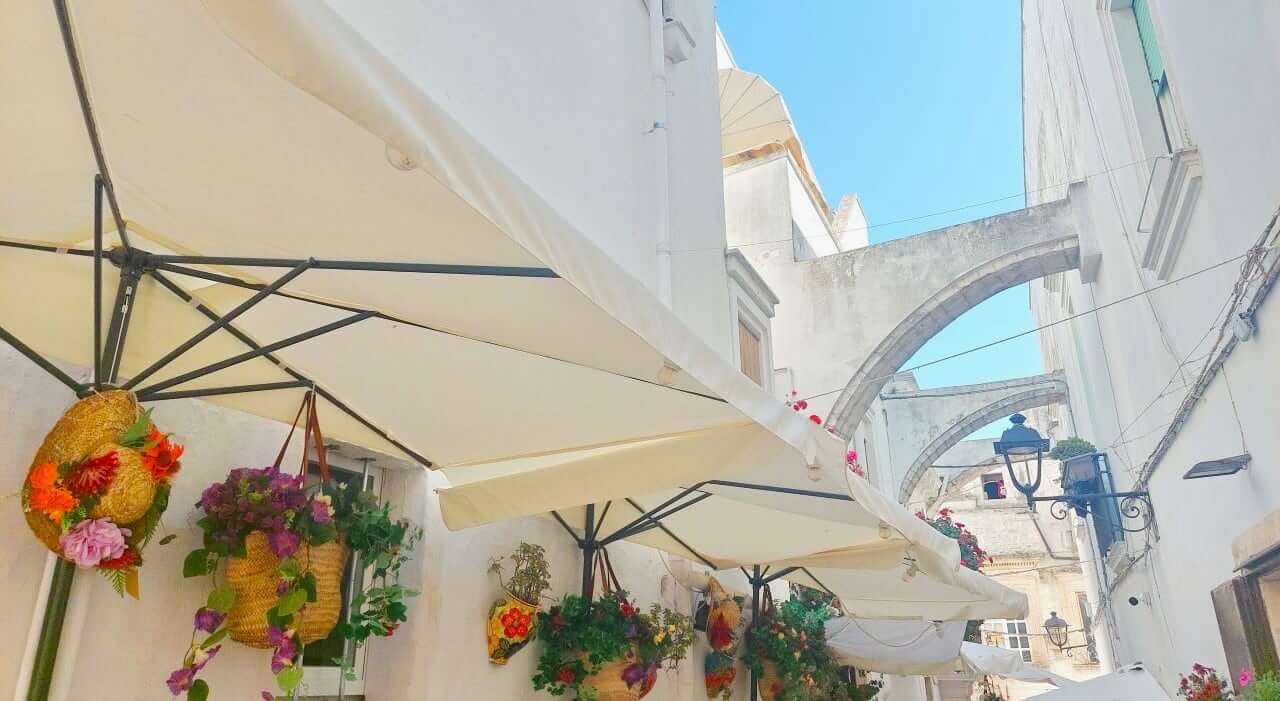
Locorotondo street
Its characteristic houses are known as “Le Cummerse“. They have regular geometric shapes and sloping roofs made of black limestone slabs. Today, some of them are renovated into boutique hotels and apartments for tourists.
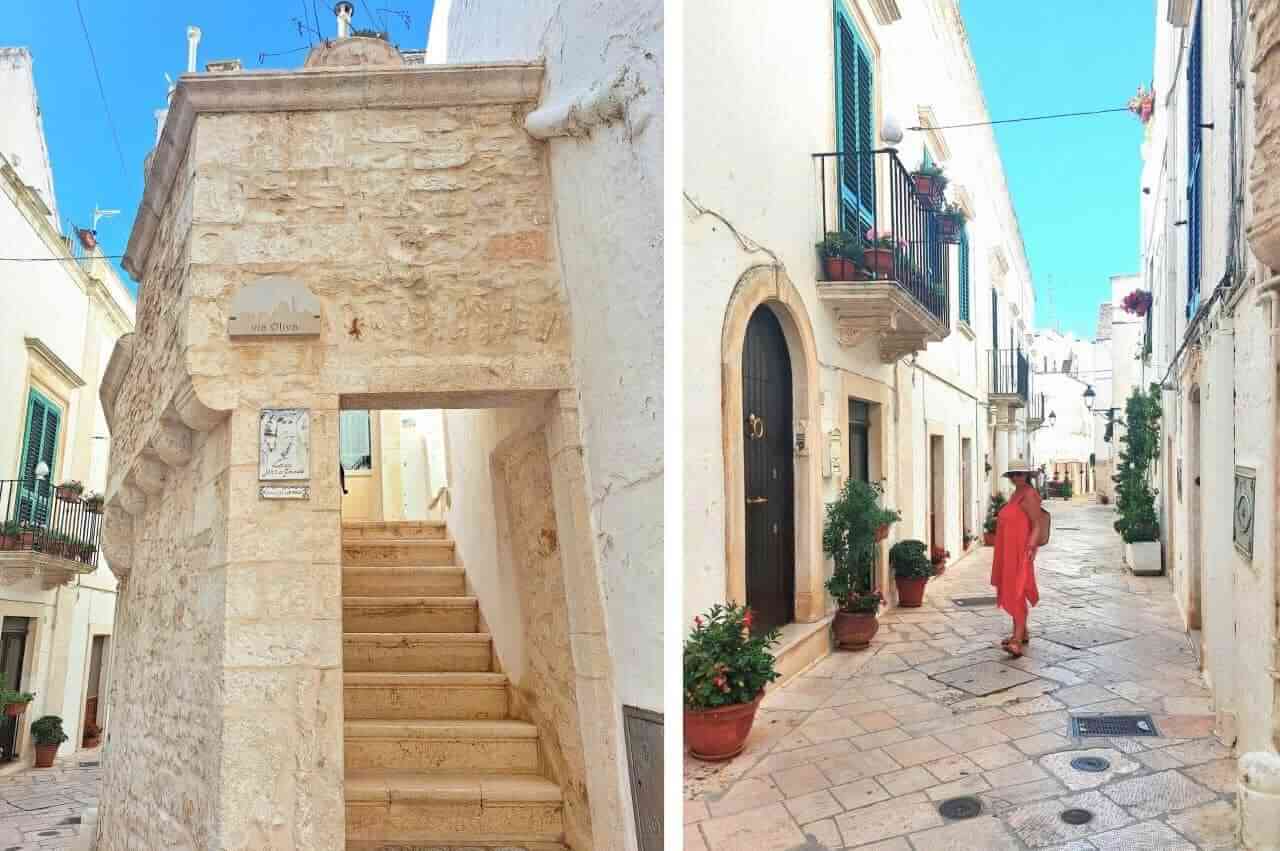
Locorotondo, Via Oliva, Casa Luxury Cummersa Janna Gnuridd
Piazza Vittorio Emanuele
Passing through the Porta Napoli gate with two pillars, you enter the heart of the Centro Storico, the square Piazza Vittorio Emanuele.
It was also known as the Piazza Castello (Castle Square). In the 14th century, there was a castle near the gate and on the place where today is the Church of Our Lady of Sorrows (Chiesa dell’Addolorata). According to the story, in 1855, on the initiative of the priest, the old castle was destroyed to erase the memory of the numerous injustices and crimes that had been committed in the castle’s cellars. The church was completed in 1858.
Tourist office, a little cafe, restaurants, and an interesting ceramic shop can be found on this square. Also, there is an ancient limestone wall with an arch and a small shrine with a statue of the Madonna.
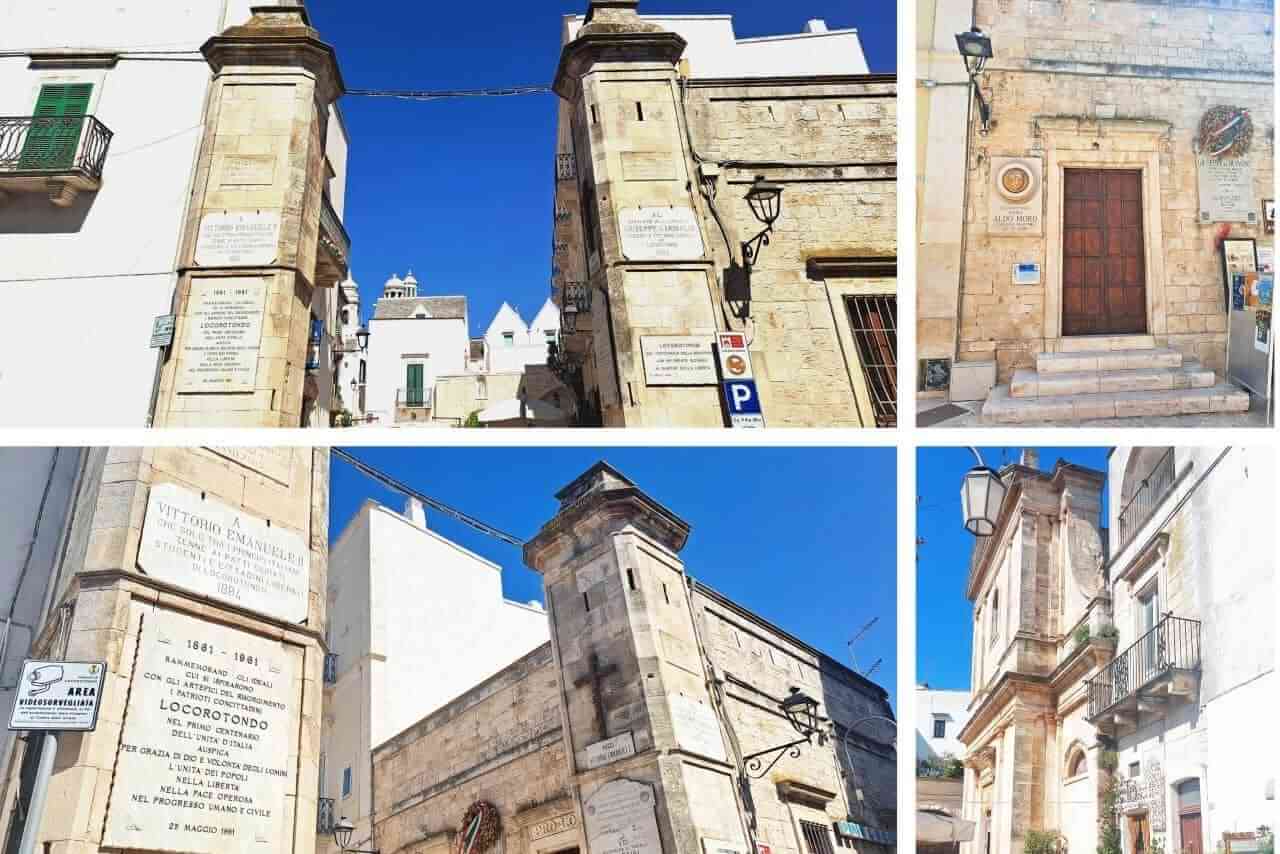
Porta Napoli, Piazza Vittorio Emanuele and the Church of Our Lady of Sorrows
On the other side of the Piazza Vittorio Emanuele, you can see the stunning Palazzo Aprile-Ximenes.
It was built in the 19th century, and it was completely painted in the Pompeian red colour.
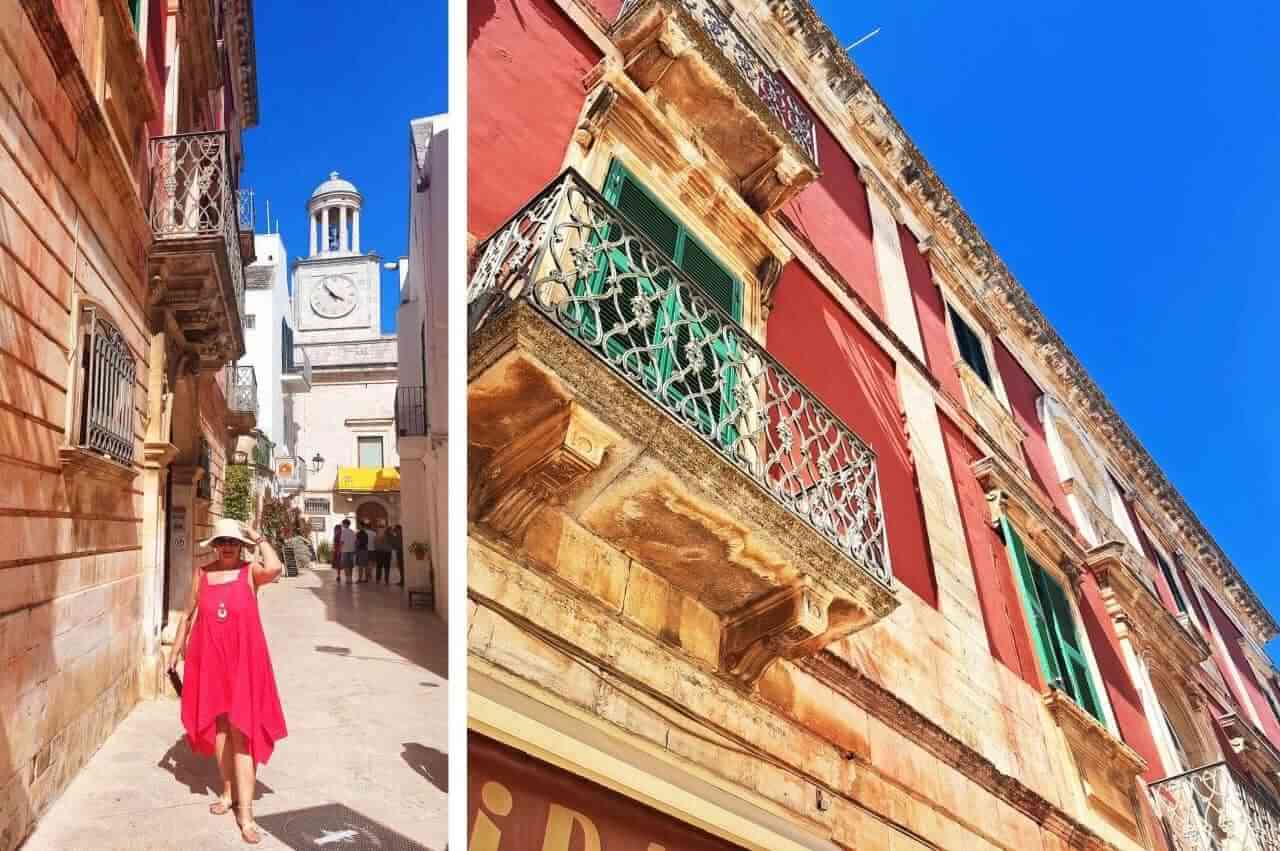
Locorotondo, Palazzo Aprile-Ximenes
Near the palace, there is a popular restaurant, Trattoria Al Vecchio Arco.
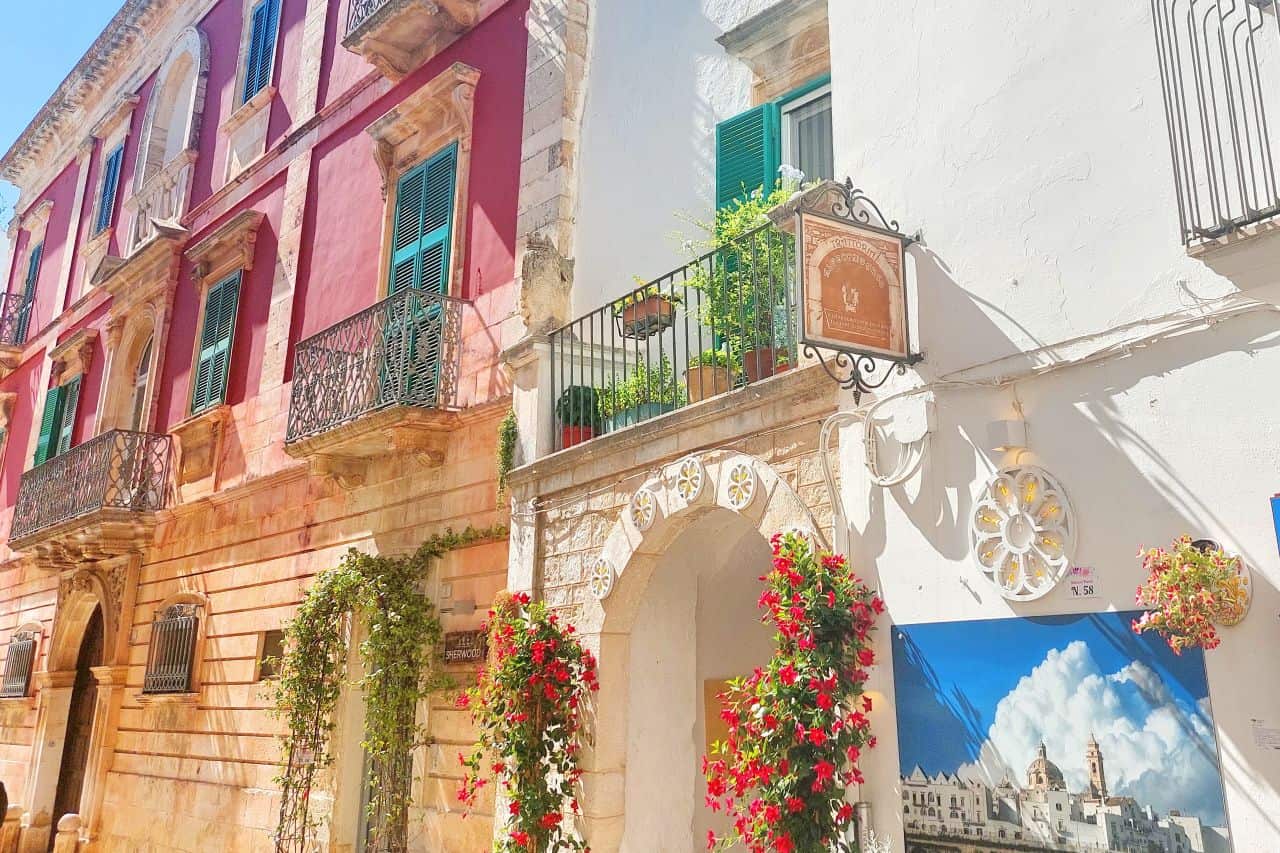
Locorotondo, Palazzo Aprile-Ximenes and entrance to the Trattoria Al Vecchio Arco
The Town Hall and Clocktower – Palazzo Comunale e Torre Civica
Behind the red Palazzo Aprile-Ximens, you can see the Town Hall with the Civic Tower.
Originally, Palazzo Comunale dates back to the 18th century. It served as both the municipality and the university, but now, it houses the Civic Library and the Historical Archive of Locorotondo. Also, various official ceremonies, art and cultural events are held there.
The white Civic Tower was built in the early 19th century, and it is 22 meters high. Once it served as a watchtower. Interestingly, the clock was added to the tower in 1820. Originally, it was mounted on the bell tower of the church Chiesa Madre di San Giorgio Martire.
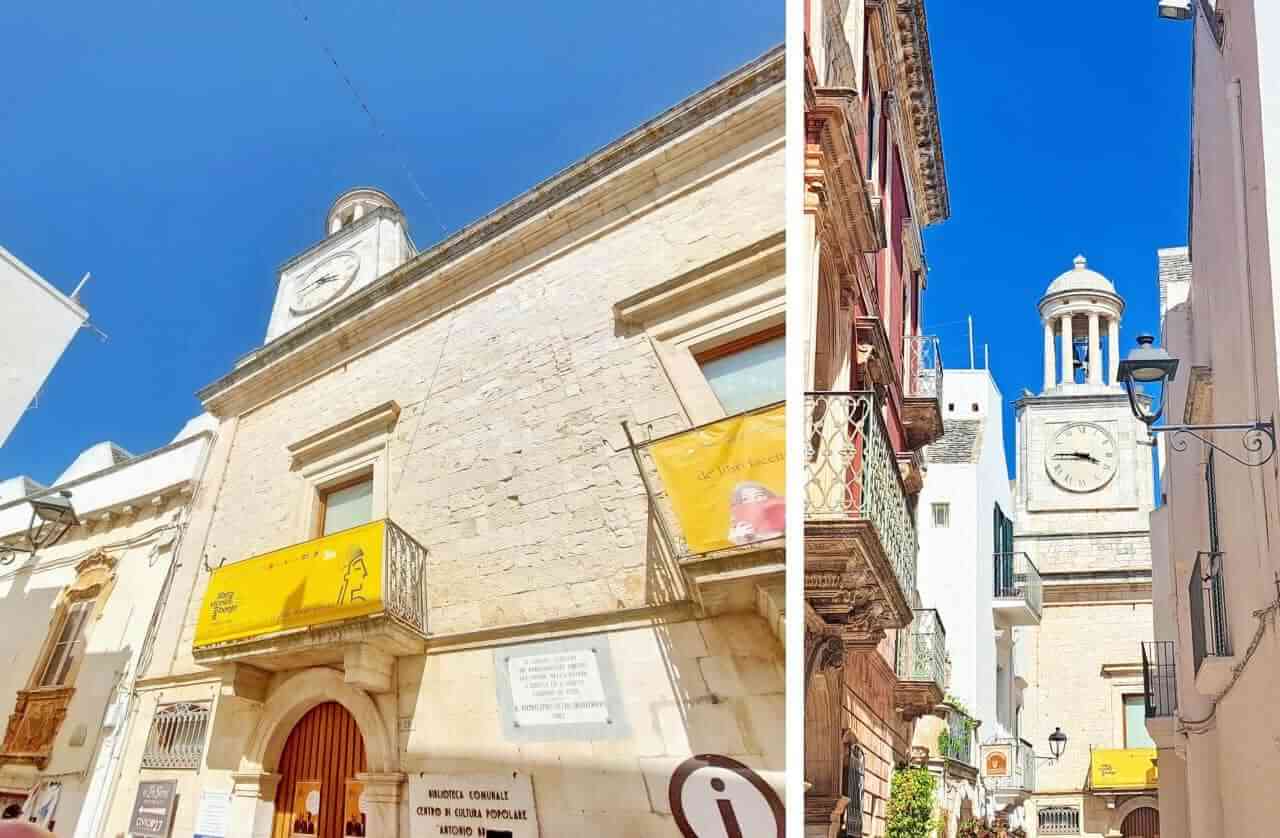
Locorotondo, Palazzo Comunale and Torre Civica
Palazzo Morelli
The impressive Palazzo Morelli was built in Baroque style in 1819, as a noble residence of the governor Morelli. He had an important role in the political and social life of Locorotondo.
The portal is interestingly carved, with the Morelli family coat of arms. The white palace still looks stunning, with ornate windows and wrought iron balconies with flowers.
I think that the palace is not open to the public now, because it is divided into private apartments.
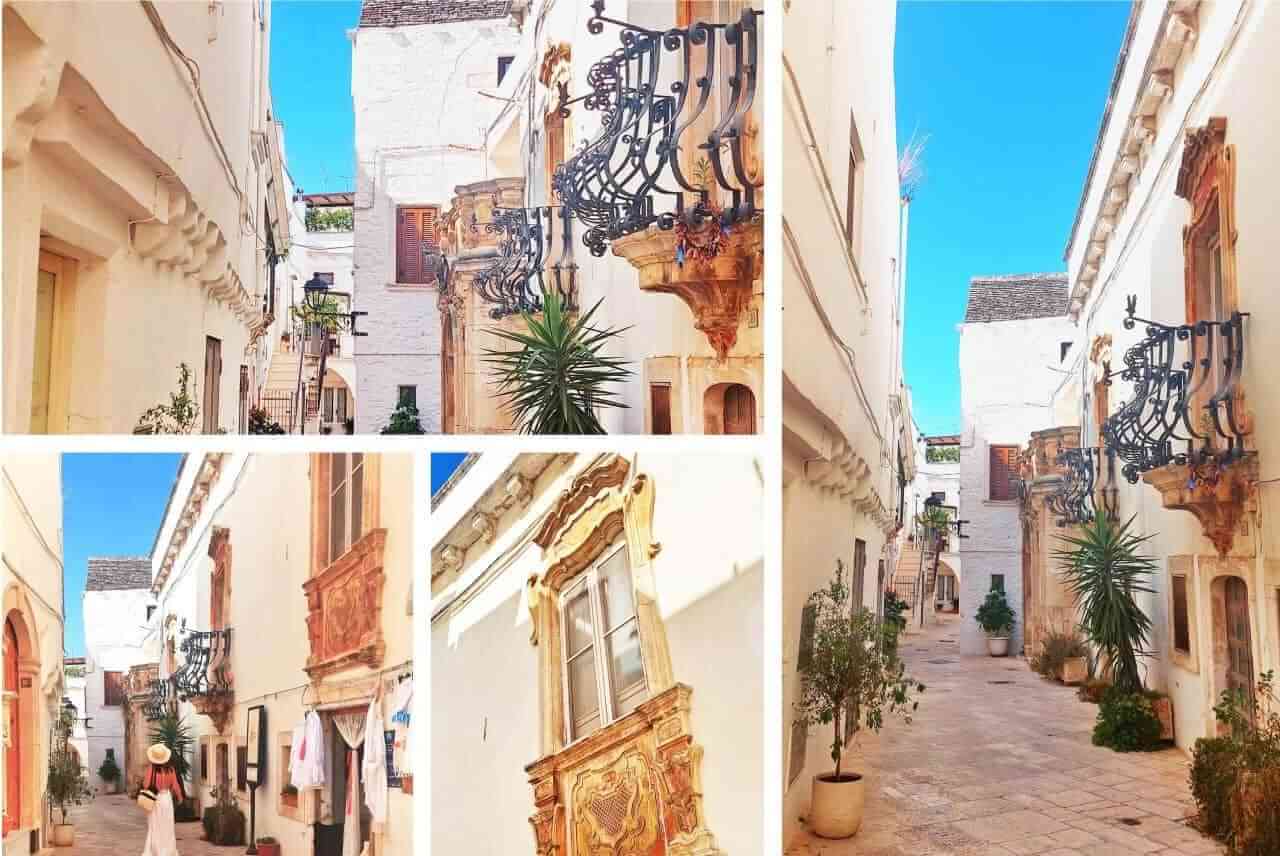
Palazzo Morelli
⛪ The most famous Churches
The Church of Saint George Martyr – Chiesa Madre di San Giorgio Martire
Chiesa Madre di San Giorgio Martire is the main church of Locorotondo. It is dedicated to Saint George, the patron saint of the city. Every year, Locorotondo celebrates San Giorgio on the 22nd and 23rd of April.
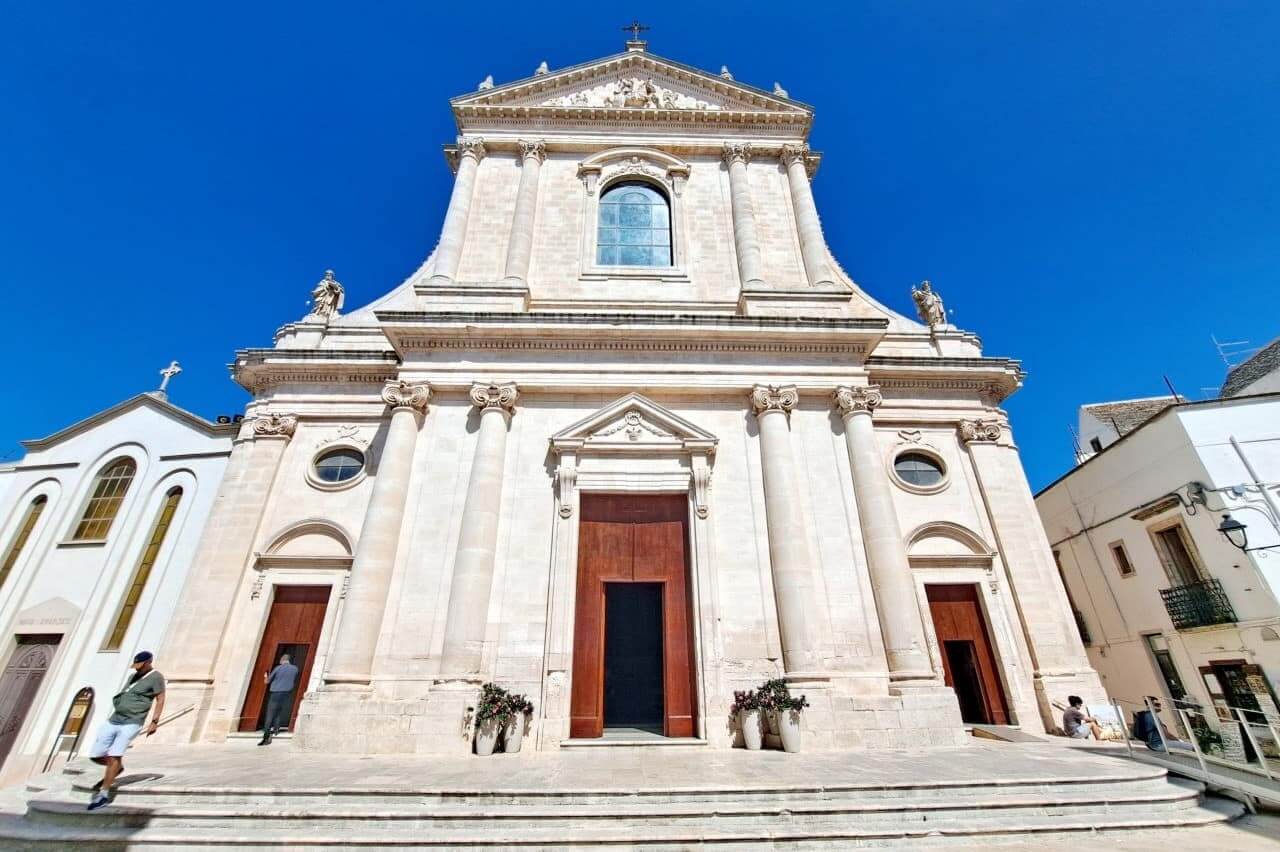
Locorotondo, the Church of Sant’Georgio Martyr
This church was built in the Neoclassical style between 1790 and 1825, on the site of two earlier churches. Interestingly, the houses were built in a circular shape around the church, according to the documents from 1195, when the first church was built. The second reconstruction was in 1579, and the church foundation can be seen today, thanks to the positioning of slabs of glass on the floor.
The central dome of the church is 35 meters high. On the left side, there is the chapel of Santissimo Sacramento, adorned with biblical scenes on 42 frames, from the previous church. There is a large painting of the Last Supper from 1841 inside the chapel.
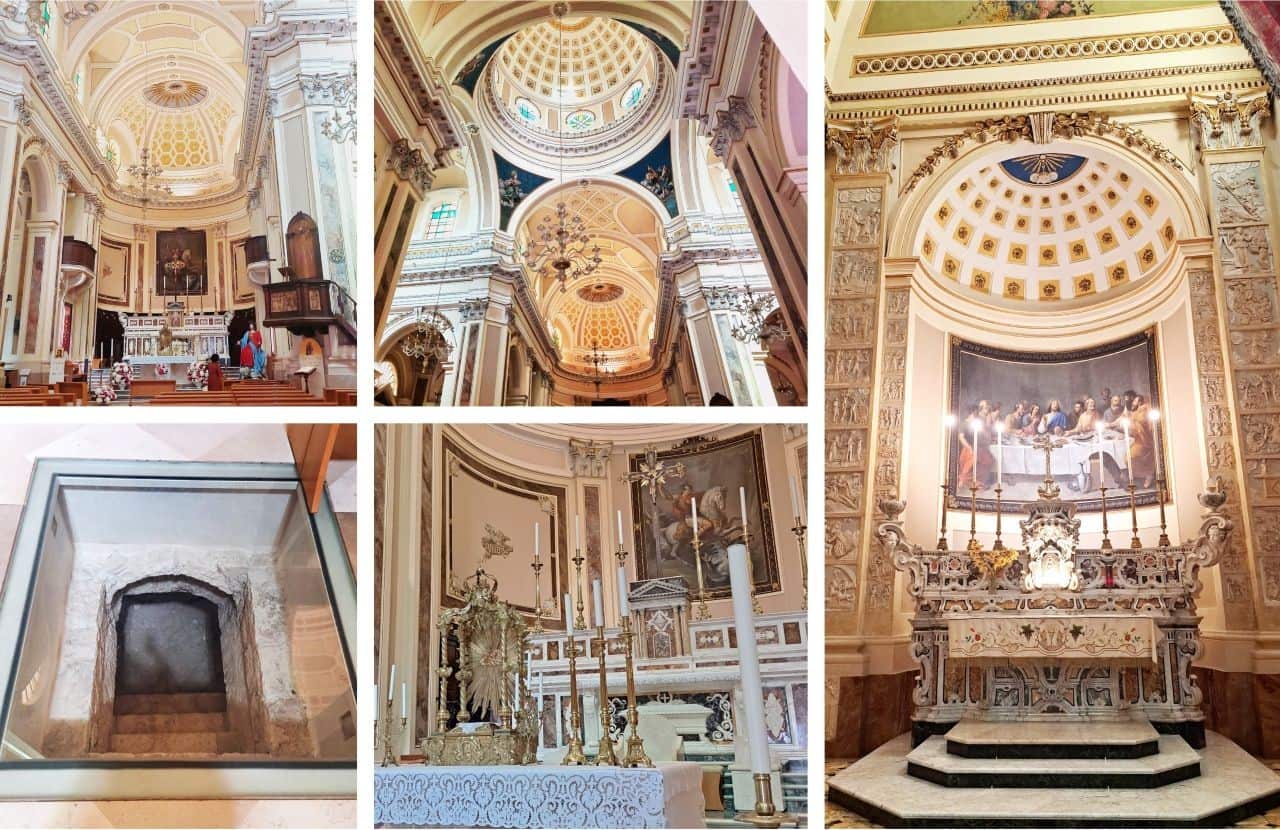
Interior of the Church of Saint George Martyr
La Madonna della Greca is the oldest church in Locorotondo, dating back to the 7th century. It was reconstructed in 1481, on the initiative of Pirro Orsini del Balzo, the prince of Taranto. The church has the Greek name; it is supposed that the Greek Orthodox cult was present there. During the medieval era, it became a Catholic church.
The facade is decorated with a stone rose window made in the 20th century. It was a reproduction of the destroyed medieval rosette. At the top corners of the facade, there are the statues of Saints Peter and Paul.
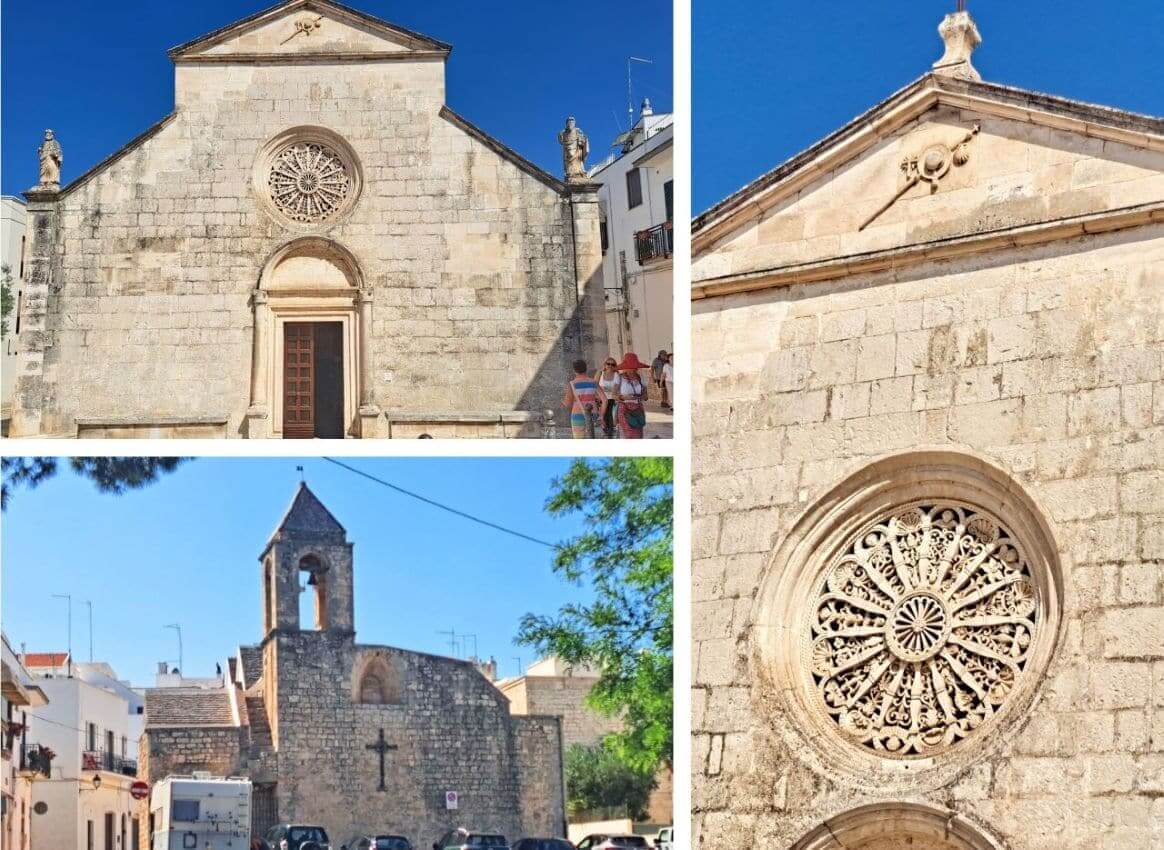
The Church of Madonna della Greca
Church – Chiesa di San Rocco
Chiesa di San Rocco is dedicated to San Rocco. It is the second patron saint of Locorotondo, because the people believed that San Rocco saved them from the plague in 1690-91.
San Rocco is celebrated on August 16th. It is a major event in town, with a procession, music, and fireworks.
Park – The Villa Comunale
Across the Porta Napoli and the Vittorio Emanuele Square, you can relax in the Villa Comunale.
It is a small public park at the edge of the old town, built in the mid-1800s. The park is a popular place both for locals and tourists, perfect for taking a break and enjoying delicious gelato on hot summer days.
In the centre of the park, there is an impressive monument, dedicated to the fallen people of all the wars (Monumento Ai Caduti).
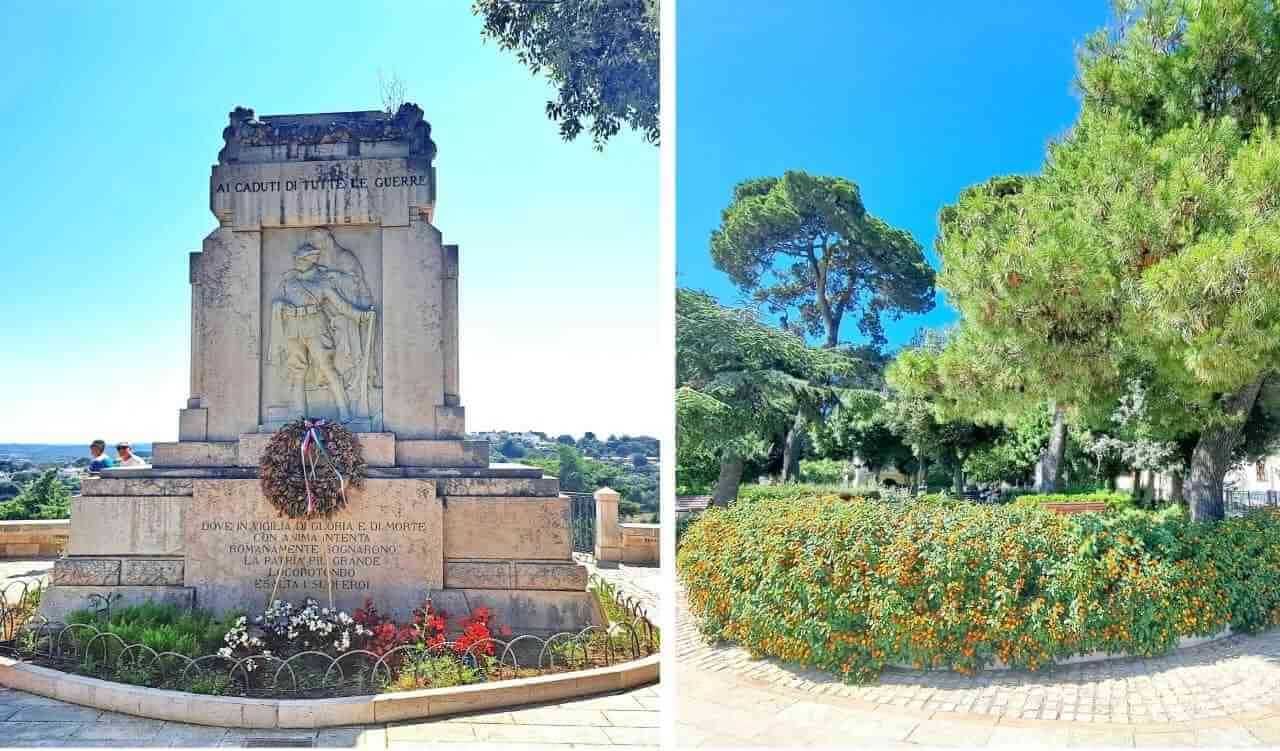
Park the Villa Comunale and the Monumento Ai Caduti
From the park and Belvedere, there is a fantastic panoramic view of the Itria Valley, trulli, olives and vineyards.
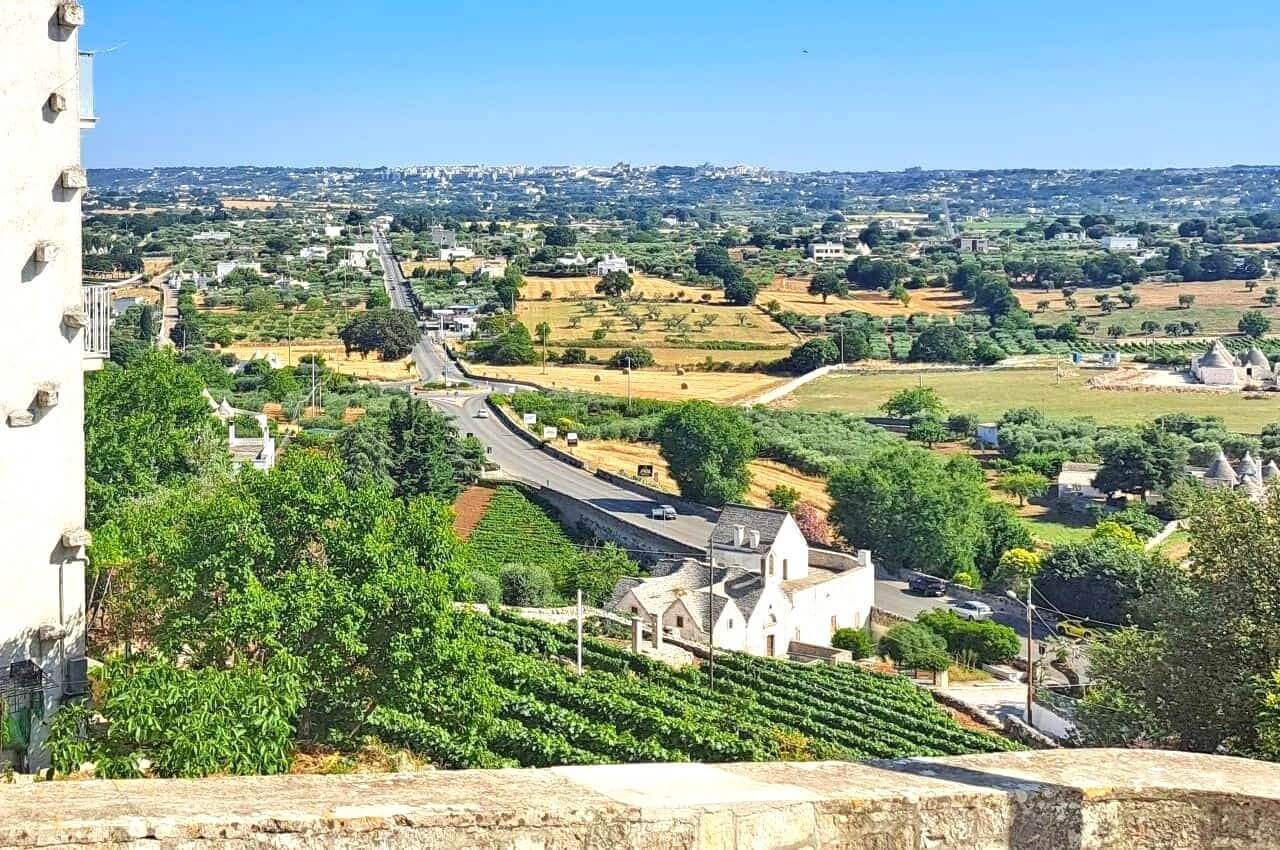
View of the Locorotondo countryside with trulli
Via Nardelli
Close to the park Villa Comunale, there is another great spot to see the valley. It is the street of Via Nardelli, which runs alongside the circular border of the historical centre. It is also known as Lungomare, even though the sea is not close (this term is used for the road that goes parallel to the sea).
There are several bars and restaurants, perfect for enjoying the sunset, wine and Puglian dishes.
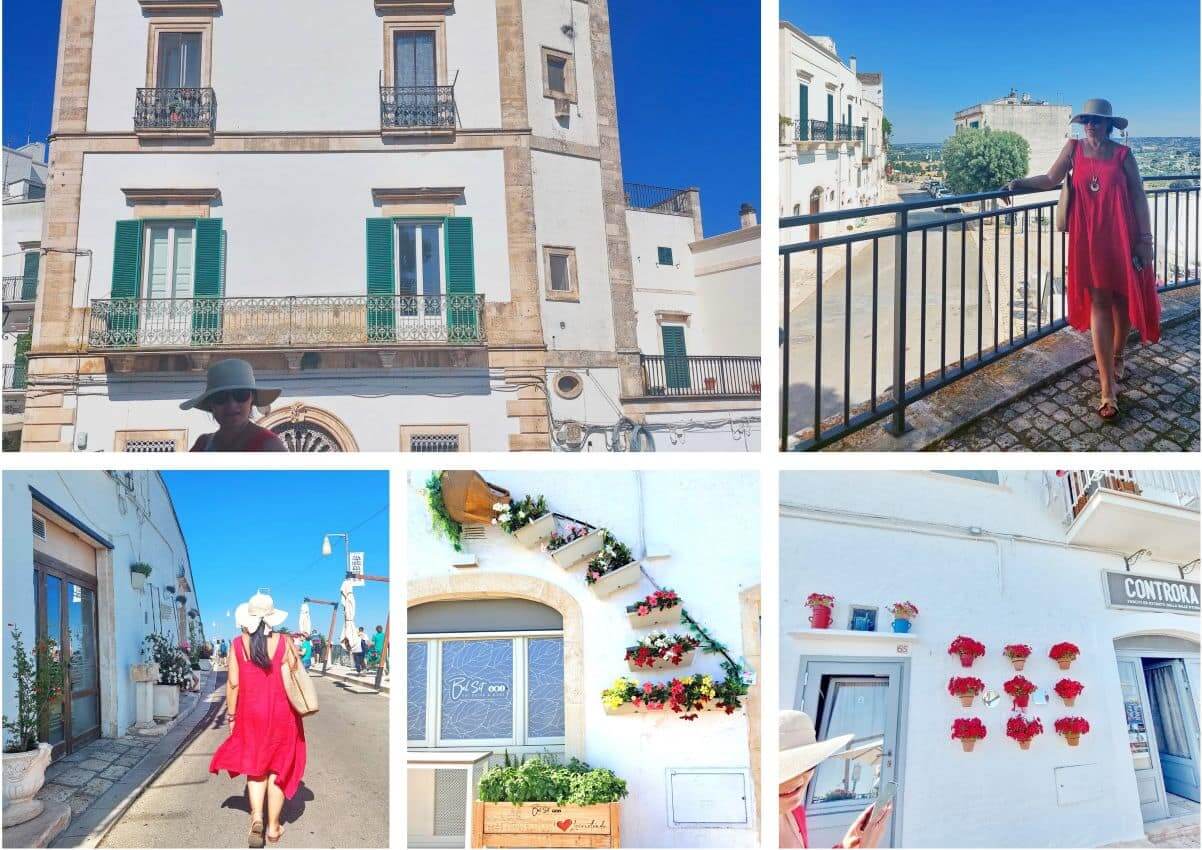
Locorotondo, Via Nardelli, with white houses, restaurants and flowers
🏠 Accommodation in Locorotondo
Usually, Locorotondo is not as crowded as Alberobello. But it can be a good choice for a base to stroll around the Puglia region.
By the way, there are no big hotels in the town. You can stay in restored houses “Le Cummerse” in the historic centre, and choose apartments or boutique hotels, which include a bed and breakfast.
Another option is the trulli, unique whitewashed houses with conical roofs, which are specific to Alberobello and the Valle d’Itria region.
Also, you can stay in masseries, renovated fortified farmhouses located around the town. They are perfect for a calm and relaxing vacation. Some of them have luxurious rooms, a spa, a pool and a restaurant. By the way, many celebrities (especially from the USA and the UK) bought masseries, for vacation or as an investment.
Food & Drink
Although Locorotondo is a small town, it offers a variety of bars, cafes, and restaurants.
Try traditional cheeses and dishes of Puglian cuisine, such as pasta (orrecchiete are the most popular in Puglia), or bombette (stuffed meat rolls). Some of the most popular restaurants are: Osteria Il Rosone, Controra, Goodo, Trattoria Al Vecchio Arco, Ai Tre Santi, 20 M2, Pizzeria Casa Pinto, Bit Sit, etc.
Taste excellent Puglian wines in wine bars, such as Pavi, or Vinifera Vini & Affini.
And various gelato, granite and espresso freddo (cold espresso coffee) will be the perfect refreshment on hot summer days.
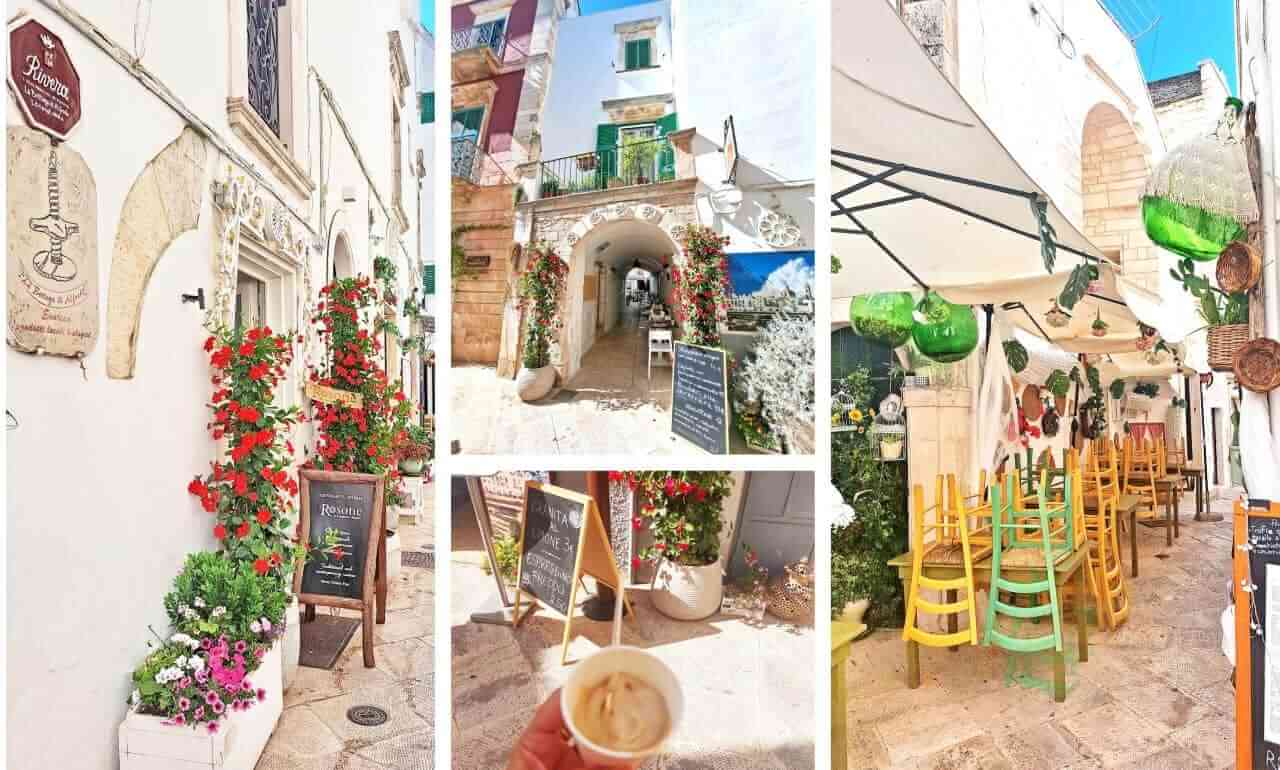
Popular restaurants in Locorotondo
🍷 Wine tasting in Locorotondo
For sure, wine lovers will enjoy tasting Locorotondo DOC wines. It is a dry white wine with refreshing and fruity flavours.
By the way, Locorotondo DOC wines are considered the best Apulian white wines. The most popular are Bombino Bianco, Bianco d’Alessano, Riserva and Verdeca wine.
If you have enough time, visit wineries around the town, or book a wine tasting to learn more about the Puglian wine-making.
Visit Locorotondo
This stunning “round place” has some unique local charm and a way of living.
Take your time and explore the white houses with flowers, and soak up the peaceful atmosphere.
Buy some of the local souvenirs, handicrafts, accessories, ceramics or clothes in small artisan shops.
And enjoy your time in Puglia 🙂
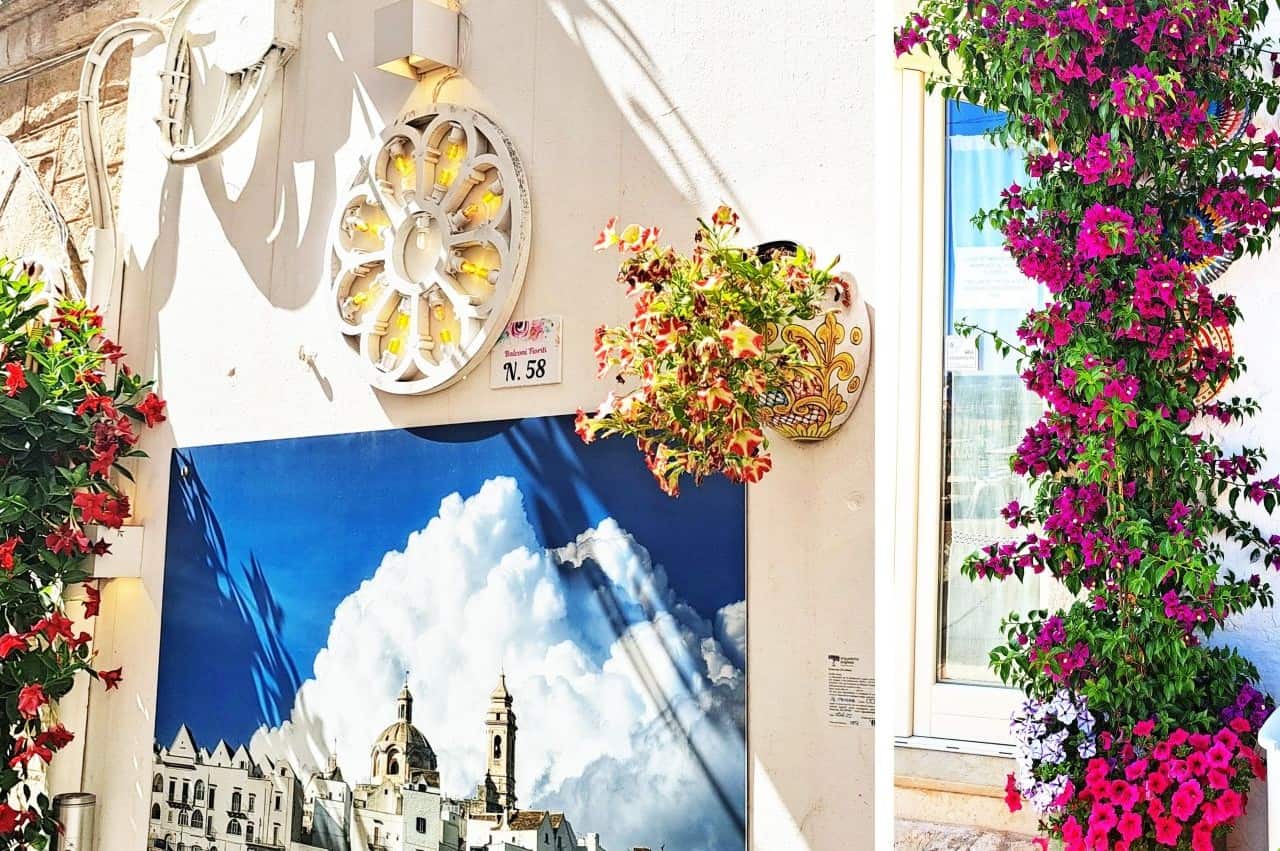
Locorotondo flowers
📌 After a short but very pleasant walk around beautiful Lotorondo, we continued our trip to another gem of Puglia.
Stay tuned for the story of the town of Monopoli…


Leave a Reply
Want to join the discussion?Feel free to contribute!