
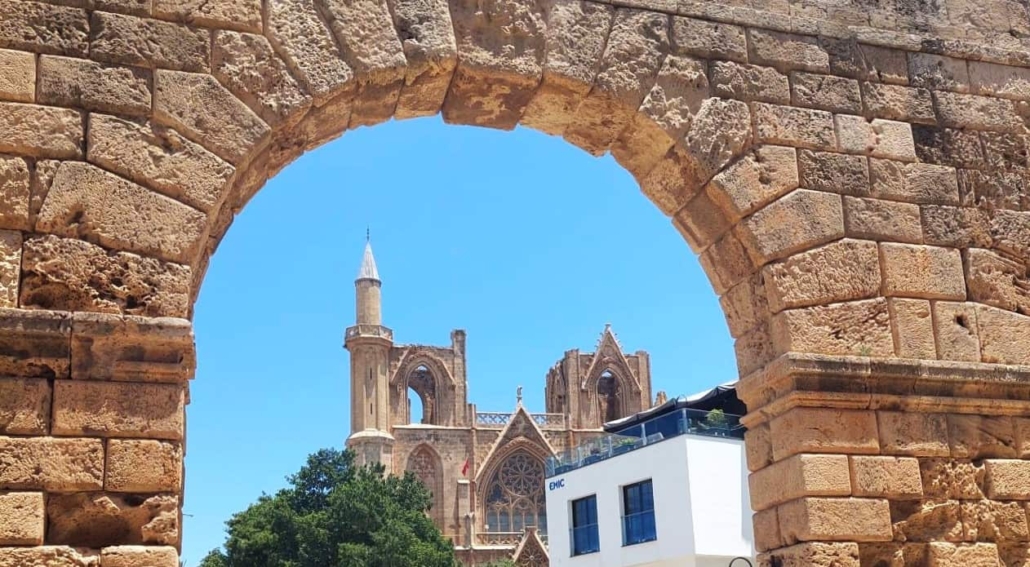
Famagusta, the city of walls, kings, and ghosts
Famagusta is one of the most interesting towns in the Mediterranean. Once a wealthy and important port, it is one of the symbols of Cyprus’s dramatic past.
Famagusta (Gazimağusa in Turkish and Ammochostos in Greek ) is located on the eastern coast of Cyprus. Today it is controlled by Turkish Cypriots and Turkey as part of the self-declared Northern Cyprus.
Welcome to Famagusta, a fascinating mix of medieval Lusignan heritage, cathedrals, Venetian palaces, mosques, and the abandoned quarter of Varosha, the former exclusive resort with luxurious hotels.
Famagusta, Cyprus
 Disclosure:
This text contains affiliate links, which means that if you book a hotel through them, I can earn a small commission, at no extra cost to you. Thanks.
📌How to get to Famagusta
Famagusta is situated on the eastern coast of Cyprus, and it is about 55 km away from the capital Nicosia.
As I mentioned in the previous text about Varosha, today it is under the rule of the Turkish Republic of Northern Cyprus (a de facto state, recognised only by Turkey). It means that you have to take your passport or EU national ID card with you because you have to pass through a checkpoint. The nearest one is the Deryneia Checkpoint, which is the best way for visitors coming from Ayia Napa or Protaras.
You can visit Famagusta individually by car, or take a bus from Ayia Napa, Larnaca or Nicosia; just check the schedules carefully. Also, you can visit it on guided tours from these towns. For example, we visited Famagusta, Varosha and ancient Salamis from Ayia Napa.
📍A few words about the history
After the ancient Salamis was seriously damaged by an earthquake, the Egyptian King Ptolemy II founded a new town and named it Arsinoe after his sister and wife, around 274 BC. By the 3rd century, the town was known as Ammochostos, which means “Hidden in Sand”, and this name is still used in the modern Greek language.
The town flourished during the time of the Byzantine emperor Justinian. In AD 647, the population increased when people came from neighbouring cities after the Arab raids.
Then, in 1291, after the fall of Acre in the Holy Land, the Knights Templar, Christian refugees, and wealthy merchants came to Famagusta. Under the rule of the Royal French Lusignan dynasty, and due to its natural harbour, the city exploded into an important trading centre between Europe and the Middle East.
Also, it got the nickname “The City of 365 Churches” because the wealthy merchants built a church for every day of the year to show off their fortunes.
The Genoese conquered the town in the 14th century, and the Venetians took over in 1489. Despite the city walls and military fortress, the garrison surrendered to the Ottomans in 1571 after thirteen months and a terrible bombardment during the siege.
During Ottoman rule, Latins lost their privileged status in Famagusta. Most of them were merchants who were expelled from the city and went to Larnaca. Also, the Greek Cypriots were banished from the walled city in 1573–1574, so they settled outside in the area that later developed into Varosha.
Turkish families from Anatolia came to the walled city, but the population drastically decreased, and Famagusta lost its importance as a trade centre. On the other hand, Varosha developed into a prosperous agricultural town.
In 1878, Great Britain administered the island. The harbour was expanded, and Varosha became the administrative British centre, with headquarters and residences. Cyprus got independence from British rule in 1960.
Turkish invasion in 1974
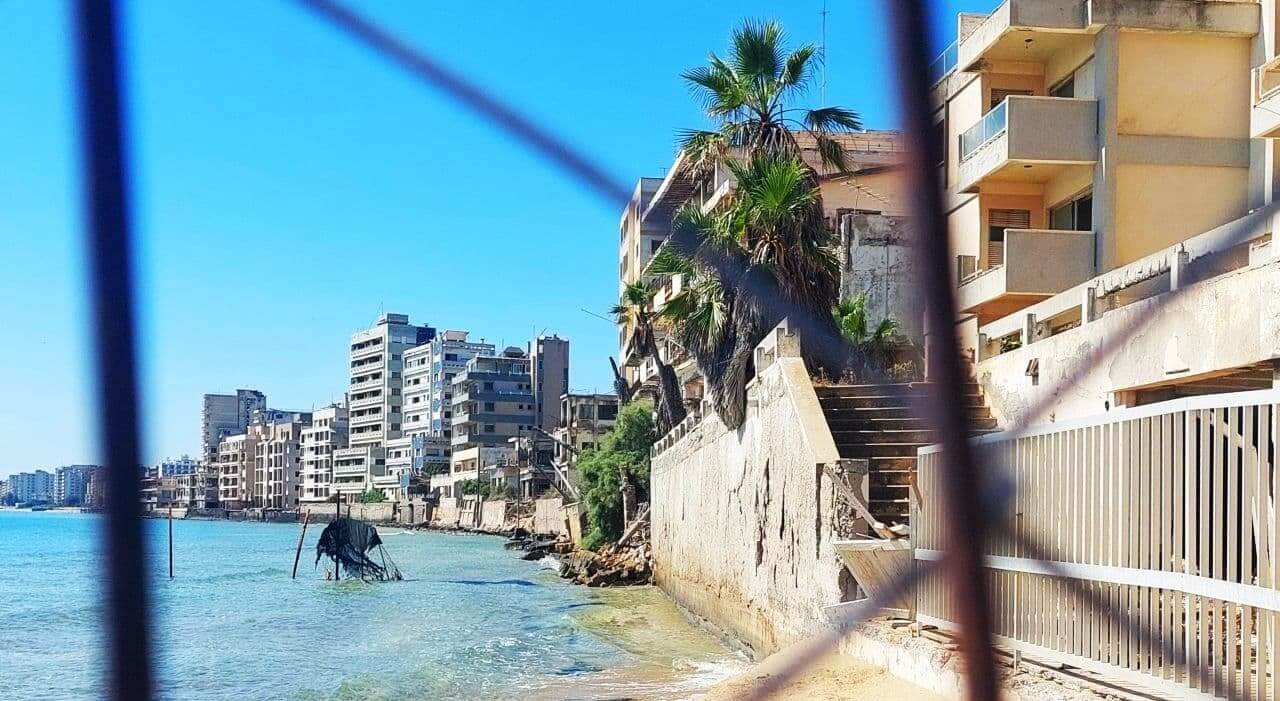
During the 1960/70s, Varosha became the modern part of the town of Famagusta and a glamorous international tourist destination. Hollywood stars such as Elizabeth Taylor, Richard Burton, and Brigitte Bardot stayed at luxurious hotels there.
But in 1974, after a Greek-engineered coup, the Turkish military intervened and occupied the northern part of the island. The Greek Cypriot population of Varosha fled the town, expecting to return in a few days.
But the Turkish military fenced off the entire Varosha and turned it into a literal “Ghost Town.” For nearly five decades, everything was completely closed and frozen in time. In 2020, a small part of the town is open to visitors, but the Greek Cypriots still can’t go back to their homes.
📍Read more about Varosha on the blog: Varosha, a ghost town in Cyprus.
Varosha, the city of ghosts
What to see in the Famagusta Old Town today
Due to the massive stone fortifications which surround the Old Town of Famagusta, it is known as the Walled City. Inside the walls, you can find amazing monuments of a rich history and modern cafes, restaurants and shops.
The old town of Famagusta reminded me of Valletta, with its stone palaces and the traces of knights’ heritage.
The Venetian Walls
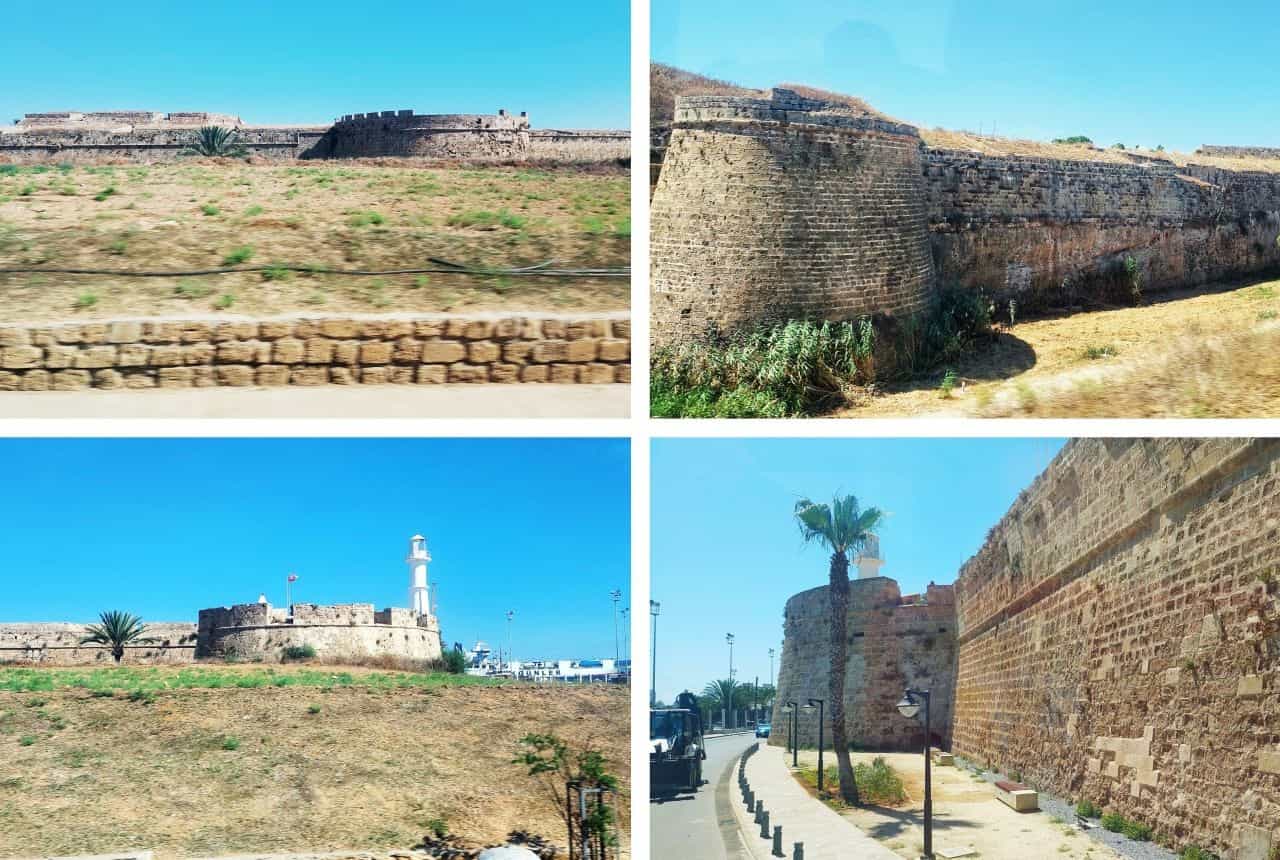
The walls that we can see today are the Venetian Walls. The monumental defensive walls are up to 15 meters high, 8 meters thick in certain sections, and about 3,5 kilometres long.
Venetian Walls of Famagusta
Originally, the walls were built in the 14th century by the Kingdom of Lusignan. In the 15th and 16th centuries, they were redesigned by the Republic of Venice. The walls had 14 bastions, each named after Venetian families, such as Martinengo, Ravelin, San Luca, etc. There were two gates: the Land Gate (the Ravelin or Akkule Bastion) in the southwest corner and the Sea Gate (Porta del Mare) by the port.
By the way, this fortification is known for having withstood a brutal 11-month Ottoman siege before the city ultimately fell in August 1571.
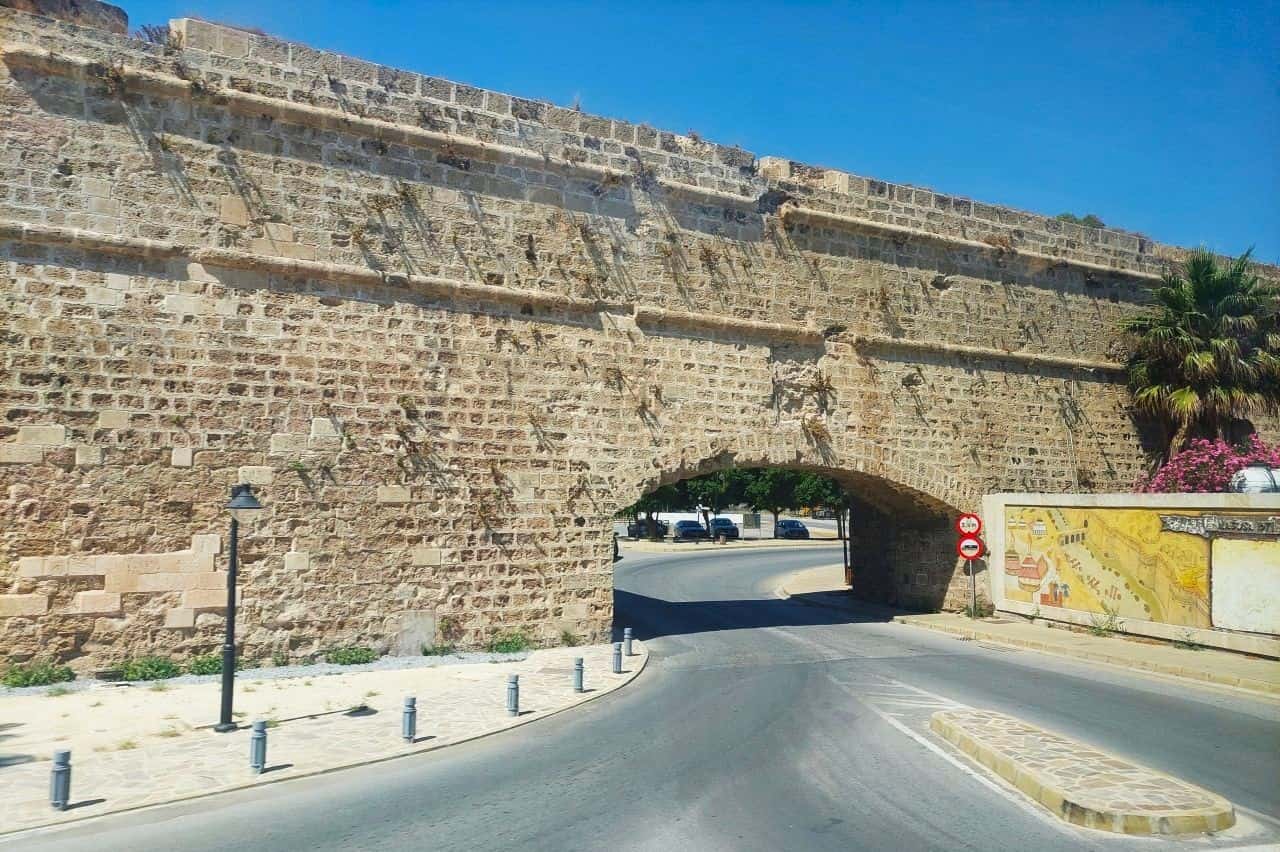
Famagusta Old Town, the Arsenal Bastion – the Canbulat Bastion
You can walk along some parts of them for a stunning view of the harbour and the town.
Next to the closed Sea Gate, in front of the wall, there is a large marble statue of the winged lion of St. Mark, the patron saint of Venice. It is believed that the marble has been sourced from the ancient ruins of Salamis.
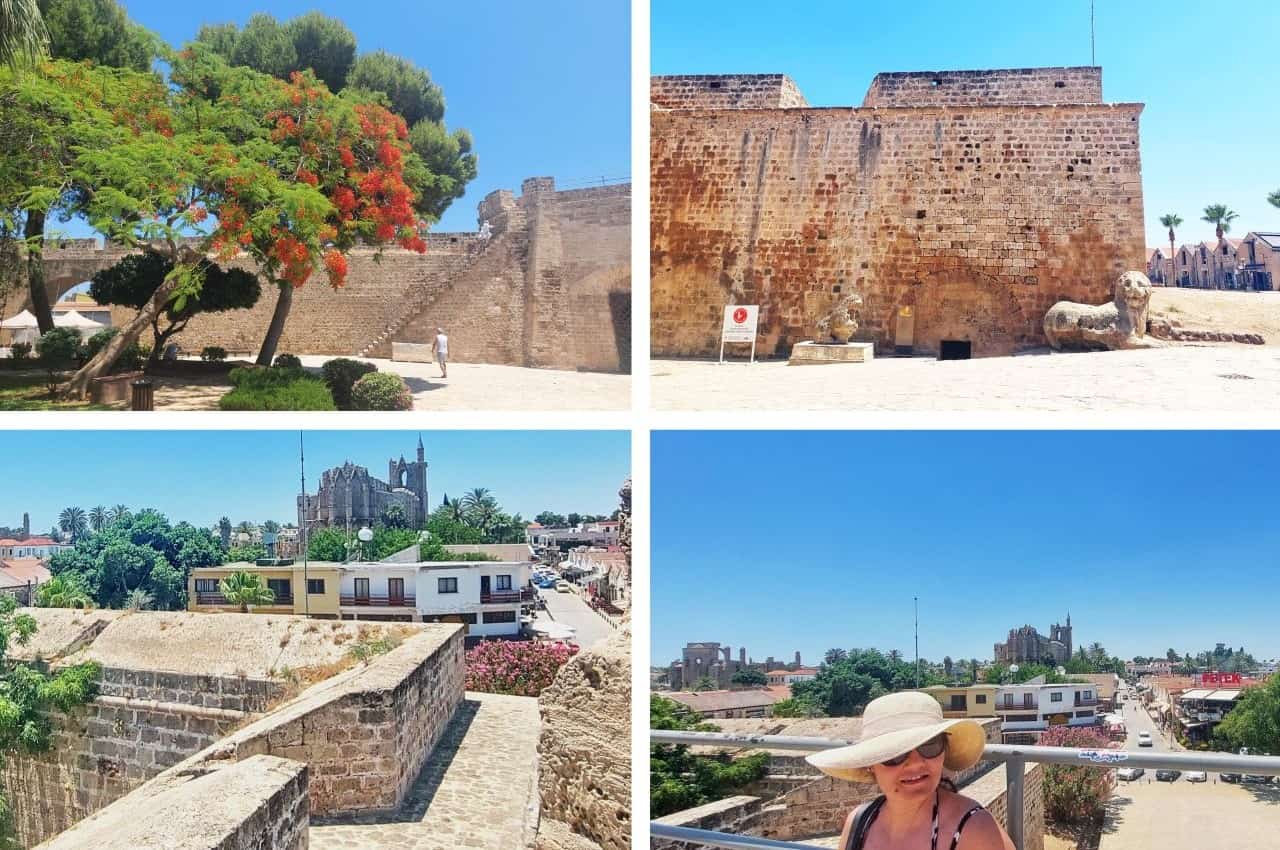
Venetian Walls, the closed Sea Gate and the Lion of Famagusta
Part of the fortification was also the Othello Castle, built in the 14th century by the Lusignans and later fortified by the Venetians, to defend both the harbour and the town. The Venetian Lion of St. Mark is carved above the castle entrance.
Interestingly, this fortress is famous as the setting for Shakespeare’s famous tragedy, Othello.
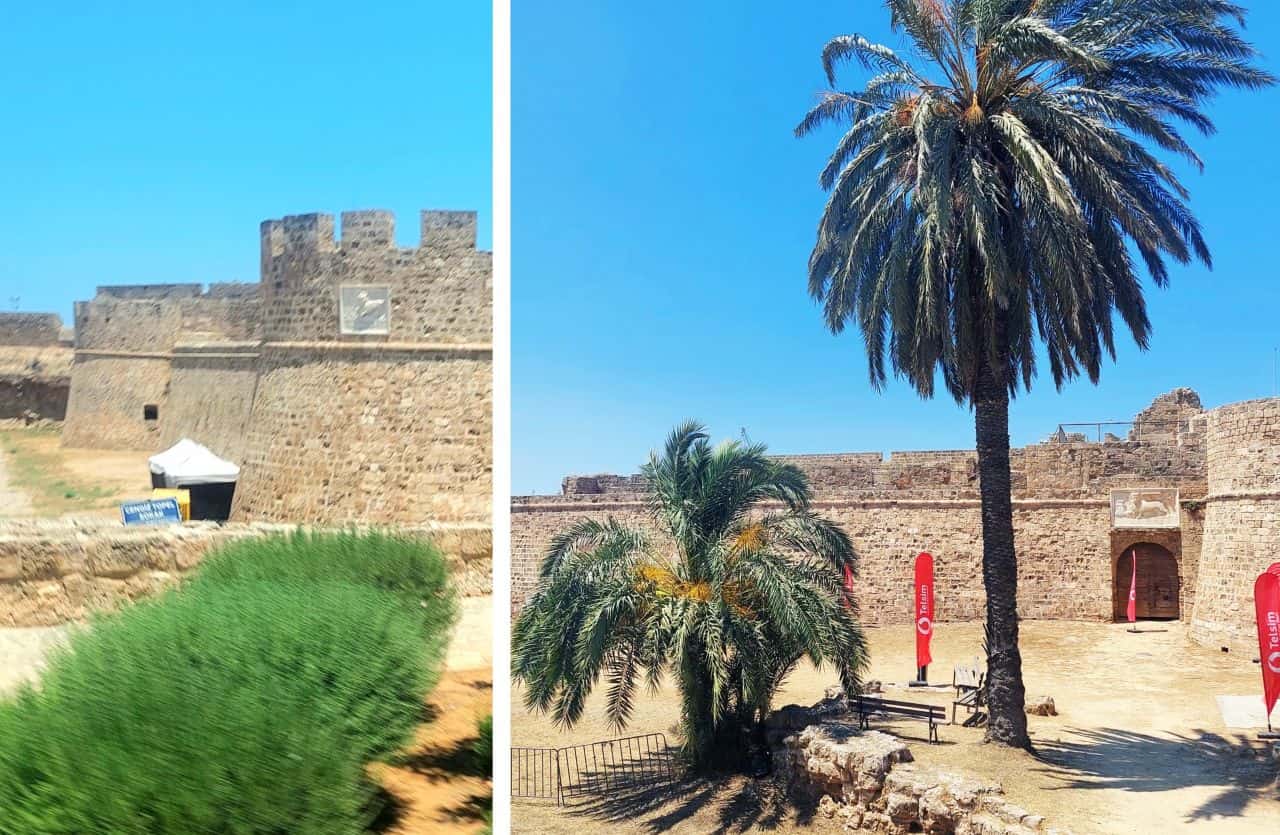
Venetian Walls, Otello Castle
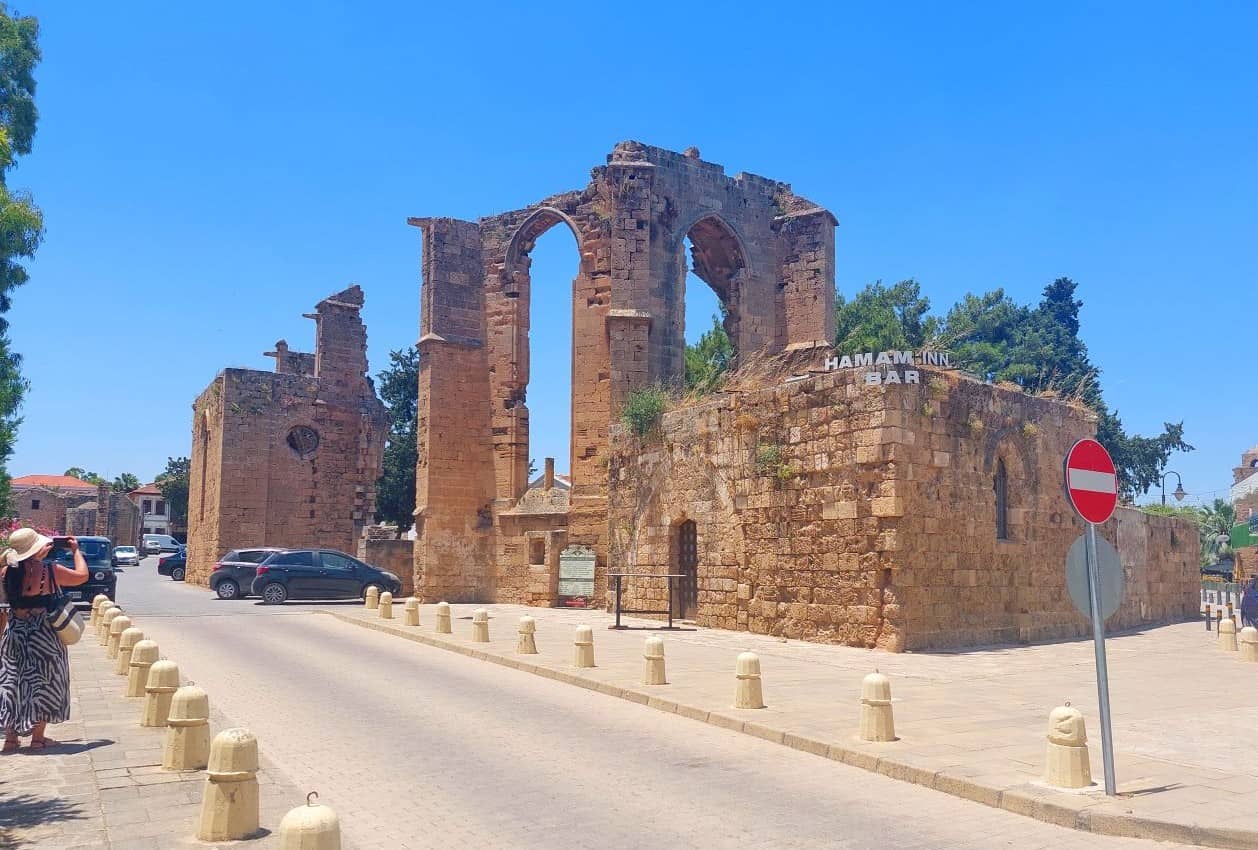
Church of St. George of the Latins
On the opposite side of the street, you can find the remains of the Church of St. George of the Latins. It was probably built at the end of the 13th century or in the early years of the 14th century. The church was destroyed during the 1570 siege of Famagusta, and the last renovation was in 2025.
Across the street is a parking lot, and this area around the church is usually the meeting point during the organised guided tours.
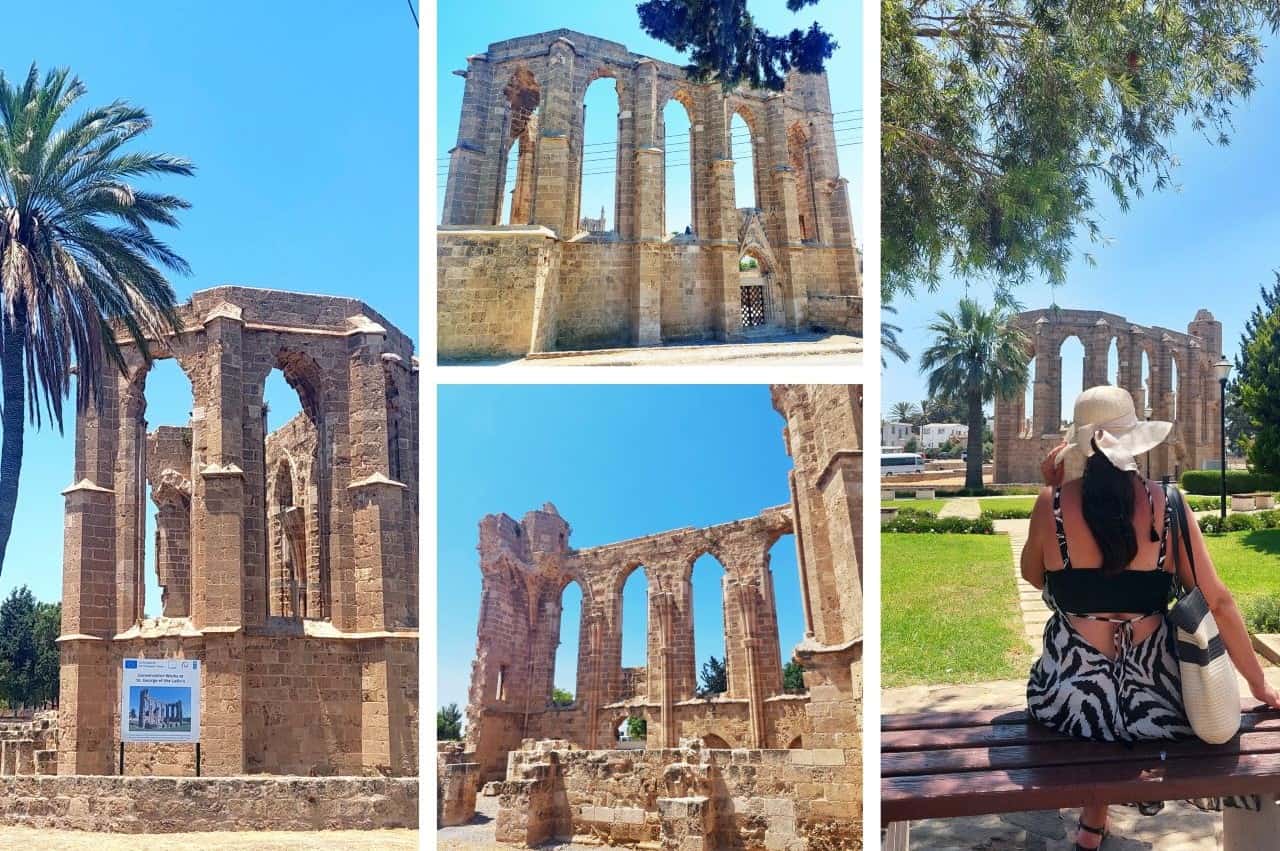
Church of St. George of the Latins
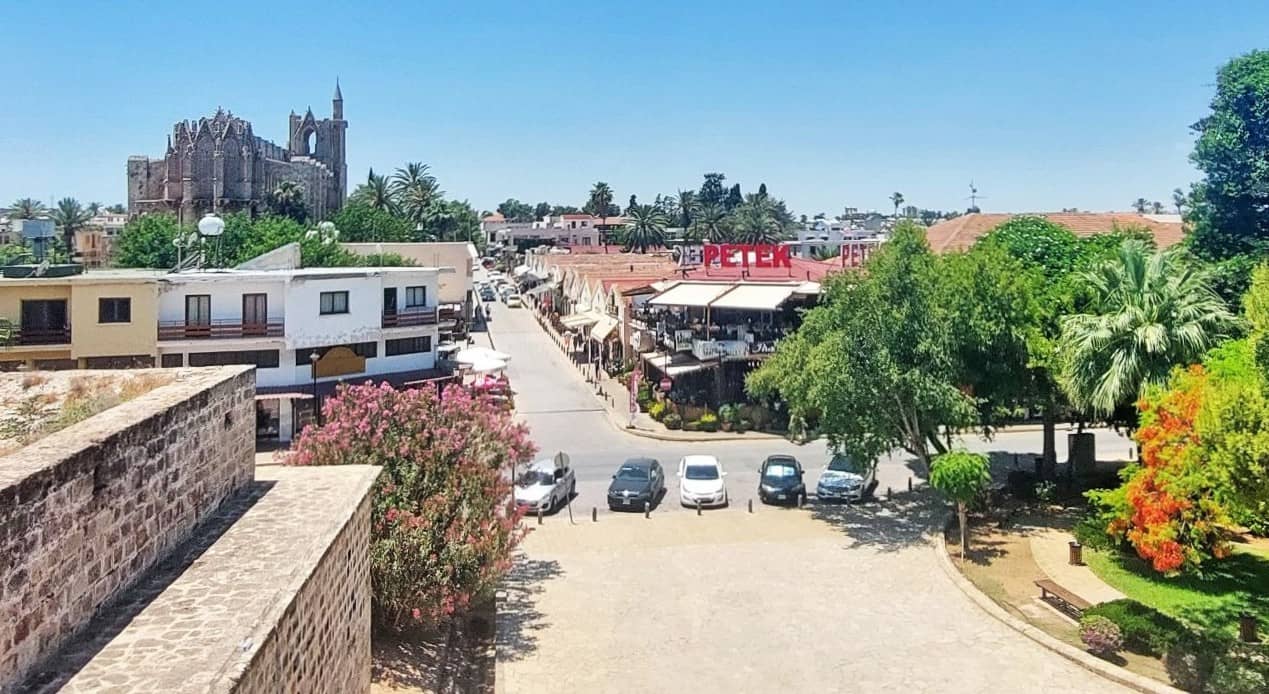
A short distance away, at the corner of the street, there is the famous Petek Patisseries (I will mention it later). After Petek, we entered the small Liman Yolu Street lined with cafes and small shops.
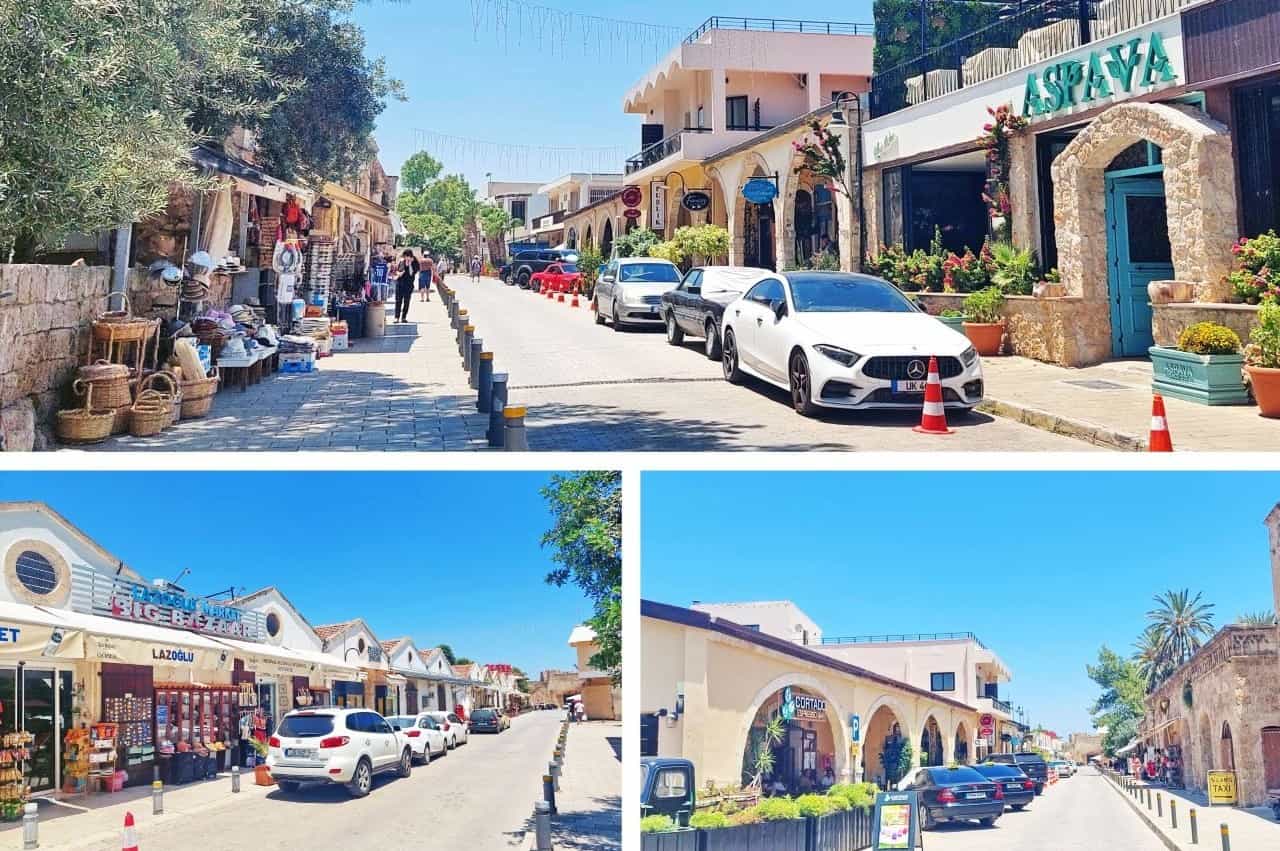
Famagusta, Liman Yolu Street
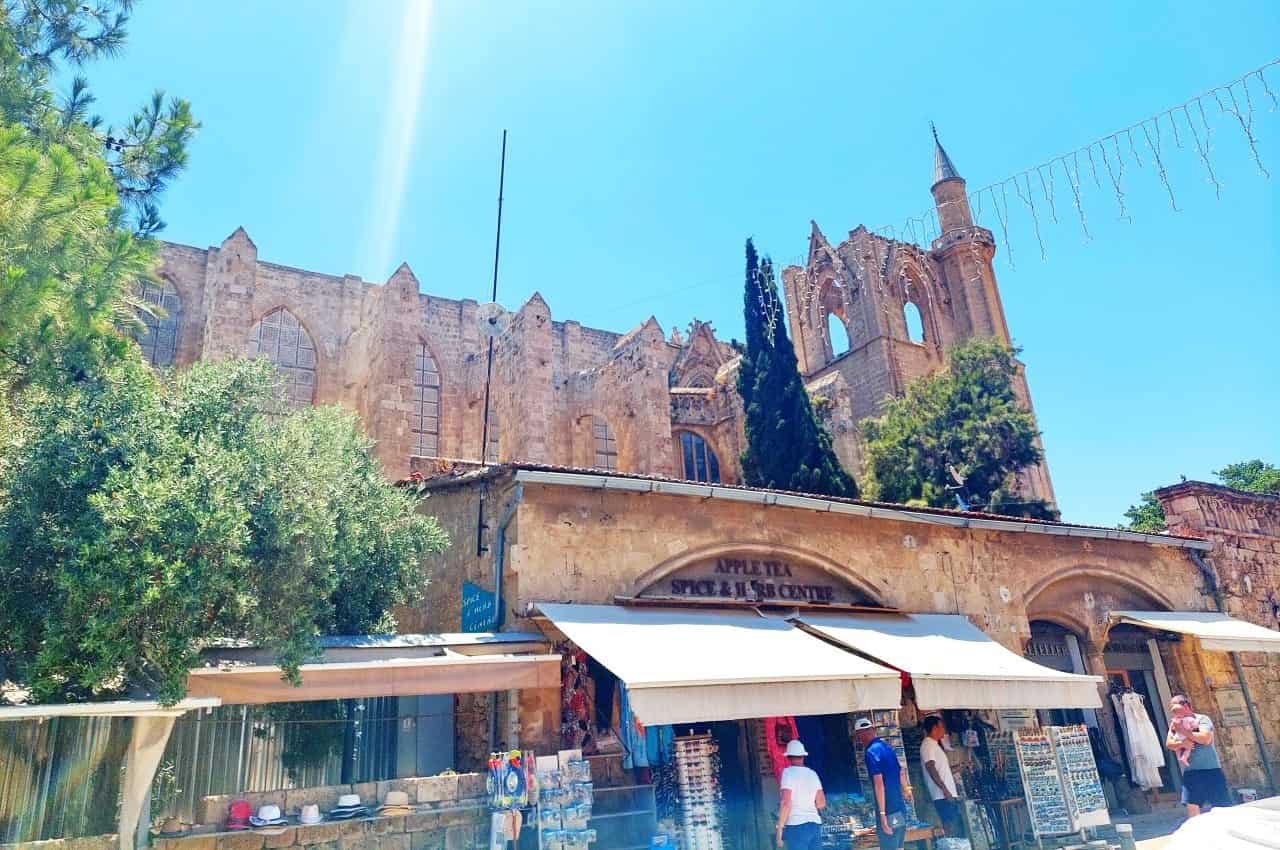
Famagusta Old Town
It leads to the centre and the main square, named after Namik Kemal (1840-1888), the Ottoman writer, journalist and reformer. You can see his bust in front of the Zaptani restaurant, situated in the building dating back to the 15th century, once a school for young priests, and later a Madrasa for young Ottomans.
Two of the most important monuments of Famagusta’s history are situated at this square.
🕌 Lala Mustafa Pasha Mosque (St. Nicholas Cathedral)⛪
The most famous building in the Old Town of Famagusta is Lala Mustafa Pasha Mosque.
First, it was the French Gothic cathedral, known as the St. Nicholas Cathedral. It was constructed from 1298 to 1312 and consecrated in 1328. The cathedral was beautifully decorated with carvings, arches, and stained-glass windows. The Lusignan kings of Cyprus were crowned Kings of Jerusalem there.
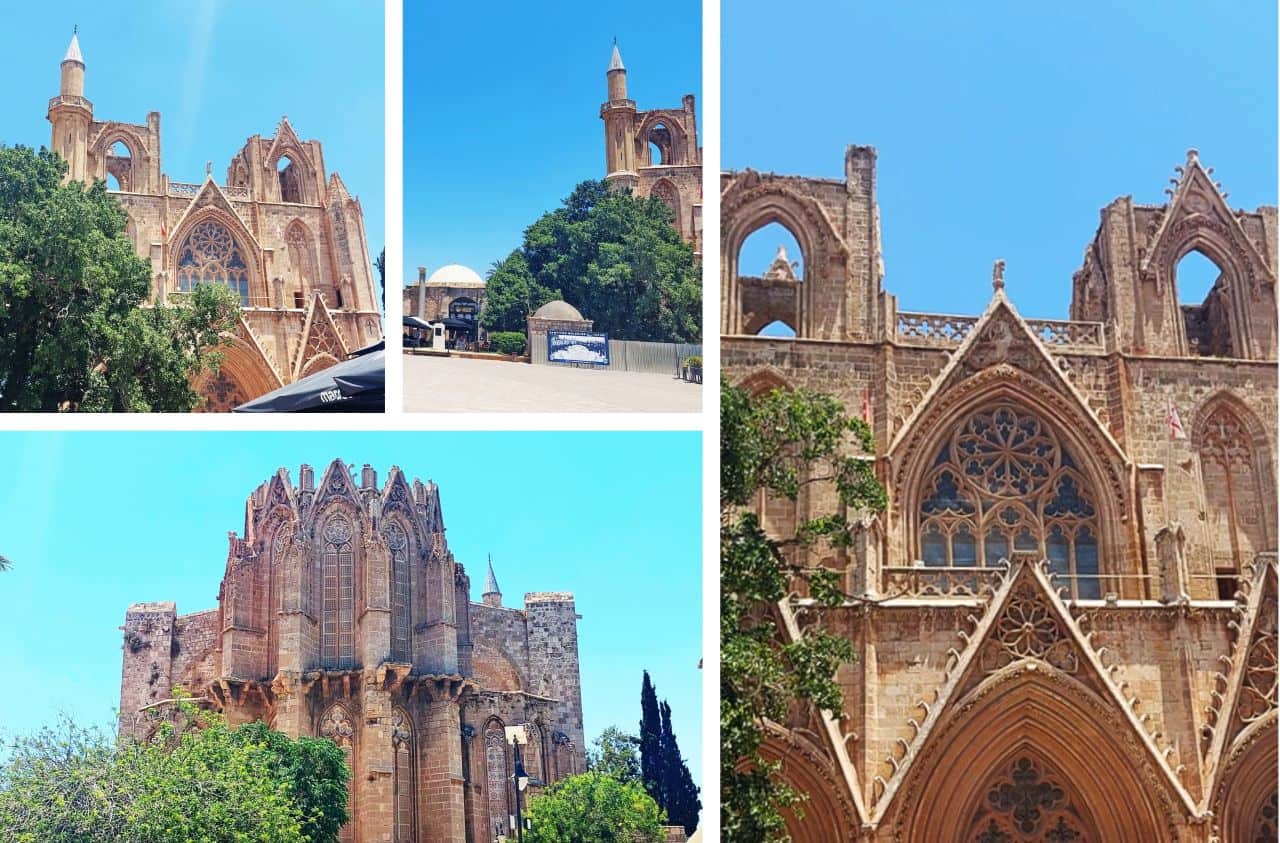
Lala Mustafa Pasha Mosque
In 1571, it was converted into a mosque after the Ottoman conquest. They added a minaret and removed all frescoes, paintings, stained glass, tombs, and the altar. Only the Gothic structure was preserved. The mosque was renamed the “St. Sophia Mosque of Mağusa”.
Then, in 1954, it was named the Lala Mustafa Pasha Mosque after the commander of the 1570 Ottoman general and Grand Vizier from Sokolac (the Sanjak of Bosnia).
Even today, the blend of Gothic towers, a row of buttresses and a Muslim minaret creates a unique architectural sight. It is closed for worship and visitors due to a restoration project started in April 2026, and it will last for the next 3-4 years.
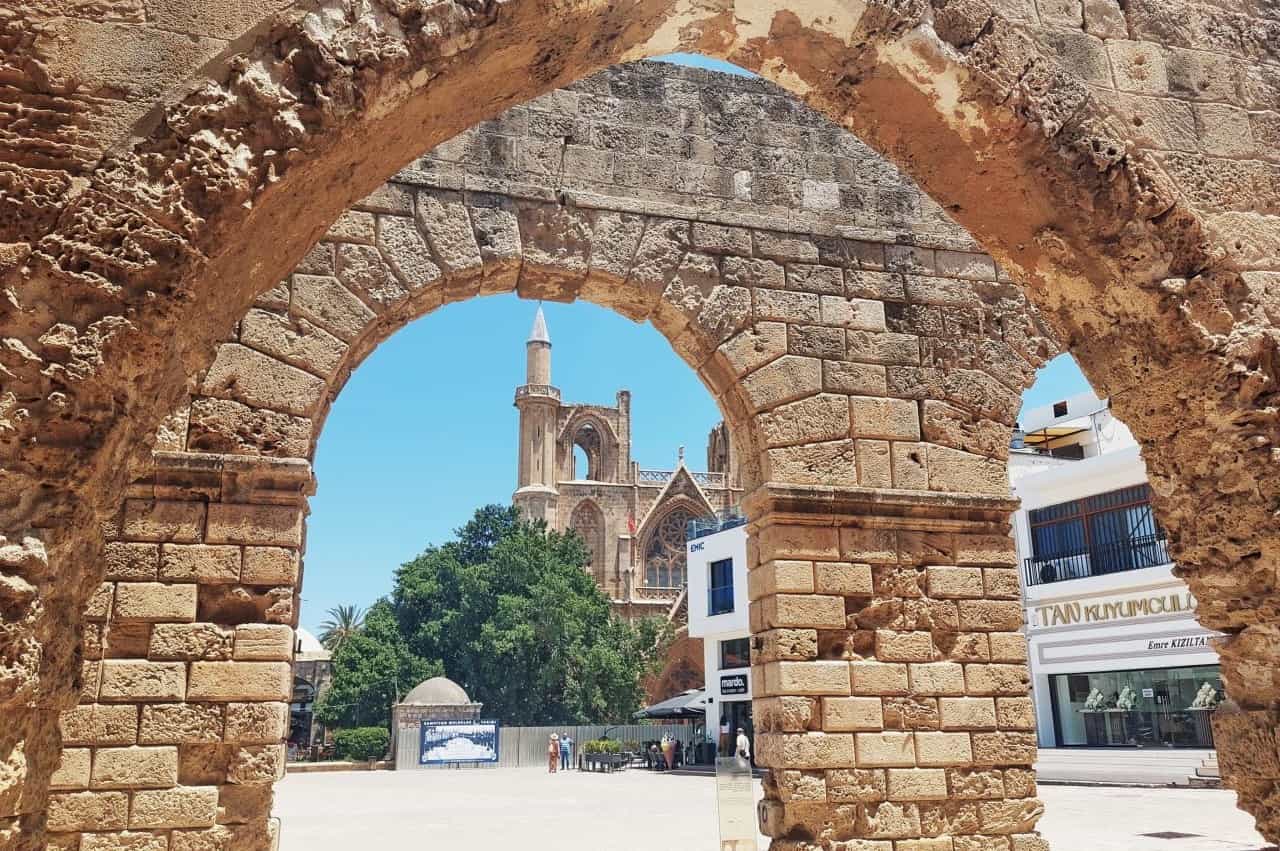
A view of the Lala Mustafa Pasha Mosque from the Venetian Palace
🏰 The Venetian Palace
The Palazzo del Provveditore, known as the Venetian Palace, was a royal residence, built around 1300–1302 by the Lusignan Kings of Cyprus. It is located at the western end of Namık Kemal Square in Famagusta, across from the former St. Nicholas Cathedral (today a mosque).
The palace was destroyed in 1369 by an earthquake and renovated between 1552 and 1554 by the Republic of Venice during its rule. Actually, the Venetians moved the capital of Cyprus from Nicosia to Famagusta. The new palace was used as the residence of the Venetian Military Governor – the Proveditore.
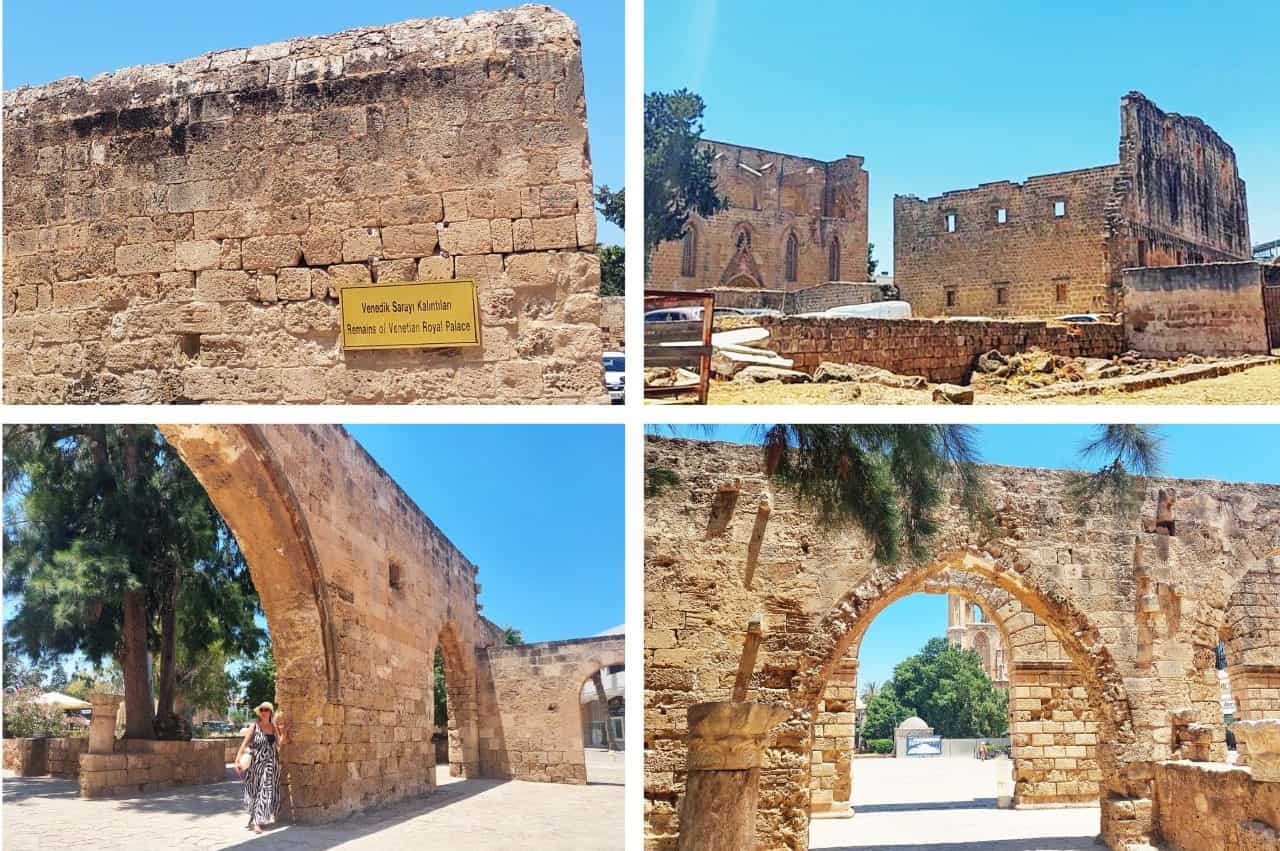
Remains of the Venetian Palace
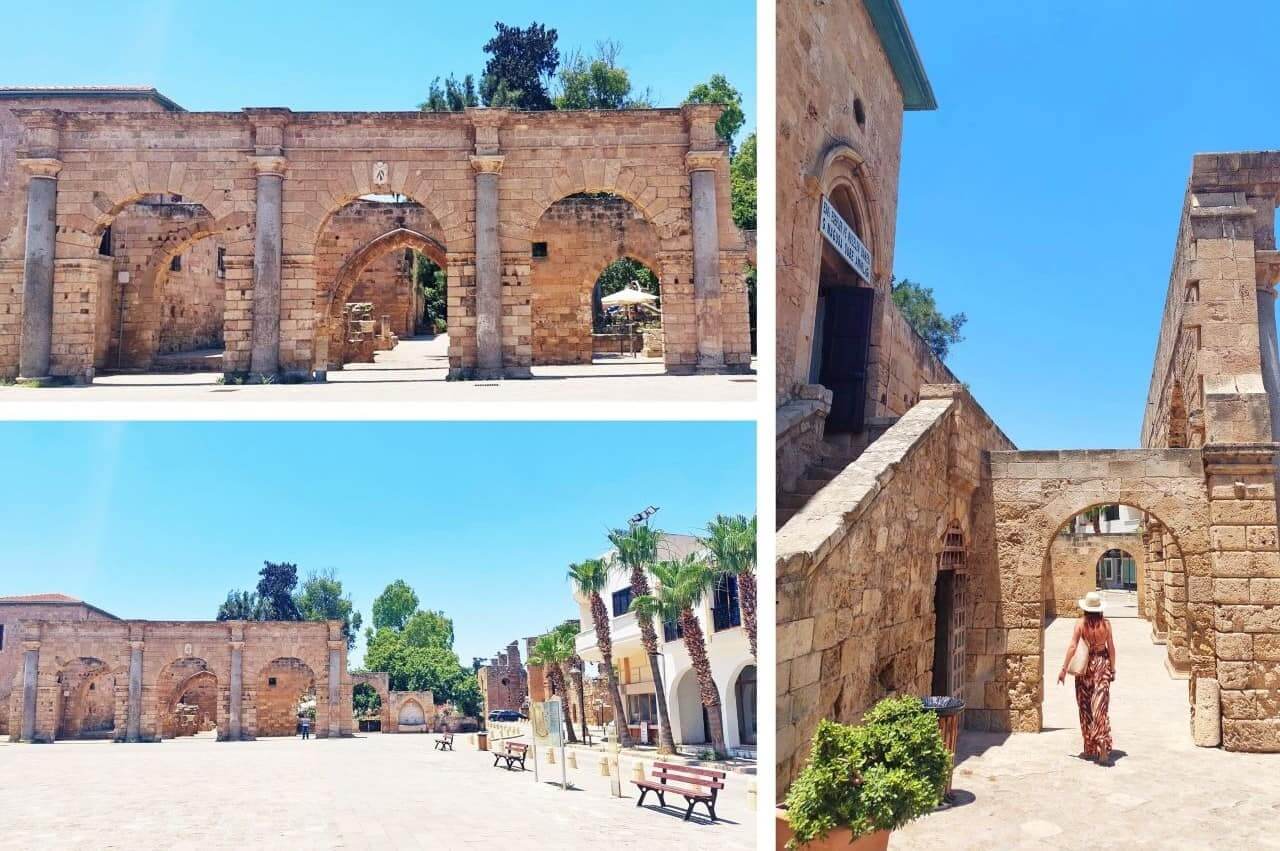
Facade of the Venetian Palace
🕌 Sinan Pasha Mosque – Church of Sts. Peter and Paul ⛪
Behind the Venetian Palace, you can find another building with amazing architecture. Once, it was the Church of Sts. Peter and Paul, and, in a word, it still looks stunning.
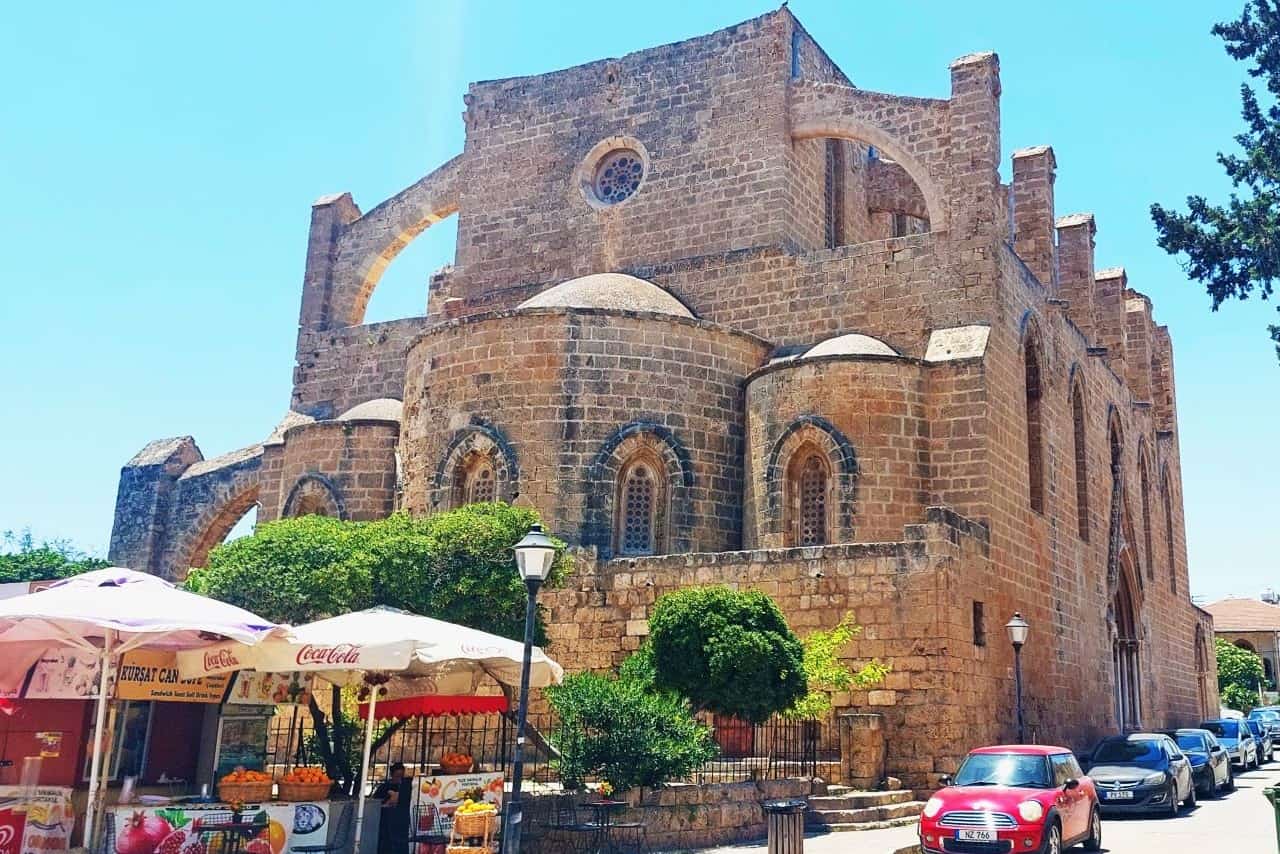
Church of Saints Peter and Paul, Sinan Pasha Mosque
The foundations of this Gothic cathedral were laid during the Lusignan reign of Peter I of Cyprus (1358–1369), the King of Cyprus and titular King of Jerusalem. One of the funders was the wealthy merchant Simon Nostrano of Famagusta. The church walls are supported by heavy flying buttresses, giving it a stunning look.
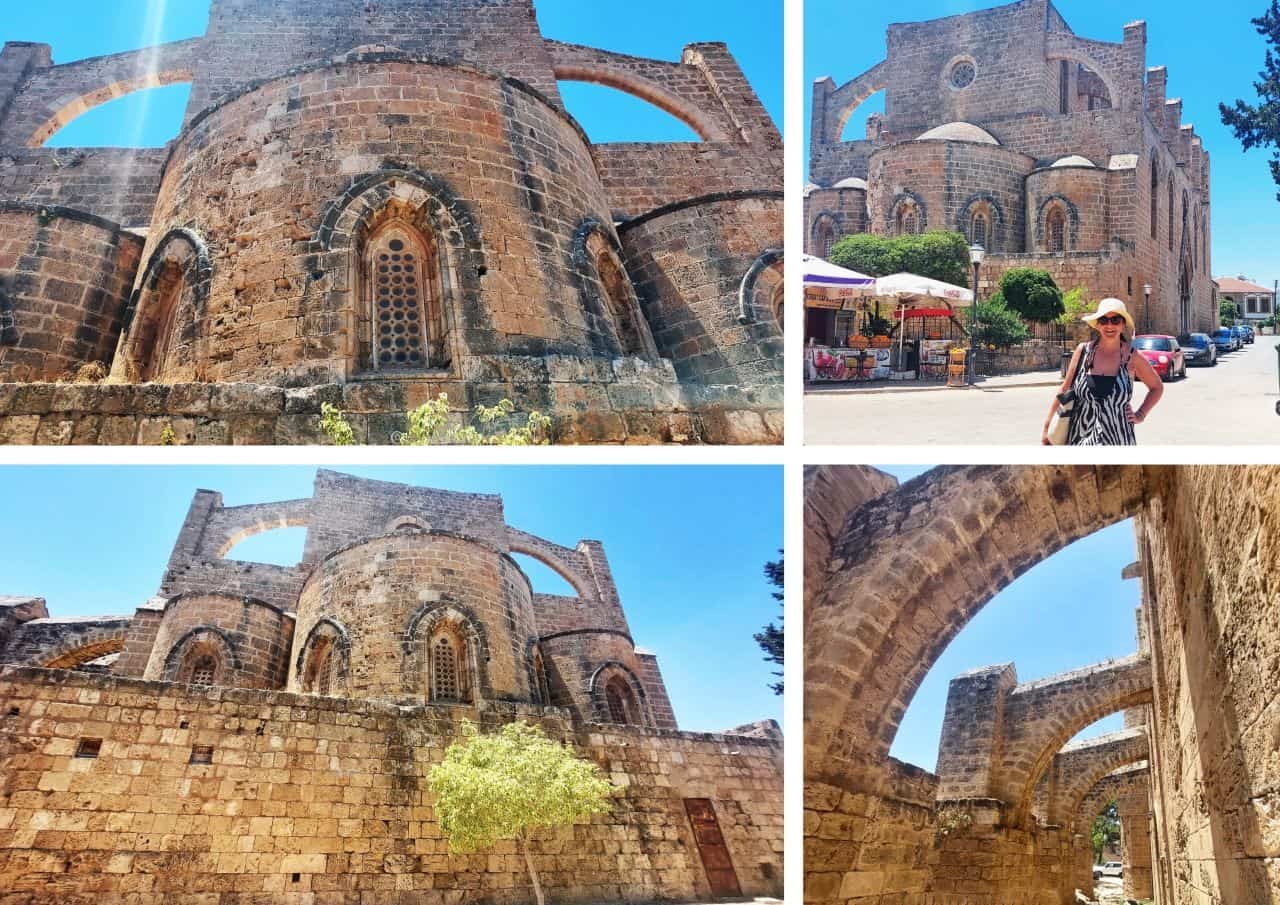
Church of Saints Peter and Paul, Sinan Pasha Mosque
In 1571, it was converted into a mosque and renamed the Sinan Pasha Mosque after “Sinan the Great”, who served as Grand Vizier in the Ottoman Empire. In the southern courtyard, under the buttresses, lies the grave of Yirmisekiz Mehmet Celebi, who died in 1732 in Famagusta. He was an Ottoman statesman and ambassador delegated by Sultan Ahmed III to Louis XV’s France in 1720.
Interestingly, the mosque was used as a store for potatoes and grain during the British era. Because of this, the locals called it the “Bugday Cami” (wheat mosque).
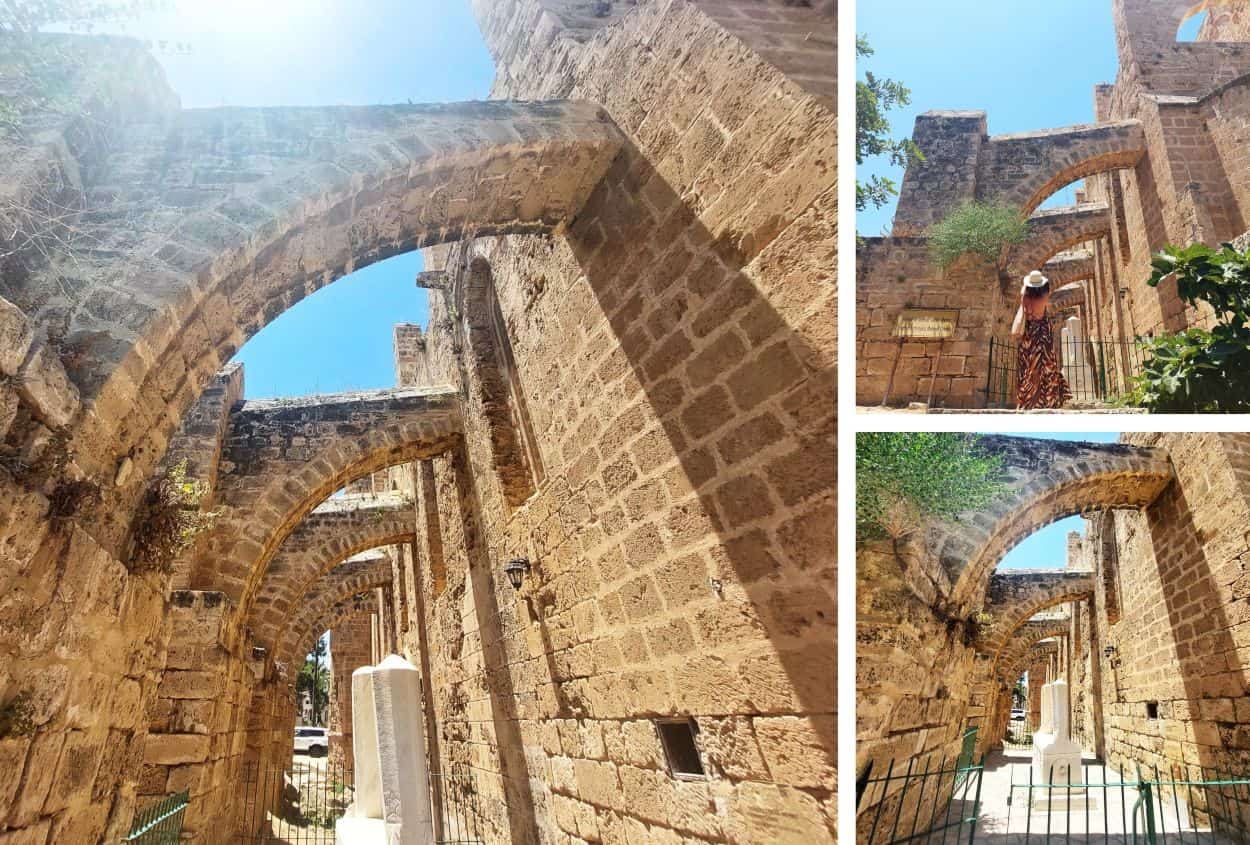
Tomb of Mehmet Celebi
Cafer Pasha Hammam
On the right side of the Venetian Palace, there are the remains of the Cafer Pasha Hammam. It was built in 1601 by Cafer Pasha, in the courtyard of the former Franciscan Monastery complex from the Lusignan period (late 13th century).
Cafer Pasha Hammam
The bath (hammam) was built of stone, and it consisted of changing rooms, hot tubs and furnaces. Only the dressing room belonged to an original room of the St.Francis Church.
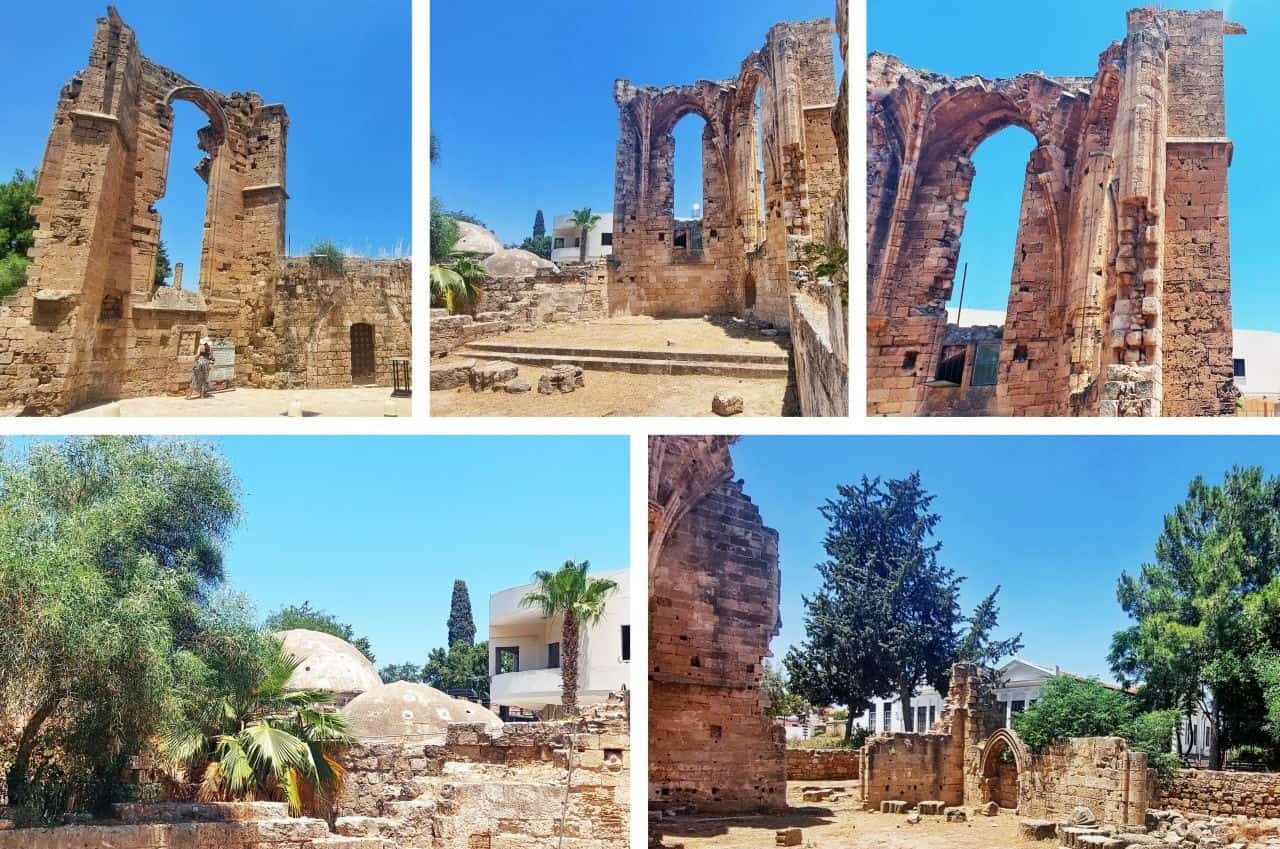
Cafer Pasha Hammam and remains of the Franciscan Monastery
St. Anthony Hospital
The Church and Hospital of Saint Anthony was built around the early 14th century during the Genoese period. It was a religious and medical complex located near the eastern city walls and the Sea Gate.
By the way, it functioned as a leper hospital (leprosarium) and is considered one of the earliest recorded leper hospitals in the world.
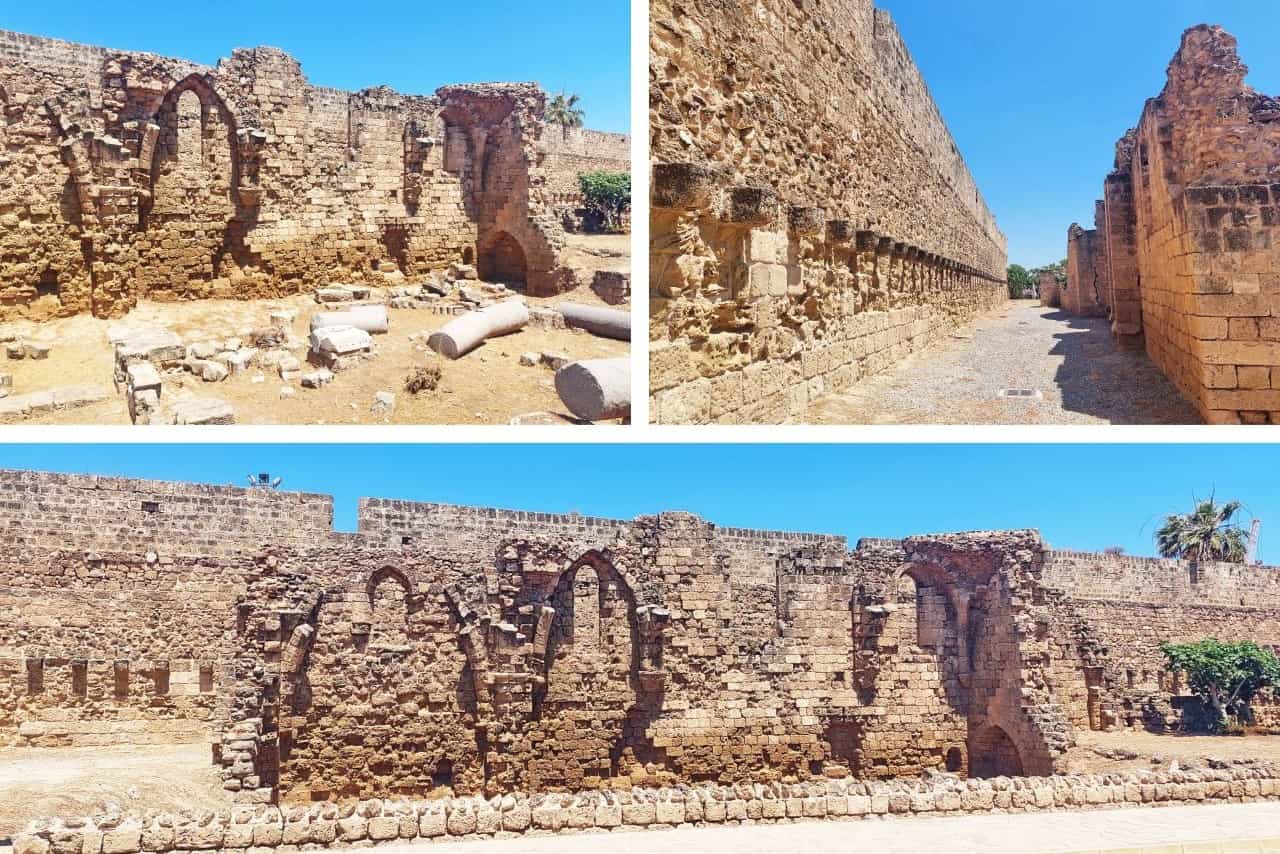
Remains of the St. Anthony Hospital
Other monuments in the Old Town of Famagusta
If you have enough time, you can visit several more monuments in the labyrinth of the Old Town. For example, there are the Church of St. George of the Greeks, the Nestorian Church (of St. George the Exiler), Twin Churches, the Armenian Church, the Tanners Mosque, etc.
🥐🍰☕Where to eat in Famagusta: Petek Patisseries
There are various cafes and small restaurants in the Old Town of Famagusta. We take a break at the famous Petek Patisserie, located in the centre, close to the city walls and the Sea Gate (at the corner of the Liman Yolu Street).
It is a family-run restaurant, founded in 1976 as a bakery, and over the years, it developed into a famous tourist spot.
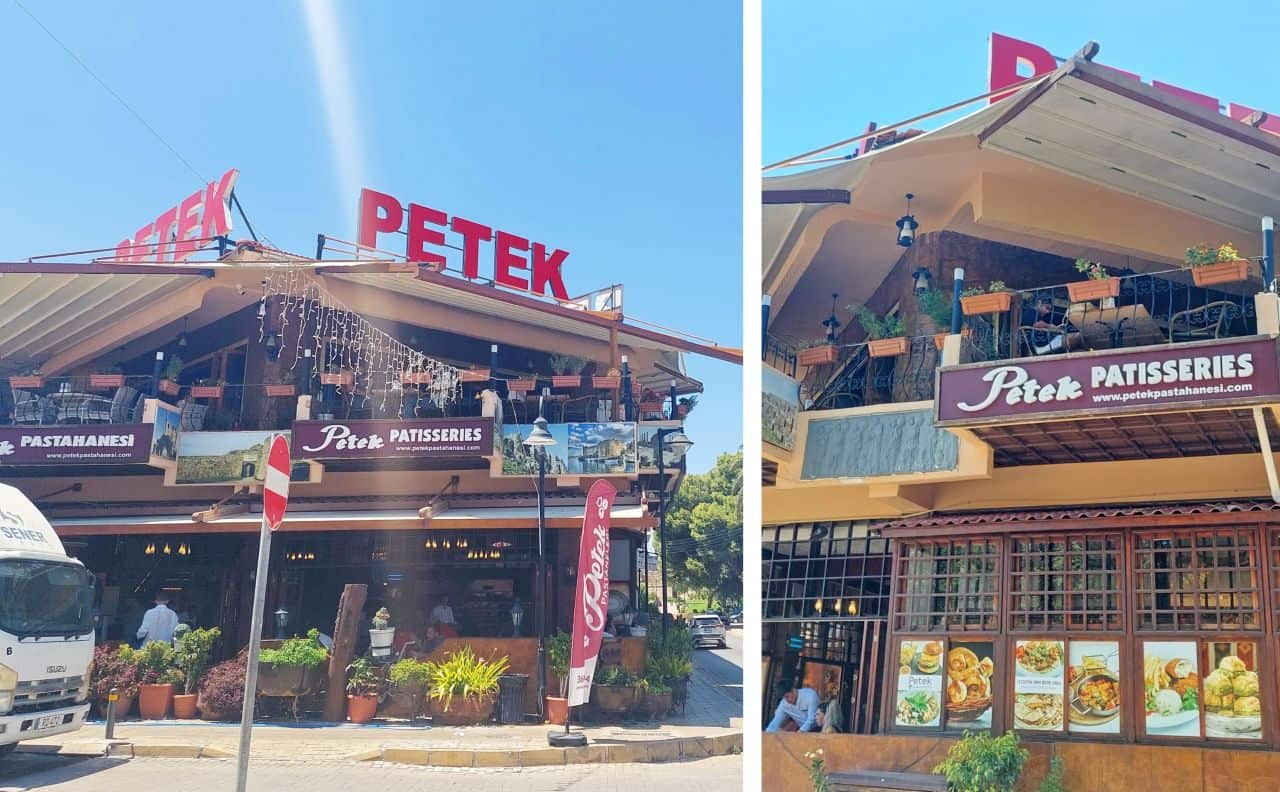
Petek Patisseries
At the entrance, the various parrots will welcome you with their songs, while the interior is interestingly decorated.
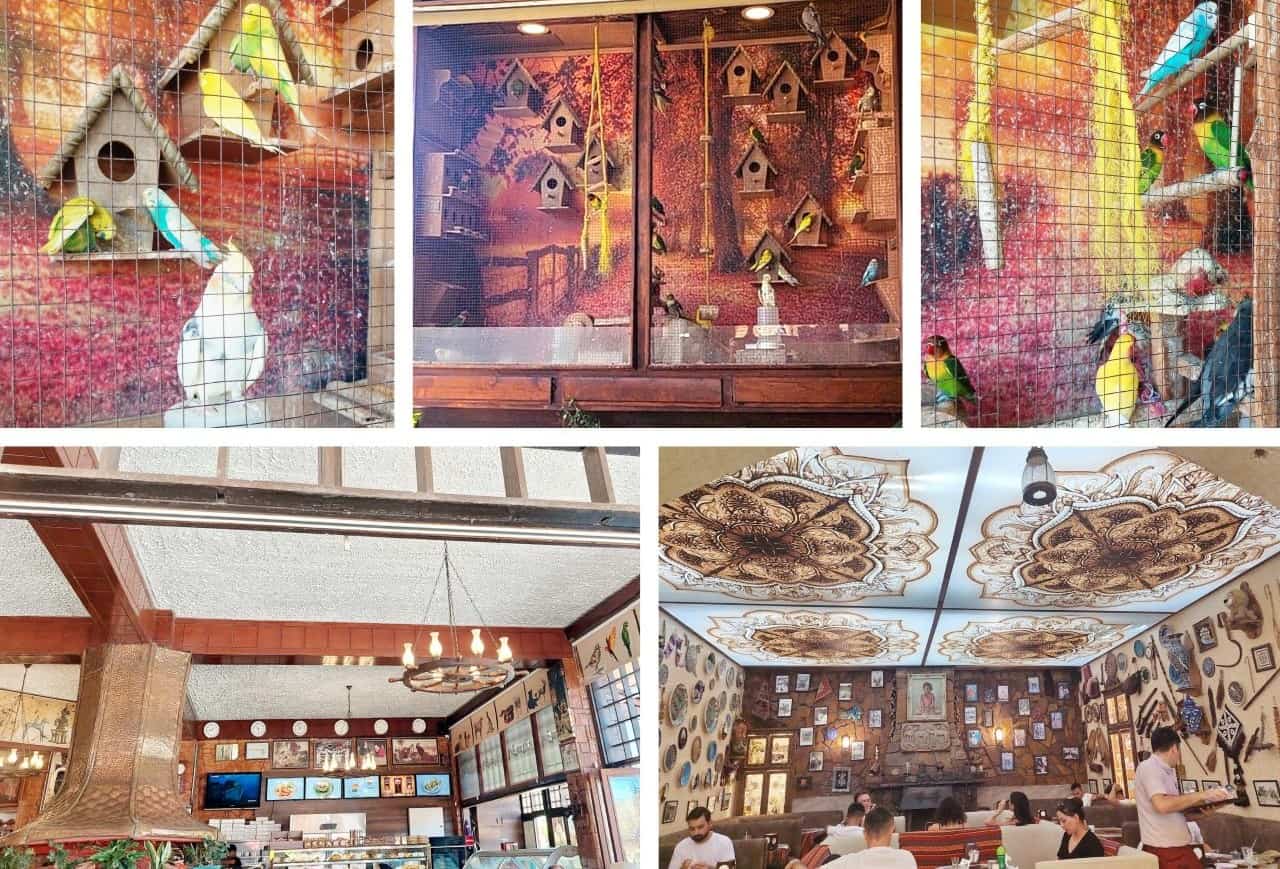
Parrots and interior of the Petek Patisserie restaurant
But I am sure that you will be amazed by the variety of pastries.
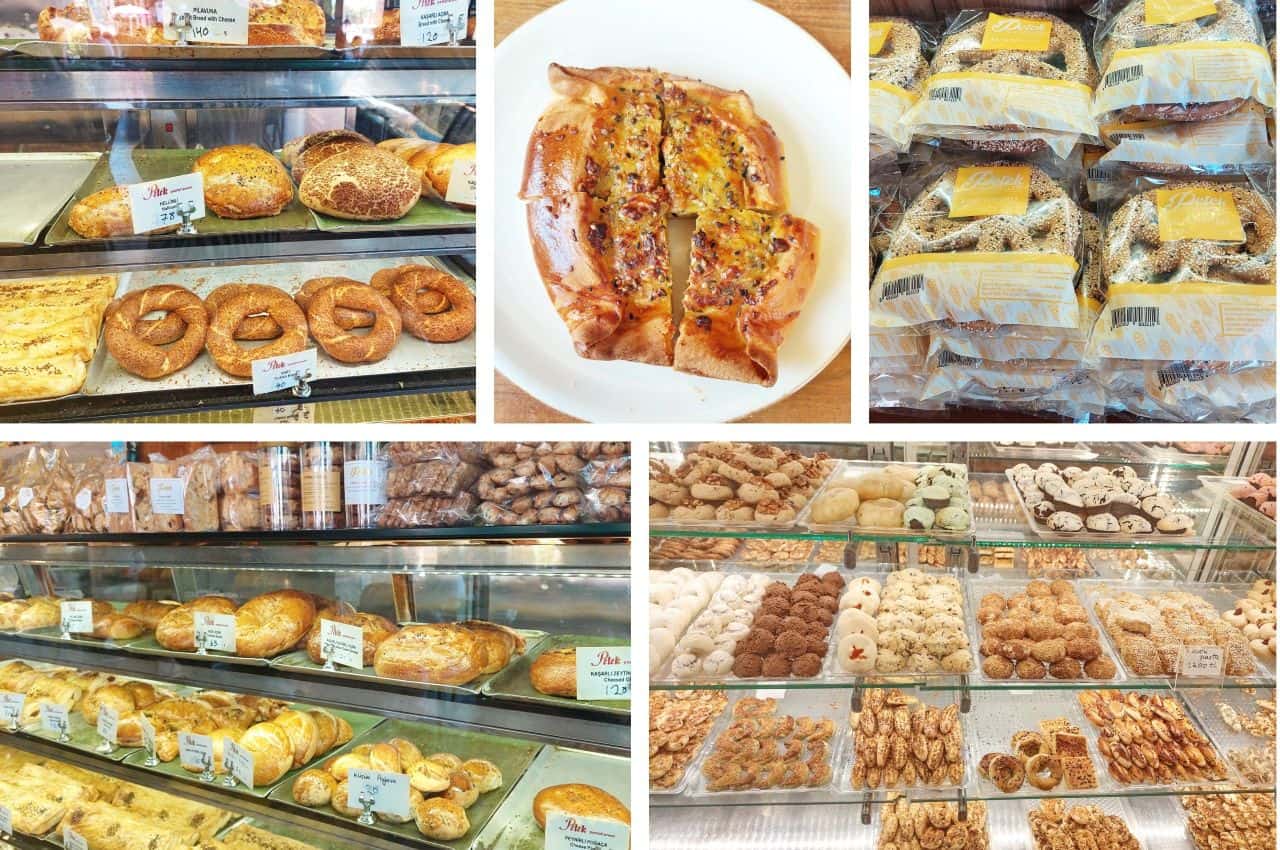
Pastries at the Petek Patisserie
And desserts… You don’t know where to look or what to choose! It is a paradise for those who like desserts and something sweet.
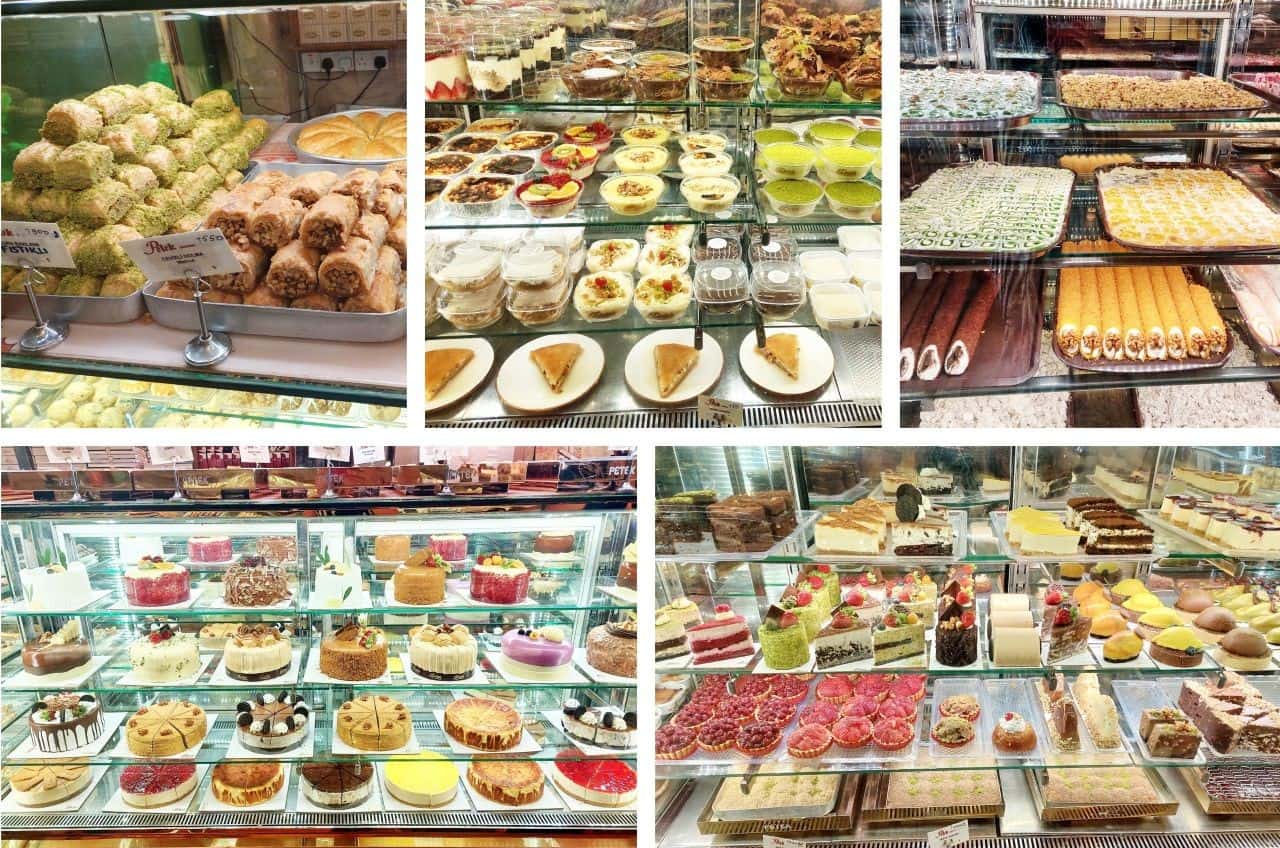
Delicious desserts at the Petek Patisserie
It is open every day from 10 AM to 10 PM, so you can come anytime for a coffee break or for a traditional Turkish breakfast, lunch or dinner. The menu mainly offers local Turkish cuisine, but it also has vegetarian dishes and a children’s menu.
Famagusta Today
Today, Famagusta is home to around 40,000 residents, predominantly inhabited by Turkish Cypriots and mainland Turkish settlers.
Around the old town, you can see modern houses, hotels, and mosques, such as the Osman Fazil Polat Pasha Mosque.
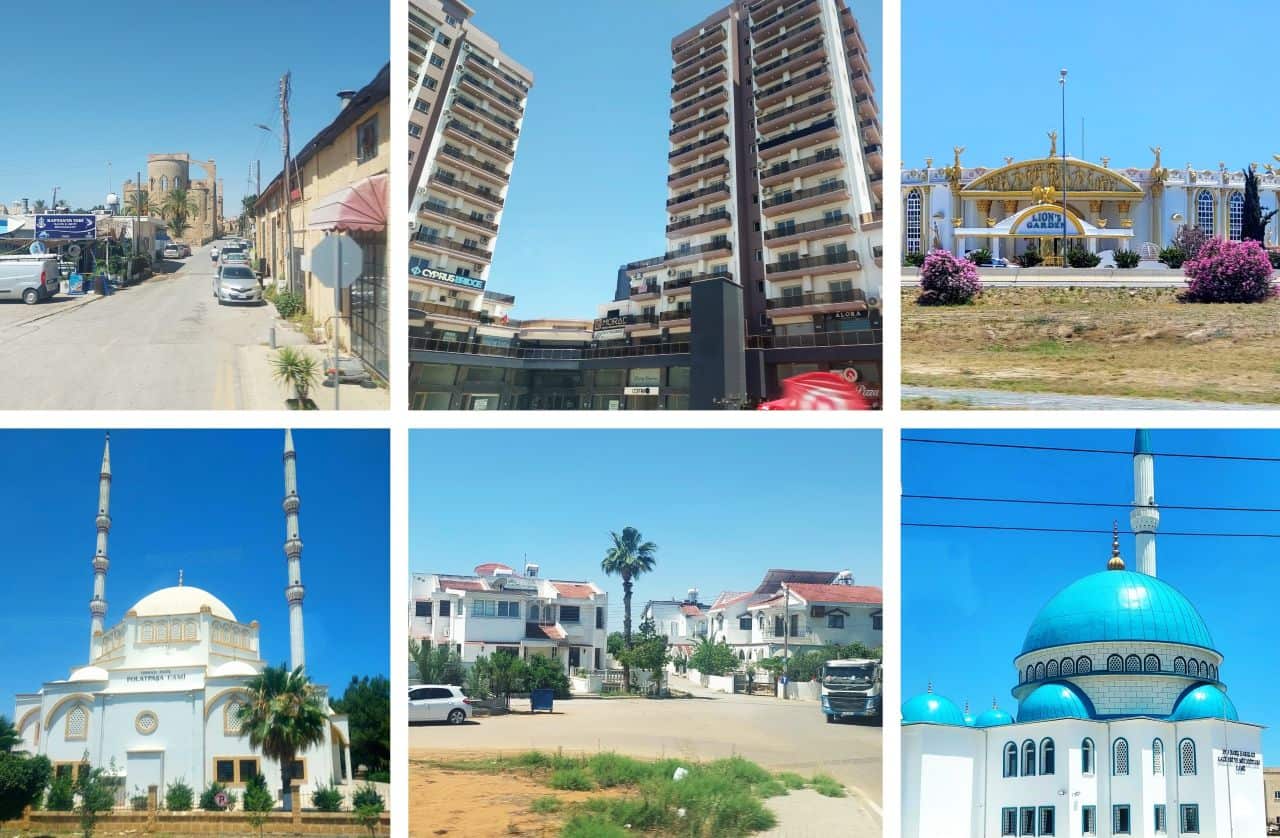
Gazimağusa town
For sure, the former Gothic cathedral, churches and the Venetian Palace show us the amazing mix of architecture and religious transformations over centuries. And they remind us of the glorious time of Famagusta.
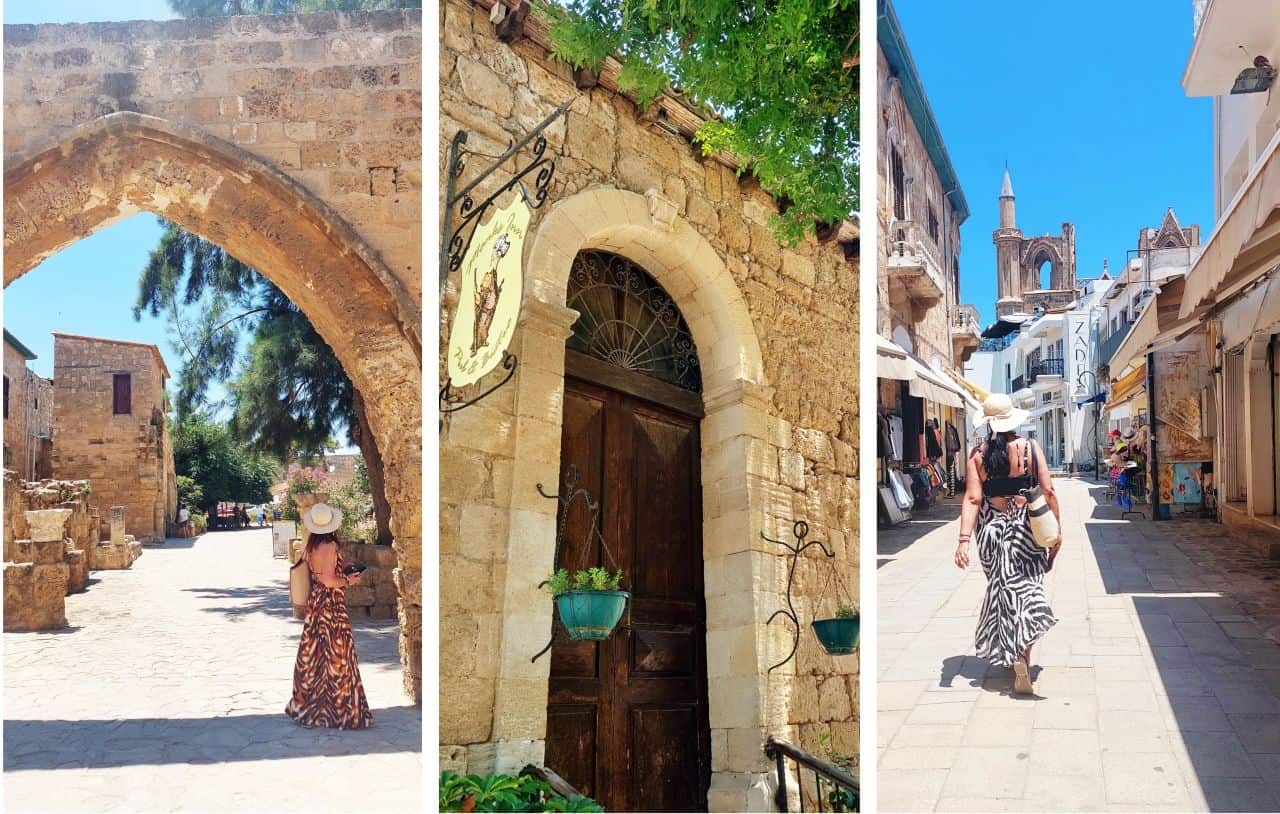
Old Town
Stay tuned for a new story about Nicosia, the capital of Cyprus…

Leave a Reply
Want to join the discussion?Feel free to contribute!