
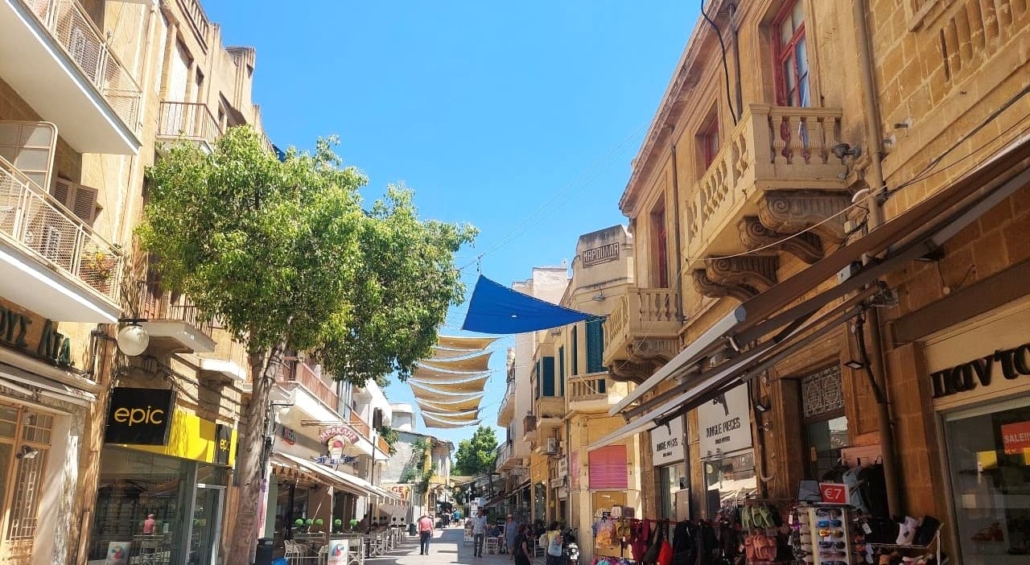
Nicosia, the last divided capital in the world
Nicosia is the capital of the Republic of Cyprus and the de facto capital of the Turkish Republic of Northern Cyprus (recognised only by Turkiye).
It sounds almost unbelievable, but Nicosia is the last divided capital in the world since 1974, after the Turkish invasion of Cyprus. At the same time, barbed wire and the UN “Green Line” connect and separate the European and oriental parts of the town.
In the south, Nicosia is also known as Lefkosia; people speak Greek and use the euro for payments.
In the north, it is known as Lefkoşa; the people speak Turkish and use the Turkish Lira.
To walk between the two sides, you must pass through specific checkpoints with valid identification (a passport or EU national ID card).
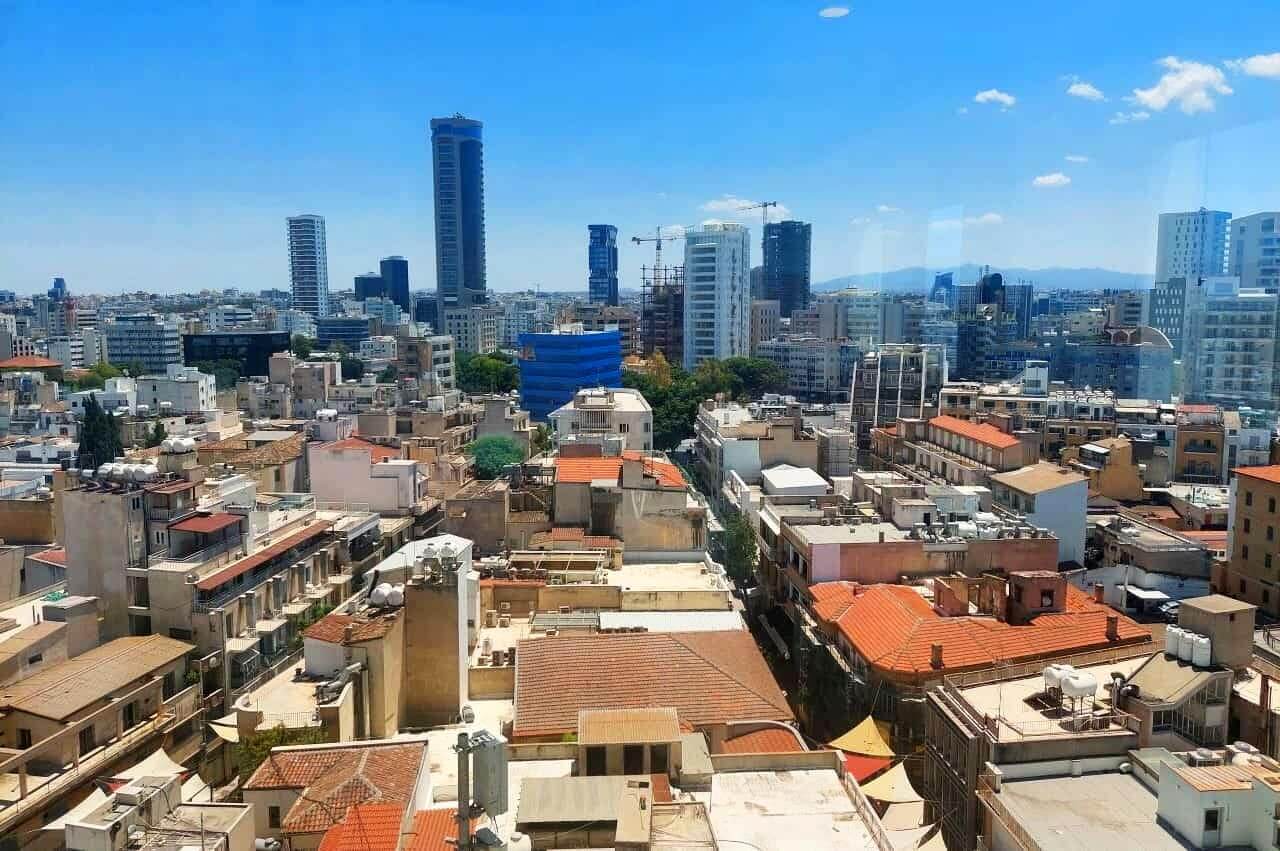
The skyline of Nicosia, from Shacolas Tower
 Disclosure: This text contains affiliate links, which means that if you book a hotel, car or excursion through them, I can earn a small commission, at no extra cost to you. Thanks.
📌How to get to Nicosia
Nicosia is located almost in the heart of Cyprus. It lies along the Pedieos River, in the centre of the Mesaoria Plain between the Kyrenia Mountains to the north and the Troodos range to the south. You can reach the city by air and by road.
✈️ The main airport is the Larnaca International Airport (LCA), which is about 50 km southeast of Nicosia (a 40-minute drive). The second is the Paphos International Airport (PFO), located about 150 km from Nicosia (a 1-hour 40-minute drive).
Bear in mind that only these two airports are legal entry points in the Republic of Cyprus. This means that if you arrive at the third airport, Ercan Havalimanı (ECN), located 13 km east of Nicosia in Northern Cyprus, you can not enter the Republic of Cyprus.
🚗🚌 Nicosia is connected with other major towns on the island by good roads. So you can rent a car or take an intercity bus (often connecting through Limassol) to get to Nicosia. The central bus station is located at the Dionysiou Solomou Square, near Eleftheria Square in the centre of the city.
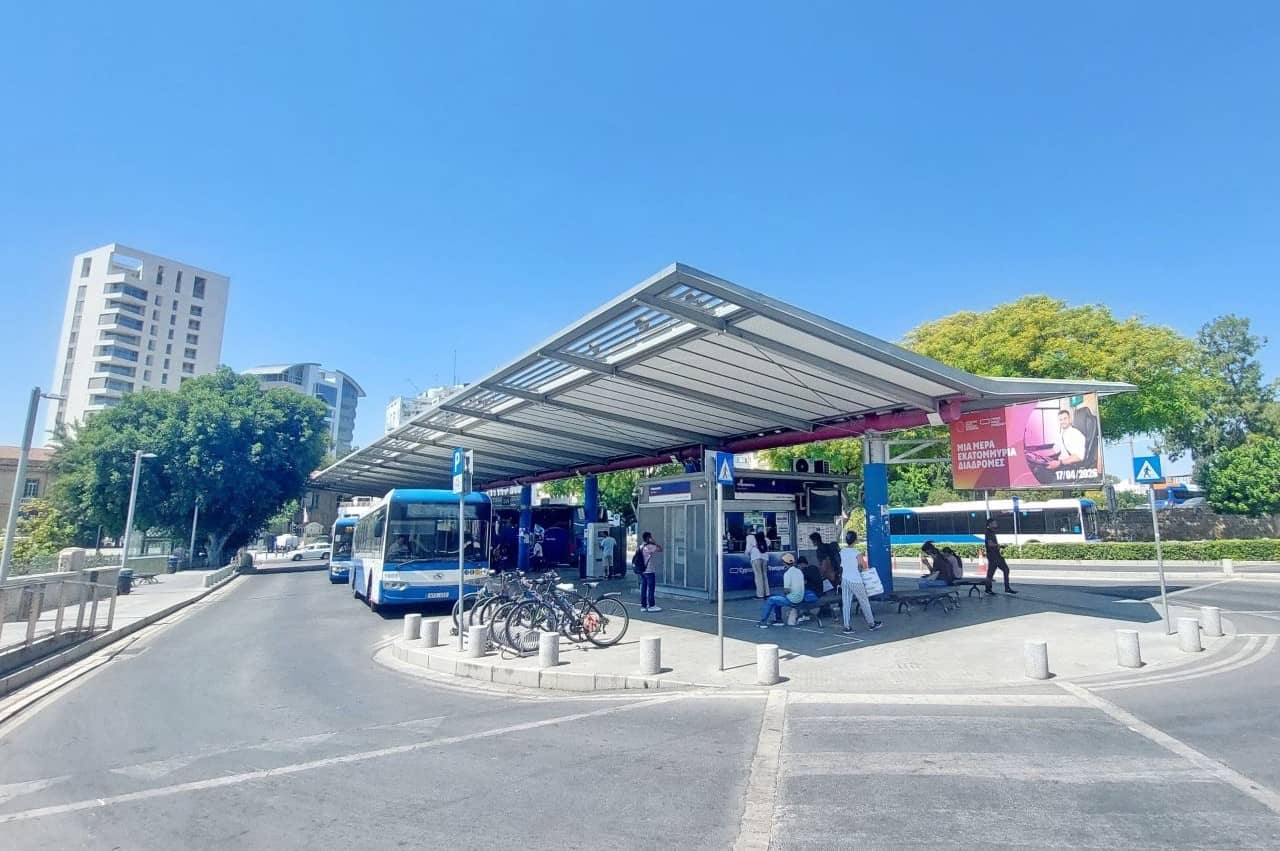
The central bus station at the Dionysiou Solomou Square
A few words about the history of Nicosia
Like other parts of Cyprus, Nicosia has a rich and turbulent history.
It is believed that Nicosia has been continuously inhabited since approximately 2,500 BC. The first written mention of the city-kingdom of Ledra was in 672 BC. By the 4th century, it had become the seat of a bishopric with bishop Saint Triphyllius.
The Byzantines controlled the city from 330 to 1191, when it was known as Lefkousia. In 965, it became the island capital and seat of Cyprus’s government. On the way to the Holy Land, Richard the Lionheart conquered the island in 1191, and shortly thereafter sold it to the Knights Templar. From 1192 to 1489, the Lusignan kings ruled the city, known as Nicosie. It was the capital of the medieval Kingdom of Cyprus and also the seat of the Lusignan kings. During this period, the city walls, numerous palaces and public buildings were erected, including the famous Gothic Cathedral of Saint Sophia.
Then, the city came under Venetian rule from 1489 to 1571. In 1567, new fortifications were constructed in the shape of a star with 11 bastions for better city defence. The walls included three gates that still survive: Famagusta (Eastern Gate), Pafos (Western Gate), and Kyrenia (Northern Gate).
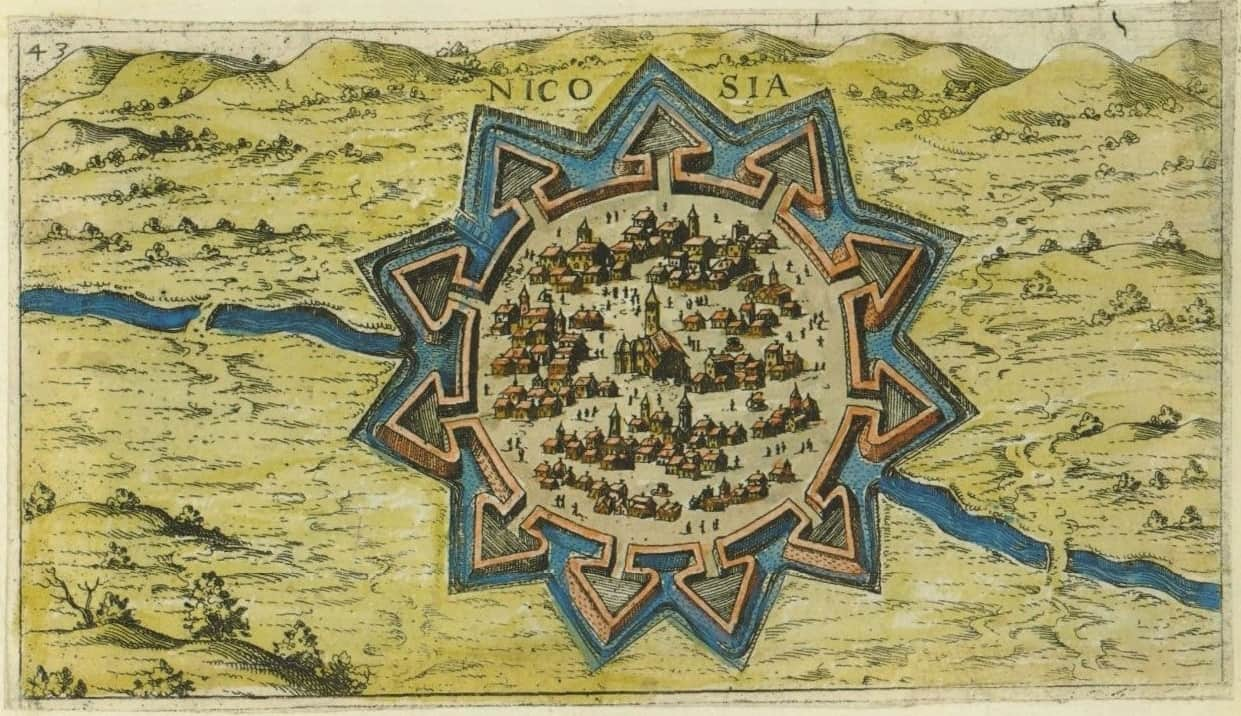
Map of Nicosia, 1597, Giacomo Franco, source: Wikipedia, User: Cplakidas
But it didn’t stop the Turks, who conquered the city after 50 days of siege and occupied the island in 1570. They devastated the city; many residents were killed, and the Latin churches were converted into mosques, including the Cathedral of Saint Sophia. In short, Nicosia was the seat of the pasha, the Greek archbishop, the dragoman, and the qadi.
After the Cyprus Convention, in July 1878, Nicosia came under British rule. In 1904, new law courts, land registry, customs, and various offices replaced the Ottoman administrative buildings.
Modern Nicosia and the Green Line
After a struggle against British rule, Cyprus gained independence in 1960. Nicosia was named the capital of a new state shared by Greek and Turkish Cypriots. However, peace was short-lived. In December 1963, rising tensions split the city in two parts. A United Nations officer drew the boundary on a map with a green chinagraph pencil, which became the world-famous Green Line.
The division deepened dramatically in July 1974. Following a Greek-backed coup aimed at uniting Cyprus with Greece, Turkish forces invaded the island, eventually capturing 37% of its territory, including northern Nicosia. The conflict sparked a massive refugee crisis on both sides and left famous luxury resorts, like the Famagusta district of Varosha, frozen in time as an abandoned ghost town.
♦ Ledra Hotel Palace (opened 2003): the historic first crossing, for pedestrians only.
◊ Ledra Street (opened 2008): the bustling, most famous pedestrian crossing right in the heart of the old town.
♦ Metehan/Ayios Dometios: the main gateway open to both cars and pedestrians.
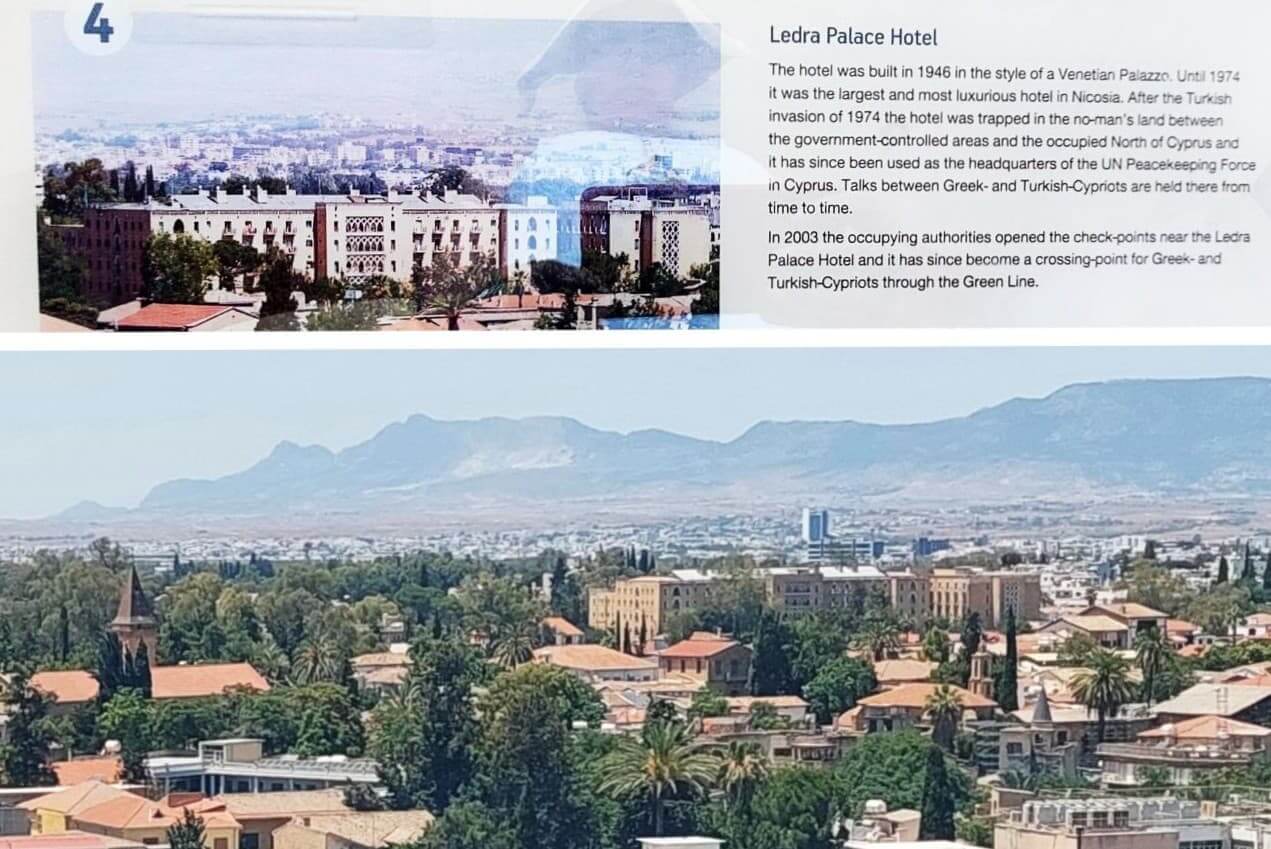
Ledra Palace Hotel checkpoint, a view from the Shacolas Tower
📍What to see in Nicosia
Generally, one or two days are enough to see both parts of Nicosia, depending on your interests.
You can explore the city on your own or join organised tours with local agencies. Don’t forget to bring your passport or ID card.
Nicosia is a blend of architectural influences from the past to the present. In one part, you can see modern buildings, houses, museums, galleries, and theatres. The other part features traditional architecture with Ottoman influence.
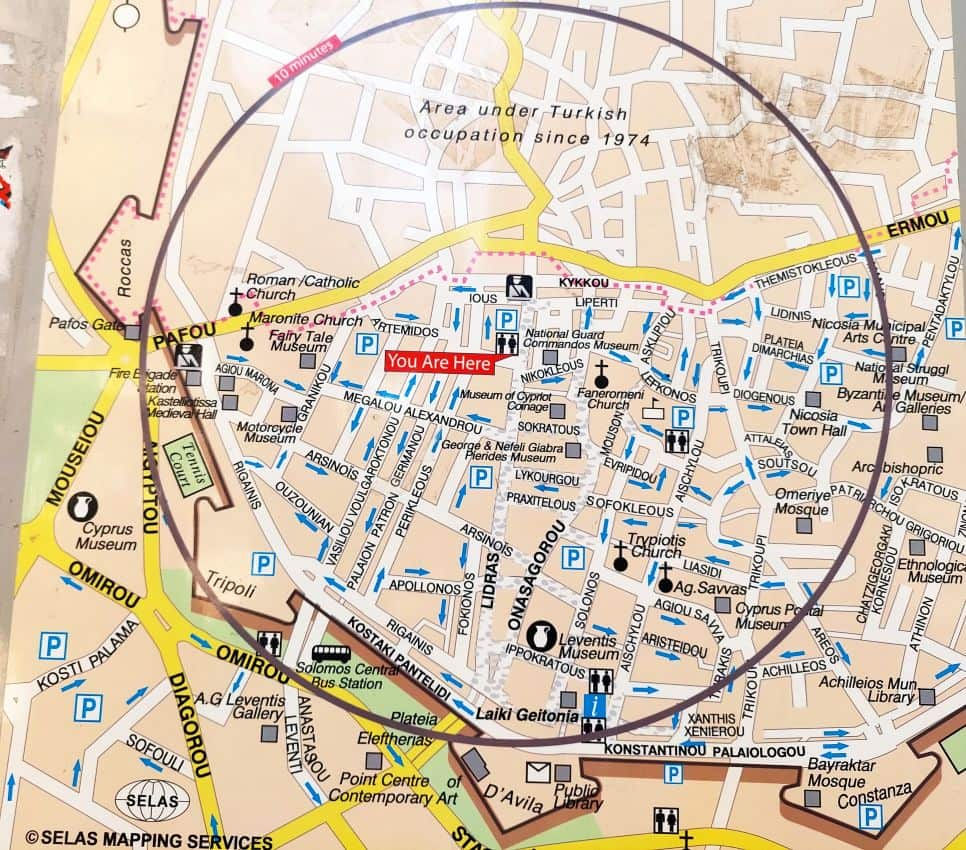
Nicosia map of area under the Republic of Cyprus’s control
Nicosia, south of the Green Line
A starting point for your Cypriot adventure is Eleftheria Square or Liberty Square. It is the main square located in the heart of town, over the former moat and near the Venetian Walls.
According to a project by the world-famous Zaha Hadid Architects, the area was reconstructed between 2012 and 2021. Today, it is a modern square with trees, an attractive water fountain, lighting, shops and sanitary facilities.
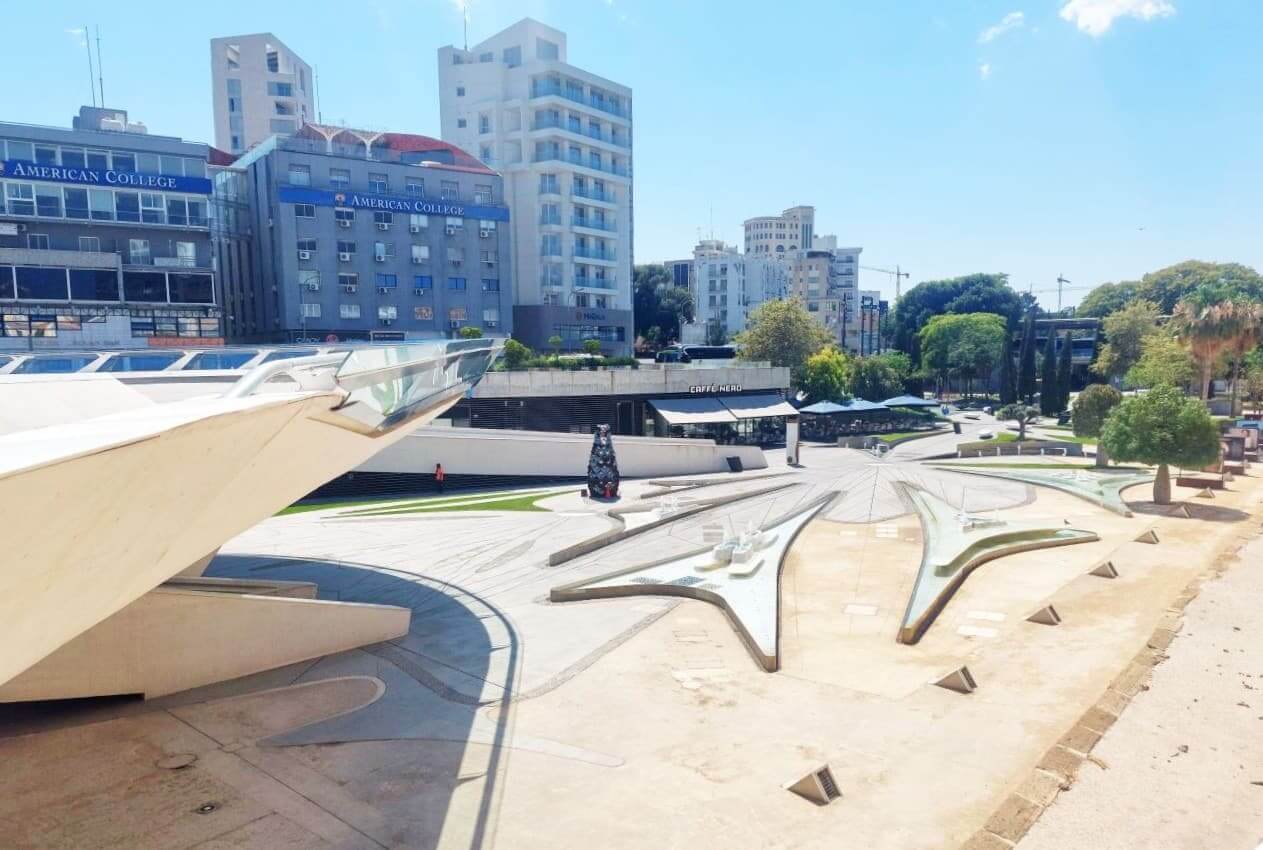
Eleftheria Square
Ledra Street
From Eleftheria Square, you can go for a walk along the famous Ledra Street. It is a pedestrian street, filled with many shops, small cafes, restaurants, and interesting buildings. The Ledra Street crossing point and the Green Line are situated at its northern end, which divides the city.
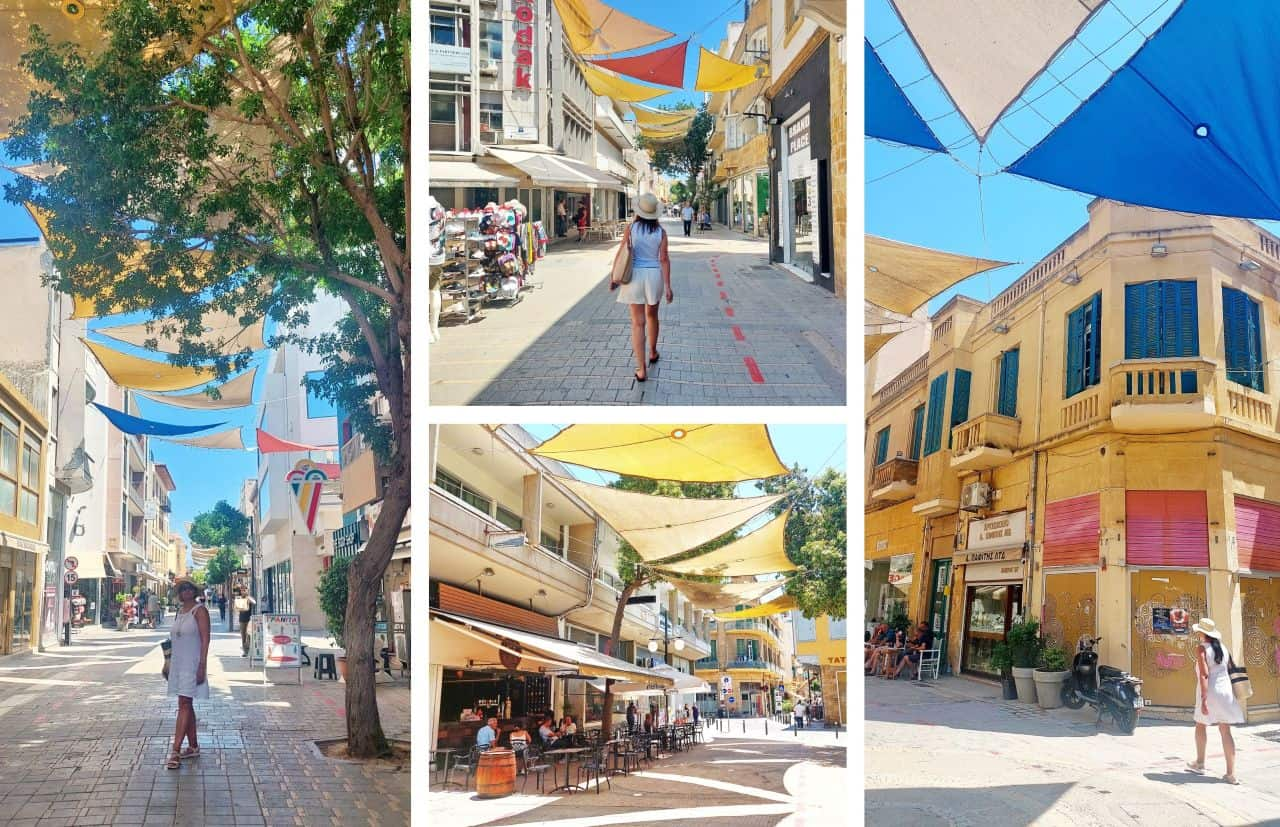
Nicosia, walking along Ledra Street
Ledra Street Observatory – Shacolas Tower
For a panoramic view of the city across the Venetian walls, visit the Shacolas Tower on Ledra Street. By the way, the first 5 floors are H&M department stores. So you can enjoy the city views and shopping in the same building.
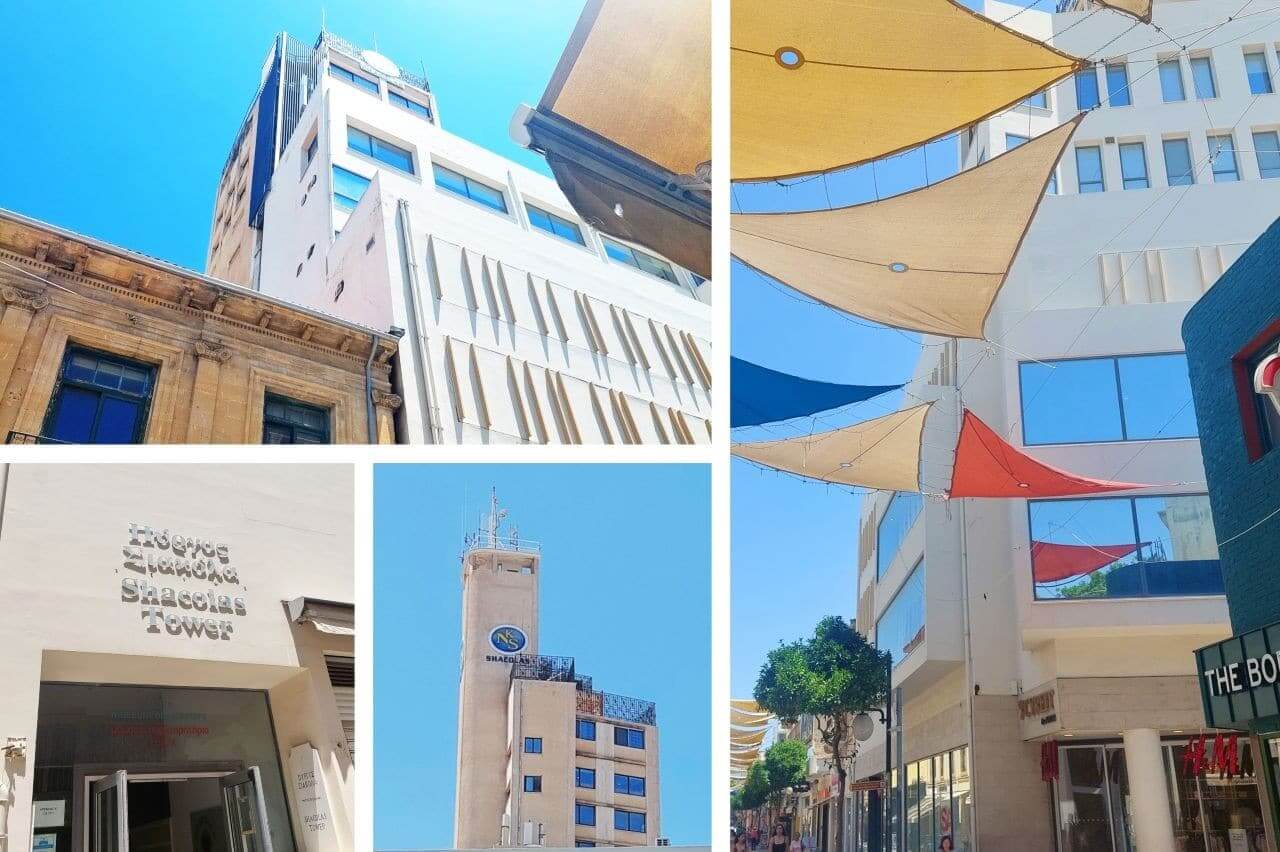
Shacolas Tower, Ledra Street
On the 11th floor, there is an exhibition that shows the history of Nicosia. You can see a collection of archival photographs and descriptions, as well as multilingual audio history with telescopes. From the observatory, you can see views of both the Turkish and Cypriot districts.
The entrance fee is 2,5 EUR.
Opening hours: Monday to Saturday: from 10 AM to 5 PM; Sundays: from 11 AM to 5 PM.
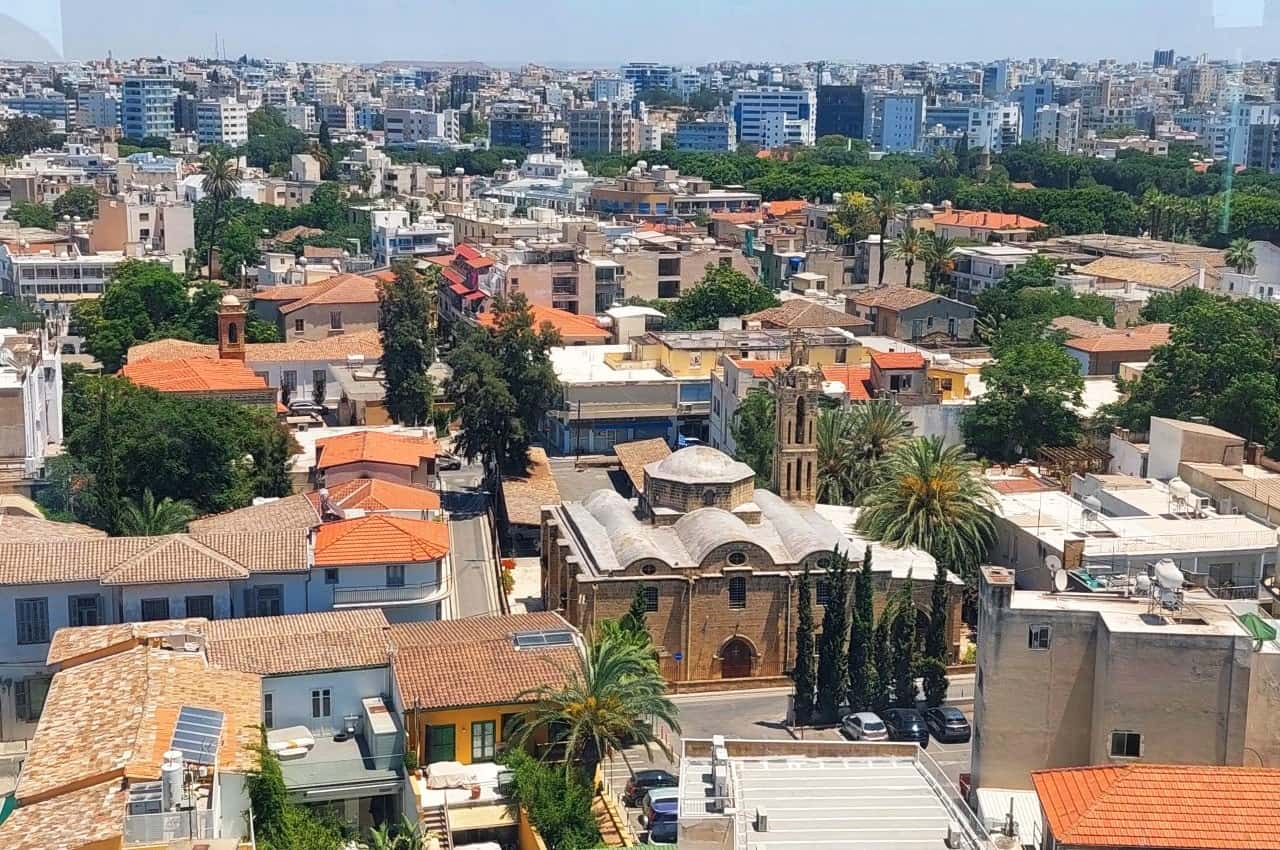
A view of Nicosia from the Shacolas Tower
Onasagorou Street
The second important pedestrian street is Onasagorou Street, lined with small shops, cafes, and restaurants.
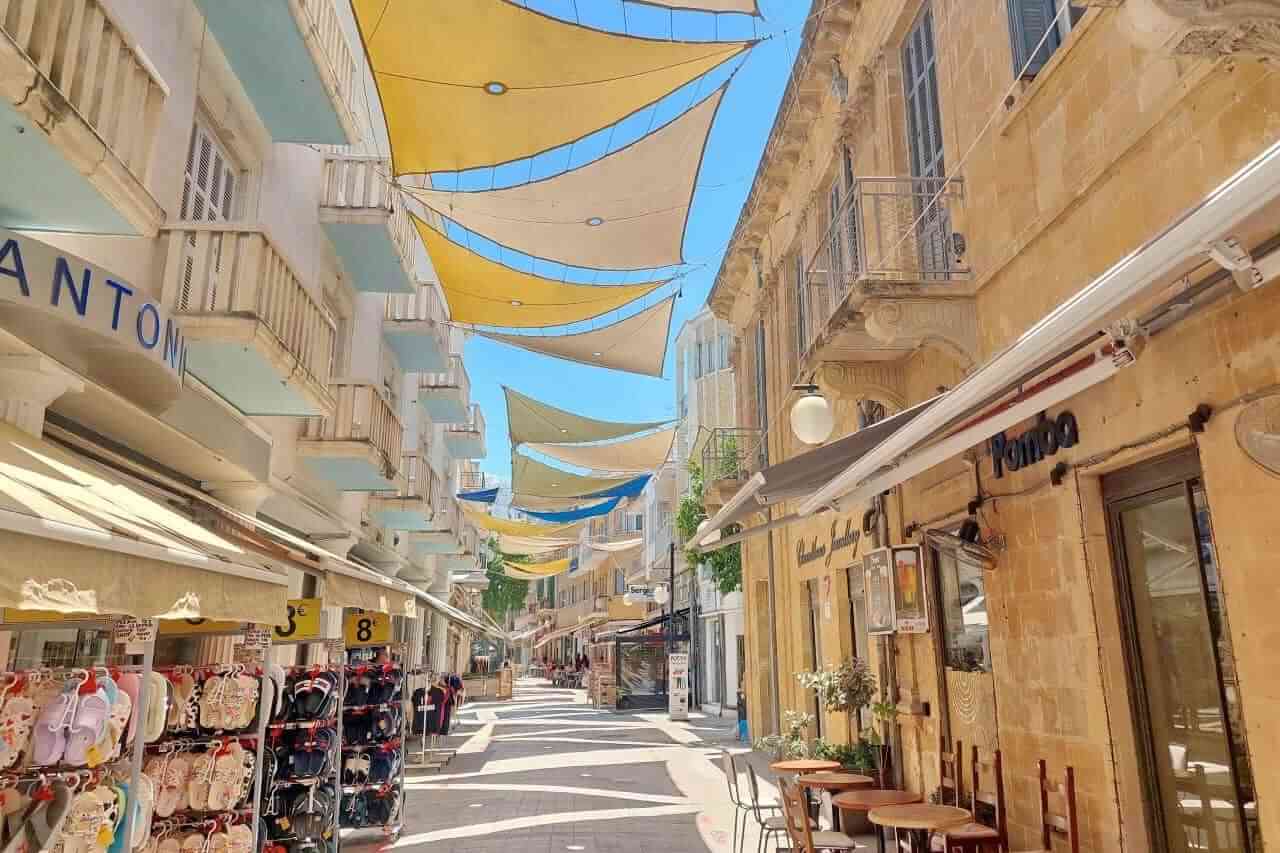
Onasagorou Street
⛪🕌 Religion in Nicosia
Two main religions are Eastern Orthodox Christianity, predominant in the southern part of the city, and Islam, predominant in the northern part. Besides churches and mosques, there are Maronite and Latin Catholic parishes, Armenian Apostolic, Anglican, and Protestant congregations (including the Greek Evangelical Church).
In this text, check out the most important churches and mosques in Nicosia’s Old City.
⛪Church of Panagia Faneromeni (Our Lady of Revelation)
The Church of Panagia Faneromeni is situated in Faneromeni Square, near Ledra and Onasagorou streets. It is the largest Greek Orthodox church within the Venetian Walls. By the way, “Faneromeni” means “the Revealed One”, named after a miraculous icon of the Virgin Mary discovered (“revealed”) among the ruins of an earlier sanctuary.
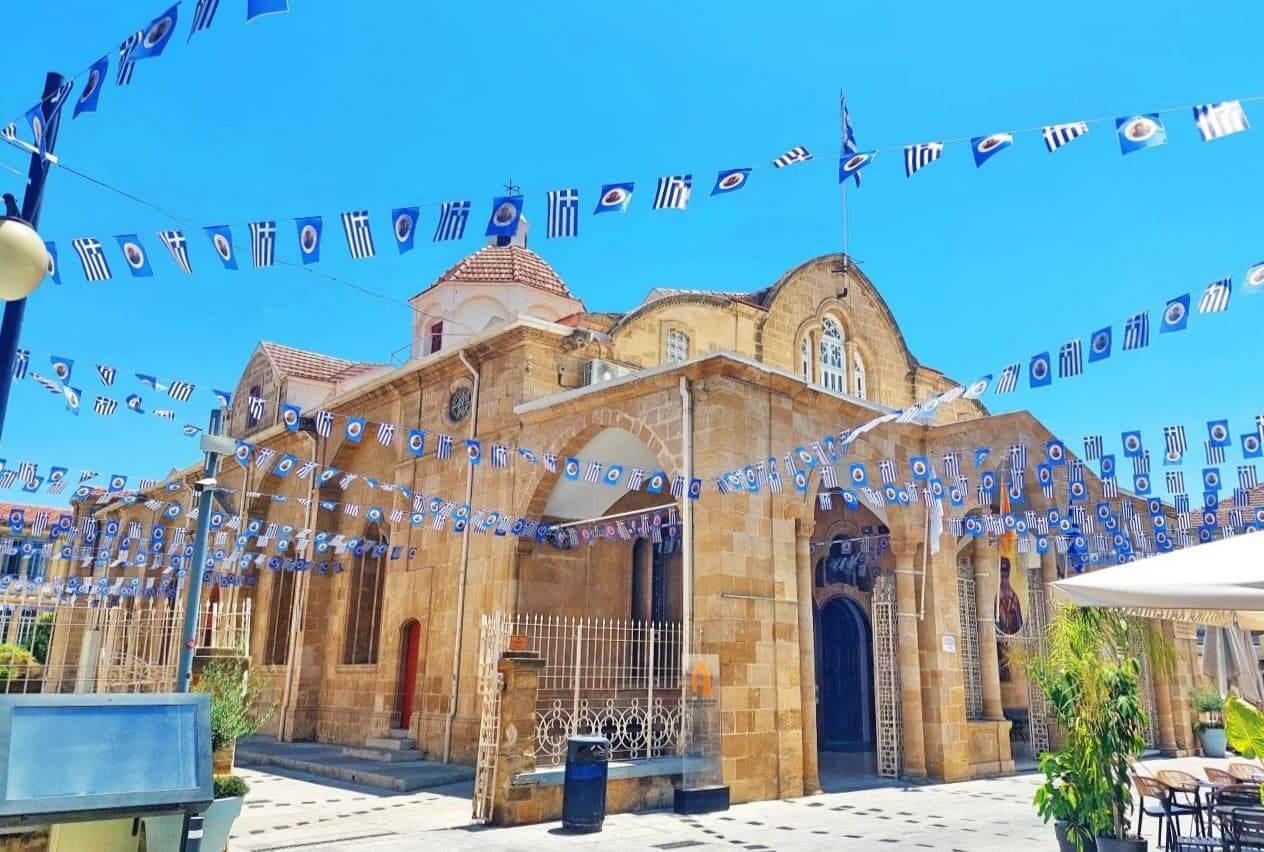
Church of Panagia Faneromeni
A convent with nuns, known as weavers of silk, was located at this place during the Byzantine period. After the Ottoman conquest of Nicosia in 1571, the church became a parish place of Christian worship. They tried to convert it into a mosque, but the imams died shortly after assuming their duties, so they abandoned their plan.
The church in this form was constructed in 1872, and the bell tower was built in 1938.
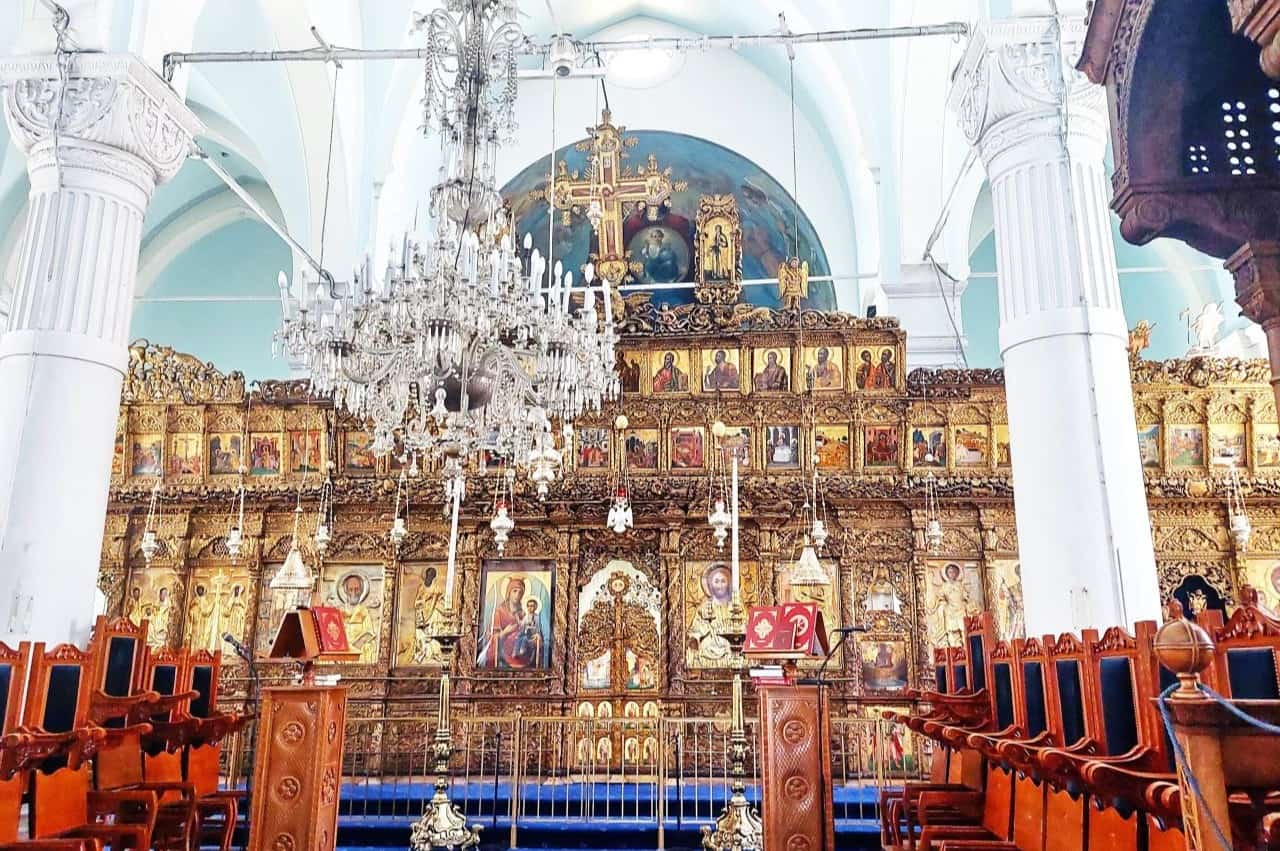
Panagia Faneromeni
The iconostasis of the church is wood-carved and gilded, and it dates to the 18th-19th centuries.
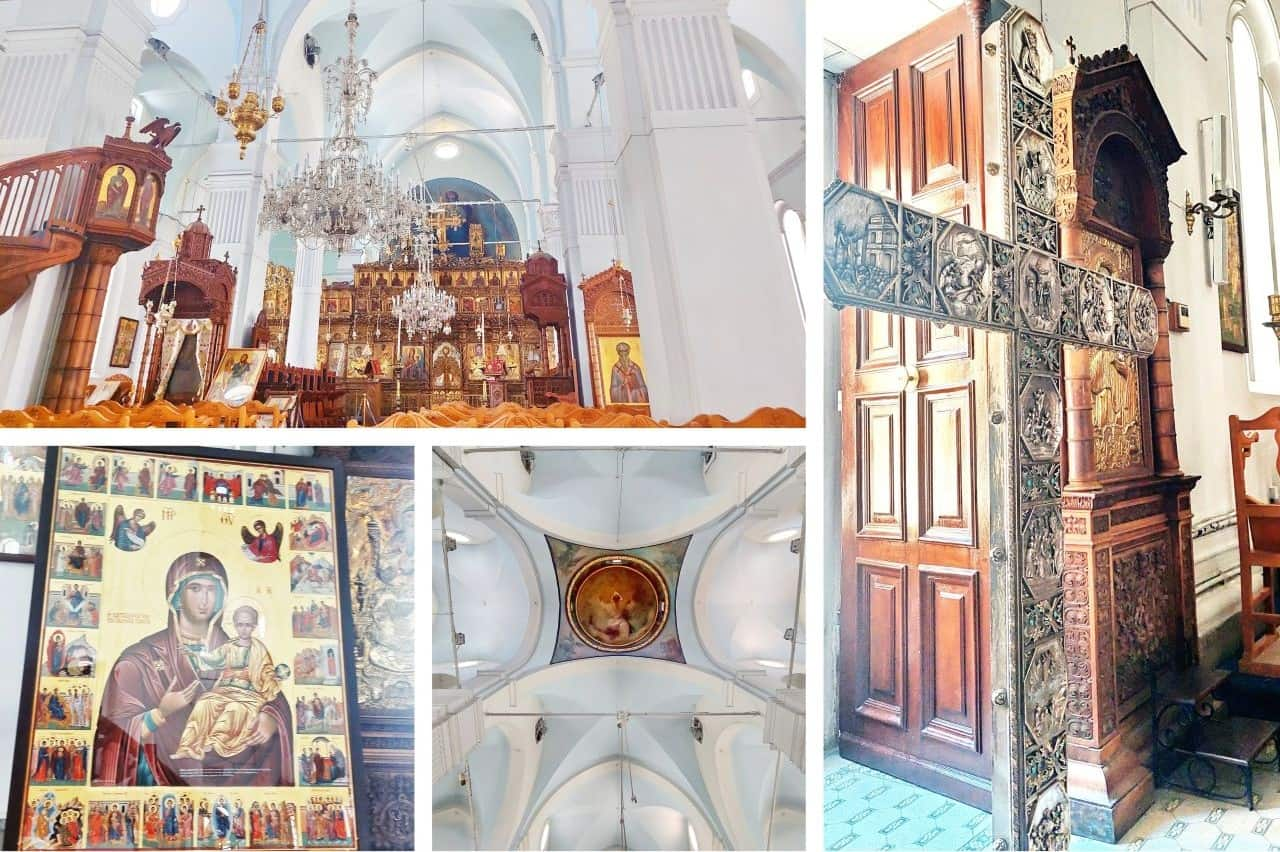
Inside the Church of Panagia Faneromeni
By the way, Faneromeni Square was a main square in the centre of Nicosia before Eleftheria Square was built in 1974.
There, you can also see a marble mausoleum with the relics of bishops and priests executed by the Ottomans in 1821. Opposite the church, there is a building with the church offices and the former Faneromeni Library dating back to 1934. The square is also known for the Faneromeni School, founded by Archbishop Makarios I in 1857, which was the first girls’ school in Cyprus.
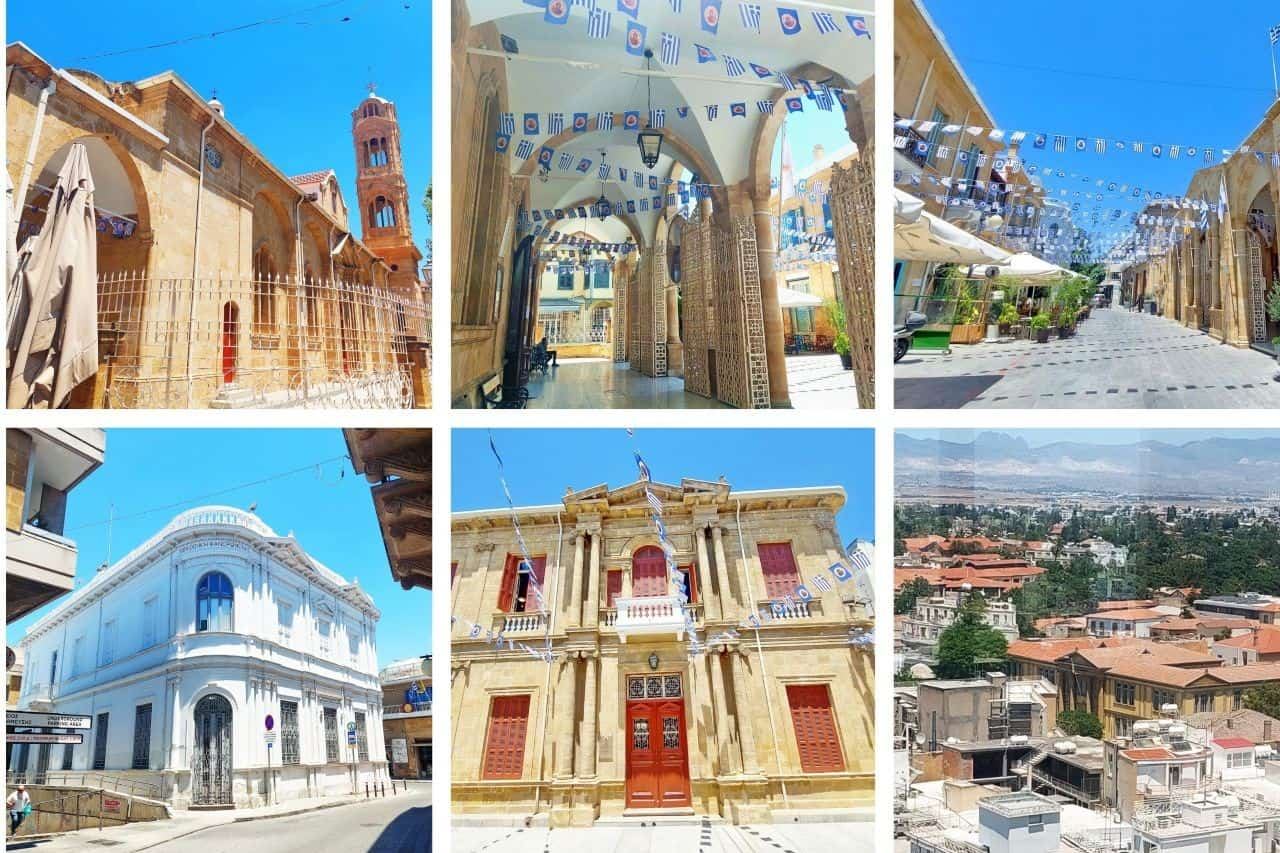
Faneromeni Square: the church (first row), second row, from left: Faneromeni Library, church offices (middle), Faneromeni School (right, a view from Shacolas Tower)
The Church of Agios Savvas (Saint Savvas)
The Church of Saint Savvas is located near Ledra Street, at the corner of Savvas and Aeschylus streets.
It was built in 1850 and 1851 on the site of an earlier, probably Byzantine church. It has four entrances; a portico and the belfry were probably built in 1900. During the 19th century, the church served as a refuge for the homeless. There are old portable icons and furniture inside the church.
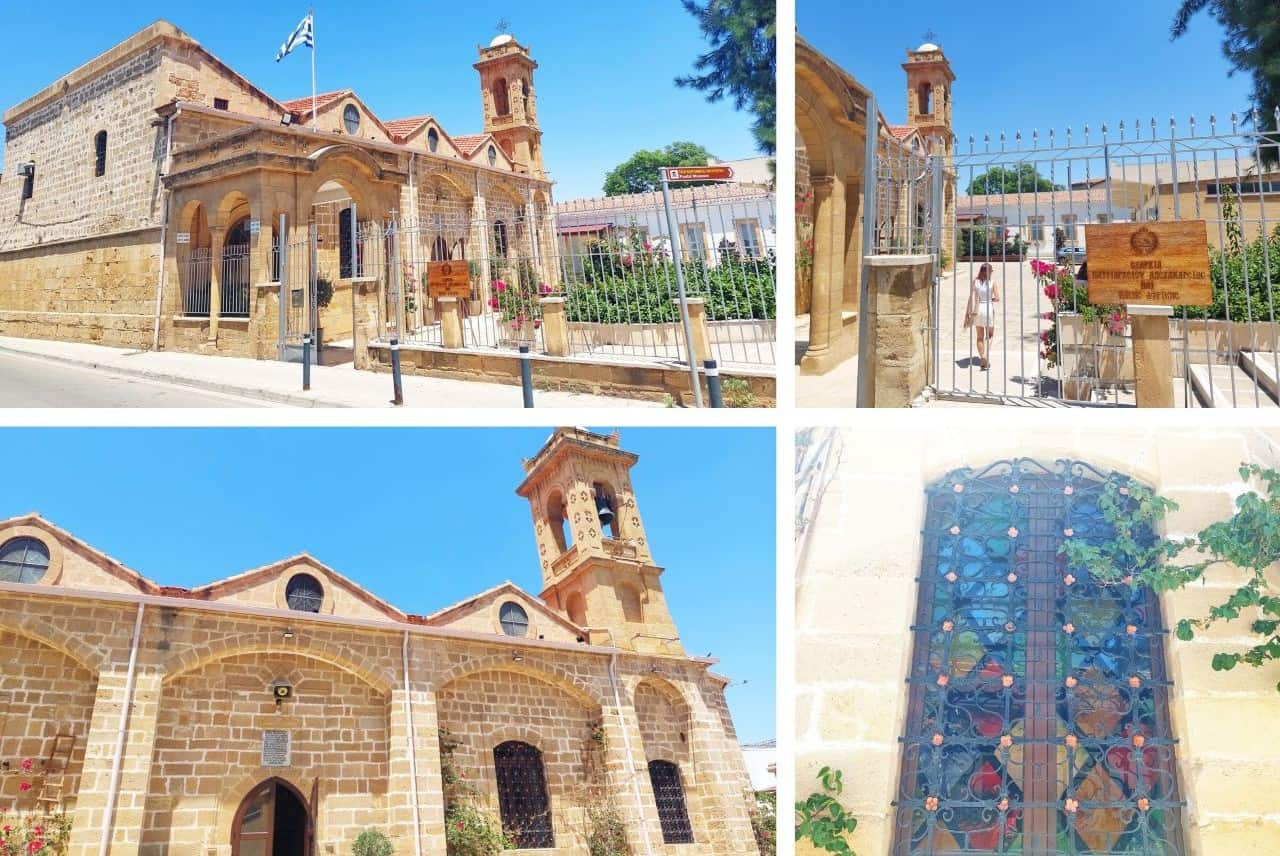
Church of Agios Savvas
Archangel Michael Trypiotis Church
Close to the Church of Agios Savvas, you can visit the Archangel Michael Trypiotis Church. According to the dedicatory inscription, it was built in 1695 at the expense of the Priest Iakovos and Christian parishioners. The church is known for its 18th-century wide iconostasis and the icon of Archangel Michael, painted in 1634, to whom it is dedicated.
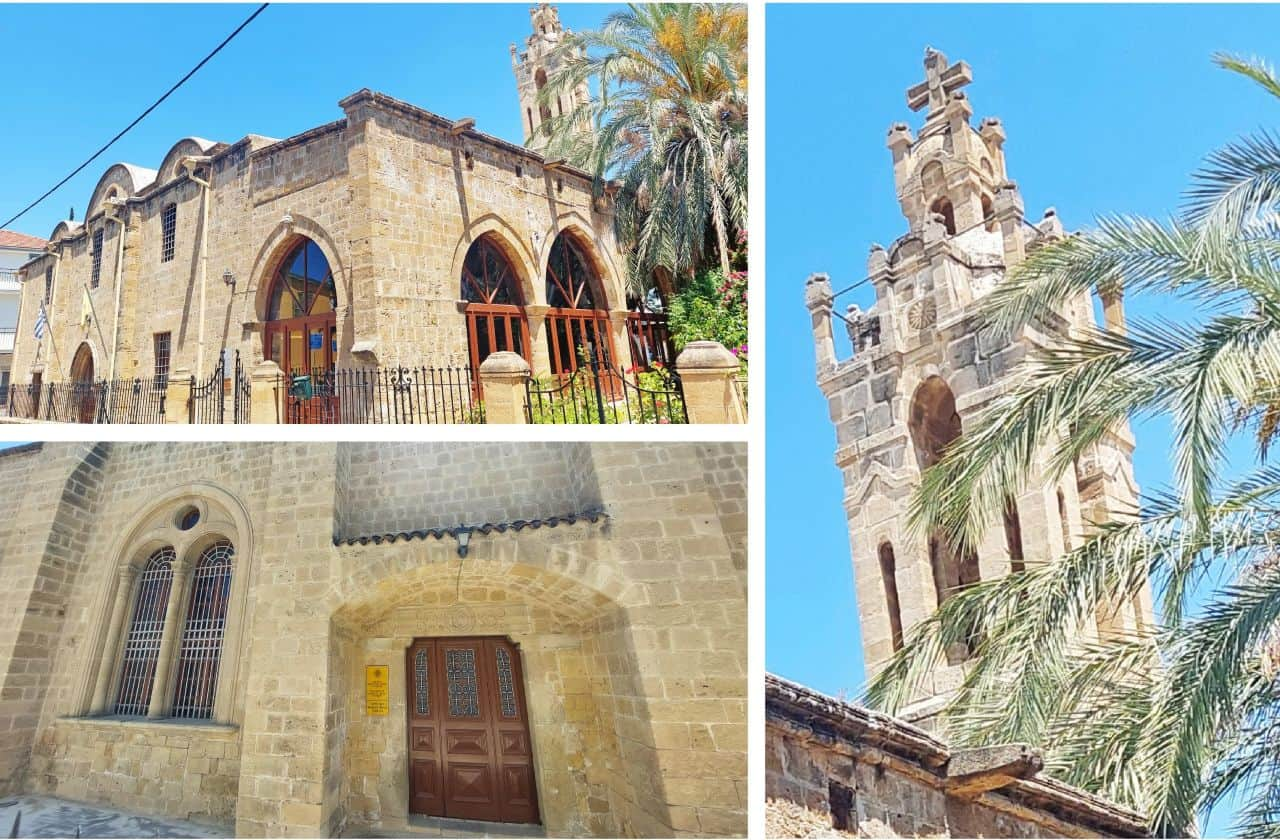
Archangel Michael Trypiotis Church
⛪Archbishop’s Palace
Archbishop’s Palace is the official residence and administrative seat of the Archbishop of Cyprus, and it is not open to the public. The complex includes both the historic Old Palace from the 17th-18th centuries and the Neo-Byzantine New Palace, built between 1956 and 1960 under Archbishop Makarios III. The palaces are surrounded by the Byzantine Museum, the Library of the Archbishopric, the Folk Art Museum, and the National Struggle Museum, all of which you can visit.
Near the Archbishop’s Palace, there is the Agios Ioannis (St John’s) Cathedral, built on the site of the 14th-century chapel of the Benedictine Abbey of Agios Ioannis. In 1720, it became the residence of the Archbishop of Cyprus, and today, it is the main church of the Church of Cyprus, one of the ancient Eastern Orthodox autocephalous churches.
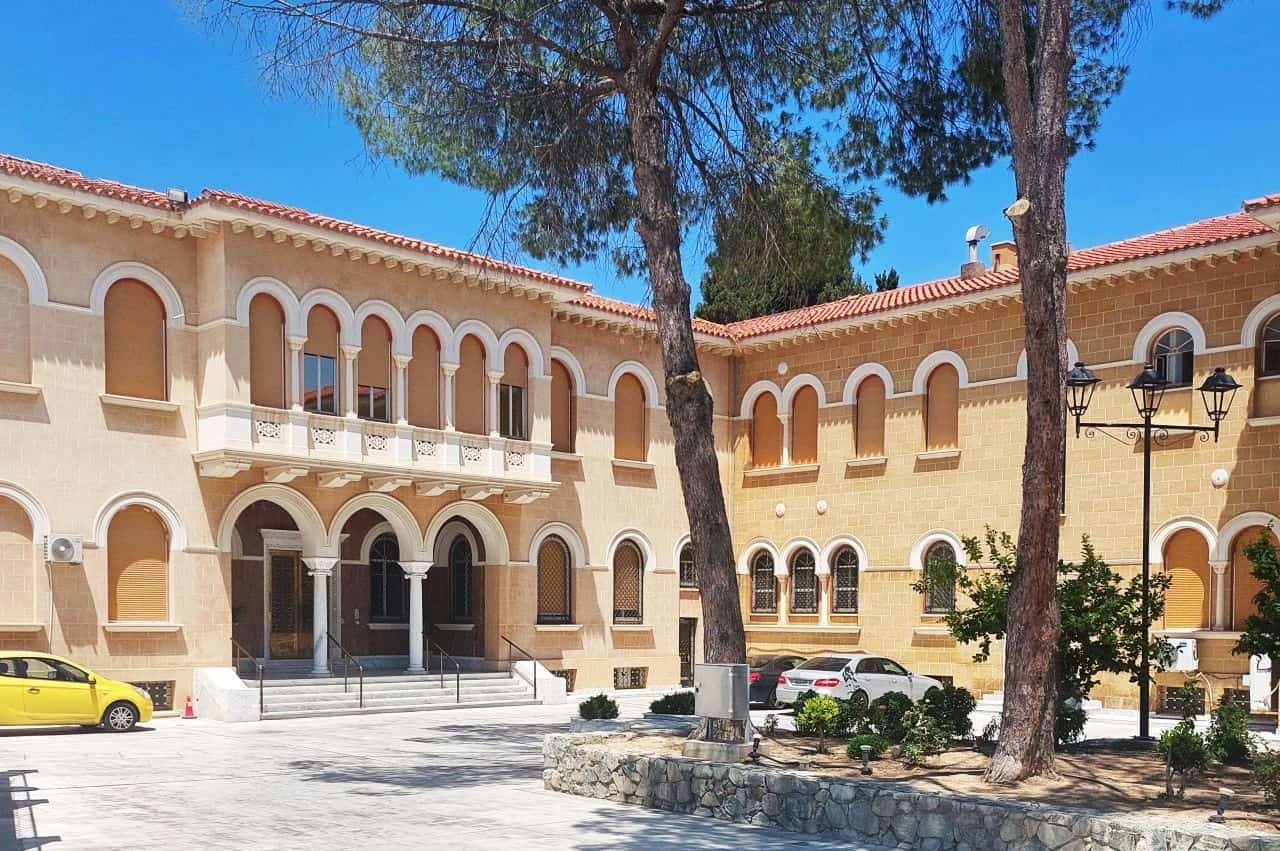
Archbishop’s Palace
⛪Apostle Barnabas Cathedral
Close to the Archbishop’s Palace stands the Apostle Barnabas Cathedral, dedicated to Saint Barnabas, the patron saint of Cyprus, who was born in the ancient town of Salamis. Completed in 2021 in Byzantine style, it stands as a reminder of the era when Archbishop Anthemios of Cyprus discovered the grave of Barnabas, the Church of Cyprus’s founder and protector.
Inside the cathedral, mosaics and frescoes depict the life and miracles of Saint Barnabas. The cathedral has become a central place of worship and pilgrimage for Christians.
📍By the way, you can visit a small chapel with the grave of Saint Barnabas near the Monastery of Saint Barnabas in Northern Cyprus, about 2 km from ancient Salamis and near Famagusta. Read more about it here.
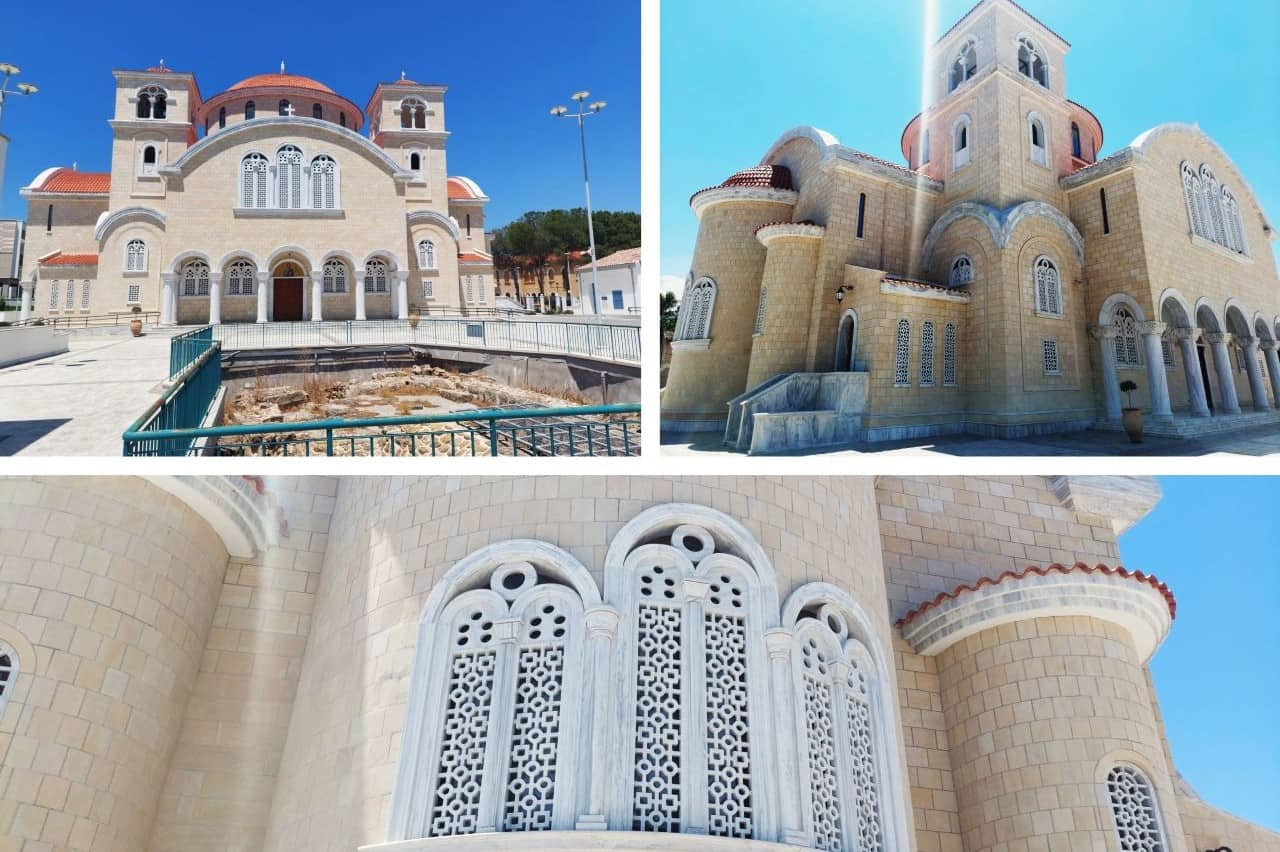
Apostle Barnabas Cathedral
Ömeriye Mosque
A short distance from the Archbishop’s Palace, you can find the Ömeriye Mosque, one of the most important sites of Muslim worship in the non-Muslim section.
The mosque was built on the former Augustinian Church of Saint Mary, dating to the 14th century. After the Ottoman conquest, Lala Mustafa Pasha, the Ottoman commander, ordered the construction of the mosque based on the popular belief that Umar, the second caliph of Islam, was buried at that place in the 7th century.
Today, the mosque is open to both worshippers and tourists.
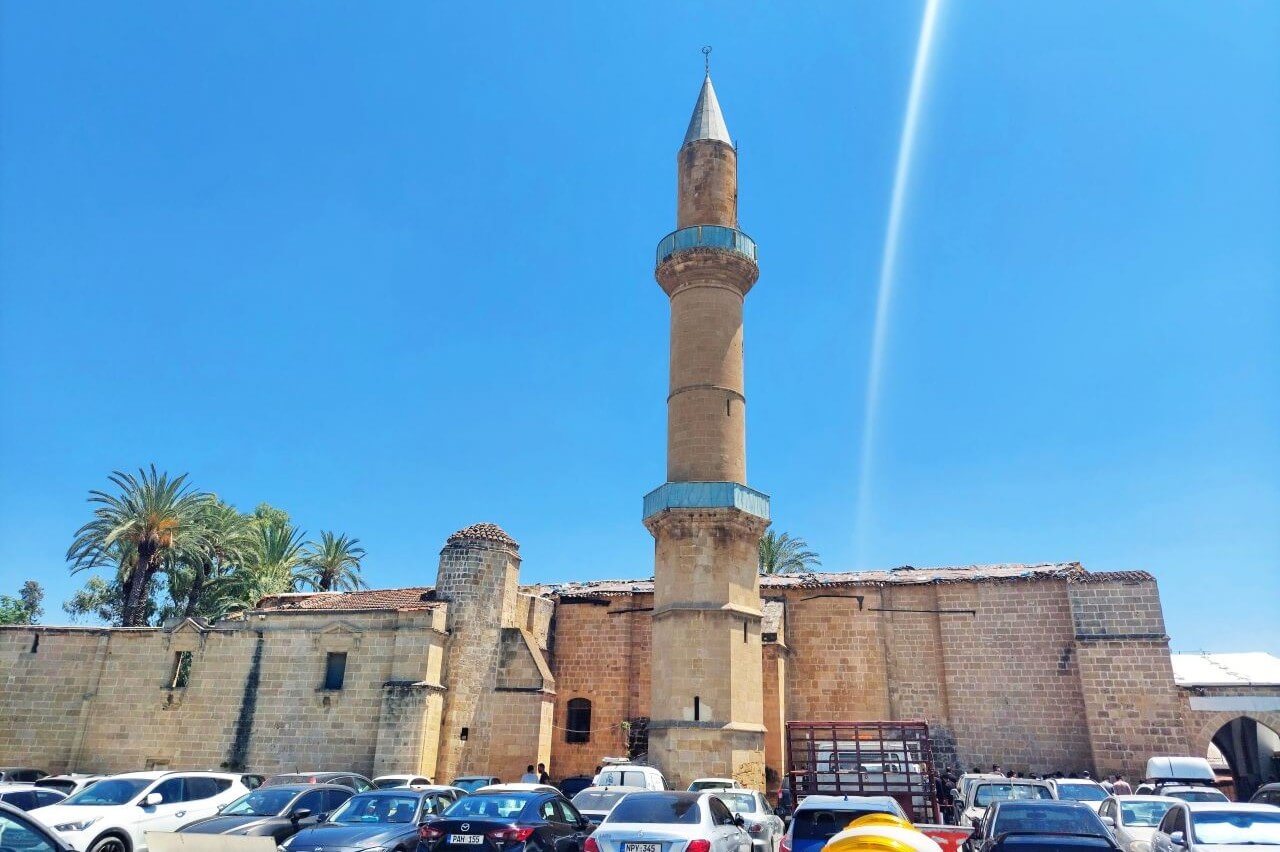
Ömeriye Mosque
Ömeriye Hamam
Across the street from Ömeriye Mosque is a hamam (bathhouse) named Ömeriye Hamam. It was also constructed by order of Lala Mustafa Pasha. After the renovation with EU funding in 2012, the hamam is open for visitors to enjoy rituals of renewal for body and soul.
Try a traditional foam massage, a steam bath and aromatic body treatments with cinnamon or coffee.
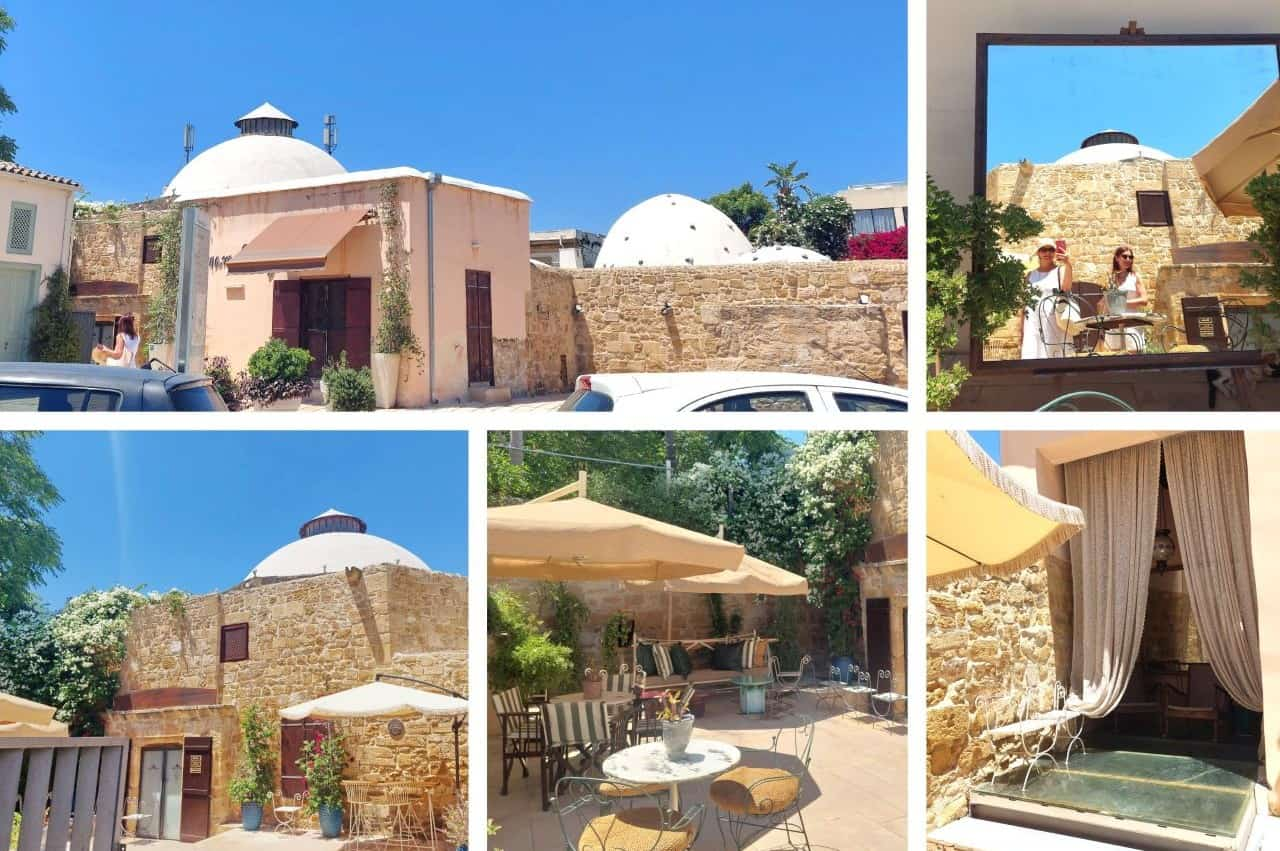
Hamam Omeriye
📌Crossing the checkpoint on Ledra Street
As I had mentioned before, if you want to cross the Green Line, take your passport or EU ID with you, because both the polices from Cyprus and Northern Cyprus will scan your documents. Ledra Street is the most popular checkpoint in Nicosia, and tourists often use it to visit the other part of the city. Be aware of signs that taking photos is forbidden at the checkpoints…
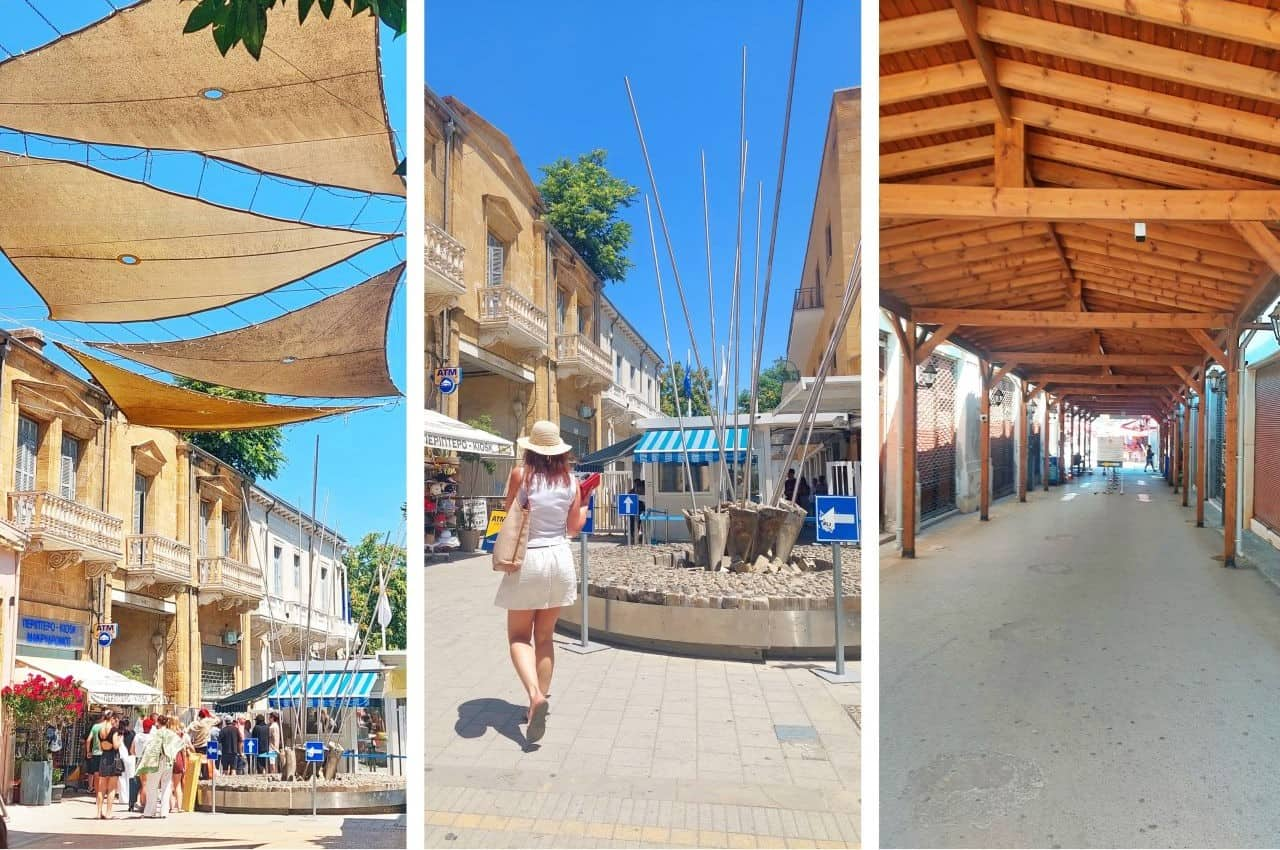
Nicosia, Ledra Street Checkpoint and path to Northern Cyprus
Exploring Northern Nicosia: where Gothic meets Ottoman
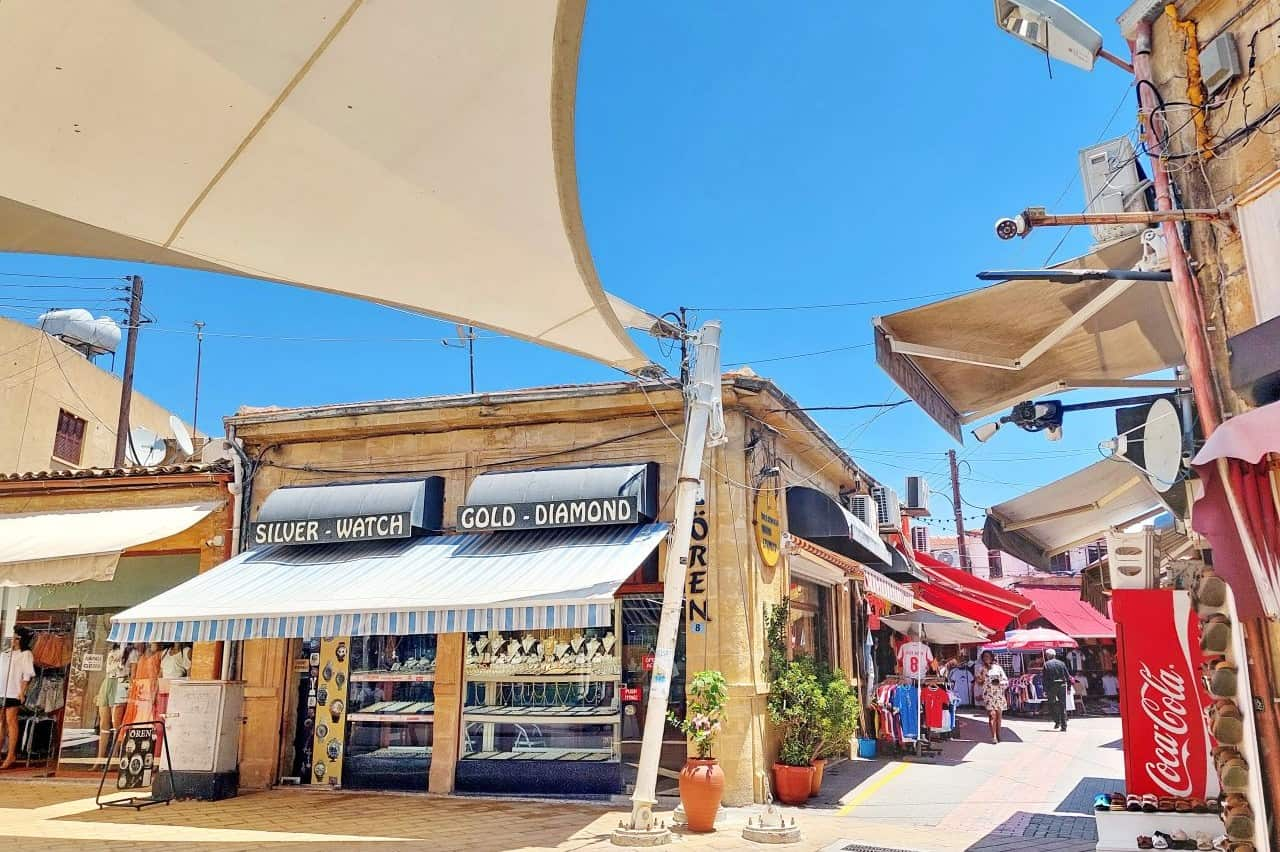
Northern Nicosia, shops in Ledra Street
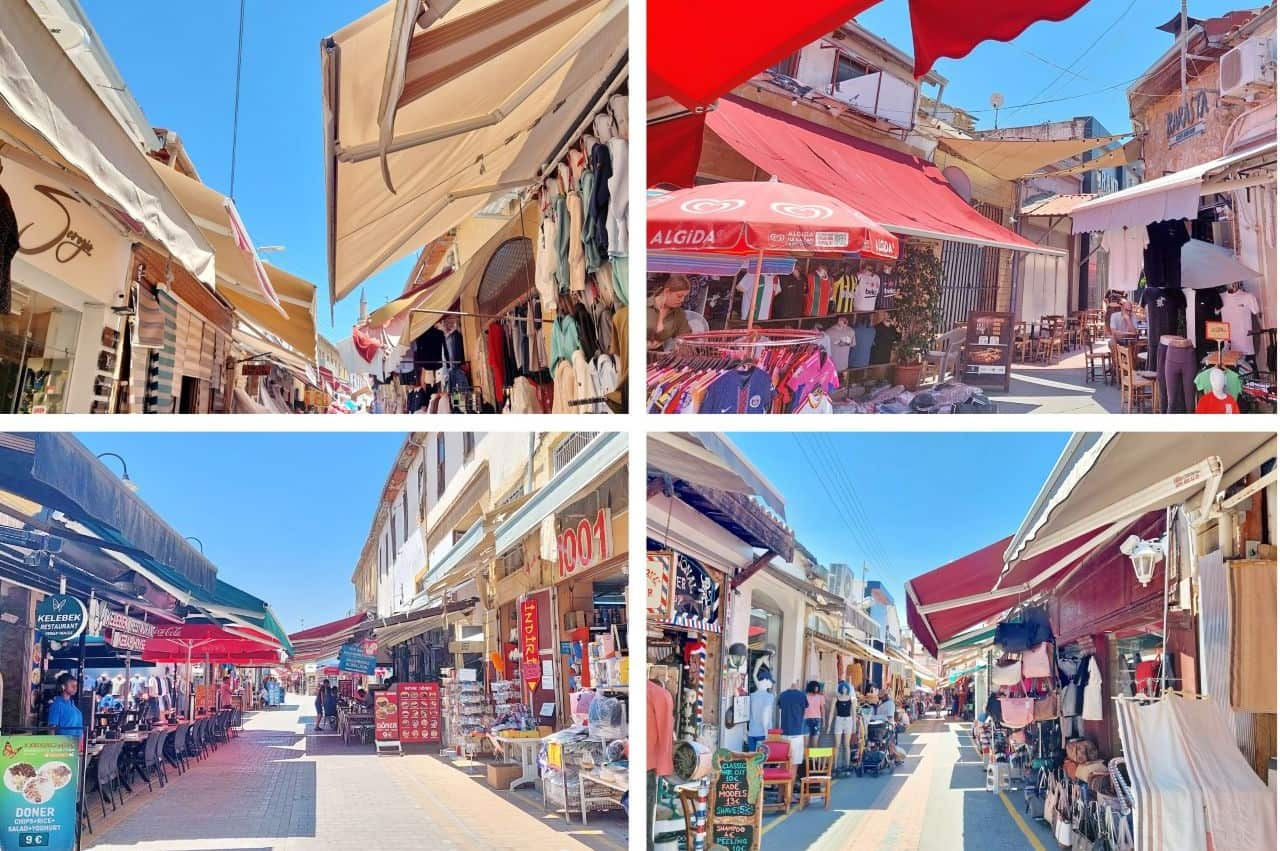
Northern Nicosia, Arasta open market
Büyük Han
In a word, the Büyük Han is the most interesting Turkish building in Nicosia and also in Cyprus. It is the largest caravanserai on the island, built in 1572 by order of the first governor, Muzaffer Pasha. The han served as accommodation for travelling merchants to Nicosia.
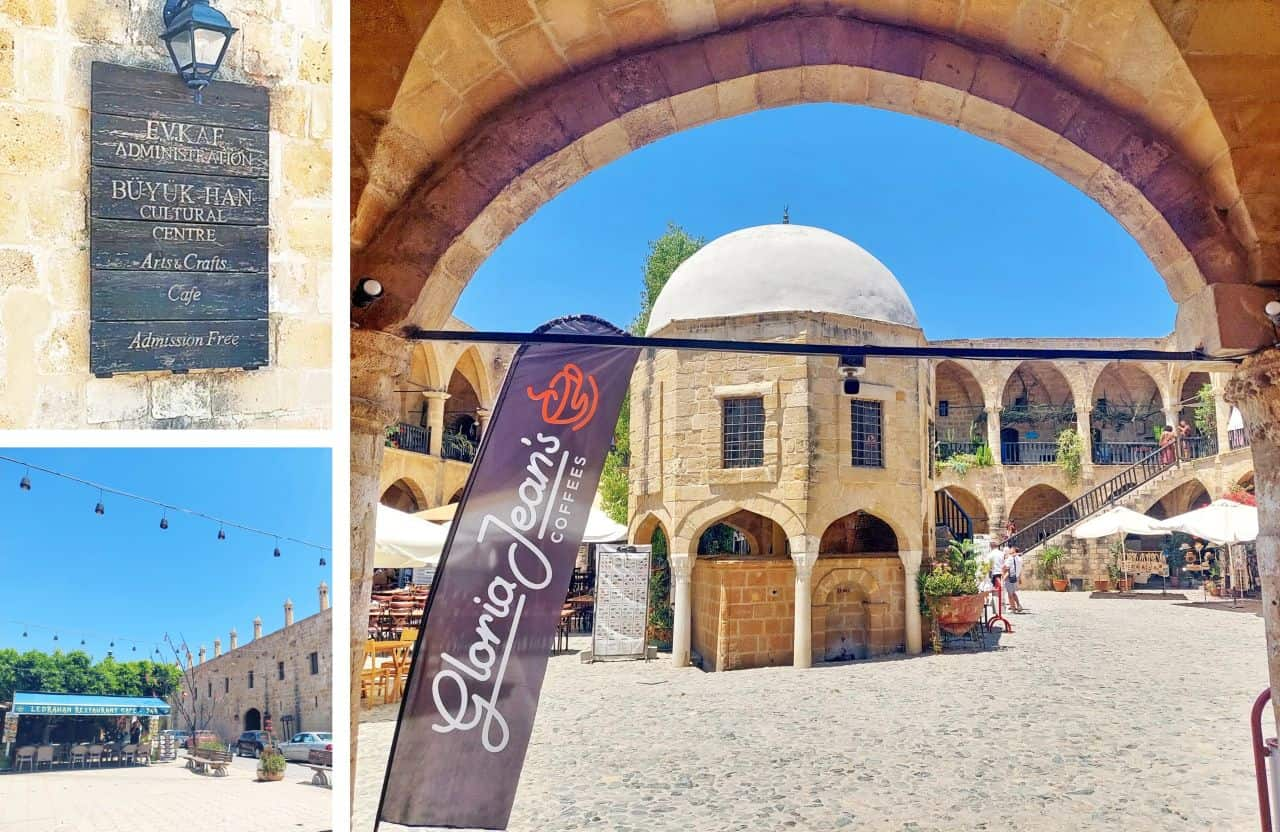
Northern Nicosia, Büyük Han
This impressive 2-storey building has 68 rooms with open galleries facing the courtyard. The main gate is located on the east side, opening to Asmaalti Street, and the second gate is on the west.
The small octagonal mosque (mesjid) is located in the middle of the han.
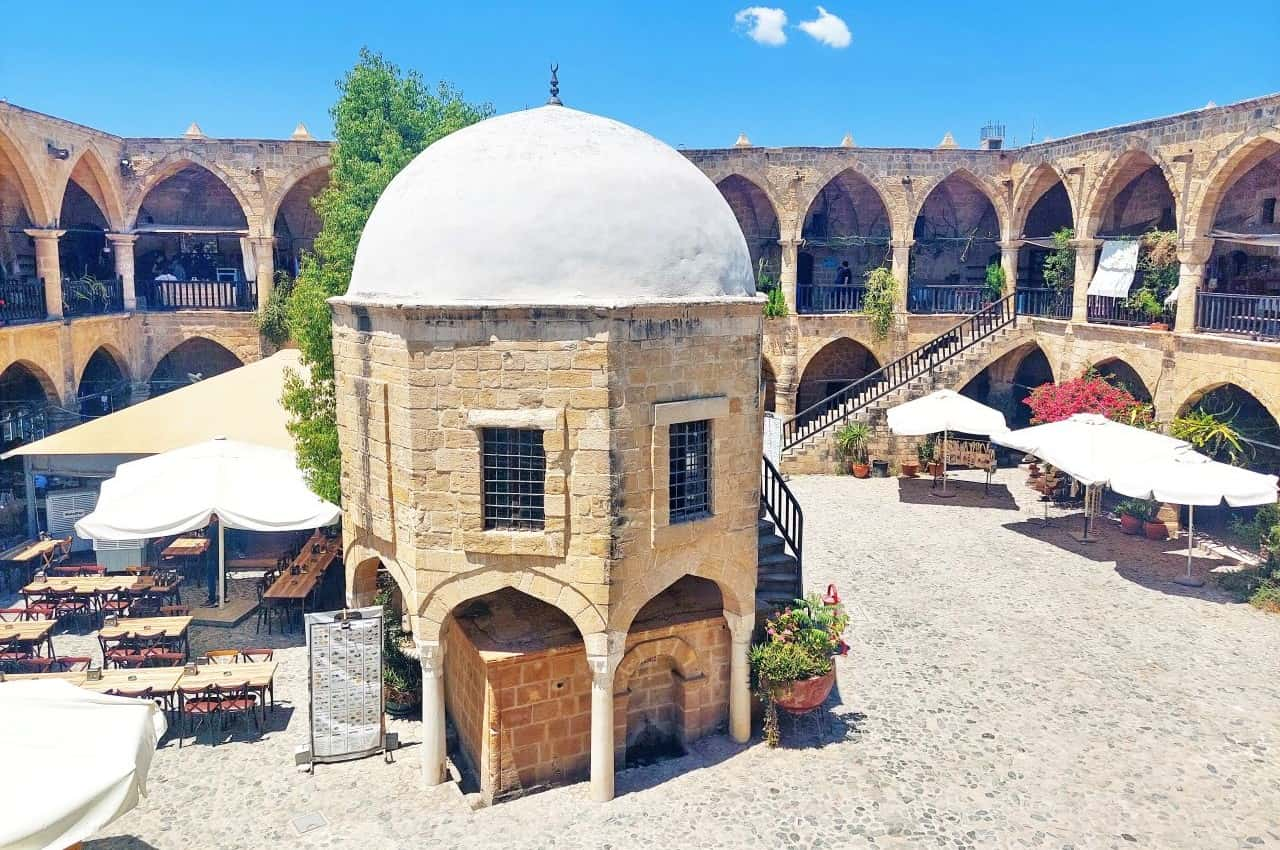
A small mosque in the centre of the Büyük Han courtyard
During the British rule, it served as a prison between 1878 and 1895, and then again as a han until 1925. Until 1962, families in need rented this space. After several restorations, today, Büyük Han is a tourist-frequented cultural and commercial centre.
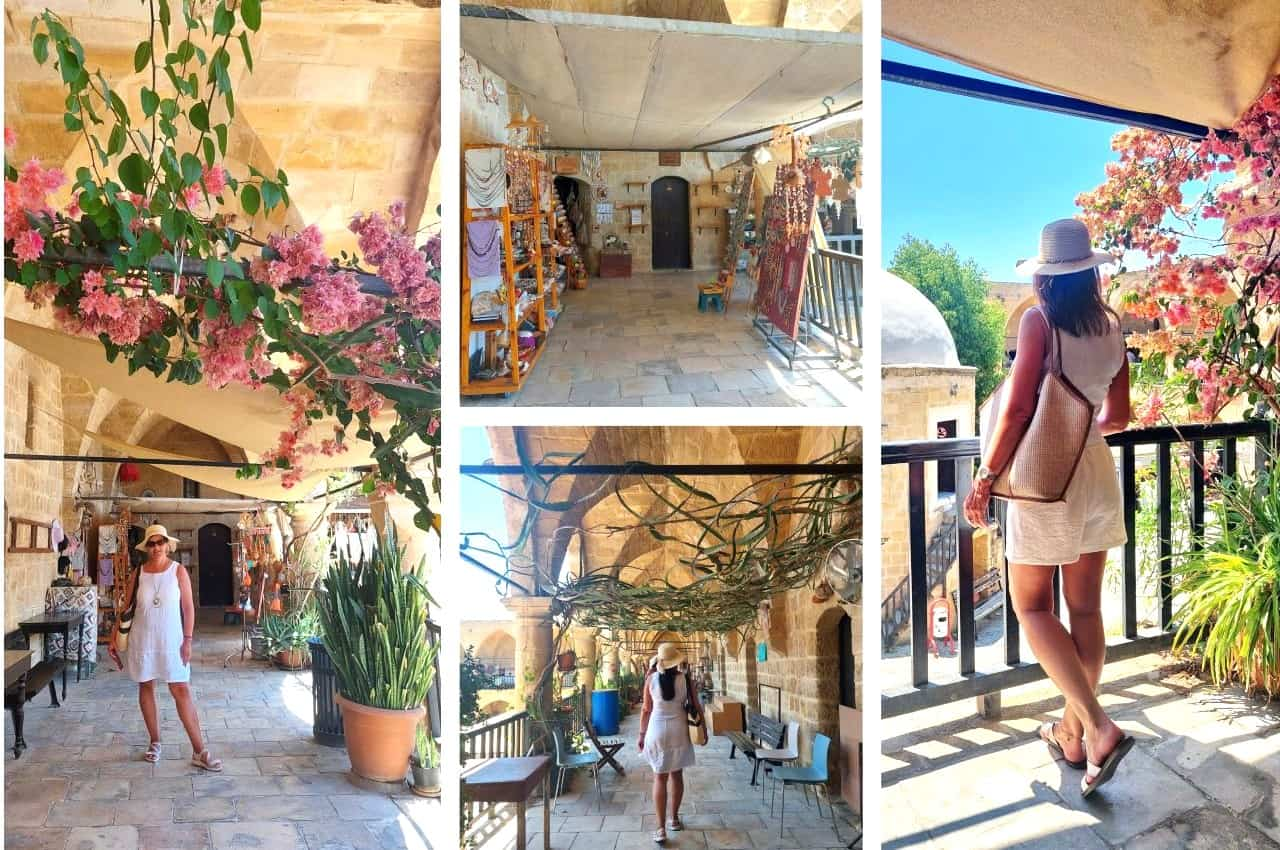
Strolling along the Büyük Han
The stone courtyard is filled with cosy cafes, local artisan workshops, and galleries. Büyük Han is the perfect spot to take a break, sip traditional Turkish coffee, or grab a bite.
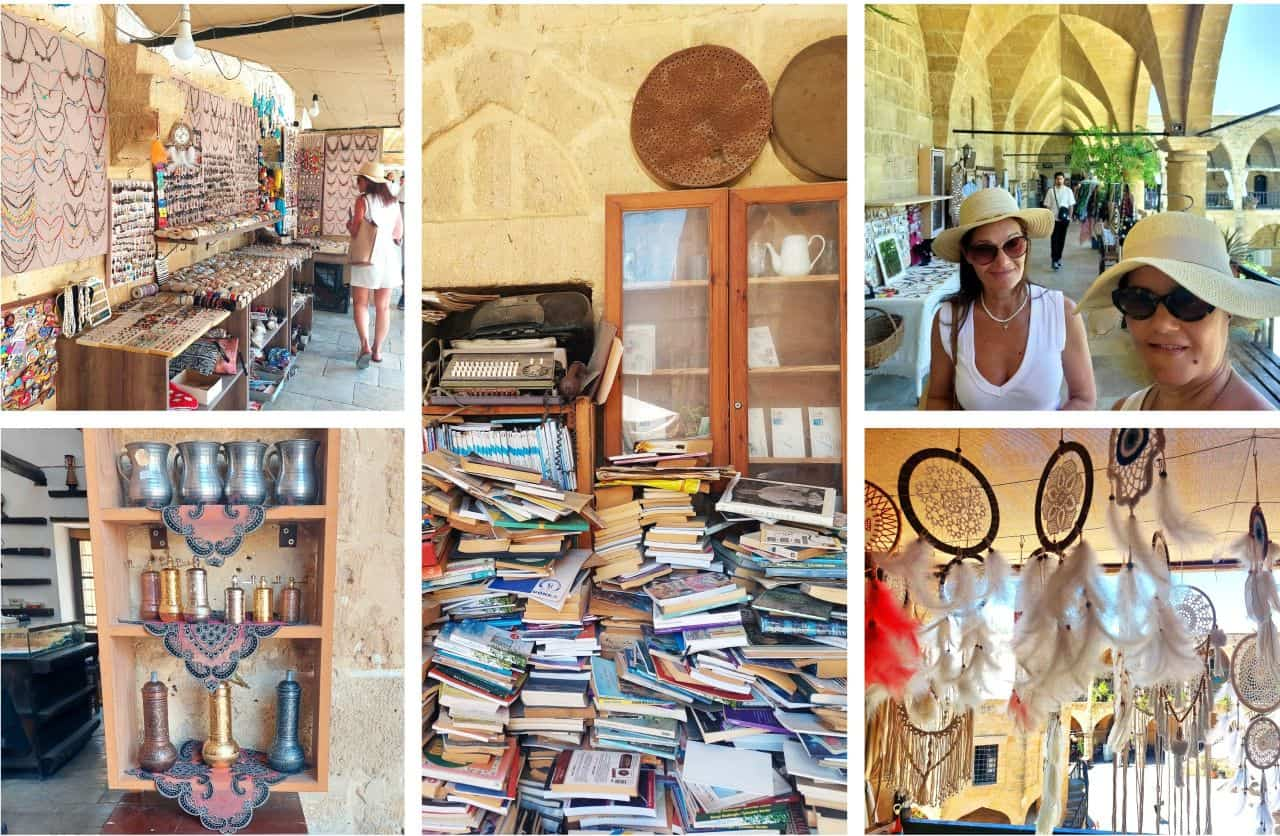
Souvenirs at the Büyük Han
🕌 Selimiye Mosque – Cathedral of Saint Sophia ⛪
The Selimiye Mosque is Nicosia’s main and most famous mosque.
It is also the largest surviving historical building (interior dimensions are 66 by 21 metres).
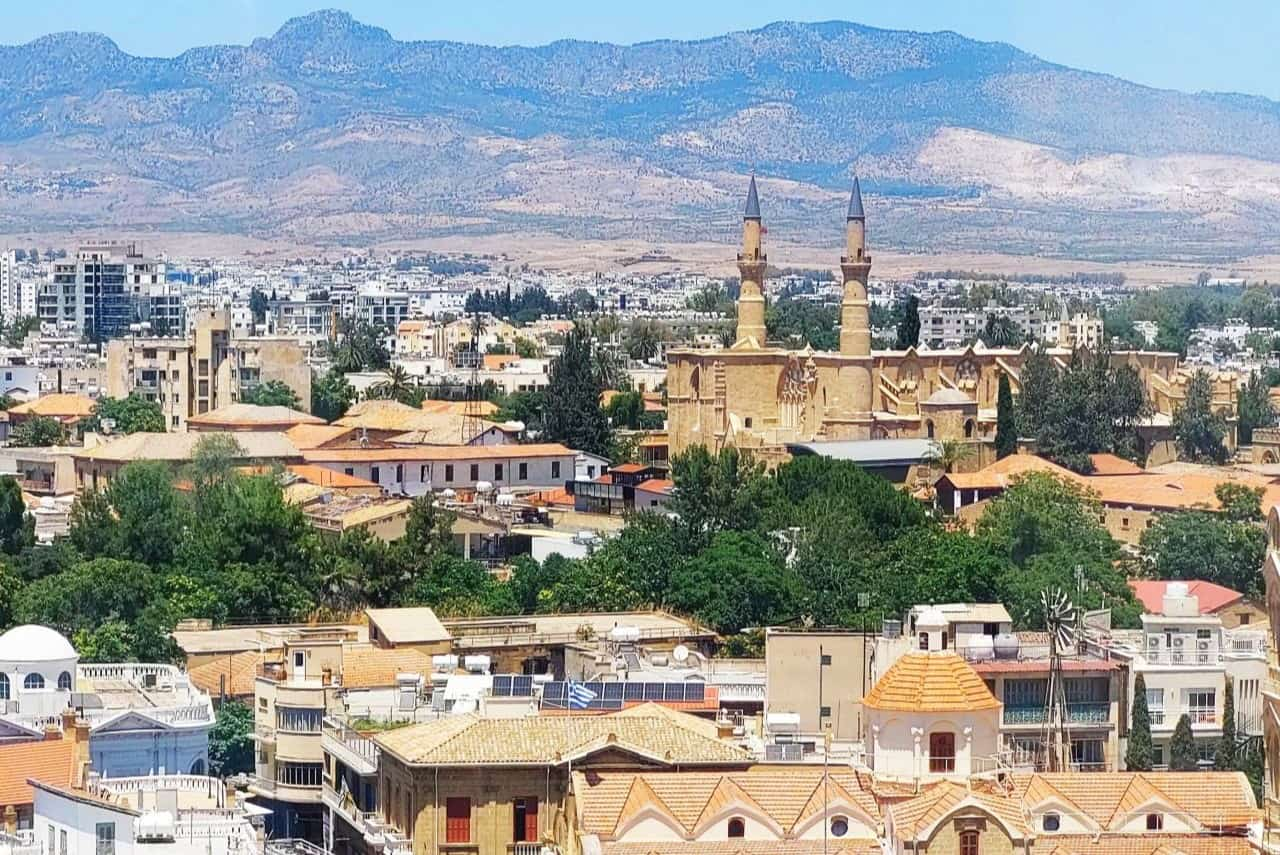
The skyline of Nicosia and the view of the Selimiye Mosque from Shacolas Tower
Originally, it was the Cathedral of Saint Sophia, built between 1209 and 1228 by the Latin Church of Cyprus. The cathedral was built in a Gothic style, similar to French cathedrals, on the site of a former Byzantine church, while several columns date to the Roman era.
By the way, the cathedral’s name derives from “Hagia Sophia”, meaning “Holy Wisdom” in Greek.
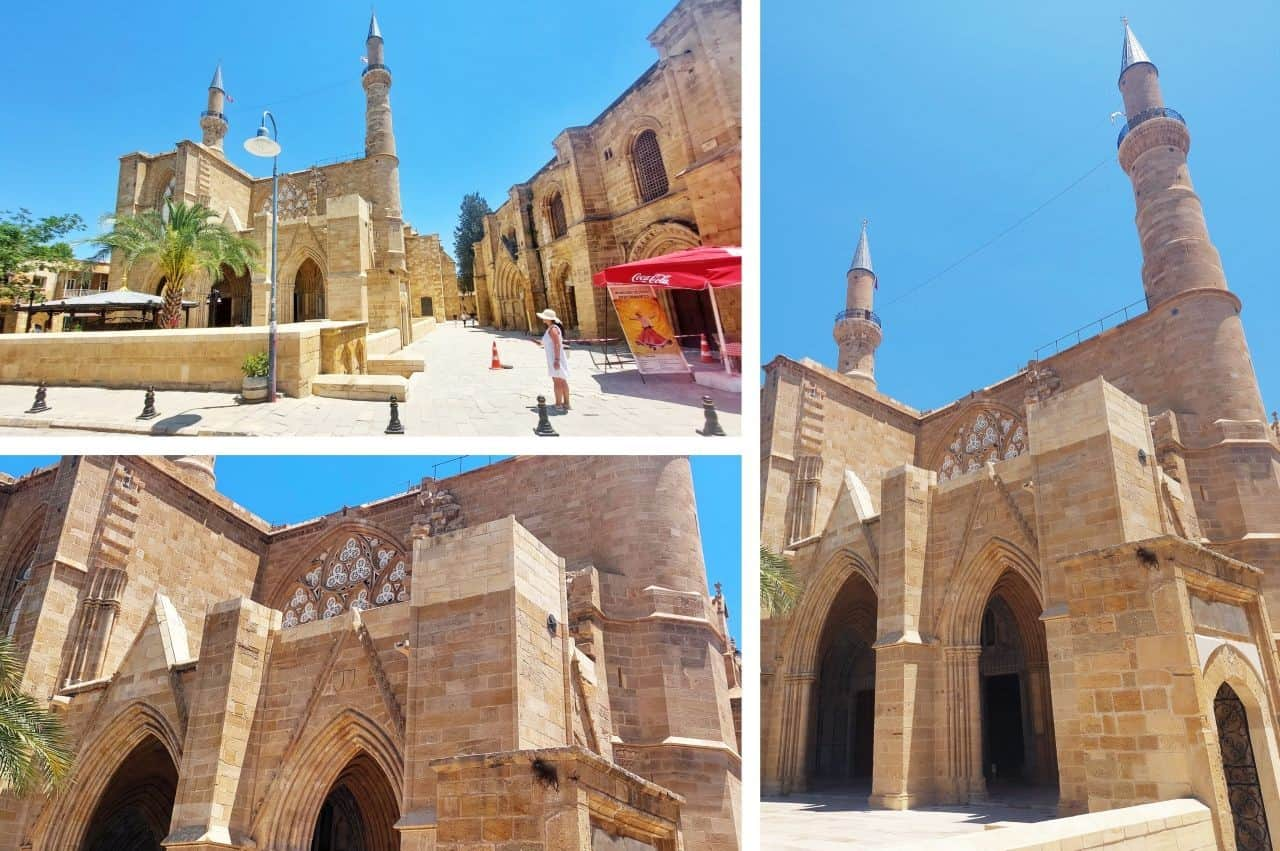
Selimiye Mosque, former Cathedral of Saint Sophia
During the Lusignan rule, the cathedral served as the coronation church of the kings of Cyprus. Aimery of Cyprus (the first king of Cyprus from 1196 and king of Jerusalem from 1198 to 1205) and Hugh III of Cyprus (king of Cyprus and king of Jerusalem from 1267 to 1284) were buried there while it was the cathedral.
St. Sophia’s Cathedral became the centre of Nicosia city during the Venetian rule.
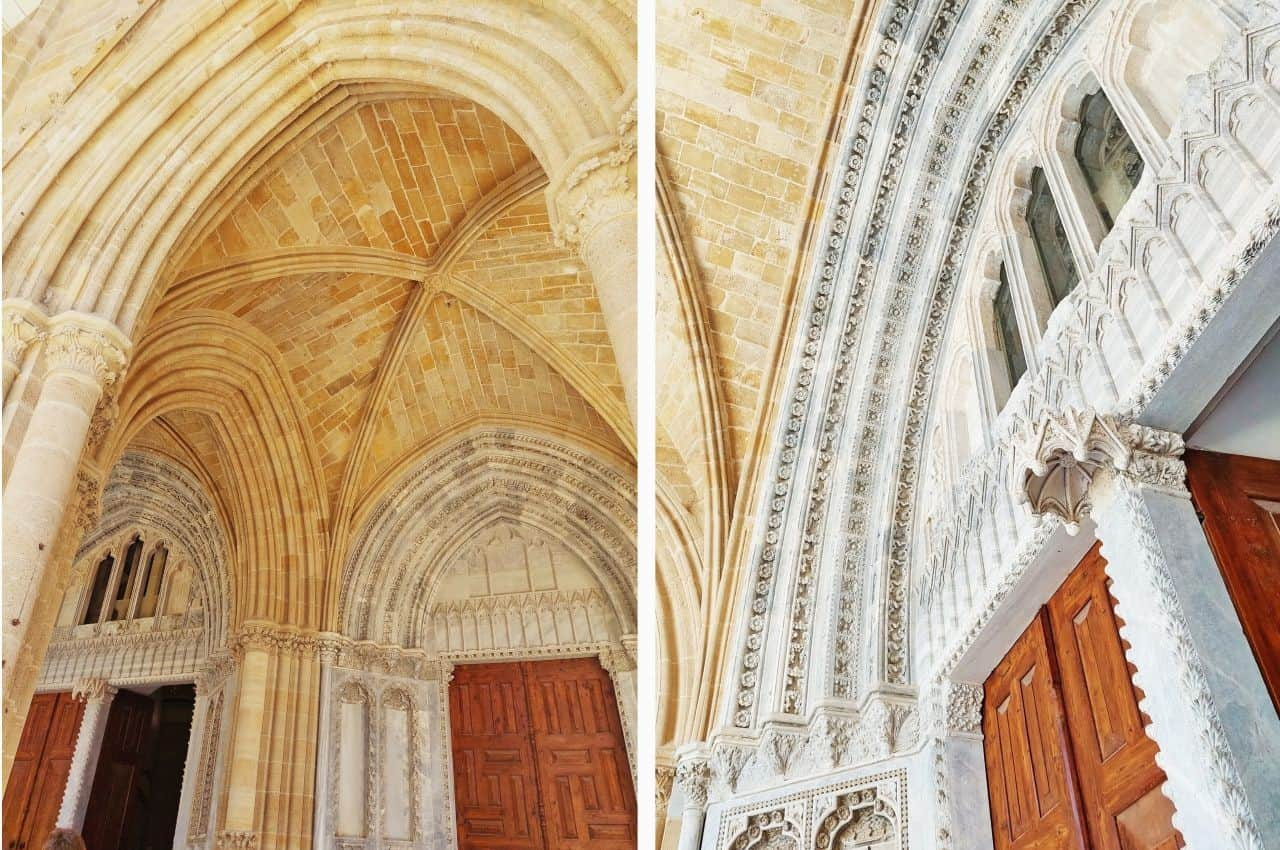
Entrance to Selimiye Mosque, former Cathedral of Saint Sophia
During the 50-day Ottoman siege in 1570, the cathedral was a refuge for people. But when the city fell on the 9th of September, the Ottomans killed them, including Francesco Contarini, the bishop of Paphos, and destroyed all Christian items. They converted the cathedral into a mosque, adding two minarets and Islamic features such as the mihrab and the minbar.
In August 1954, the Mufti of Cyprus officially renamed it “Selimiye Mosque”, in honour of the Ottoman sultan Selim II.
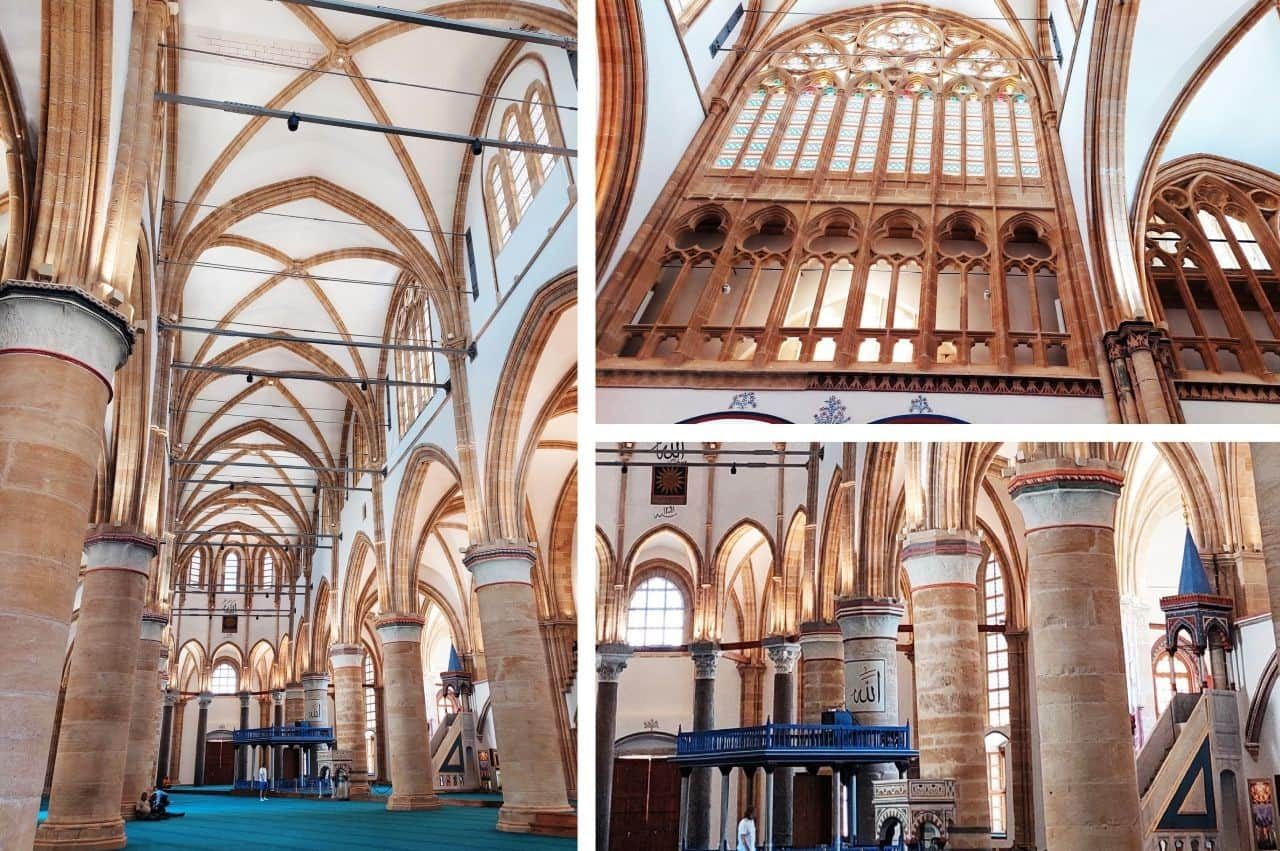
Inside the Selimiye Mosque, former Cathedral of Saint Sophia
Several earthquakes damaged the cathedral in the past. In the 2020s, reconstruction included structural, material, and conservation needs by installing stainless steel tension rods and anchors in critical wall sections.
Today, we can see the blend of beautiful Gothic architecture and Islamic signs.
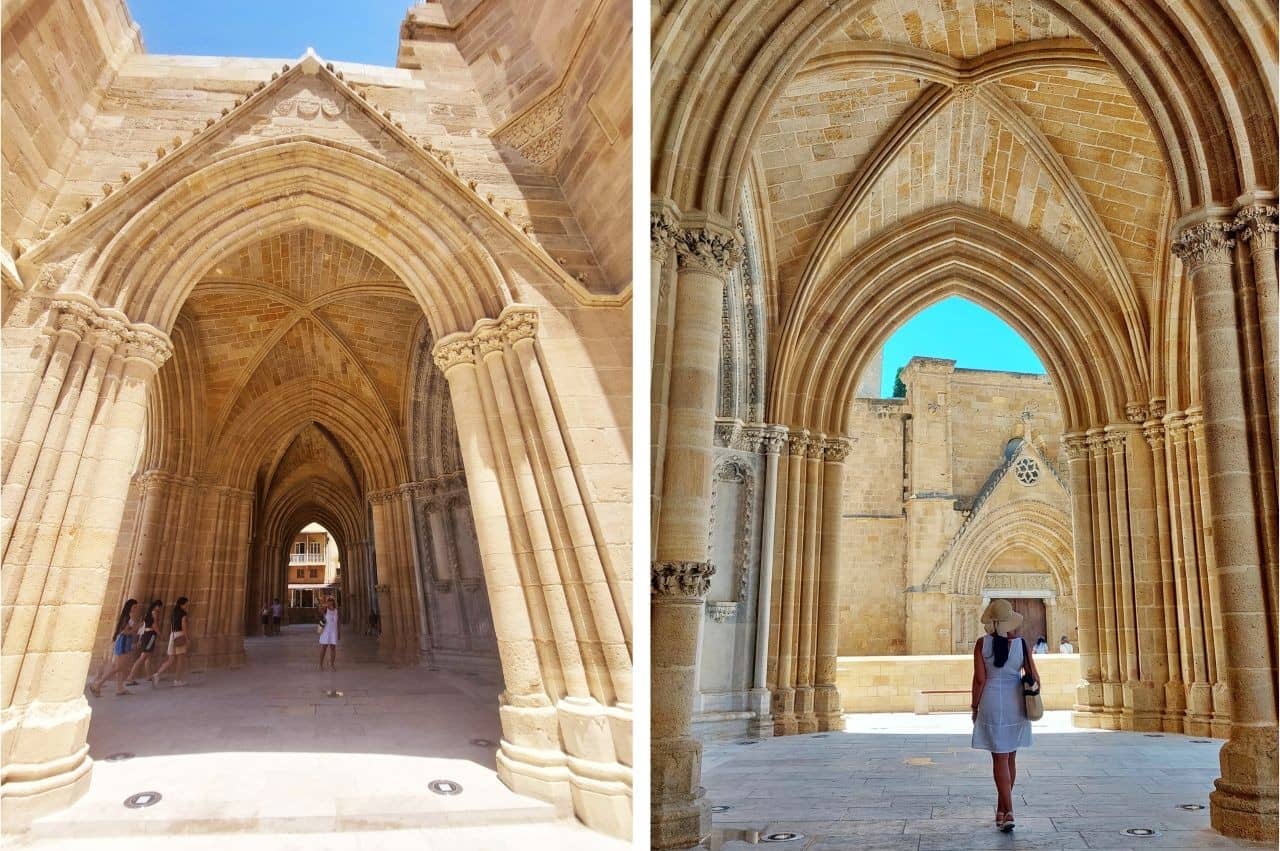
Selimiye Mosque, former Cathedral of Saint Sophia, and Bedesten across it
Bedestan (Church of St Nicholas)
The Bedestan is situated right next to the Selimiye Mosque.
This building has a long history, originally built as a church around the 6th century. Lusignans enlarged it and added Gothic features between the 12th and 15th centuries. The church was dedicated to Saint Nicholas. The Venetians built a beautiful north facade and main door in the 15th-16th centuries. In the 16th century, it was a Greek Orthodox cathedral.
During Ottoman rule, the church was converted into a bedestan, a covered market for textiles, food and grain. Today, the building serves as a cultural centre hosting concerts, exhibitions, and whirling dervish performances.
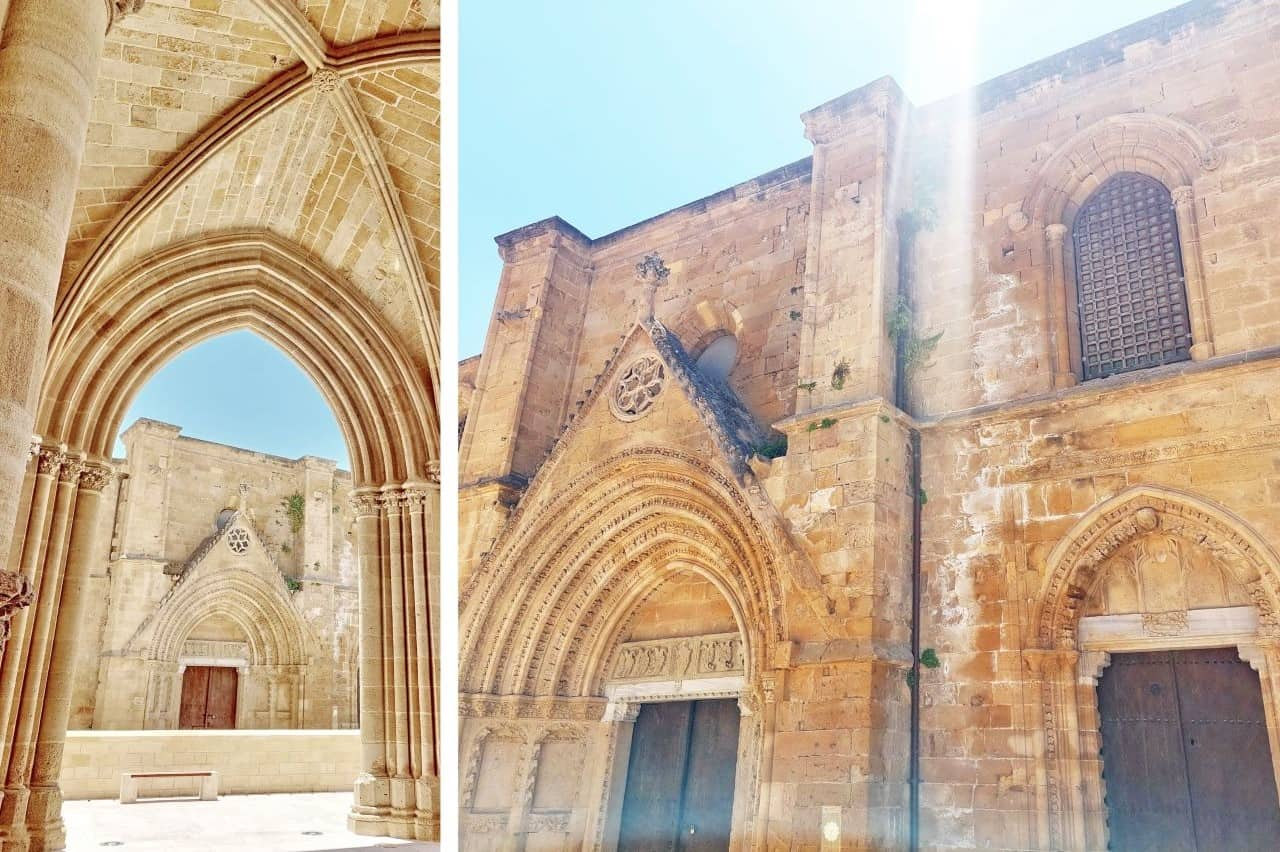
Beautiful north facade and main door of the Bedesten
Belediye Pazarı, known as Bandabulya market
Close to the Selimiye Mosque is the Belediye Pazarı, or municipal market, built in the 1930s during British rule, on the site of the former Ottoman meat and fish market. Its Art Deco-style facade remains today, and after renovations, the market reopened in 2012. Today, this covered market has more than 70 stalls with fresh fruit, vegetables, meat, spices, traditional sweets, souvenirs, handicrafts and textiles.
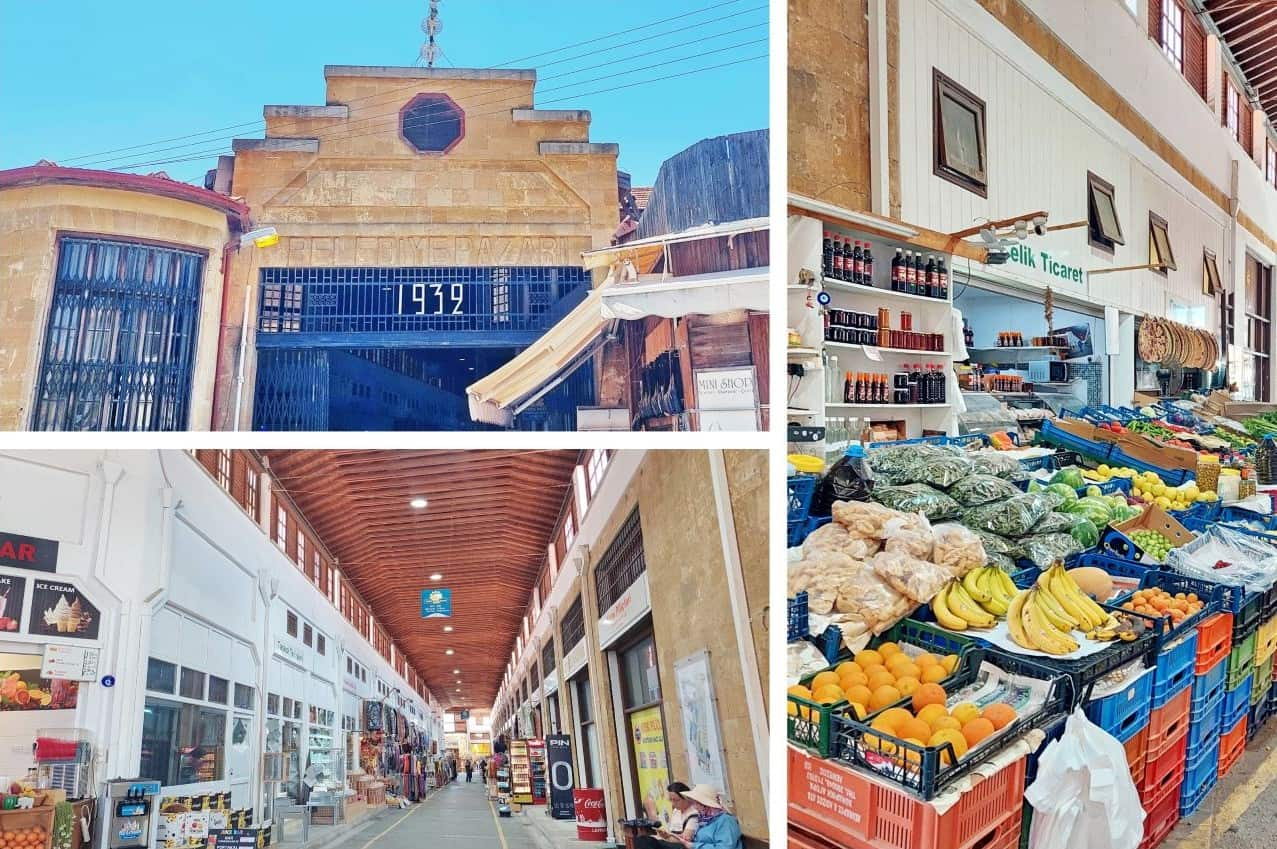
Belediye Pazarı, or Bandabulya Market
⛪🕌More churches and mosques…
Strolling along the city streets, you can find abandoned houses and more churches converted into mosques.
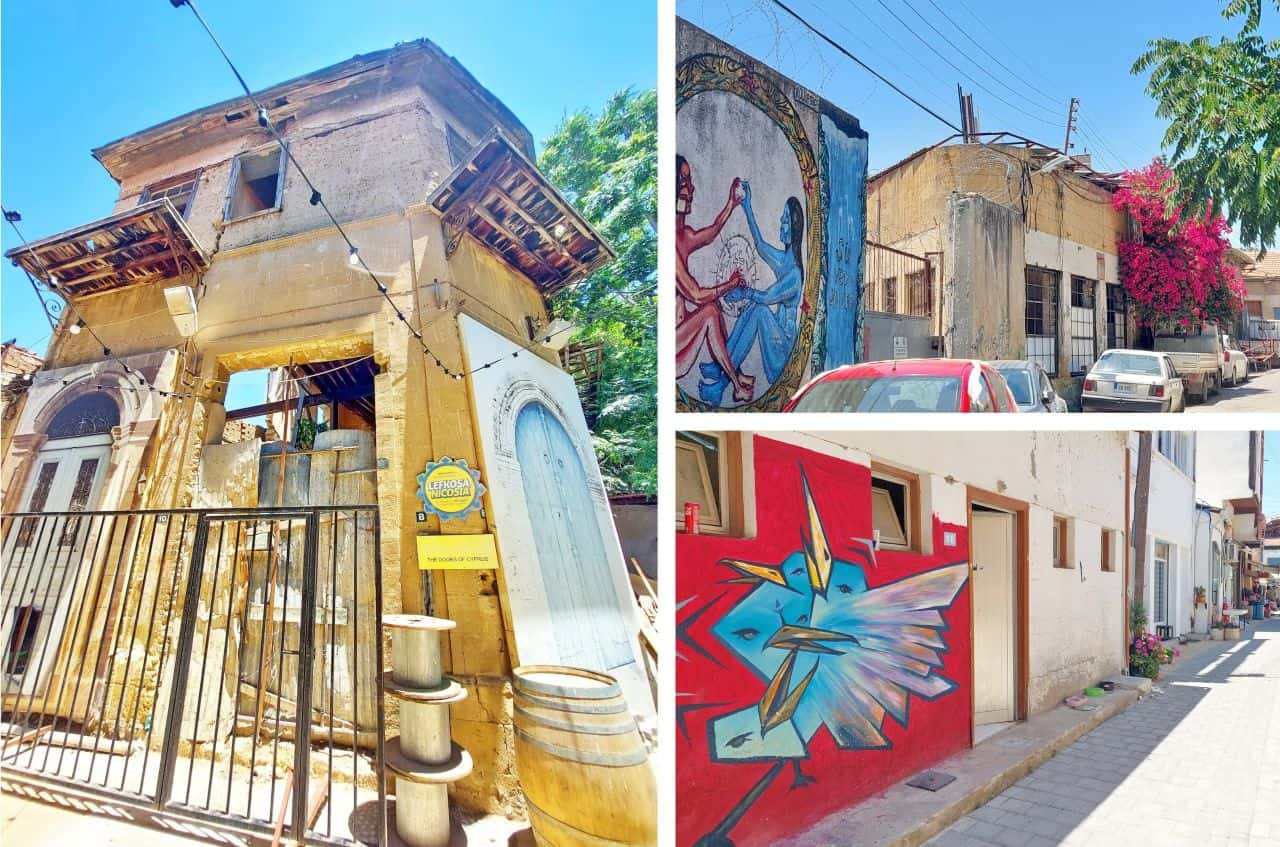
North Nicosia, Old Town
The Haydarpasa Mosque was originally the St. Catherine Church, built by the Lusignans in the 14th century. It was the second largest church in Nicosia, and the most notable Lusignan monument in the capital after the Cathedral of St. Sophia, with intricate stone carvings and gargoyles. Today, it is used as an art gallery and cultural space.
Then, the Church of Agios Loukas (St. Luke) was built in 1758 in one of the historic Greek Orthodox neighbourhoods in the walled city. After the 1974 conflict, the church was abandoned and later restored in the 1980s. Today, it serves as the headquarters for the Turkish Cypriot Folklore Association (HASDER).
Arabahmet Mosque is situated near the Bandabulya market. Originally, it was a Latin church built in the late 16th century. During the Ottoman rule, it was converted into a mosque and named after Arab Ahmet Pasha, the commander who led the Ottoman armies during the conquest of Nicosia. The mosque remains in use even today.
Inside the Venetian Walls, you can also see the Kyrenia Gate, which once was the main northern entrance to the walled city. Today, it houses a small tourist information office.
🏛️Museums in Nicosia
Because of Nicosia’s rich history, the city has many museums and art galleries. Check out some of the most popular sites.
♦ The Cyprus Museum (Archaeological) is the oldest and largest museum in Cyprus. There, you can find out more about the evolution of Cypriot civilisation from the Neolithic period to the early Byzantine period (7th century AD).
◊ The Leventis Municipal Museum of Nicosia was established in 1984 by Nicosia Municipality and the Anastasios G. Leventis Foundation. The permanent exhibition shows visitors Nicosia’s history from antiquity to the present day.
♦ The Cyprus Museum of Natural History contains a collection of over 2,500 discoveries, including precious stones and fossils.
◊ The House of Hadjigeorgakis Kornesios is a well-preserved 18th-century mansion from the Ottoman period. It shows traditional domestic life, architecture, and artefacts in the old town.
♦ Cyprus Classic Motorcycle Museum is a private collection showcasing over 350 vintage and classic motorcycles starting from 1914.
♦ Dervish Pasha Mansion is a historical mansion and ethnographic museum in the Arab Ahmet quarter in North Nicosia. Built in 1801, it was the home of a wealthy Turkish Cypriot. The mansion has two entrances, one for men and one for women, and a large inner courtyard.
Walled city of Nicosia
Generally, it is easy to explore on foot within the historic Venetian walls. Get lost in the Walled city of Nicosia, a labyrinth of small, narrow streets lined with houses, shops, churches and mosques.
You can visit Nicosia in one day, or you can stay overnight at small boutique hotels, apartments, guest houses or luxury hotels. Some of them are: Autograph Collection Hotel, Madame Residence, MAP Boutique Hotel, Aelia Wellness Retreat, while Concorde Tower Hotel & Casino, the Grand Pasha Lefkosa Hotel & Casino, and Merit Lefkosa Hotel & Casino are located in North Nicosia.
Divided by the UN Buffer Zone (the Green Line), Nicosia offers you the chance to experience two distinct cultures just a few footsteps apart.
Stay tuned for more stories about Cyprus..

Leave a Reply
Want to join the discussion?Feel free to contribute!